Skip to content

ajhlovestheatre

  • Home
  • About
  • Contact
  • Blog

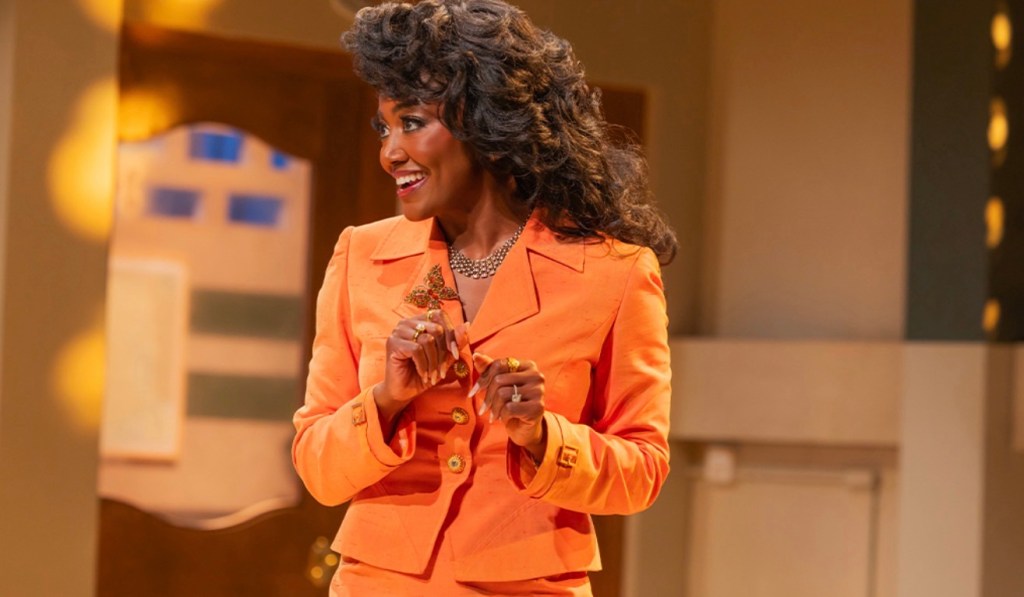
  • INVISIBLE ME – ⭐️⭐️⭐️⭐️ – this heartwarming, humorous, gritty dramedy tackles ageing and connection with real charm

    Tessa Peake-Jones, photograph by Harry Elletson

    INVISIBLE ME

    by Bren Gosling

    directed by Scott Le Crass

    Southwark Playhouse Borough, London – until 2 May 2026

    running time: 80 minutes no interval 

    https://southwarkplayhouse.co.uk

    Getting older is a privilege denied to many but it’s sometimes easy to lose sight of that fact when you’re staring down the barrel of loneliness, physical aches and pains, ongoing grief and the feeling of invisibility in an ever-more frenetic modern world. Playwright Bren Gosling addresses this in his punchy but charming three hander, given a beautifully modulated production here by Scott Le Crass. Often laugh-out-loud funny, Invisible Me then suddenly floors you with an injection of real, earned emotion that palpably has audience members fighting back the tears. At times, it’s as though a trio of the Alan Bennett Talking Heads have been spliced together. 

    Gosling creates a trio of singletons all turning sixty around the same time, and all living within a few Walthamstow streets of each other: timid Lynn (Tessa Peake-Jones) works part time as a chambermaid at the local Travelodge, priapic Alec (Kevin N Golding) is a London cabbie and reserved Jack (James Holmes) is a gay, HIV+ widower whose friends are trying to get him to socialise again. All three share a degree of crippling loneliness, which they each deal with in wildly differing ways, along with valid reasons not to fully trust their fellow humans. Mawkishness is kept at bay for the most part by a sense of humour that occasionally suggests a London-centric Victoria Wood at her most cosily trenchant.

    Le Crass directs with sensitivity and attention to detail, but also a sense of real fun and a theatricality that isn’t always apparent in the writing, which is never less than engaging but, taken by itself, is so conversational and intimate that it sometimes feels as though it would work equally well on the telly or the radio. It takes maybe a little too long for these mismatched characters to actually talk TO each other rather than ABOUT each other to us, and, given how well so many people age these days, there were moments where these three felt more like they were turning seventy rather than sixty. If I hadn’t spent more nights than I care to remember watching dodgy late night documentaries on Channel 4, I might’ve found the plot strand about Lynn’s foray into sex work a tad far-fetched, but actually it rings true (especially as played so terrifically by Peake-Jones), even if it’s a bit of a thematic non sequitur.

    Peake-Jones and Holmes wring every drop of pathos and humour out of their roles, and when their characters finally connect, you feel the audience collectively exhale. Golding brings a fizzy, contrasting energy to the laddish Alec, and makes endearing a character that in less likeable hands could be really obnoxious.

    Invisible Me gives theatrical voice to a tranche of the populace that we don’t often get to see on stage. It has a warts-and-all authenticity and core of genuine kindness, the message that we can all be looking for connection at any stage of life comes through loud and clear. There’s a wonky joy to the dancing finale that stays with you long after the final bows. Lovely stuff.

    April 22, 2026

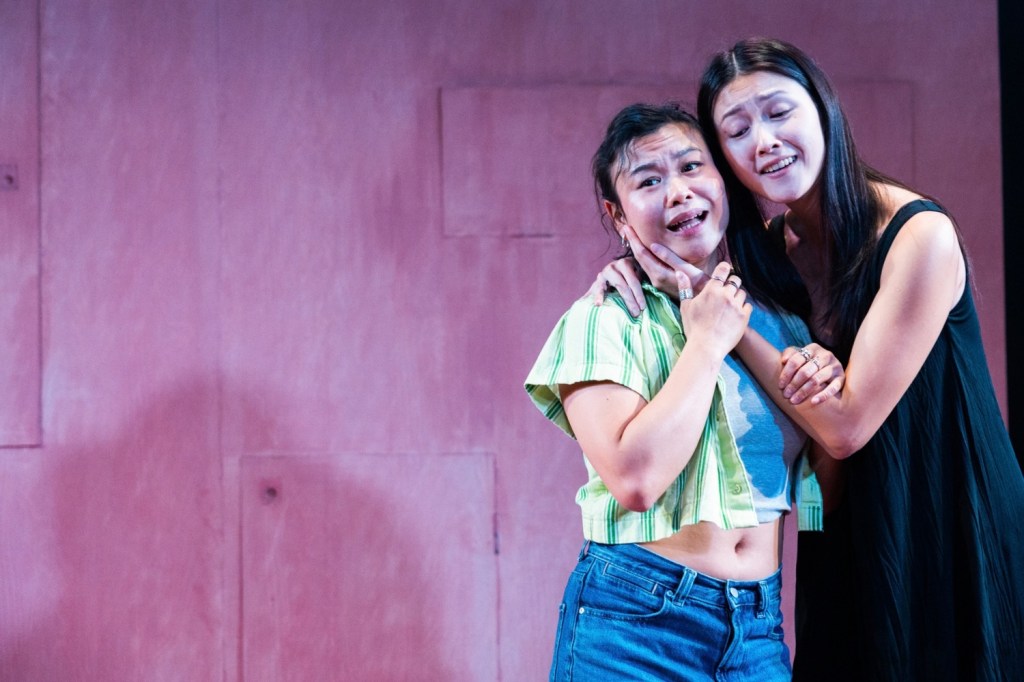
  • HEART WALL – ⭐️⭐️⭐️⭐️ – grief, family, rambunctious humour, karaoke….it’s all here in this winning new play

    Sophie Stanton and Rowan Robinson, photograph by Harry Elletson

    HEART WALL

    by Kit Withington

    directed by Katie Greenall

    Bush Theatre, London – until 16 May 2026

    running time: 100 minutes no interval

    https://www.bushtheatre.co.uk/event/heart-wall/

    Audience participation karaoke on the immersive pub set (designer: Hazel Low) that has taken over the Bush’s main house makes for a disarming start to Kit Withington’s new comedy-drama. It sets a misleadingly playful tone for Katie Greenall’s production which curdles quite drastically as this Mancunian-accented slice of social realism progresses. Heart Wall is richly enjoyable for sure, but it’s equal parts elliptical and accessible, examining the harrowing subjects of grief and fractured families through a booze and pop music-fuelled lens that sometimes blurs focus but is seldom less than engrossing.

    Twenty-something Franky (Rowan Robinson) has returned home to the North West for a visit from London, prompted by friends expressing concern that her Dad, proudly working class Dez (Deka Walmsley), is behaving strangely; meanwhile Mum Linda (Sophie Stanton) is spending an inordinate amount of time at her own mother’s, the family pet rabbit has gone missing….and over at the local pub where the landlady hasn’t been seen in months, every night is karaoke night. Withington constructs short, staccato scenes with plenty of humour and heart, that collectively build up a convincing picture of community and people with shared history whose lives are tetchily intertwined.

    At times it resembles soap opera, and I mean that as a compliment: the characters have a relatable, ripped-from-life vitality, complete with quirks and flaws, and they express themselves in language that sounds like real people talking, bubbling over with pop culture references and verbal idiosyncrasies. Withington’s dialogue is salty, funny (“have you ever seen your nana’s toenails? Have you ever just caught sight of them, Frank? They’re like little shovels on the end of each foot…She always has her shoes off. She won’t mither with slippers”)…and sometimes gains an expected poetic edge. Amongst all the naturalism, a pervasive strangeness intrigues and troubles. Withington keeps her cards close to her chest until fairly late on as to where all this is heading, resulting in the same must-watch compulsiveness of the finest soaps. If the final revelations are a tad anti-climactic, the journey to get there is entirely worth the taking.

    Perhaps surprisingly, the shifts in tone tend to keep the piece fresh and engaging rather than whiplash-inducing. The quality of the acting is undoubtedly an enormous contributing factor to this:  to see a whole company so thoroughly and convincingly inhabit their roles to this extent is a rare pleasure and, honestly, an encapsulation of the magic of theatre. Robinson makes Franky simultaneously needy and independent, a bright, complex young woman with a streak of self-obsession that becomes increasingly apparent and understandable as the story goes on. Walmsley is tremendous as struggling, self-flagellating Dez, his sudden outbursts of volcanic anger breaking through an otherwise stoic exterior. Stanton is so natural as Linda, finding the delicate balance between kindness and exasperated grit, that it barely looks like acting. Olivia Forrest is a knockout, but with unexpected depth, as Franky’s old school friend, and Aaron Anthony is heartwarming yet totally real as the pub barman who has the greatest handle on what’s going on with this disparate group of people. This is ensemble acting at it’s very best.

    Greenall’s staging is exquisitely paced, snappy when it needs to be but slowing down to realise, quite beautifully, the play’s more sensitive and sinister moments. That said, the blocking throughout favours the central section of the Bush’s auditorium, giving the unfortunate impression that the show has been directed for a traditional proscenium stage rather than the open one with audience on three sides, where it is actually playing. The karaoke theme sometimes feels a little grafted-on, meaning that fragments of songs are performed throughout. This is mostly great fun, although a rendition of The Pretenders’ ‘Brass In Pockets’ as part of a mother-daughter rapprochement is more baffling and awkward than inspired.

    Low’s design, Simisola Majekodunmi’s lighting and Mwen’s sound and compositions are vivid components in the production’s overall impact, turning downright lairy when required. Minor quibbles aside, Heart Wall is an excellent example of a piece that successfully straddles quality drama and popular entertainment. It’s laugh-out-loud funny and, ultimately, genuinely moving, never mawkish. Withington’s love for her mouthy, fallible characters is palpable, and this dream cast bring them to vibrant life. Recommended.

    April 21, 2026

  • OLIVER! – ⭐️⭐️⭐️⭐️⭐️ – now into its second year, this terrific reboot of the Lionel Bart classic deserves to be a permanent West End fixture

    Simon Lipkin, photograph by Johan Persson

    OLIVER!

    book, music and lyrics by Lionel Bart

    freely adapted from Oliver Twist by Charles Dickens

    directed by Matthew Bourne; co-directed by Jean-Pierre Van Der Spuy 

    Gielgud Theatre, London – open-ended run

    running time: 2 hours 40 minutes including interval 

    https://oliverthemusical.com

    Bigger isn’t always better, and theatrically nowhere is that more persuasively demonstrated than by Cameron Mackintosh’s latest production of the Lionel Bart musical classic which has enjoyed a West End outing in almost every decade since it premiered in 1960. In this current iteration, Oliver! is looking more vital and thrilling than countless other tuners a fraction of its age and twice its size.

    The last two West End versions, both produced by Mackintosh, played the Palladium and Drury Lane, 2000+ seat venues with vast stages, and were epic stagings. In Sam Mendes’ vision for those larger spaces, St Paul’s Cathedral soared up to the flies, a sailing junk passed along the Thames at the back of the Three Cripples Inn where Nancy performed and wassailed, Fagin’s den emerged from beneath stage level as his band of pickpockets scampered down ladders and ramshackle staircases to reach it…all absolutely gorgeous but slightly losing the heart and charm in this most British of musicals.

    Not that there’s a shortage of spectacle in Matthew Bourne’s entrancing, Hogarthian version, first seen at Chichester, and now into its second year at the midsized Gielgud Theatre. Indeed, the multiple revolves, descending gantries and Victorian street lamps of Lez Brotherston’s ingenious scenic design sometimes look like an homage to Sean Kenny’s revolutionary unit set for the very first production, and also to John Napier’s barricades in the original RSC Les Misérables. Paule Constable’s gorgeous, malleable lighting is similarly reminiscent and effective.

    But amongst the impressive visual and aural impact, there’s an attention to detail, a nuance to most of the characterisations, and a startling contrast between the joyful and horribly dark elements in Dickens’ original story, that render this Oliver! an entirely satisfying experience. Despite having worked on the earlier versions, Bourne treats this beloved staple of regional theatres and school stages as though it’s a completely new musical, and the result is fresh, dramatically alive and true, and, when it needs to be, genuinely dangerous.

    Aaron Sidwell may be less physically imposing than most of his predecessors as the villainous Bill Sikes, but plays him convincingly as a vicious psychopath. His destructive love for Ava Brennan’s stunning Nancy is made explicit, and deeply alarming. Note the look of devastation that passes over the face of the Artful Dodger (brilliantly played by Aaron MacGregor not as the cheeky kid we’re used to, but rather as a frequently horny young chancer with a streak of ruthlessness) when Fagin suggests he’s a Sikes-in-the-making.

    Brennan is fierce, sympathetic yet unsentimental and altogether wonderful, stopping the show cold (twice) with ‘As Long As He Needs Me’. At the performance I saw, Isaac Hackett (who alternates the title role with three other young actors) gives us a lovable yet spirited Oliver entirely capable of fighting the corner of his deceased mother, and of having the determination to get himself to London solo. 

    The supporting characters come off particularly well in this more intimate production. Clarion-voiced Oscar Conlon-Morrey’s drunken Mr Bumble and Katy Secombe’s lachrymose Widow Corney, both smashing, lean hard into the Music Hall elements of Bart’s creation but never lose sight of the truth at the heart of their characters. On a side note, Secombe’s presence is a lovely connection to Carol Reed’s 1968 movie version, as her father, the much loved Harry Secombe, played Bumble on screen.

    Jamie Birkett glitters and chills as the undertaker’s wife who clearly rules the feckless Soweberry (Stephen Matthews, excellent) with a rod of black iron, and is almost unrecognisable, but equally compelling, as the kind London house keeper who looks after Oliver later on. 

    Simon Lipkin’s hilarious, heartfelt, dynamic Fagin is a masterclass of musical comedy performance, and one that would be worth the ticket price even if everything else wasn’t so good. More specifically Hebraic than his predecessors, he sidesteps the anti-semitism implicit in the Dickens by investing the character with a gratifying, magnetic authenticity that has the audience eating out of the palm of his be-ringed hands. His affectionate rapport with the team of well-drilled youngsters playing his gang of petty thieves is truly joyful, and his powerful delivery of the score and his maverick physicality are exhilarating. It’s a performance for the ages.

    Bart’s score contains more gems than Fagin’s hidden box of treasures, a glorious swirling together of vaudeville, klezmer, hymnal, English Music Hall and sheer, marvellous tunefulness. Stephen Metcalfe’s adaption of William David Brohn’s earlier orchestrations ensures that each number hits home perfectly, and the ensemble singing is magnificent. Adam Fisher’s sound design, robust but not overwhelming, ensures every lyric and line is heard.

    If you love Oliver!, seeing this is a no-brainer, but equally if you feel the show is over-familiar, then this production is likely to give you pause for thought. It explodes with a ripe theatricality and emotional punch that would be exciting in a superbly crafted new musical, but which, in a show dating back almost seventy years, feels almost miraculous. This is a great evening, and one that confirms Bart’s work as a genuine masterpiece. Consider yourself knocked out, in the very best way.

    April 20, 2026

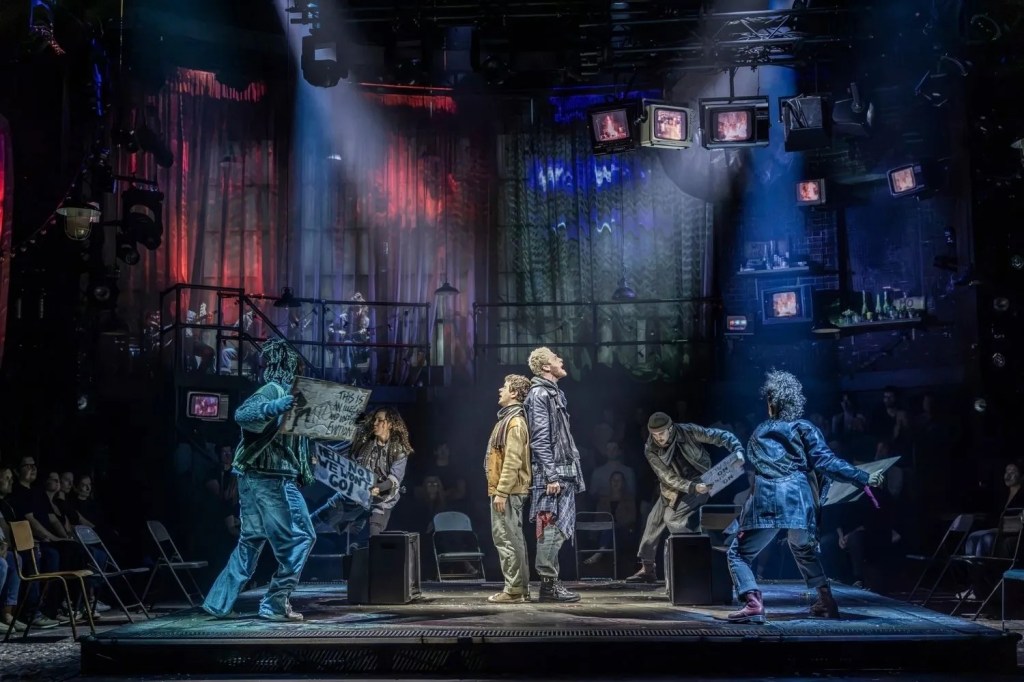
  • FLYBY – ⭐️⭐️⭐️ – adventurous musical/modern opera hybrid impresses but needs work to fully coalesce

    Photograph by Alex Brenner

    FLYBY

    written and composed by Theo Jamieson

    co-created and directed by Adam Lenson

    Southwark Playhouse Borough, London – until 16 May 2026

    running time: 1 hour 45 minutes no interval 

    https://southwarkplayhouse.co.uk/productions/flyby/

    Nobody could accuse director and creative technician Adam Lenson of lack of ambition. He constantly pushes the boundaries of musical theatre, his output ranging from a reclamation of Kander and Ebb’s esteemed Broadway flop The Rink at Southwark Playhouse, and the Brontë sisters set to emo-rock (Wasted at the same address) to a deeply personal reflection on illness and life choices (Anything That We Wanted To Be at the Edinburgh Fringe). He also helmed the UK premieres of Adam Gwon’s Ordinary Days (Trafalgar Studios…remember them?!) and Michael John LaChiusa’s Little Fish at Finborough, a pair of quirky, artsy small scale American musicals whose shadows hang subtly over FlyBy.

    That’s not to suggest that there’s anything unoriginal about this rogue collaboration between Lenson and writer-composer Theo Jamieson, it’s one of the most unconventional musicals I’ve seen in a lifetime of theatregoing. But it undoubtedly owes more in terms of style and content to the off-centre avant garde creations of NYC MT artists who march to the beat of their own drums, than it does to the work of West End and Broadway creatives aiming at the more mass-populist West End and Broadway markets. It has some wondrous things in it, but equally it has plenty to ponder over.

    For starters, there’s the story. Put simply, young couple Daniel (Stuart Thompson) and Emily (Poppy Gilbert) split up pretty traumatically so he heads off into the further reaches of Outer Space (were there no air fares available to a distant corner of this planet?!) leaving her to record increasingly desperate messages of apology on his voicemail. It’s a bizarre premise, and Lenson’s production begins with a trio of scientific types (Rupert Young, Gina Beck, Simbi Akande) pontificating over Daniel’s motivations and looking back to the lead-up of events to his interplanetary breakdown. 

    The chronological order of this tall tale is deliberately messed about with so you have to be pretty on-the-ball to work out where in the relationship any given scene is occurring. Few young actors are as fine as Thompson (the Almeida Spring Awakening, the Globe Ghosts and last year’s Radiant Boy here at Southwark) at creating fragile young men with rich but tormented inner lives and he is as good as possible here, but the writing doesn’t give him much to work with. Gilbert fares worse with the damaged but curiously unsympathetic Emily, coming across as mostly shouty and strident in the book scenes. You mainly find yourself hoping her voice will hold out for the run.

    There’s a shimmering evanescence to Jamieson’s music, by turns delicate then bombastic, that sometimes recalls the current Broadway smash Maybe Happy Ending. It’s not exactly tuneful but, in Jamieson’s own orchestration, it is powerfully theatrical at times and occasionally it’s really gorgeous. His lyrics are terse and effective, but periodically nod at the anything-for-a-rhyme school of songwriting that does nobody any favours, not least Emily whose big solo sees her describing herself as “a killer, an Attila the Hun, an army of one” which is…unfortunate. Some sections even veer towards rap and work surprisingly well.

    Lenson is responsible for the dazzling video design which sees Libby Todd’s simple but attractive set transformed into a hotel room, the sky at night, the interior of a space capsule, and endless banks of ever-increasing data. Visually and aurally, this production is mostly a real treat. Ben Kubiak’s accomplished six piece band are sometimes glimpsed behind the gauzy backdrop, and Ben Jacobs’ lighting is genuinely transformative.

    As the trio of observers who form a kind of boffins Greek chorus sometimes breaking off to play subsidiary characters, Young, Beck and Akande all have potent presences with voices to match. Akande is the most underused but has a unique grace and authority; Young does grand work as Emily’s slippery, manipulative father, while Beck, who’s incapable of giving a bad performance, brings a touching brittleness to her betrayed mother. 

    In its present form, FlyBy feels too esoteric and unfocused to fully satisfy. Giving Daniel the surname Defoe is a cute literary joke but such whimsy as this, and the frankly bizarre ending which features a life-size sea turtle for reasons too random to go into here, doesn’t coalesce with the examination of past trauma and a failing relationship. As written here, Emily and Daniel are (whisper it) just not that interesting, and that’s a problem in a show so centred on them. It’s just pretty hard to care.

    For all its flaws though, FlyBy is legitimately trying to advance music theatre as a form and that needs to be acknowledged and applauded. It needs extensive work to give it more human interest and dramatic drive; not every show needs to be delightful or even comprehensible to all, but currently this musical/modern opera hybrid is more frustrating than engaging.

    April 14, 2026

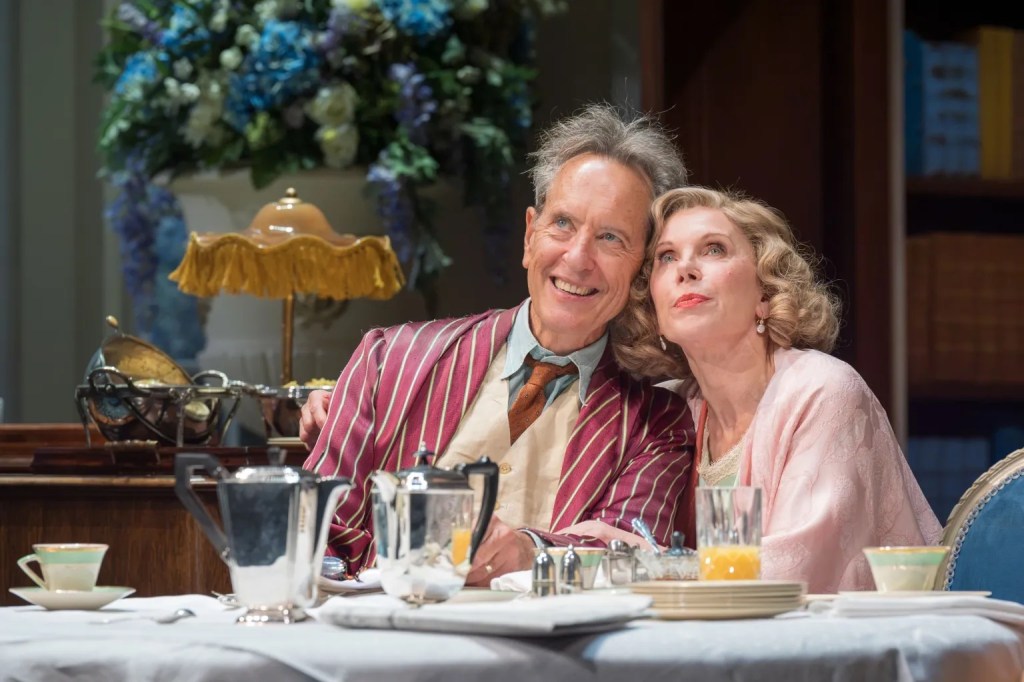
  • A DOLL’S HOUSE – ⭐️⭐️⭐️⭐️ – Ibsen gets a stark, sexy transformation in this unsettling new version

    Romola Garai, photograph by Marc Brenner

    A DOLL’S HOUSE

    by Henrik Ibsen

    in a new version by Anya Reiss

    directed by Joe Hill-Gibbins

    Almeida Theatre, London – until 23 May 2026

    running time: 2 hours 25 minutes including interval

    https://almeida.co.uk/whats-on/a-dolls-house-play/

    Auteur Simon Stone turned Yerma and Phaedra into effectively new plays with, respectively, Billie Piper at the Young Vic and Janet McTeer at the National, or Duncan MacMillan and Thomas Ostermeier modernised Ibsen’s An Enemy Of The People with Matt Smith for the West End in 2024 and then for last year’s Barbican Seagull with Cate Blanchett. Similarly,  this new Almeida A Doll’s House is more a riff on a classic than a straightforward revival. Playwright Anya Reiss (and it’s really her Doll’s House as much as it’s Ibsen’s) and director Joe Hill-Gibbins have both got form in casting canonical texts in a refreshing contemporary light, and they’ve both really gone for it here, with largely pleasing results.

    Not every aspect of Ibsen’s study of feminist worm-turning in a marriage compromised by chauvinism, deceit and financial controversies, lends itself to an update that sees controlling husband Torvald remade as a rambunctious City boy and flighty Nora as his spendthrift trophy wife. As embodied by an entrancing but raw and anguished Romola Garai, this Nora comes across as a particularly strung-out version of the kind of Islington ‘yummy mummy’ one might expect to see in the Almeida audience. But where Ibsen’s heroine forges her father’s signature to secure money for her spouse’s medical treatment, this one has somehow managed to embezzle over £800,000 from some of Torvald’s business clients to pay for his substance abuse rehab. 

    The bang up-to-date treatment renders similarly implausible that a woman with as much personal gravitas as Thalissa Teixera’s superb Kristine, who in this version had been at University with Nora, Torvald and the blackmailing Nils Krogstad, would wind up as an impecunious, glorified babysitter dependent on Torvald for her next career progression. These are areas where Reiss seems constricted by the original Ibsen, but when she allows herself the space and freedom to move more into her own territory, the play becomes really engrossing. Everybody swears their heads off (the words “fuck” or “fucking” are used so often, even in the middle of sentences, that we quickly become inured to them), and nobody except Kristine is particularly likeable. 

    I’m not sure that matters though: Reiss isnt trying to sell these people to us, and neither is Hill-Gibbins’ uniformly strong cast. Collectively, they’re painting here an accurate but unsympathetic picture of modern urban dwellers in love equally with the sounds of their own voices and the moneyed shallowness of their existence. In moments of high stress and tension, or uncertainty, Hill-Gibbins has them on the floor on all fours like caged zoo animals. Hyemi Shin’s set, while suggestive of the basement of an affluent home that’s still being worked in, also has the sense of an arena, or possibly a bear-baiting pit. 

    The shorter second half is more satisfying, but also more distressing, than the first, as the situations Ibsen and Reiss have set up play out with horribly compulsive results. When Torvald’s mask of patronising, self-assured masculinity slips as he learns what Nora has done, the torrent of verbal abuse he unleashes upon her is deeply unpleasant but makes for riveting theatre. Mothersdale and Garai play it like the brilliant creatures of the theatre that they are, entirely without vanity, him a howling, threatening bully, as she physically reacts to his rage as though the blows were physical rather than verbal. 

    Torvald’s transformation from truculent sexist git you wouldn’t want to sit next to at a dinner party to full blown monster, is completed by a deux ex machina plot invention by Reiss that could have been ripped out of present day newspaper headlines. In another departure from the original, Nora has the tables turned back on her in an act of cruel manipulation that alters the ending of the play. This will undoubtedly divide people but it entirely worked for me.

    James Corrigan nails the sweaty desperation and sardonic misery of Nils, whose difficult circumstances are forcing him into using the information he has on Nora’s shady financial activities. Olivier Huband brings warmth and louche charisma to the doctor whose romantic/sexual connections to Nora are more explicit here than usual. Costume designer Alex Lowde dresses everybody in grungily expensive attire that feels perfectly appropriate for these people at this time, and gives Garai a spangled, titillating nurses outfit and lurid porno wig for the offstage party where things start to come to a head. Lee Curran’s lighting bathes everything in queasily expressive, unforgiving washes, relieved only by the twinkling lights of a Christmas tree, a sole source of comfort in amongst the moneyed starkness.

    This is an ambitious reimagining. Ibsen lit the touch paper then Reiss and Hill-Gibbins poured the gasoline on this ultra-modern conflagration of sexual politics, cruelty, treachery and misplaced love. It’s very much a Doll’s House for now and it’s likely to provoke strong reactions. Ultimately, I was pinned to the back of my seat by the power of it.

    April 13, 2026

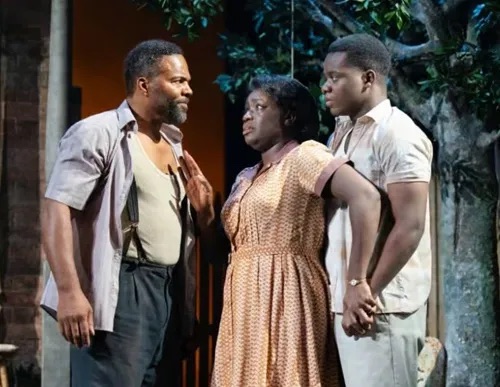
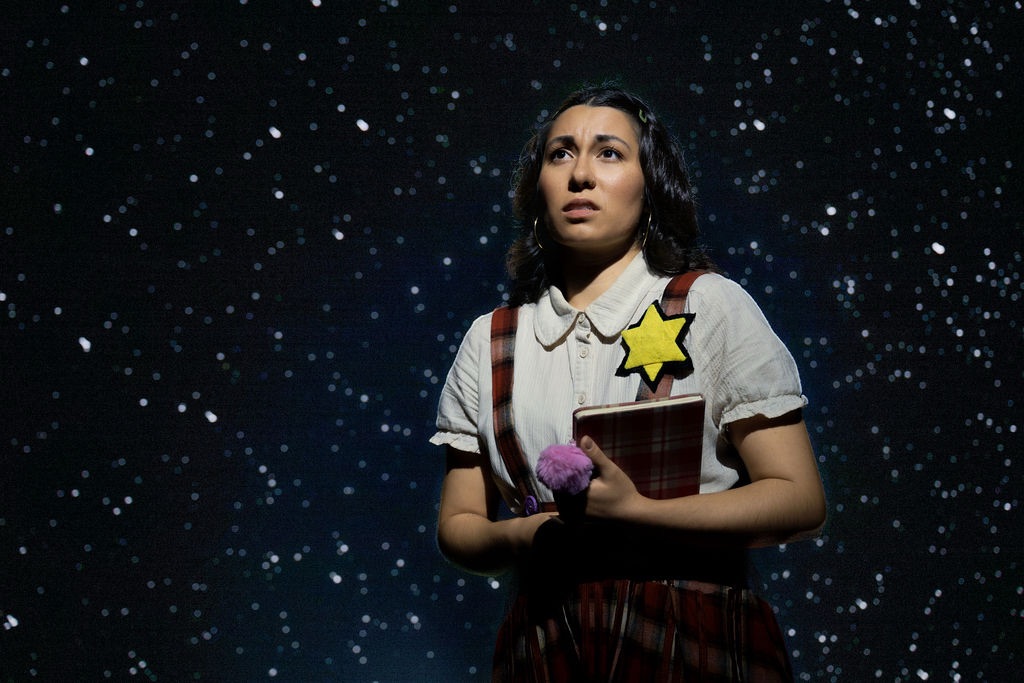
  • CHOIR BOY – ⭐️⭐️⭐️⭐️ – sweet music, raw emotions and coming-of-age collide to satisfying effect in this impressive revival

    Photograph by Mark Senior

    CHOIR BOY

    by Tarell Alvin McCraney

    directed by Nancy Medina; co-directed by Tatenda Shamiso

    Theatre Royal Stratford East, London – until 25 April 2026

    running time: 2 hours 20 minutes including interval

    https://www.stratfordeast.com/whats-on/all-shows/choir-boy

    An American play that’s almost a musical and, at times, almost a concert, Tarell Alvin McCraney’s Choir Boy premiered at London’s Royal Court in 2012 before a Tony nominated Broadway run and enjoying numerous productions across the US. Watching Nancy Medina’s sensitive production, originally seen at Bristol Old Vic in 2023 and now co-directed by Tatenda Shamiso, it’s not hard to fathom the appeal of this unruly but life-affirming, stirring dramedy.

    The play follows a quintet of African American youngsters negotiating the passage from childhood to manhood at the strict but prestigious Charles R Drew prep school where their principal extracurricular outlet is as members of the choir. The choir leader, and the most fleshed-out character, is super-smart gay Pharus (Terique Jarrett, sublime) whose wise-cracking, opinionated exterior masks deep longings and uncertainties. His flamboyance is tolerated by an understanding but professionally restricted headmaster (beautifully played by Daon Broni) on the condition that his sexuality is never acted upon.

    If the other young men -repressed, God-fearing David (Michael Ahomka-Lindsay), gawky, well-meaning JR (Khalid Daley), cocky, jock-y, homophobic Bobby (Rabi Kondé) wounded by the early loss of his Mum- sometimes feel like stock characters in terms of the writing, the performances are so detailed and quirky that it’s easy to overlook. There’s really lovely work from Freddie MacBruce as AJ, Pharus’ roommate and the other character who entirely breaks out of cliché: he’s witty, self-confident both in his personality and his (straight) sexuality) yet raw. He’s also a tremendous ally and friend to Pharus when he needs it most. In a second act scene where he looks after a broken Pharus after all hell has broken loose, initially tentatively but eventually with such kindness, the only sound in a wrapt audience is the sniffing of people overcome with emotion. Jarrett and MacBruce play it with astounding emotional delicacy.

    McCraney’s text meanders a bit, to be honest, but it’s also incredibly rich. There’s a riveting dissection of Black history in the US, specifically as filtered through the spirituals which have handed been down through generations and are now performed by these boys; they stud the evening like jewels of feeling and the voices are magnificent (Ahomka-Lindsay and Daley have solos that make the hairs on the back of your neck stand up); it’s impossible not to be moved. Martin Turner has an amusing, appropriately toe-curling cameo as a well meaning but out-of-touch white former teacher whose awkward determination to get down with the kids is met with understandable scepticism. 

    For all the talking and indeed the singing (Femi Temowo is the excellent musical director and arranger), a pivotal scene is almost entirely wordless which seems a curious choice, as does a swift succession of plot points in the latter half of the play when the script felt more mood than action up until then. The dialogue is soaked in humour and truth though, and is never less than engaging. The staging could ideally do with a couple more actors to better give the sense of a school (though Max Johns’ set is nicely vivid) but it’s pacy and finds the middle ground between entertainment and polemic. 

    Although the Black masculinity tropes and the American boarding school setting are pretty specific, there remains a universality to McCraney’s writing that moves and uplifts. If you’ve ever felt othered or misunderstood, if you’ve ever found kindness in a place where you didn’t expect it to be, Choir Boy will strike a chord deep within you. It ends on an uplifting note, with a hopeful suggestion that Jarrett’s exquisite Pharus will soar through life as he deserves, and that’s pretty much impossible to argue with. 

    April 12, 2026

  • ROWLING IN IT – ⭐️⭐️ – the artist AKA Robert Galbraith gets off surprisingly lightly in this would-be satire

    Photograph by Lucy Hayes

    ROWLING IN IT

    written and performed by Laura Kay Bailey 

    directed by Dominic Shaw

    Kings Head Theatre, London – until 18 April 2026

    running time: 1 hour no interval

    https://kingsheadtheatre.com/whats-on/rowling-in-it-zwy4

    Anybody intrigued by the wittily punning title of Rowling In It who pitches up to the Kings Head expecting a coruscating comic takedown of the divisive J K whose views on transgender people has been the source of much consternation and impassioned discussion over much of the last decade, is in for a bit of a surprise. Laura Kay Bailey’s self-penned solo show, running at barely an hour, is a semi-fictionalised account of what happens when a jobbing actress accepts the challenge of playing J K Rowling in a potentially provocative Edinburgh Fringe play, but it’s more contemplative than savage. The script’s attempts at being even-handed in terms of considering different sides of an argument are commendable but make for rather unsatisfying theatre, at least as handled here.

    Bailey plays the American actress (is this a version of herself?) embroiled in the self-flagellation and soul-searching, as well as the inevitable trial by social media, after being cast as the controversial writer. She also plays everyone else, and it’s here that Dominic Shaw’s tension-free production encounters one of its biggest problems. Bearing a passing physical resemblance to Broadway and US TV star Laura Benanti, Bailey is an engaging, elegant presence, but she doesn’t, at least as yet, have the chameleonic elan to convincingly transform herself into a myriad of characters, including a gross director, a monstrously self-indulgent writer or a sensitive fellow actor struggling with the show’s messy creative processes. 

    Accordingly, the switches between characters sometimes feel fudged and confusing, not helped by Bailey’s grasp on different accents (Scottish, posh English, and so on) isn’t as secure as it might be. This lends Shaw’s staging an unhelpful underrehearsed quality, and the comedy frequently fails to land. Bailey tends to deliver bulky swathes of text towards the floor as though locking eyes with an audience member might put her off her stroke. 

    It’s a fun touch naming the cast and creatives of the play being produced after Harry Potter characters. So, the clueless, drawling American writer is Snape, the enthusiastic young actress cast as Emma Watson is Hermione, a non-binary performer whose role is cut to ribbons during the rehearsal process is Minerva McGonagall, the ghastly producer is Hagrid…you get the idea. 

    The lack of background information on the principal character is frustrating. We find out that she’s originally Texan, that she has a racist grandma who she adores while acknowledging she wishes she wasn’t so racist (like, duh!) and that she has two children. That last tranche of information feels barely relevant, except to justify the borrowing from Jonathan Spector’s masterly 2018 play Eureka Day of the device of having a school parents association’s increasingly tetchy online group chat beamed on to the back wall of the set. It’s quite funny but what has it got to do with being hauled over the coals for playing J K Rowling. This, and the reveal that she had a miscarriage prior to starting rehearsals, make Rowling In It feel like a fragment of a longer, more broadly focussed play.

    Another symptom of this is the inclusion of an unseen character, one Mr V, who keeps phoning and with whom our heroine seems to be in a relationship but about who we find out almost nothing so these moments come across as so much dead air. There’s a lame running joke, mercifully abandoned quite quickly, about her not being able to remember where he’s working but only that it begins with the letter L (Lichtenstein, Luxembourg, Libya…). 

    Pondering that Rowling started attacking trans folks online while menopausal isn’t original or revelatory, and neither does the acknowledgement that such blinkered views can do considerable damage when expressed by somebody with a vast global platform, but that’s about as edgy as this show gets. Bailey seems so determined not to offend anybody at all that the piece has almost no bite or colour. It’s pretty funny though when it depicts a disastrous opening night where a leading performer can’t find their lift while trying to deliver a dynamic, pivotal speech. More of this kind of “when theatre goes wrong” humour wouldn’t go amiss.

    A critic accuses Snape’s Edinburgh play of being flavourless but unfortunately that is a description that also applies to Rowling In It, despite Bailey’s hard work. The ultimate punchline, such as it is, involves Bailey telling her agent that she doesn’t think this should be a one woman show. Unfortunately I’m not sure I do either.

    April 9, 2026

  • SLIPPERY – ⭐️⭐️⭐️⭐️⭐️ – love, sex, food, guilt and death… it’s all served up with sensitivity and masterful craft in this fabulous new play

    Perry Williams and John McCrea, photograph by Ali Wright

    SLIPPERY

    by Louis Emmitt-Stern

    directed by Matthew Iliffe

    Omnibus Theatre, London – until 11 April 2026

    running time: 75 minutes no interval 

    https://www.omnibus-clapham.org/slippery/

    There’s a special kind of theatrical alchemy that happens when a play’s writing, direction, acting and design are in perfect harmony. Watching Matthew Iliffe’s quietly compulsive, note-perfect production of this crackling gut punch of tragicomedy by Louis Emmitt-Stern, I couldn’t help but reflect how seldom it occurs. All the more reason then to hasten to Clapham’s Omnibus Theatre where Slippery is already staking a claim to be one of the best new plays of 2026. There may be more ambitious texts, charting a broader spectrum of human experiences and sociopolitical considerations, but if this year we get another London production that so stylishly achieves the goals it sets itself and with such detail, biting humour and emotional authenticity, it’ll be a lovely surprise.

    Slippery is about a reunion of sorts. Jude (John McCrea) and Kyle (Perry Williams) were hedonistic club kids, and boyfriends, a decade earlier. They lost touch after splitting and apparently getting clean of drink and drugs, the former accusing the latter of abandoning him. Jude has had an accident and still lists Perry as his emergency contact despite now grieving for a different partner who died in the intervening years. Perry has his own things going on, including an increasingly successful career as an illustrator of children’s books, but here we are at 3am in Jude’s luxurious but soulless, (and not-fully-unpacked) Canary Wharf pad (gleamingly impersonal set design by Hannah Schmidt), and the men have just returned from A&E.

    At first at least, Kyle is conciliatory, wry, nice, while Jude is brittle and defensive, clearly damaged spiritually as well as physically. Emmitt-Stern’s dialogue, urbane, snappy and exquisitely turned but shockingly raw when it seeks to be, bears the unmistakable hallmark of truth, masterfully suggesting the hurt in the silences and the frequent gulf between what people say and what they actually mean in difficult, emotionally charged situations. A satisfying vein of jet black humour runs through the script, which director Iliffe and his actors mine for all it’s worth while never losing sight of the sadness and antagonism between the two men…or the genuine affection.

    McCrea, brilliant, combines waspish and vulnerable to devastating effect, and Williams invests Kyle with winning warmth and charm but also a watchful, unreadable ambiguity, the reasons for which become clearer as the play progresses. The chemistry between the two of them is extraordinary (this show is properly sexy!) and the play’s title accurately describes the constantly shifting power dynamics and attitudes of this pair of men whose volatile compatibility changes almost by the minute.

    Iliffe (who also helmed one of the other greatest two handers I’ve seen in the last decade, 2022’s Bacon for the Finborough) marshals all this with a lightness of touch, mastery of pace, and attention to detail that serves the writing exquisitely. Great direction for essentially naturalistic pieces shouldn’t make viewers overly aware of the craft and that is the case here. At the same time though, every glance matters, every throwaway quip, every subtle gradation in Ryan Joseph Stafford’s lighting…every single thing works together, from the weighty silences to a chaotic food fight to the acidic disappointment emanating from somebody determined not to show how hurt they are. 

    Neither Iliffe nor his actors strike a single false note, and what starts out as amused eavesdropping on an uneasy former relationship swiftly and steadily becomes absolutely riveting. We may not always be clear on what’s motoring Jude and Kyle’s interactions, but they consistently are, so we can relax into the journey and enjoy it. Thematically, the play is rich and bang up-to-date as the men discuss/bicker over everything from the significance of gay marriage and the dehumanisation accelerated by social media to cooking and careers. The picture of what happens to party people who try to sober up and grow up is painted in bold, neurotic, all-too-credible colours.

    Initially, the bittersweet ending bothered me, as it felt like a bit of an inconclusive cop-out, but having slept on it, I rather think that’s the point: that messy connections between human beings don’t get wrapped up neatly. Go and judge for yourself, but do go…Slippery is world class theatre and if there’s any justice, this whole production will have a successful further life. Tremendous. 

    April 4, 2026

  • RIKI LINDHOME: DEAD INSIDE – ⭐️⭐️⭐️⭐️ – a one woman musical comedy about infertility that works on every level

    Photograph by Elisabeth Caren

    RIKI LINDHOME: DEAD INSIDE 

    Soho Theatre – Dean Street, London – until 18 April 2026

    running time: 70 minutes no interval 

    https://sohotheatre.com/events/riki-lindhome-dead-inside/

    Delight (ours) and pain (hers) sit side-by-side in Dead Inside, with empathy squeezing in somewhere in between. American actress and musician Riki Lindhome’s unique, self-penned show is a fusion of musical comedy, confession, bravery and bat-shit crazy. It’s wholly irresistible but cuts surprisingly deep when it needs to. 

    The depth is essential, indeed inevitable: Dead Inside deals with that most sensitive and personal of topics, female infertility, specifically as experienced by Lindhome, whose sunny, kooky stage persona occasionally fissures to reveal authentic, but understandable, darkness. She’s a self-described “delusional optimist” but there’s a whole lot more to her than that, including killer comedy chops and an ability to write and perform satirical songs that suggest a sexually explicit, American Victoria Wood.

    Equipped only with a guitar, a flute, a keyboard (all of which she plays), a video screen, some bubbles and a winning presence, Lindhome describes the various processes and psychological challenges involved in being a woman longing for a child while being acutely aware that time is ticking by. She wryly rejects the patronisingly cosy term “fertility journey”, reasoning, rightly, that men don’t couch their health struggles in such a way, i.e. nobody ever talks about their “gout journey”.

    As well as her screen work as an actress, Lindhome is half of a comedy-folk duo Garfunkel And Oates: her consummate skills as musician and comedienne are here coupled with raw lived-life experience, a commendable willingness to laugh at herself and an even more commendable eschewing of self-pity. Collectively, this makes her the perfect conduit through a thorny, potentially distressing story that examines how society judges childless women as much as it’s about biological need. Miscarriage, channelling anger through avoidance, Disney Princesses, despair…it’s all laid out here. Lindhome is tremendously likeable, shuffling on with the insouciance of a charismatic goofball whose self-deprecating manner masks a lethal wit and intelligence that periodically get unleashed to devastating effect.

    The humour and indeed the genuine, uncomfortable humanity are all the more potent because they’re punctuated by attractive parodic songs that seem sugary-sweet…until you listen to the potty-mouthed lyrics. Lindhome puts them over with a twinkle-eyed charm that often looks on the verge of tipping over into delicious madness. The Sound of Music number which retells the story from the point-of-view of the increasingly embittered Baroness is an absolute masterpiece. My only criticism is that the sound could be better, the music overwhelming Lindhome’s pleasing but not exactly power-packed vocals.

    Dead Inside is a deceptively clever show, making something bracingly entertaining, but never trivial, out of a traumatic, troubling topic. I would imagine it’ll feel like finding a friend for many women, though for others it may be too painful to watch. It ends on a satisfying nemotional note, entirely earned, that I won’t spoil here. This Soho season, following on from acclaim at the Edinburgh Festival, will surely see Riki Lindhome’s British fan base expand, she’s wonderful.

    April 3, 2026

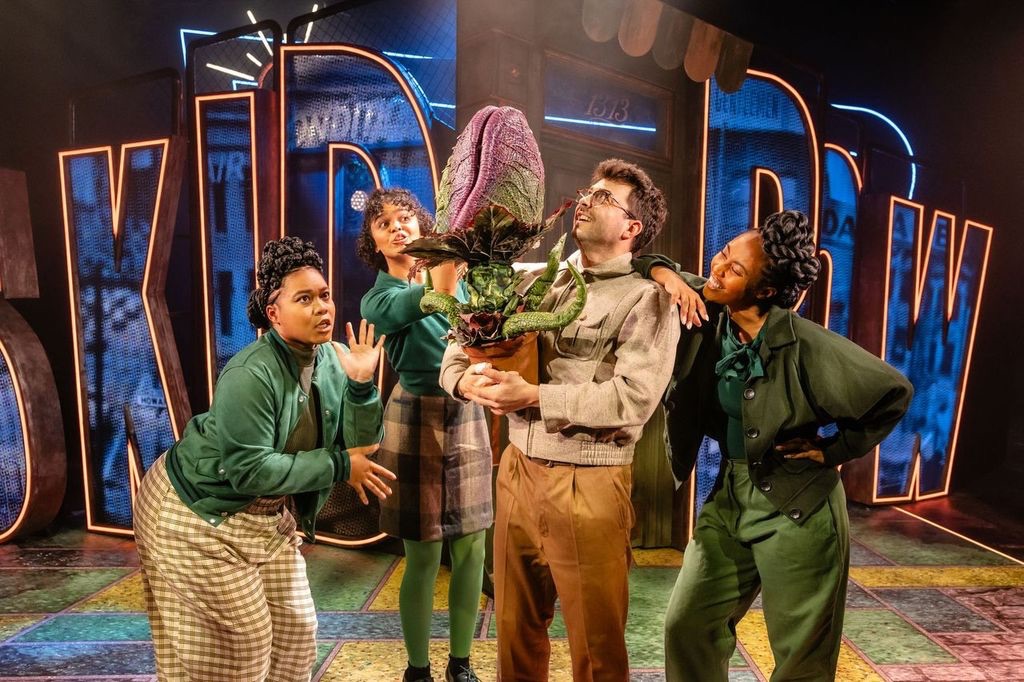
  • JAJA’S AFRICAN HAIR BRAIDING – ⭐️⭐️⭐️⭐️ – a glorious collection of vivid characters and a dramatic sting in the tail make this Broadway comedy-drama fly

    babirye bukilwa and company, photograph by Manuel Harlan

    JAJA’S AFRICAN HAIR BRAIDING

    by Jocelyn Bioh

    directed by Monique Touko

    Lyric Hammersmith Theatre, London – until 25 April 2026

    running time: 90 minutes no interval 

    https://lyric.co.uk/shows/jajas-african-hair-braiding/

    Playwright Jocelyn Bioh and director Monique Touko scored a big hit for the Lyric Hammersmith in 2023 with the delightful, thought-provoking School Girls: Or, The African Mean Girls Play. The unique combination of ferocious energy, life-enhancing humour and a hard-hitting examination of colourism ensured that the New York import (first seen off-Broadway in 2017, and due to receive a Broadway production this autumn) found resonance and a fan base here in London. Can lightning strike twice, with most of the same creative team collaborating on the UK premiere of Jaja’s African Hair Braiding, Bioh’s Tony nominated 2023 comedy? The answer, judging from the enthusiastic, highly vocal, reaction of last night’s audience for Touko’s vital production, is a resounding, overjoyed yes. 

    The year is 2019, during Trump’s first presidential term, so the shadow of ICE hangs over the lives of the women working in the Harlem hair braiding salon that gives the play its title. Had Bioh set her script more recently, it would probably be more anxiety-ridden, but once again she has come up with a script that manages to be simultaneously potently political and cracking entertainment, with the emphasis on the latter. 

    Jaja’s African Hair Braiding salon is brought to life in a gloriously vivid revolving scenic design by Paul Wills, augmented by Dick Straker’s eye-catching video work and Simisola Majekodunmi’s lighting. In this apparently safe space a team of women, mostly African immigrants, work, gossip, opine, confide, complain, and lift each other up. The wigs designs by Cynthia De La Rosa are particularly remarkable, as actors playing salon customers are transformed pretty much before our very eyes.

    A party-like atmosphere pervades Touko’s staging: scene transitions are indicated by loud blasts of Afrobeat and undulating, booty-shaking choreography (lovely work by Kloé Dean), the fourth wall is periodically broken to acknowledge the howls of merriment and/or outrage coming from the deeply invested audience… The boiling hot Manhattan summer is convincingly evoked, and costume designer Jessica Cabassa has created some terrific looks. For the most part, the acting style is as bold and broad as the writing and the characters’ visual impacts, but rooted in just enough reality that when an emotional wallop is required, it registers most satisfyingly. 

    Beyond the bickering and outrageousness, there’s a palpable sense of the precariousness of these women’s existences. If the genuine shock in the play’s final couple of minutes makes for a jarring change of tone, I think that’s partly Bioh’s point: that life can change irrevocably in a split second. It’s a shame that the show gets wrapped with almost indecent haste but equally it’s commendable that Bioh doesn’t try to parcel it all up neatly or to provide easy answers, and it’s a great tribute to her writing that in just ninety minutes of stage time, we come to care deeply about most of these women. 

    The cast are clearly having a ball. Dolapo Oni is a formidable delight as Bea, whose low level grievance that Jaja’s shop was originally her idea informs her overall attitude. Her friendship with fellow stylist Aminata (played with irresistible comic relish but real heart by babirye bukilwa) is beautifully realised, as is her exasperated rivalry with the flighty, freewheeling Ndidi, a co-worker who seems to be stealing all her clients (Bola Akeju, glorious). Jaja herself appears only briefly, resplendent in her gaudy wedding gown en route to her nuptials with an unseen white guy whose main attraction may be the size of his wallet, and Zainan Jah plays her as a head turning force of nature.

    There’s lovely work from Sewa Zamba as Jaja’s second generation African-American daughter Marie, terrified of telling her mother that she intends to pursue a career in writing rather than anything more lucrative. Jadesola Odunjo is equally fine as Miriam, the Sierra Leone-born salon worker whose kindness is matched by an unexpected fortitude and whose back story strikes a note of genuine pathos amongst  all the sound and comic fury. Three of the actors (Dani Moseley, Renee Bailey and the sole man, Demmy Ladipo) play several roles each, and a huge part of the fun is in observing their swaggering transformations.

    Jaja’s African Hair Braiding isn’t quite perfect – it takes maybe a little too long to find its substance and dramatic meat, then deals with it too perfunctorily – but it’s a rollicking good time. As a celebration of the pervasiveness and hardiness of African culture and female empowerment and camaraderie, it’s an undoubted triumph. It also raises interesting, troubling points about what might be necessary to cling on to a life in a country that isn’t as welcoming as you might have hoped, which ensures that the play registers as something deeper and richer than just an urban African-American spin on Steel Magnolias. Touko infuses it all with ripe theatricality and comic aplomb. This feels like a real winner. Joyful.

    March 29, 2026

Next Page

Blog at WordPress.com.


Loading Comments...
 

    • Subscribe Subscribed
      • ajhlovestheatre
      • Join 59 other subscribers
      • Already have a WordPress.com account? Log in now.
      • ajhlovestheatre
      • Subscribe Subscribed
      • Sign up
      • Log in
      • Report this content
      • View site in Reader
      • Manage subscriptions
      • Collapse this bar