Skip to content

ajhlovestheatre

  • Home
  • About
  • Contact
  • Blog

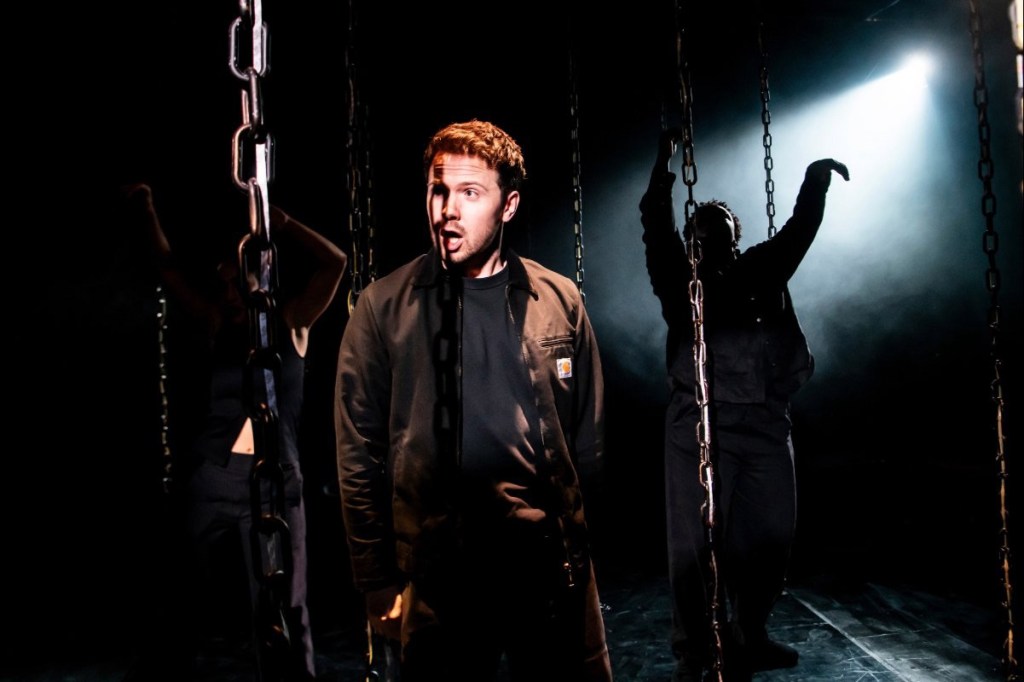
  • TEETH ‘N’ SMILES – ⭐️⭐️⭐️ – the central performance is astounding but David Hare’s play with rock songs is showing its age

    Rebecca Lucy Taylor, photograph by Helen Murray

    TEETH ‘N’ SMILES

    by David Hare

    songs by Nick Bicât (music) and Tony Bicât (lyrics)

    additional music and lyrics by Rebecca Lucy Taylor

    directed by Daniel Raggett

    Duke of York’s Theatre, London – until 6 June 2026

    running time: 2 hours 20 minutes including interval 

    https://www.thedukeofyorks.com/teeth-n-smiles

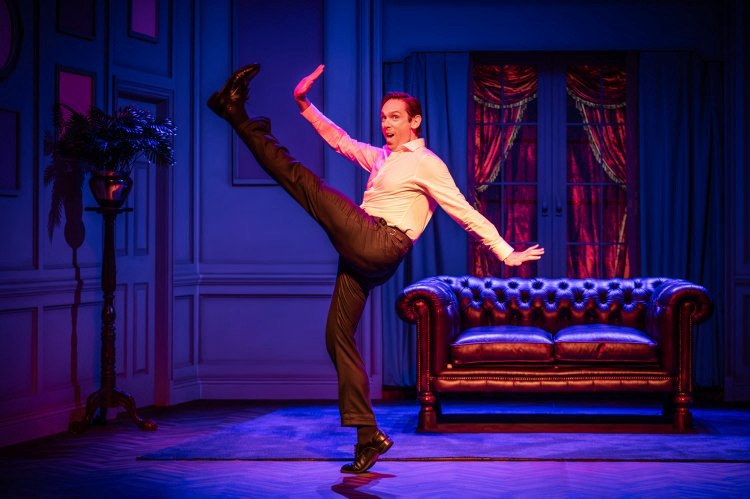
    “There’s something inside me that won’t lie down” howls Maggie Frisby, the on-the-ropes would-be rock goddess whose spectacularly dissolute downfall is the crux of David Hare’s mid-1970s play. As played by Rebecca Lucy Taylor (aka acclaimed singer-songwriter Self Esteem) in this appropriately grungy, full-throttle revival by Daniel Raggett, it’s impossible not to take her at her word. This woman has been wrecking herself with booze (she’s first seen being carried in a stupor from the auditorium to the stage) for years and is as unreliable as she’s talented, but is never out-for-the-count for long. 

    Taylor is a marvel: a one-woman whirlwind of raucous energy, deft comic timing, bereft desolation and wild lunacy, with a steel-lunged belt that pierces the soul before subsiding into something like a whisper. She’s danger and earthy charisma personified, and does much to elevate Teeth ‘n’ Smiles, a dated but interesting piece that in lesser hands than the ones involved here, could easily devolve into being a boozy, drug-fuelled dirge studded with the kind of rock music that foreshadowed punk before being effectively killed off by it.

    Bearing a superficial resemblance to last year’s smash hit Stereophonic, also seen at the Duke of York’s, Hare’s play unfolds over one tumultuous night as a troubled rock band, led by Maggie, implodes spectacularly while playing the Cambridge University Summer Ball. The meandering script is shot through with sour, ironic wit, and boasts a fascinating gallery of men behaving badly (the sole other female character than Maggie is woefully underwritten). The state-of-the-nation talk feels like a precursor to much of Hare’s politically charged work later in his career.

    The year is 1969, and Raggett’s staging and Hare’s writing capture the gleeful nihilism of a period still crawling out of the long shadows cast by the Second World War: when asked about the volume of their gigs, a band member responds “the louder we play the sooner we won’t be able to hear”, and their morally ambiguous manager (brilliantly played by Phil Daniels) has a vivid, gruesome speech recalling his presence at the WW2 bomb strike on Piccadilly’s Café de Paris.

    Perhaps to reflect the fact that most of these characters are out of their minds for much of the play, twenty-something Hare gave them dialogue that sounds less like conversation and more like a series of (frequently outrageous) non sequiturs. It feels authentic, and certainly reflects the antediluvian attitudes of the time period the play’s set in, but it doesn’t elicit much interest in, or sympathy for, the individuals involved.

    The cast of actor-musicians is terrific though. Michael Abubakar, Samuel Jordan, Jojo Macari and Noah Weatherby make a wonderfully Rabelaisian crew, and there’s strong, sensitive work from Michael Fox as Arthur, the songwriter with a complicated connection to Maggie. Roman Asde is funny and a little sad as a bedazzled student in way over his head, and Aysha Kala finds more substance to the role of Laura, the group’s general dogsbody and Arthur’s alternative romantic interest, than one suspects there is in the actual writing.

    Raggett’s production has an appropriately makeshift feel but is actually laser- sharp in focus, and technically superb. The murky darkness of Chloe Lamford’s set is pierced by shards of unforgiving lighting (Matt Daw), and for all the chaos of the offstage sections it’s usually clear where the eye should be drawn to. Ben and Max Ringham’s sound design has an authentic rock’n’roll feel, and Alex Mullins’ costumes are period perfect, especially flamboyant for Taylor. A pivotal, genuinely moving scene between lovelorn Arthur and defeated Maggie plays out within a sheet of dry ice to evoke smoke, illuminated only from behind, by the citrus left-over glow of an arsonist’s fire; it’s all the more effective and compulsive because we can’t see Fox and Taylor’s faces, and we are entirely drawn in.

    For all the expertise in Raggett’s staging, the talent of the company, the authenticity of Nick and Tony Bicât’s songs, and the unflinching fire of Taylor’s performance, Teeth ‘n’ Smiles leaves us with a nagging question. Why revive this play now, aside from the fact that this is its fiftieth anniversary? It’s a trawl through the sexist, seamy underbelly of the music industry but there’s nothing inherently revelatory here. As a play, it’s dramatically inert, albeit intermittently engaging….but as a star vehicle for the astonishing Rebecca Lucy Taylor, it’s undoubtedly a success.

    March 26, 2026

  • VINCENT IN BRIXTON – ⭐️⭐️⭐️⭐️⭐️ – Nicholas Wright’s justifiably acclaimed Van Gogh drama in an exquisite revival

    Jeroen Frank Kales and Niamh Cusack, photograph by Johan Persson

    VINCENT IN BRIXTON

    by Nicholas Wright 

    directed by Georgia Green

    Orange Tree Theatre, RIchmond – until 18 April 2026

    running time: 2 hours 20 minutes including interval 

    https://orangetreetheatre.co.uk/whats-on/vincent-in-brixton/

    There’s a seam of magic running through the melancholy and the humdrum in Nicholas Wright’s remarkable drama, first seen at the National in 2002 before hitting the West End and Broadway. This intimate piece is now revived in-the-round by Georgia Green at Richmond’s Orange Tree Theatre, and the balance between the earthy and the ethereal is exquisitely managed. If D H Lawrence had written a play about a youthful van Gogh’s brief residence in London before becoming a fully fledged artist, and had had access to a really good editor, one imagines it would have been something like Vincent In Brixton. 

    Stage or screen depictions of artists frequently come unstuck as they tend to be either overly precious or downright exploitative, their central figures appearing banal and/or two dimensional. Wright neatly sidesteps all this however by focusing on Vincent van Gogh as a young man, newly arrived in 1870s London to work for an art dealer, not yet a creative but with plenty of opinions on art and artists, and the writer does so with a wondrous lightness of touch. That life-enhancing delicacy is all the more surprising  and impressive since the play is as much about depression and the intertwining of inspiration and despair as it is about art. This suggests that Vincent In Brixton could be a chore to sit through, but that’s unequivocally not the case.

    As played here by Jeroen Frank Kales, van Gogh is wonderfully gauche: tactless, watchful, almost painfully direct but also puppyishly enthusiastic. If this delightful but frustrating young man were alive now, his neurodivergence might be obvious, but in less enlightened times he’s regarded with a degree of suspicion and annoyance. Kales brilliantly conveys his mixture of guilelessness with the ruthlessness of a loner. 

    The play’s leading role isn’t really van Gogh, but rather Ursula Loyer, the progressive-thinking, middle aged widow with whom Vincent lodges, shaken out of fifteen years of mourning by the presence of this unconventional young Dutchman. Ursula clearly suffers from bouts of severe depression -something simultaneously managed and glossed over by her daughter Eugenie (Ayesha Ostler, winningly no-nonsense in the role created by Emily Blunt at the NT) and her other lodger, aspiring painter Sam (a hugely likeable Rawaed Asde)- but blossoms under the light of Vincent’s unexpected romantic attention. In a beautiful performance, so natural it barely feels like acting but so emotionally true that it’s hard to watch at times, Niamh Cusack charts Ursula’s progression from brisk pragmatism to furtive but unbridled joy, before reaching a state of almost vegetative sadness tinged with real, raw anger.

    Cusack is unforgettable but so was Clare Higgins in Richard Eyre’s original London and New York stagings; Wright has created one of the most complex, richly textured leading female roles in modern drama, one pleasingly open to considerable interpretation. Higgins was saturnine yet warm, while Cusack feels more fragile, yet kinder and more open, and she becomes positively girlish post-seduction, vitally embodying Vincent’s assertion that “no woman is old so long as she loves and is loved”, where Higgins luxuriated in a womanly sensuality. It’s fascinating to note that both contrastingly different approaches work equally as well as each other.

    One aspect of Green’s production that is an active improvement on Eyre’s is in the presentation of Anna, Vincent’s determined younger sister, arriving in the second act as a forthright whirlwind of puritanical judgement and organisation to sort out her troubled sibling. Originally she felt like a fugitive from entirely another play, providing jarring comic relief. Not here though, in a bracingly funny but bruisingly truthful, and altogether more authentic-feeling, performance by Amber van der Brugge, looking like a Vermeer painting made flesh, she’s simultaneously appalling and sympathetic, and a very compelling figure.

    Wright’s script and Green’s tender, powerful staging, designed with economical flair by Charlotte Henery and lit with the perfect combination of gloom and enchantment by Lucía Sánchez Roldán, satisfyingly include visual motifs from van Gogh’s later art works. There’s also verbal foreshadowing both of the art and of Vincent’s subsequent psychological issues. 

    Vincent In Brixton is perhaps guilty of the same accusation that gets levelled at Stoppard, namely that it’s theatre that makes its audience feel clever, in this case particularly anybody with a smattering of art history knowledge. Does that really matter though? This is a thoroughly engrossing evening, a romantic fantasia rooted in harsh realities, and a nuanced riff on the life story of a tragic, multi-layered artistic figure. The entire run is currently sold out but keep trying for returns, this really is glorious.

    March 22, 2026

  • CHILDREN OF THE NIGHT – ⭐️⭐️⭐️ – there’s talent galore in this wild ride through ‘90s Northern clubland

    Charlotte Brown and Danielle Phillips, photograph by Marc Brenner

    CHILDREN OF THE NIGHT 


    by Danielle Phillips 


    directed by Kimberley Sykes


    Southwark Playhouse Borough – The Little, London – until 4 April 2026


    running time: 90 minutes no interval 

    https://southwarkplayhouse.co.uk/productions/children-of-the-night/


    Danielle Phillips’ raucous debut play burns with the fire of blazing, unfettered talent. Children Of The Night is crude, raw, big of heart and loud of mouth. It owes a debt to Jim Cartwright both for its salty, gobby poeticism as well as its episodic structure, but it has a ferocious energy that feels all its own. 

     If you’re looking for finesse and subtlety, this isn’t your show. Kimberley Sykes’ staging has an ‘in ya face’ sensibility that’s appropriate to the writing but threatens to verge on the tiring and repetitive, despite the commitment of the performances.  Phillips stars in her own work, playing amateur DJ and former clubbing wild child Lindsay looking back on a decade of debauchery as the clock ticks down to the dawning of the year 2000, and she’s as full throttle and fearless an actor as she is a writer. She’s joined by Charlotte Brown and Gareth Radcliffe, both delivering lovely, vivid work as, respectively, Lindsay’s academically gifted best friend Jen, and Terry, her Dad, himself a former clubber.

     Children Of The Night gets off to a refreshing, energised start as it recalls the hedonistic nightlife of 1990s Doncaster (here affectionately referred to as Yorkshire’s answer to Vegas). Snatches of clubbing bangers pulse through the theatre (boisterous sound design and music by Ben McQuigg) and Jennifer Kay’s movement direction evokes the sweaty euphoria of a heaving dancefloor. Phillips’ youthful, wildly enthusiastic Lindsay eulogises her hometown and it seems that we are going to be in for an unusually uplifting portrait of working class life where everyone is, despite financial and health woes, basically having an ongoing party.

     Hold that thought though. The alco-pop fuelled optimism of the first section, punctured only by some unease between Terry and teenage Lindsay over her absent mother, is a bit of a red herring. It turns out that Phillips is on about something much bleaker and darker. Under the gaudy façade of twirling glitterballs, roving multi-coloured spotlights (suitably unrestrained lighting design by Jessie Addinall), flailing limbs and thundering beats, Lindsay’s partying is spiralling out of control; with the excessive drinking and rampant promiscuity, her social life is starting to resemble a death wish more than a good time, driving a schism between her and her father and best mate. On top of that, Jen (who is of Chinese parentage) is on the receiving end of racist abuse, and there is a disturbing outbreak of HIV infections amongst heterosexual revellers. The play slaloms from joyful chaos to the harrowingly grim with almost indecent haste.

     Sharp tonal changes can be hugely effective; that is only intermittently the case here, but there is no doubt that Phillips is a bold, gifted writer and performer. The transition between, and crossover of, heightened, poetic language and the potty-mouthed slang of ‘real’ speech is very nicely done. Brown has some beautiful moments as a young woman more sensitive than she initially appears, and clearly on the brink of outgrowing her limited horizons. Radcliffe and Phillips establish the sometimes fractious bond between father and daughter with a winning warmth and accuracy. Hannah Sibai’s abstract set, a bathroom where the walls periodically become translucent to reveal glowing, colour-changing worms of neon, is a little cumbersome but economically suggests the rapidly changing locales.

     Shapeless but dynamic, and with a disappointingly inconclusive ending, Children Of The Night is part celebration, part examination of the intensity and durability of female friendships, and part lament for a time now lost. The lack of sentimentality is commendable, as is the unflinching willingness not to over-sell the characters to us: these are real, flawed humans. If ultimately it’s not clear what the point of the play as a whole is, the sheer talent on display provides an invigorating jolt.


    March 18, 2026

  • IT WALKS AROUND THE HOUSE AT NIGHT – ⭐️⭐️⭐️ – the build-up impresses more than the pay-off but this horror thriller is a technical marvel

    Photograph by Tommy Ga-Ken Wan

    IT WALKS AROUND THE HOUSE AT NIGHT

    by Tim Foley

    directed by Neil Bettles

    Southwark Playhouse Borough – The Large, London – until 28 March 2026

    running time: 90 minutes no interval 

    https://southwarkplayhouse.co.uk/productions/it-walks-around-the-house-at-night/

    The tremendous West End success of Paranormal Activity (already confirmed for a return season later this year) and the ongoing tour of The Woman in Black following a three decade London run suggests that audiences are still more than willing to pay good money to be scared out of their wits. The horror genre in theatre gets another creditable addition with this chiller, already a success in the regions and now traumatising sell out audiences in Southwark. 

    It Walks Around The House At Night is a good, scary time in the theatre but it ends up being a victim of its own ingenuity. Tim Foley’s script and Neil Bettles’ production (both as staging and in terms of the quite brilliant technical elements, and more on those shortly) do such a terrifically creepy job of setting up the premise and story that when the denouement comes it’s inevitably a bit of an anticlimax, albeit a hysterical one. 

    George Naylor plays unemployed actor Joe, seconded from his job in a gay bar by a wealthy, mysterious gent to come to a remote manor house for a week to pretend to be a ghost nightly walking the perimeter of this country pile for the entertainment of the strangers nieces. It’s an unlikely but intriguing premise but Joe turns out to be an unreliable witness with more than a few personal issues. He’s embittered by his flailing acting career and his break-up from posh boy Rufus (who he nicknames, not entirely affectionately, Dufus), is up to his eyeballs in debt, and has a troubled family history. He also has a couple of sizeable chips on his shoulder: about class, about a regional theatre writing project that has come to nought. So, yes, Joe is a lot. Is he really being followed when he makes these macabre night walks around the estate, and how many of the night terrors he experiences are actually real, and how many are the products of his fevered, paranoid brain?

    On top of all that he is seriously considering jumping the bones of the rich, hot older man who has brought him to the middle of the countryside for this unconventional job. Naylor commendably doesn’t overdo trying to endear this abrasive, insecure chancer to us. He’s often very funny but also entirely self-absorbed and pretty unkind. If Naylor‘s performance tends to the shouty, his athleticism and precision impresses, and he has a wonderful ability to connect with an audience, even when Joe is being a bit of a jerk.

    Needless to say, almost nothing about Joe’s unconventional work gig is to be taken at face value and Naylor isn’t the only actor involved. Without giving too much away, Oliver Baines brings grace and gravitas to a character called simply ‘The Dancer’ and Paul Hilton, surely one of this country’s greatest but most underrated actors, provides a vivid pre-recorded voiceover for a section that seems to come out of left field. 

    The suggestion of the terror of the unknown is much more potent than the later sequences where all hell breaks loose, almost literally. It’s undoubtedly the stuff of nightmares – Joe’s and the audience’s – but dragging the sinister and forbidding out into the open robs it of some of its power. Foley’s writing, which for the most part skilfully blends irreverent humour with real fear, temporarily becomes disappointingly prosaic. 

    Bettles’ staging doesn’t put a foot wrong though. The set, co-designed by Bettles and Tom Robbins is a shady wonder of skewed perspectives and weird angles, and the lighting and video design by Joshua Pharo is gloriously, dislocatingly ambiguous and atmospheric. Horror thrives on aural stimuli and Pete Malkin’s sound work here is an absolute masterpiece.

    The ending feels like a more malevolent riff on The Woman in Black’s unexpected, bone-chilling conclusion but might have benefitted from a crucial element of it not having been revealed to us before. As with Andy Nyman and Jeremy Dyson’s popular Ghost Stories, the shuddering build-up of suspense proves more exciting than the pay-off. That reservation aside, this is a big fat popular hit that will send fear-crazed patrons out delirious, and deliciously exhausted.

    March 11, 2026

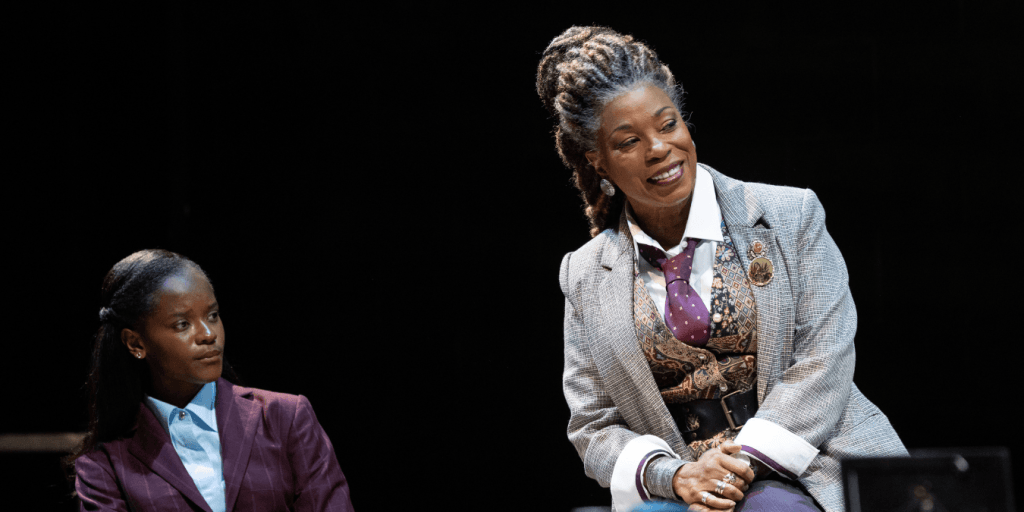
  • MARIE AND ROSETTA – ⭐️⭐️⭐️ – the play’s a little uneven but when the music kicks in, this is heavenly

    Photograph by Johan Persson

    MARIE AND ROSETTA 

    by George Brant

    directed by Monique Touko 

    @sohoplace, London – until 11 April 2026

    running time: 2 hours including interval

    https://nimaxtheatres.com/shows/marie-rosetta/

    If it takes a star to play a star, then that aspect of Marie and Rosetta is in very safe hands. A vibrant Beverley Knight plays “the Godmother of rock’n’roll” Sister Rosetta Tharpe in George Brant’s enjoyable two hander examining the legacy of the musical pioneer who inspired greats such as Elvis, Johnny Cash and Ray Charles, but whose name isn’t as universally well known as it deserves to be. Knight brings dynamic stage presence, exquisite comic timing tempered with a rare emotional availability, and, as expected, roof-raising, majestic vocals. 

    She’s partnered by rising star Ntombizodwa Ndlovu as Marie Knight, Rosetta’s protégée, musical collaborator and (alleged) lover, although Brant’s play (first seen off-Broadway a decade ago in a different production) is curiously noncommittal about exploring that part of their relationship. Ndlovu is excellent, but the role feels underwritten in comparison to the barnstorming opportunities Knight is afforded as Tharpe. 

    The play opens in a funeral parlour in Mississippi in 1946, as Rosetta persuades Marie to tour with her. Brant emphasises the grimness and racism of the mid twentieth century touring circuit in much of America as it pertains to these two Black women, who, almost unbelievably, will be expected to sleep amongst the coffins, no other accommodation being permitted to them. “We not in New York anymore, honey” states Rosetta, “we not in Chicago. Can’t stay in no hotel down here.” The script bounces fleetly and, honestly, a little confusingly through various life events, some traumatic, for both women, before returning to the funeral parlour and a would-be tear-soaked conclusion that feels earned by the acting if not the writing. 

    Brant’s work is at its best when depicting Rosetta’s passion and fervour around her music, as she moves between gospel and the roots of rock’n’roll, and Knight, with her rolling gait and bruised survivor’s vitality, handles it so persuasively. This in turn leads to the sections when Monique Touko’s in-the-round production really excels, and the music takes over. An all-female quartet of musicians, led by Shirley Tetteh, tear through gospel, r’n’b, rock numbers, while the voices holler and soar thrillingly overhead. If the dialogue is sometimes tepid, when the singing starts, Marie and Rosetta becomes red hot.

    The real Rosetta and Marie played instruments and having Knight and Ndlovu mime invisible guitar and piano at various points becomes distracting and enervating, given the amount of music in the production. Despite the sketchiness of the characterisations as written, the contrast in the two women’s energies and outlooks is nicely conveyed. Liam Godwin’s orchestrations are suitably rousing and Tony Gayle delivers a sound design that captures the rawness of rock’n’roll in its infancy and ensures that we all feel the music in our bones. Visually, the show is attractive, driving a decent middle path between glamour and grit (set design by Lily Arnold, costumes by Jodie-Simone Howe, wigs, hair and make-up by Keisha Banya) and it’s beautifully lit by Matt Haskins.

    Marie and Rosetta isn’t a great play: its structure is unwieldy and the storytelling is unclear, and having the audience on all sides is great for the intimacy but problematic for sightlines, at least as staged here. Still, it has genuine heart and humour. It also sheds a welcome light on a pair of neglected musical talents, one of whom really should be spoken of in the same breath as the other ‘greats’. See it for that, for the unforgettable music, and for the performances. 

    March 10, 2026

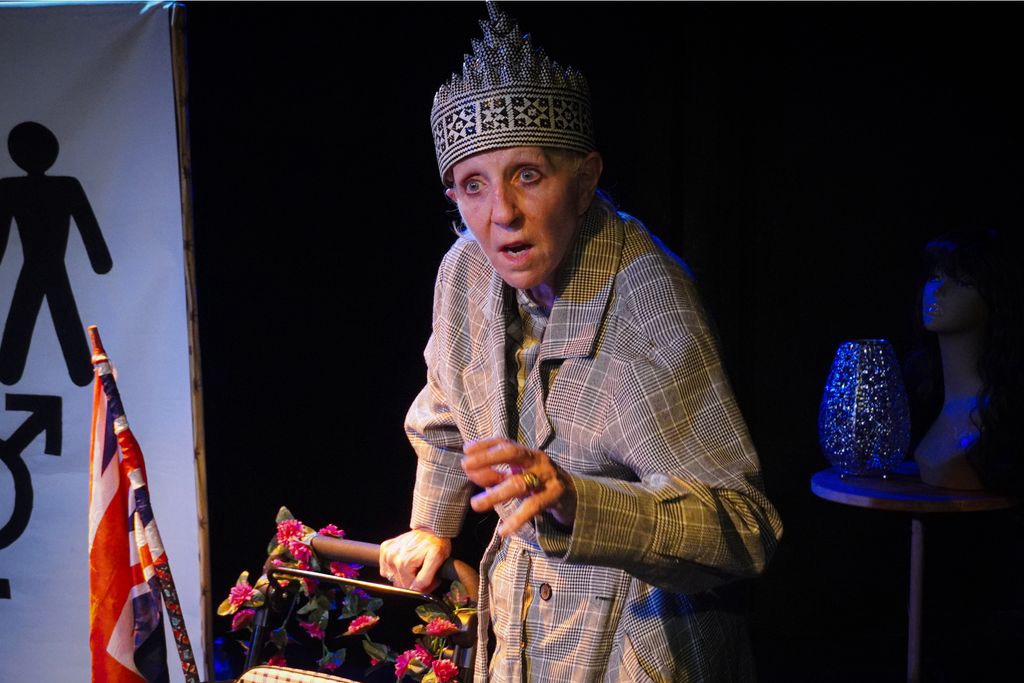
  • OUR TOWN – ⭐️⭐️⭐️ – Michael Sheen stars in Thornton Wilder’s American classic with a distinctly Welsh accent

    Michael Sheen and company, photograph by Helen Murray

    OUR TOWN

    by Thornton Wilder

    directed by Francesca Goodridge

    creative associate: Russell T Davies

    a Rose Theatre and Welsh National Theatre co-production 

    Rose Theatre, Kingston – until 28 March 2026

    running time: 2 hours 25 minutes including interval 

    https://www.rosetheatre.org/whats-on/our-town-m74x

    For all its warmth and lyricism, the 1938 American drama Our Town is a curious choice as inaugural production for the Welsh National Theatre, despite being a natural precursor to that quintessential Welsh text, Dylan Thomas’ Under Milk Wood. Both use a narrator and panoply of characters to bring to life a fictional community, rich in intrigues and eccentricities but revelling in their crucial ordinariness, and with just a touch of the fantastical. One wonders if that’s what inspired WNT artistic director and onstage star Michael Sheen, in tandem with director Francesca Goodridge, to select Thornton Wilder’s metatheatrical masterpiece, in a co-presentation with Rose Theatre Kingston. 

    Sheen already played First Voice, the role immortalised by Richard Burton, in a post-pandemic staging of Under Milk Wood at the National, so maybe didn’t want to revisit it so soon, but there are undoubtedly echoes of that performance in his charismatic turn here as Our Town’s Stage Manager. Where Thomas’ play is marinated in poetic melancholy and humour, the figures deftly, vividly conjured up in a few brilliant lines, Wilder’s writing is blander, more pedestrian, his people thinly characterised. The form of Our Town (revolutionary in the 1930s) strikes me as more remarkable than its execution, which manages to be simultaneously treacly and profound, theatrically heightened yet, until the last of the three acts, dramatically inert.

    Our Town is certainly an important play in the American theatrical canon, with opportunities for a large ensemble cast, but one can’t help wishing that, for this debut Welsh National Theatre show, Sheen and gang had gone for something by an actual Welsh playwright. The production is performed with Welsh accents, and traditional hymns are sung at certain points, but the nods to the Principality feel grafted on. Enthusiastic programme notes by Sheen and Goodridge seek to sell us on the universality of Wilder’s creation, but in practice this iteration doesn’t fully convince. Welsh place names are used inconsistently, which is a bit confusing, and references to dollars, the Appalachians, New Hampshire, Boston etc. sound weird coming out of the mouths of these Welsh people. The accents are generally from South Wales yet some (not all) of the cast pronounce the town’s name (Grover’s Corners) with the pinched gutturality of North Wales. 

    Sheen invests the Stage Manager, conjuring the inhabitants of Grover’s Corners, living and dead, out of thin air, with authoritative charm and wry humour, plus, it must be said, a large helping of grandstanding ham. He certainly owns the stage, and his legion of fans won’t be disappointed. The acting (particularly in the overlong first half; it all gets a bit more subdued in the death-centred final act) tends towards the broad: the energy is admirable, but it does appear that most of these overwrought Welsh-Americans never met a gurn, grimace or double-take they didn’t like. That said, there’s some lovely nuance in the performances of Gareth Snook as a sensitive town undertaker, and of Peter Devlin as a youngster who goes from idealism and romance to disillusioned grief in the course of the play, and Sian Reese-Williams as his tough but tender mother. 

    Our Town is divided into three acts and the decision to perform the first two prior to the interval results in a ninety minute first half that might prove interminable to anybody with a low threshold for down-home charm and whimsy. The last section is genuinely affecting though, as it looks at Grover’s Corners – and by extension all human existence – from both sides of the grave (“the dead don’t stay interested in us living people for long…gradually they lose hold of the earth”.) Wilder’s writing and Goodridge’s staging acquire a welcome gravitas and emotional pull that unsettles but satisfies. I defy anybody not to be moved by the Stage Manager’s ultimate assertion that the only people to truly appreciate life in all its joys and complexities are “saints and poets maybe…they do some.” The whole show ends on a note of rapturous, contemplative stillness.

    Goodridge’s busy, good-looking production is dominated by the fluid, dynamic choreography and movement direction by Jess Williams and Ryan Joseph Stafford’s gorgeous, evocative lighting, all golden glow in the first half and sepulchral pallor in the second. If this show had scenery, most of the cast would be chewing it but Hayley Grindle’s design makes inventive use of ladders and planks to delineate locations. Dylan Jones provides a magical, ubiquitous musical score that occasionally overwhelms the spoken words.

    TV’s Russell T Davies is credited as creative consultant but it isn’t immediately clear what his contribution is. Welsh accents aside, this is a fairly straight rendition of a play that’s wholesome and full of heart, but probably more interesting for its place in American theatre history rather than its content and characters. It’s a respectable start to the much-needed Welsh National Theatre but one hopes that future projects will be packing a bit more hwyl.

    March 5, 2026

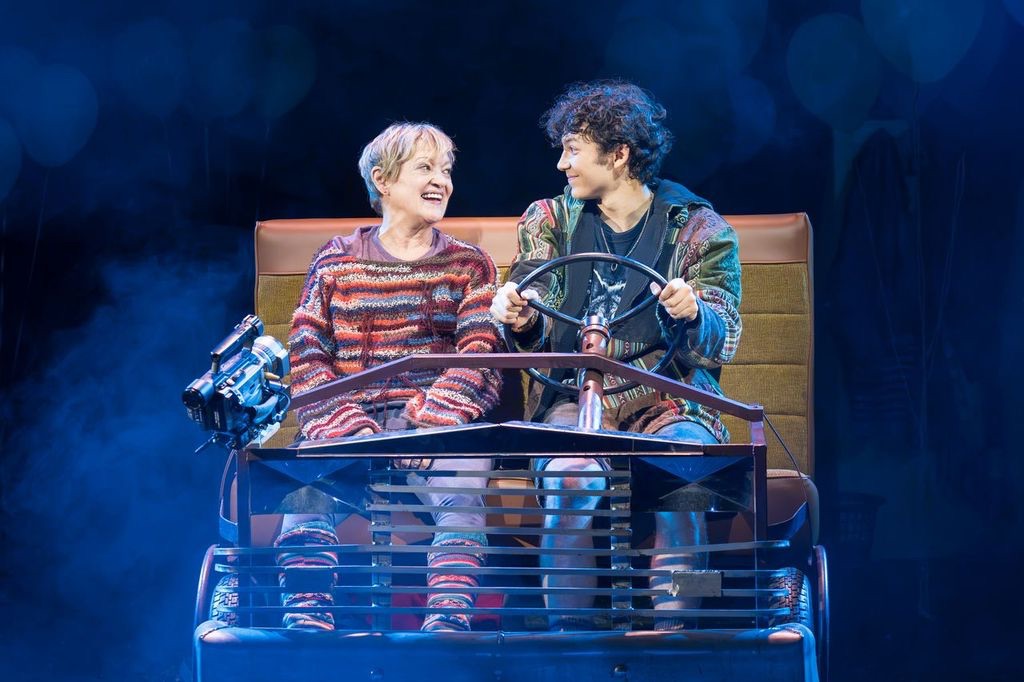
  • THE UNLIKELY PILGRIMAGE OF HAROLD FRY – ⭐️⭐️⭐️⭐️ – folk, fine performances and a very British odyssey combine in enjoyable new musical

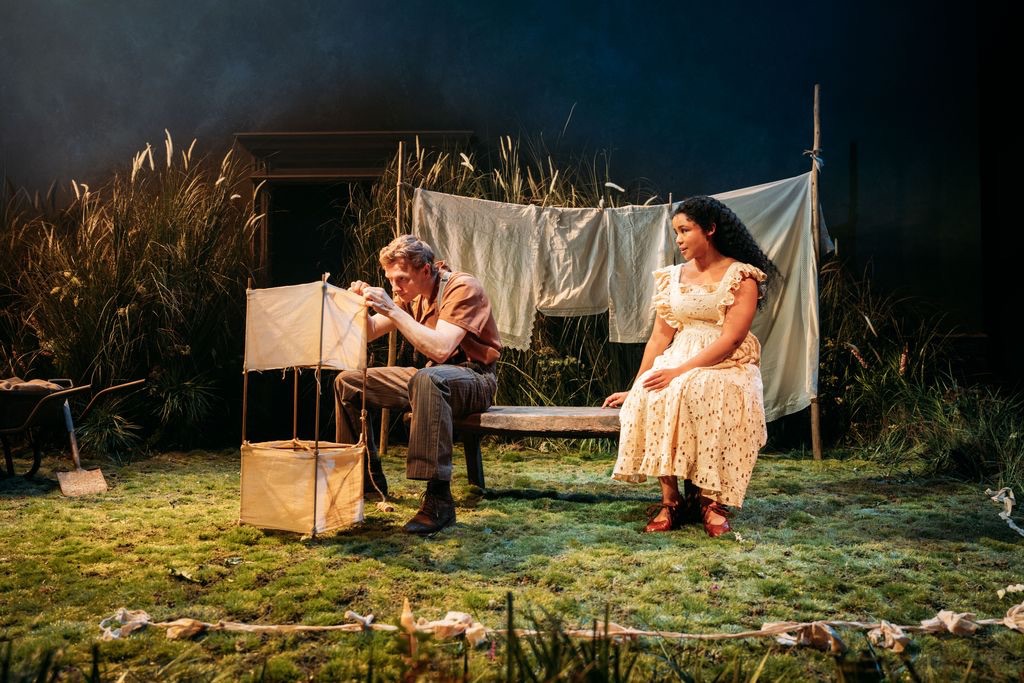
    Noah Mullins and Mark Addy, photograph by Tristram Kenton

    THE UNLIKELY PILGRIMAGE OF HAROLD FRY

    Book by Rachel Joyce based on her own novel

    Music and lyrics by Passenger 

    adaptation co-created by Rachel Joyce, Peter Darling and Katy Rudd

    directed by Katy Rudd

    Theatre Royal Haymarket, London – until 18 April 2026

    running time: 2 hours 20 minutes including interval 

    https://trh.co.uk/whatson/harold-fry/

    Rachel Joyce’s beloved debut novel, The Unlikely Pilgrimage of Harold Fry, first published in 2012, has already spawned a popular film starring Jim Broadbent as the tormented retiree who undertakes an epic walk from Devon up to the Lake District for the unlikeliest but most noble of reasons. Now it’s a big-hearted musical with haunting songs by bestselling folk artist Passenger (real name: Mike Rosenberg) and a whirling, inventive production by Katy Rudd, arriving in the West End beefed-up from its well received Chichester premiere last year. 

    It’s not hard to see the enduring appeal of this slightly tall tale of loss, sacrifice and the importance of appreciating what we have in our lives. It’s sentimental for sure but the emotional pay-offs in the story feel honest and earned: you can’t really argue with a roomful of sobbing patrons. Unlike the eponymous Harold’s journey though, this is no trudge, especially when dressed up with Passenger’s soaring music – all melodic hooks, folk beats and moments of rousing beauty – and in a staging that delights in the possibilities of theatrical storytelling, employing everything from puppetry to video to dance (the stompy, intermittently graceful choreography by Tom Jackson Greaves really hits the mark). 

    As with her work on The Ocean At The End of The Lane and Ballet Shoes for the National, Rudd excels at marrying the mundane (Harold’s wife Maureen stewing discontentedly at home, their next door neighbour discussing how he disposes of grass cuttings…) with the fantastical, as individual stage pictures swirl by, delighting the eye and quickening the pulse. The more whimsical elements of the visual storytelling sometimes feel a little grafted on, but the bold theatricality consistently commands attention. 

    Billy Elliot choreographer Peter Darling is credited as co-adapter, along with Rudd and Joyce, and his influence surely seems to be a factor in making exhilaratingly airborne a downbeat story one wouldn’t automatically expect to sing and dance, and burnishing it with an entrancing showbiz sheen. A scene in a railway station café transforms into a Busby Berkeley-esque tap extravaganza, a roadside garage car wash explodes into a zestful, glittering chorus line….

    The changes in tone sometimes jar, and the whole thing is held together by the plangent uplift of the score and a glorious central performance by Mark Addy, combining irascible charm with almost classical intensity as Harold’s psyche and resolve fall apart. For much of the evening, his disapproving wife Maureen seems like a pretty thankless role by comparison, although the always exquisite Jenna Russell invests her with a flinty wit, and a wonderfully expressive singing voice capable of going from pinched resentment to full-throated emotionalism within a few bars. When she has a change of heart and opens back up to Harold, it’s tremendously affecting, and the sniffles throughout the auditorium throughout the final scene attest to how much the audience has invested in these two flawed but lovable characters. 

    Joyce has adapted her own novel for the stage and, while it’s undoubtedly engaging, Harold’s odyssey has an episodic feel and an occasional lack of clarity as it jumps back and forth in time and introduces peripheral characters only to discard them minutes later. As a musical, it suffers from the commendable but frustrating desire to give apparently every character a song, although the sheer quality of Passenger’s work – at times reminiscent of Benjamin Button and Come From Away, both superior tuners but with a similar emotional wallop – means that at least the extraneous numbers are enjoyable.

    In an excellent supporting cast, standouts include Daniel Crossley, a subtly outrageous delight as a tap-dancing gent with an unusual romantic dilemma, Madeleine Worrall as a kind but pithy Eastern European doctor who helps Harold, and Jenna Boyd, just gorgeous as a pragmatic farmer’s wife and a warm, golden-voiced singing nun (you’ve got to have a nun in a wholesome musical apparently). There’s equally fine work from Peter Polycarpou as a lonely neighbour and Maggie Service as the saintly co-worker who’s at the end of Harold’s arduous journey. Clarion-voiced Nicole Nyarambi stops the show as a diffident garage worker who sets Harold on his way. Noah Mullins brings presence and exciting vocals to the role of a Balladeer whose relevance to the central story becomes darker and more essential as the evening progresses.

    Samuel Wyer’s woody, earthy set ingeniously marries Mother Nature with suburbia. In tandem with Paule Constable’s stunning lighting and video creations by Ash J Woodward that sometimes take the breath away with their simplicity and sheer beauty, the design suggests the wide open wonder of the countryside and the dark, claustrophobic inner workings of a troubled soul with equal vividness and skill. Gareth Tucker’s sound design ensures every lyric is heard although the company numbers could sometimes use a little more oomph. 

    The Unlikely Pilgrimage of Harold Fry isn’t a perfect musical, but it is a richly enjoyable one. It’s a crowd pleaser full of heart, melody and humanity, and Addy is giving a performance for the ages. Go, and remember to bring hankies.

    February 20, 2026

  • 1.17am, OR UNTIL THE WORDS RUN OUT – ⭐️⭐️⭐️⭐️ – world class talents working in a tiny space as the Finborough scores again

    1.17AM, OR UNTIL THE WORDS RUN OUT 

    by Zoe Hunter Gordon

    directed by Sarah Stacey

    Finborough Theatre, London – until 7 March 2026

    running time: 75 minutes no interval 

    https://www.finboroughtheatre.co.uk/productions/117am-or-until-the-words-run-out

    On paper, Zoe Hunter Gordon’s one act, two character, one set tragicomedy looks like a pretty minor work. In performance though, 1.17am, or until the words run out reveals itself as a hugely satisfying watch, more layered than one might expect, packing rich seams of insight, truth and humour into its fleet, relatable seventy five minutes. The writing is terrific: pithy, potty-mouthed, concise and so so true.

    It examines the limits of grief and friendship – surely likely to be primary forces in the lives of much of any audience – through the prism of a pair of uneasy best friends, a family bereavement and a couple of revelations that feel as regretfully credible as they are riveting storytelling beats. It’s female focussed (the entire cast and production team are women) but it speaks to everyone.

    Early twenty-something Katie (Catherine Ashdown) is packing up the room of her late brother, killed in a car crash, when she’s disturbed by her estranged best mate Roni (Eileen Duffy). Ashdown, nervy and defensive, and Duffy, warm and simultaneously strong but vulnerable, entirely convince as a pair of friends whose mutual affection has corroded, but probably not irreparably, through mistrust and miscommunication. It swiftly emerges that Roni has had a sexual relationship with Katie’s brother, though she’s since moved on to cohabiting with a young man with a similar Eastern European background to her own, while Katie struggles with her grief and bewilderment. Meanwhile, a party merrily rages upstairs as Katie’s brother’s flatmates have a last hurrah before eviction. 

    Despite the friends being at loggerheads, Sarah Stacey’s terrific staging is suffused with affection. The audience becomes as invested in these young women reconnecting as the characters themselves are. Neither of the unseen men attached to them are necessarily what they initially seem and the family backgrounds of Katie and Roni are skilfully, naturalistically revealed. Hunter Gordon has an unerring skill for making utterly fascinating the minutiae of apparently ordinary lives, and the performances and production here match her work perfectly.

    Watching the balance of power shift between Ashdown and Duffy is thrilling, as the recriminations and revelations fly. Ashdown could perhaps tone down some of the neurotic body language but she makes vivid and credible the waves of grief passing through this tortured young woman, and nails Katie’s neediness and flashes of anger. Duffy delivers a beautiful portrayal of an essentially kind soul with a wild streak, and the sense of loss and dislocation when she finally reaches the end of her tether is superbly done. Both young actors look like stars-in-the-making.

    Sharp, touching and refreshingly contemporary, this is a really fine addition to the roster of new writing currently on the London stage. Totally worth the trip to Earls Court, and another example of why fringe theatre is so important. 

    February 16, 2026

  • CASH ON DELIVERY – ⭐️⭐️⭐️ – belly laughs and benefit fraud equal crowd-pleasing post-dinner entertainment

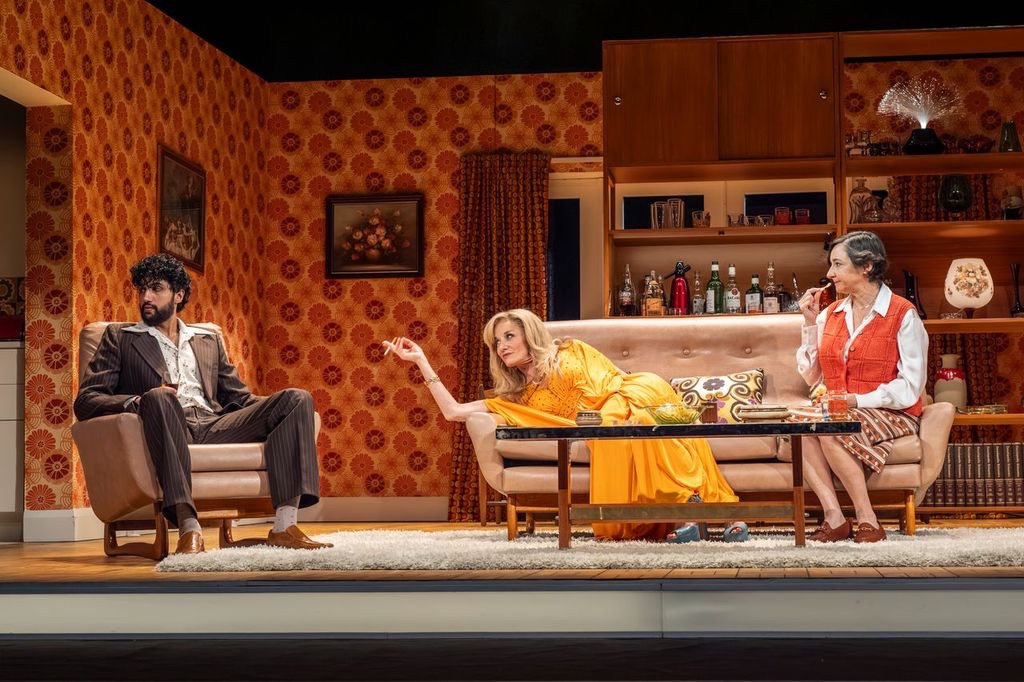
    Steven Pinder, Felicity Duncan and Melanie Gutteridge, photograph by Carla Joy Evans

    CASH ON DELIVERY

    by Michael Cooney

    directed by Ron Aldridge 

    The Mill at Sonning, Sonning Eye near Reading – until 4 April 2026

    running time: 2 hours 30 minutes including interval 

    https://millatsonning.com/Events/cash-on-delivery/

    It would be all too easy to over-analyse Michael Cooney’s benefit fraud farce Cash On Delivery, given a spirited revival by farce expert Ron Aldridge for the delightful Mill at Sonning. It’s essentially a cheeky romp with one foot in TV sitcom and the other in the frenetic comic crowdpleasers which Cooney’s much-missed Dad Ray specialised in for decades: Cooney Sr even directed the star-studded West End premiere of this play in 1996, and the Mill’s auditorium is named after him.

    But this thirty year old comedy, while undemanding, interestingly comes from a point in history where society, and accordingly the world of entertainment, was changing. The lingerie-clad young women and marital infidelities that characterised earlier examples of the farce genre, and so brilliantly satirised by Michael Frayn in Noises Off, were starting to look outdated and glaringly sexist, so Michael Cooney instead spins an elaborate yarn about Eric Swan, a Home Counties landlord who makes a living via numerous fraudulent state welfare claims pertaining to fictional tenants and lodgers. The proverbial chickens come home to roost when a DSS inspector turns up, followed by his overbearing boss, a grief counsellor, an undertaker and the fiancée of the one genuine lodger Swan has.

    Cash On Delivery doesn’t entirely break the antiquated mould though: a smack in the face with a door renders an elderly character incapacitated for most of the play, and the audience is expected to find the concept of cross dressing, in and of itself, utterly hilarious. Of the female characters, two are harridans and the other two have little agency. However, Cooney, like his legendary Dad, unerringly understands the mechanics of farce, so that, even if dialogue, verbal jokes and characters are more functional than inspired, it’s impossible not to marvel as the comedy machine gets into gear and the merry mayhem picks up pace. 

    At the press performance I saw, Aldridge’s staging still felt like it was running at 80% energy rather than the full 100% needed to really make the show fly, but there’s every indication that the production will reach that level once the actors get a few more performances under their belts. Looking at times uncannily like Bradley Walsh who originated the role in the West End, the hugely likeable Steven Pinder steers a canny path between insouciance and swivel-eyed panic as deceitful Eric. Natasha Gray makes something surprisingly sympathetic out of the underwritten role of his wife Linda, suspicious of, well, almost everything yet with no idea about Eric’s financial shenanigans. James Bradshaw is very funny as their lodger Norman, his hitherto contented life devolving rapidly into an ever-mounting tsunami of disbelief and outrage.

    Harry Gostelow delivers note-perfect work as the unexpectedly benign man from the DHSS and is a pleasing foil to Felicity Duncan’s bellowing, fearsome boss. Rachel Fielding’s well meaning but clueless relationship guidance counsellor is another enjoyable creation as is Norman’s naive yet naughty fiancée, delightfully played with an appealing zing of sweetness, heart and camp by Melanie Gutteridge. 

    Alex Marker’s door-heavy (this is farce after all) domestic set and Natalie Titchener’s costumes, slightly too garish to be fully realistic, add to the overall sense of the entire show being contained in a time capsule, harking back to decades when things were more straightforward and less PC. This is a classic example of a show that achieves exactly what it sets out to do, there’s not much “there” there, but the Mill at Sonning audience, fuelled by an excellent dinner, roars its approval. 

    February 14, 2026

  • THE VIRGINS – ⭐️⭐️⭐️⭐️ – teenage angst and embarrassment is never this much fun in real life

    Zoë Armer, Anushka Chakravarti, Molly Hewitt-Richards and Ella Bruccoleri, photograph by Camilla Greenwell

    THE VIRGINS

    by Miriam Battye

    directed by Jaz Woodcock-Stewart

    Soho Theatre, London – until 7 March 2026

    running time: 85 minutes no interval 

    https://sohotheatre.com/events/the-virgins/

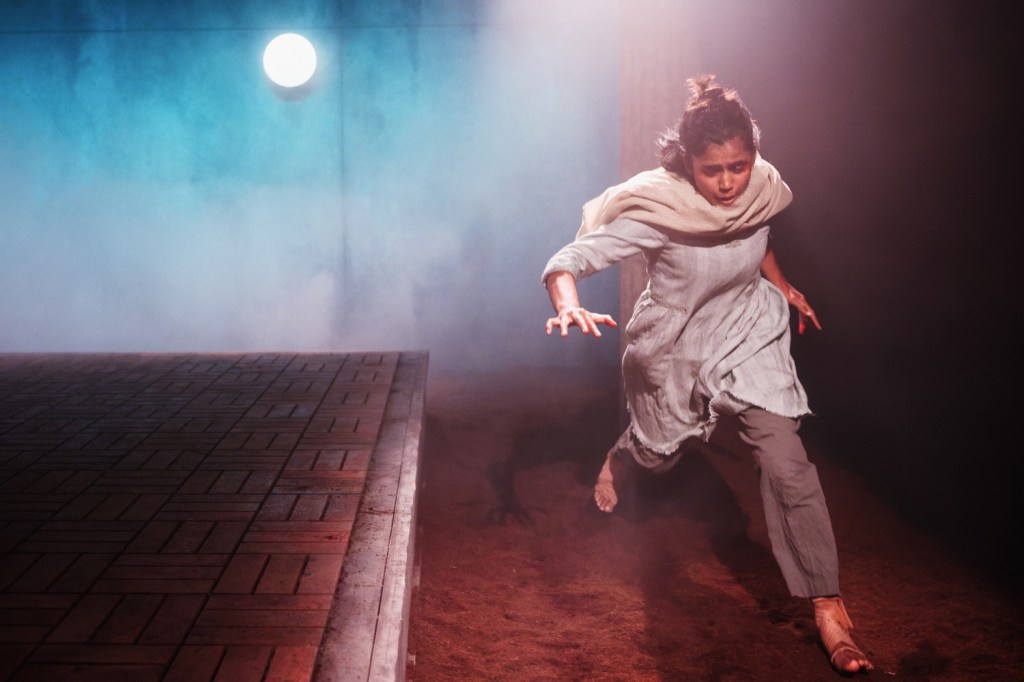
    “It is a massive thing. I can literally feel it… It’s so heavy I feel like I’m wiping the floor with it… I’m surprised I can even walk with it.” That’s hyper-anxious sixteen year old Phoebe talking about her own virginity in Miriam Battye’s outrageously entertaining but thoughtful new play. The Virgins centres on a group of teenage girls preparing for a night out where the aim of “pick one boy each to pull…then come home and eat chicken dippers” takes a more extreme turn when an older, more sexually experienced young woman turns up, all knowing sass and attitude, and the race is on for full scale loss of virginity.

    At first it feels like a modern day answer to Willy Russell’s Stags And Hens, the girls primping and preening in the bathroom while just across the hall a pair of boys play computer games and engage in half-hearted banter. The detailed, mostly realistic set and entirely plausible costumes are by Rosie Elnile.

    Battye’s writing for these kids is eye-wateringly accurate and deliciously funny. The dialogue bounces off the stage with a rare vitality and relatability, and the playwright’s affection for these stroppy, clueless, lovable youngsters is palpable. Jaz Woodock-Stewart’s sparky, supremely well cast production, punctuated by blasts of bombastic classical music in witty counterpoint to the lower brow concerns of the characters, matches the potty-mouthed dynamism of the text.

    Every member of the youthful acting company is outstanding, mining the script for every scrap of humour but never playing it for the laughs which, goodness knows, are coming thick and fast anyway. Anushka Chakravarti and Ragevan Vasan fully convince as siblings whose mutual loathing is probably only on the surface, and Ella Bruccoleri finds so many layers and colours to quirky, independent-minded Jess. Zoë Armer suggests with real pathos the trauma and hurt hiding just under the surface of apparently confident, slightly older Anya, and Alec Boaden raises diffident coolness to an art form as a bemused lad also with hidden depths. Molly Hewitt-Richards is a neurotic delight as uncertain Phoebe (“I’ve done a test run and I know if I have three single vodka lemonades on no dinner I’ll be fun and not vulnerable”).

    Aside from the copious belly laughs, The Virgins has a genuine gravitas as it touches on peer pressure, sexual violence, the objectification of young women and the bewilderment of young men. It’s a compelling mix but the lurches into serious territory, though essential to the play as a whole, could be refined somewhat. A mutual masturbation scene should be awkward, as should the closing moments where two youngsters start to have sex but are impelled to use the physical and indeed aural language learnt from exposure to porn. But a reflective speech for Boaden’s Mel where he talks, almost accusingly, about his disillusionment with the opposite sex, although terrifically well played, feels shoe-horned in and a tad ponderous. 

    The Virgins is still a tremendously accomplished piece of writing though, a rollicking good time with very sharp fangs and moments of authentic pathos. It should be required viewing for mid- to late-teenagers, but probably not with their parents. The embarrassment, y’know…. Enthusiastically recommended.

    February 9, 2026

Previous Page Next Page

Blog at WordPress.com.


Loading Comments...
 

    • Subscribe Subscribed
      • ajhlovestheatre
      • Join 59 other subscribers
      • Already have a WordPress.com account? Log in now.
      • ajhlovestheatre
      • Subscribe Subscribed
      • Sign up
      • Log in
      • Report this content
      • View site in Reader
      • Manage subscriptions
      • Collapse this bar