Skip to content

ajhlovestheatre

  • Home
  • About
  • Contact
  • Blog

  • CHOIR BOY – ⭐️⭐️⭐️⭐️ – sweet music, raw emotions and coming-of-age collide to satisfying effect in this impressive revival

    Photograph by Mark Senior

    CHOIR BOY

    by Tarell Alvin McCraney

    directed by Nancy Medina; co-directed by Tatenda Shamiso

    Theatre Royal Stratford East, London – until 25 April 2026

    running time: 2 hours 20 minutes including interval

    https://www.stratfordeast.com/whats-on/all-shows/choir-boy

    An American play that’s almost a musical and, at times, almost a concert, Tarell Alvin McCraney’s Choir Boy premiered at London’s Royal Court in 2012 before a Tony nominated Broadway run and enjoying numerous productions across the US. Watching Nancy Medina’s sensitive production, originally seen at Bristol Old Vic in 2023 and now co-directed by Tatenda Shamiso, it’s not hard to fathom the appeal of this unruly but life-affirming, stirring dramedy.

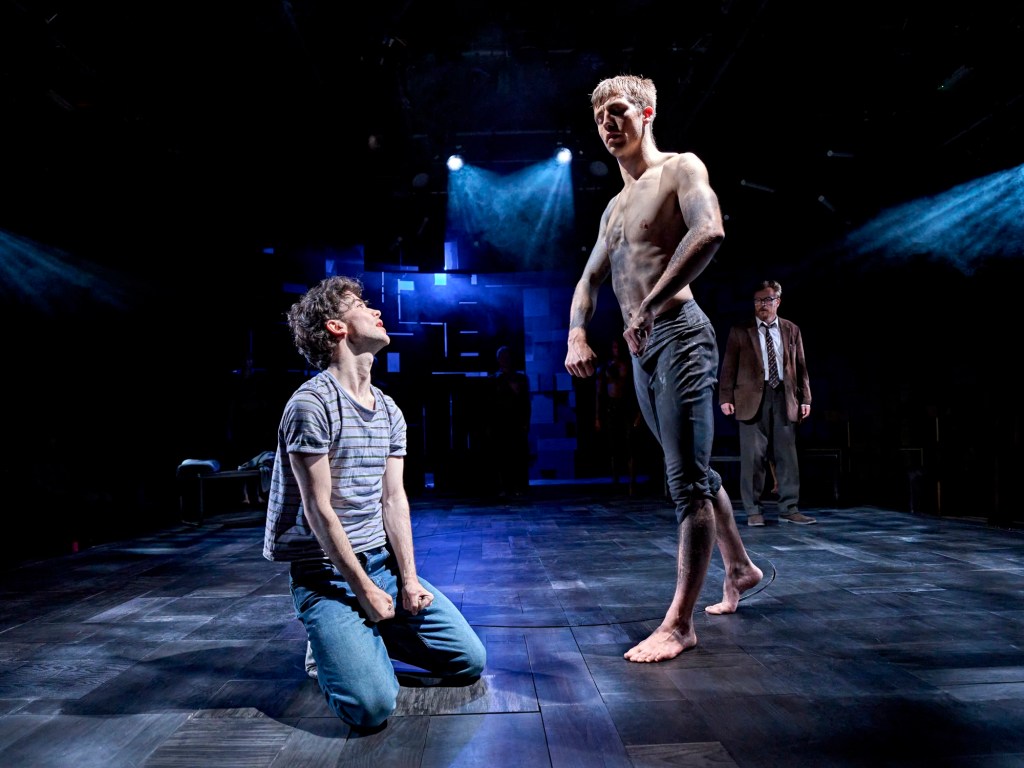
    The play follows a quintet of African American youngsters negotiating the passage from childhood to manhood at the strict but prestigious Charles R Drew prep school where their principal extracurricular outlet is as members of the choir. The choir leader, and the most fleshed-out character, is super-smart gay Pharus (Terique Jarrett, sublime) whose wise-cracking, opinionated exterior masks deep longings and uncertainties. His flamboyance is tolerated by an understanding but professionally restricted headmaster (beautifully played by Daon Broni) on the condition that his sexuality is never acted upon.

    If the other young men -repressed, God-fearing David (Michael Ahomka-Lindsay), gawky, well-meaning JR (Khalid Daley), cocky, jock-y, homophobic Bobby (Rabi Kondé) wounded by the early loss of his Mum- sometimes feel like stock characters in terms of the writing, the performances are so detailed and quirky that it’s easy to overlook. There’s really lovely work from Freddie MacBruce as AJ, Pharus’ roommate and the other character who entirely breaks out of cliché: he’s witty, self-confident both in his personality and his (straight) sexuality) yet raw. He’s also a tremendous ally and friend to Pharus when he needs it most. In a second act scene where he looks after a broken Pharus after all hell has broken loose, initially tentatively but eventually with such kindness, the only sound in a wrapt audience is the sniffing of people overcome with emotion. Jarrett and MacBruce play it with astounding emotional delicacy.

    McCraney’s text meanders a bit, to be honest, but it’s also incredibly rich. There’s a riveting dissection of Black history in the US, specifically as filtered through the spirituals which have handed been down through generations and are now performed by these boys; they stud the evening like jewels of feeling and the voices are magnificent (Ahomka-Lindsay and Daley have solos that make the hairs on the back of your neck stand up); it’s impossible not to be moved. Martin Turner has an amusing, appropriately toe-curling cameo as a well meaning but out-of-touch white former teacher whose awkward determination to get down with the kids is met with understandable scepticism. 

    For all the talking and indeed the singing (Femi Temowo is the excellent musical director and arranger), a pivotal scene is almost entirely wordless which seems a curious choice, as does a swift succession of plot points in the latter half of the play when the script felt more mood than action up until then. The dialogue is soaked in humour and truth though, and is never less than engaging. The staging could ideally do with a couple more actors to better give the sense of a school (though Max Johns’ set is nicely vivid) but it’s pacy and finds the middle ground between entertainment and polemic. 

    Although the Black masculinity tropes and the American boarding school setting are pretty specific, there remains a universality to McCraney’s writing that moves and uplifts. If you’ve ever felt othered or misunderstood, if you’ve ever found kindness in a place where you didn’t expect it to be, Choir Boy will strike a chord deep within you. It ends on an uplifting note, with a hopeful suggestion that Jarrett’s exquisite Pharus will soar through life as he deserves, and that’s pretty much impossible to argue with. 

    April 12, 2026

  • ROWLING IN IT – ⭐️⭐️ – the artist AKA Robert Galbraith gets off surprisingly lightly in this would-be satire

    Photograph by Lucy Hayes

    ROWLING IN IT

    written and performed by Laura Kay Bailey 

    directed by Dominic Shaw

    Kings Head Theatre, London – until 18 April 2026

    running time: 1 hour no interval

    https://kingsheadtheatre.com/whats-on/rowling-in-it-zwy4

    Anybody intrigued by the wittily punning title of Rowling In It who pitches up to the Kings Head expecting a coruscating comic takedown of the divisive J K whose views on transgender people has been the source of much consternation and impassioned discussion over much of the last decade, is in for a bit of a surprise. Laura Kay Bailey’s self-penned solo show, running at barely an hour, is a semi-fictionalised account of what happens when a jobbing actress accepts the challenge of playing J K Rowling in a potentially provocative Edinburgh Fringe play, but it’s more contemplative than savage. The script’s attempts at being even-handed in terms of considering different sides of an argument are commendable but make for rather unsatisfying theatre, at least as handled here.

    Bailey plays the American actress (is this a version of herself?) embroiled in the self-flagellation and soul-searching, as well as the inevitable trial by social media, after being cast as the controversial writer. She also plays everyone else, and it’s here that Dominic Shaw’s tension-free production encounters one of its biggest problems. Bearing a passing physical resemblance to Broadway and US TV star Laura Benanti, Bailey is an engaging, elegant presence, but she doesn’t, at least as yet, have the chameleonic elan to convincingly transform herself into a myriad of characters, including a gross director, a monstrously self-indulgent writer or a sensitive fellow actor struggling with the show’s messy creative processes. 

    Accordingly, the switches between characters sometimes feel fudged and confusing, not helped by Bailey’s grasp on different accents (Scottish, posh English, and so on) isn’t as secure as it might be. This lends Shaw’s staging an unhelpful underrehearsed quality, and the comedy frequently fails to land. Bailey tends to deliver bulky swathes of text towards the floor as though locking eyes with an audience member might put her off her stroke. 

    It’s a fun touch naming the cast and creatives of the play being produced after Harry Potter characters. So, the clueless, drawling American writer is Snape, the enthusiastic young actress cast as Emma Watson is Hermione, a non-binary performer whose role is cut to ribbons during the rehearsal process is Minerva McGonagall, the ghastly producer is Hagrid…you get the idea. 

    The lack of background information on the principal character is frustrating. We find out that she’s originally Texan, that she has a racist grandma who she adores while acknowledging she wishes she wasn’t so racist (like, duh!) and that she has two children. That last tranche of information feels barely relevant, except to justify the borrowing from Jonathan Spector’s masterly 2018 play Eureka Day of the device of having a school parents association’s increasingly tetchy online group chat beamed on to the back wall of the set. It’s quite funny but what has it got to do with being hauled over the coals for playing J K Rowling. This, and the reveal that she had a miscarriage prior to starting rehearsals, make Rowling In It feel like a fragment of a longer, more broadly focussed play.

    Another symptom of this is the inclusion of an unseen character, one Mr V, who keeps phoning and with whom our heroine seems to be in a relationship but about who we find out almost nothing so these moments come across as so much dead air. There’s a lame running joke, mercifully abandoned quite quickly, about her not being able to remember where he’s working but only that it begins with the letter L (Lichtenstein, Luxembourg, Libya…). 

    Pondering that Rowling started attacking trans folks online while menopausal isn’t original or revelatory, and neither does the acknowledgement that such blinkered views can do considerable damage when expressed by somebody with a vast global platform, but that’s about as edgy as this show gets. Bailey seems so determined not to offend anybody at all that the piece has almost no bite or colour. It’s pretty funny though when it depicts a disastrous opening night where a leading performer can’t find their lift while trying to deliver a dynamic, pivotal speech. More of this kind of “when theatre goes wrong” humour wouldn’t go amiss.

    A critic accuses Snape’s Edinburgh play of being flavourless but unfortunately that is a description that also applies to Rowling In It, despite Bailey’s hard work. The ultimate punchline, such as it is, involves Bailey telling her agent that she doesn’t think this should be a one woman show. Unfortunately I’m not sure I do either.

    April 9, 2026

  • SLIPPERY – ⭐️⭐️⭐️⭐️⭐️ – love, sex, food, guilt and death… it’s all served up with sensitivity and masterful craft in this fabulous new play

    Perry Williams and John McCrea, photograph by Ali Wright

    SLIPPERY

    by Louis Emmitt-Stern

    directed by Matthew Iliffe

    Omnibus Theatre, London – until 11 April 2026

    running time: 75 minutes no interval 

    https://www.omnibus-clapham.org/slippery/

    There’s a special kind of theatrical alchemy that happens when a play’s writing, direction, acting and design are in perfect harmony. Watching Matthew Iliffe’s quietly compulsive, note-perfect production of this crackling gut punch of tragicomedy by Louis Emmitt-Stern, I couldn’t help but reflect how seldom it occurs. All the more reason then to hasten to Clapham’s Omnibus Theatre where Slippery is already staking a claim to be one of the best new plays of 2026. There may be more ambitious texts, charting a broader spectrum of human experiences and sociopolitical considerations, but if this year we get another London production that so stylishly achieves the goals it sets itself and with such detail, biting humour and emotional authenticity, it’ll be a lovely surprise.

    Slippery is about a reunion of sorts. Jude (John McCrea) and Kyle (Perry Williams) were hedonistic club kids, and boyfriends, a decade earlier. They lost touch after splitting and apparently getting clean of drink and drugs, the former accusing the latter of abandoning him. Jude has had an accident and still lists Perry as his emergency contact despite now grieving for a different partner who died in the intervening years. Perry has his own things going on, including an increasingly successful career as an illustrator of children’s books, but here we are at 3am in Jude’s luxurious but soulless, (and not-fully-unpacked) Canary Wharf pad (gleamingly impersonal set design by Hannah Schmidt), and the men have just returned from A&E.

    At first at least, Kyle is conciliatory, wry, nice, while Jude is brittle and defensive, clearly damaged spiritually as well as physically. Emmitt-Stern’s dialogue, urbane, snappy and exquisitely turned but shockingly raw when it seeks to be, bears the unmistakable hallmark of truth, masterfully suggesting the hurt in the silences and the frequent gulf between what people say and what they actually mean in difficult, emotionally charged situations. A satisfying vein of jet black humour runs through the script, which director Iliffe and his actors mine for all it’s worth while never losing sight of the sadness and antagonism between the two men…or the genuine affection.

    McCrea, brilliant, combines waspish and vulnerable to devastating effect, and Williams invests Kyle with winning warmth and charm but also a watchful, unreadable ambiguity, the reasons for which become clearer as the play progresses. The chemistry between the two of them is extraordinary (this show is properly sexy!) and the play’s title accurately describes the constantly shifting power dynamics and attitudes of this pair of men whose volatile compatibility changes almost by the minute.

    Iliffe (who also helmed one of the other greatest two handers I’ve seen in the last decade, 2022’s Bacon for the Finborough) marshals all this with a lightness of touch, mastery of pace, and attention to detail that serves the writing exquisitely. Great direction for essentially naturalistic pieces shouldn’t make viewers overly aware of the craft and that is the case here. At the same time though, every glance matters, every throwaway quip, every subtle gradation in Ryan Joseph Stafford’s lighting…every single thing works together, from the weighty silences to a chaotic food fight to the acidic disappointment emanating from somebody determined not to show how hurt they are. 

    Neither Iliffe nor his actors strike a single false note, and what starts out as amused eavesdropping on an uneasy former relationship swiftly and steadily becomes absolutely riveting. We may not always be clear on what’s motoring Jude and Kyle’s interactions, but they consistently are, so we can relax into the journey and enjoy it. Thematically, the play is rich and bang up-to-date as the men discuss/bicker over everything from the significance of gay marriage and the dehumanisation accelerated by social media to cooking and careers. The picture of what happens to party people who try to sober up and grow up is painted in bold, neurotic, all-too-credible colours.

    Initially, the bittersweet ending bothered me, as it felt like a bit of an inconclusive cop-out, but having slept on it, I rather think that’s the point: that messy connections between human beings don’t get wrapped up neatly. Go and judge for yourself, but do go…Slippery is world class theatre and if there’s any justice, this whole production will have a successful further life. Tremendous. 

    April 4, 2026

  • RIKI LINDHOME: DEAD INSIDE – ⭐️⭐️⭐️⭐️ – a one woman musical comedy about infertility that works on every level

    Photograph by Elisabeth Caren

    RIKI LINDHOME: DEAD INSIDE 

    Soho Theatre – Dean Street, London – until 18 April 2026

    running time: 70 minutes no interval 

    https://sohotheatre.com/events/riki-lindhome-dead-inside/

    Delight (ours) and pain (hers) sit side-by-side in Dead Inside, with empathy squeezing in somewhere in between. American actress and musician Riki Lindhome’s unique, self-penned show is a fusion of musical comedy, confession, bravery and bat-shit crazy. It’s wholly irresistible but cuts surprisingly deep when it needs to. 

    The depth is essential, indeed inevitable: Dead Inside deals with that most sensitive and personal of topics, female infertility, specifically as experienced by Lindhome, whose sunny, kooky stage persona occasionally fissures to reveal authentic, but understandable, darkness. She’s a self-described “delusional optimist” but there’s a whole lot more to her than that, including killer comedy chops and an ability to write and perform satirical songs that suggest a sexually explicit, American Victoria Wood.

    Equipped only with a guitar, a flute, a keyboard (all of which she plays), a video screen, some bubbles and a winning presence, Lindhome describes the various processes and psychological challenges involved in being a woman longing for a child while being acutely aware that time is ticking by. She wryly rejects the patronisingly cosy term “fertility journey”, reasoning, rightly, that men don’t couch their health struggles in such a way, i.e. nobody ever talks about their “gout journey”.

    As well as her screen work as an actress, Lindhome is half of a comedy-folk duo Garfunkel And Oates: her consummate skills as musician and comedienne are here coupled with raw lived-life experience, a commendable willingness to laugh at herself and an even more commendable eschewing of self-pity. Collectively, this makes her the perfect conduit through a thorny, potentially distressing story that examines how society judges childless women as much as it’s about biological need. Miscarriage, channelling anger through avoidance, Disney Princesses, despair…it’s all laid out here. Lindhome is tremendously likeable, shuffling on with the insouciance of a charismatic goofball whose self-deprecating manner masks a lethal wit and intelligence that periodically get unleashed to devastating effect.

    The humour and indeed the genuine, uncomfortable humanity are all the more potent because they’re punctuated by attractive parodic songs that seem sugary-sweet…until you listen to the potty-mouthed lyrics. Lindhome puts them over with a twinkle-eyed charm that often looks on the verge of tipping over into delicious madness. The Sound of Music number which retells the story from the point-of-view of the increasingly embittered Baroness is an absolute masterpiece. My only criticism is that the sound could be better, the music overwhelming Lindhome’s pleasing but not exactly power-packed vocals.

    Dead Inside is a deceptively clever show, making something bracingly entertaining, but never trivial, out of a traumatic, troubling topic. I would imagine it’ll feel like finding a friend for many women, though for others it may be too painful to watch. It ends on a satisfying nemotional note, entirely earned, that I won’t spoil here. This Soho season, following on from acclaim at the Edinburgh Festival, will surely see Riki Lindhome’s British fan base expand, she’s wonderful.

    April 3, 2026

  • JAJA’S AFRICAN HAIR BRAIDING – ⭐️⭐️⭐️⭐️ – a glorious collection of vivid characters and a dramatic sting in the tail make this Broadway comedy-drama fly

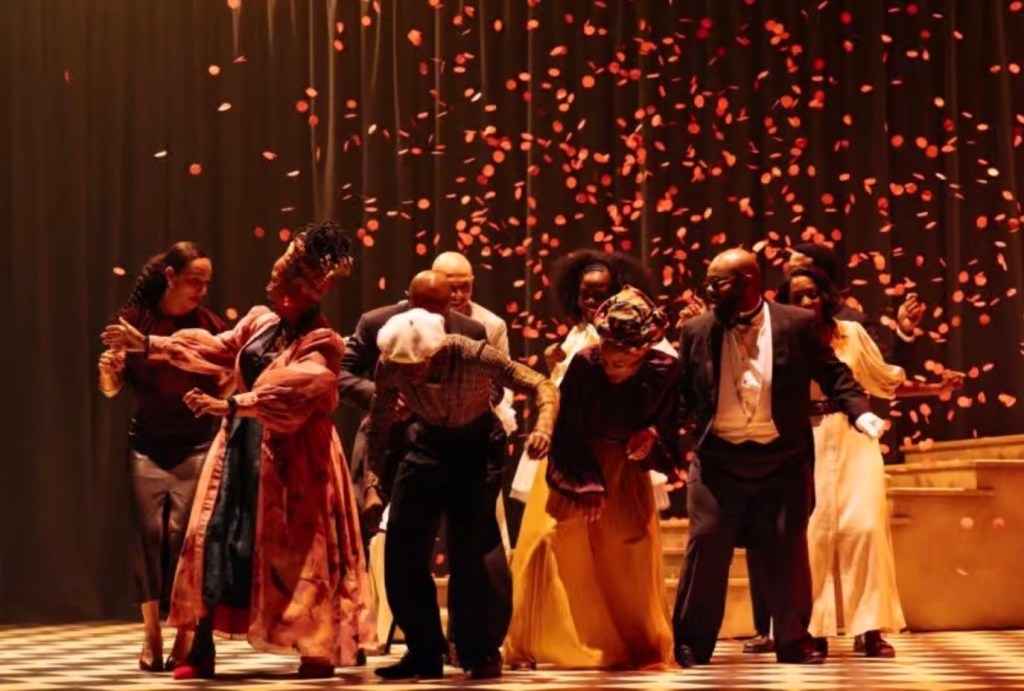
    babirye bukilwa and company, photograph by Manuel Harlan

    JAJA’S AFRICAN HAIR BRAIDING

    by Jocelyn Bioh

    directed by Monique Touko

    Lyric Hammersmith Theatre, London – until 25 April 2026

    running time: 90 minutes no interval 

    https://lyric.co.uk/shows/jajas-african-hair-braiding/

    Playwright Jocelyn Bioh and director Monique Touko scored a big hit for the Lyric Hammersmith in 2023 with the delightful, thought-provoking School Girls: Or, The African Mean Girls Play. The unique combination of ferocious energy, life-enhancing humour and a hard-hitting examination of colourism ensured that the New York import (first seen off-Broadway in 2017, and due to receive a Broadway production this autumn) found resonance and a fan base here in London. Can lightning strike twice, with most of the same creative team collaborating on the UK premiere of Jaja’s African Hair Braiding, Bioh’s Tony nominated 2023 comedy? The answer, judging from the enthusiastic, highly vocal, reaction of last night’s audience for Touko’s vital production, is a resounding, overjoyed yes. 

    The year is 2019, during Trump’s first presidential term, so the shadow of ICE hangs over the lives of the women working in the Harlem hair braiding salon that gives the play its title. Had Bioh set her script more recently, it would probably be more anxiety-ridden, but once again she has come up with a script that manages to be simultaneously potently political and cracking entertainment, with the emphasis on the latter. 

    Jaja’s African Hair Braiding salon is brought to life in a gloriously vivid revolving scenic design by Paul Wills, augmented by Dick Straker’s eye-catching video work and Simisola Majekodunmi’s lighting. In this apparently safe space a team of women, mostly African immigrants, work, gossip, opine, confide, complain, and lift each other up. The wigs designs by Cynthia De La Rosa are particularly remarkable, as actors playing salon customers are transformed pretty much before our very eyes.

    A party-like atmosphere pervades Touko’s staging: scene transitions are indicated by loud blasts of Afrobeat and undulating, booty-shaking choreography (lovely work by Kloé Dean), the fourth wall is periodically broken to acknowledge the howls of merriment and/or outrage coming from the deeply invested audience… The boiling hot Manhattan summer is convincingly evoked, and costume designer Jessica Cabassa has created some terrific looks. For the most part, the acting style is as bold and broad as the writing and the characters’ visual impacts, but rooted in just enough reality that when an emotional wallop is required, it registers most satisfyingly. 

    Beyond the bickering and outrageousness, there’s a palpable sense of the precariousness of these women’s existences. If the genuine shock in the play’s final couple of minutes makes for a jarring change of tone, I think that’s partly Bioh’s point: that life can change irrevocably in a split second. It’s a shame that the show gets wrapped with almost indecent haste but equally it’s commendable that Bioh doesn’t try to parcel it all up neatly or to provide easy answers, and it’s a great tribute to her writing that in just ninety minutes of stage time, we come to care deeply about most of these women. 

    The cast are clearly having a ball. Dolapo Oni is a formidable delight as Bea, whose low level grievance that Jaja’s shop was originally her idea informs her overall attitude. Her friendship with fellow stylist Aminata (played with irresistible comic relish but real heart by babirye bukilwa) is beautifully realised, as is her exasperated rivalry with the flighty, freewheeling Ndidi, a co-worker who seems to be stealing all her clients (Bola Akeju, glorious). Jaja herself appears only briefly, resplendent in her gaudy wedding gown en route to her nuptials with an unseen white guy whose main attraction may be the size of his wallet, and Zainan Jah plays her as a head turning force of nature.

    There’s lovely work from Sewa Zamba as Jaja’s second generation African-American daughter Marie, terrified of telling her mother that she intends to pursue a career in writing rather than anything more lucrative. Jadesola Odunjo is equally fine as Miriam, the Sierra Leone-born salon worker whose kindness is matched by an unexpected fortitude and whose back story strikes a note of genuine pathos amongst  all the sound and comic fury. Three of the actors (Dani Moseley, Renee Bailey and the sole man, Demmy Ladipo) play several roles each, and a huge part of the fun is in observing their swaggering transformations.

    Jaja’s African Hair Braiding isn’t quite perfect – it takes maybe a little too long to find its substance and dramatic meat, then deals with it too perfunctorily – but it’s a rollicking good time. As a celebration of the pervasiveness and hardiness of African culture and female empowerment and camaraderie, it’s an undoubted triumph. It also raises interesting, troubling points about what might be necessary to cling on to a life in a country that isn’t as welcoming as you might have hoped, which ensures that the play registers as something deeper and richer than just an urban African-American spin on Steel Magnolias. Touko infuses it all with ripe theatricality and comic aplomb. This feels like a real winner. Joyful.

    March 29, 2026

  • TEETH ‘N’ SMILES – ⭐️⭐️⭐️ – the central performance is astounding but David Hare’s play with rock songs is showing its age

    Rebecca Lucy Taylor, photograph by Helen Murray

    TEETH ‘N’ SMILES

    by David Hare

    songs by Nick Bicât (music) and Tony Bicât (lyrics)

    additional music and lyrics by Rebecca Lucy Taylor

    directed by Daniel Raggett

    Duke of York’s Theatre, London – until 6 June 2026

    running time: 2 hours 20 minutes including interval 

    https://www.thedukeofyorks.com/teeth-n-smiles

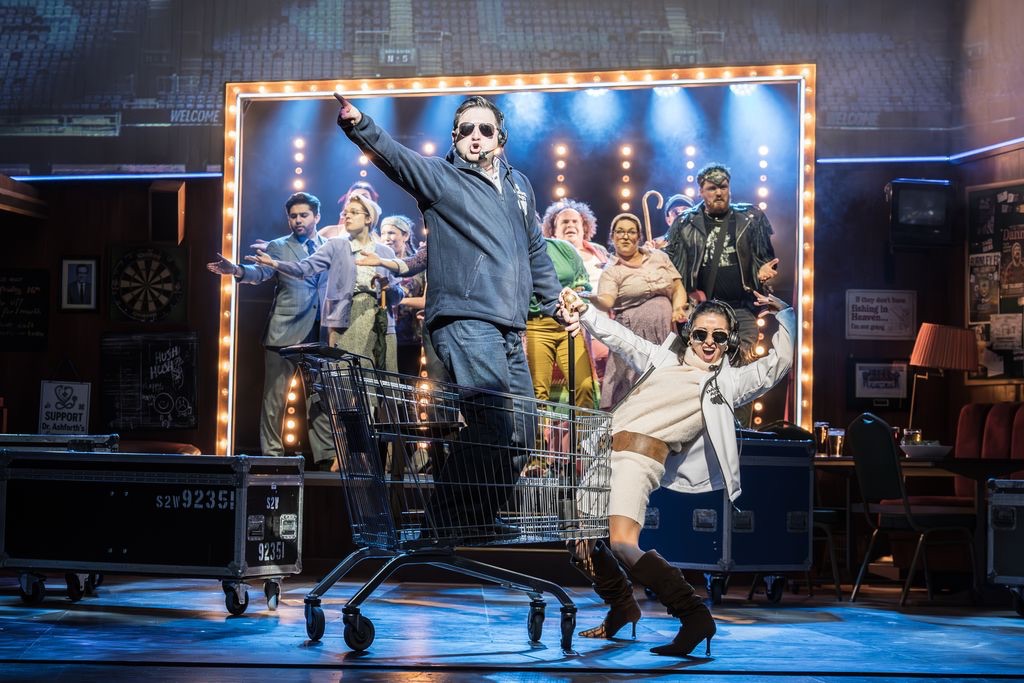
    “There’s something inside me that won’t lie down” howls Maggie Frisby, the on-the-ropes would-be rock goddess whose spectacularly dissolute downfall is the crux of David Hare’s mid-1970s play. As played by Rebecca Lucy Taylor (aka acclaimed singer-songwriter Self Esteem) in this appropriately grungy, full-throttle revival by Daniel Raggett, it’s impossible not to take her at her word. This woman has been wrecking herself with booze (she’s first seen being carried in a stupor from the auditorium to the stage) for years and is as unreliable as she’s talented, but is never out-for-the-count for long. 

    Taylor is a marvel: a one-woman whirlwind of raucous energy, deft comic timing, bereft desolation and wild lunacy, with a steel-lunged belt that pierces the soul before subsiding into something like a whisper. She’s danger and earthy charisma personified, and does much to elevate Teeth ‘n’ Smiles, a dated but interesting piece that in lesser hands than the ones involved here, could easily devolve into being a boozy, drug-fuelled dirge studded with the kind of rock music that foreshadowed punk before being effectively killed off by it.

    Bearing a superficial resemblance to last year’s smash hit Stereophonic, also seen at the Duke of York’s, Hare’s play unfolds over one tumultuous night as a troubled rock band, led by Maggie, implodes spectacularly while playing the Cambridge University Summer Ball. The meandering script is shot through with sour, ironic wit, and boasts a fascinating gallery of men behaving badly (the sole other female character than Maggie is woefully underwritten). The state-of-the-nation talk feels like a precursor to much of Hare’s politically charged work later in his career.

    The year is 1969, and Raggett’s staging and Hare’s writing capture the gleeful nihilism of a period still crawling out of the long shadows cast by the Second World War: when asked about the volume of their gigs, a band member responds “the louder we play the sooner we won’t be able to hear”, and their morally ambiguous manager (brilliantly played by Phil Daniels) has a vivid, gruesome speech recalling his presence at the WW2 bomb strike on Piccadilly’s Café de Paris.

    Perhaps to reflect the fact that most of these characters are out of their minds for much of the play, twenty-something Hare gave them dialogue that sounds less like conversation and more like a series of (frequently outrageous) non sequiturs. It feels authentic, and certainly reflects the antediluvian attitudes of the time period the play’s set in, but it doesn’t elicit much interest in, or sympathy for, the individuals involved.

    The cast of actor-musicians is terrific though. Michael Abubakar, Samuel Jordan, Jojo Macari and Noah Weatherby make a wonderfully Rabelaisian crew, and there’s strong, sensitive work from Michael Fox as Arthur, the songwriter with a complicated connection to Maggie. Roman Asde is funny and a little sad as a bedazzled student in way over his head, and Aysha Kala finds more substance to the role of Laura, the group’s general dogsbody and Arthur’s alternative romantic interest, than one suspects there is in the actual writing.

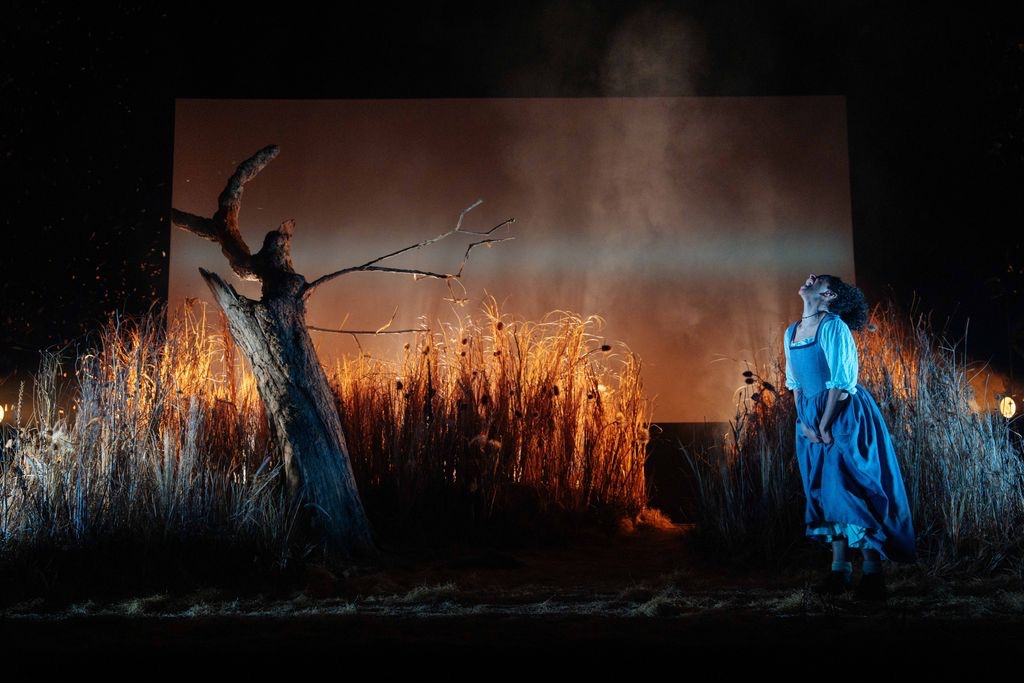
    Raggett’s production has an appropriately makeshift feel but is actually laser- sharp in focus, and technically superb. The murky darkness of Chloe Lamford’s set is pierced by shards of unforgiving lighting (Matt Daw), and for all the chaos of the offstage sections it’s usually clear where the eye should be drawn to. Ben and Max Ringham’s sound design has an authentic rock’n’roll feel, and Alex Mullins’ costumes are period perfect, especially flamboyant for Taylor. A pivotal, genuinely moving scene between lovelorn Arthur and defeated Maggie plays out within a sheet of dry ice to evoke smoke, illuminated only from behind, by the citrus left-over glow of an arsonist’s fire; it’s all the more effective and compulsive because we can’t see Fox and Taylor’s faces, and we are entirely drawn in.

    For all the expertise in Raggett’s staging, the talent of the company, the authenticity of Nick and Tony Bicât’s songs, and the unflinching fire of Taylor’s performance, Teeth ‘n’ Smiles leaves us with a nagging question. Why revive this play now, aside from the fact that this is its fiftieth anniversary? It’s a trawl through the sexist, seamy underbelly of the music industry but there’s nothing inherently revelatory here. As a play, it’s dramatically inert, albeit intermittently engaging….but as a star vehicle for the astonishing Rebecca Lucy Taylor, it’s undoubtedly a success.

    March 26, 2026

  • VINCENT IN BRIXTON – ⭐️⭐️⭐️⭐️⭐️ – Nicholas Wright’s justifiably acclaimed Van Gogh drama in an exquisite revival

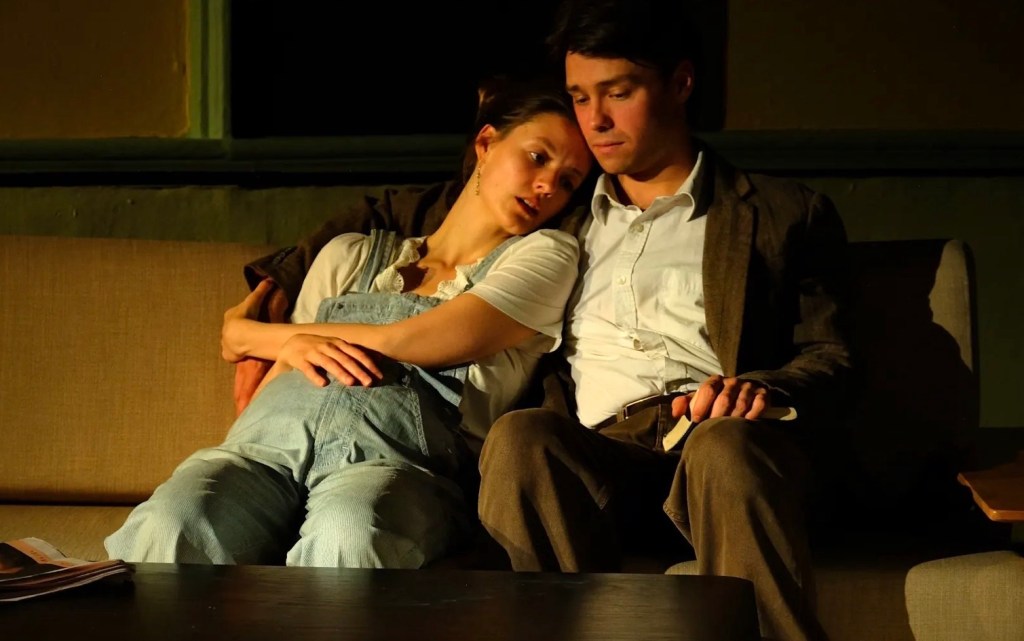
    Jeroen Frank Kales and Niamh Cusack, photograph by Johan Persson

    VINCENT IN BRIXTON

    by Nicholas Wright 

    directed by Georgia Green

    Orange Tree Theatre, RIchmond – until 18 April 2026

    running time: 2 hours 20 minutes including interval 

    https://orangetreetheatre.co.uk/whats-on/vincent-in-brixton/

    There’s a seam of magic running through the melancholy and the humdrum in Nicholas Wright’s remarkable drama, first seen at the National in 2002 before hitting the West End and Broadway. This intimate piece is now revived in-the-round by Georgia Green at Richmond’s Orange Tree Theatre, and the balance between the earthy and the ethereal is exquisitely managed. If D H Lawrence had written a play about a youthful van Gogh’s brief residence in London before becoming a fully fledged artist, and had had access to a really good editor, one imagines it would have been something like Vincent In Brixton. 

    Stage or screen depictions of artists frequently come unstuck as they tend to be either overly precious or downright exploitative, their central figures appearing banal and/or two dimensional. Wright neatly sidesteps all this however by focusing on Vincent van Gogh as a young man, newly arrived in 1870s London to work for an art dealer, not yet a creative but with plenty of opinions on art and artists, and the writer does so with a wondrous lightness of touch. That life-enhancing delicacy is all the more surprising  and impressive since the play is as much about depression and the intertwining of inspiration and despair as it is about art. This suggests that Vincent In Brixton could be a chore to sit through, but that’s unequivocally not the case.

    As played here by Jeroen Frank Kales, van Gogh is wonderfully gauche: tactless, watchful, almost painfully direct but also puppyishly enthusiastic. If this delightful but frustrating young man were alive now, his neurodivergence might be obvious, but in less enlightened times he’s regarded with a degree of suspicion and annoyance. Kales brilliantly conveys his mixture of guilelessness with the ruthlessness of a loner. 

    The play’s leading role isn’t really van Gogh, but rather Ursula Loyer, the progressive-thinking, middle aged widow with whom Vincent lodges, shaken out of fifteen years of mourning by the presence of this unconventional young Dutchman. Ursula clearly suffers from bouts of severe depression -something simultaneously managed and glossed over by her daughter Eugenie (Ayesha Ostler, winningly no-nonsense in the role created by Emily Blunt at the NT) and her other lodger, aspiring painter Sam (a hugely likeable Rawaed Asde)- but blossoms under the light of Vincent’s unexpected romantic attention. In a beautiful performance, so natural it barely feels like acting but so emotionally true that it’s hard to watch at times, Niamh Cusack charts Ursula’s progression from brisk pragmatism to furtive but unbridled joy, before reaching a state of almost vegetative sadness tinged with real, raw anger.

    Cusack is unforgettable but so was Clare Higgins in Richard Eyre’s original London and New York stagings; Wright has created one of the most complex, richly textured leading female roles in modern drama, one pleasingly open to considerable interpretation. Higgins was saturnine yet warm, while Cusack feels more fragile, yet kinder and more open, and she becomes positively girlish post-seduction, vitally embodying Vincent’s assertion that “no woman is old so long as she loves and is loved”, where Higgins luxuriated in a womanly sensuality. It’s fascinating to note that both contrastingly different approaches work equally as well as each other.

    One aspect of Green’s production that is an active improvement on Eyre’s is in the presentation of Anna, Vincent’s determined younger sister, arriving in the second act as a forthright whirlwind of puritanical judgement and organisation to sort out her troubled sibling. Originally she felt like a fugitive from entirely another play, providing jarring comic relief. Not here though, in a bracingly funny but bruisingly truthful, and altogether more authentic-feeling, performance by Amber van der Brugge, looking like a Vermeer painting made flesh, she’s simultaneously appalling and sympathetic, and a very compelling figure.

    Wright’s script and Green’s tender, powerful staging, designed with economical flair by Charlotte Henery and lit with the perfect combination of gloom and enchantment by Lucía Sánchez Roldán, satisfyingly include visual motifs from van Gogh’s later art works. There’s also verbal foreshadowing both of the art and of Vincent’s subsequent psychological issues. 

    Vincent In Brixton is perhaps guilty of the same accusation that gets levelled at Stoppard, namely that it’s theatre that makes its audience feel clever, in this case particularly anybody with a smattering of art history knowledge. Does that really matter though? This is a thoroughly engrossing evening, a romantic fantasia rooted in harsh realities, and a nuanced riff on the life story of a tragic, multi-layered artistic figure. The entire run is currently sold out but keep trying for returns, this really is glorious.

    March 22, 2026

  • CHILDREN OF THE NIGHT – ⭐️⭐️⭐️ – there’s talent galore in this wild ride through ‘90s Northern clubland

    Charlotte Brown and Danielle Phillips, photograph by Marc Brenner

    CHILDREN OF THE NIGHT 


    by Danielle Phillips 


    directed by Kimberley Sykes


    Southwark Playhouse Borough – The Little, London – until 4 April 2026


    running time: 90 minutes no interval 

    https://southwarkplayhouse.co.uk/productions/children-of-the-night/


    Danielle Phillips’ raucous debut play burns with the fire of blazing, unfettered talent. Children Of The Night is crude, raw, big of heart and loud of mouth. It owes a debt to Jim Cartwright both for its salty, gobby poeticism as well as its episodic structure, but it has a ferocious energy that feels all its own. 

     If you’re looking for finesse and subtlety, this isn’t your show. Kimberley Sykes’ staging has an ‘in ya face’ sensibility that’s appropriate to the writing but threatens to verge on the tiring and repetitive, despite the commitment of the performances.  Phillips stars in her own work, playing amateur DJ and former clubbing wild child Lindsay looking back on a decade of debauchery as the clock ticks down to the dawning of the year 2000, and she’s as full throttle and fearless an actor as she is a writer. She’s joined by Charlotte Brown and Gareth Radcliffe, both delivering lovely, vivid work as, respectively, Lindsay’s academically gifted best friend Jen, and Terry, her Dad, himself a former clubber.

     Children Of The Night gets off to a refreshing, energised start as it recalls the hedonistic nightlife of 1990s Doncaster (here affectionately referred to as Yorkshire’s answer to Vegas). Snatches of clubbing bangers pulse through the theatre (boisterous sound design and music by Ben McQuigg) and Jennifer Kay’s movement direction evokes the sweaty euphoria of a heaving dancefloor. Phillips’ youthful, wildly enthusiastic Lindsay eulogises her hometown and it seems that we are going to be in for an unusually uplifting portrait of working class life where everyone is, despite financial and health woes, basically having an ongoing party.

     Hold that thought though. The alco-pop fuelled optimism of the first section, punctured only by some unease between Terry and teenage Lindsay over her absent mother, is a bit of a red herring. It turns out that Phillips is on about something much bleaker and darker. Under the gaudy façade of twirling glitterballs, roving multi-coloured spotlights (suitably unrestrained lighting design by Jessie Addinall), flailing limbs and thundering beats, Lindsay’s partying is spiralling out of control; with the excessive drinking and rampant promiscuity, her social life is starting to resemble a death wish more than a good time, driving a schism between her and her father and best mate. On top of that, Jen (who is of Chinese parentage) is on the receiving end of racist abuse, and there is a disturbing outbreak of HIV infections amongst heterosexual revellers. The play slaloms from joyful chaos to the harrowingly grim with almost indecent haste.

     Sharp tonal changes can be hugely effective; that is only intermittently the case here, but there is no doubt that Phillips is a bold, gifted writer and performer. The transition between, and crossover of, heightened, poetic language and the potty-mouthed slang of ‘real’ speech is very nicely done. Brown has some beautiful moments as a young woman more sensitive than she initially appears, and clearly on the brink of outgrowing her limited horizons. Radcliffe and Phillips establish the sometimes fractious bond between father and daughter with a winning warmth and accuracy. Hannah Sibai’s abstract set, a bathroom where the walls periodically become translucent to reveal glowing, colour-changing worms of neon, is a little cumbersome but economically suggests the rapidly changing locales.

     Shapeless but dynamic, and with a disappointingly inconclusive ending, Children Of The Night is part celebration, part examination of the intensity and durability of female friendships, and part lament for a time now lost. The lack of sentimentality is commendable, as is the unflinching willingness not to over-sell the characters to us: these are real, flawed humans. If ultimately it’s not clear what the point of the play as a whole is, the sheer talent on display provides an invigorating jolt.


    March 18, 2026

  • IT WALKS AROUND THE HOUSE AT NIGHT – ⭐️⭐️⭐️ – the build-up impresses more than the pay-off but this horror thriller is a technical marvel

    Photograph by Tommy Ga-Ken Wan

    IT WALKS AROUND THE HOUSE AT NIGHT

    by Tim Foley

    directed by Neil Bettles

    Southwark Playhouse Borough – The Large, London – until 28 March 2026

    running time: 90 minutes no interval 

    https://southwarkplayhouse.co.uk/productions/it-walks-around-the-house-at-night/

    The tremendous West End success of Paranormal Activity (already confirmed for a return season later this year) and the ongoing tour of The Woman in Black following a three decade London run suggests that audiences are still more than willing to pay good money to be scared out of their wits. The horror genre in theatre gets another creditable addition with this chiller, already a success in the regions and now traumatising sell out audiences in Southwark. 

    It Walks Around The House At Night is a good, scary time in the theatre but it ends up being a victim of its own ingenuity. Tim Foley’s script and Neil Bettles’ production (both as staging and in terms of the quite brilliant technical elements, and more on those shortly) do such a terrifically creepy job of setting up the premise and story that when the denouement comes it’s inevitably a bit of an anticlimax, albeit a hysterical one. 

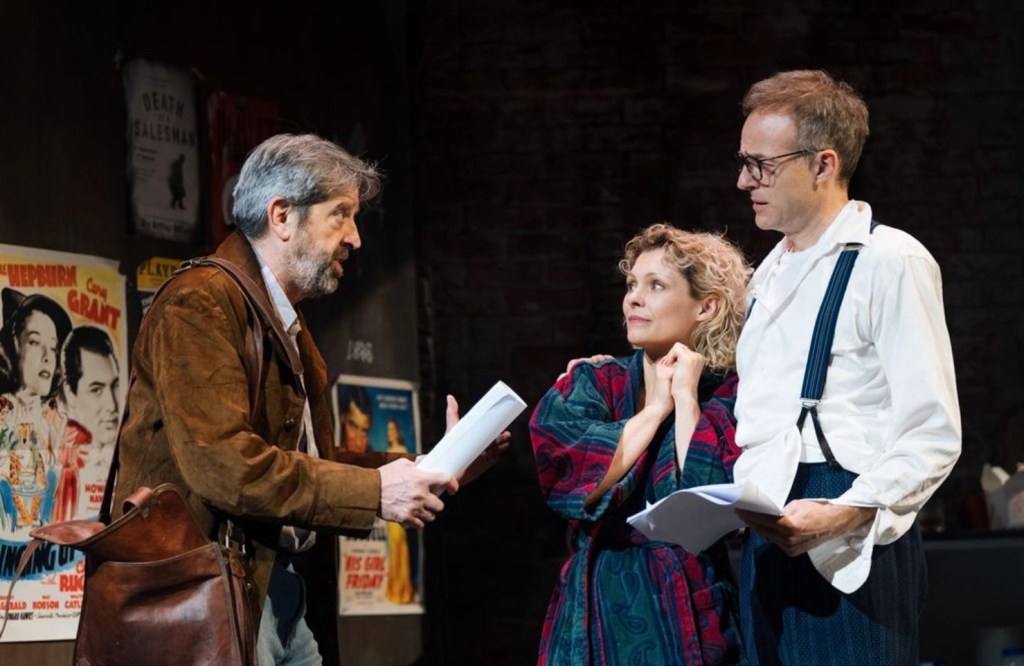
    George Naylor plays unemployed actor Joe, seconded from his job in a gay bar by a wealthy, mysterious gent to come to a remote manor house for a week to pretend to be a ghost nightly walking the perimeter of this country pile for the entertainment of the strangers nieces. It’s an unlikely but intriguing premise but Joe turns out to be an unreliable witness with more than a few personal issues. He’s embittered by his flailing acting career and his break-up from posh boy Rufus (who he nicknames, not entirely affectionately, Dufus), is up to his eyeballs in debt, and has a troubled family history. He also has a couple of sizeable chips on his shoulder: about class, about a regional theatre writing project that has come to nought. So, yes, Joe is a lot. Is he really being followed when he makes these macabre night walks around the estate, and how many of the night terrors he experiences are actually real, and how many are the products of his fevered, paranoid brain?

    On top of all that he is seriously considering jumping the bones of the rich, hot older man who has brought him to the middle of the countryside for this unconventional job. Naylor commendably doesn’t overdo trying to endear this abrasive, insecure chancer to us. He’s often very funny but also entirely self-absorbed and pretty unkind. If Naylor‘s performance tends to the shouty, his athleticism and precision impresses, and he has a wonderful ability to connect with an audience, even when Joe is being a bit of a jerk.

    Needless to say, almost nothing about Joe’s unconventional work gig is to be taken at face value and Naylor isn’t the only actor involved. Without giving too much away, Oliver Baines brings grace and gravitas to a character called simply ‘The Dancer’ and Paul Hilton, surely one of this country’s greatest but most underrated actors, provides a vivid pre-recorded voiceover for a section that seems to come out of left field. 

    The suggestion of the terror of the unknown is much more potent than the later sequences where all hell breaks loose, almost literally. It’s undoubtedly the stuff of nightmares – Joe’s and the audience’s – but dragging the sinister and forbidding out into the open robs it of some of its power. Foley’s writing, which for the most part skilfully blends irreverent humour with real fear, temporarily becomes disappointingly prosaic. 

    Bettles’ staging doesn’t put a foot wrong though. The set, co-designed by Bettles and Tom Robbins is a shady wonder of skewed perspectives and weird angles, and the lighting and video design by Joshua Pharo is gloriously, dislocatingly ambiguous and atmospheric. Horror thrives on aural stimuli and Pete Malkin’s sound work here is an absolute masterpiece.

    The ending feels like a more malevolent riff on The Woman in Black’s unexpected, bone-chilling conclusion but might have benefitted from a crucial element of it not having been revealed to us before. As with Andy Nyman and Jeremy Dyson’s popular Ghost Stories, the shuddering build-up of suspense proves more exciting than the pay-off. That reservation aside, this is a big fat popular hit that will send fear-crazed patrons out delirious, and deliciously exhausted.

    March 11, 2026

  • MARIE AND ROSETTA – ⭐️⭐️⭐️ – the play’s a little uneven but when the music kicks in, this is heavenly

    Photograph by Johan Persson

    MARIE AND ROSETTA 

    by George Brant

    directed by Monique Touko 

    @sohoplace, London – until 11 April 2026

    running time: 2 hours including interval

    https://nimaxtheatres.com/shows/marie-rosetta/

    If it takes a star to play a star, then that aspect of Marie and Rosetta is in very safe hands. A vibrant Beverley Knight plays “the Godmother of rock’n’roll” Sister Rosetta Tharpe in George Brant’s enjoyable two hander examining the legacy of the musical pioneer who inspired greats such as Elvis, Johnny Cash and Ray Charles, but whose name isn’t as universally well known as it deserves to be. Knight brings dynamic stage presence, exquisite comic timing tempered with a rare emotional availability, and, as expected, roof-raising, majestic vocals. 

    She’s partnered by rising star Ntombizodwa Ndlovu as Marie Knight, Rosetta’s protégée, musical collaborator and (alleged) lover, although Brant’s play (first seen off-Broadway a decade ago in a different production) is curiously noncommittal about exploring that part of their relationship. Ndlovu is excellent, but the role feels underwritten in comparison to the barnstorming opportunities Knight is afforded as Tharpe. 

    The play opens in a funeral parlour in Mississippi in 1946, as Rosetta persuades Marie to tour with her. Brant emphasises the grimness and racism of the mid twentieth century touring circuit in much of America as it pertains to these two Black women, who, almost unbelievably, will be expected to sleep amongst the coffins, no other accommodation being permitted to them. “We not in New York anymore, honey” states Rosetta, “we not in Chicago. Can’t stay in no hotel down here.” The script bounces fleetly and, honestly, a little confusingly through various life events, some traumatic, for both women, before returning to the funeral parlour and a would-be tear-soaked conclusion that feels earned by the acting if not the writing. 

    Brant’s work is at its best when depicting Rosetta’s passion and fervour around her music, as she moves between gospel and the roots of rock’n’roll, and Knight, with her rolling gait and bruised survivor’s vitality, handles it so persuasively. This in turn leads to the sections when Monique Touko’s in-the-round production really excels, and the music takes over. An all-female quartet of musicians, led by Shirley Tetteh, tear through gospel, r’n’b, rock numbers, while the voices holler and soar thrillingly overhead. If the dialogue is sometimes tepid, when the singing starts, Marie and Rosetta becomes red hot.

    The real Rosetta and Marie played instruments and having Knight and Ndlovu mime invisible guitar and piano at various points becomes distracting and enervating, given the amount of music in the production. Despite the sketchiness of the characterisations as written, the contrast in the two women’s energies and outlooks is nicely conveyed. Liam Godwin’s orchestrations are suitably rousing and Tony Gayle delivers a sound design that captures the rawness of rock’n’roll in its infancy and ensures that we all feel the music in our bones. Visually, the show is attractive, driving a decent middle path between glamour and grit (set design by Lily Arnold, costumes by Jodie-Simone Howe, wigs, hair and make-up by Keisha Banya) and it’s beautifully lit by Matt Haskins.

    Marie and Rosetta isn’t a great play: its structure is unwieldy and the storytelling is unclear, and having the audience on all sides is great for the intimacy but problematic for sightlines, at least as staged here. Still, it has genuine heart and humour. It also sheds a welcome light on a pair of neglected musical talents, one of whom really should be spoken of in the same breath as the other ‘greats’. See it for that, for the unforgettable music, and for the performances. 

    March 10, 2026

Previous Page Next Page

Blog at WordPress.com.

Loading Comments...
  • Subscribe Subscribed
    • ajhlovestheatre
    • Join 60 other subscribers
    • Already have a WordPress.com account? Log in now.
    • ajhlovestheatre
    • Subscribe Subscribed
    • Sign up
    • Log in
    • Report this content
    • View site in Reader
    • Manage subscriptions
    • Collapse this bar