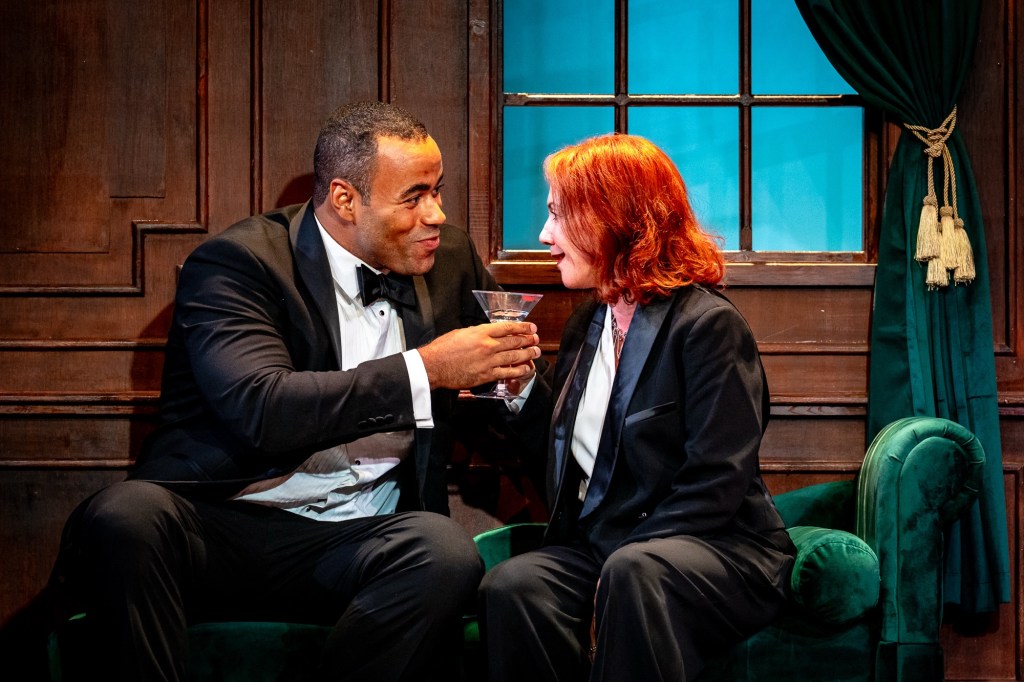
I’ve no idea when Jordan Waller wrote this amiable Hollywood-adjacent comedy but A Role To Die For often seems approximately two decades old. Set mainly in the office of a fictional producer of the James Bond film franchise as one 007 passes the baton to the next, a lot of the tension and humour derives from the realisation that the role’s newest incumbent is Black and gay. Not too long ago that might have been shocking or at least surprising but in 2025 it’s hard not to feel, well, so what?!
It says much for the quality of the performances in Derek Bond’s production, partially recast from its premiere at Cirencester’s Barn Theatre, as well as the ongoing fascination with the machinations of showbiz, that A Role To Die For is still worth watching. Waller’s writing for Deborah, the embattled film producer who inherited her position from the late father who still very much influences her ongoing life, is expletive-strewn and waspishly amusing. Tanya Franks inhabits the role with a compelling nastiness and keen comic timing but is a nuanced enough actress to invest the character, who really is a piece of work, with a degree of warmth, and she makes vivid her feelings for her gay, socially conscious son (Harry Goodson-Bevan, excellent) whose values and beliefs are the very antithesis of her own.
Franks is terrific and it doesn’t hurt either that Obioma Ugoala, as Theo, the actor up for 007, clearly has the looks, charisma and charm to plausibly play Bond in his own right. In a rare moment of calm in an otherwise pretty frenetic script, Waller gives him a sensitive speech about representation and what it would have meant to a youthful Theo to see a Black man in such a role, and Ugoala delivers it beautifully. Philip Bretherton is great value as Deborah’s co-producing cousin, perpetually on the verge of outraged hysteria but whose bumbling exterior belies a ruthless streak.
More mildly engaging than outright hilarious, it’s an entertaining piece, with overtones of farce and thriller, that doesn’t tell us anything new or surprising, but rattles by agreeably. Running at less than two hours including interval, it doesn’t outstay its welcome either, although, for all of Franks’s skill, the sections where Deborah addresses her late father are pretty laboured, as is a jokey conclusion that suggests the writer wasn’t entirely sure how to end the play. The (frequently extremely rude) dialogue sometimes fizzes though.
If the energy in Derek Bond’s staging occasionally dips and Cory Shipp’s set falls some way short of conveying the luxury and glamour of what one imagines the premises of a high end movie company might be like, the performances carry the show. A Role To Die For won’t change lives, but for a spicy bit of undemanding popular culture-related fun, it does rather nicely.
Mental health, the insidiousness of isolation, and office politics come under the microscope in this engaging monologue. It feels rather like a throwback to the Alun Bennett Talking Heads series of solo plays where a raft of information was telegraphed to the audience over the heads of the principal character doing the talking, and also to Covid times when it felt like the only theatre we were ever going to see was with one person on stage.
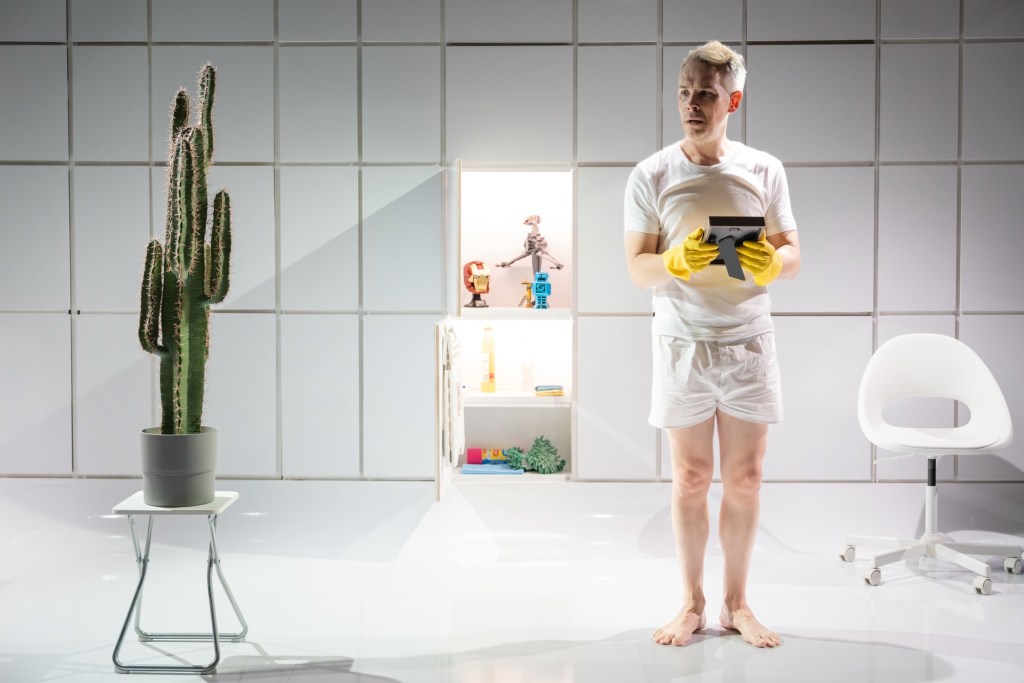
Clive is the name of the giant cactus that lonely Thomas shares a living space with, and to whom he confesses, complains and generally offloads, as he carries out his mundane office job working from home, in a flat he hasn’t left for more than two years. Paul Keating, in an exquisitely detailed performance, invests this likeable oddball with a cosy charm and mirthless jollity through which shards of absolute desolation occasionally pierce. When he gets angry, it’s unsettling but entirely plausible, the inevitable consequences of a desperation borne of always trying to do the right thing by other people but then getting shafted by life anyway.
Michael Wynne’s script is a great showcase for Keating, whether it’s wryly relating stories from when he used to work in an office, wistfully recalling a lost love, conveying the absolute shock of somebody facing accusations they had no idea were coming, or demonstrating the old adage of “dance like nobody’s watching”. He’s delightful yet strangely tragic as he observes, from his window, other people going about their lives while he remains indoors, either glued to his laptop, obsessively cleaning, or talking to a cactus. The performance is more accomplished than the writing which, though often witty and delicately but cleverly structured as a piece of storytelling, is pretty pedestrian.
There are some implausibilities in the telling of how and why Thomas is shaken from his safe but sterile isolated existence, and the final suggestion that he needs to get out more is hardly revelatory. Despite the brilliance of Keating’s delivery, I didn’t fully buy that an act of kindness could be so grossly misinterpreted leading to an implosion of Thomas’s limited world, although the systematic destruction of the titular Clive is a striking metaphor for that. The play is at its most interesting in its exploration of the dynamics of an “office” where the workers never see each other in person, and how extreme loneliness can take a dire toll on an individual’s mental health.
Lucy Bailey directs Keating with a subtle flair. They previously collaborated at this venue on Mike Poulton’s wrenching Rattigan spin-off Kenny Morgan, one of the theatrical highlights of 2016. That was a masterpiece and while Clive isn’t in the same league there is still something thrilling about watching world class talents lavish their efforts on a minor key work. Mike Britton’s brutally neat, almost clinical, set design contrasts nicely with the surprisingly extravagant lighting and sound contributions of Chris Davey and Nick Powell respectively.
Wynne ends the play on a welcome note of hope, and even if ultimately this is pretty small beer as a whole night in the theatre (in years gone by, this would probably have been half of a double bill) the craft, intelligence and talent involved still make it a worthwhile watch.
Shows and films, let alone musicals, about women excelling in activities usually associated with men are hardly common, especially when mounted by predominantly female creative teams. Therefore, it was dismaying, ahead of seeing it, to note the muted critical response to this heartfelt, imperfect but mostly seaworthy new tuner premiering at Southwark Playhouse.
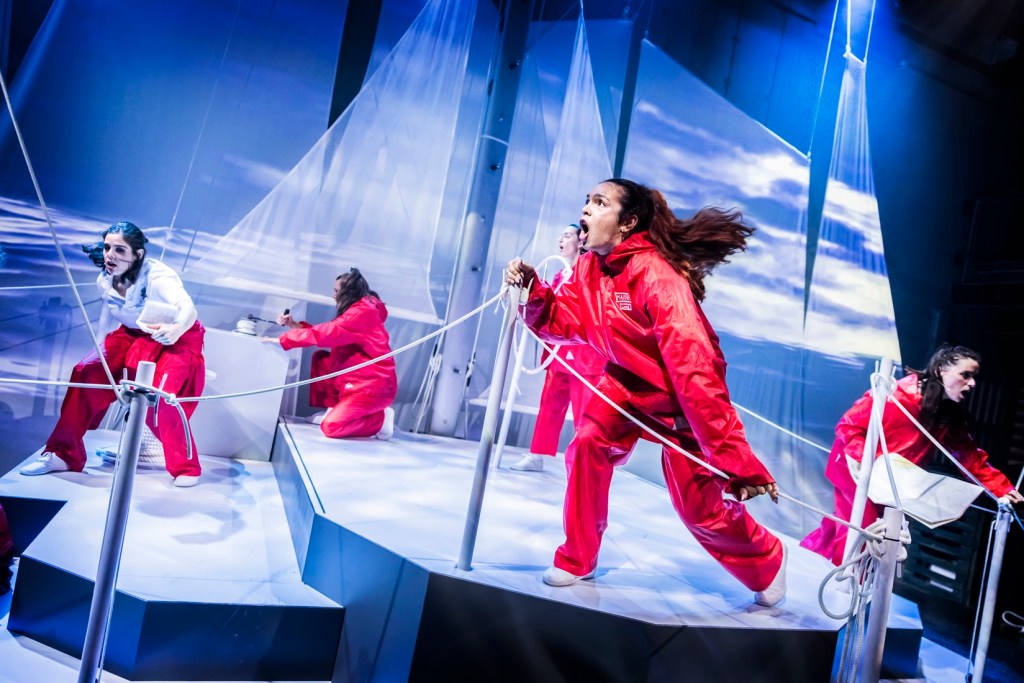
I’m not suggesting for a moment that shows should be praised when they’re undeserving, but, watching this, it felt that the often unfavourable response was surprising given, when considered as a whole, how much there is here to enjoy. The musical revisits the true story of yachtswoman Tracy Edwards (a superb Chelsea Halfpenny) who in 1989 skippered the first all-female crew, on a refurbished vessel christened ‘Maiden’, in the Whitbread Round The World Yacht Race, finishing second. It’s an inspirational story about overcoming the odds and confounding other people’s expectations, not typical fodder for a musical treatment, but Tara Overfield Wilkinson’s muscular, dramatic production works wonders to theatricalise it.
Visually, it’s rather splendid. The set is a series of platforms, ropes and screens that gradually, excitingly takes the shape of a boat as the performance progresses. Jack Baxter’s video design conjures up serene waters then a roiling, turbulent sea beneath dark cloud-scudded sky in a thrilling, terrifying storm sequence (further enhanced by Dominic Bilkey’s sound and Adam King’s lighting design, both contributions vivid and ingenious). Overfield Wilkinson choreographs as well as directs, and has her cast sliding, staggering and pitching to simulate being at sea in extreme conditions. This is boldly effective, imaginative theatrical storytelling of the highest order and, in all honesty, it’s more effective than the actual material.
Mindi Dickstein’s book has a tendency to hurl information at us without much nuance or flair, but moves swiftly and captures the excitement of the race, and the determination of the racers. Characters ranging from King Hussein of Jordan, an early mentor for Tracy, to our heroine’s concerned mum, to chauvinistic pundits and journalists, pop up to hasten the story along but neither they nor the dozen women crew are presented as little more than sketches. It gets a little repetitive, but that isn’t inappropriate given how much of the show features the day-to-day seafaring lives of these women.
The structure feels a little off as the piece really takes its time with establishing the personal and professional challenges Edwards and colleagues endure in pursuit of their dreams but then ends abruptly, as though the authors suddenly remembered that the show is only supposed to last ninety minutes. A dialect coach might have been advisable too, as a couple of the accents from the international sailing team are alarmingly non specific. If all this ultimately matters surprisingly little, that’s thanks to the commitment of a talented cast, Carmel Dean’s frequently rousing songs, and the bravura low-tech ingenuity of Overfield Wilkinson’s staging.
Dean’s music fares better than the book: it’s a surging, intermittently soaring tapestry of sound that invokes sea shanties, folk and pop, elevated by gorgeous, strings-heavy orchestrations by long term Sondheim collaborator Michael Starobin. All the singing is strong and the complex vocal harmonies are stunning (Dean also did the vocal arrangements).
Halfpenny is wonderful, making Tracy simultaneously unassuming, hard-edged yet appealing. There’s real affection in the relationship portrayed between her and best mate Jo (a winning Naomi Alade). The team of international women who join them on their epic journey aren’t particularly fleshed out in the writing but the ensemble do a lovely, spirited job of bringing them all to life. Juliette Artigala, last seen as Cosette on the stunning non-replica Les Mis at Paris’s Theatre du Châtelet, makes a particularly strong impression as a French sailor learning English from a phrasebook to connect with her fellow crew, and Sam DeFeo, despite an inconsistent accent, makes a creditable professional debut as a brash, humorous New Zealander determined to find fun amongst all the travails.
The writing for the men is even less robust but the performances are potent and effective. Daniel Robinson offers a delightful study in benign neurosis as one of the team’s biggest supporters. There are shades of Jason Robert Brown’s Parade in the sequences where male pub drinkers and newspaper personnel make acidic snipes and misogynistic observations from the sidelines.
Ideally, Maiden Voyage needs another workshop to be fully satisfying but, even in this iteration where the production and performances seem stronger than the actual work itself, it’s refreshing to see an ambitious new tuner willing to tackle subjects and situations outside the typical remit of musical theatre. It’s not a world beater yet but this is an admirable initial cast off.
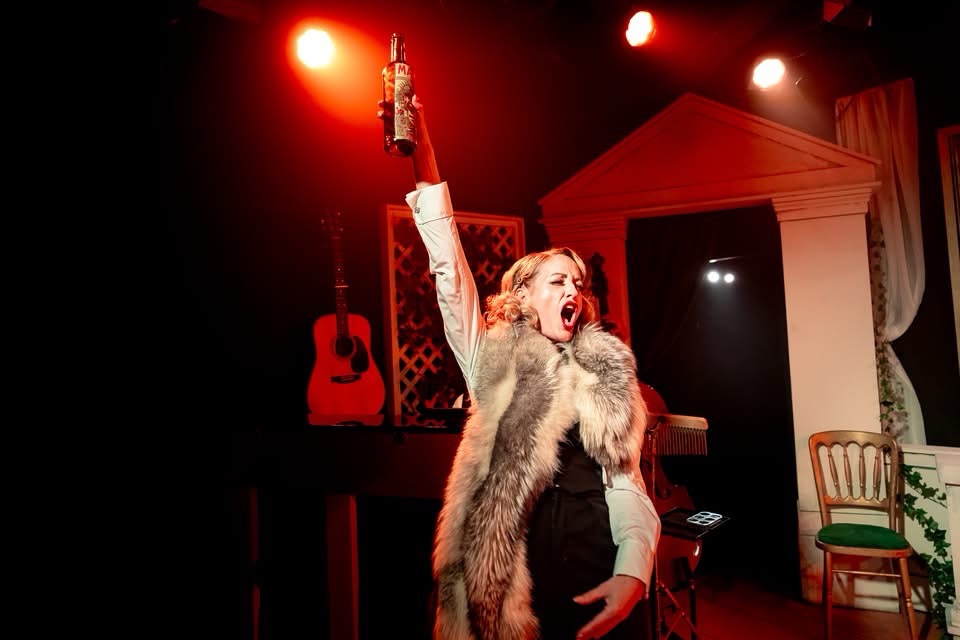
This delightful chamber musical, exquisitely staged and performed, comes as a refreshing palate cleanse after the bombast of most current West End tuners. Extraordinary Women is inspired by Compton MacKenzie’s satirical novel set on a fictionalised Capri in 1919 where swathes of international bohemians and artists decamped (and “camp”is the operative word) to escape the horrors of WW1. Sirene, as the author renamed the idyllic island, is a hotbed of lesbian dalliances, intrigue and rivalries professional and personal, and Sarah Travis and Richard Stirling’s musical has a cast of six women and just one man.
Presumably inspired by the name MacKenzie gave his reimagined Capri in the 1928 novel, librettist Stirling has added the nifty framing device of having four Sirens of Greek mythology – Parthenope, Ligeia, Leucosia, and the especially relevant Sappho – as commentators on, and controllers of, the narrative, also swooping in to play actual women embroiled in the story. If initially it’s a little confusing having Grecian mythical figures in an Italianate setting, there is something peculiarly English anyway about these arch, campy, trilling glamazons swanning about in flowing robes like a sort of chimerical Mitford sisters.
Monique Young, Jasmine Kerr, Sophie-Louise Dann and Amira Matthews make an irresistible team, displaying spectacular voices and impeccable comic timing. “I’m not a siren, I’m an icon” grandly asserts Matthews’s commanding Sappho near the beginning, and the collective looks of exasperation and disdain from the other three could freeze mercury. Dann is an absolute scream as the comically uptight English governess and the volatile French diva that Leucosia deigns to personify in human form, and gets to unleash her formidable voice on an overwrought pastiche operatic aria. Young, a particularly lovely stage presence, does accomplished work in the contrasting roles of a fretful Russian emigrée and a go-getting American vulgarian. The entire quartet is fabulous.
The story, such as it is, centres on an ongoing liaison between impecunious but impossibly glamorous Italian-Swiss adventuress Rosalba (a sensational Amy Ellen Richardson) and dowdy, sensitive rich Brit Aurora (Caroline Sheen). Their relationship is conveyed in a series of vignettes with little in the way of a through-line so it’s not easy to get particularly emotionally involved, but both joint-lead actresses are tremendously impressive. Sheen invests Aurora (or Rory as she’s known to her Sapphic chums) with a bittersweet charm but also a steeliness borne of the self- reliance of a woman who, despite her privilege, is always made to feel unequal to her contemporaries. She delivers a beautiful rendition of a second act ballad that usefully fleshes out her character.
Rosalba is the showier role and Richardson, attired for half the show like a Blue Angel-era Dietrich, is an absolute knockout. She nails the almost alarming self-confidence of a great beauty accustomed to every human she comes across falling at her feet, but also the constant low-level desperation of the chancer acutely aware that her luxuriant lifestyle is mostly smoke and mirrors. Extravagantly funny but multi-layered, with top flight vocals and dancing, this is a heavenly musical comedy star performance with an intriguingly dark edge.
Another winning turn comes from Jack Butterworth, a young leading man with a unique combination of classic showbiz brio and earthy charm, playing all the male roles. From disapproving, thickly accented Italian policeman to stiff-upper-lip English army captain to Daffodil, Rory’s touchingly goofy Julian Clary-esque gay sidekick, and a few others besides, Butterworth is wonderfully specific, pulling off some head-spinningly fast costume changes. He’s a real treat.
Paul Foster’s production, scintillatingly choreographed by Joanna Goodwin, is fleet of foot and light of heart, but with a satisfying attention to detail and willingness to engage with the more sombre aspects of the story. It looks ravishing too, from the gold and azure elegance of Alex Marker’s simple set to the glittering, opulent costumes by Carla Joy Evans. Sam Sommerfield’s orchestrations for piano and guitar/bass are straightforward but enjoyable, and superbly played, crucially never overwhelming the all-important lyrics. The acting repeatedly strikes the perfect balance between sincerity and knowing camp, and the whole thing is so well paced and entrancing that you almost don’t notice that the episodic script very slightly outstays its welcome in an over-extended first half.
The music by Sarah Travis, lilting and often lovely, vamps and shimmers, conjuring up a lost world of endlessly flowing champagne, gleeful bad behaviour and low key melancholy. Paired with Stirling’s witty, literate words, the whole jolly thing sometimes feels like a vintage throwback to the small scale British musicals of Sandy Wilson and Julian Slade, where class, eccentricity and fantasy collided with similar comic aplomb.
All Extraordinary Women lacks is a couple of really big tunes, and a sense of palpable erotic heat between the bed-hopping, romantically entwined women. But it’s a beguiling, defiantly unfashionable mixture of outrageous and elegiac, crafted with infinite class and intelligence by a terrific team. Jermyn Street is a tiny house, you’d be advised to get your tickets now, this deserves to be a summer hit.
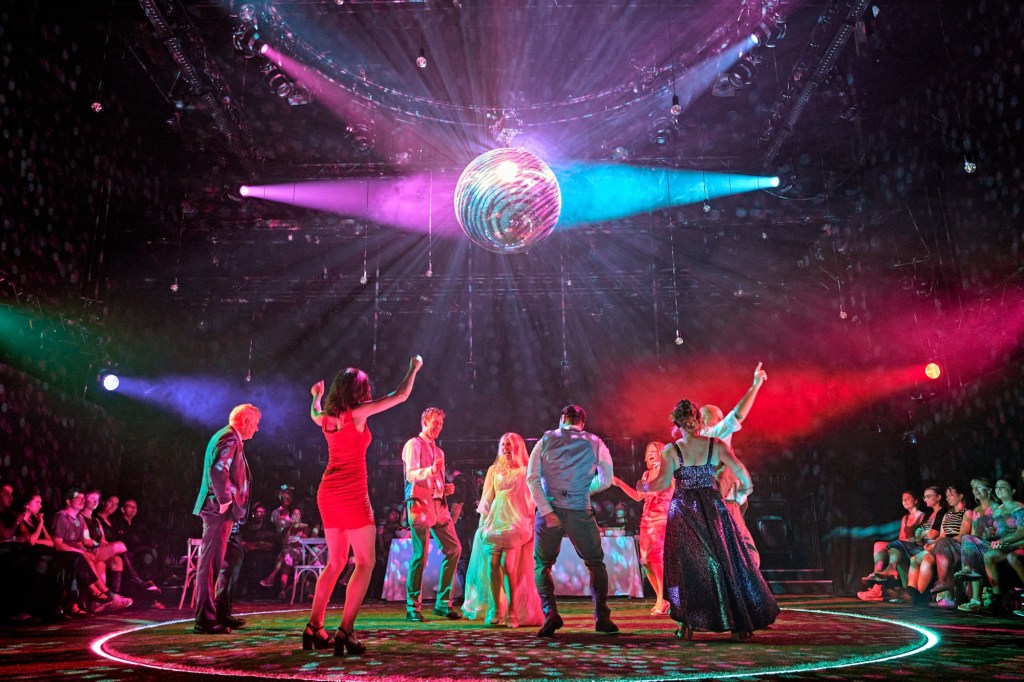
There’s a broad consensus that Mark Rosenblatt’s astonishing writing debut Giant was the best new play of 2024, with the RSC’s gripping, urgent climate change drama Kyoto as a worthy second. Terrific as they both are though, neither are as much fun as Beth Steel’s cracking wedding-from-hell saga Till The Stars Come Down which blasted open at the National early last year to universal popular and critical acclaim, and enjoyed further popularity on NT Live. Newly transferred into the West End, following a hiatus, it remains a pleasure to sit through, even if Bijan Sheibani’s semi-recast production doesn’t sit quite as well amongst the gilt and plush grandeur of the Theatre Royal Haymarket as it did in the intimacy of the Dorfman.
Sheibani’s staging retains its in-the-round configuration by placing a couple of rows of the audience on the Haymarket stage, and involves the house by including us all in a singalong and amping up having the actors directly address us as though we’re wedding guests. The production also feels the loss of two key actresses from the National original. This is a piece that would have played brilliantly at Trafalgar Studios had it still existed, and in scaling up to fill its opulent new home, the pacing and rhythms, at least on press night, seemed a little off at moments, although that may iron itself out as the run progresses. Under these circumstances, Steel’s script, while still richly entertaining and gripping, doesn’t seem quite as rock solid as it previously did.
In earlier works like Wonderland and The House of Shades, Steel demonstrated a unique talent for mixing up the gritty realities of day-to-day lives with a bold melodramatic theatricality. This has elements of all that, but also a seam of wild humour, a clear-eyed take on the state of the UK today, and a cast of vivid characters drawn and played with truth and compassion. It is tremendous entertainment but it’s also more than that.
Set in Steel’s native Nottingham area, which probably explains the sometimes painful authenticity of the script, the piece centres on a wedding, the sort of event that is frequently a catalyst for emotions boiling over and ancient resentments coming to the fore. Steel further enriches this by making the family gathered to celebrate the nuptials of delicate Sylvia (Sinéad Matthews) to Polish Marek (Julian Kostov) a microcosm of the UK today. Thus Dad Tony (Alan Williams) is a former miner who hasn’t spoken to his brother Pete (Philip Whitchurch) for years over an issue with the strikes in the 1980s. Pete’s wife Carol (Dorothy Atkinson) is joyously lairy with an opinion, however controversial, on everything. Meanwhile, Sylvia’s brother-in-law (Adrian Bower) can’t find work due to the industries shutting down while his wife and Sylvia’s older sister Hazel (Lucy Black) views immigrants with suspicion. Their daughter Leanne (Ruby Thompson) is a bit of a lost soul…..
It sounds a lot to take in, but Steel drip feeds the information and the revelations with skill, the characters are so engaging (even when they’re being appalling) and the dialogue is so funny, salty and sharp that it washes over you as a couple of hours of utter, if occasionally painful, pleasure. Sheibani’s production plays out under a giant glitterball that suggests not just a party but the size of a planet, as if to put into perspective the human difficulties, joys and fury this onstage family is going through. Encountering it again though in a new space, the gear changes between rollicking comedy and high stakes near-melodrama seem more abrupt, and the juxtaposition of the universe at large with these tumultuous domestic lives feels more self conscious, less organic than it originally did.
The acting is a treat. Dorothy Atkinson’s Aunty Carol is dourer and less the monstrous comic motor driving the play than Lorraine Ashbourne was originally, but she’s irresistibly funny, and finds the casual cruelty underneath the character’s gossipy vulgarian exterior. Note the way she casually throws away the sentence “the story of his life” about her own husband when recalling a long-ago fancy dress contest at which he came second. Lucy Black’s in-denial older sister, who expresses some pretty ugly viewpoints, has deepened and darkened into a stunning study of disappointment and barely contained fury. Similarly, Alan Williams’s grieving patriarch has gained in intensity, authority and sympathy from the NT run, it’s a subtle, wonderful portrayal.
I missed the quiet intensity and warmth of Lisa McGrillis from the first cast as arguably the most relatable of the sisters….replacing her, Aisling Loftus is tremendously likeable and plays up the character’s vulnerability more. Sinéad Matthews’s childlike but tougher-than-she-looks Sylvia remains exquisite, and is thrilling when required to turn up the emotional heat. Opposite her, newcomer Julian Kostov invests Marek with a combination of bonhomie and intensity that rings entirely true. Seemingly younger and more innocent than his predecessor, he makes more sense of a vital, damaging second act plot development (no spoilers here!)
Each design element (Samal Blak – set and costumes, Paule Constable- lighting, Gareth Fry – sound), works harmoniously but without detracting attention from the riveting, crackling dialogue and these fascinating characters. The play ends on a cathartic but too abrupt note, leaving a rapt audience wanting more. Ultimately, Till The Stars Come Down is a unique achievement: a superior situation comedy meets riveting family saga meets state-of-the-nation drama. Despite a few niggles about this current iteration, it remains that a rare and wonderful thing, a very good play that’s also a great big crowd pleaser.
There are multiple ways of doing Jesus Christ Superstar. The controversial Broadway original (which Andrew Lloyd Webber famously derided as “such a freak show”) was an extravagant nightmare with an aesthetic inspired by insects, the 1973 Norman Jewison movie was a hippie trip, Sheader’s thrilling Regents Park version was like an outdoor music festival, a Kenwright tour reduced it to a gold-covered pantomime, European auteur Ivo van Hove envisioned it as something stark, disturbing and cultish. This Watermill production for actor-musicians sets it in a semi-dilapidated church inhabited by grungy, guyliner-ed hipsters, and invests it with a brooding sincerity.
Just like Evita, which is once again the talk of the West End thanks to Jamie Lloyd’s stunning Palladium revisal, Jesus Christ Superstar began life as a concept album. Watching Paul Hart’s intelligent but still viscerally exciting new version of the older show, first staged in 1971, it’s apparent that this rock opera, while not as musically sophisticated as its precocious younger sister, is more coherent as a piece of drama. There is a natural flow to the storytelling that not even a brief, not entirely necessary, sojourn outside which sees the Watermill’s picturesque Berkshire gardens on the banks of the Lambourn substituting for the garden of Gethsemane, can dispel.
Hart and his designer David Woodhead have turned the wood and stone watermill itself into a gloomy church, with graffitied walls, multiple candles illuminating the shadows, pew benches being rearranged to create locations and light streaming down through an ornate window. It’s an environment at once atmospheric and sombre yet loaded with theatrical possibilities. What follows is a swift, almost breathless, retelling of the last days of Jesus that has a touching, tender humanity alongside the rock’n’roll raucousness.
Jesus, Judas and Mary come across as real, fallible human beings here, not the impersonal archetypes they are sometimes represented as in larger scale iterations. The tormented Judas, torn between love for Jesus and the creeping dread that all of this God stuff could have dangerous repercussions, has always been a more interesting role than the title one, and so it proves again here. Max Alexander-Taylor is haunting and unsettling, presenting him as a volatile outsider with a desperately vulnerable streak. Switching seamlessly between the electric guitar, flown in from above like a symbol of divine retribution, and keyboards, he sings the role with a ringing rock tenor that sounds like it’s being ripped out of his soul. His final demise is horrible to watch yet totally compelling. It’s a stunning performance.
More lowkey but equally fine is Parisa Shahmir’s watchful, folk-inflected Mary, accompanying herself on the acoustic guitar in a gorgeous, deeply affecting version of the ballad ‘I Don’t Know How To Love Him’. As Jesus, looking like a boyband heartthrob, Michael Kholwadia navigates the stratospheric, intense vocal demands of the role with astonishing confidence and ease, but is an oddly blank stage presence. After his capture, torture and interrogation at the hands of Pilate (a brilliantly nervy, neurotic Christian Edwards), this Jesus seems more bored than broken, which deprives the latter parts of the show of some of its emotional impact. Vocally though, he’s one of the most secure and impressive interpreters of the role that I’ve ever heard.
The ensemble cast is loaded with charisma and sheer raw talent, whether coming together as a stomping, swaying folk-rock band, singing like angels or executing Anjali Mehra’s angular, galvanising choreography with real plomb. Michali Dantes is a cracking, dangerous Simon Zealotes and Seb Harwood makes something memorable and tragic out of Peter’s denial of Christ. Samuel Morgan-Grahame’s vicious leather queen Herod is simultaneously hilarious and terrifying, and comes close to stopping the show.
The church setting lends the show a sense of gravitas and mystery that is sublimely effective, augmented by outstanding work from lighting designer Rory Beaton whose contributions range from bathing the company in a comforting golden glow, to a blinding battery of rock stadium illumination for the title number, with much in between. He paints with walls of light, allowing characters and scenes to magically appear and disappear apparently out of nowhere….it’s fun but also vaguely sinister, as are Daniel Denton’s murky, striking video designs.
Stuart Morley’s adaptation of Lloyd Webber’s original musical arrangements is smart and satisfying, only very occasionally do you miss the full orchestral swell or the face-melting intensity of true hard rock. Tom Marshall’s sound design is admirably clear, so that Tim Rice’s lyrics, some of which now register as endearingly quaint but are still overall witty and pithy, are fully heard.
The idea of playing the opening of act two, so the Last Supper followed by Jesus’s vocal chord shredding solo ‘Gethsemane’ and subsequent arrest (but not for bad singing), outside with the audience in a circular wooden mini-amphitheatre, is a mixed blessing. While it’s a thrill to have somebody on the cello or guitar literally centimetres from you, the dramatic and aural intensity outdoors is drastically compromised, so, for all the efforts of this splendid cast, it feels a bit karaoke, albeit with amazing voices. The bucolic splendour of the Berkshire countryside also seems a little at odds with the atmosphere of shuddering dread and explosive confrontation that the Rice-ALW score is going for at this point. Still, using the full height of the Watermill’s structure, with Olugbenga Adelekan and Alexander Zane’s impeccably nasty authority figures staring down at all of us plebs, is undeniably impressive, and the transition back indoors for the trial and subsequent crucifixion is smoothly handled. I’m just not sure it was ultimately worth the effort.
There is a lot here to love though. An original, frequently rousing, take on a beloved score that for the most part feels timeless, with an intriguing shabby-chic visual aesthetic which throws up several breathtaking moments. Plus a jawdroppingly talented cast. Other Watermill productions (Amelie, Mack and Mabel, Lord of the Rings….last year’s Barnum about to tour) have gone on to have further lives elsewhere, and this Superstar thoroughly deserves a similar fate. Well worth a trip into the Home Counties.
Who would have thought that the most dynamic show in town would be a (nearly) half century old musical about an Argentine dictator’s wife who died over 70 years ago? Yet here we are. Master conceptualiser/enfant terrible director Jamie Lloyd revitalised and transformed Sunset Boulevard (still packing them in for a couple more weeks in NYC starring the now Tony-winning Nicole Scherzinger) and now works similar magic on Andrew Lloyd Webber and Tim Rice’s Evita.
An earlier edition of Lloyd’s take on this pop opera about Eva Perón was seen at Regents Park Open Air Theatre in 2019, with the same production team but different cast, and while there are cosmetic similarities between the two versions, this new one has been so significantly upgraded on every level as to feel like an entirely new show (the pandemic put paid to plans for a return season at the Barbican, as the Tim Sheader Jesus Christ Superstar had previously done). So, will this follow a similar trajectory to Sunset and end up on Broadway? It’s hard to imagine that preliminary planning hasn’t already started, given the mostly ecstatic word-of-mouth, media attention (more of that in a bit) and skyrocketing ticket sales during Palladium previews. The rollicking combination of extreme lights, sound, high octane choreography and diva worship is probably as well suited to Madison Square Garden as to a regular Broadway house.
Whatever happens, this Evita will surely launch American screen star Rachel Zegler on a similar stage career to that of Scherzinger: it’s a stupendous West End debut, and one that redefines an iconic role in the musical theatre canon. Tiny of frame and mighty of voice, Zegler makes no attempt to ingratiate Eva (Evita – “little Eva” – is an endearment favoured by Perón’s working class supporters) to us, instead offering a rock hard, unscrupulous manipulator who uses her charm and sexuality to rise up the greasy pole of Argentine society, from an impoverished backwoods pueblo to the Casa Rosada, Buenos Aires’s presidential palace.
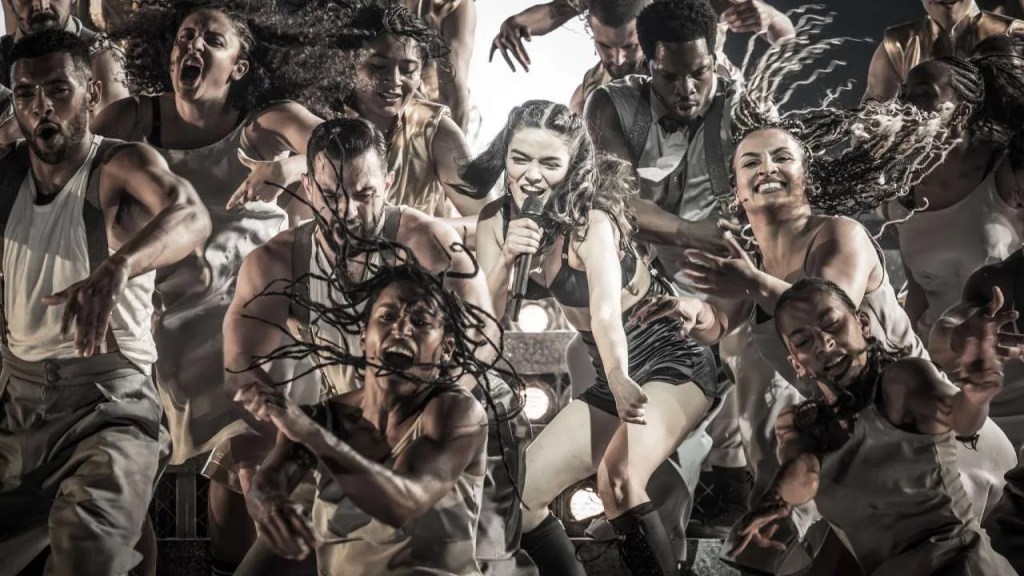
Clad for most of the show in a bra top and shorts (anybody who saw the Regents Park Evita will remember that period trappings of the early to mid twentieth century when the Perons were in power are almost entirely eschewed), she’s like a pop megastar at the height of her fame, a diminutive diva with killer dance moves, a voice that can turn on a dime from seductive soprano to fearless high belt, and a lethal ambition that can, and will, steamroller anything on her path to glory. Zegler takes on the often very challenging music as though going into battle….and wins, every time. There’s fierce intelligence too in the way she bites into Tim Rice’s witty, cynical lyrics.
If the concept doesn’t allow for much in the way of nuanced acting, the ‘Don’t Cry For Me Argentina’ sequence which controversially has Zegler performing the famed song on the exterior balcony of the theatre to crowds outside while the paying audience watches her on screen, shows us in dream-like, glowing close-up, Eva’s magnetism as a political speechifier and the cynical way she controls the throng. Technically, it’s breathtaking, but it has rubbed some people up the wrong way given how well known the number is; it’s a brilliant idea though, making a free event happen outside the venue every night for “regular” people while those who can afford tickets are inside watching our leading lady by live relay, which, as a metaphor for why and how the real Eva Perón was such a divisive figure, is about as on-the-nose as you can get. Personally, I thought it was magical from inside the auditorium, and even more effective than Tom Francis’s street walkabout to the title song of Sunset Boulevard. Zegler’s wily, impassioned performance of the beloved aria, dressed as the iconic blonde, ball-gowned Eva to suggest this is the public facade as opposed to the much less serene, more sinister face we are encountering behind closed doors, is one of the finest I’ve ever experienced.
Another American import with charisma to match Zegler’s is Diego Andres Rodriguez as an unusually energetic, youthful Che, the increasingly disenchanted narrator and lynchpin of the piece. Rodriguez has a warm, powerful voice and an appealing vulnerability that reads affectingly against Zegler’s granite princess. There are suggestions in the staging that the two characters serve as alter egos to each other, and they have considerably more chemistry than there is between Eva and Perón himself (a chiseled, unknowable James Olivas, excellent). I rather think that’s the point though – Eva’s relationship with Juan Perón is transactional, a power grab, while Che is nearer to Eva’s actual soul as a working class Latina, but represents a side of her she actively quashes in her quest for advancement.
Lloyd’s vision for Evita has similarities with the Harold Prince original, in that it is as much about the corrosive power of celebrity as it is a biographical study of real historical figures, and is similarly stripped back (Soutra Gilmour’s set is just gargantuan bleachers, some screens and the shows title in giant, moveable letters). Evita geeks will enjoy the homages to that first production, not just in the deployment in unexpected places of the signature look of blonde hair swept back into a bun atop jewels and a diamanté encrusted white ballgown, but also the sight of Eva’s heavies stripping aristocrats from their finery down to the street clothes of the poverty stricken, or Eva literally walking over the backs of the ensemble to traverse the stage.
Unlike the 2006 Michael Grandage revival, which was sumptuously realistic and softened Elena Roger’s Eva to the extent that ‘You Must Love Me’ (a lovely song created for Madonna in the film but strangely at odds with the rest of the stage score, where it’s now apparently obligatory) didn’t stick out like a sore thumb, this Evita makes no attempt to turn the show into a traditional musical. It happily owns its origins as a concept album, and also, for the first time, turns it into a dance show.
Fabian Aloise’s choreography, already marvellous in 2019 but further developed now, is everywhere, and it’s stunning. Although the moves have much in common with what you’d expect to see in a Beyoncé or Gaga concert (the indefatigable ensemble are fit in every sense of the word), the dance here is not merely decorative: it tells story, cuts emotional corners, conveys jubilation and distress. Rows of bodies undulate like an organic whole, while individual figures jackknife and hurtle through the air. It’s full throttle and fabulous.
Some of the stage pictures here will stay indelibly etched in the memory, but perhaps none more so than the act one finale ‘A New Argentina’ which sees the white and blue of the Argentine flag (a persistent motif) rain in torrents all over the Palladium auditorium in a recurring avalanche of streamers and confetti, amid a choral and orchestral wall of sound that is at once exhilarating and unsettling. It’s legitimately one of the most extraordinary things I’ve ever seen in a theatre. Adam Fisher’s thunderous sound design and Jon Clark’s razor-sharp, retina-bruising lighting are further essential components in a whole where clarity of storytelling is often sacrificed to style and bombast, but where you may be too busy picking your jaw up off the floor to notice.
If the Regents Park version felt like an outdoor political rally, the Palladium edition is an arena tour, with extra menace. That’s one thing this team has restored to Evita… a sense of real danger, a component conspicuously missing in Grandage’s bland but gorgeous vision, and the long running Kenwright tour that borrowed ideas from both earlier productions but just came off as derivative and cheap. Lloyd and gang give us a world where anything, however outlandish or plain nasty, can happen. The threat was there all along in Lloyd Webber’s music, in the potent downbeats of the ‘Buenos Aires’ number shot through with discordant, acidic brass, or the foreboding minor notes that cast a chill over the ‘I’d Be Surprisingly Good For You’ seduction song that later reoccur when Eva is dying. This is some of Lloyd Webber and Rice’s best work, a lyrical, often enthralling, sometimes downright eccentric score that still sounds original and distinctive to this day. Musical supervisor and director Alan Williams, also responsible for how wonderful Sunset Boulevard sounded, has contributed invaluably once again: musically, the show is simultaneously clear but overwhelming, as it should be, the magnificent nineteen piece orchestra occasionally, tantalisingly glimpsed through the golden light and haze at the back of the stage.
“All I want is a whole lot of excess” sings Eva on arrival in the big city. This production gives us that, but also a stark simplicity at moments which throws the visual and aural extravagance into profound relief. Not everyone will embrace Lloyd’s singular vision, but if you’re prepared to strap in for the crazy ride and you’re not too hung up on storytelling, this is a sizzling, sexy, transfixing couple of hours of music theatre, enriched by a powerhouse central pairing and a sensational, high energy ensemble. Eva also refers to herself in Rice’s lyrics as having “just a little touch of star quality”; when Rachel Zegler’s in the driving seat, you get a hell of a lot more than that. I’ve already booked to go again.
Double Pulitzer prize winner Lynn Nottage is one of the greatest living American playwrights. Her plays frequently surprise and confront, but the majority of them have a compassion, humanity and generosity of spirit in common. The earlier Donmar productions of Sweat (2018) and Clyde’s (2023) suggested that in director Lynette Linton, Nottage had found the ideal British interpreter of her work. That theory is given even further weight by Linton’s gorgeous new production of Nottage’s Intimate Apparel, a tasty, twisty story of working class Black womanhood in the New York City of the turn of the 20th century.
Like the garment makers in the play (heroine Esther creates sometimes elaborate underwear -the intimate apparel of the title- for other women, becoming a friend and confidante in the process), Linton weaves the discrete but exquisite strands of the production into a rich, tantalising whole. Each element (haunting sound, music and lights by George Dennis, Jai Morjaria and XANA respectively, period-specific designs by Alex Berry, subtly enhanced by Gino Ricardo Green’s video creations, as well as a flawless cast) works in harmony to create a couple of hours of taut, engaging, evocative theatre.
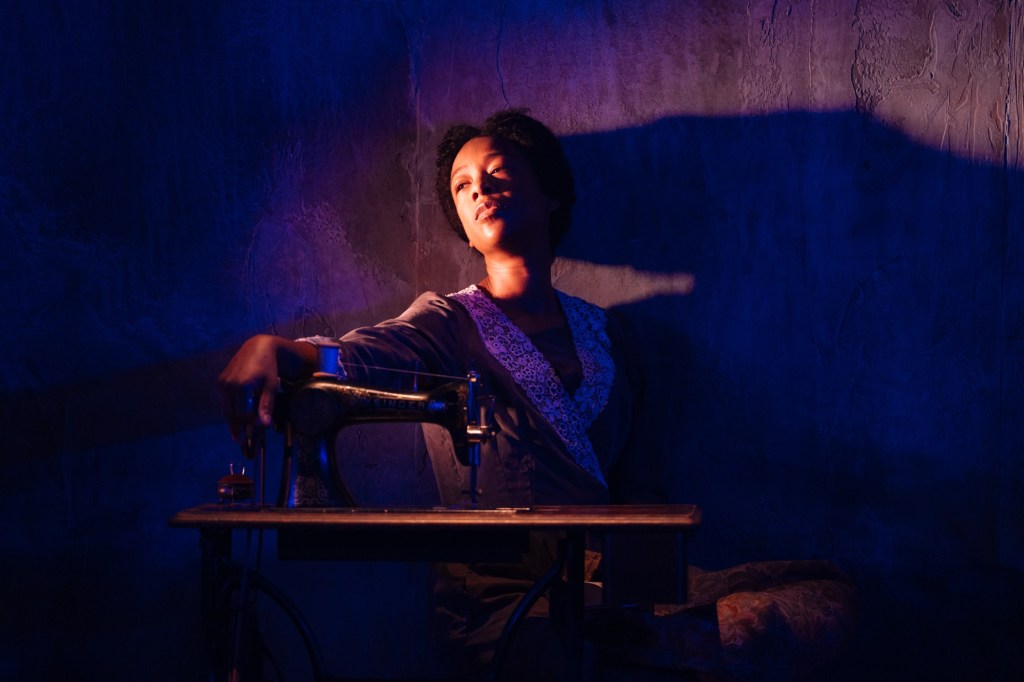
Nottage was inspired to write Intimate Apparel by the discovery of a photo of her great grandmother, a Barbadian seamstress who arrived alone in New York aged 18 to forge a life. Lynton and her designers frame each act and key moments with a striking freeze frame effect so that the living figures are briefly suspended in time like figures in an ancient photograph; when we enter the Donmar’s auditorium the individual objects (a bed, a trunk, the sewing machine upon which Esther whips up her creations) are labelled like exhibits in a museum. It’s a clever device, contextualising these vibrant characters while also humanising history.
Humanising history is of course the point of this rather marvellous play, or rather one of its many points. It’s also a love story of sorts but not between Esther (Samira Wiley) and George Armstrong (Kadiff Kirwan), the manual worker from the Panama Canal with whom she shares an epistolary romance before a disastrous marriage. It’s about Esther learning to love herself, finally…and about the love in friendship between women.
Wiley, previously seen on the London stage in Linton’s magnificent Blues For An Alabama Sky revival at the National and barely recognisable here, is deeply moving as a woman at odds with herself but possessed of a steely ambition (to open a ground-breaking beauty parlour for African American women) and a gift for empathy that she doesn’t even fully comprehend. It’s a beautiful performance, your heart actually aches for her, even though she’s too smart to ultimately be a victim.
Honestly though, all the other performances are up to this standard, it’s hard to know where to start with the superlatives. Kirwan has the most unsympathetic role but is thoroughly convincing as a man whose initial good intentions are scuppered by a combination of disappointment, emasculation and sheer bloody mindedness. Faith Omole is a like a firecracker tempered with a volatile but palpable humanity as the Tenderloin prostitute Esther is friendly with, and Nicola Hughes is lovely, funny but grounded, as the kind landlady with a past of her own. Claudia Jolly finds fascinating colours in the rich Upper East Side client whose affection for Esther spills over into unexpected territory. Alex Wldmann delivers a tender, compelling account of the Orthdox Jewish cloth merchant Esther has business dealings with but also a deep, complex connection.
This is one of those rare, blissful productions where everyone seems to be singing from the same metaphorical hymn sheet. I’m not sure Intimate Apparel as a script is right up there with the very best of Nottage’s work: there are a couple of coincidences and plot developments in the second half that slightly strain credulity but it’s also not hard to see why it has enjoyed multiple productions since its 2003 premiere. The dialogue is raw, honest and often painfully funny. It’s a powerfully women-driven story, touching, poetic, shot through with hard truth, and as compulsively watchable as a soap opera. Lynette Linton’s vivid, transporting production is the icing on a wonderful cake. A gem of an evening.
The majority of Eugene O’Neill’s classic American dramas are known for their punishing length as much as their poetry and Rebecca Frecknall’s glacially paced but stunningly well acted revival of this, his last play, reinforces that twin impression. A sequel of sorts to Long Day’s Journey Into Night, A Moon For The Misbegotten shows some of what happened next to James Tyrone Jr, the boozy, tormented elder son of the family in turmoil depicted in the earlier play.
He isn’t really the principal character here though; that’s Josie Hogan, the tough talking, hard-bitten worker on the Connecticut farm James owns, who, with her permanently soused father is scheming to ensure that the property will be sold to themselves at a reasonable price. Ruth Wilson and David Threlfall as the hardscrabble Hogans are so utterly convincing, unostentatiously inhabiting these difficult characters, every roar of fury, muted demur of affection or muttered aside feeling authentic, that it’s less like watching acting than witnessing real people navigate their fractured lives. Even their accents are spot on: Threlfall uses a flawless Irish accent while Wilson mixes American and Irish to potent effect.
Wilson is atypical of the actresses to play Josie to date. The character refers to herself as a “rough, ugly cow of a woman” and Wilson assuredly isn’t that. Nor indeed were some of the role’s previous interpreters -Colleen Dewhurst and Cherry Jones on Broadway, Frances de la Tour in London, and Eve Best opposite Kevin Spacey on both sides of the Atlantic- yet they were all physically imposing where Wilson is earthy but petite. She compensates by investing her with an angular awkwardness and abrasive attitude, but the woman’s innate kindness shines through.
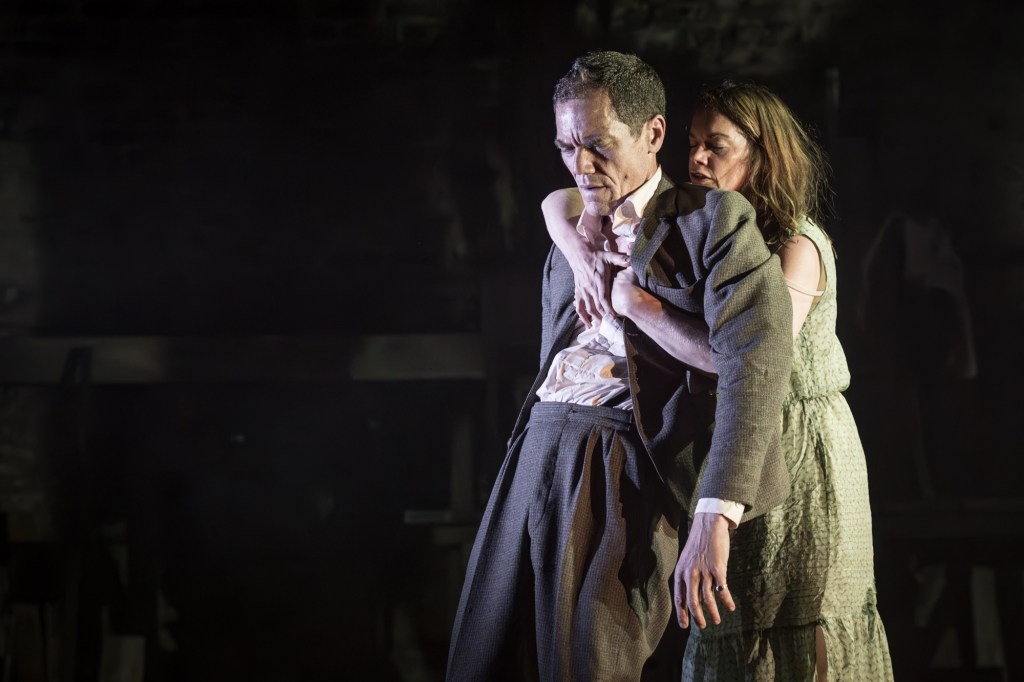
O’Neill ups the stakes by having Josie and Tyrone harbouring real, but mostly unexpressed, love for each other. James can only really verbalise his feelings when intoxicated (and this being O’Neill, that’s most of the time: Michael Shannon’s ‘drunk acting’ is gloriously vivid, in another performance of outstanding detail and fascinating choices) while Josie is so defensive that her emotions come out in intense spasms, swiftly quelled. Wilson is extraordinary, succeeding in demonstrating the complex inner workings of a woman who is terrified to let herself be fully known, so we simultaneously get the bawdy, granite-like facade and the bruised heart within. This Josie and James are desperately afraid of being vulnerable and it’s that tension that motors most of the human interest in this terse, overlong play.
I’m not a massive advocate for cutting down scripts – for instance, the recent Jamie Lloyd Tempest and Much Ado butchered the texts to such an extent that they lost some sense of the originals – but I’d gladly make an exception in the case of A Moon For The Misbegotten. There’s so much repetition here, so much push-and-pull, people telling lies or half truths then backtracking, that it could easily lose twenty minutes out of each act without the play being drastically compromised.
Despite the quality of the performances and the striking theatricality of the design team’s work (Tom Scutt’s multi-levelled wood set resembles a carpenters workshop rather than a farm but is constantly interesting to look at, and Jack Knowles’s lighting is stark and haunting), meandering occasionally threatens to turn into interminable. Although it’s of the period, the constant references to women as “tarts” and “pigs” is pretty hard to listen to in 2025, and doesn’t do anything to endear James Tyrone to us.
Frecknall’s staging is less gimmicky than her earlier Tennessee Williams revivals here at the Almeida, the only really notable embellishments being NYX’s ethereal, unsettling music and a light circling the playing on a track like a cross between the titular moon and a searchlight, both of which add length to an already epic playing time but are captivating nonetheless. If anything, A Moon For The Misbegotten is a play that, for 2025, might benefit from a bold, unconventional directorial concept. As it stands, it’s an even longer day’s journey into night, albeit a feast of phenomenal acting.
First produced in San Francisco in 2017 and previously seen two years ago on the London fringe, Harrison David Rivers’ two hander, taking its title from the soulful Dinah Washington song classic, is simultaneously a love story, a response to civil unrest in the United States, and a meditation on the nature of multiracial relationships. In Billy Porter’s dynamic new staging, it’s compulsive viewing, sometimes very funny, but also thematically rich with cauldrons of fury and unease simmering just beneath it’s entertaining surface.
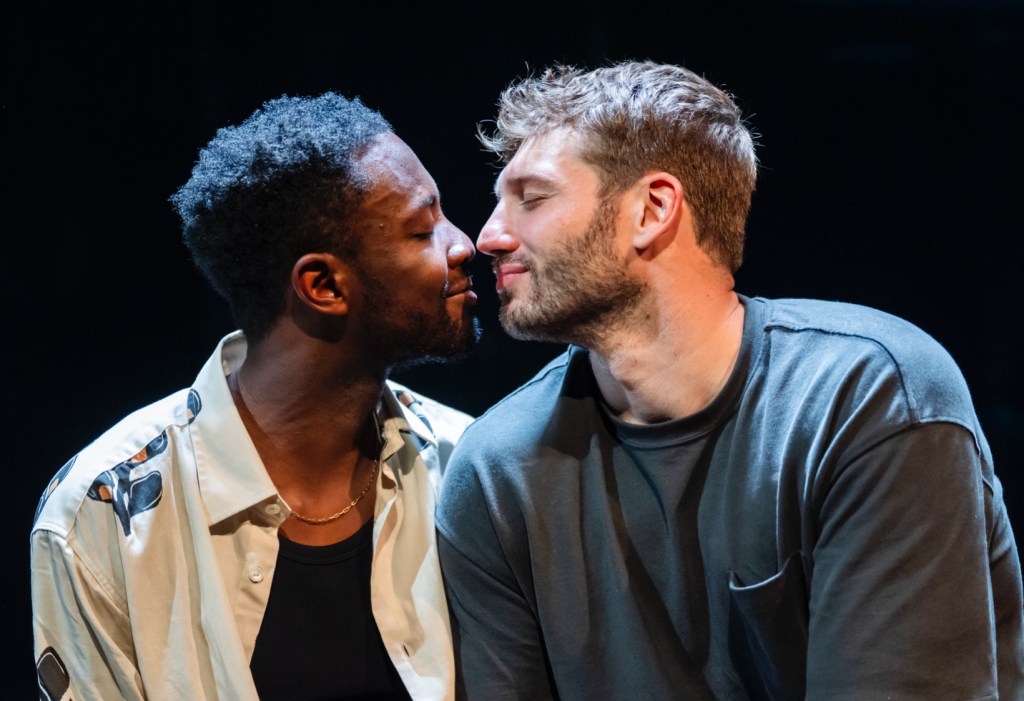
Jesse (Omari Douglas) is a Black playwright from a working class background – he’s smart, sensitive, spiky, self-sufficient – while his white boyfriend Neil (Alexander Lincoln, in an entrancing stage debut) is a trust fund baby but also an ardent activist particularly active in the Black Lives Matter movement. Rivers sets This Bitter Earth in the America of 2012-2015 at a time of a series of heavily publicised murders of young African American men such as Travyvon Martin, Michael Brown and Eric Garner (the last two by police personnel), and lights the dramatic touch paper by making Neil far more agitated and impassioned, on the surface at least, than Jesse about these grievous injustices.
It’s a compelling brew, written in dialogue that’s snappy, sharp but drenched in deep feeling. It treads some of the same territory as Matthew López’s The Inheritance as two smart gay men watch with disbelief as America votes in Trump (first time round) and the impassioned rows between the pair are similarly engrossing. It’s hard to imagine it better acted than it is here by Douglas and Lincoln, who mine the text for every ounce of anger, pathos, joy and frustration. They’re also combustibly sexy together with a relaxed chemistry that feels entirely natural, but also serves as a twisting knife when the relationship goes tragically asunder in ways that come as a nasty surprise but don’t feel inorganic, unfortunately.
Few actors can marry flamboyance with intellect the way Douglas does, and his Jesse is at once defensive but loving, a soul that finally finds a place to rest at least for a little time. Apart from a misjudged indiscretion following the Baltimore race riots of 2015, Neil, as written, is a bit of a unicorn, a rich, intelligent young man with liberal parents and a social conscience to put most people to shame. Lincoln is such a sincere, magnetic presence, and such a good actor, that you buy into him completely, even though he is markedly less well written than the other character.
The script loops frequently back round to the couple being attacked in the street after a night in a gay bar, and the same portion of dialogue is repeated but each time with different emphasis until finally the outcome of this hideous moment is realised. It’s powerful storytelling and if it doesn’t quite have the emotional punch one might hope for, that may be because the pace of Porter’s otherwise excellent production is so fast that the audience doesn’t always have time to breathe.
Punctuated with blasts of music and slick, striking projections, the show plays out on a predominantly bare stage under a neon sign proclaiming ‘Take Care Of Your Blessings’, words from the poet Essex Hemphill which take on more significance as the evening progresses. Rivers doesn’t stick to a linear timeline, which can be challenging in terms of placing where the characters are at any given moment, but the performances are so engaging and detailed that one’s concentration is amply rewarded. He doesn’t flinch from conveying the particular obstacles inherent in a biracial relationship where the two partners come come from radically different socio-economic backgrounds, but he invests their union with as much love as unease, so the protagonists are very easy to root for.
This Bitter Earth strays briefly into Hallmark Cards territory at the end (cue projections of rolling clouds and a beatific, heavenly light, as the audience are invited to vocalise their feelings) which feels slightly at odds with the meaty drama and acidic comedy that has gone before. It’s a small misstep though in an otherwise terrific piece of theatre, that succeeds in marrying the personal and the political in one neat but satisfyingly thought provoking package. It feels entirely appropriate that this is running during Pride month, but theatre this good deserves to be on all year round.

 ajhlovestheatre