ajhlovestheatre

  • Home
  • About
  • Contact
  • Blog

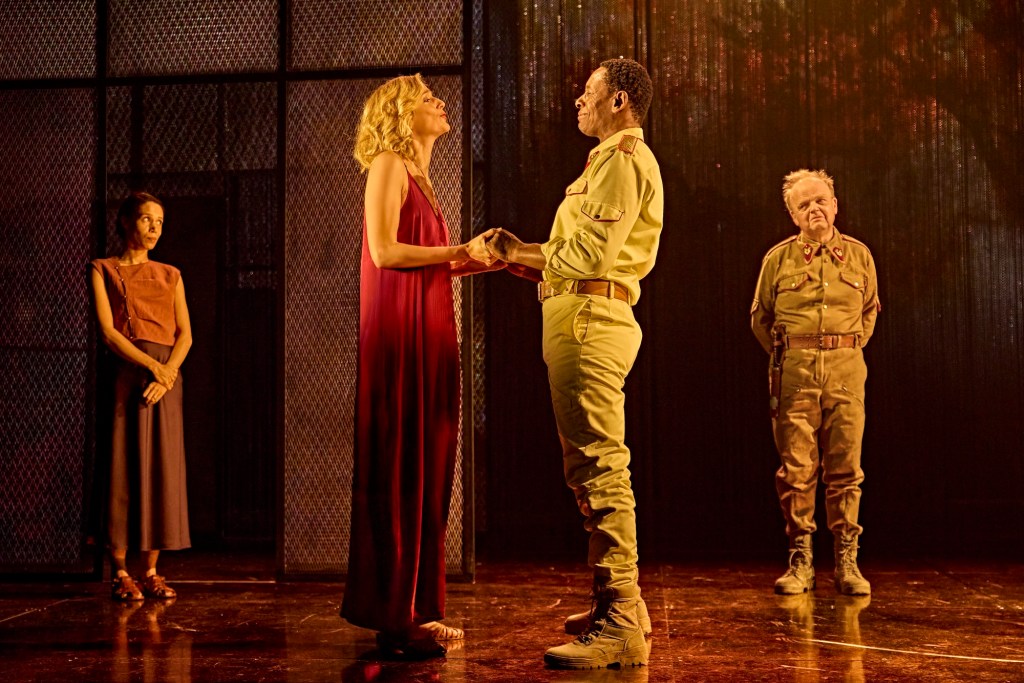
  • BORN WITH TEETH – ⭐️⭐️⭐️ – Shakespeare and Marlowe fight and flirt in flashily staged new play, with starry casting

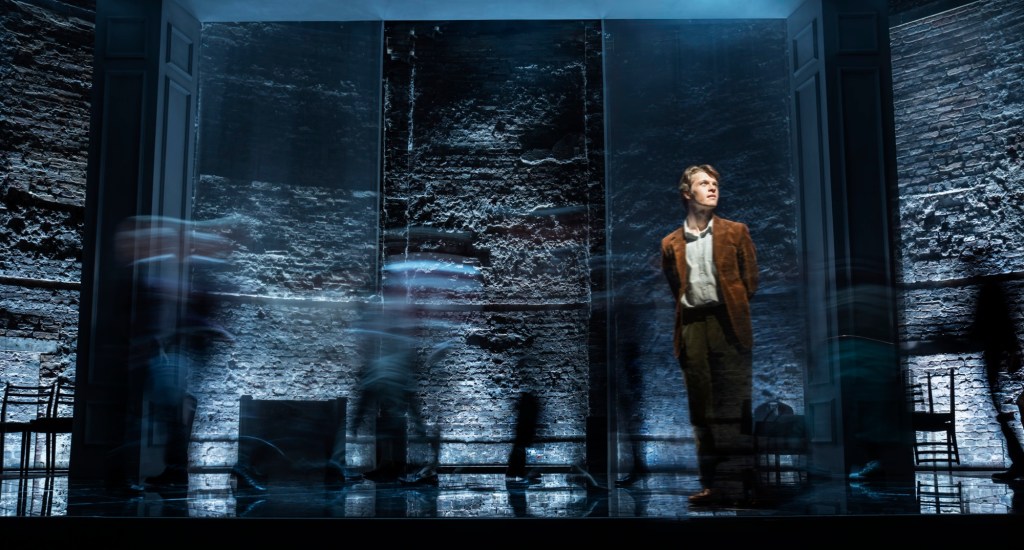
    Ncuti Gatwa and Edward Bluemel, photograph by Johan Persson

    BORN WITH TEETH 

    by Liz Duffy Adams 

    directed by Daniel Evans 

    Wyndhams Theatre, London – until 1 November 2025

    running time: 85 minutes no interval 

    https://www.delfontmackintosh.co.uk/whats-on/born-with-teeth

    “We are not the stuff of tragedy” says Ncuti Gatwa’s Kit (Christopher) Marlowe to Edward Bluemel’s Shakespeare at the emotional and dramatic climax of this fleet, verbose two hander which sets a romantic/sexual, as well as a creative, collaboration between these literary titans against a dangerous backdrop of intrigue and treachery in Tudor England. In Liz Duffy Adams’ 2022 script, first seen at Houston, TX’s Alley Theater, Kit and Will may not be tragic figures but they are participants in a sharp, playful comedy that shades into political thriller with a lavish helping of rampant homoeroticism. It very much feels like imagined history filtered through a decidedly twenty first century prism.

    Daniel Evans’ flashy production, co-presented by the RSC who have another American riff on Shakespeare on the go at the moment with the riotous Fat Ham up in Stratford, is often wildly entertaining, and Duffy Adams’ premise is fascinating, but it doesn’t quite add up to a fully satisfying evening. There is scholarly evidence to suggest that Marlowe and Shakespeare might well have joined forces to write Henry VI Parts One and Two, the text they’re working on here and from which this play’s title derives (“the midwife wonder’d and the women cried ‘O Jesus bless us, he is born with teeth!’” in reference to the birth of the vicious Richard of Gloucester). Duffy Adams takes that as a given, swirling it all together with same sex attraction, a power play and duel of wits between the two men, and sinister machinations during Elizabeth I’s politically unstable reign. 

    Duffy Adams has clearly done a formidable amount of research and, when not directly quoting from Shakespeare, displays a useful ability to fuse together modern profanity and bluntness with an elegant approximation of Elizabethan language. Born With Teeth works best as an extended sketch with pretensions rather than a fully fledged play. It’s frequently hilarious -“we’re the same age” points out the naive Will, to which the more sophisticated Kit snaps back “not in stage years”- and watching the power shift between the two men is gripping: at the beginning, Marlowe is a lauded professional and sexual predator while Shakespeare is a wet-behind-the-ears neophyte ripe for patronisation and seduction. By the end of the play, our perceptions of both of them change drastically. 

    The script has Will step out of the action to comment upon it, which at once draws us in while keeping us at an emotional distance so that the less than happy conclusion (the real life Marlowe was killed, aged 29, in a tavern brawl, two decades before Shakespeare’s death) packs less of a dramatic punch than it might. Evans’ eye-popping staging features anachronistic, exciting use of video design by Andrzej Goulding and shuddering, omnipresent sound by George Dennis. Neil Austin’s batteries of lights dazzle the audience from the length and breadth of Joanna Scotcher’s square box set. It’s technically impressive and stylish, but feels more concerned with providing empty thrills than real substance, an accusation one might also level at Duffy Adams’ writing which occasionally tends to the self-consciously long-winded.

    Gatwa and Bluemel attack their roles with formidable energy and commitment, brilliantly negotiating the gear changes between facetious and heartfelt. Gatwa has a rockstar swagger and louche danger that threatens to repel as much as it compels, but finds an authentic darkness and gravitas in the latter part of Kit’s journey. Bluemel nails Will’s raw intelligence and uncertainty at first, and then impressively conveys a chilling ambiguity once the proverbial worm has turned. The actors also share an undeniable, and essential, sexual chemistry.

    The play is simultaneously slight and overblown, but it’s also sexy and dynamic, at least as staged and acted here. Indeed, casting and production aside, the most gratifying thing about Born With Teeth might just be that it makes one want to see, or at least, read the original Shakespeare (or Shakespeare/Marlowe!) again, which is no bad thing. It may also, partly due to the starry casting for this production, inspire a new audience to check out the Bard and his contemporaries….and that is a great thing.

    September 3, 2025

  • JUNIPER BLOOD – ⭐️⭐️⭐️ – Mike Bartlett’s ambitious but uneven new play gets a terrific cast and an uncompromising staging

    Hattie Morahan and Sam Troughton, photograph by Marc Brenner

    JUNIPER BLOOD

    by Mike Bartlett 

    directed by James Macdonald 

    Donmar Warehouse – until 4 October 2025

    running time: 2 hours 35 minutes including two intervals 

    https://www.donmarwarehouse.com/whats-on/juniper-blood-n8df

    Mike Bartlett takes on sustainability, climate change, and the tension between living an authentically virtuous life and remaining relevant in, and connected to, the modern world, in this absorbing but perplexing new play. Juniper Blood premieres at the Donmar in a magnificently acted production helmed by James Macdonald and, if it isn’t Bartlett at his peak, it’s certainly a huge improvement on his wan open marriage drama Unicorn seen in the West End earlier this year. 

    Bartlett sets up Juniper Blood with a quintet of characters that initially seem like stereotypes but some of whom, on closer inspection, reveal unexpected layers and foibles. Having relocated to a remote rural farm from a privileged London life, good-hearted middle class Ruth (Hattie Morahan) occupies the middle ground between her intense, monosyllabic partner, the ironically named Lip (Sam Troughton), and wealthy, potty-mouthed neighbouring farmer Tony (Jonathan Slinger). There’s a further culture clash with arrival from town of Ruth’s stepdaughter from a previous marriage, fragile, self-obsessed Milly (Nadia Parkes) and her intellectual student pal Femi (Terique Jarrett). 

    The script has a lot of fun pitting the precious, judgmental townies against sceptical country folk for whom bullshit is what you fertilise a field with not what comes out of your mouth. Bartlett brilliantly nails the differing rhythms, vocabularies and speech patterns of this disparate group of people. The dialogue crackles and fizzes, and each character, for the most part, sounds plausible, even though some of the situations they put themselves in during the course of the play, which takes place over the across several years and three acts, strain credulity. 

    Personally, I didn’t buy Milly’s drastic volte face in terms of her attitude to the land, despite the conviction of Parkes’s performance. Also, the brutal choice facing Lip and Ruth regarding their very different attitudes to the future, although conveyed with passion and truth by Morahan and Troughton, doesn’t fully ring true. The symbolism of taking a hammer to a mobile phone sure ain’t subtle. The third act is the least satisfactory, partly because the characters start to talk like mouthpieces rather than real people. 

    Despite these quibbles, it is refreshing to see a play with serious ambition, and a concept of the world beyond the limited confines of its setting. Bartlett detonates little dramatic bombs throughout each act, including the very final moment, that send shock waves through a script that engrosses as much as it frustrates. Juniper Blood is bold, knotty, imperfect, but weirdly haunting. I found myself processing it for hours and days after watching.

    It helps that the performances and James Macdonald’s visually stark staging, played out under house lights that never dim as though we are all in some kind of giant hothouse (which we probably are), seldom strike a false note. Like the Broadway import Stereophonic just down the road, Juniper Blood dares the audience to buy into the minutiae of its characters lives. Macdonald isn’t afraid to take his time, so we get to watch Troughton staring thoughtfully into the middle distance for minutes on end, or an increasingly stressed Morahan juggling phone and laptop as she manages farm business, and if you invest, you’ll be riveted, but equally this won’t appeal to everyone. 

    Few actors project innate goodness as clearly as Morahan and she is just tremendous here. So is Troughton, who makes all too convincing the extremities of Lips’s views. Slinger is a formidable but playful presence as swaggering but strangely lost Tony, and gets to deliver a rather beautiful middle act speech interrogating the concept of a flawed but not cruel England lost and never to return, tonally reminiscent of Bartlett’s earlier work in the Almeida’s earlier Albion. 

    The set by Ultz, all wood, earth, grass and white panelled walls, is aggressively ugly. There’s no attempt to suggest a rural idyll, but then the play is hardly an ode to a bucolic existence, more an acknowledgment of the hard graft involved in farming, and a repudiation of the romanticism, usually by clueless urban types, of country life. If Bartlett offers no solution to the myriad of existential problems that Juniper Blood is juggling, well, there really aren’t any. If it feels bleak, he seems to be saying, then suck it up. 

    This is a challenging, unwieldy piece, by turns richly entertaining then dismayingly clumsy. It’s not an entirely satisfying evening, but it’s too intriguing and urgent to write off. Cautiously recommended.

    August 30, 2025

  • INTERVIEW – ⭐️⭐️⭐️⭐️ – fine performances in better-than-average screen-to-stage adaptation

    Photograph by Helen Murray

    INTERVIEW

    adapted for the stage and directed by Teunkie Van Der Sluijs

    based on a screenplay by Theodore Holman and the film by Theo Van Gogh

    Riverside Studios, London – until 27 September 2025

    running time: 90 minutes no interval 

    https://interviewplayonstage.com/?gclsrc=aw.ds&gad_source=1&gad_campaignid=22829649589&gbraid=0AAAABAIZZMvhSu_FRHIURMtbTe64bzUs_

    Films being adapted into stage musicals are all too common, but screenplays becoming theatrical dramas are a much rarer proposition. Theo Van Gogh’s 2003 Dutch movie Interview later given a 2007 American makeover by Theodore Holman has an advantage over other such projects as it’s essentially a two hander in a single powderkeg setting, thereby lending it an inevitable theatrical tension from the getgo. Teunkie Van Der Sluijs‘s stage version takes a while to warm up but when it does it’s compulsive, thought-provoking stuff.

    Middle aged former war correspondent Pierre (Robert Sean Leonard) is reluctantly interviewing popular actress Katya (Paten Hughes) in her swish Brooklyn loft apartment (chic, gorgeous set design by Broadway’s Derek McLane). They’re both on the defensive, but in different ways: he’s dismissive of her brand of fame and feels he’s slumming it, she bristles when she realises he has done zero preparation or research. Furthermore, he’s distracted by a breaking White House scandal involving the impeachment of the (fictional) VP, which is the type of story he’d much rather be covering, dismissing Katya as the kind of person who “thinks impeachment is a sort of moisturiser” in one of the script’s best jokes. 

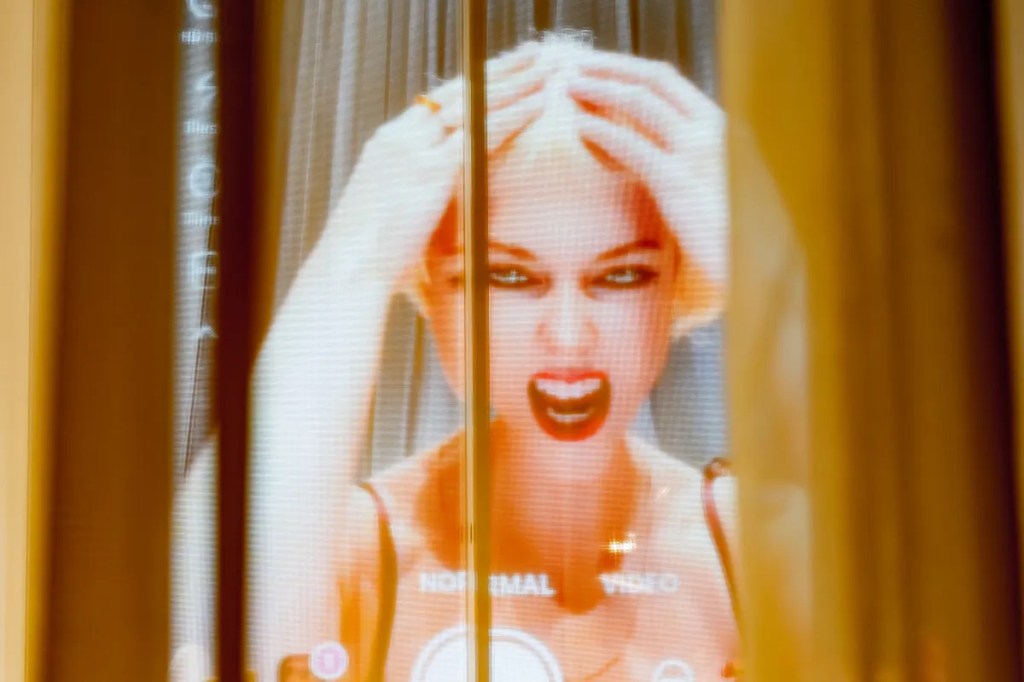
    Van Der Sluijs updates the story by making Katya a social media influencer as well as an actress (“we all want to be seen, not watched, not followed, seen”) which adds to Pierre’s initial disdain. Visually, the production assaults us with text messages, social media posts and live filming projected up on the walls of the set, which at first seems distracting but ends up potently paying its way in the storytelling. Drinks are poured, drugs inhaled, opinions hammered out….the dialogue is provocative, sometimes frustratingly elliptical, but seldom less than compelling.

    Interview has interesting, if not necessarily hugely original, things to say about the power and the fragility of celebrity. As Pierre asks Katya “What are you going to do when we decide we’re done watching and just turn you off?” The script skilfully alters the audience’s perception of Katya -first seen stalking on with designer shopping bag, outsize sunglasses and mid cellphone conversation- just as Pierre becomes disarmed by her. Hughes, in a sizzling UK theatre debut, nails the disaffected drawl and too-cool-for-school attitude but also conveys vulnerability, fierce intelligence and a quirky sense of humour under the glossy facade. Hughes leaves us in no doubt that this young woman is a grafter and the architect of her own success, impressing Pierre with her commitment to acting classes (“I’m good at crying”) and embodying a youthful perspective quite different from that of Pierre’s but not untinged by life’s harsh realities.

    Leonard matches her with a performance of apparently effortless naturalism. He gives Pierre a relaxed charm but a tough edge that entirely convinces. The script is equally fascinating on the sometimes questionable ethics of journalism, and sexism rife in the media and public eye, and Leonard’s Pierre stands as in an intriguingly ambiguous figure in the midst of several raging storms.

    For people unfamiliar with the film, it’s best not to reveal too many plot points but suffice it to say that the piece segues satisfyingly into thriller territory as well as some areas with a pretty high ick factor. The acting is so good and the staging so slick and accomplished that the ride, however uncomfortable, is nonetheless pleasurable, and the conclusion authentically chills. Bernat Buscato’s costume design (carelessly elegant but funky for her, slightly shabby for him) is appropriately understated, while Jackie Shemesh’s atmospheric lighting, Ata Grüner’s doomy sound and compositions and extensive video design Idontloveyouanymore, are all top notch. I was surprised at how much I enjoyed it.

    August 29, 2025

  • THE GATHERED LEAVES – ⭐️⭐️ – a fine cast do their best with a dated dud of a script

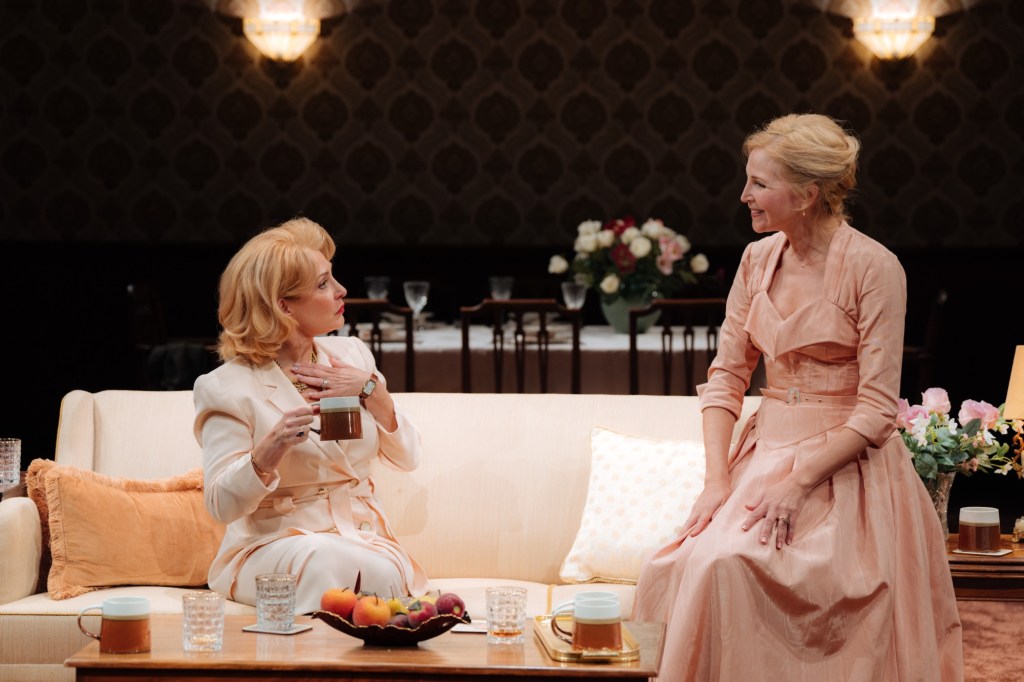
    Jonathan Hyde and Joanne Pearce, photograph by Rich Southgate

    THE GATHERED LEAVES

    by Andrew Keatley

    directed by Adrian Noble

    Park Theatre, London – until 20 September 2025

    running time: 2 hours 40 minutes including interval 

    https://parktheatre.co.uk/events/the-gathered-leaves/

    Fractured families have long been a staple of stage drama. Andrew Keatley’s saga of an upper middle class English clan congregating for a tempestuous birthday weekend at their country pile, is reminiscent of the kind of thing seen on Shaftesbury Avenue three or four decades ago, especially as staged by former RSC artistic director Adrian Noble. The Gathered Leaves probably seemed dated when it premiered here at the Park back in 2015, and it feels positively antediluvian now. 

    That original production had the benefit, for a family drama, of fielding two sets of actual family members (Jane Asher and daughter Katie Scarfe, and father and son Alexander and Tom Hanson) playing various members of the embattled Pennington tribe, which may have lent a certain frisson. This revival doesn’t have that but boasts some serious luxury casting (Jonathan Hyde, Joanne Pearce, Olivia Vinall, Chris Larkin, Zoë Waites) with collective credits that read like a who’s who of high quality legit British theatre. 

    Initially, from director to cast list to Dick Bird’s opulently muted drawing room set with its creamy upholstery, antique furniture and chandelier, this has all the trappings of the classic ‘well made play’…but then, unfortunately, we get into the script which has aged like milk. In the present climate it’s a pretty big ask for an audience to invest in a bunch of self-involved, privileged monsters with reactionary views on race (the youngest daughter had a child out of wedlock with a Black man – shock horror!) and mental health (the eldest son is autistic). Keatley has the younger and/or more enlightened characters attempt to correct the blinkered opinions of their elders/less advanced thinkers but those moments come across like a sort of rudimentary beginners guide to social progress.

    It doesn’t help that the younger family members  look and sound like a middle aged person’s bland idea of what a teenager or young adult was like in the 1990s (the play is set just as New Labour was coming in). They just don’t ring true. Keatley explores the idea of the ‘old guard’ moving aside in a scene where ageing lawyer William Pennington (Hyde), now in the early stages of dementia, lectures his 22 year old grandson Simon (George Lorimer, in a creditable stage debut) on the importance of carrying on the family line. Simon is suitably appalled but the writing is so flavourless that it’s hard to know who we’re supposed to root for.

    It’s all too asinine to be really offensive, but it’s a mystery why anybody thought this was worth reviving. The tricky dynamics of familial relationships are laid out with all the sophistication and originality of a particularly uninspired episode of Crossroads. Keatley certainly nails the tedium of family gatherings: we get to watch the Penningtons play board games, discuss what they’re going to have for dinner, where they bought a particularly nice sort of gift wrap….if you find this sort of thing riveting in the theatre, then the best of British to you, but I thought my brain was going to melt. 

    An affair is revealed while mopping up spilt tea, one of the brothers hits the bottle (can’t say I blame him), the teenage girls illicitly down huge quantities of white sambuca in the middle of the night with no apparent effect, William ups the ante by periodically becoming irrationally enraged….and it all plods on for the best part of three hours. In one particularly excruciating sequence, estranged daughter Alice (Olivia Vinall, very likeable, to be fair) discovers the piano she hasn’t played in years and has a little tinkle…cue the entire family drifting on from different directions and sitting around in spotlights with beatific looks on their smug faces. Ah, the power of music….then everybody goes back to talking As Though They Are In A Play.

    Lots of speeches are clumsily inserted purely for exposition, so that the audience is clued up on the back stories of this dull lot, but the characterisations are pretty muddy and one-note despite the efforts of a game cast. Richard Stirling delivers sensitive, committed work as the autistic older brother and Chris Larkin finds real warmth and layers in the middle sibling whose professional success as a doctor is in stark contrast to his fractured personal relationships. Joe Burrell and Ellis Elijah are excellent as the younger versions of the brothers in the extended flashback sequences. It’s lovely to see Hyde and Pearce back on stage but one can’t help but wish it was in a stronger vehicle. 

    Maybe this is intended to be the theatrical equivalent of comfort food and will perhaps satisfy people of a certain age who yearn for the dramas of times past when issues were thrashed out by characters sitting around on comfy armchairs and chaises longues, untroubled by the greater world at large. It absolutely wasn’t for me.

    August 24, 2025

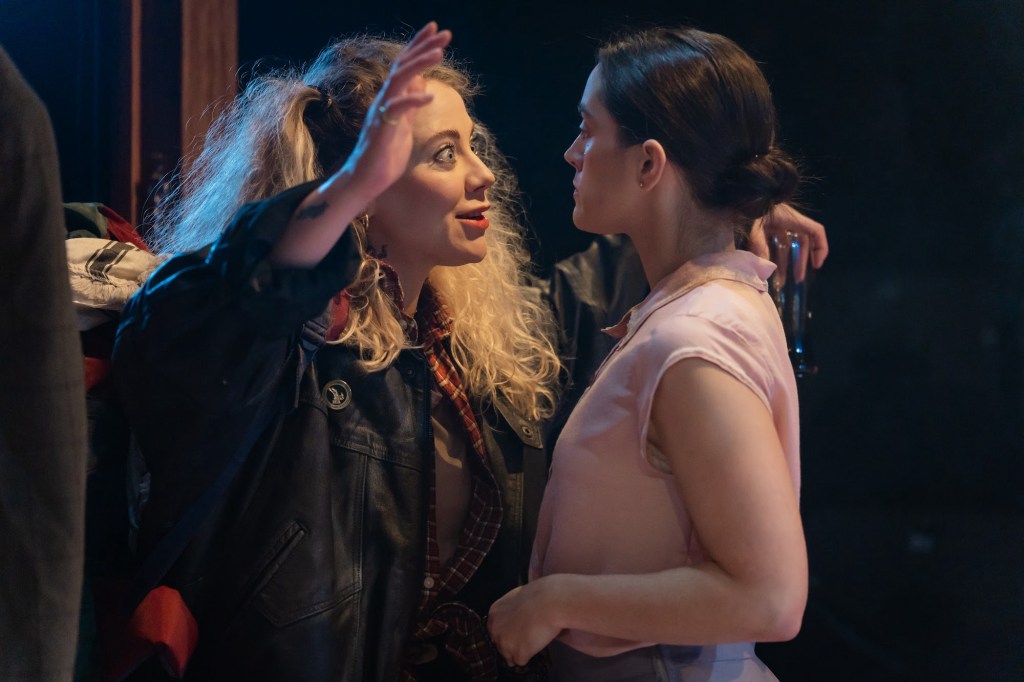
  • FAT HAM – ⭐️⭐️⭐️⭐️ – this acclaimed modern American Hamlet crosses the pond in triumph

    Andi Osho and Olisa Odele, photograph by Ali Wright

    FAT HAM

    by James Ijames

    directed by Sideeq Heard for the Royal Shakespeare Company 

    original direction by Saheem Ali

    Swan Theatre, Stratford-Upon-Avon – until 13 September 2025

    running time: 100 minutes no interval 

    https://www.rsc.org.uk/fat-ham

    Arguably Shakespeare’s most popular tragedy, Hamlet gets a modern Black American makeover in James Ijames’s rollicking, Pulitzer-winning 2022 Fat Ham. It now receives its UK premiere at (where else?!) the RSC in a production based on, but subtly and surprisingly different to, the one that played at New York’s Public Theater then on Broadway where it was a Best Play Tony nominee. Ijames transplants the story to contemporary North Carolina and the Danish royals are now a squabbling family looking to possibly sell their barbecue restaurant to alleviate their financial woes, and Elsinore is their back porch. 

    Shakespeare’s “sweet prince” is now Juicy (Olisa Odele), a likeable, thicc, troubled queer college student trying to find the strength in his own softness and struggling to break the family cycle of macho bullshit and bullying. Gertrude is now brash glamazon Tedra (“I need noise. Commotion makes me happy”), played with go-for-broke joy but real heart by Andi Osho, torn between her sensitive son and volatile new husband (Sule Rimi, proving that comical and terrifying are not mutually exclusive) but determined to have as good a time as possible. An unexpected bonus of Ijames’s writing is that he actually gives Tedra more agency, or at least more justification for her actions, than Shakespeare afforded Gertrude. When Juicy quizzes her as to whether she misses his father (depicted as a far more savage figure here than anything envisioned for Hamlet), she responds that “my memory of him won’t allow me to miss him….if you think about something everyday…you not really remembering it. It’s just there. Like heartburn.” She further notes “I went from my Daddy’s house to my husband’s house. I ain’t never been alone.” Her behaviour is sometimes crass but it is fundamentally understandable and Osho makes every aspect of her ring true.

    Anybody familiar with the Shakespeare (or “that dead old white man” as he’s described by one of the characters) will get a kick out of seeing the way Ijames’s script dovetails with the original: Horatio is cheerful stoner Tio (Kieran Taylor-Ford, fabulous), perpetually lusting after Tedra, and Ophelia becomes hard-nosed, fledgling lesbian Opal, played with a seething, inspired mix of weirdness and awkwardness by Jasmine Elcock. The play-within-a-play that unseats the new King becomes here a karaoke party (Juicy/Hamlet expresses his ongoing unease with a roof-raising karaoke version of Radiohead’s ‘Creep’ while Tedra launches into an eye-poppingly suggestive rendition of the Crystal Waters dancefloor classic ‘100% Pure Love’ aimed at her new hubby) and a game of charades. Ijames has a tremendous gift for heightened dialogue rooted in real life, and Fat Ham is raucously funny but never quite loses sight of the truth beneath all the outrage and volume.

    Director Sideeq Heard, who was associate director to Saheem Ali on the original production, matches the text with a staging that is flashy and slightly surreal. If he still can’t solve the problem that the writer can’t quite seem to decide how to end the play, the slight lag in focus and tension about seventy five per cent of the way through that marred the New York version is no longer evident here. Undoubtedly inspired by the Swan’s apron stage, Heard and Ijames have amped up the direct connection with the audience in comparison to the original. The fourth wall isn’t so much ignored as gleefully demolished, giving the show the occasional impression of being an American panto for adults, and I don’t mean that as a criticism.

    Fat Ham UK also feels like more of a team effort than the NYC original. Where the Broadway production was dominated by the exquisite melancholy of Marcel Spears and a barnstorming performance by Tony nominee Nikki Crawford as Tedra, this superb ensemble all carry equal weight. Odele doesn’t have the vulnerability of his predecessor but makes true and vivid Juicy’s self-effacing intelligence and his frequent disbelief at the behaviour of those around him. 

    Sandra Marvin delivers an irresistible comic tour de force as opinionated family friend Rabby: think Polonius reimagined as a church lady, a human hurricane in a flurry of purple and sequins. She’s a Jesus-obsessed delight and the late revelation about her character, while still far fetched, makes more sense than it did in the previous staging. Another improvement is Corey Montague-Sholay, who makes something really touching out of her son, an uptight Marine hiding a couple of secrets of his own and who gets a bizarre but crowd-pleasing conclusion.

    Fat Ham may be more spangles than subtlety, and uses a number of well-worn tropes to hit the comedy home, but it compounds it’s clichés with aplomb and a vitiating showbiz flair, and you are pretty much guaranteed to leave the theatre feeling a hell of a lot better than you did when you went in. It also has a robust intelligence underneath all the shouting and bawling. Maruti Evans’s house-porch set looks realistic at first, but becoming more and more artificial the longer you scrutinise it, and appears a useful metaphor for Fat Ham’s relationship to Hamlet. Dominique Fawn Hill’s costumes and Bradley King’s lighting are suitably flamboyant and Skylar Fox’s illusions add a layer of authentic magic. 

    You might have thought that Hamlet is the last of Shakespeare’s plays that could bear a high camp, high energy treatment (I mean, even Lear has a Fool), but you’d have thought wrong. This is a great time in the theatre, and has transferred over here way better than I would have expected. Another popular hit for the RSC.

    August 22, 2025

  • THE WINTER’S TALE – ⭐️⭐️⭐️⭐️⭐️ – the classic stuns, surprises and satisfies in this richly rewarding new RSC production

    Madeline Appiah and company, photograph by Marc Brenner

    THE WINTER’S TALE

    by William Shakespeare 

    directed by Yaël Farber for the Royal Shakespeare Company

    Royal Shakespeare Theatre, Stratford-Upon-Avon until 30 August 2025

    running time: 2 hours 50 minutes including interval

    https://www.rsc.org.uk/the-winters-tale

    Visionary, internationally acclaimed, but sometimes divisive (remember her Salome for the NT?!), South African director Yaël Farber takes on one of Shakespeare’s most emotionally affecting plays…and the result is a magical, shattering piece of theatre. This is a Winter’s Tale that gives full rein to the majesty and poetry of the bard’s text while also making it feel fresh, dynamic and psychologically acute. Crucially and impressively, it marries together the courtly and pastoral elements of the play more successfully than any other production I’ve seen. It’s a night of dramatic fireworks and Beckettian gloom. 

    There’s something compulsive, almost soap operatic, about the earlier sections of The Winter’s Tale where the volcanic jealousy of Sicilian King Leontes rents asunder not only his own marriage but the platonic relationship between his pregnant wife Hermione and long-standing friend Polixenes, King of Bohemia. In a triumphant return to the RSC, Bertie Carvel (first revealed wrestling homoerotically with John Light’s chiselled, assured Polixenes) plays Leontes as palpably unstable from the very outset. He’s the kind of volatile tyrant around whom courtiers and lesser mortals pussyfoot lest they provoke his rage. It’s a superbly controlled performance, dangerous and compelling, with an edge of childlike vulnerability, and Carvel attacks the language with sibilant relish and breathtaking confidence. The play may be familiar but Carvel keeps you on the edge of your seat with tension (look out for the scene where he is holding his baby daughter Perdita…it includes a moment that has the audience gasping in shock). 

    Madeline Appiah’s gorgeous, touchy-feely Hermione appears to have his measure and seems the sort of woman used to pouring oil on the troubled waters stirred up by her difficult consort. Her relationship with Light’s matter-of-fact, likeable Polixenes is disarmingly physical -they stand at times as though on the verge of a kiss, their fingers entwined- and could perhaps be seen as ambiguous, except that Appiah radiates such warmth that one imagines she is the sort of woman that beguiles people on a regular basis. 

    By putting everybody in slate grey, timelessly elegant clothing, Farber and her designer Soutra Gilmour suggest a modern-ish kingdom, which makes the brutal treatment meted out to Hermione all the more startling. Visually and tonally, this is a dark production, sepulchral even. Time The Thief (a laconically witty, disturbing Trevor Fox, looking like a refugee from Waiting For Godot), stalks the action like a Geordie-accented harbinger of doom, unseen yet sensed with unease by some of the courtiers, and acting as unexpected playmate to Mamillius, Hermione and Leontes’s isolated young son. 

    For much of the first half, it’s not easy to gauge where Farber’s work ends and the contributions of movement director Imogen Knight begins. The production moves with an almost balletic fluidity, making subtle but effective use of a pair of revolves on what is otherwise a bare stage presided over by a giant disc that at different times suggests a cold, unattainable faraway planet, a blood red moon and finally, the earth itself. Figures emerge from darkness as if by magic -Tim Lutkin’s lighting and Dan Balfour’s sound are tremendously accomplished and seamlessly in tune with Farber’s concept- and Max Perryment’s ethereal, unsettling music underscores every word, beat and moment but succeeds in enhancing the action and language, never detracting from them. 

    All these technical elements, muted but potent, work together seamlessly in the first half but explode into something even more extraordinary in the second, which is often where lesser productions of The Winter’s Tale falter. That is emphatically not the case here. The action fast forwards sixteen years and banished Perdita (Leah Haile) has been raised by rural shepherds (Amelda Brown and Ryan Duval, both delightful but tough, not the bucolic peasants often portrayed) and is in love with Florizel (Lewis Bowes), Polixenes’s slumming-it-in-disguise son.

    All too often creative teams tend to pretty up these sections of The Winter’s Tale, making them so discrete from the rest of the play as to feel jarringly inconsistent. However, Farber et al lends them a wild, dark intensity that seem very much of the same world as the tyrannies and unease of Leontes’s court but unfettered by the social mores of society. Fire bursts from the stage, the Bohemians stomp and sway under a blood red moon, drums thunder overwhelmingly from on high, a solo voice wails….it feels shamanic and essential.

    Equally thrilling is Aïcha Kossoko as a fine, authoritative Paulina whose “what studied torments, tyrant, hast for me” speech chiding the king is delivered with such elemental force that the seats nearly rattle. There’s magnificent support from Matthew Flynn as her kind, concerned husband and Raphael Sowole as a thoughtful, unwillingly complicit Camillo. Haile and Bowes have a striking but edgy chemistry.

    In a text powered by male sexual jealousy, it is almost impossible to present the fairy tale-adjacent ending without some sort of comment in this day and age. Farber doesn’t overplay her hand here though, giving us a reconciliation scene that authentically wrings out the tear ducts but is subtly undercut at the last moment by Appiah’s revitalised Hermione who non-verbally suggests that all is not necessarily as well as one might hope. It’s an intriguing, troubling button on a remarkable production, one that stays true to the core of the classic play but builds a fascinating new world around it. A wonderful achievement, and the sort of show that will convert a Shakespeare-sceptic while also satisfying the purists. Unmissable. 

    August 21, 2025

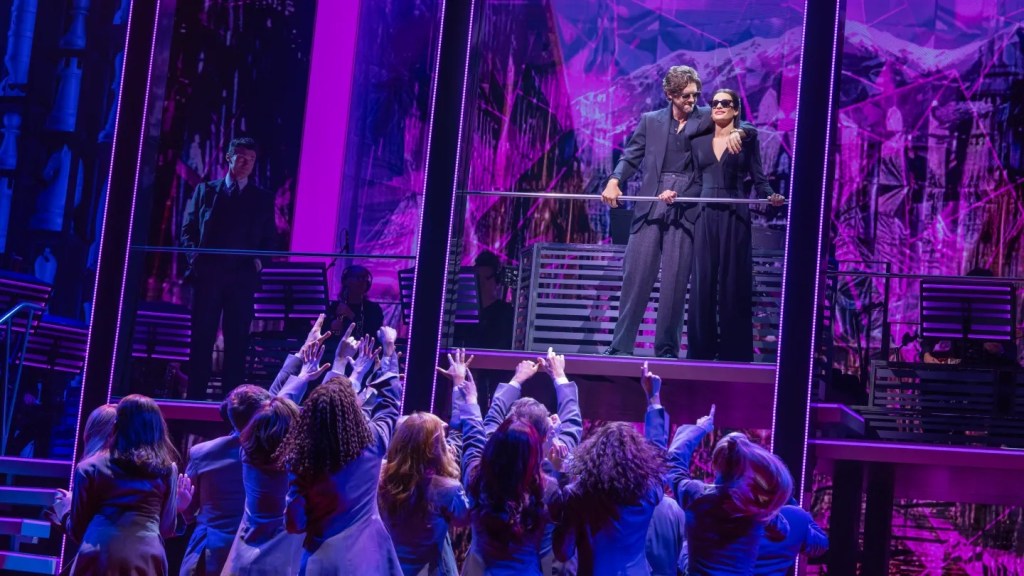
  • BRIGADOON – ⭐️⭐️⭐️ – Lerner & Loewe’s not-quite classic in a respectful rethink is this year’s major Regents Park musical

    Georgina Onuorah, Nic Myers and ensemble, photograph by Andy Senior

    BRIGADOON

    Book and lyrics by Alan Jay Lerner

    Music by Frederick Loewe 

    in a new version by Rona Munro

    original dances by Agnes de Mille

    directed and choreographed by Drew McOnie 

    Regents Park Open Air Theatre, London – until 20 September 2025

    running time: 2 hours 15 minutes including interval

    https://openairtheatre.com/production/brigadoon

    What with the state of everything at the moment, the idea of running away to a picturesque Highlands village where everyone is healthy, contented and entirely cut off from the outside world, has never seemed so appealing. The whimsy and escapism are strong in Brigadoon, receiving its first London production in almost forty years. 

    Drew McOnie’s open air revisal (Alan Jay Lerner’s book has been adapted by Rona Munro to include some authentic Scottish language and a rethought ending) is a pleasant, occasionally stirring, entertainment. It also unfortunately demonstrates why the show isn’t more widely seen, despite a lilting, romantic score.  

    Lerner and Loewe’s musical predated their better known My Fair Lady and Camelot on Broadway, and is now probably best remembered for the film version with Gene Kelly and Cyd Charisse. It’s full of gorgeous tunes but saddled with a fairytale premise – the spell-bound residents of Brigadoon who wake for one full day every hundred years thereby avoiding the pitfalls and stresses of modern life – that is almost impossible to take seriously. 

    Munro ups the ante somewhat by making the two Americans (Louis Gaunt and Cavan Clarke) who happen upon this Scottish idyll into WW2 military airmen whose bomber has crashed, rather than mere tourists. The yearning for an uncomplicated peace separate from the darkness and destruction of war is keenly felt, and allows heroine Fiona (a captivating Georgina Onuorah) to balefully intone lines like “wars happen and people get lost inside them”.

    Suspend your disbelief though and there’s a lot here to like. The ceremonial opening to each act, with drummers and bagpipers roaming the auditorium, is absolutely thrilling and almost worth the cost of the ticket alone. Onuorah (who alternates with Danielle Fiamanya) and Gaunt make villager Fiona and air force captain Tommy an attractive central couple that it’s impossible not to root for, never overdoing the sentimentality but finding real emotional heft in their medium-tortured romance (he has to choose between returning to his real life or disappearing forever with her into this bucolic paradise…you’d think this might be a no-brainer…) 

    McOnie’s choreography, incorporating reels and sword dances as it references Agnes de Mille’s iconic originals, is swirlingly elegant. The airy freeness of the fine company of dancers is uplifting to witness, reaching an apotheosis in a searing, desperate dance of grief for a young villager mourning the loss of her unrequited love, stunningly performed by Chrissy Brooke. Personally I could have done without the too-contemporary all-male interpretive dance that accompanies Tommy’s rueful ‘There But For You Go I’ number as he envisions a life without his beloved Fiona. It’s such a beautiful song, and Gaunt delivers it with such heartfelt conviction, that it doesn’t need the extra visual help. 

    The score has been largely left alone, and it’s glorious. ‘The Heather On The Hill’, ‘Come To Me, Bend To Me’ and ‘Almost Like Being In Love’ – standards of the Broadway Golden Age – come up new-minted yet timeless in Sarah Travis’s orchestrations, and Laura Bangay’s exquisite band sounds larger than it actually is. The choral singing is strong but a couple of the individual vocals tend towards the shrill. 

    Visually it’s all a bit, well, beige: Basia Biñkowska’s bizarre wooden set, dominated by a lengthy slope which at least proves useful for melodramatic run-ups, looks more like a CenterParcs villa than a rustic town square and the Highlands countryside, and is monotonously lit by Jessica Hung Han Yung. That said, there’s a genuine sense of enchantment when the glowing lanterns and bushels of violet heather are used to dress the space, but overall the design intersects with the sylvan loveliness of the Park less than one might hope or expect. Sami Fendall’s costumes are appropriately earthy and simple, but the muted colour pallet of yellows and browns, with a bit of sugary pink thrown in for wedding festivities, gets a bit tedious to look at. Some full blooded reds and greens, and bold tartans, wouldn’t go amiss.

    There are quite a few genuine Scots in the cast (there’s particularly lovely, selfless work from Norman Bowman as one of the village elders and veteran Anne Lacey as the spiritual leader, usually played by a man in earlier iterations) but their authenticity shows up the weakness in the accents of some of the other company members. Cavan Clarke injects some welcome acidic cynicism as the other stranded airman and Jasmine Jules Andrews is hugely endearing as Fiona’s perpetually giggling younger sister. Nic Myers is a fabulous triple threat talent but her sassy Meg, the Brigadoonian with the hots for one of the interlopers, doesn’t read as the resident of a rural 18th century village in any shape or form and McOnie has given her so much business to perform in her second act comedy number “My Mother’s Wedding Day” that she ends up breathless, and the lyrics and punchline go for almost nothing. 

    The big Regents Park musical every year is an anticipated event. Some of them (Evita, Jesus Christ Superstar, Little Shop of Horrors, La Cage aux Folles, last year’s Fiddler on the Roof) turn out to be transformative triumphs while others (Carousel, Legally Blonde) are wrong-headed. This Brigadoon is nearer to the former than the latter but doesn’t quite make the case for the show returning to the popular canon. The new ending, unexpectedly recalling the end of Rent, of all things, involving a briefly dead central character being returned to life by the power of love, is moving in its own preposterous way but not as much as the original ending.

    Overall, it’s almost like being in love….but not quite.

    August 13, 2025

  • SAVING MOZART – ⭐️⭐️ – the classical composer gets the Eurovision treatment in this nicely performed but ponderous new musical

    Aimie Atkinson and company, photograph by Danny Kaan

    SAVING MOZART

    Book, music and lyrics by Charli Eglinton

    directed by Taylor Walker and Markus Olzinger

    The Other Palace, London – until 30 August 2025

    running time: 2 hours 15 minutes including interval 

    https://theotherpalace.co.uk/saving-mozart/

    Hamilton and Six have a lot to answer for! Ever since those entertainment juggernauts burst onto the popular cultural scene, there has been a plethora of musicals telling historical, or at least period-specific, stories with pounding anachronistic scores. Some have been better than others, and here comes another one.

    You might have thought Peter Shaffer’s Amadeus had the last word in mythologising the life of Mozart but you’d be wrong. Charli Eglinton’s Saving Mozart, receiving its UK premiere having been seen earlier this year in Austria, isn’t even the only rock-pop tuner inspired by the legendary classical composer. The 1999 Mozart! musical was a big hit on the continent and only last year Mozart, Her Story, centred on Wolfgang’s gifted sister Nannerl, also a principal character here, received an all-star concert presentation at Drury Lane. 

    Eglinton initially leans into the suggestion that Nannerl may have been even more talented than her younger sibling: the banging opening number ‘Remember Me’, delivered with thrilling vocal power and charisma by Aimie Atkinson, sets her up as a star in her own right. It’s a bold, unexpected start but the book subsides into something like a conventional biography, albeit with gaping anachronisms, once Jack Chambers is introduced as a teen then adult Mozart (the composer as a child is alternated between Carla Lopez-Corpas and Izzie Monk). 

    The first act tells the story of Wolfgang and Nannerl’s manipulation by their tyrannical father (Douglas Hansell) with reasonable efficiency. Jealous rival composer Salieri (fan favourite Jordan Luke Gage) is introduced and Gloria Onitiri makes a potent impression as the Mozart kids’s protective mum. The book falls apart though in act two once it’s established that Nannerl’s musical career has to end when she becomes an adult leaving Wolfgang to pursue the celebrity and acclaim that is probably rightfully hers. Recriminations fly, bridges are built, a love interest is introduced…and Mozart Senior has a massive change of heart in his treatment of his put-upon daughter that seems less to do with psychological or dramatic truth and more about moving the story along. It may be more or less biographically accurate, but as presented here little of it makes much sense. 

    Taylor Walker and Markus Olzinger’s production matches Eglinton’s messy, borderline interminable book by being stronger on grandstanding individual moments and striking tableaux than on authentic, powerful drama. The musical numbers mostly hit home quite satisfactorily, but the interconnecting script scenes feel awkward and unfocused, as though the actors have just been left to their own devices. 

    Walker also created the jagged, statuesque choreography which works despite being crammed into a limited space: the Other Palace stage is small anyway but Justin Williams’s attractive, evocative set dominated by mirrors, woodwork and a giant ‘M’, occupies so much of it that it feels designed for an altogether larger theatre. Still, the repeated visual motifs of an endlessly revolving upright piano or having the ensemble walking in slo-mo with chairs held upturned over heads, toting parasols, or miming the playing of classical strings, all quite stunningly lit by Ben Jacobs, are surprisingly haunting. Julia Pschedezki’s costumes evoke the 1980s New Romantic era more than 18th century Middle Europe, but have a gossamer elegance. The whole show looks gorgeous, if cramped. 

    Musically, Eglinton uses a number of pop styles and borrows cheekily from Mozart’s own work. The songs are catchy but, despite their eclecticism, tend to all merge together by the end of the evening. Arguably the best tunes in the whole thing though are Wolfgang’s and an electronica-infused riff on the Magic Flute overture captures the pulse-quickening radiance of the original. Transposing down the signature section of the Queen of the Night aria to incorporate it into a song for Constanze, Mozart’s wife (Erin Caldwell), to be performed in chest voice, robs the music of much of its majesty and exhilaration though.

    The music here may not be operatic in style but it’s still difficult to sing and, on press night, Chambers and Hansell both sounded pretty strained at times. The rest of the singing is fine: the always classy Onitiri has an act one aria about protecting  her child that brings the house down. Chambers convincingly projects Mozart’s anarchic irreverence, while Atkinson and Gage are genuine star presences despite iffy material. 

    Ultimately, I’m unsure what the point of Saving Mozart is. The storytelling is incoherent and seldom conveys the brilliant genius of the composer himself while the rehashing of some of his musical themes into a sort of Eurovision-adjacent aural soup just feels reductive. It all feels about as authentic as those boxes of Mozart chocolates you can pick up in Duty Free at Vienna airport. Fans of the stars are likely to be frustrated by how little stage time magnetic performers like Atkinson and Gage actually get, although it’s impossible not to be impressed by the commitment and the vocal chops. Still, there are ear worms aplenty and it’s very pretty to look at. 

    August 6, 2025

  • A ROLE TO DIE FOR – ⭐️⭐️⭐️ – the casting of an iconic movie role turns toxic in this undemanding but enjoyable comedy

    Obioma Ugoala and Tanya Franks, photograph by Steve Gregson

    A ROLE TO DIE FOR 

    by Jordan Waller

    directed by Derek Bond

    Marylebone Theatre, London – until 30 August 2025

    running time: 1 hour 45 minutes including interval 

    https://www.marylebonetheatre.com/productions/a-role-to-die-for

    I’ve no idea when Jordan Waller wrote this amiable Hollywood-adjacent comedy but A Role To Die For often seems approximately two decades old. Set mainly in the office of a fictional producer of the James Bond film franchise as one 007 passes the baton to the next, a lot of the tension and humour derives from the realisation that the role’s newest incumbent is Black and gay. Not too long ago that might have been shocking or at least surprising but in 2025 it’s hard not to feel, well, so what?!

    It says much for the quality of the performances in Derek Bond’s production, partially recast from its premiere at Cirencester’s Barn Theatre, as well as the ongoing fascination with the machinations of showbiz, that A Role To Die For is still worth watching. Waller’s writing for Deborah, the embattled film producer who inherited her position from the late father who still very much influences her ongoing life, is expletive-strewn and waspishly amusing. Tanya Franks inhabits the role with a compelling nastiness and keen comic timing but is a nuanced enough actress to invest the character, who really is a piece of work, with a degree of warmth, and she makes vivid her feelings for her gay, socially conscious son (Harry Goodson-Bevan, excellent) whose values and beliefs are the very antithesis of her own. 

    Franks is terrific and it doesn’t hurt either that Obioma Ugoala, as Theo, the actor up for 007, clearly has the looks, charisma and charm to plausibly play Bond in his own right. In a rare moment of calm in an otherwise pretty frenetic script, Waller gives him a sensitive speech about representation and what it would have meant to a youthful Theo to see a Black man in such a role, and Ugoala delivers it beautifully. Philip Bretherton is great value as Deborah’s co-producing cousin, perpetually on the verge of outraged hysteria but whose bumbling exterior belies a ruthless streak. 

    More mildly engaging than outright hilarious, it’s an entertaining piece, with overtones of farce and thriller, that doesn’t tell us anything new or surprising, but rattles by agreeably. Running at less than two hours including interval, it doesn’t outstay its welcome either, although, for all of Franks’s skill, the sections where Deborah addresses her late father are pretty laboured, as is a jokey conclusion that suggests the writer wasn’t entirely sure how to end the play. The (frequently extremely rude) dialogue sometimes fizzes though.

    If the energy in Derek Bond’s staging occasionally dips and Cory Shipp’s set falls some way short of conveying the luxury and glamour of what one imagines the premises of a high end movie company might be like, the performances carry the show. A Role To Die For won’t change lives, but for a spicy bit of undemanding popular culture-related fun, it does rather nicely.

    August 3, 2025

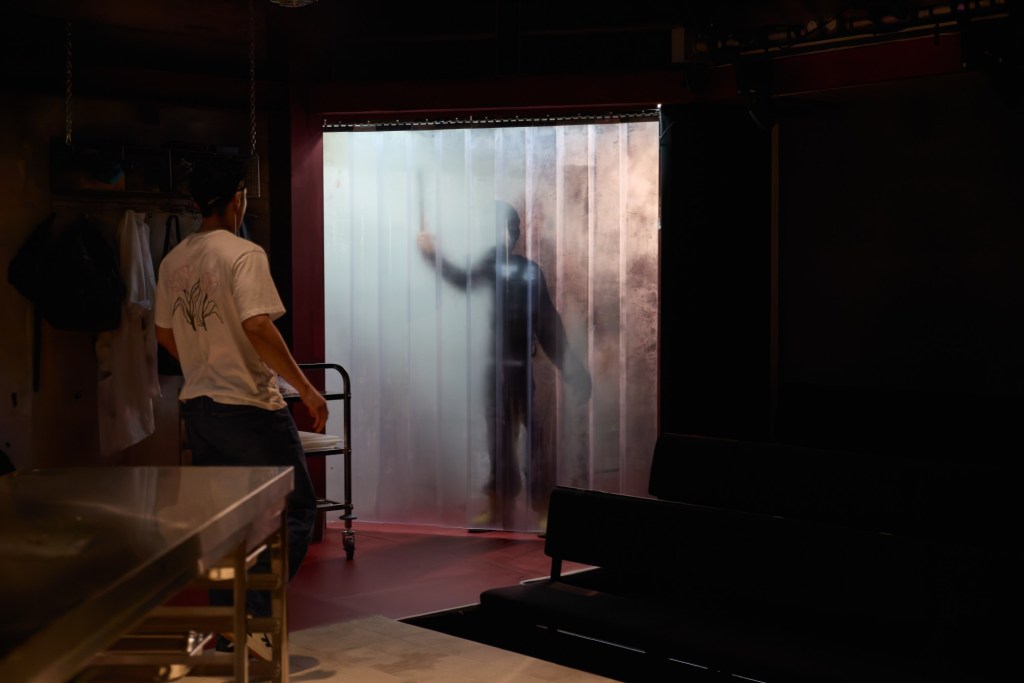
  • CLIVE – ⭐️⭐️⭐️ – Paul Keating excels in this bittersweet monologue exploring the need for human connection

    Photograph by Ikin Yum

    CLIVE 

    by Michael Wynne

    directed by Lucy Bailey

    Arcola Theatre, London – until 23 August 2025

    running time: 1 hour no interval

    https://www.arcolatheatre.com/whats-on/clive/

    Mental health, the insidiousness of isolation, and office politics come under the microscope in this engaging monologue. It feels rather like a throwback to the Alun Bennett Talking Heads series of solo plays where a raft of information was telegraphed to the audience over the heads of the principal character doing the talking, and also to Covid times when it felt like the only theatre we were ever going to see was with one person on stage.

    Clive is the name of the giant cactus that lonely Thomas shares a living space with, and to whom he confesses, complains and generally offloads, as he carries out his mundane office job working from home, in a flat he hasn’t left for more than two years. Paul Keating, in an exquisitely detailed performance, invests this likeable oddball with a cosy charm and mirthless jollity through which shards of absolute desolation occasionally pierce. When he gets angry, it’s unsettling but entirely plausible, the inevitable consequences of a desperation borne of always trying to do the right thing by other people but then getting shafted by life anyway. 

    Michael Wynne’s script is a great showcase for Keating, whether it’s wryly relating stories from when he used to work in an office, wistfully recalling a lost love, conveying the absolute shock of somebody facing accusations they had no idea were coming, or demonstrating the old adage of “dance like nobody’s watching”.  He’s delightful yet strangely tragic as he observes, from his window, other people going about their lives while he remains indoors, either glued to his laptop, obsessively cleaning, or talking to a cactus. The performance is more accomplished than the writing which, though often witty and delicately but cleverly structured as a piece of storytelling, is pretty pedestrian. 

    There are some implausibilities in the telling of how and why Thomas is shaken from his safe but sterile isolated existence, and the final suggestion that he needs to get out more is hardly revelatory. Despite the brilliance of Keating’s delivery, I didn’t fully buy that an act of kindness could be so grossly misinterpreted leading to an implosion of Thomas’s limited world, although the systematic destruction of the titular Clive is a striking metaphor for that. The play is at its most interesting in its exploration of the dynamics of an “office” where the workers never see each other in person, and how extreme loneliness can take a dire toll on an individual’s mental health. 

    Lucy Bailey directs Keating with a subtle flair. They previously collaborated at this venue on Mike Poulton’s wrenching Rattigan spin-off Kenny Morgan, one of the theatrical highlights of 2016. That was a masterpiece and while Clive isn’t in the same league there is still something thrilling about watching world class talents lavish their efforts on a minor key work. Mike Britton’s brutally neat, almost clinical, set design contrasts nicely with the surprisingly extravagant lighting and sound contributions of Chris Davey and Nick Powell respectively.

    Wynne ends the play on a welcome note of hope, and even if ultimately this is pretty small beer as a whole night in the theatre (in years gone by, this would probably have been half of a double bill) the craft, intelligence and talent involved still make it a worthwhile watch.

    August 2, 2025

Previous Page Next Page

Blog at WordPress.com.


Loading Comments...
 

    • Subscribe Subscribed
      • ajhlovestheatre
      • Join 59 other subscribers
      • Already have a WordPress.com account? Log in now.
      • ajhlovestheatre
      • Subscribe Subscribed
      • Sign up
      • Log in
      • Report this content
      • View site in Reader
      • Manage subscriptions
      • Collapse this bar