ajhlovestheatre

  • Home
  • About
  • Contact
  • Blog

  • KIMBERLY AKIMBO – ⭐️⭐️⭐️⭐️⭐️ – here’s a show and a heroine you’ll never forget

    Photograph by Joan Marcus

    KIMBERLY AKIMBO

    Book and lyrics by David Lindsay-Abaire

    Music by Jeanine Tesori

    Based upon the play by David Lindsay-Abaire

    Booth Theatre, New York City

    https://kimberlyakimbothemusical.com

    Sometimes the hardest theatre to write about, critically speaking, is a production that you’ve loved almost entirely without reservation. I mean, how many superlatives are there?! The current Broadway season has already yielded two such showbiz Holy Grails: one is the NYC transplant of London hit & Juliet, every bit as adorable as it was in the West End and, if anything, enhanced by it’s new North American slant. The other is new musical Kimberly Akimbo, small in scale but mighty in craft, ambition, accomplishment and sheer, beautiful heart.

    Kimberly Akimbo’s book is by David Lindsay-Abaire, the author of the original 2010 play, which may explain the extraordinary richness of the musical’s characters -a bunch of flawed, troubled yet relatable people elbowing their way through life as best they can- and the mastery of a variety of themes and tones that frequently promise one thing then deliver something quite delightfully different. Lindsay-Abaire clearly loves this bunch and, by extension, so do we.

    However, what elevates this unusual and entirely engaging musical from a thumping good night out to a rare, must-see event are the score (Jeanine Tesori’s music, and more about that shortly, and Lindsay-Abaire’s own lyrics which merge seamlessly with his hilarious, poignant, potty-mouthed script) and a central performance from Victoria Clark as the titular Kimberly that will inevitably go down in Broadway history. 

    Kimberly is a musical theatre heroine unlike any other: on the cusp of turning sixteen, she has a rare genetic disorder, affecting one in fifty million people, that causes her to age four to five times faster than the average. Thus we have Ms Clark, a radiant and powerful early sixty-something, realising the gauche awkwardness and open hearted energy of a sixteen year old with a conviction, physicality and technique that takes the breath away. When Clark sings – and it’s swoon-worthy when she does – her voice magically encapsulates youth but also a sense of autumnal finality. She is extraordinary. 

    Kimberly’s problems don’t just end with her disorder though, and neither does this musical’s infinite pleasures. Jessica Stone’s seamless, emotionally intelligent production features a galaxy of fine supporting performances fully in tune with Lindsay-Abaire’s off-beat vision and Tesori’s exhilaratingly eclectic music. But, wow, these people are messy. Heavily pregnant Mom Pattie (Alli Mauzey, glorious) is a narcissistic hypochondriac, both arms in plaster from a carpal tunnel syndrome operation and forever making videos for the unborn child she already prefers to the under-appreciated diamond she already has, while Dad Buddy (Tony nominee Steven Boyer on sensational form) is a feckless drunk, albeit one with a big heart. 

    On top of all that there’s Aunt Debra, a convicted felon with a money-making cheque rinsing scheme and a serious lack of accountability, newly arrived in the family home to upset the moral and ethical apple cart. Rising star Bonnie Milligan inherits her with a ferocious energy and laid back chutzpah only topped by a thrilling belt of a voice. I defy anybody not to watch either of her big numbers, one in each act, without a massive grin on their faces, even while marvelling at what a truly awful human being she is. Along with Clark, Milligan is providing the kind of moments that theatregoer’s memories are made of.

    A set of unmissable performances is completed by Justin Cooley, in a fine, heart catching Broadway debut, as Seth, the fiercely smart fellow student, missing his own deceased mother, also a freakishly gifted anagram geek and tuba specialist (yes it’s random but it adds to the richly bizarre tapestry), who becomes Kimberly’s sidekick and love interest. A magnetic, warm stage presence, Cooley ensures that Seth is a guy to root for, even when being crassly insensitive to our beloved heroine, which pays rich dividends by the joyful, tear-stained finale. There is also a sort of Geek/Greek Chorus of four teenagers, played with real charm and tremendous specificity by a group of superb young performers – Olivia Elease Hardy, Fernell Logan, Michael Iskander and Nina White – three of which are making their Broadway debuts…. and what a show this is to get started with!

    Tesori’s musical contribution feels like a sister score to her stunning work on Caroline, Or Change and Fun Home whereby sophisticated, choppy, character-driven sections give way to pastiches of late twentieth century pop and, in this instance, folk that inform the period and characters. Thus Clark gets a bittersweet ´I want’ song near the top of the show, then there’s a gorgeous lullaby for Pattie’s unborn child and possibly for the troubled Kimberly (delivered flawlessly by Mauzey) that goes from whimsical to profound within a few bars, and ‘Better’, a rambunctious, belty, poppy paean to doing entirely the wrong thing with which La Milligan nearly rips the roof off the theatre. Boyer gets a patter song that wouldn’t disgrace G&S, and the second half features an inspired section that pits a family dispute against a glitzy show choir rehearsal. It’s all powerfully evocative and memorable theatre music, and the cast album will be a must-have.

    “Getting older is my affliction / getting older is your cure” sings Kimberly to her classmates at one point, with an astonishing level headedness and lack of rancour. The writing never descends into sentimentality or sensationalism but when it’s sad, it really goes there: see the way Clark’s Kimberly just blinks and firms up her mouth when her pregnant mother expresses hope that her next child will turn out better, or the unhistrionic way she affirms to Seth, as she turns sixteen, that people with her disorder usually don’t make it much past that age (“it’s just an average though” she trills).

    If Kimberly Akimbo doesn’t gladden, then threaten to break, your heart, maybe book an appointment with a cardiologist to check if you even have one. This is life-enhancing theatre, a show you don’t just watch, you fall in love with. To quote one of the best numbers in the score, although pretty much every one is a gem, this’ll “make your shitty life better”. Kimberly’s a keeper and this show is a masterpiece.

    December 6, 2022

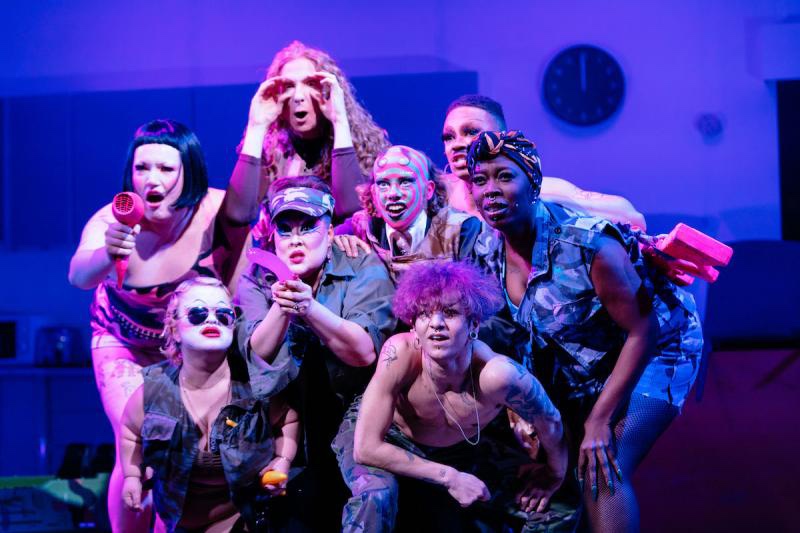
  • AIN’T NO MO’ – ⭐️⭐️⭐️⭐️- Buckle up, it’s brilliant

    Photograph by Joan Marcus

    AIN’T NO MO’

    by Jordan E Cooper

    Directed by Stevie Walker-Webb

    Belasco Theatre, New York City – until 26 February 2023

    https://aintnomobway.com

    All aboard the final flight of African American Airlines, a journey taking every last Black American, tired and pissed off from being sidelined, passed over, disappointed, hurt, viewed with suspicion and just plain disrespected, to a new life in Africa. Such is the premise of Jordan E Cooper’s extraordinary new play, just opening on Broadway in a gorgeously realised production by Stevie Walker-Webb that manages to combine the high gloss sheen New York ticket prices would seem to demand with a biting fury that feels raw and authentic. Shocking and bewildering this show frequently is, but it provides 100 minutes of thought-provoking, often rollicking entertainment that turns on a dime between hilarious and horrible.

    Structurally, Ain’t No Mo’ is nearer to a sketch show or a revue than a traditional play, which allows a phenomenally talented quintet of performers to display some serious versatility as they switch between roles, playing styles and looks (the outstanding costume and wig designs are by Emilio Sosa and Mia M Neal respectively). It also allows a broad examination of Black life in modern day America from a variety of different perspectives. Opening with a wondrously OTT, cartoon-like funeral with Marchánt Davis’s pastor prowling the aisles of the theatre like a gospel preacher on acid whipping up audience response, it moves on to a scabrously funny harpoon on the Real Housewives franchise that also takes on cultural appropriation (Shannon Matesky is gloriously off-kilter as a character described as “trans-racial”, in other words a white woman hell bent on turning herself Black), and an aspirational family dinner blown apart by a figure, who might best be described as the essence of Blackness, newly released from shackles in the basement (Crystal Lucas-Perry, simultaneously frightening and energetically funny).

    Holding the running theme of the soon-to-be-departing flight together, is the fabulous (literally) stewardess Peaches (performed usually by the author, but played at the preview I caught by the sensational understudy Nik Alexander). Peaches is terrific company: gossipy, judgemental, wise but sassy, and ultimately extremely affecting for reasons that I won’t spoil here. It’s during Peaches’s sections that Cooper’s writing really takes flight (pun intended) and as a character she’s a gift to audiences and the performer (Alexander invests her with charm, attitude and killer comic timing, then finally a vulnerability that pierces the heart.)

    Not every section lands perfectly, and a few scenes outstay their welcome, but when Cooper’s script really hits its mark it’s unforgettable. At just 27, Cooper is the youngest playwright in Broadway history, and Ain’t No Mo’ feels like a young work, but, for the most part, in the best possible sense, in that it has a freshness, originality and “fuck you” outspokenness that braces thrillingly.

    The only scene where the writing matches what Cooper has given himself as Peaches is one set in abortion clinic and a young pregnant woman (a supremely affecting Fedna Jacquet, all the more poignant because the actress has just announced her own pregnancy in real life) chooses to end the life of her unborn child rather than allow them to face the horrors and injustices of growing up Black and poor. Meanwhile, her partner (Davis again, superb) tries to cajole her out of it, while another mother-not-to-be (Ebony Marshall-Oliver, just wonderful) pontificates comically. Tragedy and comedy co-exist bruisingly here, and there is a massive twist, revealed early on. The whole show is never less than engaging but this sequence haunts and hurts.

    Of all the actors, it’s probably the chameleonic Ms Lucas-Perry that gets the most opportunities to transform, which she does with remarkable skill, literally unrecognisable from scene to scene, whether as a trashily glamorous English babymama, a deeply damaged convict or a breezily glossy TV anchorwoman. The entire team is magnificent though, tackling the knotty, vital text with restraint or abandon as required.

    For all its entertainment value (which is extremely high), and the visual flair of Scott Pask’s colourful sets and Adam Honoré’s flashy lighting, Ain’t No Mo’ is ultimately a work of seriousness and significance. Yes, it’s a great time in the theatre but it stays with you long after the final curtain. It is a worthy and welcome addition to the Black excellence suffusing Broadway at the moment with works such as the stunning Best Musical Tony winner A Strange Loop and the acclaimed, starry revivals of Topdog/Underdog, The Piano Lesson and Death Of A Salesman. Cooper’s multitude of characters may be going on a journey, but so are we in the audience.

    December 2, 2022

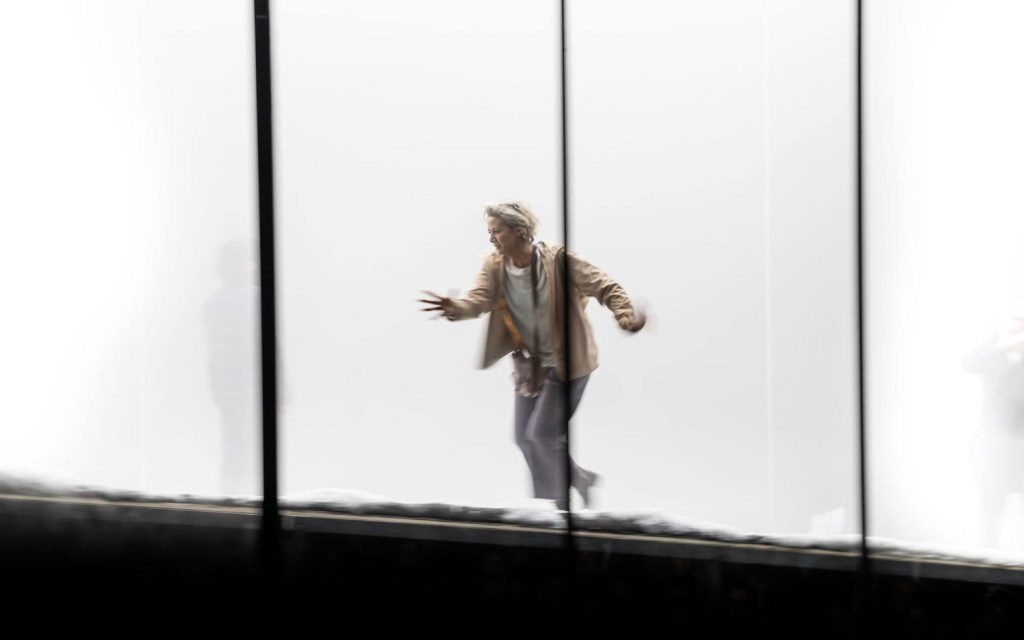
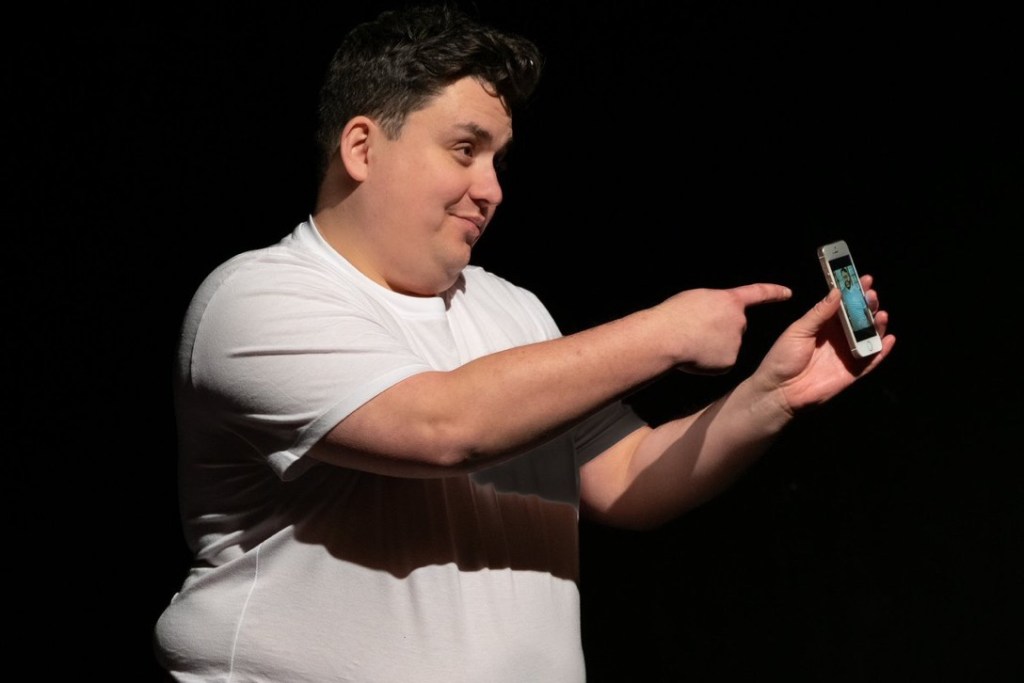
  • SARAH – ⭐️⭐️⭐️⭐️ – Jonathan Slinger delivering greatness in a fascinating solo show

    Photograph by Tristram Kenton

    SARAH

    From the novel by Scott McClanahan

    Adapted and directed by Oliver Reese

    The Coronet Theatre – until 17 December 2022

    https://www.thecoronettheatre.com/whats-on/sarah/

    Hurtling towards December we may be, but there’s no doubt that Jonathan Slinger is delivering one of the performances of the year in Sarah this extraordinary fever dream of a monologue, distilled from Scott McClanahan’s acclaimed 2015 semi-autobiographical novel The Sarah Book. This booze-and-bile soaked tale of one man’s descent into alcoholic stupor and emotional and spiritual freefall as his marriage collapses (the titular Sarah is the wife who is leaving him, not altogether surprisingly given what we get to witness here) serves as a coruscating metaphor for the collapse of the great ‘American Dream’ and the result is frequently wince-inducing to watch, but also often grimly hilarious.

    The adaptation and direction are by Berliner Ensemble artistic director Oliver Reese who provides a staging that starts out like a piece of stand-up comedy with Slinger’s Scott in a spotlight with a mic stand telling a funny story that quickly sours, then veers between chillingly still to toxically energised, but is seldom less than gripping. The black box setting is dressed only with a fridge, a few props and a couple of sticks of furniture, and the most prominent technical elements are a haunting country/rock musical underscore and Steffen Heinke’s acidic, malleable lighting.

    The emphasis is, rightly, on Slinger and on McClanahan’s remarkable writing. Yet another privileged white man falling through the cracks in life is hardly original subject matter but the language McClanahan employs is muscular, evocative, poetic….and sometimes revolting. McClanahan doesn’t spare us, or his onstage counterpart, much, whether it’s in the jet-black-funny description of Mr King, the ancient, severely physically compromised rescue dog who gives Scott and Sarah the mange, or the heartrending sequence where a desperate, inebriated Scott is comforted by his own young daughter. Nothing is sugarcoated and there are moments where McClanahan offers peeks into the very darkest recesses of his imagination that seem calculated to offend and upset. It’s seldom less than gripping though.

    That this tawdry tale feels like compulsive viewing rather than just an endless trawl through a troubled soul at the boundaries of reason and civility, is largely down to Jonathan Slinger in a powerhouse solo turn of such ferocious brilliance and technical dexterity that even the veins in his forehead seem to pop on cue. He never once tries to excuse Scott or make his behaviour more “acceptable” but instead invests him with a humour and battered humanity that draws the audience in even when, in real life, one’s instinct might be to run away screaming. He impressively navigates the tricky Virginian accent with ease, and manages the lightning fast switches between pathetic to swaggering to vaguely repellent with complete assurance. He’s utterly magnificent.

    This is an uncomfortable ninety minutes of theatre but a rewarding one, and anybody who wants to see a masterclass of a performance at extremely close quarters should beat a path to Notting Hill immediately.

    November 25, 2022

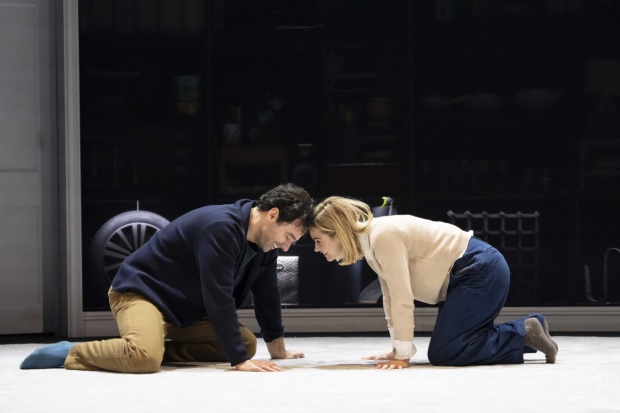
  • THE SEX PARTY – ⭐️⭐️⭐️- the Menier is back, and so is Terry Johnson: this’ll get people talking

    Will Barton and Kelly Price, photograph by Alastair Muir

    THE SEX PARTY

    Written and directed by Terry Johnson

    Menier Chocolate Factory until 7th January 2023

    https://www.menierchocolatefactory.com/Online/default.asp

    Terry Johnson has an interesting history of promising his audience a certain kind of play then delivering something quite unexpected: Dead Funny sounded like a classic, if macabre, farce but turned out to be a devastating examination of a marriage in crisis, while Insignificance featured a number of 20th century cultural and intellectual icons and it’s key scene had Marilyn Monroe explain the theory of relativity to Einstein using balloons as props. Hysteria saw a chamber comedy about Freud and Dali explode into a wild surrealist extravaganza. True to form, The Sex Party -his first new play in four years and the reopening production for a refurbished Menier Chocolate Factory- appears from it’s title and marketing to be something salacious and naughty, but actually proves to be a surprisingly astute critique of open relationships and the emotional and human costs of a situation where not everyone is reading off of the same hymn sheet. It’s also not very sexy, although I suspect that is partly the point. This isn’t Johnson at his best, to be honest, but it’ll certainly get people talking.

    Set in the kitchen at a swingers party in Islington, this is essentially a discussion piece that puts nine contrasting individuals in a room and has them grapple with, well, almost everything really: jealousy, gender, personal boundaries, yearning for what might have been, political correctness …oh and sex of course, although anybody seeing this show to view nudity and onstage “action” will be left disappointed. Johnson’s gift for literate, often painfully funny dialogue remains, as does his wry, almost absurdist take on allegedly civilised social conventions: there’s an amusing moment when Jason Merrell’s party host Alex bolts, mid-orgy, into the living room in high dudgeon and armed with salt because somebody has spilt red wine on an expensive rug.

    That aforementioned verbal elegance is shot through with moments of quite breathtaking crudity and even cruelty though. A lot of what comes out of the character’s mouths may be disturbingly unpalatable but most of it sounds authentic enough, although whether one would choose to spend over two hours in the company of some of these people is another matter. The script becomes less successful as it interrogates the boundaries of “wokeness”, the catalyst for which is the arrival of the stunning Lucy, a trans woman played with a fascinating mixture of aloofness and vulnerability by Pooya Mohseni. There is an extended scene in the second act where a number of really offensive opinions (think, if you must, transphobic, homophobic and just plain crass) are bandied about from some of the more unreconstructed partygoers. It’s pretty ugly stuff and no doubt indicative of the way many people sadly still think, and while I’m not suggesting for one moment that theatre shouldn’t explore the uncomfortable and/or offensive, Johnson’s characters here morph into mouthpieces for a bewilderingly eclectic selection of viewpoints rather than fully fledged human beings, and there’s nothing that even this fine bunch of actors can do to ameliorate that.

    Jason Merrells makes host Alex into a genuinely likeable figure, and Molly Osborne sparkles as his enthusiastically frisky younger girlfriend, who finds one character’s scepticism about the merits of owning a dog far more unacceptable than any of the coital excesses going on in her own living room. Lisa Dwan and John Hopkins find real firepower in a fractured couple at their first sex party, and whose relationship looks set to change forever after the revelations of a single night. Kelly Price is hilarious but also entirely convincing as haughty, intimidatingly “right on” Camilla who comes to realise that her boundaries are not necessarily where she thought they were, and Will Barton is great fun as her drug-addled man-child boyfriend. Oscar winner Timothy Hutton invests wealthy eccentric Jeff with just the right amount of blunt insensitivity and blandly masked nastiness, while Amanda Ryan goes impressively for broke as his super-brash trophy wife, who seems to have been written as Russian solely so that she can toss out unspeakable opinions without intending to offend anyone (although she invariably does). Either way, Ryan’s roaring Russian accent sounds spot on. Mohseni is gorgeous and makes Lucy into probably the most sympathetic figure at the party.

    While it has much to enjoy, particularly the note-perfect performances and Tim Shortall’s beautiful and astonishingly detailed Islington townhouse kitchen set, The Sex Party feels like a play that needed at least one more draft before being exposed to audiences and indeed to critical opinion. The music choices are a little confusing… although the piece is set in the present day the playlist seems stuck irrevocably in the 1970s, but then again so do some of the attitudes presented. Ultimately, The Sex Party is an unruly beast, chock full of opinions, tropes, issues and characters that have the unmistakable tang of truth while only fitfully achieving full theatrical life, despite the efforts of a stellar cast.

    November 17, 2022

  • TAMMY FAYE – ⭐️⭐️⭐️⭐️- Katie Brayben is jaw-droppingly good in this ambitious new musical

    Andrew Rannells and Katie Brayben, photograph by Marc Brenner

    TAMMY FAYE

    Music by Elton John

    Lyrics by Jake Shears

    Book by James Graham

    Directed by Rupert Goold

    Almeida Theatre – until 3rd December 2022

    https://almeida.co.uk/how-to-get-tickets-for-tammy-faye

    An ambitious new musical at a major producing theatre from a team of internationally renowned powerhouse creatives, with a uniformly magnificent cast, featuring the UK debut of a beloved Broadway star (Andrew Rannells) and the greatest leading performance by any actress (Katie Brayben, surely in line for a second Olivier here) in an original British tuner since Elaine Paige as Evita, is cause for rejoicing.

    Charting the rise and fall of controversial American televangelist Tammy Faye Bakker (Jessica Chastain won the 2021 Oscar for playing her in the recent biopic), this Almeida extravaganza is flashy but thought-provoking, a musical that succeeds in giving audiences a rollicking good time while never leaving one in any doubt that there is a serious intellect at play under the sequins, mega make-up, elaborate wiggage and showstopping numbers.

    Is it worth seeing? Hell yes (if you can snaffle a return). Is it perfect? Actually, no. Richly enjoyable though it is, a certain amount of work needs to happen before it becomes a great example of the genre. Given that the Islington run totally sold out within days of going on sale (the magical creative triumvirate of Elton John, Scissor Sister’s Jake Shears and multi-award winning playwright James Graham saw to that) and rumours already swirl about a swift transfer, whether that work will take place is anybody’s guess, but it would be a pity if it doesn’t, as Tammy Faye, in Rupert Goold’s witty, fast-moving production, is so close to being an absolute world beater.

    Many of the individual elements are already terrific. The lyrics, surprisingly sophisticated and heartfelt when not incorrigibly innuendo-laden (a gospel bop entitled “He’s Inside Me” is particularly fun), are some of the finest I’ve heard in ages: Jake Shears shows the same gift for camp poetry and acerbic wit as when writing for the Scissors Sisters; his work here is innately theatrical and it’s a shame that the raucous sound design sometimes renders a small portions of it unintelligible. Elton John’s stirring music -with a few exceptions- isn’t particularly memorable (there’s little here to match the best bits in Billy Elliot or The Lion King, or even Aida) but attractively pastiches gospel, country, blues, disco and torch songs. It sounds great but is seldom distinctive. Tammy Faye’s 11 o’clock number “If You Came To See Me Cry”, coming after her fortune, marriage and credibility have all been lost, and delivered with open-hearted virtuosity and a stratospheric belt by the miraculous Ms Brayben, could become a showtune standard. So could the cynical “Satellite of God”, a beguilingly strange statement of sinister intent for her greatest adversary, the pastor and conservative activist Jerry Falwell (Zubin Varla, brilliant).

    James Graham’s book may be the show’s greatest strength (apart from the cast) but also one of its most obvious, if fixable, drawbacks. Graham displays his characteristic chutzpah at presenting serious themes and real life people juxtaposed with a slick of showbiz glitz (Tammy Faye’s dramatis personae includes the Pope, Billy Graham and the Archbishop of Canterbury). However, the script here, while intermittently brilliant, is so over-stuffed with characters and ideas that some pretty vital areas of Bakker’s story feel glossed over or rushed, especially in the second half which moves at a bewildering lick in charting her fall from grace, and never clarifies how complicit Tammy Faye was in the siphoning off of millions of dollars, or how aware she was of her husband Jim’s extramarital activities. And this is without really telling us anything about her early life or her post-Bakker marriage to Roe Messner.

    The ambiguity of the storytelling may be intentional but the tone is inconsistent: for instance, an opening scene where our heroine banters with a gay proctologist may reflect the un-PC nature of the time (the late 90s) but feels strangely homophobic when considered against the later sequences that depict what a force for kindness and tolerance Tammy Faye was to gay people. If anything, and given the sheer outlandishness of American televangelism and the mania surrounding it, both Graham’s book and Goold’s production could afford to go bigger, weirder and more outrageous. The act one finale which sees Tammy Faye weeping over her husband’s misdemeanours then turning it around, getting mic’d up then emoting the same song BIG on live television as part of a religious broadcast is sheer showbiz, and a beautiful example of storytelling and manipulation in musical theatre. Brayben’s astounding performance at this point sends theatregoers into the interval in something approaching stunned rapture.

    Bunny Christie’s set of a slightly flimsy-looking moving tower of TV screens out of which characters pop as though in a demented musical version of Celebrity Squares, is appropriate for the television milieu in which the Bakkers found fame but feels a bit characterless and lacking in pizzazz compared to everything else on offer. That is certainly not an accusation one could make of Katrina Lindsay’s garish costumes and wigs, or Lynne Page’s showy choreography. Unlike in American Psycho or Spring Awakening, there are moments when the exuberance and sheer scale of this production seem a little hemmed in on the Almeida stage. Tammy Faye isn’t quite an epic musical on the Evita scale but it needs more room to breathe than it currently has.

    What is unquestionably epic is Katie Brayben’s rambunctious star turn. Vocally she is breathtaking, but the detail in the acting is phenomenal….the way she ages up and down by a tilt of the head, bend of the spine, a tiny change in vocal timbre….it’s a masterclass, as truthful as it is flamboyant. In lesser hands, this Tammy Faye could be a grotesque, but Brayben makes her live, breathe and feel. Stunning.

    The rest of the company are magnificent too. Andrew Rannells has enough charisma to power the electric grid and if at first his performance seems pretty close to his acclaimed original Elder in The Book of Mormon with it’s pop-eyed cheer and skewed wholesomeness, when the dramatic stakes heighten as Jim’s story darkens, Rannells really goes there, and he utterly convinces.

    There’s lovely work, energised but detailed, from Richard Dempsey as a feckless business partner, Ashley Campbell as an AIDS sufferer whose life is turned around by Tammy Faye’s kindness, and Gemma Sutton as a young woman royally screwed over by Jim. Steve John Shepherd is an absolute riot as a comically dyspeptic Archbishop and a chilling, smiley Ronald Reagan. Peter Caulfield’s frenetically camp take on Billy Graham is beyond fabulous. At the performance I saw, Georgia Louise was on instead of Amy Booth-Steel as one of the less forward thinking of the Bakkers’s allies, and she brilliantly captures the dangerous mixture of downhome sweetness and poisonous bigotry, plus she sings like a dream.

    It will be fascinating to see what happens next with this; I’ve no doubt it’ll go into the West End but even that may not be the final destination. It ultimately screams Broadway transfer and if that’s the case then a certain amount of reworking is essential, as New York critics tend to be a lot less forgiving than their UK counterparts when it comes to a musical’s shortcomings. While there are certainly American actresses who would eat the scenery in the glamorous lead role (somebody put Rachel York, Elizabeth Stanley and Kerry Butler on standby), it’s hard to imagine anybody giving us a stage Tammy Faye as authentic, multi-faceted and downright thrilling as Ms Brayben. It’s great entertainment but she elevates it above even that.

    November 3, 2022

  • MARY – ⭐️⭐️⭐️ – a new perspective on the Queen of Scots

    Rona Morison and Douglas Henshall, photograph by Manuel Harlan

    MARY

    by Rona Munro

    directed by Roxana Silbert

    Hampstead Theatre – until 26 November 2022

    https://www.hampsteadtheatre.com/

    The titular Mary of Rona Munro’s brief but absorbing new play is the 16th century Queen of Scots, a fascinating figure whose short, controversial life has already provided rich dramatic fodder for playwrights such as Schiller (the oft-revived Mary Stuart), Robert Bolt (the epic pageant Vivat Vivat Regina), and Liz Lochhead with the bracingly political Mary Queen of Scots Got Her Head Chopped Off. Although, like Lochhead, Munro comes at Mary’s legend from a distinctly Scottish angle (it’s a companion piece to the same writer’s acclaimed The James Plays cycle, which in modern terms does for Scotland’s history what Shakespeare did for England’s), her text stands apart from all the others mentioned by not concerning itself with the rivalry between Elizabeth I and Mary.

    More unexpectedly, the principal character of Mary the play isn’t even Mary herself (although she does briefly appear, hauntingly sketched by debuting actress Meg Watson), but rather James Melville, the diplomat and memoirist who was one of her major supporters. Munro suggests that Melville’s interest in Mary transcended the merely professional, and, queasily, that he turned a blind eye to her maltreatment at the hands of various powerful men. In a terrific return to the stage, Douglas Henshall lends Melville an intriguing mixture of affability and entitlement that is later punctured by the realisation of just how much damage is being inflicted on Mary, and how complicit he may be in it.

    Set in the Holyrood Palace where Mary resided from 1561-7, the play interrogates the question of how apparently ‘good’ men can close ranks and do nothing when women are in harms way. Munro’s text doesn’t let Melville off the hook, although he is so meticulously crafted, by playwright and actor, that he is consistently relatable, if often far from admirable. The other male character, Thompson, a zealous young government servant with a misogynistic cruel streak, comes off even worse. Brian Vernel skilfully, convincingly plays him with a callowness that later shades into chilling vehemence.

    The third figure in the play is Protestant (and therefore severely anti-Catholic Mary) proto-feminist Agnes, a servant in the Royal household who turns into a rebellious rabble-rouser when off duty. Rona Morison invests her with a spiky intelligence, barely contained energy, and the suggestion that, in a different time and with a different set of circumstances, this young woman would be a true force to be reckoned with. Morison is so good that she almost allows one to overlook the fact that Munro has given Agnes a second act change of heart over Mary that is so unexpected it defies credulity.

    Munro’s script eschews ‘period speak’ for salty, contemporary language – often funny and just occasionally devastating – and makes a grimly convincing case for Mary’s incarceration and subsequent marriage to the vividly described Bothwell (who we never see) being essentially euphemisms for extended periods of sexual abuse. Anybody with a heart and any sense of decency and humanity will find Agnes’s pained description of a half-naked Mary screaming desperately for help through a window to the throng below, pretty difficult to shake off.

    This is an interesting play but also a supremely garrulous one, definitely preferring to tell rather than show; however director Roxana Silbert ensures that it’s performed with such a pace and energy that boredom isn’t an option. Silbert tends to move her actors around Ashley Martin-Davis’s austerely handsome Palace set in endless triangular formations that don’t make for particularly interesting stage patterns but at least ensure that shifts in perspective and tone don’t get missed.

    Enjoyable and challenging as it is, I found myself wondering at several points if Mary mightn’t work just as well on radio as on a stage. Then though, the production ends with a powerful coup de theatre that sees hordes of enraged women explode across the stark monochrome of Martin-Davis’s set design as it blazes into scarlet (the painterly lighting design is by Matt Haskins), in a foreshadowing perhaps of the infamous red gown Mary allegedly wore to her execution. It’s a rousing conclusion to a play that, while often engrossing, lacks much real drama. Still, this is historical drama with an urgent modern edge, and likely to prove very popular.

    November 1, 2022

  • A DEAD BODY IN TAOS – ⭐️⭐️ – sci-fi meets headscratcher in ambitious new play

    Eve Ponsonby , photograph by Tristram Kenton

    A DEAD BODY IN TAOS

    by David Farr

    Directed by Rachel Bagshaw

    Wilton’s Music Hall until 12th November then Warwick Arts Centre

    https://www.wiltons.org.uk/whatson/763-a-dead-body-in-taos

    Science fiction is a difficult genre to pull off in the theatre. There’s something about the warm immediacy of live performance that is anathema to the chilly mechanics of futuristic fantasy. The distance that the screen lends, along with (usually) drastically bigger production budgets, tends to mitigate against the more risible aspects of stories set in an almost unimaginable, frequently unrelatable alternative universe. When it works on stage, it tends to be either as musical comedy (Return To The Forbidden Planet, We Will Rock You) or, as in the recent Yard version of The Cherry Orchard set on a failing spaceship, underpinned by a rock solid, and already familiar, set of characters and circumstances. Even the usually brilliant Mike Bartlett came unstuck, in his 2010 National Theatre epic Earthquakes In London, where the portions set far in the future somewhat undermined what was elsewhere a searing, multi-layered family saga.

    David Farr’s new play, briefly in London following performances in Bristol and Plymouth and before moving on to Warwick Arts Centre, is an earnest addition to an underpopulated genre. Undeniably ambitious, but more ponderous than engaging, it doesn’t make a great case for creating stage dramas in this mould. The premise is interesting enough: damaged, disenfranchised Sam (Gemma Lawrence, investing the character with more inner life than the writing might suggest) is summoned to New Mexico to identify the body of her estranged mother Kath, only to discover herself confronted with a robotic avatar of the deceased, the creation of ‘Future Life’, a glossy but shady biotech company “questing to take humanity into the third millennium”.

    The play interrogates the nature of grief, what the ending of life really means, monetary greed and family dynamics, and does so in a series of flashbacks showing Kath’s earlier life as a rebellious artist and student protestor in 1960s America, then, somewhat improbably, as a 1970s London punk and, even less believably, a power-suited 1980s big business go-getter. Eve Ponsonby inhabits each iteration with considerable verve, and an abrasive stridency that works for Kath as a youthful agitator but becomes wearisome. Ultimately though, she and the rest of the cast are fighting a losing battle against a turgid, clichéd script. She also has to maintain extensive portions of the play as Kath’s dead-eye, monotoned avatar, who is hardly what one could call interesting theatrical company, but at least isn’t unintentionally funny, which she could be in less skilled hands.

    Splicing together sci-fi with a potted history of 20th century social movements and fashions, is unusual and intriguing, but when each section is so eye-rollingly unoriginal, and all the characters so resolutely unsympathetic, it becomes difficult to engage. The dialogue is serviceable but seems calculated more to hammer home Farr’s ideas than to illuminate the people and situations in his story.

    Rachel Bagshaw’s production for Fuel doesn’t help much. It has tremendous energy for the most part, but misses a trick in it’s constant use of Sarah Readman’s excellent video designs that exhilaratingly conjure up the trashing of a work of art, or Kath’s fevered creation of a painting, but might equally have been useful in providing indications as to the ever-changing locales and time periods. Instead though, the visual aesthetic remains resolutely abstract, even though it looks rather elegant, and a bewildering text and uninvolving characters remain out of reach. A subplot involving a terminal illness for Leo, the only man Kath really ever loved (played with hangdog good humour by David Burnett), is introduced too late in the play to carry any real tragic weight.

    The final image, involving a rapprochement of sorts between mother, daughter and Leo, feels as though it is straining for some sort of catharsis, or at least bleak acceptance, but crowns an overlong story too elliptical and lacking in emotional engagement to provoke much more than relief at getting out of the theatre. Hugely disappointing.

    October 29, 2022

  • THE CHOIR OF MAN revisited – ⭐️⭐️⭐️⭐️ – it’s back, and we need it

    Photograph by The Other Richard

    THE CHOIR OF MAN

    Created by Nic Doodson and Andrew Kay

    Directed by Nic Doodson

    Arts Theatre

    https://www.choirofmanwestend.com/

    They’re back, those big burly men who sing like angels while dispensing free beer….yes, The Choir of Man has returned to town and it’s just the tonic that we need in these grim times. The term “crowd pleaser” was coined for shows like this concert-revue-jamboree hybrid, with a song stack featuring everything from Guns’n’ Roses, Queen, Avicii, Katy Perry and Sia, to showtunes, Celtic folk songs and much more besides.

    It feels like a warm bear hug: populist in the most positive sense of that word, deeply sentimental, and musically breathtaking. Since debuting on the Edinburgh Fringe in 2017, this eclectic parade of songs has triumphed across the USA, Canada and Australia, at numerous festivals and in an earlier West End season that opened at the end of last year….frankly, it’s not hard to see why.

    It’s practically immersive theatre: the economics of running a production with a cast of nine and a (sensational) band of four presumably couldn’t be made to work in an actual pub, which is where this raucous, loveable melange of fabulous music, jollity, some tears, lots of exhilaration and a fair bit of audience participation truly belongs, the producers have alighted on the slightly ramshackle Arts Theatre. This does feel like the next most appropriate venue, with it’s sticky floors and rickety seating, and designer Oli Townsend has gone to town blurring the line between the fictional Jungle Pub of the show and the auditorium: photos, hung up coats and hats plus other pubby paraphernalia line the walls of the stalls. If the rough-round-the-edges exuberance of Nic Doodson’s production sometimes feels a bit hemmed in on a traditional stage, the sheer talent and bonhomie of the current cast, a mixture of newbies and Choir of Man veterans, make up for it.

    Reminiscent at times of Tap Dogs (the stage floor and many of the tables take a hell of a pounding, thanks to Freddie Huddleston’s rambunctious choreography) and Once (complete with onstage working bar but without the plot), the show is as big of heart as it is loud of volume. All of the nine male “choir” members have specific identities and, even if they are too sketchily introduced to make much impact individually, they collectively make a winning team. Lengthy poetic monologues, celebrating the camaraderie of pub life or mourning the loss of welcoming spaces for the whole populace to elitist urban re-development, are beautifully performed and penned by Ben Norris (“The Poet”), and carry rather more emotional heft and sincerity than I gave them credit for when I first saw the show last year.

    The singing and instrumental playing (Jack Blume is the musical supervisor, orchestrator and vocal arranger) remain magnificent however. If at times the boisterous sound design gets a little overwhelming in the smallish auditorium, obscuring some lyrics, most people will already know the words to ‘The Impossible Dream’, The Proclaimer’s ‘500 Miles’, Eagle Eye Cherry’s ‘Save Tonight’ and so on. The few lyrical moments are most welcome when they come: there’s a particularly stunningly performed (by Matt Beveridge) and staged version of Adele’s ‘Hello’ which sees the pub loner contemplate a lost love while his oblivious mates react in slow-mo to a football match on TV (all while exquisitely delivering gorgeous multiple part harmonies, because that’s how talented these blokes are).

    The whole cast are a likeable, prodigiously talented, testosterone-fuelled bunch and, if all the male posturing gets a bit much at times, the virtuosity of the singing and energy of the performances are pretty hard to resist. There isn’t a weak link in the present crew but I especially loved Michael Baxter’s comically bossy pianist (“The Maestro”), Matt Thorpe’s clarion voiced pocket rocket “Joker”, glorious Lemuel Knights delivering an outrageously camp take on Rupert Holmes’s Pina Colada song, and the stunning vocals of Levi Tyrell Johnson on a soaring version of ‘You’re The Voice’. Violinist Darius Luke Thompson feels like a star in his own right.

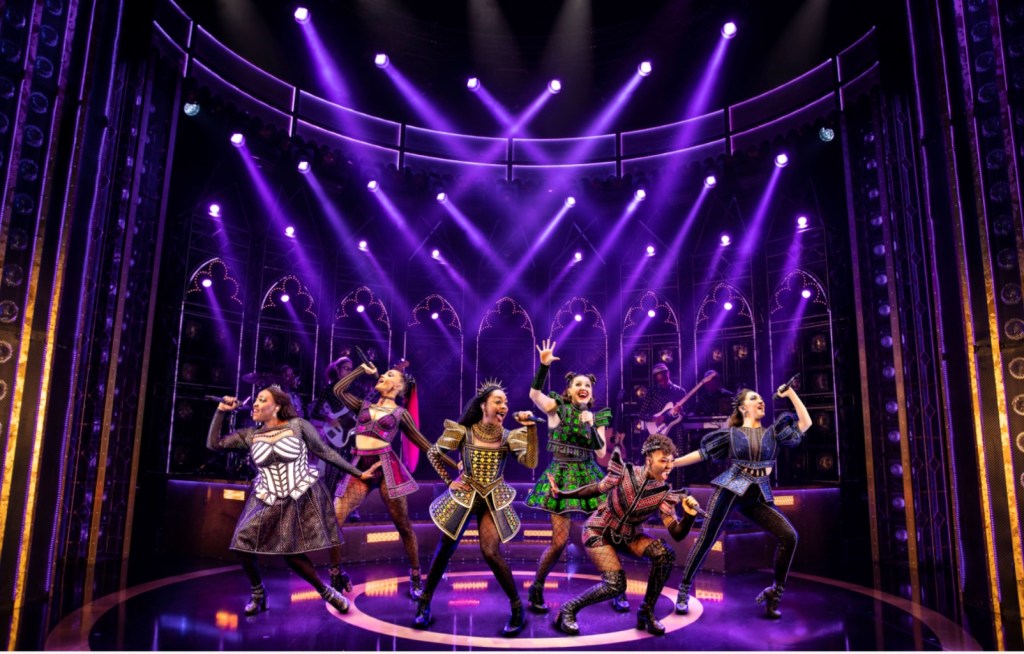
    If audience participation isn’t your thing (I loathe it) then avoid aisle seats in the stalls, but make sure you get to the Arts for ninety minutes of sheer uplift and joy. This is effectively the male answer to Six, and it’s pretty damn great. A rousing smash hit, and the kind of show audiences flock back to multiple times. I’m so glad I got to experience it’s unique verve and musical bravura again.

    October 15, 2022

  • THE BAND’S VISIT – ⭐️⭐️⭐️⭐️ – kindness trumps conflict in this unusual musical

    Harel Glazer, Miri Mesika and Marc Antolin, photograph by Marc Brenner

    THE BAND’S VISIT

    Music and Lyrics by David Yazbek

    Book by Itamar Moses

    Based on the screenplay by Elran Kolrin

    Directed by Michael Longhurst

    Donmar Warehouse – until 3 December 2022

    https://booking.donmarwarehouse.com/events/5801ANBQVBLJQKVGKMVQVKJKLJQMKBTVN?_ga=2.51218858.288472771.1665651419-1175656577.1665651419

    Extraordinary what a difference venue size can make. When I saw this highly unconventional Best Musical Tony winner in a 1000+ seat Broadway house a number of years ago, I admired it but didn’t particularly enjoy it: it was beautifully done but felt too esoteric, indistinct and (whispers) a bit boring. In Michael Longhurst’s dreamy new London production however, in a 250 seat theatre where everyone is close to the stage, it’s enchanting and quietly riveting. It also features, in the work of leading lady Miri Mesika, in the role that won Katrina Lenk the 2018 Outstanding Actress Tony, one of the most remarkable British stage debuts in living memory.

    The UK premiere of The Bands Visit actually feels like a return to it’s roots. The Donmar is far closer in stature to the off-Broadway Atlantic Theatre’s intimate Linda Gross space where David Yazbek and Itamar Moses’s chamber musical premiered in 2016 rather than the comparatively cavernous Barrymore that it transferred to, and the various theatrical barns it toured to across America. The material is so much better served by being experienced at close quarters.

    Based on a multi-award winning Israeli movie, the premise of the show is very simple: the Alexandria Ceremonial Police Orchestra travel from Egypt into Israel to play at the opening of an Arabic cultural centre in the city of Petah Tikva but, due to misunderstandings and mispronunciation, end up in the desert town of Beit Hatikva. “Welcome To Nowhere” is a ruefully funny early number as a trio of amused but not unkind Beit Hatikvans explain the mistake to the band of powder blue suited musicians, sweating beneath their formal hats and epaulettes. Due to the town’s remoteness, the men are forced to stay overnight and interact with the locals, and that, on the surface at least, is pretty much it.

    The plot of Itamar Moses’s book is that gossamer thin, but the detail, humour and humanity in the characters and their relationships is rich and satisfying. They’re a quirky but relatable bunch, from the character simply known as Telephone Guy (Ashley Margolis, oddly haunting) endlessly waiting at the town’s sole public phone for a call from his beloved, to the gawky, chronically shy sweetheart who’s never had a girlfriend (an adorable Harel Glazer) to the hilarious and all-too-real uneasy rivalry of a pair of band members billeted together overnight (sublime work from Carlos Mendoza de Hevia and Sargon Yelda). Then there’s the young couple (Marc Antolin and Michal Horowicz, both heartbreakingly good) whose relationship teeters on the verge of collapse. Moses’s nuanced script presents these people without comment but crucially never judges them: it all manages, under Longhurst’s perfectly pitched direction, to be utterly truthful yet intriguingly odd.

    A tapestry of life and community is created before our eyes on Soutra Gilmour’s deliberately downbeat breezeblock, chipboard and fairy lights set. It’s almost palpably atmospheric. Kindness and resignation trump drama here and the lack of dynamism and dramatic focus may prove frustrating to many (it certainly did for me on Broadway!) but this is a piece that, elusive as it is, repays the effort you put in…eventually. The onstage musicianship is also a thing of joy and wonder to encounter at close quarters.

    Once again, David Yazbek proves himself a musical chameleon: his scores for The Full Monty, Dirty Rotten Scoundrels, Women on the Verge of a Nervous Breakdown, even the slightly inferior Tootsie, bear so little relation to each other that it’s hard to believe they’re all the work of the same person, so completely does he align his craft each time with the specific style and milieu of the show he’s creating. Here he has come up with an authentic-sounding score unlike anything in the musical theatre canon. It eschews Broadway-style emoting and grandstanding for the evocative dissonance, rhythms and cadences of Middle Eastern music and instrumentation. It often washes over the audience like a warm breeze, but thrills the blood when it has to. There’s a bona fide stand-out number in ‘Omar Sharif’, a gorgeous reverie where café owner Dina sensuously recalls a childhood watching Sharif and listening to Egyptian chanteuse Umm Kulthum (“dark and thrilling, strange and sweet…we dance with them in a jasmine scented wind”) to an understandably entranced band leader (the Israeli film star Alon Moni Aboutboul in an understated but deeply touching performance.)

    Dina is played in London by Miri Mesika, a massive star in her native Israel….and it’s not hard to see why: she’s magical. With a singing voice like warm molasses and the kind of magnetic stage presence that can’t be learnt, she is the lynchpin of this wayward but affecting musical. She lends Dina a very particular authority and authenticity, making her the kind of woman you’d want as your friend but who you definitely wouldn’t mess with, conveying every iota of her warmth, strength, humour and innate kindness. She compellingly hints at frustrations and roiling passions beneath her bemused surface, and captures with heartbreaking honesty the sense of an urbane, curious soul trapped in a stultifying small town. Mesika is ravishingly beautiful yet earthy, magnetic and mesmerising…. this is a glorious performance, one that elevates a classy, accomplished production into a must-see event.

    October 13, 2022

  • ONLY AN OCTAVE APART – ⭐️⭐️⭐️⭐️⭐️ – Is it cabaret? Is it theatre? Is it a concert? Who cares, it’s divine

    Justin Vivian Bond and Anthony Roth Costanzo, photograph by Ellie Kurttz

    ONLY AN OCTAVE APART

    Justin Vivian Bond and Anthony Roth Costanzo

    Co-created and directed by Zack Winokur

    Wilton’s Music Hall – until 22 October

    https://www.wiltons.org.uk/whatson/753-only-an-octave-apart

    That old adage about madness and genius being closely aligned has seldom been better demonstrated, at least in the theatre, than by this beauteous bitchslap of a show, already an acclaimed sell out in New York and, if there’s any justice, about to follow suit here. The atmospheric, slightly seedy grandeur of Wilton’s feels like an appropriate setting for these two wildly contrasting yet surprisingly complementary, and entirely unique, world class talents and their gloriously offbeat mini-extravaganza.

    Pitched somewhere between cabaret and recital, but most definitely a piece of true theatre, Only An Octave Apart (the title refers to the fact that Anthony Roth Costanzo is a classical counter tenor while Justin Vivian Bond possesses a resonant deep baritone at home singing everything from torch songs to disco…so they literally do sing an octave apart) is a strange and compelling melange of the screamingly funny and just (exquisitely controlled) screaming. It’s glamorous and outrageous but, such is the mood-shifting brilliance of the performers and Zack Winokur’s deceptively clever staging, the tone can, and does, turn on a dime from dirty-minded camp joy to breath-holding, tear-jerking poignancy. This is audience control of the highest order.

    Other than the unlikely but exhilarating pairing of Costanzo’s ravishing, bell-like sound with the smoke and slate of Bond’s vocal tone, it’s the contrast and chemistry between the two stars as talents and humans that fascinates most perhaps. As Bond (who, from a distance and with every passing year, more and more resembles Cybill Shepherd or the much missed Broadway diva Marin Mazzie) gleefully points out, they’re a star of the sometimes rough and ready downtown cabaret circuit while Costanzo has graced the stages of everywhere from the Metropolitan Opera in New York to ENO and Glyndebourne. If Costanzo’s stage persona is irrepressibly good humoured and boyish, albeit capable of real emotional depth when required (astonishingly, he’s 40 but reads on stage as at least a dozen years younger), Bond is, to quote Harvey Fierstein’s Torch Song Trilogy, “mountain beautiful”, a statuesque, louchely glamorous figure with a mega-watt smile, a killer side-eye and zero filter. Costanzo is an adorable Peter Pan, if J M Barrie’s ageless boy had a voice to make angels weep, to Bond’s slightly demented society hostess doling out cocktails while telling cock tales. He’s warm and engaging, they’re magnetic, elegantly naughty and a little dangerous, and together these boutique superstars create some crazy magic.

    In between droll, delightful banter, the musical choices are nothing if not eclectic. Costanzo treats us to several pieces from his classical repertoire, including some Schubert, Purcell, Gluck and a breathlessly brilliant (breathless for us that is, not him) version of the Crudel! Perchè finora duet from Mozart’s The Marriage of Figaro in which he fearlessly and successfully takes on soprano and baritone parts. He also joins his co-star in a rip roaring Sylvester disco number and thrilling reinventions of Queen’s Under Pressure and the Bangles’s Walk Like an Egyptian (yes really). Nico Muhly’s terrific arrangements and Daniel Schlosberg’s nine piece band soar throughout.

    Bond’s voice, a distinctive fusion of screech and guttural growl, is no less remarkable an instrument than Costanzo’s in it’s own way, emphasising phrasing over tonal loveliness: it’s by no means a beautiful sound but it’s an expressive one that compels you to listen, especially in tandem with it’s owner’s innate charisma. Bond sashays through a weirdly sexy appropriation of Me And My Shadow that bewitches, and delivers a raw, affecting version of Dido’s wistful White Flag that troubles and aches. The programme runs even deeper and more haunting when the stars reinvent the Peter Gabriel-Kate Bush duet Don’t Give Up as a meditative response to the ongoing battle for trans rights, gay rights and basic human decency: it’s tender, profoundly affecting and lifts an already exceptional evening into a rapturous stratosphere.

    There’s an authenticity about Bond and Costanzo, both separately and collectively, that goes beyond the glitter, the outlandish almost-matching outfits, the sometimes groan-worthy jokes, the bizarre but inspired musical choices, and Bond’s repeated mantra of “keep it shallow, keep it pretty, keep it moving”… these are two true artists at the very top of their game, and you should do whatever it takes to see them. Fabulous, in the most authentic sense of the word, and, perhaps surprisingly, moving (and not necessarily in the way Mx Bond meant). A must-see.

    October 1, 2022

Previous Page Next Page

Blog at WordPress.com.


Loading Comments...
 

    • Subscribe Subscribed
      • ajhlovestheatre
      • Join 59 other subscribers
      • Already have a WordPress.com account? Log in now.
      • ajhlovestheatre
      • Subscribe Subscribed
      • Sign up
      • Log in
      • Report this content
      • View site in Reader
      • Manage subscriptions
      • Collapse this bar