Skip to content

ajhlovestheatre

  • Home
  • About
  • Contact
  • Blog

  • THE MISANDRIST – ⭐️⭐️⭐️⭐️ – this’ll tickle your funny bone and (possibly) make your eyes water

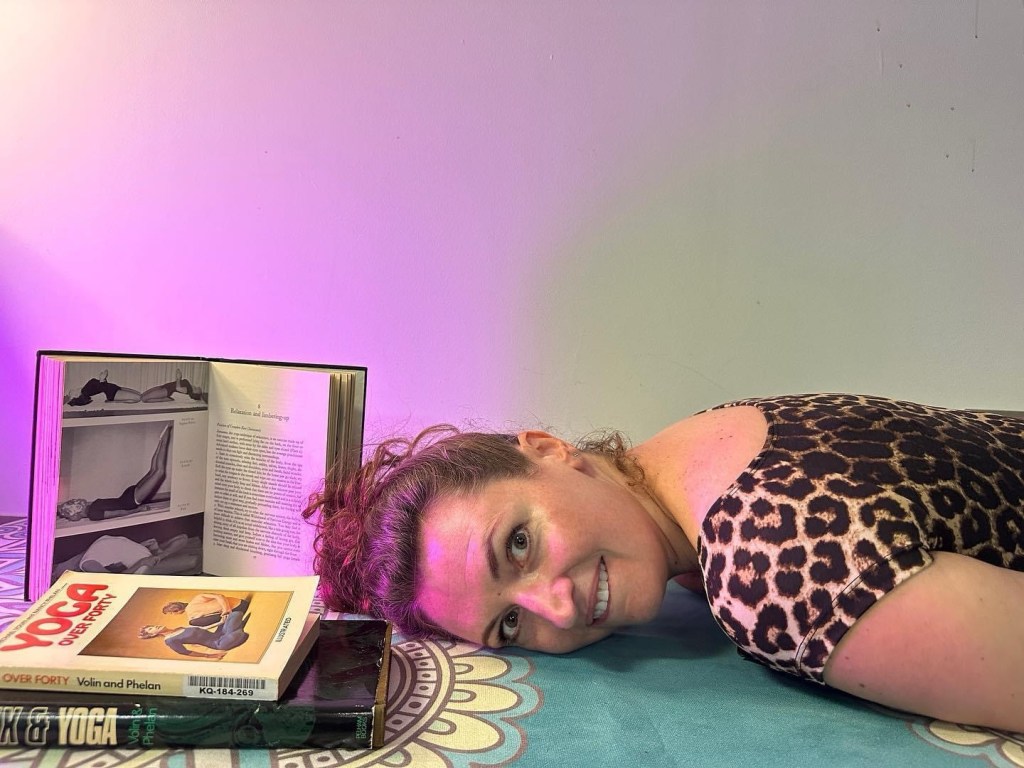
    Elf Lyons and Nicholas Armfield, photograph by Charles Flint

    THE MISANDRIST

    by Lisa Carroll

    Directed by Bethany Pitts

    Arcola Theatre, London – until 10 June 2023

    https://www.arcolatheatre.com/whats-on/the-misandrist/

    A misandrist, according to the dictionary, is a person “who dislikes, despises or is strongly prejudiced against men”, so effectively the counterpart equivalent to a misogynist, although as a word it’s far less frequently used. Funny that.

    Near the end of Lisa Carroll’s terrific new play, Elf Lyons, an incandescent presence and half of the cast of Bethany Pitts’s production, delivers a coruscating speech about the chokehold men have had over women’s lives for far too long that, in its erudition and magnificent rage, is reminiscent of Jodie Comer in the West End and now Broadway sensation Prima Facie. It’s the same sense of articulated weariness and propulsive fury that renders it almost impossible to just sit there and listen. It’s a stirring moment, an aria of indignation written and performed with such riveting precision and attack that it’s almost possible to overlook that it doesn’t feel fully integrated into what otherwise is a thoroughly engrossing, character-driven piece of comedy-drama.

    If Lyons’s Rachel is truly a misandrist, she can pretty much justify it – a drunken, verbally abusive father, a cheating, blame-shifting ex – though it’s sad to reflect that a sizeable proportion of women watching this play may well have experienced at least one of these toxic male figures in their lived experience. If Rachel’s history is not particularly remarkable, her subsequent reaction to it is entirely understandable, at least at first, and Carroll’s writing and Lyons’s acting make acute psychological sense. She’s coolly defensive, extremely witty, and definitely off men, that is until she meets puppyish Nick.

    Where Rachel is acid, Nick is honey: an open-faced, non-predatory charmer with a cracking sense of humour and a tinge of social anxiety that chimes well with Rachel’s own. Nicholas Armfield, in a tremendous, exquisitely well-rounded performance, invests him with a bouncy niceness that never cloys and an undertow of melancholy that suggests he’s all too aware that ‘nice guys’ often finish last. Armfield further impresses as Rachel’s salacious, functioning alcoholic female boss (hilarious) and her definitely non-functioning alcoholic father (chillingly real), but the chemistry between his Nick and Lyons’s Rachel feels wonderfully authentic, despite the obvious mismatches between the characters as they start a jokey, casual affair.

    So far so raunchy RomCom, but when one of their sex sessions takes a turn for the unexpected, the play goes seriously off piste and turns into very much its own savagely funny, disturbing beast, as Rachel and Nick get into the unconventional sexual practise of pegging. For the uninitiated, pegging is where a woman straps on a fake phallus and anally penetrates a man, and there is an astonishing moment when the curtains at the back of Cara Evans’s set (which is equal parts combat arena, stand-up comedy stage and lurid sex club) open to reveal a giant neon penis and an eye-watering array of sex toys that remain in full view for the rest of the evening.

    Carroll explores Nick’s reticence and Rachel’s enthusiasm with a clarity and sensitivity that deepens and darkens as a fun add-on to their sex life morphs into an obsession. You also realise while watching that the driving force, particularly for Rachel, is increasingly less about sex and more about power. Outrageously funny becomes awkward, even sinister, by stealth, and it’s all fleshed out with explosive, loaded dialogue and really magnificent acting.

    Pitts’s staging, each scene amusingly having a summarising caption beamed up on the stage wall (“Meet-cute (gross)”, “Vibe killer”, “You pegged my soul”) has some gleefully meta moments and skilfully balances comic bliss with genuine unease. Watching the sunshine drain out of Armfield’s adorable Nick is hard to watch, largely because it is so brilliantly conveyed, just as his swaggering self-congratulation after first penetration is as joyful as it’s absurd, and Lyons makes vivid Rachel’s less admirable traits yet, almost miraculously, never forfeits sympathy for her. Carroll’s writing is crisp, contemporary and painfully honest, shot through with belly laughs and moments of raw shock. Structurally, the play meanders a little as it flirts with a number of dramatic genres and feels as though it could have benefitted from maybe one more draft to be something really special, but it’s never less than engaging. At its most dramatic and most impressive, it recalls Patrick Marber’s Closer in its unflinching frankness and urbane wit.

    All in all, this is a very satisfying couple of hours of theatre. There’s nothing like a trip to Dalston to broaden your horizons.

    May 23, 2023

  • NUL POINTS! – ⭐️⭐️ – Eurovision season is upon us

    Kane Verrall, Marcus J Foreman, Charlotte East, image courtesy of East Photography

    NUL POINTS!

    by Martin Blackburn

    directed by William Spencer

    Union Theatre, London – until 20 May 2023

    It’s that time of year again….when Eurovision fever grips the nation (or at least for those who celebrate) and taste, restraint and anything remotely beige goes straight out of the window. It can also feel like an early start to Pride season, and William Spencer’s production ticks a number of the boxes that a predominantly gay crowd will look to get filled (behave!) when picking a theatrical night out around the longest running televised annual music competition in the world.

    The overall experience is certainly camp: David Shields’s enjoyably garish London apartment design is an eyeful of musical theatre memorabilia (including a poster for cabaret trio Fascinating Aida, one of whose members – Adele Anderson – is in this cast), kitschy wallpaper and fairy lights, and past Eurovision performances run on a continuous loop upon a giant screen in the Union’s bar, which is serving a speciality cocktail of (what else?!) Bucks Fizz.

    It looks like the perfect set-up for a night of rainbow-spattered, gay-centric joy, with a trio of drama students (two gay boys, one straight woman) settling down to watch the 2012 contest, buoyed up by Bucks Fizz and bants. Writer Martin Blackburn certainly has a realistic handle on the insecurity and low level jealousy inherent in fledgling acting careers. Josh (a nicely enthusiastic Kane Verrall) has the hots for cute but vacant Daz (Marcus J Foreman) much to the amusement of Kat (Charlotte East, very good) and the party is gatecrashed by stripagram cowboy Ryder (Sean Huddlestan, miscast but investing his character with a lot more charm than he has in the text) who has turned up at the wrong flat. It all feels a bit sub-Jonathan Harvey (who wrote his own, rather lovely, Eurovision tragicomedy Boom Bang-A-Bang seen at the Bush in the 1990s) but it’s perfectly watchable, littered with ESC trivia, musical theatre references and catty one liners (“Less gays have seen Wicked than your arse” is one of the better ones).

    Unfortunately though, Blackburn has loftier pretensions. Having hit on the neat idea of making each scene a separate year and a separate ESC watch party to show the progressions and changes in the protagonist’s lives as the years pass (the first half runs through to 2015 while the second half shows 2022-3), Blackburn fudges it by trying to introduce serious themes that the sketchily drawn characters and rudimentary, flavourless dialogue -heavy on cheap jokes but light on illumination- are unable to support. The #metoo movement, suicide, child surrogacy, chronic guilt, celebrating the departed, the decline of the UK in the last twenty five years, all get trotted out and then discarded like so many Union Jack party hats after a festive night out.

    Adele Anderson lends a worldweary elegance and wit as Josh’s unlikely mother. To be honest, on press night the usually divine Ms Anderson wasn’t quite on top of her lines, but being word perfect wouldn’t make sense of a character who we are seriously asked to accept is the lady of the manor in an Aberdeenshire estate while also a Eurovision and Strictly obsessive, a serial destroyer of any canapés she puts in the oven (a running joke that never gets past the start line) and the sort of woman who used to get puke-drunk on Malibu in cheap nightclubs, but then mysteriously becomes an online sensation. It may be that Blackburn intended to create an AbFab Patsy Stone type but the writing and performance just don’t deliver that and instead we are left with an accomplished artist struggling, and failing, to join some impossible dots.

    There are moments when Spencer’s production veers towards farce but there isn’t the precision in the blocking or the playing to make that work. The plot borrows effectively from a certain long running West End ghost/thriller play (no spoilers here) and ends with an unexpected volte face that, while mawkish, is pretty impressive. Blackburn has a strong grasp of theatricality but doesn’t seem able to decide exactly what his script is supposed to be. It’s not really a comedy (it’s not that funny), it’s not a drama (the characters aren’t well developed enough), and it isn’t joyful enough to be a true Eurovision celebration. There’s a distinct whiff of misogyny about the female characters, which Ms East’s open-faced emotionalism goes some way to dispelling, and the trope of gay men who will shag anything, despite being in a relationship, feels well worn to the point of being totally exhausted.

    The game cast work hard but the whole show feels under-rehearsed and uneven. It’s not exactly nul points, but it’s certainly no winner.

    May 4, 2023

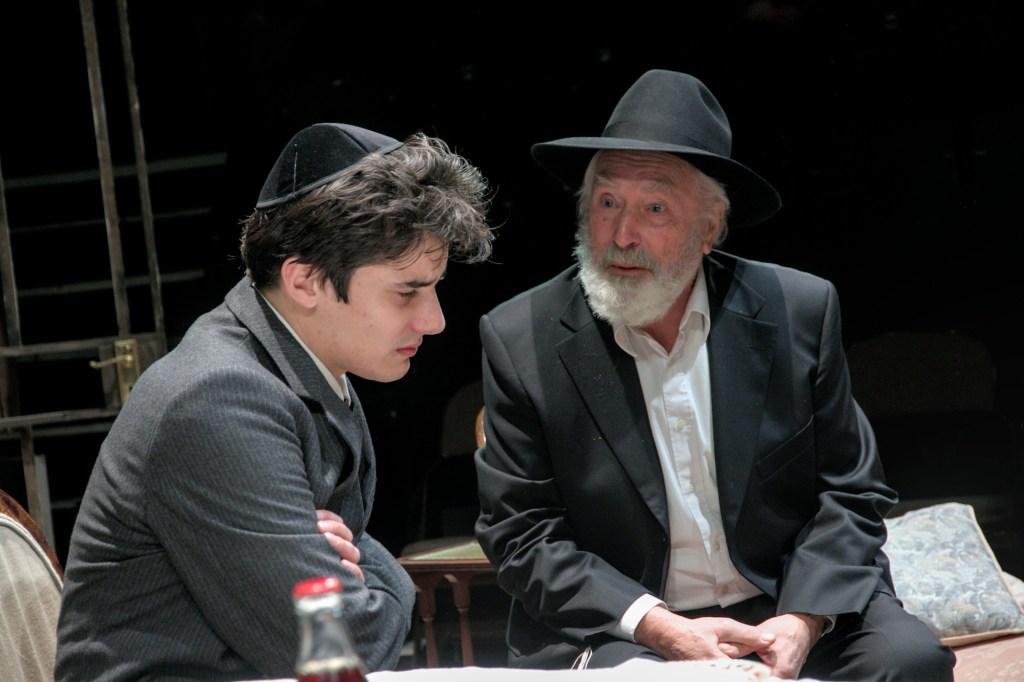
  • THE MOTIVE AND THE CUE – ⭐️⭐️⭐️⭐️ – for the love of theatre….

    Mark Gatiss and Johnny Flynn, photograph by Mark Douet

    THE MOTIVE AND THE CUE

    by Jack Thorne

    Directed by Sam Mendes

    National Theatre/Lyttelton, London – until 15 July 2023

    https://www.nationaltheatre.org.uk/productions/the-motive-and-the-cue/

    If you love theatre, you’re going to want to see this. It’s as simple as that. If you’re interested in the craft, the process of play-making, you’re going to need to see this. If, on top of all that, you’re fascinated by old school stardom of a bygone era – specifically Richard Burton and Elizabeth Taylor and, for those with more classical taste, Sir John Gielgud – then it’ll be like all your Christmasses have come at once. Jack Thorne’s engrossing new play is a love letter to the theatre and, in Sam Mendes’s beautifully calibrated, elegantly flamboyant production, looks likely to be the biggest smash hit the National has had with a piece of new writing on one of its main stages since Alan Bennett gave us The History Boys.

    Thorne’s scintillating piece centres on the famous Burton Hamlet which Gielgud directed on Broadway in 1964. Burton and Taylor were newly weds at the time and the new bride had put her lucrative Hollywood career on hold temporarily to be in New York to support her husband. The play alternates between rehearsal room and various opulent NYC locations as the Burton-Taylors entertain, Richard struggles to find “his” Hamlet (as opposed to the one he feels Sir John is trying to impose upon him) and Gielgud overcomes his own demons as he struggles to stay relevant but true to his craft. There are glimpses of the alcoholism that will eventually cost Burton his reputation and then his life, and Broadway obsessives will love noting that the character list includes veteran actor Hume Cronyn and star Alfred Drake (the original Fred/Petruchio in Kiss Me Kate) both of whom were in the ‘64 Hamlet cast.

    The play would have worked well enough as a gossipy, glamorous backstage drama but Thorne is interested in rather more than that. The Motive And The Cue (the title is a quote from one of Hamlet’s speeches, and refers to the intellectual reason for something and the passion to ignite it into being) examines why the theatre and storytelling are so important, and the legacy handed down through generations, both onstage and off. It also looks with great sensitivity at the isolation that a high profile artist who was also gay would have had to endure in those less enlightened times (there’s a particularly moving sequence when a lonely Gielgud picks up a male prostitute for company and the result is entirely unexpected.)

    As Gielgud, Mark Gatiss delivers career-best, uncanny work. Not only does he look and sound just like him, but he captures his essence, his wit, his charm, his occasional tetchiness, and an underlying melancholy. At a time when so many things on stage and screen are hailed as “great”, this truly is a great performance. Johnny Flynn’s Richard Burton is almost as impressive, projecting the swagger, sexiness and bonhomie but also the sense of a lost soul. He’s likeable and maddening, irresistible yet on his way to being potentially a bit seedy. Flynn impersonates the compelling rasp of the Burton tone with real accuracy, even if the swoonworthy depth of timbre is sometimes missing.

    Tuppence Middleton is a slightly one-note Elizabeth Taylor, and looks nothing like her, but is a suitably flashy presence in Katrina Lindsay’s period-gorgeous costume designs. Janie Dee is underused but still glorious as a veteran stage actress while Luke Norris and Allan Corduner do vivid, rich work as two main players, and Laurence Ubong Williams is quietly devastating as the young man from the New York streets who briefly connects Gielgud with his humanity.

    Although it’s a play about theatre, Mendes, in tandem with Es Devlin’s striking set designs, gives it a cinematic sweep and motion, as walls expand and contract as though to focus or wide-shot scenes and moments. There is though a lot of theatrical magic here, from the act one closing sequence where Gatiss’s Gielgud quietly, and alone on stage, runs through a Hamlet speech with such understated brilliance, or the section where Gielgud and Burton find the common ground to make this particular Prince of Denmark resonate for the new actor playing him and Burton thrillingly delivers, or the spinetingling final section which is pure showbiz but also pure class. Thorne’s writing is erudite, punchy and heartfelt.

    Ultimately, this terrific play and production is the closest this generation will probably get to seeing the particular greatness of Gielgud and Burton, but they will be seeing authentic greatness nonetheless, right here on this stage. With it’s famous characters, classical references and New York setting, I suspect The Motive And The Cue will turn out to have very long legs and wide ranging international appeal, but Flynn and especially Gatiss may prove very difficult to replace.

    May 3, 2023

  • DANCING AT LUGHNASA – ⭐️⭐️⭐️⭐️⭐️ – Go and see this: heartbreak was seldom so exquisite

    Photograph by Johan Persson

    DANCING AT LUGHNASA

    by Brian Friel

    Directed by Josie Rourke

    National Theatre/Olivier, London – until 27 May 2023

    https://www.nationaltheatre.org.uk/productions/dancing-at-lughnasa/

    It’s hard to believe that Dancing At Lughnasa is thirty years old. Although set in a very particular place and time period (Summer 1936, Ballybeg in rural Ireland), Brian Friel’s radiant memory play retains a bewitching freshness, emotional maturity and understanding of humanity -specifically family dynamics- that defy time. Josie Rourke’s breathtaking new production for the National is every bit the equal of the long running original.

    Michael Evans (Tom Vaughan-Lawlor, in an exquisite study of controlled feeling) looks back with fondness but also clarity at the Mundy sisters, by whom he was raised and of which his mother Chris is one of the five, and their brother Jack (a revelatory Ardal O’Hanlon), returned home to die after decades of missionary work in Africa, in their final summer in the family cottage in the rolling countryside. It looks idyllic but roiling beneath the surface are disappointments, resentments, broken hearts, and the constant threat of abject poverty. Friel based this fictional family on his mothers own which partly explains the extraordinary combination of affection and truth with which he invests his characters.

    Not a single word or moment feels extraneous or forced, and under Rourke’s detailed but big-hearted direction, nuances of feeling and waves of understanding are conveyed through the smallest glance or touch between the sisters. It’s delicate, like the financially precarious existence the five women eke out on the sole schoolmistress wages of elder sister Kate, but robustly human, and shot through with rambunctious humour and several devastating moments of raw anguish.

    The acting is flawless, so natural that these women barely seem to be acting, simply existing. Siobhán McSweeney is a comic joy as live-wire, irreverent Maggie but watch the wistful way she reacts when she learns a childhood friend, who’d gone off to marriage and affluence in London has returned to the area for a brief visit; the cracks in the wisecracking facade and the yearning for an alternative life that might have been, is utterly heart wrenching, and beautifully underplayed. Equally moving is McSweeney’s Derry Girls cast mate Louisa Harland as resourceful, kind middle sister Agnes, secretly smitten with Chris’s unreliable love interest Gerry (played with appropriate guileless charm by Tom Riley). Harland’s watchfulness and quiet intensity is tantalisingly subtle; it’s a beautiful performance in a company of beautiful performances.

    Alison Oliver inhabits Chris’s erotic and romantic thrall to Gerry so completely that it’s almost painful to hear her sister’s descriptions of how she falls apart when he goes absent once again. Bláithín Mac Gabhann finds the sweetness and spirit in the vulnerable Rose, and never overplays her neurodivergence. Justine Mitchell as the older Kate, conflicted between religious rectitude plus the need to be seen to be doing the right thing at all times, and a maelstrom of inner torment and frustration, is giving an absolute masterclass. Watching her go from straight-backed, stiff-limbed disapproval to unwilling but then totally abandoned participation as the five sisters give in to joy and dance to the Irish folk music blaring from their unreliable kitchen wireless is at once very funny and deeply affecting. It’s the finest account of this multi-layered role that I’ve seen.

    Dance, both as a physical act and as a metaphor for escape both literal and imaginative, runs through Friel’s gorgeous text like veins through wood. It’s at once swooningly lovely and achingly sad. The choreography is by Wayne McGregor and it feels so organic and specific that one couldn’t imagine these people moving in any other way. Robert Jones’s set, lit with masterful command of shade and colour by Mark Henderson, is simultaneously real, yet not-real, like the memories Michael is conjuring up: it’s ravishing yet gritty, and, on the Olivier’s massive stage, gives a wonderful impression of the Mundy homestead being marooned in a vast open space.

    The cruelty, but also the brilliance, of Friel’s text, surely one of the the greatest plays of the latter half of the twentieth century, lies in the speech at the end of the first half where Michael describes what’s going to happen long term to these beloved people. It throws the second half into a rich, dark relief that proves unbearably moving. This is onstage perfection, not so much ‘feel good’ as ‘feel everything’ theatre and I cannot recommend it highly enough. Bewitching.

    May 3, 2023

  • FUCKING MEN – ⭐️⭐️⭐️⭐️ – honest, funny, occasionally brutal, this updated version is well worth a look

    Charlie Condou and Stanton Plummer-Cambridge, photograph by Darren Bell

    FUCKING MEN

    by Joe DiPietro

    directed by Steven Kunis

    Waterloo East Theatre, London – until 18 June 2023

    https://www.waterlooeast.co.uk/f-men

    Schnitzler’s 1920 play La Ronde was astonishingly ahead of its time with its depiction of a daisy chain of sexual liaisons and has since provided a fertile dramatic basis for other treatments/adaptations such as David Hare’s modern The Blue Room (a two actor tour de force in which Nicole Kidman and Iain Glen bared more than their souls at the Donmar and on Broadway in 1998) and Michael LaChiusa’s gorgeous quasi-operatic Hello Again which haunts and troubles far more than your average off-Broadway tuner. Joe DiPietro, best known here for his scripts for a number of successful American musicals such as Memphis and The Toxic Avenger, had the inspired idea of applying this neat but explosive concept to gay relationships/hook-ups and ended up with a long running London fringe show and several international productions.

    Fucking Men (the confrontational title hilariously chosen by the author because he thought the play was un-producible so, like, what the hell) is back in a stylish, coruscating new edition which feels fiercer but also more emotionally true than its previous iteration. That has much to do with DiPietro’s intelligent textual updates (there are now references to things like OnlyFans, PrEP and apps), but also a smart, sexy but never exploitative production by Steven Kunis, and a quartet of beautiful performances that run the gamut from painful to sassy and much in between with extraordinary skill and delicacy.

    Charlie Condou draws a thrilling contrast between a bewildered “nice guy” type all at sea in the transactional world of casual sex and a hard nosed Hollywood exec whose tough exterior conceals a well of pain. Derek Mitchell is a lot of fun but still finds the core of truth in a self-aggrandising playwright, and Alex Britt is an impressive shapeshifter in a variety of roles. Stanton Plummer-Cambridge invests each of his roles with intriguing layers. All in all, it’s hard to imagine the play acted better than it is here.

    In a parade of a dozen or so scenes, DiPietro’s assortment of men – a sex worker, a bisexual student, a closeted actor, a cheating husband, a soldier, a lovelorn tutor, several more – meet, talk, have sex, and repeat…each successive scene retaining a partner from the previous one. It’s a straightforward enough concept but each encounter bears the unmistakable ring of truth, and, in an elegant visual flourish, director Kunis and designer Cara Evans has participants from the next liaison visible through the clear walls of the set, like lingering ghosts. The whole thing is lit with real invention by Alex Lewer. The men of the title are vividly, swiftly established with a remarkable economy but also a specificity that provokes guffaws and winces of recognition. Very seldom do any of the characterisations hit a false note (I’m not sure I fully bought into the porn star suffering chronic loneliness, despite Britt’s sensitive performance) and the script as a whole feels successful in its intention to present a broad spectrum of gay ‘types’ that still, on the whole, feel like rounded human beings.

    DiPietro finds a lot of humour amongst all the angst and the frantic rutting, which mercifully stops Fucking Men from becoming a wearying succession of dark nights of the soul. There’s sweetness amongst the cynicism but ultimately the play as a whole paints a slightly depressing picture of the emotional disconnect and isolation that seems to go hand-in-hand with endless bouts of casual encounters. Still, DiPietro presents it all with a commendable lack of judgement, and a clear-eyed compassion.

    Audiences may well be attracted by the provocative title but in fact this is a surprisingly scintillating evening.

    April 30, 2023

  • SWEENEY TODD – ⭐️⭐️⭐️ – it’s big, beautiful and starry…but where’s the blood and grit?!

    Annaleigh Ashford and Josh Groban, photograph by Matthew Murphy and Evan Zimmerman

    SWEENEY TODD THE DEMON BARBER OF FLEET STREET

    Music and lyrics by Stephen Sondheim

    Book by Hugh Wheeler, from an adaptation by Christopher Bond

    Directed by Thomas Kail

    Lunt-Fontanne Theatre, New York City – open-ended run

    https://sweeneytoddbroadway.com

    Is it the greatest musical of the late twentieth century? Is it the greatest opera of the twentieth century? The question of genre has always hung over Sondheim and Wheeler’s 1979 masterpiece, further complicated by the fact that it is the only piece of music theatre of it’s time to have been presented on opera stages as well as legit stages (New York City Opera have performed it at Lincoln Center and in the UK, Sweeney has slashed throats at ENO, the Royal Opera House and Opera North). What is in no doubt though is that it is a noirish masterpiece, a soaring, seething cauldron of vivid characters, ribald humour, nasty shocks, astonishing beauty and thrilling, transporting music. The current Broadway revival, which obliquely homages Harold Prince’s extraordinary original vision at times, leaves audiences in no doubt that they are in the presence of greatness, even if several individual elements are less than ideal.

    Musically it’s magnificent: Jonathan Tunick’s original orchestrations, by turns swoon-worthy then jarring, is played by a much-heralded 26 piece orchestra under Alex Lacamoire’s baton. Sondheim’s score, from the rollicking foreboding of the opening and closing ‘Ballad of Sweeney Todd’ with the entire band sawing away thrillingly, to haunting, achingly lovely balladry (‘Johanna’, ‘Pretty Women’, ‘Not While I’m Around’), witty patter songs, fiendishly clever quartets and chorales, to sheer, unbridled terror, is a thing of absolute wonder. The company singing is crisp, accurate and impassioned.

    Visually, Kail’s production is restrained to the point of anaemia though. His Victorian London, as designed by Mimi Lien, is a cavernous, dark, empty space (matching Sondheim’s lyric “there’s a hole in the world like a great black pit…and it goes by the name of London”), dressed only with a stage-wide arch, a giant crane, a couple of staircases and some sticks of furniture periodically trundled on. It’s all lit in painterly fashion by Natasha Katz in great sudden washes of light thinning down to laser-like pin pricks to give added focus to specific moments. It’s striking and attractive, but it all seems a bit sanitised (there’s not nearly enough blood). There’s never the sense of roiling desperation, even filth and squalor, that permeates Sondheim’s astonishing score. The musical’s subtitle is “A Musical Thriller” but there’s precious little terror here, handsome and imposing as this production is.

    That’s a problem. Few musicals set out to authentically frighten their audiences (Phantom never did, Little Shop of Horrors has its moments) but Sweeney most emphatically does. It’s right there in the music….I remember having nightmares after being obsessed with the Original Broadway Cast Recording as a child, and listening to it into the night without the lights on (what was my Mum thinking?!) I can also recall the wide-eyed discomfiture of the front couple of rows at the Cottesloe (now the Dorfman) in Declan Donnellan’s viciously brilliant National production when Alun Armstrong’s terrifying Sweeney turned on them during ‘Epiphany’ (“You sir, you sir, how about a shave? Come and visit your good friend Sweeney. You sir, too sir? Welcome to the grave….Who sir, you sir? No ones in the chair, Come on! Come on!”) as Julia McKenzie’s peerless Mrs Lovett looked on appalled yet excited.

    Humanising Sweeney, or rather Benjamin Barker as is his real name, is not a bad idea, but there has to be the feeling that this is a once-good, deeply wronged man who has completely snapped the tether. Without the danger, he runs the risk of appearing bland. Opera singers such as Bryn Terfel (ENO opposite Emma Thompson) or Thomas Allen (for the Royal Opera) achieved the appropriate level of mania, even housewives’ favourite Michael Ball cast aside his chummy cuddly persona and went there magnificently in the 2011 Chichester production. It’s so well written that, in the score, Sondheim actually gives Sweeney anguished moments at the disturbing height of his homicidal passion where he reflects/laments on his situation (“I’ll never see Johanna, no I’ll never hug my girl to me – finished!….And my Lucy lies in ashes, and I’ll never see my girl again”) amplifying the tension while piercing the heart. At present, Josh Groban is a vocally glorious Sweeney, but misses the jet black fury at the heart of the man. It may come, but at the moment he reads as too uncomplicated and insufficiently driven.

    The real villain of the piece is the pie maker Mrs Lovett, as she is the only person who holds all, or most of, the knowledge regarding the blighted lives of Sweeney, his lost wife and daughter, and the cruel, privileged chancers who fashioned their downfall; she it is who first has the idea to make pies out of the murderous barber’s victims, and who unscrupulously pursues Sweeney for her own romantic ends. It’s a gift of a part but fraught with pitfalls, standing as she does at the crossroads between Music Hall and Grand Guignol. She’s a grotesque, incorrigible yet irresistible, but needs to have some basis in reality to elicit that peculiar mixture of hilarity, repugnance, desperation and even sympathy to make the magic of this extraordinary role really take wing. The greatest interpreters of the role (Angela Lansbury and Sheila Hancock in the original Broadway and West End stagings respectively, the aforementioned McKenzie, Imelda Staunton, Carolee Carmello, even Patti LuPone) all got it. This production fields Annaleigh Ashford, acclaimed for her Dot/Marie opposite Jake Gyllenhaal in the pre-pandemic Sunday In The Park With George and the original Lauren in Broadway’s Kinky Boots. Anybody who saw her in the latter show, or has listened to the cast album, will have some idea of what to expect from Ms Ashford’s attempt at a British accent: it’s not just bad, it doesn’t sound like anybody you’ve ever heard anywhere, unless you’ve had the misfortune to be stuck in a pie shop with a whiny Eastern European with a very heavy cold.

    Ashford has brilliant comic instincts but unfortunately they have little to do with either the historical period of the show, or the character. It’s a display of shameless, scenery-chomping focus pulling, and it’s often very funny, but it seldom feels sincere and it’s not Nellie Lovett. Watching a younger, blonder, more glamorous Mrs L did make me wonder though if, should this production make it’s way across the pond, this could be the role that gets Sheridan Smith back into musical theatre.

    The supporting cast are excellent. Broadway sweetheart Ruthie Ann Miles is a saturnine, edgy presence as the Beggar Woman, although she needs to decide whether she’s Scottish or not, and Gaten Matarazzo is utter perfection as Tobias, finding the sweet spot between streetwise and cute. In short, he really makes you care. I also really liked Maria Bilbao’s manic Johanna, lovely yet damaged probably beyond repair, and her coloratura sits exquisitely on the music, pretty but with a slight air of danger. At the performance I saw understudy Nathan Salstone was on for Jordan Fisher as Anthony and gave a solid, finely sung rendition of the role. Jamie Jackson and Jamie Rapson are suitably horrible as the Judge and Beadle respectively, and sing superbly. Nicholas Christopher is a thrillingly funny and vocally dexterous Pirelli.

    British choreographer Steven Hoggett has done the movement and, while some of it feels a little too self-consciously modern, the moment during the first ‘Ballad of Sweeney Todd’ where the entire ensemble seems to become one pulsating organism before vomiting forth a triumphant Sweeney, is a real spinetingler. Mrs L and Sweeney’s final descent to hell is brilliantly done as well, a real shock moment, leaving the audience with a mixture of stunned admiration and “wtf just happened?!” laughter: as closing moments go, it matches the iconic slamming of the iron foundry door with which Prince put the button on his original production.

    Ultimately, there is a lot to enjoy here: at the end of the day, Sweeney Todd is a raging masterpiece, and encountering him will always be a chilling pleasure. It’s just sad that Sondheim never lived to see it become the massive commercial success it’s currently proving to be, and that this production doesn’t have more fire in its belly. If they manage to keep finding star replacements for Groban and Ashford, this Sweeney will end up being one for the ages primarily because of the amount of money it makes.

    April 26, 2023

  • BLACK SUPERHERO – ⭐️⭐️⭐️⭐️ – fanciful but urgent, a cracking debut play by Danny Lee Wynter

    Ben Allen and Dyllón Burnside, photograph by Johan Persson

    BLACK SUPERHERO

    by Danny Lee Wynter

    directed by Daniel Evans

    Royal Court Theatre – until 29 April 2023

    https://royalcourttheatre.com/whats-on/black-superhero/

    As debut plays go, Danny Lee Wynter’s Black Superhero is a pretty terrific achievement. A mouthy, sexy, vital thunderclap of a play, it’s a funny, frank dissemination and examination of Black identity versus, and in entanglement with, queer lifestyles, of familial ties, the fragility of relationships, polyamory…and hero worship. It feels authentic and personal but also universal, and although there’s a lot going on here, Wynter displays a masterly gift for keeping his thematic plates spinning. Plus he creates bold, interesting characters, snappy, unforced dialogue that switches from witty to heartfelt to raunchy in the blink of an eye, and marbles an already rich cake with a layer of magic realism that proves surprisingly potent.

    At the beginning of the Royal Court run, Wynter himself was playing disaffected David, a sort-of Black gay everyman, an unemployed actor living in his sisters spare room and in sexual and romantic thrall to friend-with-benefits King (Dyllón Burnside, one of the breakout stars from TV’s Pose). The role is now played by Lewis Brown and, while it’s disappointing not to see a playwright perform their own work, Brown is absolutely tremendous. He captures exactly David’s multiple but entirely credible traits: the relatability, the sensitivity, the emotional availability to friends and families but not necessarily to lovers, the deep well of damage (including the ongoing management of substance use) caused by a brutalised childhood, the keen intelligence and political awareness that sees him unable to resist a turn on the soapbox even when it’s not the time or the place, the humour…. Brown inhabits this flawed, lovable human with compassion and consummate stage craft.

    Burnside makes King, the Hollywood star with a newly opened-up marriage and a libido bigger than a whole herd of elephants in the room, an appealing, elusive figure. As charismatic as he is physically beautiful, he comes across as the sort of gorgeous steel-cored hedonist who breezes through life blithely unaware of the trail of emotional destruction they leave in their wake. Wynter also has King appear as Craw, a caped, masked superhero who’s both his best known film role and, in David’s fevered minds-eye, his alter ego. It’s an imaginative touch that, while fun, doesn’t feel fully integrated into the rest of the script and runs the risk of making an unknowable figure feel even more removed from the rest of the characters and action.

    Daniel Evans’s production, played out in a dark, angular, neon-edged space (scenic design by Joanna Scotcher, lit by Ryan Day) that multitasks effectively as night club, hotel suite, Essex beach and the outer reaches of David’s imagination, mines the text for all it’s confrontational satire, outrageous humour and moments of authentic distress. It’s also studded with excellent supporting performances.

    Eloka Ivo is sharp and funny as pragmatic Raheem, David’s successful actor friend whose ideals and opinions re race and sexuality are a moveable feast depending on how they affect him (“bein black shouldn’t enslave me to being a role model”) and Ben Allen does nuanced but hilarious work as King’s amiably crass Caucasian travel writer husband (“I felt very white when I visited the Congo, actually”) and a provocative Australian interviewer. Rochenda Sandall is a total knockout as Syd, David’s feisty sister, a straight-talking children’s party entertainer with an athletic sex life, a very clear-eyed take on her sibling, and, despite being straight, a pretty astute grasp on gay sexual politics: “spend a lifetime fightin for what we’ve got, finally go and get it, then realise all they wanted was what they had to begin with. No marriage and loadsa cock!” The wondrous Sandall, in tandem with Wynter’s cracking writing, turns Syd into the kind of woman you wouldn’t want to mess with, but would love to have as a friend.

    One of the great strengths of Wynter’s script is his ability to present opposing viewpoints with equal conviction while seldom reducing his characters to mere mouthpieces. The result is a series of timely, engrossing debates that never lose sight of the humanity of the principal figures, shot through with rambunctious humour and shards of irresistible theatricality, in Evans’s flashy but sensitive staging. There are shades of Jonathan Harvey, Tony Kushner, Michael R Jackson and Jeremy O Harris here, yet Black Superhero is it’s own fabulous beast. Lovely, naughty, essential stuff.

    April 25, 2023

  • SHUCKED – ⭐️⭐️⭐️⭐️ – probably the biggest and sweetest surprise of this Broadway season

    Photograph by Matthew Murphy and Evan Zimmerman

    SHUCKED

    Book by Robert Horn

    Music and lyrics by Brandy Clark and Shane McAnally

    Directed by Jack O’Brien

    Nederlander Theatre New York City – open ended run

    https://shuckedmusical.com

    Here’s the maize-based, country-tinged cutie pie of a musical that you never knew you needed in your life. Like that ubiquitous yellow crop, it’s sweet and surprisingly delicious. If it’s only moderately nourishing, it is deeply lovable.

    Broadway, for all its rampant commercialisation, has a rare but rather lovely occasional history of pretty unlikely shows becoming solid hits. Think Urinetown, Avenue Q, Spelling Bee, Edwin Drood, Falsettos, even Spring Awakening …. now add to that exclusive list a brand new musical that looks set to become this season’s sleeper hit. Some Like It Hot has a familiar film title and a stellar creative team, & Juliet has a globally adored pop playlist and London success, New York New York has Susan Stroman, Kander & Ebb, Lin-Manuel Miranda and the most NYC-synonymous title song ever, Kimberly Akimbo has a beloved Tony-winning star, a fine pedigree and arrives on the main stem armed with the kind of off-Broadway reviews from its initial run that other shows can only dream about. Shucked has……corn.

    I’m being slightly disingenuous here: first seen in a try out season in Salt Lake City of all places, Shucked is helmed by Tony winner Jack O’Brien, a director at home with everything from opera to Shakespeare but whose track record with Broadway musicals (Hairspray, The Full Monty, Dirty Rotten Scoundrels) proves that he really knows what he’s doing with the great American theatrical art form. Also, while the names of songwriters Brandy Clark and Shane McAnally may not mean much to those of us who obsess over Sondheim, Schwartz, Jason Robert Brown etc., they are record-breaking award-winners within the sphere of country music. Book writer Robert Horn creates for TV and theatre, and also has a Tony to his credit. So, yes, Shucked has rather more going for it than just ubiquitous yellow ads all over the city and press featuring heinous made-up pull quotes.

    To be honest, if it’s an evening of laugh-yourself-silly fun, catchy tunes, inspired lunacy and bona fide triple threat star turn performances that you’re after, it doesn’t get much better than this. Shucked sets expectations low – a simplistic plot about a corn-run isolated community (think Brigadoon with Deep South accents) whose existence is threatened when their all-important crops of the yellow vegetable start to catastrophically fail, that sends an innocent off to the big city (Tampa, FL!) to seek help, is set up with groan worthy jokes – but then proceeds to elevate and upstage itself at every turn. O’Brien‘s production is busy but focussed, and succeeds in creating a world where backwoods charm co-habits with showbiz ingenuity to irresistible effect. Sarah O’Gleby’s terrific choreography, homaging a plethora of more high brow shows and staging tropes almost none of which are as much fun as Shucked, is a major factor in this.

    So is Scott Pask’s attractive corn-festooned barn set, and Japhy Weideman’s colourful, atmospheric lighting. John Shivers’s sound design has a bell-like clarity that ensures that the only thing that stops us catching the next zinger is the mirthful response of other audience members. The jokes come so thick and fast that probably the only way to ensure that you experience all of them is by seeing Shucked more than once, which frankly would be no hardship.

    Clark and McAnally’s score may slightly play second fiddle to the belly laughing joy of Horn’s script, but it is packed with melody, infusing the country genre with a roaring theatricality. Some of the individual numbers really hit home: the young female lead (called Maizy because, well, of course she is, portrayed by Broadway debutante Caroline Innerbichler who’s the nearest thing imaginable to sunshine in human form) gets a pair of cracking solos in the ‘I want’ song “Walls” and the wistful “Maybe Love” while her love interest Beau (clarion-voiced Andrew Durand) has a rousing cri de cœur in the exciting “Somebody Will”. Each act has an authentic showstopper, with Alex Newell as self-made local businesswoman providing the stuff of musical memories with the gloriously ‘eff you’ “Independently Owned” and in the second half the entire male cast cutting loose on the competitive, rollicking “Best Man Wins”. What’s perhaps most surprising is how much of an emotional wallop such an upbeat set of songs can carry.

    That’s undoubtedly due to the characters, all written and performed with broad but joyful strokes, but about whom it becomes impossible not to care. Innerbichler, Durand and Newell are utterly fabulous but there’s also superb work from John Behlmann as the city slicker set on exploiting the Cob County dwellers and Broadway veteran Kevin Cahoon, uproarious as a philosophical but not necessarily all that bright farmhand. The whole tall tale is overseen by a pair of witty narrators, winningly played by Grey Henson, basically warming over his camp, captivating turn from 2018’s Mean Girls musical, and delightful newcomer Ashley D Kelley.

    If exchanges like “what’s happening brother?” “I just passed a huge squirrel…..which is odd cos I don’t remember eating one” or “you can put sugar on horseshit but that don’t make it a brownie” “NOW you tell me?!” make you wince rather than guffaw then maybe Shucked isn’t for you. The humour makes up in relentlessness for what it lacks in sophistication, but I personally found it repeatedly impossible to stop laughing, and that certainly seemed true of almost everybody around me. Stir in a tractor-trailer load of heart, several barrels of good will, and a wealth of soul-stirring music, and you have a very appealing night out, the sort of entertainment that sends you out of the theatre floating on air, with a big soppy grin on your face.

    Sometimes a casual shuck really can turn into true love.

    April 23, 2023

  • CAMELOT – ⭐️⭐️⭐️ – Aaron Sorkin takes on Lerner & Loewe…who wins?

    Photograph by Joan Marcus

    CAMELOT

    Lyrics by Alan Jay Lerner

    Music by Frederick Loewe

    Book by Aaron Sorkin, based on original book by Alan Jay Lerner

    Directed by Bartlett Sher

    Lincoln Center Theater at the Vivian Beaumont New York City – booking until 3 September 2023

    https://www.lct.org/shows/camelot/

    Although billed everywhere as ‘Lerner & Loewe’s “Camelot”’, which may be the other a licensing requirement or an attempt to reassure Broadway traditionalists, this is undoubtedly actually Aaron Sorkin’s Camelot. The West Wing writer has filleted and reshaped Alan Jay Lerner’s original book to such an extent that the show as a whole feels less like an integrated musical than a play with songs. It’s intelligent, resonant and classy, and it looks austerely beautiful in Bartlett Sher’s opulent but restrained production, but it may not satisfy those in search of escapism and magic.

    In fact, the magic has been completely excised, along with a number of winning songs from the original score. Nimue’s enchanting “Follow Me” soprano solo has gone, as has the character; Morgan Le Fey is now a scientist with a drink problem, and Arthur (Andrew Burnap, who could well be in line for another Tony for his magnificent work here) has no Royal or divine right to the throne, and merely pulled the sword from the stone on a passing whim, the thousands of earlier would-be Kings having probably loosened it, as Phillipa Soo’s glorious Guenevere tartly points out. Guenevere’s second act solo ‘I Loved You Once In Silence’ has been given to Jordan Donica’s Lancelot, for no very intelligible reason beyond beefing up that role (Donica is exquisite, for the record, and thrills the house with his singing, but the role still feels underwritten in comparison with the other two leads).

    Burnap and Soo are probably this version’s greatest triumphs. Burnap, appreciably younger than his predecessors in the role, makes Arthur an innately kind man, acutely aware of his own shortcomings but with a keen wit and hot headedness that suggests a less priapic Shakespearean Prince Hal. He brilliantly charts the journey from cocky youngster, almost playing at being the monarch, to a deadly serious adult determined to protect who and what he loves but then horribly aware of the impact of his responsibilities. It’s a really winning performance, subtle, attractively sung, and utterly convincing.

    Soo is equally fine, using an understated but successful upper crust English accent to suggest Guenevere’s difference from everybody else (most of the rest of the cast sound standard American and it doesn’t jar, and one wishes they’d taken a leaf out of this particular book over at Sweeney Todd, where the accents are by and large execrable). She makes “Jenny”, as Arthur calls her, a forward-thinking woman, every bit the king’s intellectual equal, floored by her unexpected passion for Lancelot. Dramatically and musically, Soo never hits a false note, her luscious soprano is full of character and she has never before been this magnetic on stage.

    In an excellent (and large) supporting cast, Dakin Matthews’s enjoyable Merlyn/Pellinore double, Taylor Trensch’s gleefully spiteful Mordred and Marilee Talkington’s striking Jessica Chastain lookalike Morgan Le Fey, are particularly noteworthy. The choral singing is glorious but there just isn’t enough of it.

    In all fairness, Camelot always was a bit of a plodder, stranded in some mythic neverland between earnest and operetta, and Sorkin’s attempts to tether it to modern relevances makes sense, but results in a show that feels resolutely earthbound. The only time, aside from the two central performances, where the show almost soars is in the fast-moving second act “Fie on Goodness” sequence where multiple storylines play themselves out and Sher uses the vast Beaumont stage almost as a giant movie set, with Lap Chi Chu’s atmospheric but terminally dim lighting helping to create new focuses and locations in the blink of an eye on Michael Yeargan’s stately set.

    Ultimately, this feels like a show more to be admired than adored. Camelot in its original form was some way from the pinnacle of the revered Golden Age of Broadway, and this reimagining falls between the twin stools of respecting Lerner and Loewe’s creation and wanting to drag it (sedately) into the 21st century. It’s hardly revelatory but it’s still undoubtedly worth seeing though for those performances and the chance to hear a full sized orchestra.

    April 19, 2023

  • FAT HAM – ⭐️⭐️⭐️⭐️ – makes a tasty meal out of Shakespeare

    Marcel Spears and Billy Eugene Jones, photograph by Joan Marcus

    FAT HAM

    by James Ijames

    Directed by Saheem Ali

    American Airlines Theatre New York City – booking to 25 June 2023

    https://www.fathambroadway.com

    Hamlet takes time out of his melancholic schedule to express his ongoing discontentment by performing a roof-raising karaoke version of Radiohead’s ‘Creep’ while Gertrude serenades her volatile new husband with an eye-poppingly suggestive rendition of the Crystal Waters dancefloor classic ‘100% Pure Love’… I mean, sure, why not?! You might have thought that Hamlet is the last of Shakespeare’s plays that could bear a high camp, high energy treatment (I mean, even Lear has a Fool), but you’d have thought wrong.

    The bard’s most popular tragedy gets a modern Black American makeover in James Ijames’s rambunctious, Pulitzer-winning piece, newly arrived on Broadway following a critically acclaimed sell out season at the Public Theater downtown, and it proves a life-enhancing addition to the season. It may be more spangles than subtlety, and uses a number of well-worn tropes to hit the comedy home, but it undoubtedly compounds it’s clichés with aplomb and a vitiating showbiz flair, and you are pretty much guaranteed to leave the theatre feeling a hell of a lot better than you did when you went in.

    Ijames has transplanted Hamlet to an unspecified Southern state (“not Mississippi, or Alabama or Florida” as the Playbill and published script assure us) and the Danish royals are now a squabbling family looking to possibly sell their barbecue restaurant to alleviate their financial woes, and Elsinore is their back porch. Central to the success of Saheem Ali‘s brash, delightful production is a star-making performance by Marcel Spears as Juicy, the likeable, thicc, damaged queer college student at the heart of Ijames’s loquacious, go-for-broke script.

    Spears has a magnetic, witty but sincere stage presence and understated comedy timing that proves irresistible. Crucially, as a troubled young man trying to find the strength in his own softness and struggling to break the family cycle of macho bullshit and bullying, he’s the human bridge between the audience and the frequently wild characters and goings-on elsewhere in the play. However crazy it all gets (and it does get pretty crazy), Spears, clad in a sparkly T-shirt emblazoned with the words “Momma’s Boy”, gives us a central figure to really root for and relate to. He has a way with Ijames’s salty, joyfully bonkers language, especially the wry, askance asides, that almost makes it sound like he’s improvising on the spot. When he tackles actual Shakespeare (or “that dead old white man” as he’s described by one of the characters), such as the famed “what a piece of work is man” speech, it’s a thing of real beauty; he owns it to such an extent that one longs to see him play the original role in full in the near future. This is an irresistible Broadway debut.

    If Spears is working on a palpably different energy level to the rest of the company, that feels like a measured choice to demonstrate Juicy’s “otherness”. One of the joys (and there are many) of Ali’s staging is that, in spite of this, all of the characters seem to be inhabiting the same warped, colourful universe, and each of the actors achieve a similar state of blissful, caffeinated energy. Perhaps the most successful is Nikki Crawford, doing utterly gorgeous work – wildly funny but with undertows of tenderness and deep unease as Tedra – Fat Ham’s ‘Gertrude’ equivalent. The newly widowed Queen of Denmark is reimagined here as an ebullient, gleaming, undulating glamazon (“I need noise. Commotion makes me happy”), of whom Crawford makes you believe that underneath all the bling, make-up and flagrant sexuality, here is a woman who genuinely adores her son but finds herself caught between a rock and a hard place.

    An unexpected bonus of Ijames’s writing is that he actually gives Tedra more agency, or at least more justification for her actions, than Shakespeare afforded Gertrude. When Juicy quizzes her as to whether she misses his father (depicted as a far more savage figure here than anything envisioned for Hamlet), she responds that “my memory of him won’t allow me to miss him….if you think about something everyday…you not really remembering it. It’s just there. Like heartburn.” She further notes “I went from my Daddy’s house to my husband’s house. I ain’t never been alone.” Her behaviour is sometimes crass but it is fundamentally understandable and, in Crawford’s barnstorming performance, she’s hard and sassy, then she’s soft and conflicted, but she’s seldom less than lovable.

    The other women are terrific too: Ophelia becomes feisty, gay Opal (Adrianna Mitchell, seething in a sparkly frock, screamingly funny but also multi-layered…she’s not messing around when Juicy asks her if, as queer kids, they can survive the tough road ahead: “I will. I’m not sure about you.”) Benja K Thomas comes close to stealing the show as the somewhat clichéd God-fearing grande dame. If the revelation concerning her past doesn’t fully convince, it’s an undoubted crowd pleaser, like so much else about this show.

    Billy Eugene Jones brings manic glee but also a chilling unpredictability to the dual role of both of Tedra’s husbands (unlike in Shakespeare, this Ghost has plenty to say for himself). Chris Herbie Holland is a glorious comic find as Juicy’s sex-mad, pot-loving, endlessly inappropriate cousin/sidekick, and he gets a monologue near the end that brings the house down, delivered with exactly the right combination of roguish charm and wired mania. Calvin Leon Smith completes the cast as Opal’s button-up military brother, and if he initially appears to have the most thankless role while everyone else is firing on all cylinders, well, just you wait. Smith turns out to be a shape-shifting sensation…

    Ijames has a tremendous gift for heightened dialogue rooted in real life, and a beguiling grip on theatricality, which Ali’s production embraces and exploits. However, the show could safely lose around fifteen minutes running time: there is a point about three quarters of the way through where tension and interest flag. If ultimately neither the staging nor the script, for all their snap and pop, makes us truly believe that Juicy is on the verge of killing his horrible stepdad/uncle, there is still plenty here to relish.

    Maruti Evans’s house-porch set is fascinating, looking realistic at first, but becoming more and more artificial the longer you scrutinise it, and appears a useful metaphor for Fat Ham’s relationship to Hamlet, but then undergoes a stunning (and, one would imagine, costly) transformation which has to be seen to be believed. Dominique Fawn Hill’s costumes and Brad King’s lighting are equally vivid and ingenious. Skylar Fox’s illusions add a layer of authentic magic. The crowd pleasing ending is the stuff theatregoers memories are made of, so much so that it seems a little churlish to point out that it feels more like the writer wasn’t quite sure how to end the play rather than a natural or credible conclusion to what we’ve watched. It’s pretty wonderful as a theatrical moment though.

    Less confrontational and easier to follow than Jordan Cooper’s underrated Ain’t No Mo from earlier this season or Michael R Jackson’s masterpiece A Strange Loop from the last, and a better piece than Douglas Lyons’s Chicken And Biscuits, Fat Ham, despite its faults, feels like a Black American play that could, and should, succeed on Broadway. It’s intelligent, warm, wild, and a rollicking good time in the theatre. No, it’s not perfect, but this cast sell it for everything it’s worth, and then some. Adorable.

    April 19, 2023

Previous Page Next Page

Blog at WordPress.com.

Loading Comments...

    • Subscribe Subscribed
      • ajhlovestheatre
      • Join 59 other subscribers
      • Already have a WordPress.com account? Log in now.
      • ajhlovestheatre
      • Subscribe Subscribed
      • Sign up
      • Log in
      • Report this content
      • View site in Reader
      • Manage subscriptions
      • Collapse this bar