ajhlovestheatre

  • Home
  • About
  • Contact
  • Blog

  • DEAR OCTOPUS – ⭐️⭐️⭐️ – the play creaks a bit, but the production is beautiful

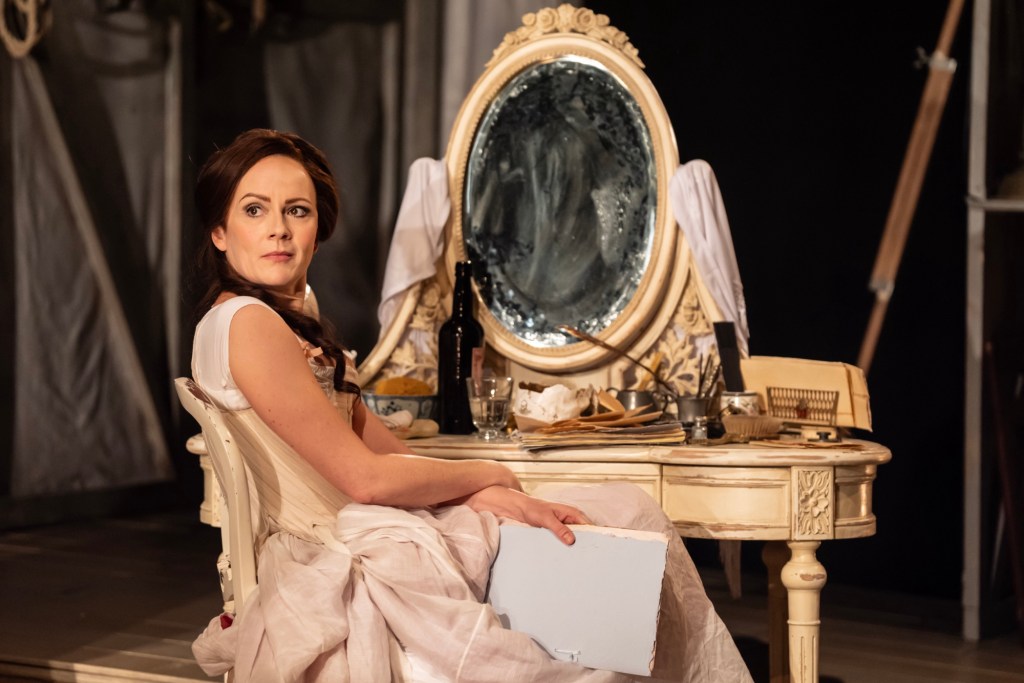
    Photograph by Marc Brenner

    DEAR OCTOPUS

    by Dodie Smith

    directed by Emily Burns

    National Theatre/Lyttelton – until 27 March 2024

    https://www.nationaltheatre.org.uk/productions/dear-octopus/

    A major West End success before and after the Second World War, Dodie Smith’s 1938 dramedy family saga has seldom been seen since. This opulent National Theatre re-evaluation shows us what we’ve been missing while intriguingly suggesting why the piece has been neglected for decades. Theatre historians and completists will surely flock to Emily Burns’s long but luscious staging, but it may prove a harder sell to theatregoers who prefer their shows flashier and more dynamic.

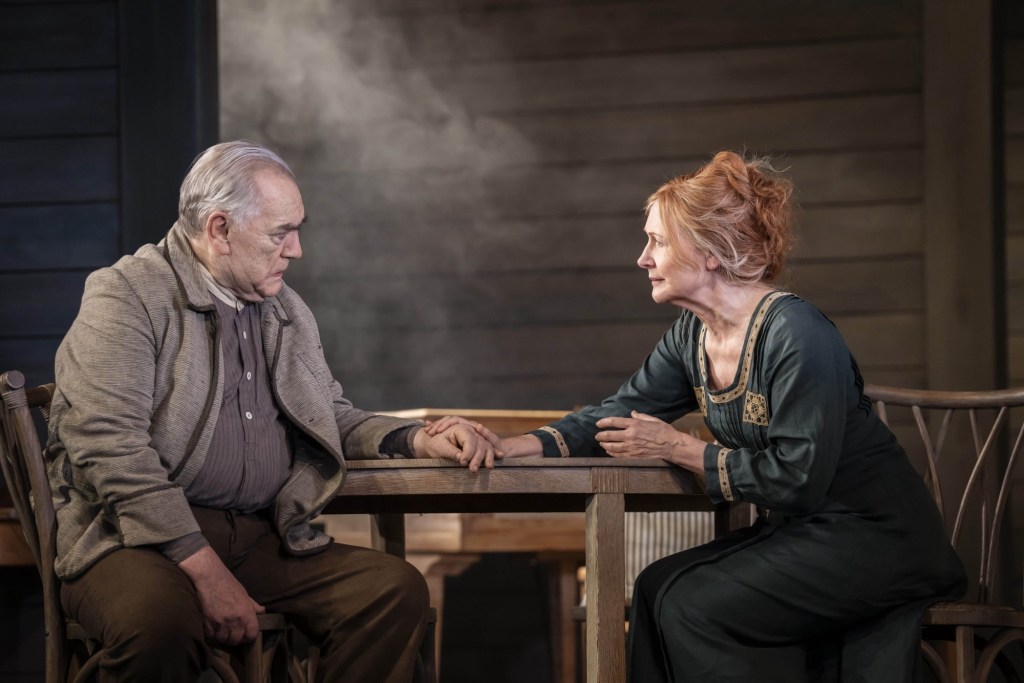
    The title Dear Octopus refers to the ties that, tentacle-like, bind a family together, however geographically far removed they are, and Smith’s play is not so much plot driven as nudged in different directions by shared memories and mutual grievances. The setting is the gaslit country pile (gorgeously designed by Frankie Bradshaw) of the moneyed Randolph family, four generations of which are gathered to celebrate the golden wedding anniversary of eccentric, religiously devout matriarch Dora (Lindsay Duncan) and her benign, doting husband Charles (Malcolm Sinclair).

    Tensions rise, reconciliations happen, two unrequited loves get contrasting solutions, it’s all tremendously civilised. How interesting it is will depend on how invested one can get in the tribulations of the privileged few, and also perhaps on how easy it is to draw parallels with the Randolphs and one’s own family. The detail in the production is a thing of considerable beauty, from the muted flair of Bradshaw’s costumes to the richly atmospheric lighting by Oliver Fenwick and Nico Muhly’s delicate underscoring, which gives the whole thing an almost filmic quality. There’s even an etiquette consultant employed (Lucy Cullingford).

    That detail doesn’t extend to all of the casting. Most of the leads are spot on, but there’s some alarmingly wooden acting from some of the supporting company. Sinclair is in fine fettle as doting, contended Charles, and Kate Fahy brings a brittle edge to family friend Belle whose joie de vivre masks an inner hollowness that quietly tugs at the heartstrings.

    Lindsay Duncan is brilliant as Dora, as kind as she is deliciously withering (“she’s always been very honest about her make-up. Dear me, it must be worrying to take a face like that out in the rain”). Duncan even convinces in the ponderous sections where Dora discusses her faith with her non-believing husband, moments which in lesser hands could easily become a lot of theatrical dead air. Bethan Cullinane, Jo Herbert and Amy Morgan do striking, slyly funny work as three contrasting daughters, and Bessie Carter makes something vivid and true out of long standing ladies companion Fenny’s fixation on Billy Howle’s apparently confirmed batchelor son Nicholas. Herbert’s OCD suffering estate agent Hilda is especially delightful.

    There’s an elegant savagery to much of Smith’s dialogue (“only a very happy woman could dare to trust to nature as your mother has”) that genuinely stings and entertains, but the whole play is so dated that it sometimes shocks for the wrong reasons (there are several references to the weight of Morgan’s Margery that take the breath away with their sheer insensitivity).

    Realistically, only somewhere like the National would have the resources nowadays to stage a play like this, and the whole enterprise reeks of quality. Whether or not the play itself was really worth the effort and the money is a question. It’s gently enjoyable, but you may come out thinking that there’s a reason why Dodie Smith is best known for 101 Dalmatians…

    February 17, 2024

  • THE HILLS OF CALIFORNIA – ⭐️⭐️⭐️ – it’s not the best play about sisters currently in town, but the acting is sublime

    Ophelia Lovibond, photograph by Mark Douet

    THE HILLS OF CALIFORNIA

    by Jez Butterworth

    Directed by Sam Mendes

    Harold Pinter Theatre, London – until 15 June 2024

    https://hillsofcaliforniaplay.com

    Jez Butterworth sure likes a long play. His latest, directed by Sam Mendes, clocks in at a full three hours, which makes it shorter than his acclaimed earlier offerings Jerusalem and The Ferryman…but not by very much. Like its siblings, The Hills of California has a fascination with storytelling and the power of invagination to create an escape from frequently fraught lives. Unlike them, it’s a strongly female driven piece, set across two time periods – the 1950s and the freakishly hot UK summer of 1976 – depicting a quartet of sisters, each pretty damaged in their own way.

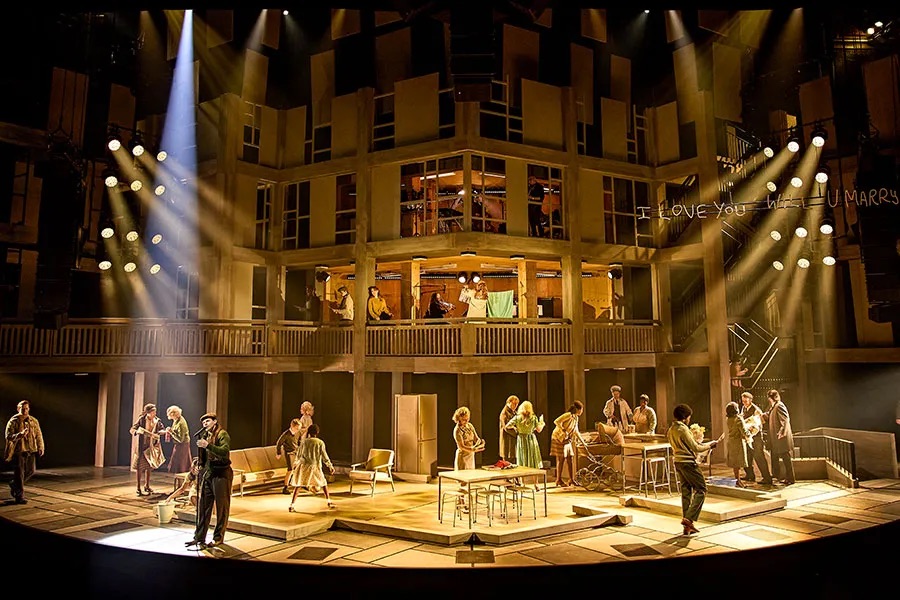
    Despite the title, it isn’t set in California at all, but rather in a rundown Blackpool hotel owned by the sisters’ formidable mother, where every guest room is named after an American state. It’s a theatrical premise ripe with possibilities, and Rob Howell’s gorgeous ramshackle set with multiple staircases rising vertiginously up into the flies offers ample opportunities for eavesdropping or stalking off in a huff. It’s unfortunate though that this is opening so close to another play, and an absolute belter at that, about sisterly relationships in turmoil, Beth Steel’s unmissable Till The Stars Come Down over at the National.

    The Hills of California isn’t unmissable: but it contains a lot to enjoy, as well as a certain amount of head-scratching stuff. It’s an unwieldy piece with the bulk of the drama and, to be honest, most of the enjoyment arriving after the interval which comes at the one hour mark. That first sixty minutes aren’t exactly hard to sit through but neither are they particularly compelling. This is a real slow burner, but stick with it as the second and third acts really up the dramatic stakes.

    Some of Butterworth’s dialogue is brilliant (Ophelia Lovibond’s Ruby has a bracingly bitter, expletive-strewn speech about the challenges of parenting, observing amongst other things that having four year olds is like living with drunk dwarves, that verges on genius) and the delineation between the way the characters speak in the different time periods is exquisitely done, as is the correlation of personality traits between the older and younger versions of the central sisters. The young women are aspiring singers (excellent work on the musical aspects from Nick Powell and Candida Caldicot) and the play touches on the seedier side of showbiz, and sets the girls mother Veronica (Laura Donnelly) up as a sort of Northern Mama Rose.

    The script is at its most intriguing, and most harrowing, when it deals with suggestions of child abuse and the way it stunts lives. The dynamic between the contrasting sisters is convincingly done (and beautifully acted) but there are a couple of details and scenes, usually involving the male characters, that feel extraneous. The Ferryman felt similarly baggy, unless you were a fan of all the Irish tropes, and of all Butterworth’s longer works, I feel that Jerusalem is the only one that truly justifies the punishing running time.

    Mendes’s staging includes some surprisingly clumsy blocking, but is flawlessly performed right across the board. Lovibond is a multi-layered revelation as witty but deceptively delicate Ruby. Her comic timing is magnificent and when she ups the emotional ante she sears the heart: it’s a truly wonderful performance. Helena Wilson draws a tender, haunting portrait of the sister left behind to tend to mother and Leanne Best makes something vivid, vital and often hilarious out of flashy, vulgar, opinionated but strangely likeable Gloria. Playing dual roles, Donnelly impressively suggests the steel and the desperation in their flinty mother and captures unerringly the drawling wildness of an Americanised, long absent family member, despite the slightly clichéd ‘1970s hippie chick’ nature of the writing Butterworth has given her.

    Lara McDonnell, Nancy Allsopp, Nicola Turner and Sophie Ally do lovely work as the younger versions of the sisters, and are all fabulous singers. Bryan Dick and Shaun Dooley make strong, humorous impressions as the sometimes unfortunate men who loom large in their lives. There isn’t a false note in any of the performances from a large cast.

    Hugely watchable though it is, one of the ultimate take aways from The Hills of California is that there’s no essential point to it. There are more urgent dramas about family relationships and the passage of time, and the whole thing could benefit from losing about half an hours playing time. Still, the characters and especially the performances command the attention. It’s not the soaring triumph that the name of the playwright and director might have led one to expect, but it’s certainly not a dud either. Approach with managed expectations and you’ll have a good evening.

    February 16, 2024

  • TINA – The Tina Turner Musical – ⭐️⭐️⭐️⭐️ – it takes a star to portray a star

    Karis Anderson, photograph by Manuel Harlan

    TINA – THE TINA TURNER MUSICAL

    Book by Katori Hall, with Frank Ketelaar and Kees Prins

    Directed by Phyllida Lloyd

    Aldwych Theatre, London – open-ended run

    https://tinathemusical.com/uk/

    While regular theatregoers get a lot of mileage out of bragging about seeing the original casts of various legendary shows (and I am definitely one of those people!), there are several examples of long runners that have actually improved over time, as the creatives get a chance to rethink and finetune their work, and new performers become available to fill the iconic roles. A case in point is Tina, which opened at the Aldwych in 2018 and since then has seen replica productions spring up on Broadway, on tour across America, in Australia and in Europe. The London production isn’t just in great shape, it’s arguably the best it has ever been.

    Of course, there is an extra emotional frisson to the show now, following the death last year of the beloved music industry icon, born Anna Mae Bullock in Tennessee in 1939, whose life story is the basis of this musical, on which she also served as executive producer. Seeing it originally, it was impossible not to be moved by the music and impressed by the energy of Adrienne Warren’s Tony-winning performance in the title role, which is a rollercoaster of highs and lows, requiring prodigious vocal and physical stamina. The role is now split between two actresses, currently Karis Anderson and Elesha Paul Moses, who perform four performances apiece per week, which seems like an intelligent choice given the extraordinary demands of becoming Miss Tina Turner. I saw Karis Anderson and, if it takes a star to portray a star, then Tina and the audience is in very safe hands. She’s spellbinding.

    First time around, I was disappointed by Katori Hall’s book which felt bloated and soap operatic, and Phyllida Lloyd’s production which struggled to reconcile the horrifying scenes of domestic violence with the adrenalised exhilaration of the musical sequences, resulting in an uncertain tone. Fast forward five years, and the subtly retooled show is sleeker, sharper, more engrossing and coherent. The depiction of Turner’s abusive treatment at the hands of Ike remains shocking but feels integrated better, as do the juxtapositions of gritty realism with the spiritual mysticism that guided Tina through her adult life.

    Similarly, the interpolations of the dead Grandmother Georgeanna and Anna Mae as a child, into moments of stress or indecision for adult Tina, who was usually cross-legged on the floor at this point doing her Buddhist chanting, no longer seem risible or overdone. As a script, it isn’t Katori Hall’s finest work, and there are still a couple of moments where the transitions into song are a little clumsy. But overall it is an earnest, fast-moving musical drama that explores the mercurial nature of fame, and celebrates the tenacity of Tina Turner rising from the poorest of backgrounds to global superstardom, and her glorious musical legacy.

    That legacy is honoured with outstanding care by Ethan Popp’s orchestrations, skilfully blend the raucousness of rock’n’roll with an irresistible and essential theatricality, and Nicholas Skilbeck’s musical supervision and arrangements. The show sounds magnificent, nowhere more so than in the thunderously uplifting climax which recreates Tina’s legendary 1988 Rio De Janeiro concert, complete with onstage band, live video-filming and dazzling rock stadium lighting courtesy of Bruno Poet.

    For all the slick professionalism of Mark Thompson’s design and Anthony Van Laast’s choreography, a show like this stands or falls by its leading lady. Karis Anderson is astounding, an electrifying presence and a sensitive, instinctive actress. She recreates the full range of the Turner voice, from the thrilling raspy growl up to a roof raising belt that makes you hold on to your seat and gasp, also the unique combination of tough, tender and joyful that defined this extraordinary star. She was part tigress, part Earth Mother and Anderson gives us all that, capturing the essence of a woman whose success really did come against all odds, except her God-given talent. Describing her daughter, Tina’s mother – played with real passion by Carole Stennett – observes that “you can’t hold fire”, and that feels entirely true of Anderson…she’s pure charisma and you cannot take your eyes off her.

    The role of Ike Turner must be one of the most thankless in musical theatre, literally nobody who isn’t a psychopath is going to root for this womanising wife beater. Orezie Morro commits to the character with admirable, even terrifying ferocity and delivers the raw, upsetting speech where Ike describes the brutality he witnessed in his youth, with real skill. That, and the idea that he had an innate talent that went unappreciated due to his race and hot headedness, doesn’t excuse his behaviour but goes some way towards explaining it. Morro is very very good, and makes him seem less one-note than written.

    Irene Myrtle Forrester, with a voice that could awaken the dead, is wonderful as Tina’s beloved GG, and Emma Hatton makes something truthful and likeable out of the underwritten role of Tina’s loyal manager. There’s lovely, sensitive work from Jonathan Carlton as Erwin Bach, the man Tina found long term happiness with and he and Vanessa Dumatey, gloriously feisty as the older Bullock sister, provide most of what humour the show has.

    Now that the undisputed ‘Queen of Rock’n’Roll’ has left us, this long standing West End fixture is the next best thing. The story is inspirational and full of drama, the songs remain unsurpassed, the staging is more dynamic and engaging than previously, and in Karis Anderson, Tina – The Tina Turner Musical is fielding a sizzling, authentic star talent. I’m so glad I went back.

    February 13, 2024

  • TILL THE STARS COME DOWN – ⭐️⭐️⭐️⭐️⭐️ – the bar is set very high for brand new plays this year

    Photograph by Manuel Harlan

    TILL THE STARS COME DOWN

    by Beth Steel

    directed by Bijan Sheibani

    National Theatre/Dorfman, London – until 16 March 2024

    https://www.nationaltheatre.org.uk/productions/till-the-stars-come-down/

    As it’s only February, I’m wary of trumpeting Till The Stars Come Down as best play of the year, but I’d be prepared to wager it’ll be on every critic and regular theatregoer’s shortlist for 2024. In earlier works like Wonderland and The House of Shades, Beth Steel has proved repeatedly that she has a unique talent for mixing up the gritty realities of day-to-day lives with a bold melodramatic theatricality. This wonderful new play has elements of all that, but also a rich seam of humour, a clear-eyed take on the state of the UK today, and a cast of vivid characters drawn and played with truth and compassion. It is tremendous entertainment but it’s also more than that.

    Set in Steel’s native Nottingham area, which probably explains the sometimes painful authenticity of every aspect of this script, the piece centres on a wedding, the sort of event that is frequently a catalyst for emotions boiling over and ancient resentments coming to the fore. Steel further enriches this by making the family gathered to celebrate the nuptials of delicate Sylvia (Sinéad Matthews) to Polish Marek (Marc Wootton) a microcosm of the UK today. Thus Dad Tony (Alan Williams) is a former miner who hasn’t spoken to his brother Pete (Philip Whitchurch) for years over an issue with the strikes in the 1980s. Pete’s wife Carol (Lorraine Ashbourne) is joyously lairy but has an opinion, however controversial, on everything. Meanwhile, Sylvia’s brother-in-law (Derek Riddell) can’t find work due to the industries shutting down while his wife and Sylvia’s older sister Hazel (Lucy Black) views immigrants with suspicion. Their daughter Leanne (Ruby Stokes) is a bit of a lost soul…..

    It sounds a lot to take in, but Steel drip feeds the information and the revelations with so much skill, the characters are so engaging (even when they’re being appalling) and the dialogue is so funny, salty and sharp that it washes over you as a couple of hours of utter, if occasionally painful, pleasure. Bijan Sheibani’s production plays out in the round under a giant glitterball that suggests not just a party but the size of a planet, as if to put into perspective the human difficulties, joys and fury this onstage family is going through. It’s a show packed with fine things.

    Not least is the acting, so real that it almost doesn’t feel like acting at all. Ashbourne’s comically rambunctious Aunty Carol and Black’s in-denial older sister with some pretty ugly viewpoints, are probably the showiest roles and both actresses inhabit them fully and marvellously. I was particularly drawn to Lisa McGrillis as arguably the most relatable of the sisters, a kind but flawed woman whose placid outer strength masks some a heart piercing vulnerability….she’s warm, funny, entirely convincing, it’s a beautiful performance. Sinéad Matthews’s childlike but tougher-than-she-looks Sylvia is exquisitely done. Really though, there is no weak link in this glorious company, every actor inhabiting the same crazy yet recognisable universe.

    All in all, this is one of those sublime evenings where every element – writing, direction, design (Samal Blak – set and costumes, Paule Constable- lighting, Gareth Fry – sound), acting – is working in perfect harmony, and to utterly satisfying effect. It ends on a cathartic but quizzical note, and leaves the rapt audience wanting more. Ultimately, Till The Stars Come Down is a unique achievement: a superior situation comedy meets riveting family saga meets state-of-the-nation drama, all sprinkled with just a bit of theatrical magic. It deserves to be a big fat popular hit for the National. Do not miss.

    February 10, 2024

  • PLAZA SUITE – ⭐️⭐️ – a beautifully wrapped empty gift box of a show

    Sarah Jessica Parker and Matthew Broderick, photograph by Marc Brenner

    PLAZA SUITE

    by Neil Simon

    directed by John Benjamin Hickey

    Savoy Theatre, London – until 13 April 2024

    https://plazasuiteuk.com

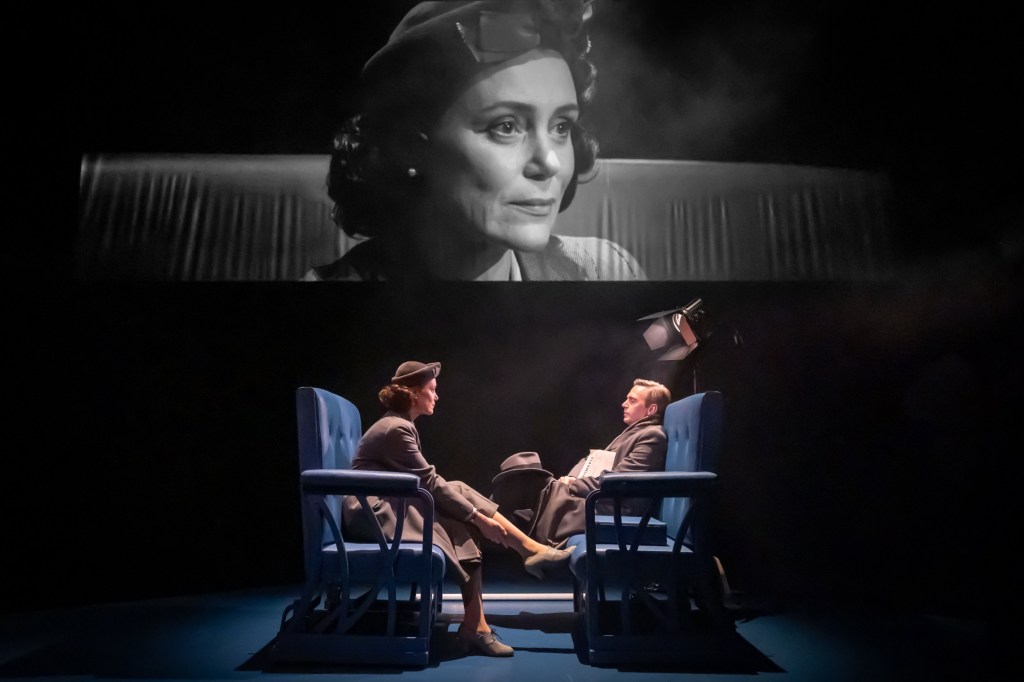
    A pair of beloved, long-term married screen stars, one of them making her hotly anticipated London stage debut, and a classic American comedy that has already proved to be a solid Broadway hit…what could possibly go wrong? As an evening of undemanding stargazing, John Benjamin Hickey’s plush production succeeds well enough – Sarah Jessica Parker and Matthew Broderick work hard, if not always entirely convincingly, in a trio of roles apiece – but anybody looking for anything meaty or enlightening is likely to be disappointed. It’s not even all that funny, at least not for modern audiences.

    The biggest problem with Plaza Suite is unfortunately Plaza Suite itself. Although the original New York production ran over 1000 performances nearly 50 years ago, and spawned a film adaptation, and two sequels, one set in Hollywood and the other in London, Neil Simon’s triptych of comedies all set in the same hotel room (the scenic design by John Lee Beatty is gorgeous) has not aged well.

    In the first playlet we see a middle aged housewife Karen (Parker in a dowdy wig, reading as too young, too attractive and too vital but doing a nice line in wistful melancholy) reacting with remarkable equanimity when her husband admits to an affair before pleading with him to end it. It may have played well in the 1960s and 1970s, but presenting a woman as a codependent doormat seems bewildering today, and in the intervening years we’ve had plays like Stoppard’s The Real Thing and Patrick Marber’s Closer which dealt with the pain of marital infidelity, and didn’t reduce it to a couple of empty quips and a lot of whingeing. As if aware of the datedness of the sexual politics, Broderick delivers a philandering husband with an endearingly soft edge, where really the character requires more macho self absorption and dynamism. All in all, it’s a pretty wan hour.

    Things improve after the interval, where Simon, Hickey and the starry leads put their collective feet on the comedy pedal, to much more pleasing effect. In Visitor from Hollywood, Broderick is a dandy LA movie bigwig, vaguely reminiscent of Mike Myers’s turn as Austin Powers, attempting to get with Parker’s radiantly ditsy, but smarter-than-she-initially-looks, former flame. It’s really more of a sketch than a play but it has a sparkle that revitalises the whole evening.

    The final piece has Broderick and Parker as a pompous old codger and his vulgarian wife trying to coax their daughter out of the bathroom she’s locked herself into minutes before her wedding. It’s a silly but enjoyable premise, and Broderick comes into his own as the bewildered, barely coping pater. Parker is less comfortable, she’s more wilting flower when she should be chiffon-clad battleaxe. Her physical comedy seems too choreographed, too calculated and lacking in spontaneity to be truly funny. Individual moments land quite satisfyingly, but that’s what they remain: isolated moments of hilarity with little to connect them. As with the first act, Parker is too delicate, too youthful and just too plain nice to make this self-dramatising harridan plausible. Fun though he mostly is, Broderick appears to be giving pretty much the same performance in each play, albeit with changes of wig and costume.

    Both leads are guilty at times of delivering the lines as though they’d just been fed them through earpieces and had never actually come across the script before, which deadens the pace somewhat. It almost feels under-rehearsed, but surely it can’t be given that it has already played a New York season. Simon’s writing is slick, sharp, and heartless.

    With most performances already sold out, bar a few eye wateringly expensive premium tickets, Plaza Suite is a great big fat hit. Critical opinion is entirely superfluous in the face of this sort of stardom and hype. It’s an efficient production of an irrelevant play, with adequate turns from leading actors whose past work proves that they’re capable of being so much better than this with the right material. Something this insubstantial needs to be a lot more fun, quite frankly. It’s a glossy entertainment that’s forgotten almost before you get back out onto the Strand. I’d love to see SJP on stage again, in something more suited to her endearing, more dramatically inclined talent. Disappointing.

    February 2, 2024

  • CHITA RIVERA, R.I.P.

    Photograph by Tom Corbett

    “And the moon grows dimmer….”

    I saw Chita Rivera several times on stage – as Aurora in Kiss of the Spiderwoman, as Roxie Hart in Chicago (her ‘Roxie’ monologue went on for what felt like ten minutes each time and she still left the audience wanting more…she made a total hilarious meal out of the simple line “I’m older than I ever intended to be” and the audience went nuts) and most recently as the oldest woman in the world in the thrillingly dark Kander and Ebb flop The Visit on Broadway. In the latter, her acting was so detailed and exquisite that I wondered if maybe she was showing signs of advanced age; that thought went out of the window at curtain call when she turned into a funny, naughty, flirtatious showgirl, batting her eyelashes at her leading man (whom her character had wanted murdered) and blowing kisses into the orchestra. Every performance I saw her give was fresh, magnetic and infused with indefinible star quality. She was like molten lava mixed with kindness. Totally unique. You can’t manufacture stage presence, and she had it. Blimey, did she have it.

    Back in 2016 when I was researching a book about the history of Joe Allen restaurant, my NYC based friend Merle set up a phone interview for me with Chita (who was a regular at the restaurant on both sides of the Atlantic, and was an ex of the eponymous restauranteur….her name and face are all over the walls of the eateries on West 46th Street in Manhattan and Burleigh Street in Covent Garden). Since I don’t habitually speak to Broadway legends – especially not ones whose distinctive, charismatic voices I listened to as a kid on the cast albums of shows like West Side Story and The Rink – I was a little nervous.

    As it turned out, I needn’t have been. From the moment she picked up the phone and said “is that you Alun?” in that tone that just doesn’t sound like anyone else, Chita was everything you’d hope she’d be, and more. She was funny, gossipy, delightful, as she talked about her disappointment at seeing posters of shows she’d been in on Joe’s notorious “flop wall”, how Mr Allen didn’t say much but would write her the most beautiful poems…. the chat went on way longer than the allotted time. It ended with Chita making me promise to come and say hello if ever we were in Joe Allen at the same time at any point in the future. Sadly for me, that never happened. Neither did the book, but I still treasure my notes from that magical conversation.

    I heard her voice again, as I was reading her glorious autobiography written with Patrick Pacheco, Chita – A Memoir – the book is an absolute must for Broadway fans, and anybody who wants confirmation that you can simultaneously be a terrific, compassionate human being, and an insanely talented artist…those two things are not necessarily mutually exclusive. It’s a great read particularly, in the light of what’s just happened, the sections where Chita talked about her fascination with death. I hope she and Hinton Battle are kicking up a storm together.

    Rest well, you amazing woman. One of the greatest lights of the Broadway Golden Age is gone. Chita Rivera 1933 – 2024: what a lady, and what a star.

    January 30, 2024

  • SIX – ⭐️⭐️⭐️⭐️ – it’s six years of Six!

    The 2023/4 London company, photograph by Pamela Raith

    SIX

    by Toby Marlow and Lucy Moss

    Directed by Lucy Moss and Jamie Armitage

    Vaudeville Theatre, London – open-ended run

    https://www.sixthemusical.com/london

    Happy 6th to Six, the formerly little show that most definitely could! From the Edinburgh fringe to Broadway, Australasia and the high seas, Toby Marlow and Lucy Moss’s thunderous concert-cum-musical hybrid has become a beloved fan favourite and a true show business sensation. As the West End production enters its seventh year, surviving a pandemic and two changes of theatre, it remains in good, crowd-pleasing shape, with a fourth completely new cast of performers taking on the wives of Henry VIII, and sending ecstatic audiences out into the night, hoarse from roaring their approval.

    Moss and Jamie Armitage’s staging has become slicker and glossier since the original run at the Arts, and Carrie-Anne Ingrouille’s terrific choreography, mixing up pop video dance styles with moves by turns organic, sassy, occasionally sinister, certainly breathes more easily on the larger stage. Tim Deiling’s thrilling rock stadium lighting and Paul Gatehouse’s sound design are similarly upgraded, although the latter has a few moments, usually when the queens are belting in unison, where it becomes a little woolly, but the majority of the deliciously deft lyrics penetrate through the aural bombast. Similarly, the purple glitz of Emma Bailey’s set and the bejewelled Steampunk splendour of Gabriella Slade’s award-winning costumes reflect the continuing upswing in this blockbuster’s fortunes.

    That global success seems to come with a price tag though. It’s something I noticed when I reviewed the previous cast last year and it struck me again watching the excellent current team. Specifically, it feels that a certain homogeneity has crept in, a fudging of detail, a prioritisation of ‘yasss kween’ fabulousness over the fact this sextet of young women actually existed and had fraught, frequently tragic lives; it’s more glamorous now, but it’s seldom as moving as it once was. It’s still fabulous entertainment, one of the most unapologetically enjoyable eighty minutes in the West End, but some of the charm and spontaneity has been lost. It may just be that the creatives have so many international iterations of the show to keep an eye on that the quirks and idiosyncrasies and the sheer heart that made the original so special have been inevitably ironed out.

    It’s not necessarily due to the talent on stage. The current cast are not cookie cutter replacements for the last set of queens, are fine triple threats, and register pleasingly as individual personalities. Nikki Bentley’s powerhouse-voiced Catherine of Aragon reads as more measured and repressed than some of her predecessors which feels entirely right for the rejected, senior wife, while Thao Therese Nguyen gives us a sexy, loose-limbed, funny-boned Anne Boleyn probably nearer in spirit to Millie O’Connell’s crazy, delightful original than any we’ve seen since.

    Kayleigh McKnight fuses an innate likability with a gorgeous, diva-worthy tone as Jane Seymour and does some exhilarating vocal opting-up in unexpected places in her roof-raising ‘Heart of Stone’ solo. Reca Oakley’s American Anna of Cleves is adorable, if more cuddly than edgy, and Inez Budd is a vivid, memorable Katherine Howard, compellingly balancing mean girl confidence with a backstory of abuse and manipulation in the most disturbing number in the score. Janiq Charles delivers a radiant, warmly empowered Catherine Parr with vocals like honeyed molasses, her balm-like Trinidadian accent absolutely perfect for the wife who stands alone as the voice of reason.

    Ultimately, as well as being a fine time in the theatre, Six is a valuable ongoing part of the West End (and Broadway) landscape because it serves as an irresistible gateway drug to musicals for emerging audiences. First time theatregoers adore this spangled but intelligent pop-showbiz hybrid, and no wonder. It’s hard to imagine it ever closing: emerging, dazzled and deafened, back out onto the Strand after this most recent viewing, I was struck by the thought that there are future cast members who haven’t even been born yet. It remains a phenomenon.

    January 25, 2024

  • COWBOIS – ⭐️⭐️⭐️⭐️⭐️ – hilarious, life-enhancing and full of surprises, this is a must-see

    Photograph by Henri T

    COWBOIS

    by Charlie Josephine

    music by Jim Fortune

    directed by Charlie Josephine and Sean Holmes

    Royal Court Theatre, London – until 10 February 2024

    https://royalcourttheatre.com

    Remember the good old Wild West as depicted in the cowboy films of yesteryear? It was a world where the women were either servile and possibly repressed, or floozies, and the gun totin’, hard drinkin’ Stetson wearing men were bow legged from horse riding all day (at least, one assumes that’s why they were bow legged). All that gets turned on its head in this remarkable musical play which is as delightful as it is confrontational, repeatedly challenging one’s expectations and prejudices with a cheeky wink, a camp sashay, and lashings of rough theatre magic, sending you out dazzled, transported…and more than a little moved.

    Charlie Josephine made a big splash in the summer of 2022 with I, Joan, a bold non-binary reimagining of the legend of Joan of Arc at Shakespeare’s Globe. That was a rambunctious, irreverent, imaginative piece, but this new work, co-directed by Josephine and Sean Holmes, and transferred from Stratford by the RSC for an all too brief Royal Court season, is even better. Cowbois is another show that defies both genre and gender, serving up a rollicking riff on traditional cowboy stories, enriched by a queer sensibility, terrific song and dance, a higher-than-average strike rate of authentically hilarious comedy shtick, and a gallery of magnificent, occasionally outrageous, performances.

    Josephine’s characters speak in the American idiom we are familiar with from watching Westerns, but keep their British or Irish accents. Thus Sophie Melville’s bar-keep is Welsh, Bridgette Amofah’s young mum is pure London, Julian Moore-Cooke’s bewildered, unreconstructed young gold quester is Northern Irish, and so on… Far from being confusing, it actually aids in making them all more relatable, although I’m not sure the gloriously free-wheeling, deceptively ambitious text necessarily even needs that help. It reaches its hilarious apotheosis in the much-feared Mancunian One-Eyed Charley, in a mesmeric, show-stealing turn from L J Parkinson (aka LoUis CYfer).

    Or at least Parkinson, striding on half way through the second act like a rhinestoned, green-maned harbinger of death with some seriously sexy dance moves, one milky eye and the comic timing of a master, would walk off with the show if everyone else wasn’t so damn good. Melville is luminous and impassioned. Lucy McCormack delivers astonishing work, her character undergoing a remarkable but credible transformation from comically uptight and judgemental to celebrating the rich diversity of humanity that doesn’t conform to preconceived norms. I defy anybody to remain unmoved by Lee Braithwaite’s Lucy becoming Lou, as they realise their true nature.

    Equally moving is the love that develops between Melville’s Miss Lillian and Vinnie Heaven’s gender-exploding bandit Jack. Heaven brilliantly suggests the pain beneath Jack’s swagger, and the joy when they realise they are just as worthy of love as anybody else is palpable and infectious. Shaun Dingwall as Lillian’s bullying beau, Emma Pallant’s hilariously buttoned-up Sally Ann and Paul Hunter’s drunken sheriff are all vivid creations, but there really is no weak link in this fine company.

    I suspect the moments of direct address to the audience and some of the running about worked slightly better at the RSC’s Swan, where the show premiered last year, rather than in the Court’s more traditional auditorium, but it remains vital and magical. The brilliantly controlled chaos climaxes in a shoot-out that is as exhilarating as it is funny. Josephine’s text is political but never preachy, choosing instead to seduce with heart and humour, and it’s full of delightful surprises and anachronisms. The balance between zany comedy, raw emotion and the sense of external threat, made uncomfortably vivid when the absent men return at the end of the first half to confront the joyful revelry of newly liberated women and non-binary people, is exquisitely handled. Jim Fortune’s anthemic final song brings a real lump to the throat.

    This is total theatre, anarchic, sexy and life enhancing, something with the power to quicken the pulse, gladden the heart and broaden the mind. We are so lucky to have it.

    January 22, 2024

  • REHAB – The Musical – ⭐️⭐️ – if you thought they didn’t make them like this anymore, you were wrong…

    Photograph by Mark Senior

    REHAB The Musical

    Music and Lyrics by Grant Black and Murray Lachlan Young

    Book by Elliot Davis

    Directed by Gary Lloyd

    Neon 194, London – until 17 February 2024

    https://rehabthemusical.com

    “Waaaaaanker! You’re a wanker!” Who doesn’t love a good ole musical theatre singalong?! Not sure that this particular ditty will be popping up much at the Theatre Café or Marie’s Crisis, mind. It’s one of the standout numbers from a new British tuner entitled Rehab The Musical, currently and inexplicably enjoying a second London run having premiered in 2022 at the Playground Theatre in Notting Hill and now deafening unsuspecting patrons in a basement near Piccadilly Circus.

    Actually I say “inexplicably” but a quick glance at the credits reveals that the music and lyrics are co-written by Grant Black, the main producer is Clive Black, and they are both sons of another of the shows producers, lyricist Don Black CBE, whose work includes Tell Me On A Sunday, Sunset Boulevard, several James Bond themes, and words for everyone from Michael Jackson and Meat Loaf to Lulu. Without such a showbiz heavy hitter involved, it’s hard to believe this well meaning but strange bit of nonsense would have made it past the first reading let alone to a production featuring some of the West End’s finest.

    In all fairness, musically this rock-pop-soul score is often nicely crafted and moderately memorable. The lyrics however are quite another matter, coming from the anything-for-a-rhyme school of writing that just about suffices in the jolly uptempo numbers (although the ‘Wanker’ number is pushing it a bit) but run the risk of provoking laughter in all the wrong places when they seek to be heartfelt or serious. Incredibly, they are partly the work of Murray Lachlan Young, which goes to prove, I guess, that providing the words for musical theatre songs and writing poetry are two very discrete skills.

    Collectors of theatrical curios, and masochists of a certain age who harbour “fond” memories of such West End musical disasters of yore as Which Witch, Out Of The Blue (the Nagasaki musical…yes really), The Fields of Ambrosia (“where everybody knows ya!”) and Murderous Instincts (‘nuff said), might want to check this out. So too should anybody who fancies seeing a selection of terrifically talented performers, with enough collective credits to choke a proverbial cart horse, grappling with some pretty diabolical material. That most of them emerge with dignity intact says more about their professionalism than about the show they’re in, which is an example of the so-bad-it’s-almost-good inept British musical that I thought we’d left behind in the early 1990s. But apparently not…

    This amateurishly staged, poorly lit farrago, long on swearing (the line “off you fuck” had the glossy first night crowd wetting their uncomfortable seats with mirth) but short on real wit and human interest, trivialises addiction, recovery, eating disorders and almost everything else it touches upon. An overdose is used as a cheap plot device to ignite a thunderous affirmation-burning anthem vaguely reminiscent of the end of the first act of Hair, only not so effective, while a crass cross-dressing number makes one ponder whether La Cage Aux Folles had just been a beautiful mirage. There’s a song about cheese that I think is supposed to be funny but mainly made me feel lactose intolerant.

    The show tells, in crude, bold, primary colours, the 1990s-set story of one Kid Pop, real name Neil (a glowering, posturing Christian Maynard who at least looks like a star), his stint in rehab and the efforts of his sleazy crook of a manager (Keith Allen, apparently having a whale of a time) to derail his efforts at sobriety in order to keep him in the tabloids. There’s a bit of a love story, although neither Maynard’s Kid, or Neil or whatever, nor Maiya Quansah-Breed’s glamorous stripper seem that into it, warbling about being two broken people with all the passion and heartbreak of a pair of gym buddies arguing about whose turn it is to put the weights back.

    There’s also a plot twist which I admit I did not see coming but which I was grateful for, partly because it meant we would all shortly be able to go home, and partly because it explained why one of British musical theatre’s more reliable talents had been giving, up to that point, such a bizarrely detached performance. There’s also redemption at the end…you can tell it’s redemption because they all come on dressed in white.

    Gary Lloyd’s in-ya-face production initially recalls Christopher Renshaw’s work on the original production of Taboo at what is now the Leicester Square Theatre, with the cast emerging from all corners of the unconventional playing space and at close proximity to the audience. But where that show about a pop star (Boy George) going off the rails before getting a second chance had poignancy and a huge heart, this one only has a load of shouting and bawling, and a bunch of unsympathetic characters it’s hard to care about. Also, Mark Davies Markham’s writing for the book scenes in Taboo had a tang of emotional authenticity, whereas the script here (by Elliot Davis) is mostly like an old fashioned schools and colleges TV programme about addiction, with extra swearing.

    Rebecca Thornhill and John Barr are fundamentally incapable of giving bad performances, and invest their roles -respectively, an alcoholic former Bond girl and a tanning addict called, I kid you not, Barry Bronze- with a lot more feeling and skill than the writing warrants. Oscar Conlon-Morrey is excellent, and in fabulous voice, as probably the only sympathetic character in the entire cast, and Jodie Steele looks stunning but is mostly wasted (in the non-inebriated sense) as Keith Allen’s nasty P.A. sidekick. Mica Paris MBE brings big hair and a big voice but little in the way of acting to the underwritten role of a group leader in the rehab clinic. Most of the singing is quite wonderful, and the dancing is a lot better than the actual choreography.

    If I’m harsher than usual on this sour yet insipid show, it’s because there is so much good musical theatre that goes unproduced or doesn’t get beyond the developmental stage, and this one has had considerable talent, resources and money lavished upon it, and it’s still excruciating. There’s a lively second act night club number, vaguely reminiscent of the rollicking ‘Shameless’ from the Pet Shop Boys musical Closer To Heaven, which repeatedly rhymes “cocaine” with “again”, and I couldn’t help but think that Rehab as a whole brought to mind, for me anyway, one of PSB’s most popular hits from the ‘90s…namely, ‘What Have I Done To Deserve This?’

    January 18, 2024

  • DON’T DESTROY ME – ⭐️⭐️⭐️ – intriguing rediscovery from the 1950s still packs a punch

    Eddie Boyce and Nicholas Day, photograph by Phil Gammon

    DON’T DESTROY ME

    by Michael Hastings

    Directed by Tricia Thorns

    Arcola Theatre, London – until 3 February 2024

    https://www.arcolatheatre.com/whats-on/dont-destroy-me/

    Reviving plays that have been untouched for decades can be a risky business: for every unearthed gem there’s a snooze fest that makes it all too clear why no director has been near it since before the Luftwaffe closed our theatres. Tricia Thorns’ Two’s Company has a better than average track record when it comes to rediscovering dormant dramas however, and Michael Hastings’s Don’t Destroy Me (written, astonishingly, when he was just seventeen) is an enjoyable, intermittently fascinating piece.

    Set in a 1956 boarding house where 15 year old Sammy (a convincingly tormented Eddie Boyce) has come to reunite with Leo, his Hungarian Jewish father who sent him away to England as an infant to be brought up by relatives and escape the Nazis. Leo (Paul Rider in a painfully honest performance) has a miserable existence dominated by alcohol abuse and a much younger wife who can barely tolerate him. The Brixton lodging is a predominantly Jewish household, and although the Holocaust is never mentioned, the sense of unspoken trauma and restlessness is palpable in the writing and in Thorns’ frequently riveting production.

    Don’t Destroy Me is no masterpiece -for all its truth and vividness, it strangely lacks a focussed centre- but it is remarkable for a first play, and demonstrates a notable ability in a youthful Hastings to swirl together a world of dramatic and literary influences into a tangy, elliptical but mostly satisfying whole. Contemporary to, and reminiscent of, the kitchen sink plays of Wesker and Osborne that revolutionised English drama at the Royal Court in the 1950s, the writing also has a fanciful, poetic quality that suggests a working class London Tennessee Williams.

    The ghost of Williams hangs especially heavy over two characters. That’s needy, unstable Mrs Pond, whose lightning fast changes in mood, shady sexual past and eccentric tea-leaf reading present, bespeak of deep emotional trauma or at the very least severe mental health issues, and her smart, highly strung daughter Suki, employing an imaginative fantasy life as respite from her mothers mania and neglect. Nell Williams invests the latter with a compelling mixture of vulnerability and imperiousness.

    With her faux genteel accent, dancers physicality and sense of aching, otherworldly sadness, Alix Dunmore’s elegant broken-doll Mrs Pond feels like an English cousin to Blanche du Bois; it’s a haunting, supremely effective portrayal. Nathalie Barclay skilfully navigates a perfectly calibrated line between steel and kindness as Sammy’s youthful stepmother, and Timothy O’Hara brings warmth and menace to the neighbour she habitually breaks her marriage vows with. Rider is wonderful, finding a tragic dignity in the dissolute ruins of Leo’s shattered life, and Nicholas Day does detailed, beautiful work as the kind rabbi invited to what turns into the tea party from hell.

    Sue Kelvin is a glorious, gorgeous force of nature as landlady Mrs Miller, the main source of light relief, whose compassion is tempered with shards of self righteousness and a penchant for gossip and judgement. Eddie Boyce and Nell Williams suggest with laudable intensity the power-shifts between the mutually attracted younger pair, each questing to escape their separate painful, traumatised existences.

    Alex Marker provides a nice, semi-realistic looking split level set that tantalisingly allows for eavesdropping with its see-through door and partially non-existent walls. The excellence of the acting goes a long way towards diverting attention from the weaknesses of the play. Not much happens and the penchant of some of the characters to communicate in a series of non sequiturs could become tiresome, pretentious even, but somehow never quite does, mainly due to the intelligence and craft of the cast.

    If Don’t Destroy Me had been the work of an older writer it could be seen as derivative, and it is pretty overwrought at times, but it shows formidable promise and, particularly in the depiction of tortured Mrs Pond, foreshadows Hasting’s later, more accomplished work in his most famous play Tom And Viv. This well judged production may not necessarily spark a series of revivals of this interesting but naive, imperfect piece but it’s an engrossing couple of hours in the theatre.

    January 17, 2024

Previous Page Next Page

Blog at WordPress.com.


Loading Comments...
 

    • Subscribe Subscribed
      • ajhlovestheatre
      • Join 59 other subscribers
      • Already have a WordPress.com account? Log in now.
      • ajhlovestheatre
      • Subscribe Subscribed
      • Sign up
      • Log in
      • Report this content
      • View site in Reader
      • Manage subscriptions
      • Collapse this bar