ajhlovestheatre

  • Home
  • About
  • Contact
  • Blog

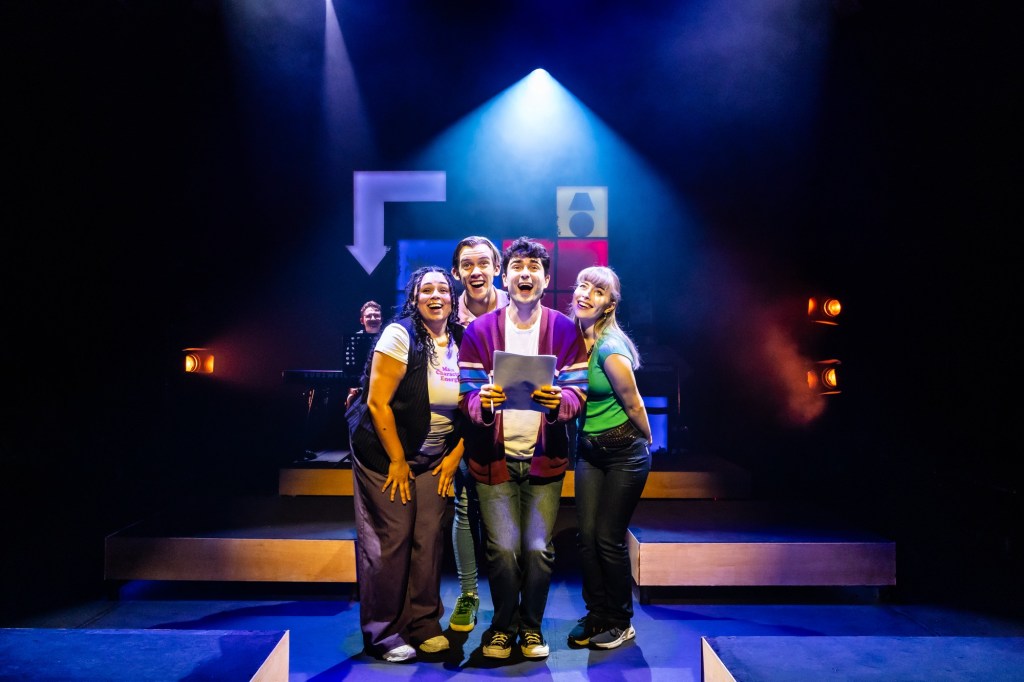
  • WHY AM I SO SINGLE? – ⭐️⭐️⭐️ – the creative process, the horrors of dating and the importance of friendship…yassified

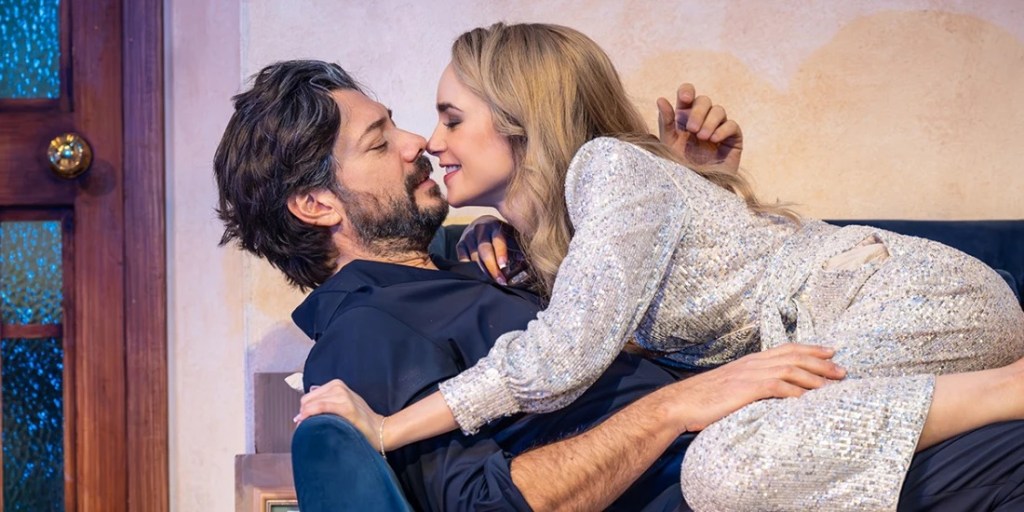
    Jo Foster and Leesa Tulley, photograph by Danny Kaan

    WHY AM I SO SINGLE?

    by Toby Marlow and Lucy Moss

    directed by Lucy Moss

    co-directed and choreographed by Ellen Kane

    Garrick Theatre, London – booking until 13 February 2025

    https://whyamisosingle.com

    If this review is harsher on a bouncy, tuneful and frequently highly entertaining new musical than perhaps it initially seems to deserve, that’s because it’s frustrating that a show with so many stellar elements has failed to coalesce into a satisfying, or even coherent, whole. In short, Why Am I So Single?, Toby Marlow and Lucy Moss’s follow-up to the lightning-in-a-bottle global smash Six, four years in the making and launched straight into the West End in a sparkly, bells-and-whistles staging when it would have benefitted from a smaller scale tryout elsewhere, should be better crafted than this.

    Six is essentially an artfully witty concert rather than a proper tuner and, on the strength of this highly meta, self-proclaimed “Big Fancy Musical”, the jury’s still out on whether or not Marlow and Moss know what makes the genre tick. They certainly love, and are knowledgable about, musical theatre: even more than its predecessor, Why Am I So Single? is stuffed to the gills with references to other shows. The stand-out number ‘8 Dates’, which is infinitely more appealing live than on the promotional videos floating around, even samples Six’s title song. 

    But constantly alluding to other, better musicals does not in itself a decent musical make, and the book for WAISS, which depicts a pair of best friend creatives working on, you’ve guessed it, a “big fancy musical”, while simultaneously contemplating their lamentable love lives, is an absolute mess, with a bewildering string of false endings, several numbers that should never have made it past the first workshop, and a lack of specificity about the principal characters that makes it hard to care about them. Or at least it would were Jo Foster and Leesa Tulley not so utterly adorable in these roles. 

    Whatever else WAISS gets wrong, the casting for this world premiere, not just Foster and Tulley but also Noah Thomas as an acerbically cool mutual friend and a dynamic, personable ensemble many of whom are making their professional debuts, is absolutely spot on. The charisma and talent of the company is doing a lot of heavy lifting of sometimes iffy material. 

    The show looks at the sometimes brutal world of dating and relationships through a smart, tart Gen Z lens, and touchingly concludes that platonic friendships are every bit as valid as erotic and romantic liaisons. Tulley’s character Nancy, although winningly played, feels pretty conventional as she hankers after a lost boyfriend but Foster’s Oliver (the young writers are superfans of the Lionel Bart tuner, a point hammered home relentlessly) is genuinely special. It’s hard to think of another mainstream entertainment where the central figure is a non-binary human trying to take their place in the world and feel fully comfortable in their own skin, but where their inability to connect is as much down to their own determination to set up a veneer of sassy, comic self-protection as it is to an uncomprehending, unsympathetic universe. & Juliet’s May (which Foster has previously played) isn’t dissimilar but is a second wheel to the heteronormative relationships at that show’s centre. Oliver is a new type of musical theatre lead, and Foster is a new type of star, but a star they most assuredly are.

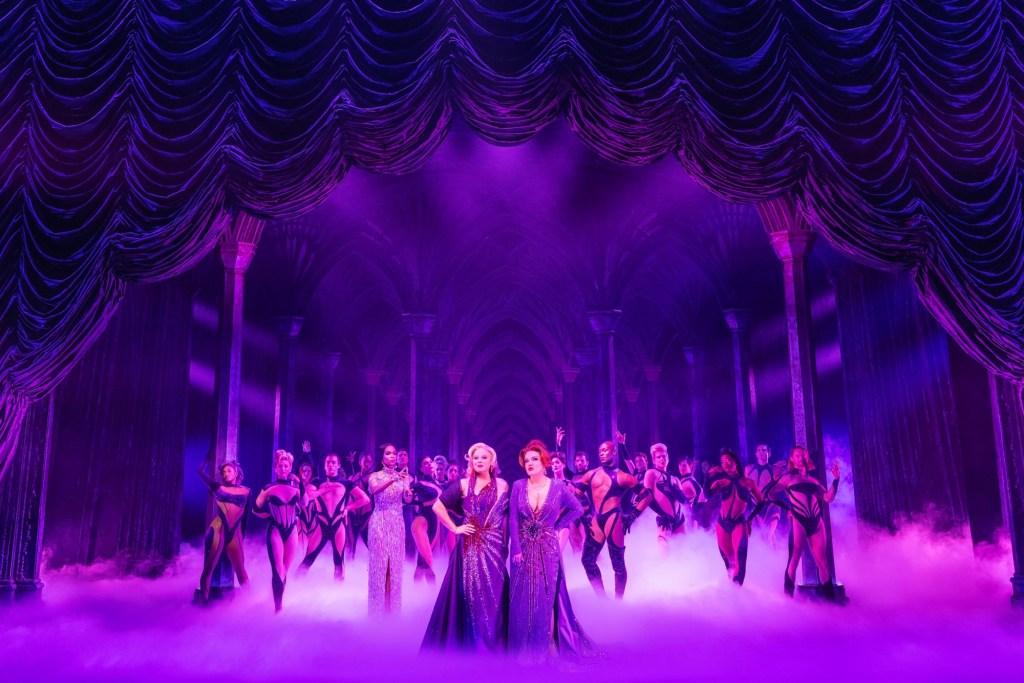
    Foster, mining every ounce of cheeky humour, irrepressible wit but also despair-tinged melancholy from their role, gets the song where WAISS comes nearest to achieving genuine dramatic power. ‘Disco Ball’, a pounding, relentless dance track sees sparkles-clad Oliver on a platform above a melee of hedonistic revellers, belting about how hard it is to find love and self-acceptance when queer people have to subsume their humanity and desires beneath a shallow, glittery exterior in order to find acceptance. The juxtaposition of high energy, camp dance music with bleak lyrics (“no one wants to see the broken ugly pieces of a disco ball up close”) and an increasingly distraught Oliver, is authentically bittersweet and moving. 

    Elsewhere the songs are less theatrically and emotionally ambitious but collectively the score reinforces the impression created by Six that Marlow and Moss are brilliant at pop pastiche earworms. They extend their pallet here with nods to numerous musical theatre styles, and a few moments that actively parallel the numbers in Oliver!. At its most exhilarating, which in all fairness occurs several times in each act, their songwriting is reminiscent of the melodic ebullience of Max Martin.

    Tulley gets a pair of gorgeous ballads, both delivered exquisitely, and there’s an inventive showstopper for Thomas (‘C U Never’, a witty dismissal of bad behaviour in online dating) deriving its beats from the sounds made by cellphones, and given thrilling, stomping choreography by Ellen Kane. An emo rock number blaming the sitcom Friends for a whole generation’s unrealistic romantic expectations is very funny, with the entire ensemble wigged and costumed up as Ross and Rachel. Not all the comedy songs work that well though: there’s a bizarre act one closer about finding a bee in Oliver’s flat that is more baffling than delightful, and jokily having the ensemble playing inanimate objects (fridge, curtains, dustbin, pot plant) in said flat is more student drama cringey than actually amusing. 

    Kane’s dances throughout are athletic and stylish, embracing a variety of styles but mainly occupying the sweet spot where contemporary musical meets pop video. It’s when the singing and dancing stops that show runs into trouble and the ennui sets in. Although Oliver and Nancy readily point out the flaws in the work-in-progress that they’re creating and that we’re witnessing, the show demonstrates little interest in improving on it and there are times when watching naff material is just, well, watching naff material. For all their friction and romantic disappointments, these best friends seem to live a life of cosy privilege, fuelled by takeaway pizza and an apparently endless supply of Prosecco, so that sometimes it’s solely the (irresistible) personalities of Foster and Tulley that cause us to care, rather than the writing. 

    Moss directs in a straightforward, presentational style (the only real excitement in the staging is due to Kane’s choreography) and one can’t help but wonder if the show wouldn’t have benefitted by a different person at that helm. Surely a more experienced and possibly ruthless director would have realised that Why Am I So Single? meanders on way past what’s bearable; the show could accurately be retitled Why Is This So Long?

    There’s a punchy, hilarious, heartfelt ninety minute delight of a show entombed in this  bloated two and a half hour extravaganza that in its present form – more sketch show with songs than well-crafted musical – is equal parts inspiration and self-indulgence. It’s just a shame that the creatives didn’t take, or weren’t given, the time to find it. Stephen Sondheim famously opined “musical comedies aren’t written, they’re rewritten” and, for all the frothy fun, moments of insight and uplift, and sheer elan of the performances, Why Am I So Single? needs a lot more rewriting. I can’t wait for the cast album though.

    September 16, 2024

  • THE SEX LIVES OF PUPPETS – ⭐️⭐️⭐️⭐️ – bonkers and bonking, this delightful puppet show is not family friendly

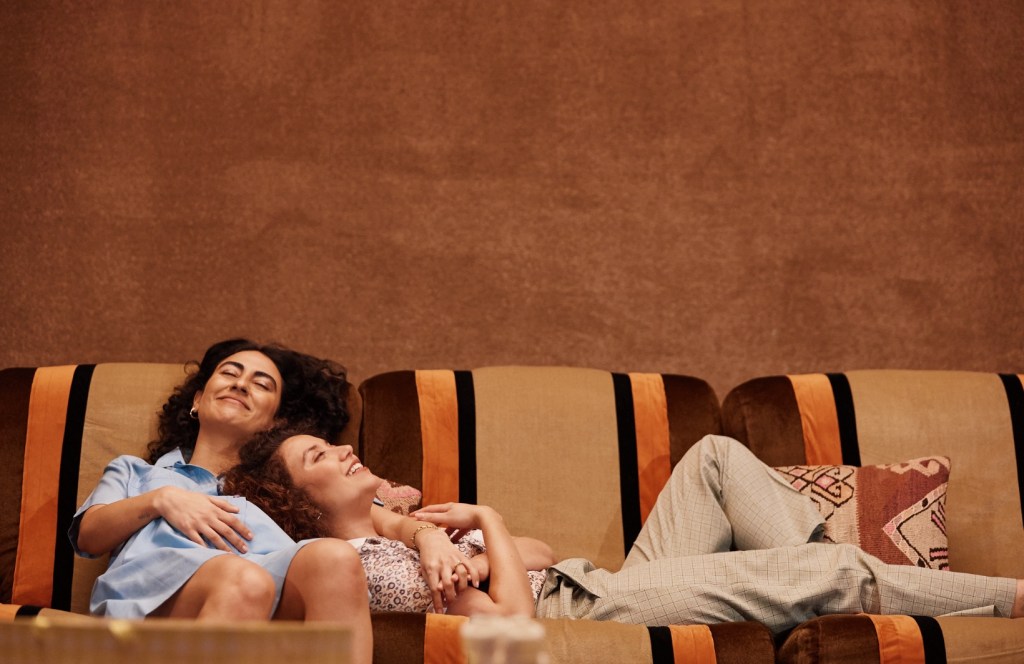
    Isobel Griffiths (behind) and Suki, photograph by Charlina Lucas

    THE SEX LIVES OF PUPPETS

    written and directed by Mark Down and Ben Keaton

    based on an original idea by Mark Down

    Southwark Playhouse – Borough, London – until 28 September 2024

    https://southwarkplayhouse.co.uk/productions/the-sex-lives-of-puppets/

    Just in case you thought Avenue Q was the last word in puppets getting freaky, here comes Blind Summit Theatre’s mischievous but surprisingly insightful set of “interviews” with puppets, following critical acclaim at Edinburgh and a sell out run earlier in the year here at Southwark where it now returns. It’s not difficult to see why The Sex Lives of Puppets is so popular.

    Created in collaboration with the National Survey of Sexual Attitudes and Lifestyles (also known as Natsal), Mark Down and Ben Keaton’s unique sketch show covers all manner of kinks, foibles, preferences and attitudes to a subject that’s a primary force in human existence yet still causes maximum discomfort and controversy. It filters them through the blank stares, exaggerated features but delicate, detailed movements of a series of exquisite puppets designed by Russell Dean; coupled with the vivid, versatile vocal performances of a talented quartet of actor/puppeteers (Down, joined by Isobel Griffiths, Briony O’Callaghan and Dale Wylde), the result is illuminating, often hilarious and occasionally profoundly touching. 

    Given the show’s connection to Natsal and the fact that many of the anecdotes are so strange yet plausible, it’s unclear whether the script is a series of verbatim monologues and duologues or brilliantly crafted fictions. If it’s the latter, then Down and Keaton are extraordinary writers but even if it’s the former, they’ve done a terrific job of compiling a smorgasbord of rich, ripe characters, outrageous stories and tender confessionals. 

    The duets worked best for me: the randy elderly couple, both married to other people, that open the show, or Harry and Frannie, the vinegary middle aged New York intellectuals who end up having full on, hilarious sex, then there’s the drag-loving gay gentlemen in a nursing home where apparently everyone is at it, and perhaps best and funniest of all, Kate and Helen, the seemingly matter-of-fact lesbians who realise near the end of their interview that they are in quite different headspaces. The back and forth of dialogue between these two – loving, arrestingly funny, brutally frank and a little bit unhinged – is reminiscent of vintage Mike Leigh.

    The most unexpectedly moving is the encounter with Dimitri the middle aged financier (“I am a larger man” he keeps repeating as though by way of apology) who after losing his wife, finds an autumnal romance with Robin, a free spirited woman who clearly adores him and is willing to explore the more unconventional aspects of their sexual preferences. The fusion of voice and puppetry in the best of these sketches makes you forget you’re watching inanimate, non-sentient objects and actually encourages you to embrace and reconsider the humanity behind the inspirations for these bonkers, often lovable puppets. It’s quite remarkable.

    Also remarkable is the cast, who perfectly negotiate the tightrope between sincerity and parody. Isobel Griffiths is especially adept at vocal transformations as she gives expression to a weird and wonderful range of characters, but there isn’t a weak link in the company. 

    Personally I could have done without the shadow-puppet enactment of porn that closes act one and the mass orgy that ends the show. Both seriously outstay their welcome and feel like stuffing, if you’ll pardon the expression, in what should be a fleet, fun, surprising bit of theatre that has been expanded to include a pointless interval and a couple of moments of self-indulgence. Despite those reservations, the overall takeaway is that this is pretty irresistible. 

    Although it’s a limited return season, The Sex Lives of Puppets – eccentric, endearing and peculiarly English – feels like the kind of irreverent, original cult hit that could potentially run for years in an appropriately intimate venue.

    September 8, 2024

  • THE FABULIST – ⭐️⭐️⭐️ – is it an opera? is it a musical? Not sure but either way, it’s fun

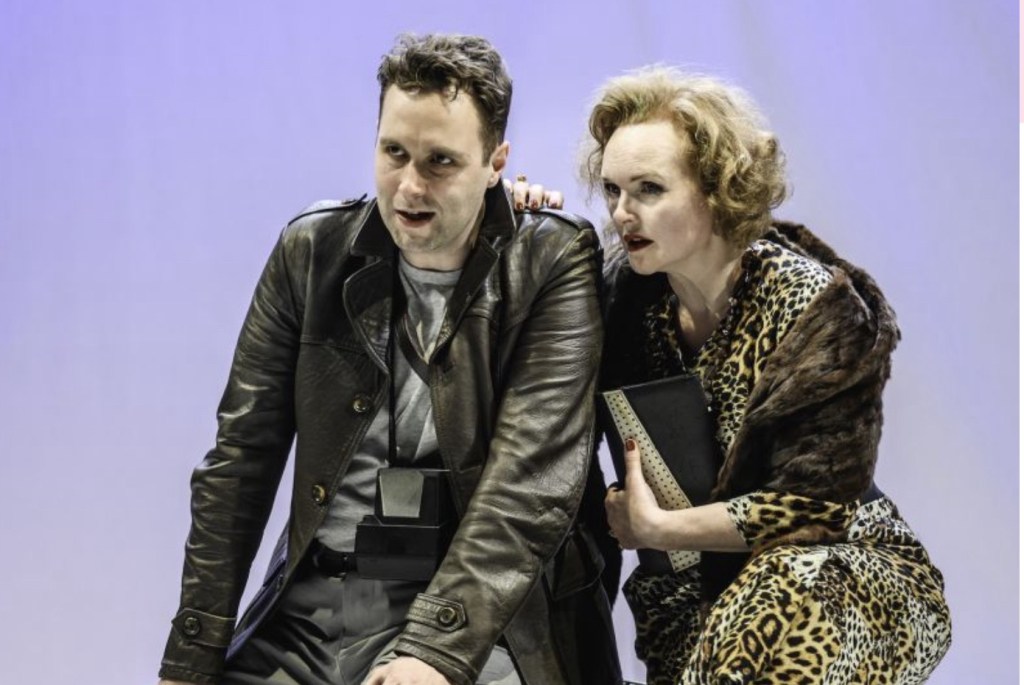
    Constantine Andronikou, Réka Jónás and Dan Smith, photograph by Mark Senior

    THE FABULIST

    Music by Giovanni Paisiello

    Book and lyrics by James P Farwell

    Directed by John Walton

    Charing Cross Theatre, London – until 21 September 2024

    https://charingcrosstheatre.co.uk

    Following on from the backwoods camp of Bronco Billy and a surprisingly engaging Korean musical life of Marie Curie, Charing Cross scores the 2024 hat trick of small scale tuners probably too eccentric to thrive in a larger space but too enjoyable to write off, with this frothy, frequently delightful confection. In tone, execution and performances, James P Farwell’s The Fabulist is near to chamber opera than traditional musical theatre. 

    Theatregoers who were around in the 1980s might find themselves recalling the work of Nicholas Broadhurst and Tony Britten’s Music Theatre London company, which took popular operas and updated them into intimate musicals, with the emphasis on the acting as much as the singing (their Cosi Fan Tutte set on a RAF base was particularly good, and their swinging sixties take on Figaro had a West End run). Mozart, and even more so Rossini, was influenced by the work of 18th century composer Giovanni Paisiello, and it is this little known (to modern audiences) maestro’s music (exquisitely played by Bobby Goulder’s string-heavy quintet) that provides the score for The Fabulist. This is a musical that doesn’t sound like anything else currently playing (except perhaps for some of the pastiche sections in The Phantom of the Opera over at His Majesty’s).

    The Fabulist has a gossamer thin plot, inspired by a one act opera Paisiello wrote for Catherine the Great, dressed up with the delicate music, a clutch of accomplished performances and some tangy off-the-wall humour. Farwell begins his story on a film set in Mussolini’s Italy where quarrelsome sisters Cassandra and Clarice (Lily de la Haye and Réka Jónás) are trying to make an allegorical movie about the Trojan war, hampered by actors temperament, uncooperative props and hordes of clueless extras (“seven years of fascism and they still can’t walk in a straight line”). Into the chaos wanders itinerant magician (or fabulist, as he prefers to be called) Agrofontido (Dan Smith) and his flamboyant companion (Constantine Andronikou). Agrofontido and Clarice fall for each other but the former is in danger as the young woman’s uncle, a high ranking Cardinal (Stuart Pendred) is arriving imminently and has waged war on any kind of magic, deeming it a dark art.

    As the emphasis is so firmly on humour, and the delivery of the music which is often lovely and lively but hardly dramatic, it seldom feels as though much is at stake. A notable exception is Clarice’s second act aria ‘Love Guide Me’, which Jónás delivers with rueful elegance and an exhilarating command of stratospherically high notes. The second act gets bogged down in debates about magic versus science, but this is offset somewhat by illusionist’s tricks performed at close quarters, and the sheer likability of the cast. It’s also pretty to look at, David Shields’s colourfully ramshackle set being an attractive amalgam of fanciful set pieces, giant planet models, and an imposing monumental arch, and the costumes are elegant.

    Smith’s Agrofontido isn’t a typical romantic hero but rather a charming goofball. He’s also a member of the Magic Circle in real life, so the tricks happening just metres from you in the audience really do defy explanation. Jónás is a genuine find, marrying a stunning voice with quirky comic timing. Lily de la Haye is equally wonderful as the less histrionic sister and there’s lovely work from James Paterson as their doting, vino-obsessed scientist father. Stuart Pendred injects some swagger and a booming voice into the proceedings as the sinister but ultimately foolhardy Cardinal.

    The Fabulist may be a little gentle for audiences used to being dazzled, or blasted out of their seats, or emotionally traumatised (or possibly all three), at regular West End. It’s an agreeable divertissement for sure, and the vocal and comic talent is exhilarating. It’s not an evening without its longueurs and the trivial and whimsical don’t make natural bedfellows with the more serious stuff, but it still has much to enjoy.

    August 23, 2024

  • BEDROOM FARCE – ⭐️⭐️⭐️⭐️ – Ayckbourn classic retains a lot of its bite

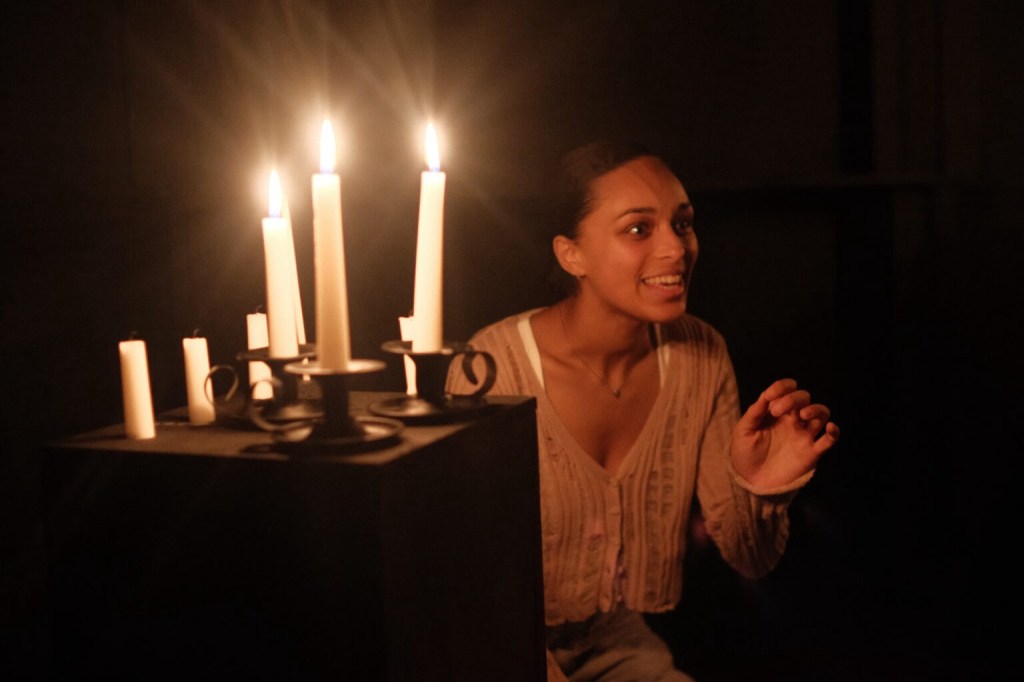
    Julia Hills and Stuart Fox, photograph by Andreas Lambis

    BEDROOM FARCE 

    by Alan Ayckbourn

    directed by Robin Herford

    The Mill at Sonning, Sonning Eye near Reading – until 21 September 2024

    https://millatsonning.com/shows/bedroom-farce/

    In a typical Ayckbourn-esque quirk, Bedroom Farce, despite its title, is barely a farce at all. First presented in London at the National in the 1970s, before successful West End and Broadway transfers, and last seen in a high profile 2002 revival at the Aldwych with June Whitfield and Richard Briers, it’s a dated but ruthlessly well observed comedy of middle class manners, misery and miscommunication. Set in a trio of bedrooms across one fraught night, it’s nearer to old school sitcom than high precision farce but it bears the hallmarks of Alan Ayckbourn at the height of his powers: sublimely subtle setting up of characters, their neuroses and personal histories, and a borderline cruel yet non-judgemental invitation to laugh at their despair. These people are only a couple of punchlines, or possibly physical punches, away from suburban Strindberg.

    Director Robin Herford, previously a stalwart of the repertory company at the Stephen Joseph Theatre in Scarborough where most of Ayckbourn’s output premiered before transferring to London (usually with TV names in the leading roles) knows exactly how to make this material tick. Whether or not it’s amusing to modern audiences accustomed to more edgy and snarky comedy is questionable though. 

    Ayckbourn’s humour is rooted in the foibles and insecurities of his carefully drawn characters, so we get imperious Delia (Julia Hills) referring to sex as “S-E-X” and viewing it as an unpleasant inconvenience when counselling her clearly distraught daughter-in-law (Allie Croker’s over-emphatic but sympathetic Susannah). Then there’s uptight Ernest (Stuart Fox, lovely), Delia’s husband, unwilling to talk about anything as messy as feelings but obsessed with household damp and preferring to hole himself up in the bathroom reading ‘Tom Brown’s Schooldays’ rather than deal with family disaster. Probably worst of all is selfish man-child Trevor -also Ernest and Delia’s son, go figure- casually wreaking emotional and domestic havoc across at least two households simultaneously yet without one iota of self-awareness or empathy. Ben Porter plays him as a whiny yet strangely appealing faded rocker who can’t be alone while unable to connect with other humans.

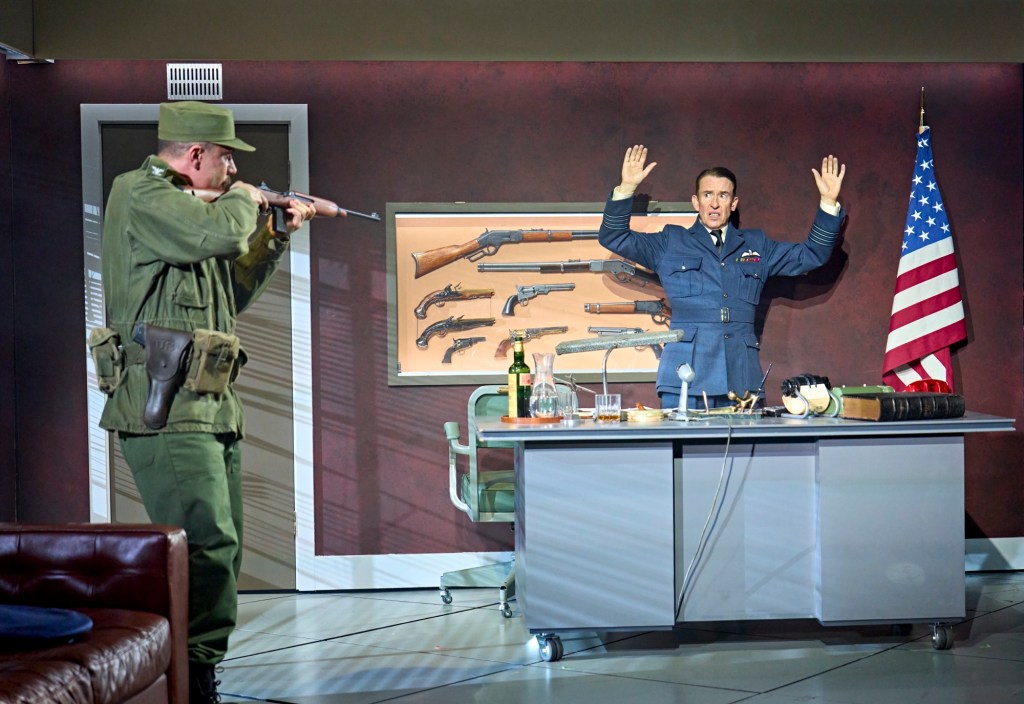
    Herford wisely chooses not to update the piece, presenting it in all its naff ‘70s glory complete with rotary dial telephones, horrific wall paper, sideburns for the men and dodgy eye make up for some of the women. Crucially though, neither he nor his designers Michael Holt (set) and Natalie Tichener (costumes) are sending up the period, instead presenting a flawless snapshot of ordinary lives in disarray. Is it funny? I laughed a lot – there’s usually something innately hilarious about watching the implosion of carefully constructed lives – but it’s probably not for everyone.

    It’s very well acted, each member of the eight strong cast going for the truth in the dialogue rather than playing the obvious comedy. Hills is particularly magnificent, investing elderly Delia with that permanent expression of vague alarm one often sees in the faces of posh English women of a certain age, and delivering lines like “I feel as though I’m sleeping on a herring trawler” (after enjoying pilchards in bed) with a crisp relish. Fox stays just the right side of bluster and bumble opposite her. 

    Antony Eden and Rhiannon Handy are likeable as the couple whose loved-up union starts to collapse as the long night drags on, and Georgia Burnell convinces as the human catalyst that almost destroys Trevor and Susannah’s already shaky relationship. As her partner, incapacitated by a bad back, Damien Matthews spends the entire performance in a prone position but does so with impeccable comic timing.

    Watching Bedroom Farce in 2024, it’s perhaps hard to imagine that this sort of play was a guaranteed smash hit on the Shaftesbury Avenue of half a century ago. The craft of the comic writing and manipulation of characters and situations remain exemplary however, and this sharply paced revival in the Mill at Sonning’s intimate, atmospheric auditorium is about as good as it gets.

    August 10, 2024

  • FIDDLER ON THE ROOF – ⭐️⭐️⭐️⭐️⭐️ – staggeringly good new version of a Broadway classic that feels all too timely

    Photograph by Marc Brenner

    FIDDLER ON THE ROOF

    Book by Joseph Stein 

    Lyrics by Sheldon Harnick 

    Music by Jerry Bock

    Based on the stories of Sholem Aleichem

    directed by Jordan Fein

    Regents Park Open Air Theatre, London – until 28 September 2024

    https://openairtheatre.com/production/fiddler-on-the-roof

    With Kiss Me Kate sparkling at the Barbican, a gorgeous Hello, Dolly! at the Palladium, A Chorus Line scintillatingly reminted at Sadlers Wells (by way of Leicester Curve) and now this breathtaking new Fiddler on the Roof as Regents Park’s centrepiece production of the season, London-based lovers of classic Broadway tuners are having a bumper theatrical summer. There are certain vintage musicals that, however well-crafted and admirable, I don’t really need to see another production of, but that’ll never be the case with Bock, Harnick and Stein’s exhilarating, sorrowful and sweet masterpiece.

    It has only been five years since Andy Nyman led Trevor Nunn’s magnificent, semi-immersive Menier production, but sadly this tale of Antatevka, a rural Jewish peasant settlement in early 20th century Imperial Russia, having to uproot and flee due to pogroms and anti-Semitic prejudice, feels even more relevant now than it did then. Joseph Stein’s book, based on a selection of short stories by Sholem Aleichem and centering on devout milkman Tevye, his opinionated wife Golde and their five unmarried daughters,  is an engaging mix of Borscht Belt humour, brutal realities and unabashed sentiment. It has a certain toughness as it depicts the hardscrabble, make-do-and-mend lives of these people offset by a wonderful generosity of spirit. 

    Meanwhile Bock and Harnick’s score, the music owing more to Jewish Klezmer than the traditional brassiness of Broadway, thrills the blood. Beloved numbers such as ‘Sunrise Sunset’, ‘If I Were A Rich Man’ and the enthralling chorale ‘Tradition’ get right under your skin. Expect a quickened pulse and wet eyes. 

    Director Jordan Fein remounted the bold Daniel Fish take on Oklahoma! for its Young Vic and subsequent West End seasons, so has form on casting an iconoclastic light on MT classics. However, this Fiddler has more in common with the Daniel Evans-directed 2021 Chichester South Pacific than with that divisive deconstruction of Rodgers and Hammerstein’s beloved first hit, in that it’s a staging which leaves traditionalists happily tear-stained while simultaneously providing plenty of fresh insights for those seeking a little more edge and depth. 

    It’s impossible in the present climate to watch the violent attack ruining the joyful wedding that closes act one and not equate it with the racist thuggery currently occurring in cities up and down the UK, in the same way that the oft-repeated statements in the script that “horrible things are happening in the world” chillingly foreshadows present times. One of the reasons why Fiddler retains its power is that it can encompass contemporary horrors yet still find the joy in being alive. The show as a whole is a paean to humanity, and to survival, or as one of the uplifting numbers has it, “L’Chaim” (“To life”).

    Fein has some bracingly original thoughts about this beloved piece, such as having the villagers sitting around bearing witness to even the most intimate family scenes, like a Jewish Greek chorus, or leaning more than usual into the concept that the eponymous fiddle-player (a virtuosic Raphael Papo) is an alter ego to Tevye. That said, he doesn’t go as far as the modern framing device Bartlett Sher used in the last Broadway revival (the show opened and closed with Danny Burstein’s Tevye in contemporary dress, clutching a book about historical Anatevka). The women possess more agency though, and it’s a stroke of genius having oldest daughter Tzeitel (luminous, clarion-voiced Liv Andrusier) play both her deceased grandmother and vengeful ghost Fruma Sarah in the fantastical dream section (stunningly staged and lit by Julia Cheng and Aideen Malone respectively) whereby Tevye convinces his wife that the lucrative match between their first born and the older local butcher, is a terrible idea. There’s no attempt to adopt Yiddish or faux-Russian vocal inflections: everybody speaks in their own accent. This is a production full of glorious things.

    Broadway actor Adam Dannheisser who played the butcher Lazar Wolf in the Sher production now graduates to Tevye, and must surely be one of the most engaging and magnetic actors to play the leading role. He projects a hearty combination of warmth and virility, plus a terrific singing voice; he convinces as a garrulous, sometimes irascible, family man torn, eventually to the point of real tragedy, between his love for his wife and daughters, and his strict obeisance to god. 

    Also unforgettable is the central trio of older daughters. Andrusier confirms that the star quality she displayed in the off-West End musical hit Ride was no fluke, while Georgia Bruce brings a haunting dolefulness to second daughter Hodel. I’ve probably heard prettier versions of her ravishingly lovely farewell lament ‘Far From The Home I Love’ but never one that feels so strongly as though it’s being ripped out of the very soul of this young woman making an irrevocable life choice; it’s desperately moving. Equally devastating is Hannah Bristow’s Chava, the bookish daughter rejected for falling in love with somebody from outside the faith. Bristow invests her with a rich, palpable inner life, a charming goofiness and a core of steel that belies her fragile appearance: she’s remarkable.

    Lara Pulver brings gentle authority, an austere elegance and expressive, beautiful singing voice to Golde, while Beverley Klein (a previous and much acclaimed Golde) is irresistibly funny as the gossipy, overdramatic matchmaker. Daniel Krikler and Dan Wolff lend passion and specificity to two young suitors. The fine ensemble create an entirely credible community on stage, and the choral singing is transportingly fabulous. 

    Tom Scutt’s split level set of corn field and wood, suggestive of both shelter and oppression, is fascinating, simultaneously evoking a giant book being prised open (perhaps a nod to the short stories upon which the show is based) with the word ‘Anatevka’ etched on the pages, and the rural harvests that sustains the population.  Fein’s direction is nimble and brilliant, some of the stage pictures linger long in the memory after the performance is over. Dan Turek’s fine band help ensure that the show sounds as impressive as it looks. 

    You emerge from this new version of one of the most deservedly beloved musicals of all time with renewed respect for just how finely crafted the piece itself is, alongside a sense of wonder at how Fein and his marvellous team have honoured what is already there while finding subtle new colours. In this enthralling production, Fiddler on the Roof succeeds in changing with the times in a way its hero struggles to do. Also, as long as some humans feel that they can beat down on people who think or believe differently from them, then this story needs to be told. Do not miss this. 

    August 8, 2024

  • DEATH OF ENGLAND: THE PLAYS – MICHAEL and DELROY – ⭐️⭐️⭐️⭐️ – Clint Dyer and Roy Williams’s thrilling state-of-the-nation monologues transfer in triumph

    Photographs by Helen Murray

    DEATH OF ENGLAND: THE PLAYS – MICHAEL

    DEATH OF ENGLAND: THE PLAYS – DELROY

    by Clint Dyer and Roy Williams

    directed by Clint Dyer

    @sohoplace, London – in repertoire until 28 September 2024

    https://sohoplace.org/shows/death-of-england-the-plays

    This provocatively titled trio of plays (the third, Closing Time, begins performances next month) returns following a series of premieres at the National and, in the case of Michael and Delroy, also online, the run of the latter curtailed by Covid. Co-writers Clint Dyer (who also directs) have updated the first play Michael, which closed at the NT’s Dorfman the week before the pandemic shut the theatres, by putting in references to Covid and other post-2020 events. Individually these pieces – superannuated monologues really in the case of Michael and Delroy – are vivid, coruscating state-of-the-nation diatribes larded with punchy theatricality and brilliantly performed, but collectively they feel like An Event.

    Michael (originally played to great acclaim by Rafe Spall, replaced now by a sweatily compelling Thomas Coombes who proves every bit the equal of his predecessor) has just lost his Dad, an East End flower stall holder who was also a massive racist, and is negotiating grief, guilt, some fairly poisonous family dynamics and the consumption of heroic quantities of booze and cocaine. Coombes brings a formidable energy to the role, his aggressive chumminess covering up deep wells of pain and self doubt. There are shades of Music Hall to the way Coombes’s Michael interacts directly with the audience (arranged on all sides of the giant St George’s Cross that makes up Sadeysa Greenaway-Bailey and ULTZ’s unit set), cheerfully handing out Penguin biscuits and bananas, or getting right up in the faces of aisle-sat patrons while celebrating a football win. He’s dangerous too, especially when intoxicated, pointing out individuals as guests at the family funeral he’s about to ruin, or examining how many of his father’s godawful prejudices he has inherited.

    The writing is abrasive but has the salty tang of authenticity and Coombes doesn’t miss a beat, even when Dyer and Williams throw a plot curveball near the end of Michael that strains credulity. In the hands of a lesser actor, this bizarre misstep (no spoilers, you need to experience it for yourself) might seriously unbalance what is otherwise a gritty thrillride of a play, but Coombes is so good he makes it work….just about. The overriding idea that to thrive on our own terms we need to free ourselves from the constraints of our parents’s flaws and opinions is a fascinating one.

    Watched together, Michael and Delroy paint a bold, fascinating picture of lives that don’t often get stage time (Delroy as a Black, Tory-voting Brexiteer feels like a particularly fresh creation). The two scripts are full of rage, bewilderment, ruthlessly detailed observation, and rambunctious comedy, they also inform each other (Michael and Delroy are working class Londoners, childhood friends who have become estranged, and use similar vernacular), and both protagonists are a mass of convincing contradictions like, you know, real flesh and blood humans.

    Delroy is, I think, the slightly better play. Like its predecessor, it’s predominantly told in flashback, and features a lot of the same unseen but vividly evoked characters. Paapa Essiedu plays Michael’s former friend, about to have a baby with his mate’s formidable-sounding younger sister, and whose life is tossed into chaos and distress when he becomesn the victim of racial profiling. If neither play is necessarily telling us anything new about the inequalities and injustices within the British social and legal systems, setting Delroy up as a home-owning bailif (and he’s pretty self-aware about the amount of sympathy that profession is likely to garner), an individual who’s actively contributing to society, makes it all the more potent and poignant when he’s sidelined and judged purely on the colour of his skin.

    Essiedu is dynamite. He brings every nuance and detail of Delroy – his charm, cheek, arrogance, humour, vulnerability, tenacity, despair and finally his hope – to raw, pulsating life. His comic timing and ability to connect directly with the audience are joyous, while his ability to crumble before our very eyes is heartrending. This may be his finest stage work to date.

    Played out on the same set (which gets partially trashed during Delroy, in a keen bit of theatrical symbolism), Dyer’s highly charged stagings are further bound together by common visual and aural motifs (thunderous sound by Benjamin Grant and Pete Malkin, and exciting lighting design by Jackie Shemesh). It’s more bombastic than subtle, but it’s an undeniably potent double-punch of theatrical wonder and political fury. You inevitably come out of the theatre determined to come back and see the third play. Riveting, vital stuff.

    My review of Closing Time will appear on WhatsOnStage on 29 August 2024

    July 31, 2024

  • WORMHOLES – ⭐️⭐️⭐️⭐️ – solo play that combines unease, humour and razor sharp writing to riveting effect

    Photograph by Rob Grieg

    WORMHOLES

    by Emily Jupp

    directed by Scott Le Crass

    Omnibus Theatre, London – until 10 August 2024

    https://www.omnibus-clapham.org/wormholes/

    Monologues and thrillers are two of the trickiest theatrical genres to pull off successfully, but Emily Jupp’s Wormholes is a compulsive fusion of the two. This isn’t an exploitative thriller though; rather it’s a one-act play, a sort of confessional, infused with intelligence, tragedy, fury and humour, sensational only in that the writing, direction (Scott Le Crass) and acting (Victoria Yeates) are so damn good.

    Wormholes is a story of domestic abuse, controlling behaviours and the way that one person’s mental health can be completely destroyed by a carefully calibrated combination of the two, especially when ignited by an irresistible dose of sexual chemistry. Victoria Yeates plays a cheerful, smart but essentially unremarkable young urbanite, with a decent job and social life, a positive outlook and a gaggle of supportive gal pals. She meets an unnamed man, has the most exciting sex of her life, and slowly but surely sees her self esteem, her external relationships and her sanity being whittled away.

    It’s not a particularly original starting premise perhaps but the quality of Jupp’s script and Yeates’s performance plus the air of simmering unease, punctuated by moments of daylight, that Le Crass’s direction subtly brews, ensures that Wormholes is thoroughly gripping for its seventy minute duration. The breezy normalcy that Yeates’s Mary projects so effortlessly serves as a feint to draw us into the mire of the mental and physical torture this woman, who seldom comes across as a victim despite life’s efforts to cast her as such, goes through at the hands of an unstable man. The message seems to be that if it can happen to her, it could happen to anybody.

    Yeates’s ability to switch between chummily anecdotal and total anguish is impressive, and the whole performance is a technically terrific example of a superb actress at the top of her game knowing exactly when and where to take her foot off the emotional pedal then when to go for absolute broke. Le Crass (who with his stunning post-pandemic production of Rose on stage and screen with Maureen Lipman, and the fascinating gay body image monologue Buff seen recently in London and Edinburgh, is a specialist in making solo plays take wing) has her talking directly to us, dancing with abandon, staring dead-eyed at a hopeless future, and, in a particularly harrowing sequence, reacting to a volley of horrible physical attacks. This is top drawer work, focussed, economical but able to go to extremes when required. The matter-of-fact-ness of roughly seventy per cent of the delivery makes the trauma of the remaining thirty per cent all the more astonishing and affecting.

    The collaboration between writer, actor and director is seamless, except for one brief moment when Mary hurls abuse at a younger detainee in the facility where she has ended up after exacting a brutal, if dramatically satisfying, revenge on her tormentor. Momentarily, the play doesn’t quite ring true. Jodie Underwood’s subtle, detailed lighting, Leah Kelly’s soothing yet vaguely clinical set and perhaps especially Paul Housden’s sound and composition, full of distortion and dislocation, unsettlingly suggest being inside the head of a person who, through no fault of her own, is unable to discern which way is up.

    It’s a powerfully female-driven show, as it needs to be, so it’s perhaps a little churlish to wish that the man who lays Mary so low wasn’t so sketchily drawn. I’m not sure that her dismissive mother rings entirely true either, but these are minor flaws in a sophisticated piece of storytelling that employs its red flags with subtlety and real skill. Jupp’s writing is terse, compelling, witty and, when it needs to be, utterly cruel. The wormholes metaphor that permeates the text (the parasitic guinea worm can live undetected in an apparently healthy human, the person’s increasing health niggles easily dismissed as something negligible, before exiting the body in the most agonising way possible…look it up, it’s terrifying) only occasionally feels forced, and makes a potent parallel with our heroine’s tangy but awful tale.

    If Wormholes doesn’t end the way I thought it would, the ambiguity and sadness of its conclusion makes for memorable theatre. This is a haunting contemporary piece: intense and tough to take, but shot through with compassion and humour, and ultimately strangely uplifting thanks to the sheer quality of the artistry on display. Strongly recommended.

    July 29, 2024

  • FANGIRLS – ⭐️⭐️⭐️ – cultish Australian teen musical arrives in London with a colourful bang

    Photograph by Manuel Harlan

    FANGIRLS

    Book, music and lyrics by Yve Blake

    Directed by Paige Rattray

    Lyric Hammersmith Theatre, London – until 24 August 2024

    https://lyric.co.uk/shows/fangirls/

    There’s a very dark, very funny musical screaming to get out of Fangirls, receiving its UK premiere in a co-production between the Lyric Hammersmith and Sonia Friedman (who apparently has a penchant for teen-aimed tuners with youthful female protagonists, since she’s also currently presenting Mean Girls in the West End) but this unruly Australian concoction needs more work to uncover it. As it stands, Yve Blake’s show is a cartoonish blast of lunacy that never quite has the courage of its convictions, and seems determined to hurl everything at the wall, in terms of tone, plot and emphasis, to see what sticks. It’s a boisterously entertaining mixed bag, messy and more crude than witty, as though Matilda, The Rocky Horror Show and Be More Chill had been swirled round in a blender and emerged with a dodgy Aussie accent.

    On the upside, Paige Rattray’s bubblegum-bright staging boasts a diverse, talented cast, flashy production values, a banging score and gleefully energetic choreography by Ebony Williams. Conversely, the piece itself is sloppily structured, and there are plot holes you could drive a truck through (a teenager can abduct and keep captive one of the biggest pop stars on the planet, and her mates are fine with it once they get over the shock?….er, ok) plus a tone of amped-up hysteria that bludgeons you into submission, or possibly bewilderment. Sometimes it’s deeply felt whilst at others it seems like a cynical attempt to cash in on a youth market that is outgrowing Six, mourns the closure of Heathers and can’t afford the ticket prices to Mean Girls. Apparently it has been extensively workshopped since its original Australian iteration, and the mind boggles at what it must have been like before.

    Despite all that, it whips up its audience into quite a frenzy. Blake’s songs are generic but they’re rousing and attractive, the voices are fabulous and the dances are executed crisply and with real dynamism. By mixing sections of the fan fiction that obsessed Sydney teenager Edna (Jasmine Elcock) creates into the action, Blake’s book doesn’t always make it clear if what we’re watching is supposed to be taken at face value or not in this high octane examination of obsessive fandom and the societal pressures on modern teenagers. The opening is a thrillingly staged fantasy sequence where Edna and her favourite pop star Harry (Thomas Grant) motorcycle ride through a nighttime city while knocking seven bells out of sinister adversaries, and I found myself fervently wishing some of the later plot developments were also supposed to be figments of Edna’s overwrought imagination, but alas not.

    Fangirls captures the abrasive sugar rush of adolescence but the production doesn’t seem clear on whether it’s embracing it or sending it up. The sinister side of obsessive fandom is alluded to, as are some of the other potential horrors of transitioning from child to adulthood (being torn between two parents, domestic abuse, self harm), but with insufficient detail or sensitivity to be properly affecting. It pales in comparison with recent Brit musicals aimed at a similar market, specifically Babies which was a beautifully realised teenage take on early pregnancy, or the current return of the joyful Fantastically Great Women Who Changed The World which makes a more persuasive and heartfelt argument for female empowerment.

    The staging has a colourful, hi-tech aesthetic, a simplicity and relentless energy that suits the material, although the piece as written feels a bit too long. The act two opening brilliantly captures the manufactured joy of a large scale arena concert (dazzling lights by Jessica Hung Han Yun and video design by Ash J Woodward), with fabulously OTT Max Gill and Gracie McGonigal leading some hilarious audience participation as a pair of over-emotional youngsters, and some of the songs hit pleasingly home.

    Elcock makes a refreshingly quirky leading lady and she and the ever-marvellous Debbie Kurup (who is incapable of giving a bad performance in anything) provide the show with what heart it has as Edna and her overstretched mum. McGonigal has a stunning voice and there’s a fun running joke which has her turning up to belt and riff whenever there’s a scene change. Terique Jarrett is magnetic and athletic as an American fan Edna’s never met. Miracle Chance and Mary Malone work hard to inject the comedy into two of Edna’s schoolmates yet are more effective in the serious moments, and Thomas Grant has authentic pop star swagger as the focus of all their obsessions. There’s even an amusing pre-recorded cameo from a multi-award winning actor and director who happens to be the sister of one of the lead producers…

    Friedman and the Lyric couldn’t have programmed this sassy rainbow-burst of a show for a better time of year, what with the long school summer holidays being upon us. Whether or not its long term prospects are as bright as the undeniable talent on display will depend on whether or not British audiences embrace it with the same enthusiasm as the Australians did…judging by the reaction on the night I saw it, Fangirls could very well find a fanbase here.

    July 27, 2024

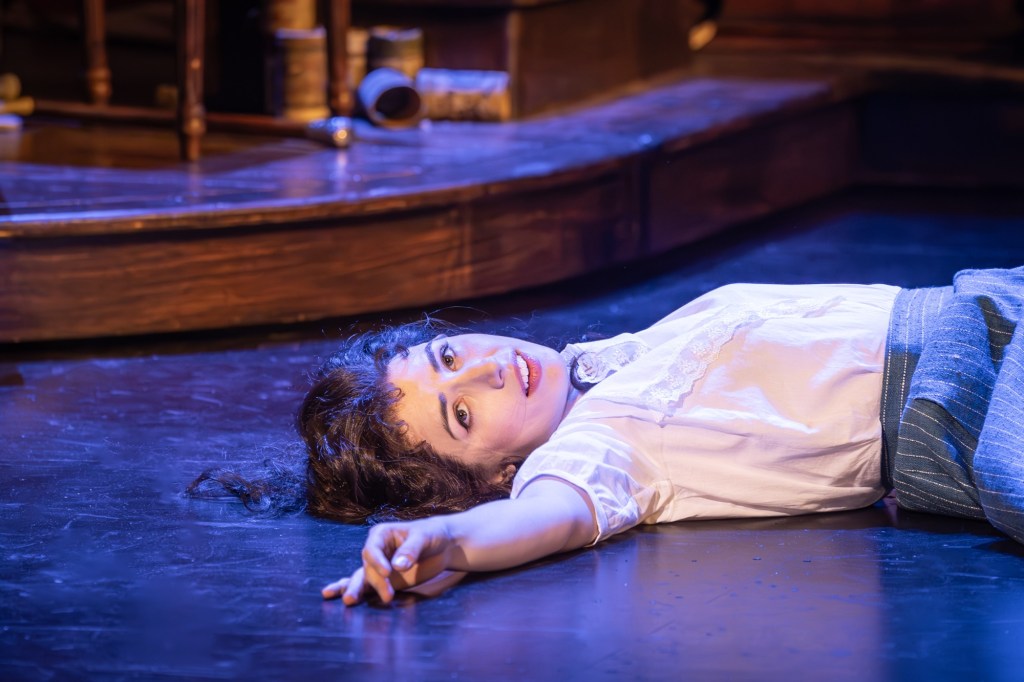
  • I’M GONNA MARRY YOU TOBEY MAGUIRE – ⭐️⭐️⭐️ – Tom Holland isn’t the only Spiderman currently on* the London stage (*-sort of)

    Tessa Albertson, photograph by Manuel Harlan

    I’M GONNA MARRY YOU TOBEY MAGUIRE

    by Samantha Hurley

    directed by Tyler Struble

    Southwark Playhouse Borough- The Little, London – until 24 August 2024

    https://southwarkplayhouse.co.uk/productions/im-gonna-marry-you-tobey-maguire/

    This cultish off-Broadway smash feels like what would happen if you put angsty teenage fan fiction, the off-kilter humane intellectualism of Will Eno and the zany/gritty aesthetic of John Waters into a blender: it’s sometimes cute but more often absolutely lethal, and sometimes impenetrable. Samantha Hurley’s jet black tragicomedy arrives at Southwark with its original star (the genuinely remarkable Tessa Albertson), director (Tyler Struble) and set designer (Rodrigo Hernandez Martinez), and proves less whimsical and considerably darker than its title, and indeed its scenic design, might suggest.

    Hernandez Martinez has turned the Southwark Little space into a fairy-lit, atmospheric, all-encompassing shrine to Tobey Maguire, the Spiderman star (yes, there was another Spidey before Tom Holland) is literally everywhere: he’s plastered all over the walls, on posters, magazine covers, in a giant framed portrait. He’s also physically on stage in the person of Anders Hayward, who looks enough like the screen star to get away with playing him (just about), but is, rather alarmingly, handcuffed to a metal pole centre stage. Maguire has been abducted and he, along with this cornucopia of images of him, is in the basement of teenager Shelby (Albertson) who is taking extreme fandom to new heights, or rather depths.

    What Hurley has created is a frequently funny but more often disturbing look at obsession, youthful alienation and the consequences of neglect. Shelby, in Albertson’s detailed, screechily go-for-broke performance, is clearly deeply troubled. She has a combative relationship with her unseen (but very much heard) mom, a non-existent one with her absent, lawbreaking father, and is the victim of school bullying. She’s not necessarily easy to like, but neither is she easy to write off. Albertson gives her a wild, restless energy tempered with moments of hollow-eyed despair; she’s emotionally immature, disconcertingly sexual at times, and extremely smart. It’s the intelligence that actor and writer give Shelby that renders her misplaced devotion to Tobey and the dysfunctional loneliness of her existence, so sad. It also makes her dangerous.

    Albertson never sentimentalises Shelby’s struggles, has wonderful comic instincts (“I’ve seen Misery” she sullenly tells Maguire at one point) and fully inhabits the character’s lightning fast changes in mood and focus: it’s an exhausting but multi-faceted performance, that constantly threatens to go slightly too far but never quite does: she’s brilliant. Hayward’s Tobey convincingly goes through the various stages of being held hostage, Stockholm syndrome apparently being the predominant one in this instance. He skilfully manages a rather pointless audience participation section, but can’t disguise the fact that the role feels underwritten in comparison with his captor. Kyle Birch is gorgeously funny as Brenda Dee Cankles, a cartoonish real estate agent who’s a jolly amalgam of every Strong Black Woman cliché, but performed with such life-affirming over-the-top relish that it’s hard to take offence. Birch also doubles improbably but gloriously as an impish Toby Maguire alter ego who bursts through the walls at regular intervals to mock, or commiserate with, the stricken screen star.

    Struble’s staging is in tune with the eccentricities of Hurley’s script, but sometimes doesn’t feel punchy or pacy enough. The writing and the premise suggest that the piece should come at us with a furious urgency, but too often here the show seems a little hesitant and languid. Ultimately, beyond the not-terribly-original revelation that parasocial relationships and teenage obsession make toxic bedfellows, it’s hard to grasp what Hurley’s point is with this strange, overlong combination of soured sitcom, psychological thriller and rampant absurdism. I’m Gonna Marry You Tobey Maguire provides equal amounts of good, nasty fun and “wtf is going on” bewilderment, but it does at least feel refreshingly original.

    July 13, 2024

  • SLAVE PLAY – ⭐️⭐️⭐️⭐️ – provocative and bracingly original, this acclaimed American import provides lot to think about

    Olivia Washington and Kit Harington, photograph by Helen Murray

    SLAVE PLAY

    by Jeremy O Harris

    directed by Robert O’Hara

    Noël Coward Theatre, London – until 21 September 2024

    https://slaveplaylondon.com

    Black writers have seldom been as well represented in London theatre as they are at the moment. The National has Katori Hall’s acclaimed The Hot Wing King in preview and is about to move Clint Dyer and Roy Williams’s Death Of England plays cycle to Sohoplace, while Faith Omole’s My Father’s Fable at the Bush and the Donmar’s UK premiere for Dominique Morisseau’s Skeleton Crew are two of the finest, funniest, most satisfying nights of drama on any current stage. They’re joined in melanised excellence by this import from New York, which enjoyed Broadway seasons either side of the pandemic, was nominated for a record number of Tony awards for a straight play, and for many London theatregoers will be the biggest must-see of the summer, if only to discover what all the fuss is about.

    Jeremy O. Harris’s Slave Play explodes into the West End as a noisome, wild, confrontational thing, hauling taboos into the unforgiving light, examining prejudices and kinks with rare, ripe humour, buckets of vitriol, and a humanity and intellectual rigour that take the breath away. I can imagine it’s possible to be offended, confused or shocked by this unique, unforgettable fusion of coruscating social, sexual and spiritual commentary, high camp and sheer fuck-you (literally at times) outrageousness, but remaining indifferent to it is surely not an option.

    The antebellum-inspired opening sections appear calculated to wrong-foot and potentially upset viewers, regardless of colour, age or sexual preference. A mixed race straight couple Kaneisha and Jim (Olivia Washington and Kit Harington) act out a preposterous slave-and-master scene: the wayward accents suggest that something is a little off, an impression reinforced by the anachronistic music and Kaneisha witheringly pointing out that the fruit Jim has provided as a prop is in fact a cantaloupe not a watermelon. Next up is an older white lady (Tony nominee Annie McNamara) in ringlets and hoop skirt (until she isn’t) sexually humiliating her manservant (Aaron Heffernan), and finally a violent bi-racial gay coupling (Fisayo Akinade, and James Cusati-Moyer, another Tony nominee for his work in the Broadway original) atop an old cart amidst cotton bales. It’s all provocative, often riotously funny, and constantly on the verge of tipping over into something deeply troubling, although Harris makes us wait for that.

    The title “slave play” turns out to have more than one meaning as the piece explores multiple themes as well as the relationship between people of different skin colours. It interrogates sexual fantasy and how potentially damaging it can be when the deepest, darkest ones are acted out. It looks with scorn on the ‘white saviour complex’, and has some very unsettling insights into interracial unions. It is mindful of Black history, but not didactically so, and inherited trauma, and savagely satirises therapy culture. The central, slightly overlong, scene is a particularly outlandish couples therapy session presided over by a pair of enthusiastic but thunderingly crass practitioners (Irene Sofia Lucio and Chalia La Tour, holdovers from the Broadway cast and both amusing if lacking in nuance).

    Some of the grievances and revelations that come to light in this section are fascinating, and Harris’s writing is unflinching, witty and brutal. It also showcases some terrific acting, especially from Akinade whose simultaneous breakdown and breakthrough is really moving, and from Cusati-Moyer opposite him as the bewildered partner forced to abandon his flamboyant histrionics and really listen. Heffernan delivers nuanced, deliciously funny but also deeply touching work as the sexy but blunt mixed race youngster who has a startling revelation over how much his sexual identity and race are intertwined. McNamara is great value, if hardly subtle, as his older lover, working herself up into paroxysms of middle class white guilt.

    Given how much Slave Play has on its mind, it’s a remarkably unpreachy piece; Harris never tells us what to think. This proves especially challenging in the final, very disturbing sequence between the first couple we saw. It’s an apotheosis of the ‘play’ that kicks off the play, but so much more. It’s sexual but not necessarily sexy, and it’s unclear whether we are witnessing the relationship imploding or a genuine breakthrough; either way it is tremendously uncomfortable to watch, and Harington and Washington play it full throttle, unsparingly and brilliantly.

    If Robert O’Hara’s production seems deliberately rough round the edges (set pieces judder haltingly on, some of the acting in the central therapy scene reads as broader than it might be, lighting and sound effects jar and alarm), that feels apiece with Harris’s text which eschews multiple established tenets of playwriting to create something unique and vital. Anyway, there’s nothing about Slave Play that suggests it should ever be a smooth theatrical journey.

    There’s no linear storytelling and no easy answers. Even Clint Ramos’s mirrored set feels like a provocation: it confronts us in the audience (with our prejudices? our proclivities?) and it gives the characters nowhere to hide. Slave Play dazzles, sears and confounds; it also makes the current theatrical landscape a considerably more stimulating place.

    July 11, 2024

Previous Page Next Page

Blog at WordPress.com.


Loading Comments...
 

    • Subscribe Subscribed
      • ajhlovestheatre
      • Join 59 other subscribers
      • Already have a WordPress.com account? Log in now.
      • ajhlovestheatre
      • Subscribe Subscribed
      • Sign up
      • Log in
      • Report this content
      • View site in Reader
      • Manage subscriptions
      • Collapse this bar