Skip to content

ajhlovestheatre

  • Home
  • About
  • Contact
  • Blog

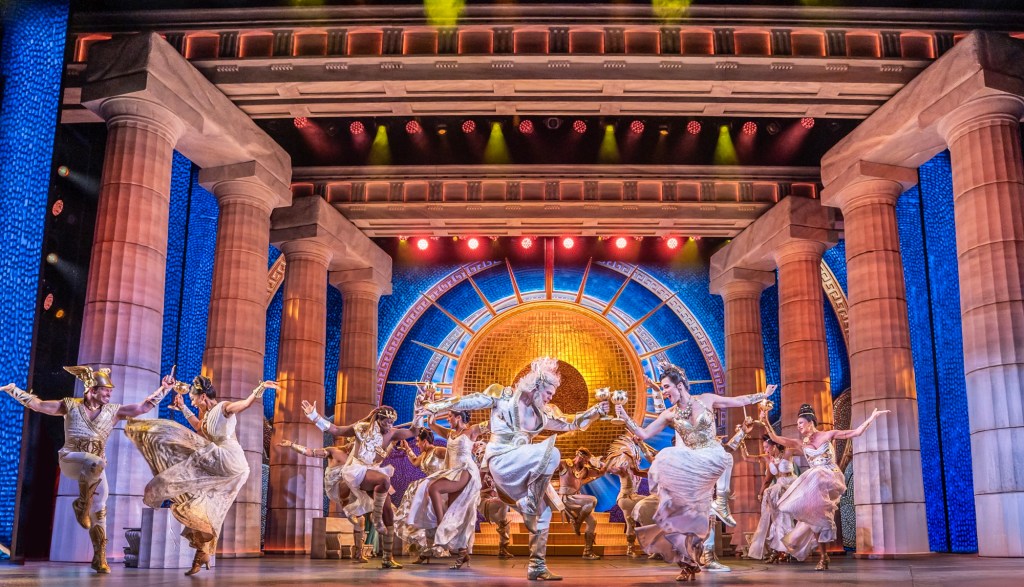
  • SMASH – ⭐️⭐️⭐️ – is this the most self-referential Broadway show ever?

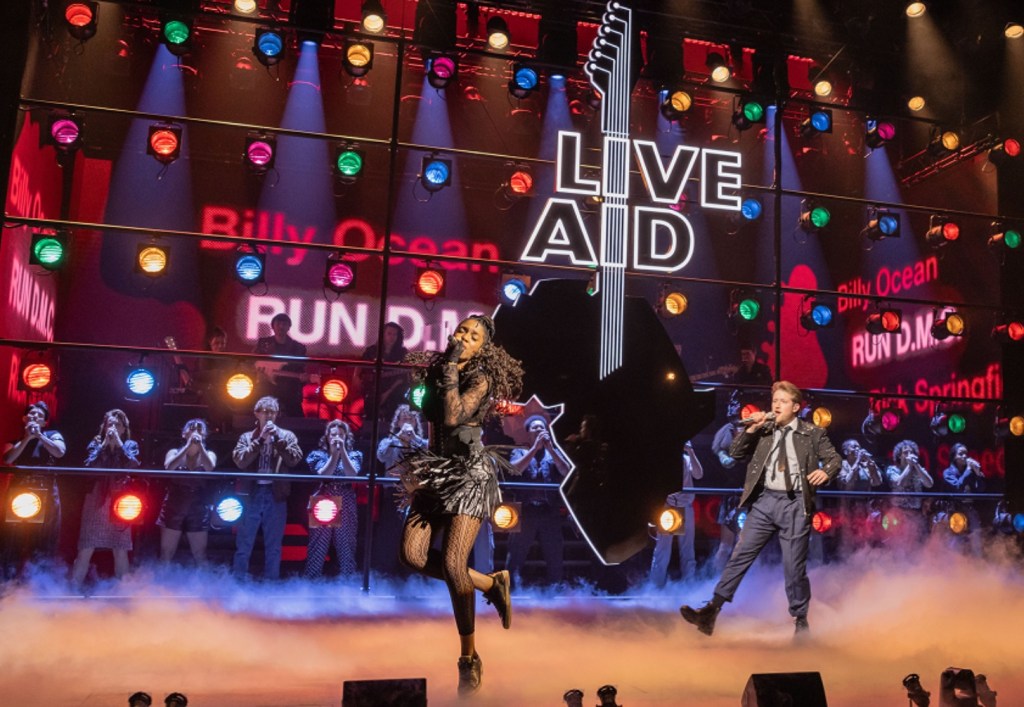
    Robyn Hurder, photograph by Matthew Murphy

    SMASH

    Music by Marc Shaiman 

    Lyrics by Scott Wittman and Marc Shaiman

    Book by Bob Martin and Rick Elice 

    Based on the series created by Theresa Rebeck, produced by Universal Television 

    directed by Susan Stroman

    Imperial Theatre, New York City – until 22 June 2025

    running time: 2 hours 30 minutes including interval 

    https://smashbroadway.com

    “They Just Keep Moving The Line” isn’t only the title of one of Scott Wittman and Marc Shaiman’s popular numbers from Smash, the 2012 TV show about mounting a production on the Great White Way, it could equally be the modus operandi of the glossy new musical culled from it and now on Broadway. It’s a highly watchable show, attractively produced and superbly performed, but it can’t seem to decide if it’s sending up, celebrating or castigating Broadway. 

    THIS Smash is actually billed as ‘a comedy about a musical’ which actually turns out to be more accurate than you might assume. Until the unexpected finale, the songs are used diegetically, which effect means that as in, say, shows like Cabaret or They’re Playing Our Song, the numbers pop up in the script because the characters are show people who would be singing at this point because they’re onstage or in rehearsal. The music and lyrics aren’t integrated, they’re part of these people’s creative lives. 

    How much of a comedy it is depends on how funny you find Rick Elice and Bob Martin’s script, which is packed with Broadway in-jokes and references to very Manhattan-centric locations and traditions (the theatre district restaurant Orso and the Hells Kitchen bakery Schmackary’s are both name-checked, and a director goes to the opening night of a show he’s no longer working on because he’s a Tony voter).  Broadway obsessives will likely love the sensation akin to being beaten around the head with copies of Playbill for a couple of hours, but others may feel bewildered. 

    Also, if you’re looking for real wit and credible character development you might be a little disappointed with a jaded director intoning at a moment of crisis “look on the bright side, one day we’ll all be dead” as though it were an inspired zinger. Or when a drink-loving creative proclaims he’s off to immerse himself in “two of the greatest words in the English language…alka…hol”.  At best, Martin and Elice’s book is amusing, seldom flat-out hilarious, although I did enjoy Jacqueline B Arnold’s ultra-glam wonderfully world weary embattled producer referring to theatre influencers as “entitled little shits”. 

    Apart from a truly terrific cast of Broadway veterans, who sell the script for everything it’s worth (and then some), the principal joy of Smash on stage is the score. Almost all of these numbers were featured in the TV show (and one of them, the sassy ‘Let’s Be Bad’ even cropped up in the same songwriter’s 2022 tuner Some Like It Hot which, in all honesty, was a considerably better musical). Still, the fact that Wittman and Shaiman so shamelessly recycle their own work gives a certain piquancy to the comic scene in Smash where husband-and-wife creative team (Krysta Rodriguez and John Behlmann, both excellent) are slotting numbers from earlier shows into Bombshell, the Marilyn Monroe musical they’re working on here. The score for Smash, although ruled sadly ineligible for a Best Score nomination in this years Tonys, is a brassy, entrancing collection of songs that suggest the excitement of vintage Broadway with a tinge of pop. Paul Staroba’s large orchestra sounds glorious playing Doug Besterman’s rich orchestrations. 

    The voices are all pretty magnificent too, and if some of the numbers, and indeed the performances, are robbed of their full impact by some head-scratching decisions by the book writers, this will be a glorious cast album. Joshua Bergasse’s choreography is stylish and worthy of the Main Stem, and Susan Stroman’s direction keeps everything moving at a decent pace although one wonders if the few laugh-out-loud moments (usually involving Brooks Ashmanksas as the increasingly desperate director or  Kristine Nielsen as a self-aggrandising, creepy acting coach costumed like Igor from Young Frankenstein) are because they’re coming from actors who are comic geniuses. Both Ashmanksas, although giving a performance similar to his joyous turn in The Prom, and Nielsen are on rampantly good form. 

    Robyn Hurder is a proper Broadway triple threat, a beam of light on stage, and she is as fabulous as she possibly can be here with the material she’s been given. She plays Ivy Lynn, named the same as the character Megan Hilty famously portrayed on screen, but here used quite differently plot-wise. Hurder dances up a storm, has a world class belt and exudes star quality but feels hemmed-in by a weird plot strand where she goes all ‘Method’ while portraying Marilyn and becomes impossible to work with. The writing just isn’t sharp or clear enough to make this plausible. Sometimes, under Nielsen’s beady eye, she thinks she IS Marilyn, at other moments she has attacks of conscience. It gets confusing, and ultimately pointless, to try and work out which is which. 

    Bella Coppola as the associate director who nearly ends up starring in the show suffers similarly from an unbelievable story arc and undistinguished writing, but nearly rips the roof off the theatre with her ‘Let Me Be Your Star’ act one finale. Caroline Bowman as Karen, here a benign understudy rather than an ambitious rival to Ivy, fares better, and delivers the aforementioned ‘They Just Keep Moving The Line’ stunningly. The split focus between three female leads makes it hard to truly empathise with any of them. Elsewhere, the book and direction can’t seem to decide if they’re going for zany or heartfelt (and you can have both, as Stroman’s own original staging of The Producers demonstrated). The show also attempts to make light of one of the characters drinking problem and of Marilyn’s suicide, which feels a little misguided. 

    Beowulf Boritt’s scenic designs are colourful and efficient, occasionally ey-popping, and Alejo Vietti’s costumes are often gorgeous. Ken Billington bathes the whole thing in mood-changing, gleaming lights. If the ensemble looks like it could use a few more members, they work their socks off. 

    Will Smash be a smash? I honestly have no idea. It may just be too self-referential to appeal to people who don’t live and breathe Broadway. But it’s big, bold and reasonably spectacular. Ashmanksas is probably worth the price of a ticket all by himself though. A decent night out, if not a truly memorable one.

    May 1, 2025

  • JOHN PROCTOR IS THE VILLAIN – ⭐️⭐️⭐️⭐️ – if this is the future of plays on Broadway then bring it on

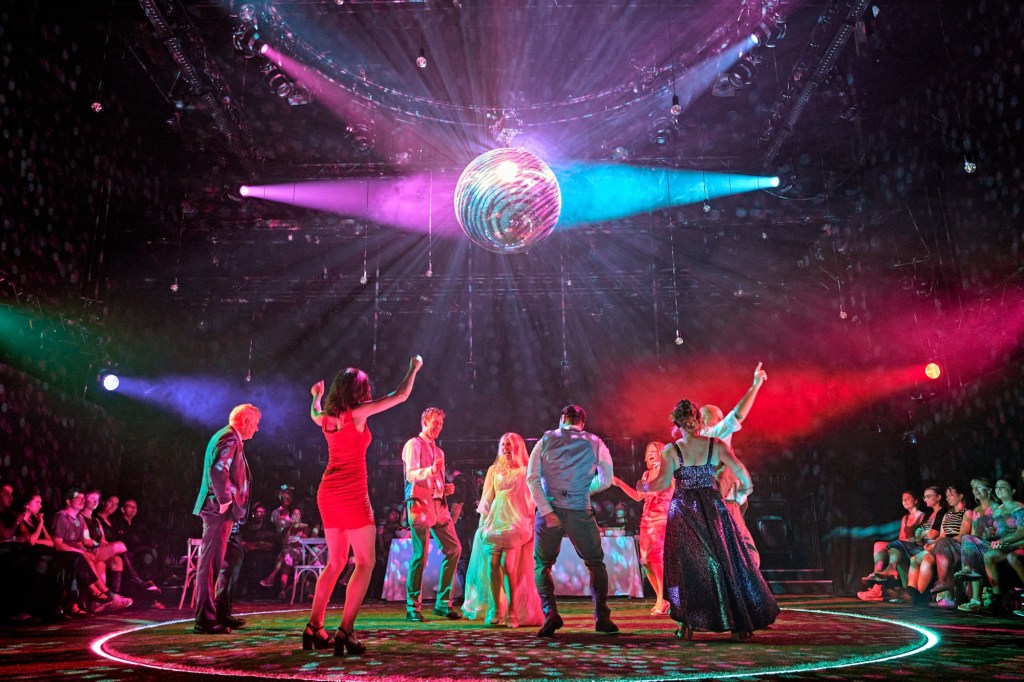
    Photograph by Julieta Cervantes

    JOHN PROCTOR IS THE VILLAIN

    by Kimberly Belflower

    directed by Danya Taymor

    Booth Theatre, New York City – until 7 September 2025

    running time: 1 hour 40 minutes, no interval 

    https://johnproctoristhevillain.com

    Rising star director Danya Taymor seems to be cornering the Broadway market when it comes to staging teenage angst and trauma. Hot on the heels of, and just along the street from, her Tony award-winning work on the thrilling Outsiders musical, she’s now directing the New York premiere of Kimberly Belflower’s 2022  response to Arthur Miller’s seminal witch hunt drama The Crucible. At first look, there’s a world of difference between the sweaty, testosterone-fuelled Greasers of late 1960s Tulsa and these vulnerable, funny, sometimes hysterical young women in a 2018 rural Georgia high school, trying to make sense of their increasingly maturing bodies, their relationships with the often less than admirable men they’re in contact with, and ultimately with Miller’s thorny text. But both productions have a bold theatrical flair and demonstrate a deep affection for, and understanding of, the troubled youngsters at their core. 

    Having a working knowledge of The Crucible isn’t essential to enjoy John Proctor Is The Villain – Belflower’s script is so punchy and funny, and the characters so vividly drawn and terrifically well acted that it’s impossible not to connect with it – though it would certainly enrich the experience. But it would also underline the differences between Miller’s aims versus those of Belflower: where the former created a thinly veiled allegory of the McCarthy witch hunt trials that scandalised and terrorised 1950s America, the latter’s young women are informed by the #MeToo movement and ignoring their voices is neither right nor fair. This play demands that we listen but is simultaneously a very good time in the theatre.

    Bellflower, Taymor and a brilliant young cast led by screen star Sadie Sink (although really it’s a true ensemble piece) capture with almost alarming precision the intensity, idealism and the sense of shifting emotions constantly just under the surface of teenagers sometimes disaffected, sometimes belligerent, sometimes eager facades. The relationships between the characters are superbly fleshed out, you really believe that most of these youngsters have grown up together and, crucially, the gaucheness is never over-played. 

    Neither, when it breaks through, is their rage. Interpretive dance is an understandable bête noir for a lot of people, but it’s employed here (powerful movement direction by Tilly Evans-Krueger) in service of a story of young women whose lives are shattering open, and who can no longer toe the line. Lorde’s cynical but rollicking dance banger ‘Green Light’ has never seemed so potent. 

    There’s little doubt that Sink’s precocious, slightly unnerving Shelby and Amalia Yoo’s emotionally intense Raelynn whose youthful heart she’s helped to hurt, at least for now, are intended as historical first cousins to Miller’s Abigail,  Mary etc. The same goes for their female classmates (Fina Strazza as high achiever Beth, Maggie Kuntz’s delicate Ivy whose father is a long way from the man she needs him to be, and Morgan Scott’s delightfully open newcomer Nell…all played exquisitely) but Belflower’s text is its own vital beast. Molly Griggs delivers first class work as the slightly neurotic student adviser who, as the young women are quick to point out, is only a couple of years older than themselves.

    The men are equally impressive. Nihar Duvvuri, endearingly gawky, and a darkly manipulative Hagan Oliveras, play the immature male classmates with edge and detail. Gabriel Ebert is such a fine actor that the rather obvious placing of his hale and hearty, but motivationally questionable, teacher as stand-in for Miller’s Proctor rankles less than it might. There are a couple of moments where Taymor’s production is a little too emphatically on-the-nose, such as when a split second recollection of past abuse for Shelby prompts an ominous sound effect and the hyper-naturalistic classroom set is plunged into momentary gloom (the scenery is by Amp featuring Teresa L Williams, with sound by Palmer Heffernan and lighting by Natasha Katz). 

    Ultimately though, this is exactly the sort of play that every young man should see as an encouragement to do better, and young women will love as it explores what is and isn’t acceptable, and communicates the power of female unity: it infuses this Broadway season with fresh blood and a jolt of youthful energy. It demands that you listen. Plus, on top of all that, John Proctor Is The Villain is wildly entertaining. Sink’s return to Broadway (she was a replacement Annie in the musical’s last Main Stem run at the Palace) is a triumph, and I would especially love to bring my 15-year-old niece to see it.

    May 1, 2025

  • PURPOSE – ⭐️⭐️⭐️⭐️⭐️ – funny, insightful and inflammatory, this feels like a new American classic

    Photograph by Marc J Franklin

    PURPOSE

    by Branden Jacobs-Jenkins 

    directed by Phylicia Rashad

    Hayes Theatre, New York City – until 31 August 2025

    running time: 2 hours 50 minutes including interval 

    https://purposeonbroadway.com

    Is Branden Jacob-Jenkins the greatest living American playwright? This cracking family drama, full of bile, fire, and revelations both comic and outrageous, certainly helps stake that claim, especially considered in tandem with last Broadway season’s scorching Appropriate, and the thought-provoking, vaguely supernatural The Comeuppance, given a superb London premiere last year by the Almeida. 

    Purpose, tearing up Broadway in a Phylicia Rashad staging that originated at Chicago’s acclaimed Steppenwolf Theatre, is a firecracker, examining the toxicity and trauma lurking underneath the benign surface of the Jaspers, a Black family prominent in the Civil Rights movement and now widely respected and feted. It’s told from the point-of-view of younger son  Nazareth (Jon Michael Hill, sublime), whose Jesus-adjacent name carries its own special weight, bringing into the God-fearing family home Aziza, the free-thinking queer New Yorker (Tony winner Kara Young, who could well be in line to bag a second award on the basis of this performance) for whom he has agreed to be a sperm donor. 

    That turns out to be almost the least of the Jasper’s family woes as disgraced politician and elder brother Junior (Glenn Davis) is straight out of a prison sentence for embezzling funds just as his jaw-droppingly bitter wife (Alana Arenas, in an incendiary Broadway debut) is about to go in for misfiled tax returns. Meanwhile, patriarch the Reverend Solomon Jasper (Henry Lennix) is possibly going to be slapped with a paternity suit…oh, and it’s his wife Claudine’s birthday. LaTanya Richardson Jackson plays Ma Jasper with just the right combination of grandeur and manipulation: you can’t help but love this woman but you sure wouldn’t want to cross her. 

    She turns out to be even more formidable than she looks, but then the wonderful thing about Jacob-Jenkins’s creations is that all six characters have so many layers and colours, whether it’s Davis’s beautifully observed Junior whose pleas of mental health issues initially seems strangely at odds with his swagger, or Solomon taking up bee-keeping in his latter days as though to give some meaning to a life that is not as honourable as it may seem from the outside. 

    The aforementioned Arenas can do as much with a withering stare as many actors achieve with ten pages of dialogue, but when she does start to speak, she -and Jacob-Jenkins- take your breath away. Young makes something wonderfully real and touching out of unwitting interloper Aziza’s journey from star-struck awe at being in the home of a Civil Rights hero to baffled disillusionment. Hill, Davis and Lennix suggest with real sensitivity, as well as marvellous comic timing, a certain aimlessness in the lives of those directly affected by great sociopolitical battles fought but now left with more insidious demons to conquer. 

    Jacob-Jenkins’s dialogue just crackles: absolutely hilarious but shot through with truth and fury. Richardson Jackson’s Claudine gets a speech about motherhood near the play’s conclusion that forces one to reconsider some of one’s earlier opinions about her complex character, and she delivers it with extraordinary conviction. 

    Rashad’s assured direction means that even an entirely static, but fabulously written, dinner party scene is totally riveting and clear: instead of being frustrated at not catching every nuance and facial expression, you find yourself leaning in. The second half is slightly too long, and I suspect that the direct address to the audience would become tiresome if performed by somebody less engaging than Hill. He’s the conduit between the audience and his crazier-than-they-look family, and he’s irresistible. 

    If not quite perfect, this is still American drama at very near its absolute finest. It channels massive themes through the squabbles, foibles and misdemeanours of a family that, even if not immediately relatable, are consistently credible, much of the writing is sensational, and the examination of the binds of family is cast in a sizzling new light. 

    This Steppenwolf production reeks of quality and detail, from the snow falling outside the windows of Todd Rosenthal’s deluxe but tellingly  antiseptic family home seating to Dede Ayite’s costumes and Amith Chandrashaker’s time-conveying lighting, to the perfectly judged pace. Given the London stage acclaim for the aforementioned Appropriate and The Comeuppance as well as the same writer’s bonkers-ly brilliant An Octoroon, it’s likely that Purpose will end up in British theatres at some point, but it may not have the same authenticity as it does here. 

    If you thrilled to Tracy Letts’s August: Osage Country, another meaty tragicomedy that saw a family imploding around the dinner table, and which also originated at the same Chicago theatrical powerhouse, the chances are that you will love this. If you’re in NYC this summer, this is so worth catching if you’re after something provocative and intelligent but compulsively entertaining, plus the opportunity to see a sextet of fine African American actors at the very top of their game. As Nazareth rightly says to the audience in the slipstream of yet another fiery Jasper family revelation: “buckle up!”

    April 30, 2025

  • FLOYD COLLINS – ⭐️⭐️⭐️⭐️⭐️ – this really is how glory goes

    Jeremy Jordan, photograph by Joan Marcus

    FLOYD COLLINS

    Music and lyrics by Adam Guettel 

    Book, additional lyrics, and direction by Tina Landau

    Lincoln Center Theater at the Vivian Beaumont, New York City – until 22 June 2025

    running time: 2 hours 35 minutes including interval 

    https://www.lct.org/shows/floyd-collins/

    Making its Broadway bow almost twenty years after premiering, Adam Guettel and Tina Landau’s meditative, anti-melodic folk opera, slightly revised, stakes a potent claim to be considered as the very pinnacle of modern American music theatre, right up there next to Ragtime (strongly rumoured to be next onto Lincoln Center’s Beaumont stage) and Parade. In Landau’s sublime, perfectly cast staging, Floyd Collins emerges as a true masterpiece. Musically dissonant and unpredictable, and dramatically sometimes inert, it steadfastly refuses to ingratiate but meet it half way (more than half way actually) and it will make your heart soar before shattering it. 

    Only Lincoln Center has the resources to mount this fascinating, frustrating beauty of a show on this scale, and my goodness it’s special. I’ve seen productions of Floyd Collins that better convey the sense of claustrophobia inherent in the true story of the intrepid Kentucky caver who perished underground aged only 37, but I’ve never appreciated the majesty, drama and sheer originality of this extraordinary musical until seeing and hearing this profoundly affecting rendering. 

    Landau, working harmoniously with set designing collective dots, lighting genius Scott Zielinski and projection artist Ruey Horng Sun utilise the Beaumont’s vast space with a combination of intelligence, economy and theatrical bravura that takes the breath away. The hard scrabble existence of rural Kentucky folk is keenly felt as is the contrast between Floyd’s physical entrapment and the carnival-esque goings-on above ground as his predicament is turned into a media circus. Then there’s the flights of fancy in Floyd’s own head, mostly involving his fragile, lovely younger sister Nellie (Lizzy McAlpine in a luminous, heart-catching Broadway debut), here reimagined as a beautiful and benign angel of death. The mixture of grit and the ethereal is totally compelling. Guettel’s music is seldom easy on the ear but its restless, surging, quicksilver insistence is authentically marvellous. 

    Floyd Collins is a defiantly uncommercial property as large scale musicals go, but its major selling point for this big Broadway reboot is the casting of Jeremy Jordan in the title role… and he is only fantastic. His rock star charisma and thrilling vocal range fit astoundingly well to a character who actually spends the majority of the performance trapped statically in one position. His pain and despair are devastatingly vivid, and the moments where Floyd sees himself in a former life, frolicking with his brother Homer (Jason Gotay, utterly wonderful) or examining his entire life and death philosophy (the concluding aria ‘How Glory Goes’, tear-jerking and magical) verge on the transcendent. Jordan has never been better than this, and the role will probably never again be performed this well. They may as well start engraving his name on the Tony award right now; even in a strong season for leading men (Jonathan Groff, Darren Criss, Tom Francis…) Jordan is a force to reckon with. 

    It’s not just the Jeremy Jordan show though (although, Gawd knows, that would be enough) – the casting from top to bottom is utterly flawless. As well as the aforementioned McAlpine and Gotay, Landau prises detailed, acute work from Sean Allan Krill (who really deserves to be a major star) as the embattled leader of Floyd’s rescue mission, Jessica Molaskey as his spiky but kind step mother and Kevin Bernard (brilliantly understudying Marc Kudisch at the performance I saw) as his gruff father. Then there’s Taylor Trensch delivering career-best work (so far) as the news reporter who gets more emotionally involved in Floyd’s plight than is convenient or advisable. Trensch’s Skeets Miller is the conduit between the audience and Collins’s horrible fate, and he is a marvel: so sympathetic and funny, and deeply moving. He’s a constant reminder of how much is at stake. 

    Directing her own work, Landau patches together the gear changes between melancholic contemplation and Kander and Ebb-esque acid (the witty trio of reporters Dwayne Cooper, Jeremy Davis, Charlie Franklin – all laser-sharp) better than any other interpreter I’ve encountered, of this tricky but ineffably worthwhile piece of musical theatre. This isn’t feel-good theatre, it’s feel-EVERYTHING theatre, and this is a production to treasure. Challenging but so so beautiful. If you’re a musical theatre aficionado visiting New York, this has to be at the top of your must-see list.

    April 28, 2025

  • MIDNIGHT COWBOY – ⭐️⭐️⭐️⭐️ – feel-bad musical theatre at its most persuasive

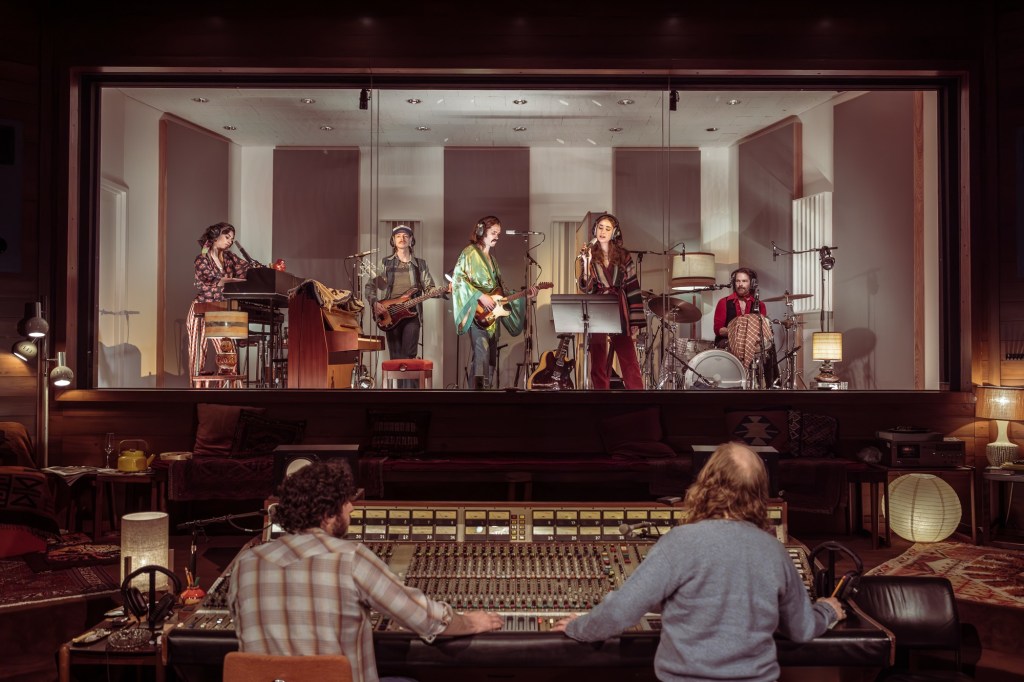
    Max Bowden and Paul Jacob French, photograph by Pamela Raith

    MIDNIGHT COWBOY

    Book by Bryony Lavery

    Music and lyrics by Francis ‘Eg’ White

    based on the novel by James Leo Herlihy

    Southwark Playhouse – Elephant, London – until 17 May 2025

    running time: 2 hours, 30 minutes including interval 

    https://southwarkplayhouse.co.uk/productions/midnight-cowboy/

    If you like your musicals upbeat and life-affirming then this Bryony Lavery-Francis ‘Eg’ White collaboration probably won’t be for you. But then anybody who has seen John Schlesinger’s acclaimed 1969 film version of the James Leo Herlihy novel will know that Midnight Cowboy is a merciless trawl through the seamy underbelly of New York, so it’s hardly feelgood. As a musical, with a plot that’s literally a stream of worst case scenarios unfolding, punctuated by White’s suitably melancholic Cowpunk songs, it makes Rent feel positively cosy. Personally, I mostly loved it, but then I’ve always been a sucker for a dark musical, and this one is pitch black.

    It’s not without its faults, but the evocation in Nick Winston’s staging of mid-1960s Manhattan as a dingy hellscape populated with desperate chancers and emotional vampires scuttling like beetles between the dark corners where the neon can’t quite reach, is tremendously powerful and entirely in tune with Herlihy’s bleak original vision. Crucially, Midnight Cowboy never falls into the trap that befell the Arlene Phillips-led Saturday Night Fever whereby the tropes of exhilarating, mass-populist musical theatre were grafted, Frankenstein’s monster-like, onto a fairly brutal tale of social deprivation and the desire to escape dead-end existences. Nope, here the the nihilism and sheer seediness are given full rein and honestly, it’s pretty hard to take at times, but it’s seldom less than engrossing. 

    Inheriting Jon Voight’s cowboy boots as deeply damaged country boy-turned-hustler Joe Buck, newly arrived in the big city and aiming to monetise his potent sexuality and increasingly shopworn charm, is Paul Jacob French. It’s a difficult role – much of Joe’s behaviour is appalling but the naivety and even kindness beneath the disaffected stud exterior has to be discernible or none of the story makes sense – and French absolutely nails it. He has a careless sex appeal tempered with a laser-sharp focus that quickly flips into grasping desperation when things don’t go his way (which they seldom do). He’s a child in a man’s body (an impression confirmed in Lavery’s script by repeated flashbacks to an upbringing blighted by neglect and leavened by sex), cynical yet vulnerable with the uneasy threat of violence never more than one or two setbacks away. He has a powerful, rangy singing voice and applies a C&W yelp which suits White’s music perfectly. 

    Equally astonishing is former EastEnders star Max Bowden as Rico ‘Ratso’ Rizzo, the disabled, sickly grifter that sees Joe as a meal ticket out of the stews of New York and off to the sunlit beaches of faraway Florida where he mistakenly thinks all his problems will be solved. Bowden is so truthful and vivid as this pitiful product of privations and the brutal streets that he all but obliterates memories of Dustin Hoffman’s Oscar-nominated turn in the film. Both Bowden and French are delivering unforgettable, career-redefining work here. 

    A hat-trick of sensational central performances is completed by Tori Allen-Martin doubling as a glamorous, manipulative Park Avenue type who spectacularly turns the tables on the hapless Joe, then as a marginally more wholesome woman he later picks up at a drug-fuelled party. Allen-Martin’s iridescent star presence and glorious voice elevates every scene she’s in; she’s so good that you barely notice that her second act solo, the lilting ‘Good Morning Joe’, while lovely, feels like filler.

    The well-crafted songs often have a sweetness that work in powerful counterpoint to the grimness of the action: both acts end with ‘Don’t Give Up On Me Now’, a lyrical, haunting affirmation of positivity that is heart-breakingly ironic given the squalor and sadness of the protagonists’s predicament. At other times they have a rumbling, menacing energy that is more obviously apposite to this carnival of sleaze and misfortune. Lavery’s writing is punchy and engaging, with many straight lifts from the original text that work superbly well, and the turning-full-circle nature of the storytelling (Joe’s blood-soaked appearance in the opening scene is explained near the end of act two, and it ain’t pretty) is satisfyingly theatrical.

    Nick Winston’s consistently well-acted, sometimes shockingly sexy, production has a compelling fluidity suggestive of a swirling nightmare unfolding, although you need to be sitting centrally to appreciate it properly. His choreography is disappointingly generic, and a bit modern, often feeling a little too clean and executed with too much polish to be really effective. Ultimately, this matters surprisingly little given that when the two men are front and centre, the show is dynamite. 

    The supporting cast is faultless, even if some of their contributions seem surplus to the requirements of the raw meat of the main story. That’s certainly not true though of Rohan Tickell and Matthew White both of whom turn in brilliantly judged studies of tortured souls in limbo that begin as sexual predators but end up as victims, essential to our understanding of the way Joe operates. 

    Where the show is devastatingly effective is in its sense of the alienation and dehumanisation of the big city. I was occasionally reminded of the much missed (by some), hugely divisive American Psycho musical. Lavery’s script also suggests, with clear-eyed compassion, how a combination of bad luck and worse choices can so easily cause lives to spiral into degradation and despair. Impressively, despite what they get up to, neither Rico nor Joe entirely lose our sympathy, and the ending is genuinely moving. The unusual placements of songs and emphasis are so quirky, and feel like valid creative decisions rather than incompetence, that when a more traditional number arrives, such as the party scene ‘Here Comes The High’, it’s a bit of a surprise in what is almost an anti-musical.

    Charlie Ingles’s orchestrations and band are wonderful, and sound period-specific, and all of the singing is excellent. Visually it’s a gloomy, stark show, almost monochromatic but stylish, and there’s a strong impression that designers Andrew Exeter (set and lighting), Sophia Pardon (costumes) and Jack Baxter (video) are all singing from the same grungy urban hymn-sheet.

    One could perhaps ask why this story is being told right now, but man’s inhumanity to his fellow man and the monetisation of sexuality are timeless themes, and it’s commendable how uncompromisingly the musical cleaves to Herlihy’s compassionate hopelessness. It’s rare to see a tuner that, for the most part, really delivers on the courage of its convictions. It definitely won’t be for everyone: it’s raw, sometimes nasty, but impressive, a musical odyssey for grown-ups, with little glitz or even hope, but French and Bowden’s battered losers will haunt your dreams, and so I suspect will some of White’s songs. I enjoyed it considerably more than many conventional musicals.

    April 19, 2025

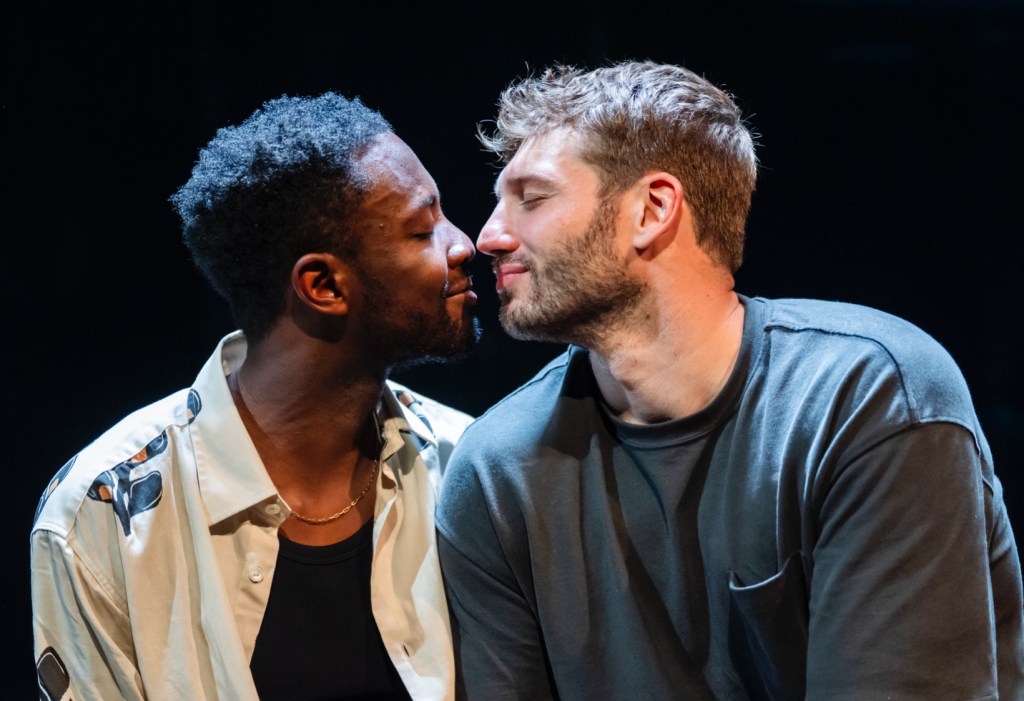
  • SUPERSONIC MAN – ⭐️⭐️⭐️ – promising new British musical that thinks outside the box

    Dylan Aiello and Dominic Sullivan, photograph by Louis Burgess

    SUPERSONIC MAN 

    written and directed by Chris Burgess

    Southwark Playhouse – Borough, London – until 3 May 2025

    running time: 2 hours, 15 minutes including interval 

    https://southwarkplayhouse.co.uk/productions/supersonic-man/

    This is a real original: a brand new British pop musical about a subject that one wouldn’t normally expect to sing and dance. If Supersonic Man hits the stage, in creator Chris Burgess’s own production, looking more like a work-in-progress than a fully developed piece, it is still refreshing to come across a new tuner with intelligence and, like its principal character and the real life human who inspired him, a genuine sense of thinking outside the box.

    It’s very loosely based on the astonishing story of Peter Scott-Morgan whose motor neurone disease diagnosis prompted him, via a series of operations and cutting edge technology, to reinvent himself as a ‘human cyborg’ able, for a time, to communicate, exert control and have some physical autonomy over his rapidly failing body. Scott-Morgan was also one half of the first legally recognised gay marriage in England, and was the subject of a 2020 Channel 4 documentary and a self-penned memoir, Peter 2.0.

    That first aspect of Scott-Morgan’s tale is so remarkable that it could only be true but, interestingly, Burgess doesn’t go down the biography route, instead using it as the jumping-off point for a contemporary musical strong on human interest, drama and some surprising zany humour. This is one of several unexpected artistic choices that, even if they don’t all land, bespeak of a creative talent with a bold imagination and a rock solid literacy in musical theatre conventions.

    Burgess’s hero Adam (played with attack and a commendable lack of sentimentality by Dylan Aiello) is very much a gay Alpha Male: witty, bolshy, sexually voracious and living life to the full when he receives his devastating diagnosis. A fast-moving opening section establishes the hectic social whirl he enjoys in Brighton with his partner Darryl (a dashing Dominic Sullivan). It’s poignant watching this in the same week that the theatre world lost William Finn as there seems a direct through-line from Finn’s AIDS-era masterpiece Falsettos which depicted functioning gay lives and community decimated by the unexpected intrusion of terminal illness, except that in the case of Supersonic Man it’s the challenges of progressive neurological disorders that characterise MND.

    Adam is a fighter though and Burgess as writer and Aiello as actor have the courage to make him less than sympathetic a lot of the time as he barks, rails and sasses against the unfair hand that life has dealt him. There is real bite and the tang of emotional authenticity in the scenes where Adam vents his frustrations at Sullivan’s likeable Darryl. 

    The absence of schmaltz is admirable but, in its present form, the show’s gear changes between hard-hitting, superbly written domestic tragedy, off-the-wall humour (Adam’s friends treat his condition with a flippancy that sometimes borders on insensitivity) and flights of fantasy (there’s a number with Adam in full metallic robot mode that needs to be seen to be believed) are too abrupt. I feel as though the production and writing either need to coalesce more into a uniform style or make the differences between Adam, Darryl and their friends’s private anguish and the cartoon-like grotesquerie of other figures they encounter (a monstrous TV producer is hilarious on first appearance but becomes tiresome, the “boffins” responsible for the scientific side of Adam’s treatment are like first cousins to Despicable Me’s Minions) way more pronounced. 

    Still, the show is often genuinely funny and when it aims for seriousness it’s seldom mawkish and is disarmingly matter-of-fact, prompted probably by Adam’s determination to never, bar a few understandable wobbles, feel sorry for himself. The rather rudimentary sound design makes it hard to decipher a lot of the lyrics, but the book scenes fare better. The references to the late Stephen Hawking, a public figure with a life trajectory that Adam would like to see for himself, feel a little shoe-horned in at present but they are undoubtedly pertinent to the story being told.

    Burgess is a gifted, eclectic tunesmith, and many of the numbers really hit home, but there are just too many styles and allusions to showbiz musical conventions for the score to fully resonate. It’s certainly fixable, it just feels as though it needs some judicious streamlining, and possibly cutting a couple of extraneous songs. Musical director and orchestrator Aaron Clingham works hard as a (literally) one man band , but the combination of ‘live’ keyboard with other instruments on backing track inevitably means that the music is robbed of a certain amount of immediacy, despite the game, if not always accurate (at least on press night), vocal efforts of the cast.

    I really liked Jude St James as the truth-talking best friend who’s a former nurse and James Lowrie brings welcome jolts of energy as the free-spirited Brighton newcomer who hooks-up with the central couple but then rather improbably ends up as Adam’s social media campaign manager when his story garners public attention, and he excels delivering Philip Joel’s choreography. Mali Wen Davies has some highly amusing moments as an emotionally invested close mate.

    This feels more like a workshop presentation, albeit one with a run of just under a month, than a fully fledged realisation of what Supersonic Man could be. It’s worth catching to see an ambitious new British musical, one with brains, imagination and heart, in its fledgling state. Chris Burgess is clearly very talented and it is to be hoped that this often charming, sometimes astonishing show gets the development and fine tuning that it deserves. 

    April 13, 2025

  • SPEED – ⭐️⭐️⭐️⭐️⭐️ – hilarious and thought-provoking, this brilliantly observed new play is a triumph

    Photograph by Richard Lakos

    SPEED 

    by Mohamed-Zain Dada

    directed by Milli Bhatia

    Bush Theatre, London – until 17 May 2025

    running time: 90 minutes no interval 

    https://www.bushtheatre.co.uk/event/speed/

    If you initially think the trio of British Asians in a Birmingham Holiday Inn basement to participate in a course for speeding and aggressive drivers in Mohamed-Zain Dada’s new play, fits a little too neatly into stereotypes then prepare to have your preconceptions blown out of the water. True, in brashly confident CEO Faiza (Shazia Nicholls), the kind of woman who responds with cheery thanks when told she doesn’t look Pakistani, feisty Brummie nurse Harleen (Sabrina Sandhu) and mouthy, streetwise “aspiring entrepreneur” Samir (Arian Nik), Dada presents a set of people that feel familiar, albeit crafted with palpable affection and some laugh-out-loud funny dialogue. But over the course of ninety excoriating minutes, the characters and indeed the play itself undergo satisfying transformations. 

    It’s true also that at the outset, with the contrasting “types” and various clanging social faux pas, that Speed is occupying sitcom territory, albeit at the wittier end of the generic spectrum. That impression’s reinforced when the disgraced drivers have to sit through an excruciating motivational video put together by course leader, suited and booted, uber-serious Abz (Nikesh Patel), whose unwittingly hilarious opening gambit is “driving is not a human right, it’s a privilege”. 

    There are clues in XANA’s intermittently unsettling sound design and Jessica Hung Han Yun’s changeable lighting that uptight Abz is suffering from some sort of PTSD, and every time he leaves the space he returns slightly more dishevelled than on his last appearance. Patel unravels brilliantly, and Tomás Palmer’s appropriately soulless conference room set springs a few surprises to hasten along his increasing distress. 

    Milli Bhatia’s exquisitely judged, bracingly energised production is entirely in tune with the shifts in tone and emphasis, and is wonderfully acted throughout. Nik’s Samir is an endearing combination of bravado and vulnerability, and is helplessly funny right up until the unfolding action takes that possibility away from him. Sandhu fully convinces as a tough but kind young woman juggling family responsibilities and a gruelling job where she’s routinely under appreciated, and delivers sardonic one liners like an old pro.

    Thankfully, Dada resists the obvious choice to make money-obsessed go-getter Faiza a nasty piece of work; she’s often crass for sure, and insensitive, and eye-wateringly un-self aware at times (“I think I’m here because I’m misunderstood…I don’t get angry at people, people get angry at me”), but she’s not a monster. In fact, she’s strangely lovable in a toe-curling sort of way. Nicholls is a sublime comic actress and plays her with gimlet-eyed relish, never funnier than when passively aggressively conveying her dismay at having to be present on this mandatory course (“you realise, my absence could have an impact on the economy?”) or pitifully sobbing “I was building generational wealth” when she realises she’s embroiled in something way out of her comfort zone. 

    Dada is a cracking writer. The dialogue here is zingy, smart but sensitive, and the building (and breaking down) of characters is beautifully done, as is the manipulation of tension. The play also delivers some uncomfortable truths about what it means to be Asian in present day Britain, and almost miraculously it doesn’t feel grafted on, but genuinely organic. Comic exuberance and trenchant social commentary are larded together with real skill here. The Asian heritage of these four people is never over-amplified but it is an essential part of what Dada has written.

    Speed is that rare beast, a comedy thriller that succeeds in being extremely funny and authentically thrilling. It’s crazy, entertaining, mercilessly well observed…and should be at the top of everybody’s list of must-see new plays.

    April 10, 2025

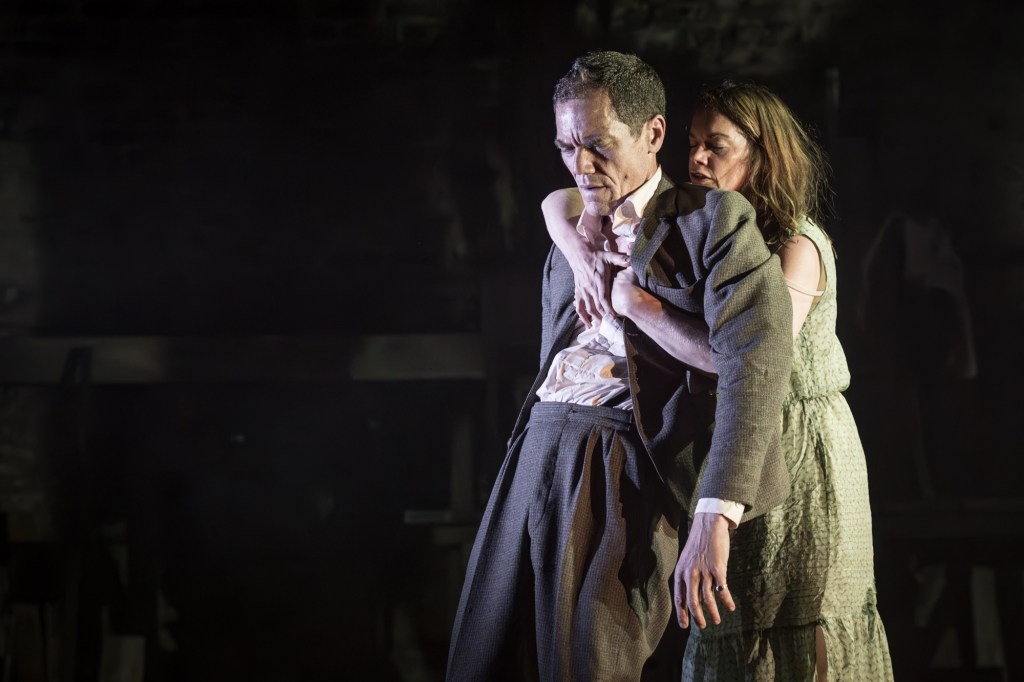
  • MANHUNT – ⭐️⭐️⭐️⭐️ – Robert Icke’s tantalisingly ambiguous portrait of a killer

    Photograph by Manuel Harlan

    MANHUNT 

    written and directed by Robert Icke

    Royal Court Theatre, London – until 3 May 2025

    running time: 95 minutes no interval 

    https://royalcourttheatre.com/whats-on/manhunt/

    Toxic masculinity and the long term effects of a traumatic childhood are under the microscope in Robert Icke’s Royal Court debut. The title Manhunt is ambiguous: on the one hand it refers to the extensive 2010 police search for Northumberland murderer Raoul Moat, which is the central focus of this intense, unusual play. But there’s potentially an alternative meaning, which is the quest and struggle that male-presenting humans have to face in order to understand what actually makes a man. 

    Icke is best known for his world-beating contemporary adaptations of the classics which reached an apotheosis with his multi-award winning Oedipus (set to go to Broadway this autumn). Here though he is onto something quite different. Serving as director and writer, he seems to be interested as much in the circumstances and experiences that combine to create a hyper-violent criminal as in the specific case of Moat himself, who famously waged war on the police after murdering his ex-girlfriend’s new partner who he mistakenly believed to be in the force before maiming his ex. As described by one of the characters here, he ended up wandering the Northumbrian countryside “like a Frankenstein’s monster with a sawn-off shotgun” before turning the weapon on himself after a six hour stand-off with police. 

    It’s a grim tale played out on a metallic grey stage (set by Icke’s regular collaborator Hildegard Bechtler) with the masterful manipulation and combination of sophisticated technical elements that typifies Icke’s work as a director. The aesthetic is characteristically spare and cool, with a surprising scenic transformation near the end. Ash J Woodward’s video contributions, whether spying on Samuel Edward-Cook’s dangerous Moat from above as though he’s under surveillance, or giving the audience regular reminders of the date as the action ticks down to the final catastrophic showdown, is a dazzling, essential contribution. So is Tim Gibbon’s sound design which brews an atmosphere of shuddering suspense, making vivid the contrast between the often distressing content of the script and the banal popular music that accompanies it. The silences, when they come, are telling and powerful.

    The writing is perhaps less satisfying than the bravura staging. The play is a cats cradle of viewpoints and situations, eschewing linear storytelling for a dynamic ricochet around Moat’s troubled history, set in motion by an imagined court appearance where the fugitive is defending himself against past misdemeanours. There are distressing scenes of domestic violence and parental neglect but also a surprising  lurch into sentimentality as a child comes on to represent a youthful Moat, while another plays his daughter. Icke even presents the notorious moment when footballer Paul ‘Gazza’ Gascoigne attempted to break through Moat’s standoff with the police. It’s written here as a funny but unsettling man-to-man therapy session (brilliantly played by Trevor Fox) that unravels alarmingly, although the actual event is even more bizarre, with the former sportsman turning up high on coke and offering to take Moat fishing. 

    The ambiguity is all. It’s never clear if Moat ever did make the requests for mental health support that he claims were ignored, and which could have helped steered his life in a different direction. He also claimed to be of French origin and bilingual but that isn’t confirmed. Neither is the identity of the man who purports to be his long-absent father (Nicolas Tennant, strangely moving) who comes to talk him down when he’s in direst trouble. All of this lends the evening an elliptical shape that intrigues but also slightly confounds. 

    A lengthy section set entirely in pitch darkness commemorates PC David Rathband who was blinded by Moat in an attack and ended up taking his own life. It’s a striking, affecting sequence, with a devastating vocal performance by Tennant) but it unhelpfully renders everything prior to it as a little clichéd, despite the exciting staging, while what comes later as the play hurtles towards its harsh conclusion is much more interesting. The suggestion that Moat had to turn violent to make people take note is probably the most unsettling thing the play throws up…is bad behaviour the only way some men can signal their issues?

    Clearly Icke and his artistic adviser, journalist Andrew Hankinson who wrote the book that inspired this project, are interested in what makes such a person as Raoul Moat tick. It’s certainly a fascinating subject and the lack of preemptive judgement is to be commended, but the glow of the footlights inevitably lends the subject a certain Bonnie and Clyde-style glamour, especially as played by the charismatic Edward-Cook. This muddles the creative intentions somewhat as we in the audience aren’t given sufficient leads to make fully informed conclusions, and the bathos in the text further obfuscates what they’re getting at. Are we supposed to feel sympathy for Raoul? Should we be raging at the failures of the welfare state? 

    Regardless of these niggles, this is affecting, stirring theatre. Technically it’s wonderful and the multi-rolling cast acquit themselves with a fine combination of attack and finesse. Whether or not it changes one’s opinion on Moat is a question, and one you’re likely to be mulling over long after the curtain comes down. If Robert Icke is a more accomplished director than a writer, he remains one of British theatre’s most iconic talent, and Manhunt is already, and inevitably, a very hot ticket.

    April 9, 2025

  • (THIS IS NOT A) HAPPY ROOM – ⭐️⭐️ – rising star Rosie Day writes and stars in uneven family tragicomedy

    Rosie Day and Jonny Weldon, photograph by Mark Senior

    (THIS IS NOT A) HAPPY ROOM

    by Rosie Day

    directed by Hannah Price

    King’s Head Theatre, London – until 27 April 2025

    running time: 90 minutes, no interval

    https://kingsheadtheatre.com/whats-on/14/by-rosie-day/this-is-not-a-happy-room

    Writer and actor Rosie Day won popular and critical acclaim for her (almost) solo show Instructions For A Teenage Armageddon in which she tackled the repercussions of abuse and the sheer bloody awfulness of being a hormone-crazed youth struggling to connect. Now she’s back with even more potentially relatable trauma but this time via a fractured family united for a wedding that swiftly, and implausibly, turns into a funeral, in a ninety minute tragicomedy that frustrates as much as it delights.

    (This Is Not A) Happy Room gets off to a cracking start. Day (in a performance not dissimilar to what she delivered in her earlier show), Jonny Weldon and Andrea Valls play a trio of bickering siblings gathered together in a hideous Blackpool hotel to “celebrate” their Dad’s wedding (there’s some conjecture as to whether it’s his third or fourth) to a younger woman. The writing’s combination of gallows humour and barely suppressed venom suggests an acidic modern Ayckbourn at work. If Day’s characters are more collections of neuroses and symptoms than fully fledged humans, the performances are engaging enough and the zingers funny enough that it’s hardly noticeable….at first. 

    Where the wheels start to come off is when the script seeks to make serious points about the long term effects of childhood abandonment with the arrival of the grown-up children’s mother (Amanda Abbington doing sterling work in an underwritten role). The humour gives way to a tsunami of psychobabble that instead of illuminating the characters, instead serves to make them more self-absorbed, and strangely less convincing. Even less believable is the way an upcoming wedding is repurposed with barely any notice into a funeral, and the arrival of the bride-to-be’s cousin (Jazz Jenkins, sparky), who conveniently works in mental health and is somehow dating Weldon’s chronic hypochondriac son. 

    There’s often something bleakly funny about a family in turmoil, as long as it isn’t your own, and Day clearly understands that, but there’s an unbridgeable gulf between the comic writing and the less successful, more serious stuff. So, despite the energised efforts of the actors in Hannah Price’s pacy production, the play becomes more laboured as it draws on and the characters reveal themselves to be less and less likable. The show ends on a particularly heartless bombshell, which I won’t reveal here, that leaves a nasty taste in the mouth but neither illuminates nor enhances anything we’ve seen before, especially as these individuals are pretty hard to care about.

    Some sections work well however, such as when Day’s actress daughter Rosie starts a funeral eulogy that, to the appalled amazement of herself as much as the other bewildered guests and participants, turns unstoppably into a recital of the lyrics to Steps/the Bee Gee’s pop hit ‘Tragedy’. Or the wildly inappropriate (under the circumstances) references to Philip Larkin’s ‘This Be The Verse’: “They fuck you up, your mum and dad”. Watch also Abbington’s hilariously uncomfortable physical reaction to the news that the interloper into the family gathering is a therapist (“I don’t believe in therapy”). There’s endearing work from Tom Kanji as the elder daughter’s goofy husband and, in a professional debut at an advanced age, Alison Liney as a benignly unaware great aunt in the grip of dementia, although one can’t help but wish Day’s writing around this tricky subject was a little more nuanced.

    Ultimately, this is an undemanding bit of theatre, made watchable by the work of a bunch of consummate professionals. But as a piece of writing it feels like it’s several drafts away from being a decent play.  

    April 5, 2025

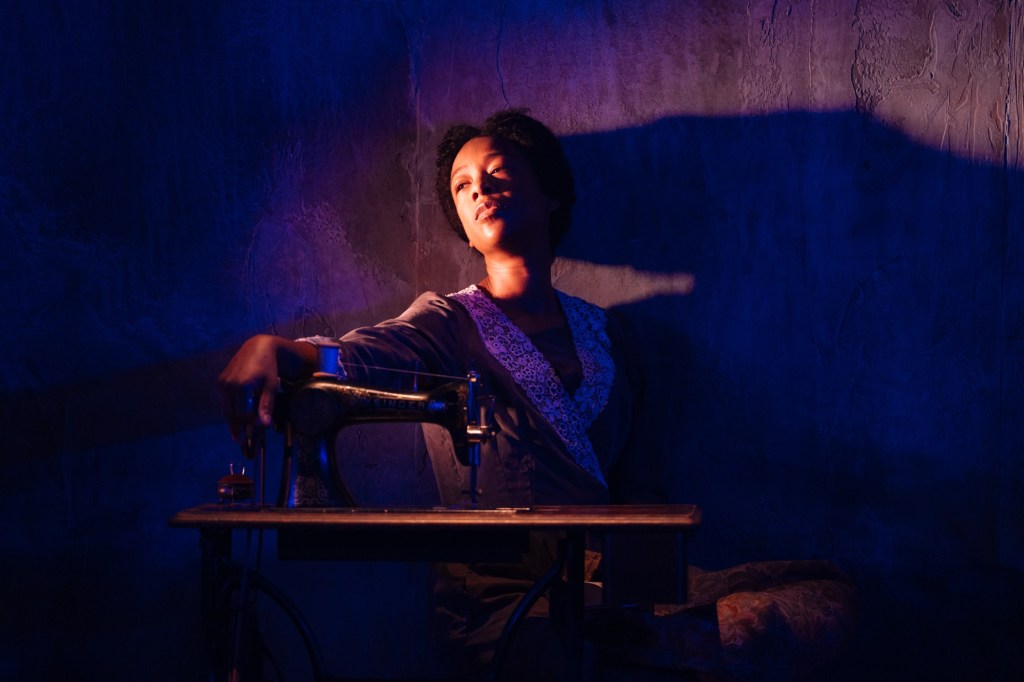
  • THE WOMEN OF LLANRUMNEY – ⭐️⭐️⭐️ – compelling but uneven Welsh slave drama provokes authentic outrage

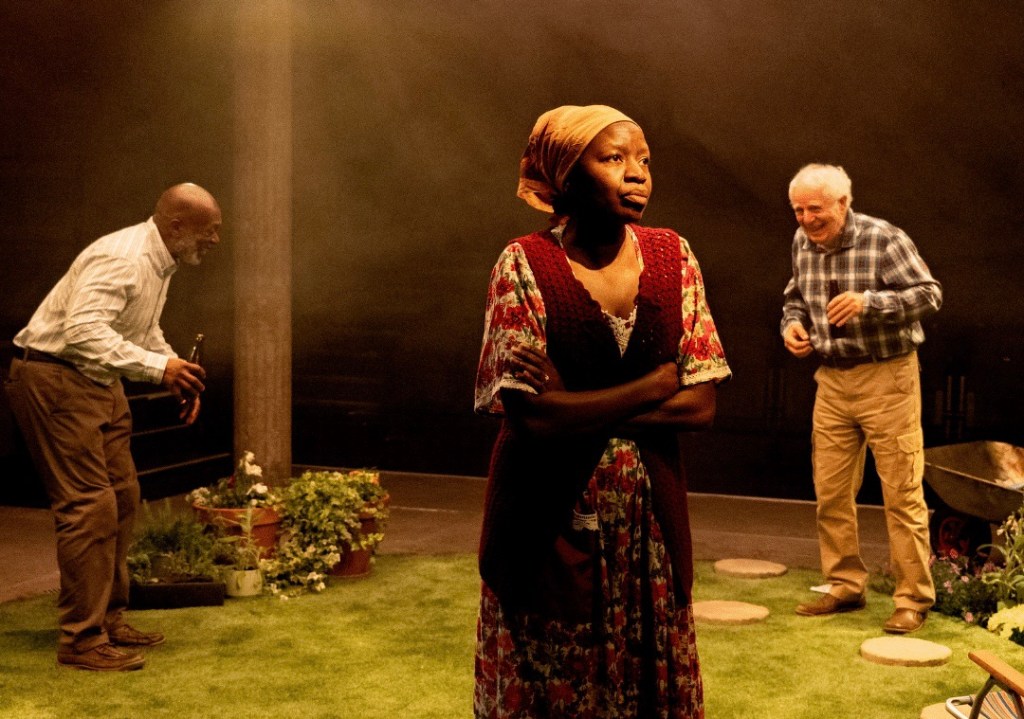
    Shvorne Marks (Suzanne Packer in background), photograph by Chuko Cribb

    THE WOMEN OF LLANRUMNEY

    by Azuka Oforka

    directed by Patricia Logue

    Theatre Royal Stratford East, London – until  12 April 2025

    running time: 2 hours, 15 minutes including interval

    https://www.stratfordeast.com/whats-on/all-shows/the-women-of-llanrumney

    The participation of Wales in the international slave trade is a curiously underexplored subject, despite the fact that one of the principality’s most notorious sons of the 17th century, Sir Henry Morgan, was governor of Jamaica for several years and so would have directly benefited from the servitude and exploitation of countless Black souls. Azuka Oforka’s interesting new play The Women of Llanrumney, playing a brief London season after premiering last year at Cardiff’s Sherman Theatre, while not an unqualified success, is to be applauded for shedding a stark light on this traumatic tranche of shameful history. 

    Set on the Llanrumney plantation (named after an area of the Welsh capital) in Jamaica, it’s a tale of brutality, humiliation and betrayal, the stuff of meaty drama. It has moments of brilliance and certainly pulls no punches in its descriptions of the inhumane horrors that slaves endured while working in the sugar cane fields and mills, yet it remains frustratingly inert as a piece of theatre. Oforka’s script derives much of its power from its retelling of the vile cruelties serving women Annwyn (Suzanne Packer) and Cerys (Shvorne Marks) have borne witness to, their Welsh first names a direct reference back to the master who controlled them. Some of the descriptions are truly, and necessarily, horrible, but the constant storytelling at the expense of action becomes wearisome.

    The three female characters – Annwyn -Annie for short- the middle aged mixed heritage housekeeper who upgraded from slavery to domestic service and is determined to hold on to her position at all costs, her darker-skinned daughter Cerys, rebellious and hungry for change, and their mistress Elizabeth (Nia Roberts), debt ridden, privileged and grossly insensitive – fall rather too neatly into a trio of archetypes. One is afraid to destroy the old order as that may take away what little comfort there is in her life, the second knows that freedom is hard won but is worth making sacrifices for, and the third reaps the rewards of slavery so will never willingly relinquish the reins of power. Putting women firmly at the centre of this examination of this worst of humanity is a tremendous idea and, at its best, The Women of Llanrumney leaves you with no doubt about the fire in its belly, but it’s all a little too on-the-nose, especially when the play lurches into full on melodrama in the second act.

    Patricia Logue’s production, played out on a too-pristine set by Stella-Jane Odoemelam that nonetheless suggests a tropical homestead, with green foliage sprouting everywhere and illuminated portraits of dead masters staring down from the walls, is a little rough around the edges. This manifests mainly in a quartet of uneven acting performances. Packer, one of Wales’s finest actresses, suggests with wonderful economy the pain behind Annie’s haunted, fearful eyes but pushes her desperation a little too hard from the outset so that her final outburst as all hell breaks loose around her doesn’t have as much impact as it might. She’s still a powerful presence though.

    Roberts is another superb actor but her Elizabeth feels like a misfire, a shrill, rouged, powdered brat, first cousin to Miranda Richardson’s Queenie from TV’s Black Adder but with a mouth like a docker. Initially she bowls on like the comic relief but as the play progresses one becomes acutely aware of how deeply unpleasant and mendacious this woman is. The problem is that Roberts isn’t allowed to develop the characterisation much beyond the fruity voiced comic charlatan so, even at her worst, she’s never as dangerous and chilling as she really ought to be. Only Marks, terrific as watchful, scornful Cerys, gets the tone absolutely right, and the final conclusion for this fierce young woman is an authentic gut punch. Matthew Gravelle, the sole man, does creditable, dexterous work as three contrasting  characters who are more plot devices than fully fledged humans. As the play’s title implies, it’s the women that are the focus here.

    Oforka makes valid points about how extreme circumstances can turn morality and culpability into luxuries, and galvanises the play towards a righteously exciting climax. The naked racism in some of the dialogue is pretty hard to listen to, but is essential to appreciate the milieu in which these women existed. It’s an uneven piece of theatre but it provides plenty to mull over, and the causes and aims of its fury and outrage are never in doubt, and it’s fascinating to see another angle on a lamentable tranche of human history. 

    April 3, 2025

Previous Page Next Page

Blog at WordPress.com.

Loading Comments...

    • Subscribe Subscribed
      • ajhlovestheatre
      • Join 59 other subscribers
      • Already have a WordPress.com account? Log in now.
      • ajhlovestheatre
      • Subscribe Subscribed
      • Sign up
      • Log in
      • Report this content
      • View site in Reader
      • Manage subscriptions
      • Collapse this bar