A VIEW FROM THE BRIDGE
by Arthur Miller
directed by Lindsay Posner
Theatre Royal Haymarket, London – until 3 August 2024
https://trh.co.uk/whatson/a-view-from-the-bridge/
It has been over nine years since Ivo van Hove ripped up the rule book on staging Arthur Miller with his spare, almost clinical take on A View From The Bridge, which sold out at the Young Vic, in the West End and on Broadway. Astonishing and refreshing as that was, it’s great to see a more traditional, only marginally less powerful version, such as Lindsay Posner’s riveting Theatre Royal Bath production, in London for a limited season and seriously beefing up the capital’s current dramatic offerings.
Posner lets the play speak for itself, mining it for all its rueful, tough-talking humour and aching, erotically complex subtext. The result is a tense, transporting evening in the theatre, one that grips like a thriller and which, although seasoned theatregoers will most likely know how it all plays out, has you on the edge of your seat hoping that this time it’ll turn out differently for Brooklyn longshoreman Eddie Carbone, his tragically devoted wife Beatrice, beloved niece Catherine and the Italian family members newly arrived in America in search of a better life… of course it doesn’t, but the journey to the emotionally shattering conclusion is as nail-biting here as it’s ever been.
It’s also funnier than usual iterations of this American classic, which admittedly pays mixed dividends. While Dominic West finds sly, dark comedy in a lot of Eddie’s mutterings and Martin Marquez invests the troubled lawyer Alfieri with a glorious, garrulous wit, several members of the press night audience, though it’s not clear whether from generous fortification from the bar or misjudging the mood of the play, seemed to find hilarious certain moments that are intended to shock, such as the horrible, tense kisses Carbone plants on first Catherine then the guileless Rodolpho who he believes is about to steal his niece away. They also roared inappropriately at some of the lines delivered by Callum Scott Howells’s heavily accented Rodolpho. On the upside, you could hear a pin drop later as the play hurtles towards its blood-soaked, tear-stained finale.
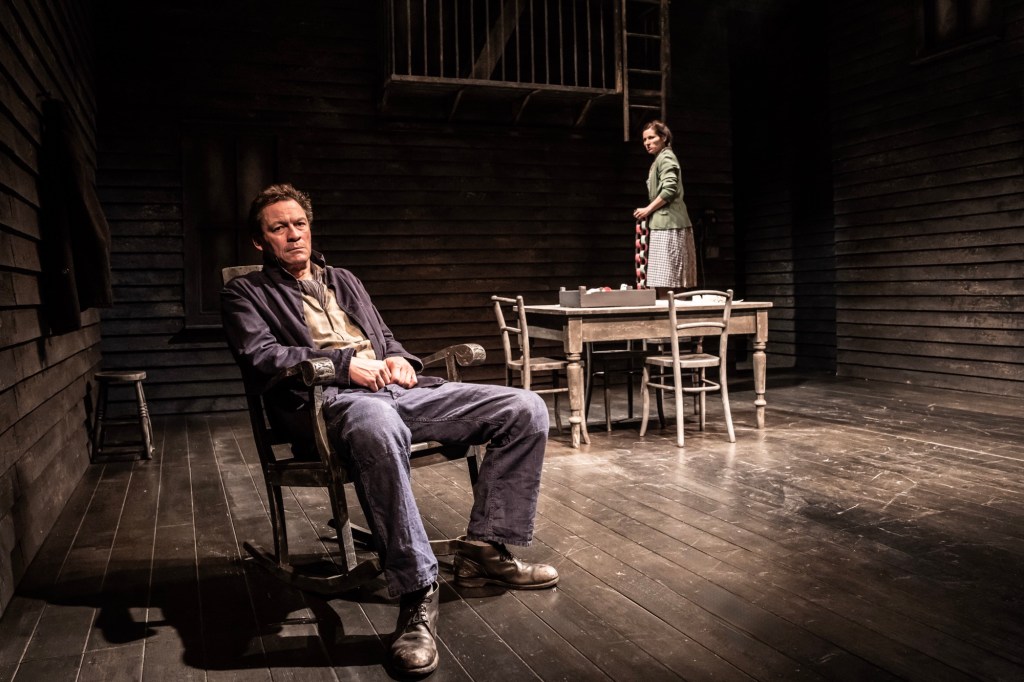
West is a magnificent Eddie, more amiable and youthful than many of his predecessors, and with a winning emotional openness that charts all too precisely the character’s descent into despair and distress. At the end, he’s like an injured bull thrashing about, blinded and broken by his own folly and shame. Opposite him, Kate Fleetwood struggles a bit with the accent and has a slightly uncertain act one but rises thrillingly and upsettingly to the high stakes drama of the second half. Her restless hands placating then pleading, her sharp features and glittering eyes bespeaking years of unspoken understanding, she makes something fine and urgent out of Beatrice’s loyalty and fury.
Nia Towle’s Catherine is unforgettable as she transitions from subservient, doting child to empowered woman, investing her with a sensuality, kindness and maturity that feels unforced but entirely convincing. Howells captures Rodolpho’s goodness but little of his physical magnetism, and has a tendency to ham it up. West and Towle aside, the most impressive performance is in a role that usually feels like a comparatively minor figure: Pierro Niel-Mee brilliantly charts a devastating course for Rodolpho’s older brother Marco from deference to his American relatives through brooding, contained self-belief to, finally, white hot vengeful rage. I’ve never seen the role performed with so much nuance and power, truly remarkable.
Technically, the whole staging is immaculately done, if seldom surprising, but that’s not a problem when the play itself is this good. Miller’s muscular, poetic writing is beautifully served. Peter McKintosh’s tenement setting, all metal and echoing wood, is simultaneously claustrophobic and monumental, and it’s atmospherically lit by Paul Pyant. Ed Lewis portentous music, liberally used throughout, matches the sometimes melodramatic hues of the text.
The compassion for, and understanding of, the flaws that make up a human, that course through this fine, brutal play ensure that it never seems to date. It’s about passion, jealousy, compromise, family: it’s the ‘big’ stuff boiled down to compelling domestic tragedy, and it’s wonderful and moving to experience it again in this excellent production.
 ajhlovestheatre
Leave a comment