HIR
by Taylor Mac
directed by Steven Kunis
Park Theatre, London – until 16 March 2024
https://parktheatre.co.uk/whats-on/hir
Long before she became an award-winning television star as flawed high achiever Lynette Scavo in Desperate Housewives, Felicity Huffman was primarily a theatre actress. Amongst other achievements, she was part of the team that founded acclaimed NYC new writing powerhouse Atlantic Theater Company and she took over from Madonna in the original production of Mamet’s Speed-The-Plow on Broadway. Watching her mighty performance in this rare revival of Taylor Mac’s muscular, absurdist genderqueer black comedy is a forcible reminder that she is one hell of an actress, and what the stage has been missing.
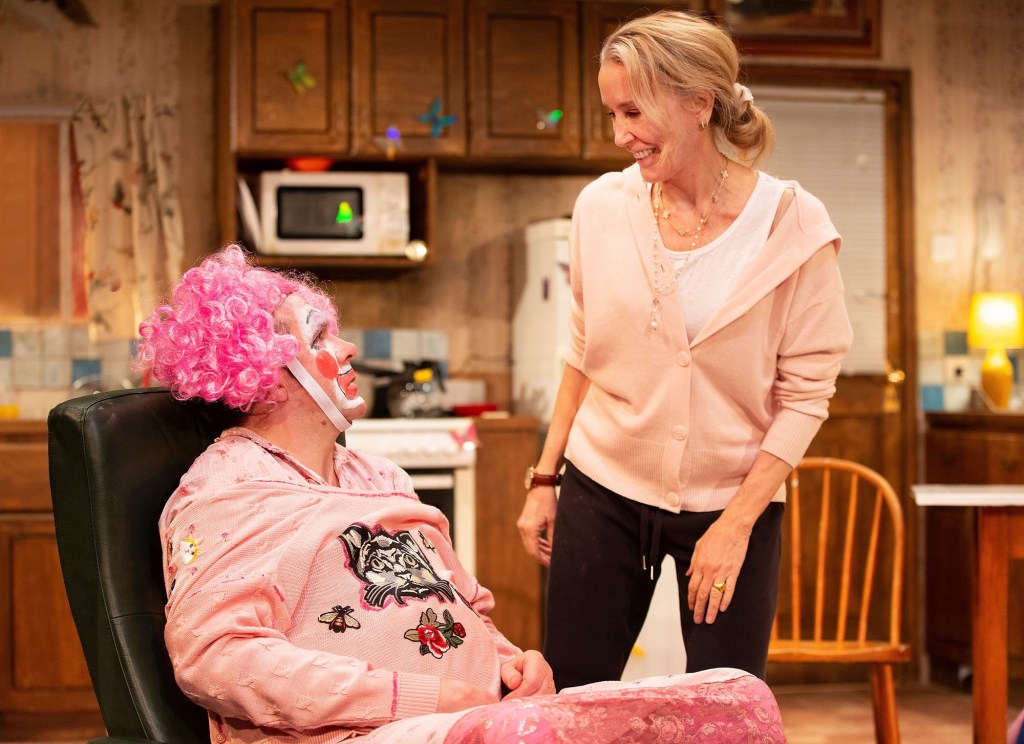
Huffman plays Paige, controlling matriarch of a deeply unconventional family living in a plasterboard house atop landfill in the suburb of an unnamed American city. Eldest son Isaac (Steffan Cennydd) returns home following a dishonourable discharge for drug use after three years of active service, to find that his teenage sister Maxine is now Max (using the pronouns “hir” and “ze”) and educating Paige in all manner of things about the whole new rainbow-coloured world. Meanwhile, their Dad Arnold has suffered a massive stroke, communicates mainly in moans and monosyllables, is made up like a clown, and is kept under control by Paige with meds and regular blasts of liquid from a handy plant watering spray. The Waltons this ain’t.
Mac’s characters are nearer in tone and bearing to the creations of Sam Shepard at their most dysfunctional, and this sort-of hate letter to the small Californian town Mac grew up is at its strongest when it explores just how eccentric people can get when reacting to unusual circumstances. Tellingly, the most grounded, and arguably the most likeable figure is teenage Max (beautifully played by Thalía Dudek), flaunting hir newly developing facial hair with glee, proudly proclaiming a sexual attraction to men and, most touchingly, trying to make sense of the family battlefield exploding on all sides.
Kunis’s well judged, if occasionally over-emphatic, staging gives us a glimpse of the literal battlefield that haunts Isaac as Ceci Calf’s fabulous, almost disgustingly well realised house set (Paige has put a ban on housework since Arnold’s stroke, as a sort of two fingered salute to the patriarchy) undergoes a transformation. It doesn’t really add anything to the trajectory of the play but it’s a striking theatrical moment.
The conversations around gender identity are more familiar to mainstream audiences now than they were when Hir had its London premiere at the Bush, in a rather less nuanced production than this one. Mac’s script now fascinates mainly as a portrait of a family in freefall, how changing circumstances and the passage of time can drive an insurmountable wedge between people. Simple things like using a kitchen blender or controlling the temperature of a room with a/c or indeed leaving everything in a (possibly metaphorical) mess seen as weapons of control and domestic war. The attempts at home entertainment (including shadow puppetry and banjo playing) that this bunch get up to have to be endured to be believed, but you wouldn’t wish them on your worst enemy.
It’s a little exhausting and relentless, despite the efforts of a very fine cast. Huffman is sensationally good. If at first her innate elegance might seem a little at odds with the grungy surroundings, she totally nails this woman’s bizarre combination of wacky eccentricity, implacable righteousness and ice cold vengeance. It’s a complex, psychologically astute, technically brilliant performance and one that will probably see her on every Best Actress award shortlist if this production transfers.
Cennydd, who if there’s any justice should be heading for major stardom, is equally impressive as the young soldier returned home to total bewilderment. He veers between astonished child and macho posturing with seamless, credible assurance, and his breakdown near the end is heartrending, despite everything we’ve seen and heard. I adored Dudek’s wide-eyed, wired Max, vacillating between indignation, compassion and casual teenage cruelty, and Simon Startin invests stricken Arnold with a haunting desolation but offers tantalising, unsettling glimpses of the bullying monster he once was.
There’s a naivety and rawness to Mac’s writing that doesn’t always gel with the finely tuned observations of the dynamics between human beings, but the acidic dialogue and sheer off-the-wall bonkersness of it all ensures that boredom at least is never an option. It’s a messy, scattershot piece of work with moments of genuine power and featuring some unforgettable characters. It’s hard to imagine it being acted better than it is here.
 ajhlovestheatre
Leave a comment