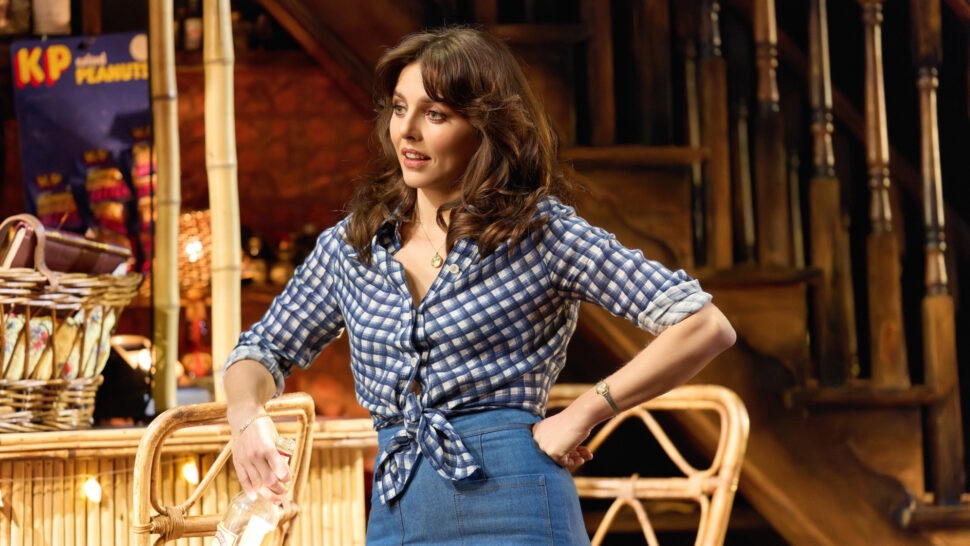
THE HILLS OF CALIFORNIA
by Jez Butterworth
Directed by Sam Mendes
Harold Pinter Theatre, London – until 15 June 2024
https://hillsofcaliforniaplay.com
Jez Butterworth sure likes a long play. His latest, directed by Sam Mendes, clocks in at a full three hours, which makes it shorter than his acclaimed earlier offerings Jerusalem and The Ferryman…but not by very much. Like its siblings, The Hills of California has a fascination with storytelling and the power of invagination to create an escape from frequently fraught lives. Unlike them, it’s a strongly female driven piece, set across two time periods – the 1950s and the freakishly hot UK summer of 1976 – depicting a quartet of sisters, each pretty damaged in their own way.
Despite the title, it isn’t set in California at all, but rather in a rundown Blackpool hotel owned by the sisters’ formidable mother, where every guest room is named after an American state. It’s a theatrical premise ripe with possibilities, and Rob Howell’s gorgeous ramshackle set with multiple staircases rising vertiginously up into the flies offers ample opportunities for eavesdropping or stalking off in a huff. It’s unfortunate though that this is opening so close to another play, and an absolute belter at that, about sisterly relationships in turmoil, Beth Steel’s unmissable Till The Stars Come Down over at the National.
The Hills of California isn’t unmissable: but it contains a lot to enjoy, as well as a certain amount of head-scratching stuff. It’s an unwieldy piece with the bulk of the drama and, to be honest, most of the enjoyment arriving after the interval which comes at the one hour mark. That first sixty minutes aren’t exactly hard to sit through but neither are they particularly compelling. This is a real slow burner, but stick with it as the second and third acts really up the dramatic stakes.
Some of Butterworth’s dialogue is brilliant (Ophelia Lovibond’s Ruby has a bracingly bitter, expletive-strewn speech about the challenges of parenting, observing amongst other things that having four year olds is like living with drunk dwarves, that verges on genius) and the delineation between the way the characters speak in the different time periods is exquisitely done, as is the correlation of personality traits between the older and younger versions of the central sisters. The young women are aspiring singers (excellent work on the musical aspects from Nick Powell and Candida Caldicot) and the play touches on the seedier side of showbiz, and sets the girls mother Veronica (Laura Donnelly) up as a sort of Northern Mama Rose.
The script is at its most intriguing, and most harrowing, when it deals with suggestions of child abuse and the way it stunts lives. The dynamic between the contrasting sisters is convincingly done (and beautifully acted) but there are a couple of details and scenes, usually involving the male characters, that feel extraneous. The Ferryman felt similarly baggy, unless you were a fan of all the Irish tropes, and of all Butterworth’s longer works, I feel that Jerusalem is the only one that truly justifies the punishing running time.
Mendes’s staging includes some surprisingly clumsy blocking, but is flawlessly performed right across the board. Lovibond is a multi-layered revelation as witty but deceptively delicate Ruby. Her comic timing is magnificent and when she ups the emotional ante she sears the heart: it’s a truly wonderful performance. Helena Wilson draws a tender, haunting portrait of the sister left behind to tend to mother and Leanne Best makes something vivid, vital and often hilarious out of flashy, vulgar, opinionated but strangely likeable Gloria. Playing dual roles, Donnelly impressively suggests the steel and the desperation in their flinty mother and captures unerringly the drawling wildness of an Americanised, long absent family member, despite the slightly clichéd ‘1970s hippie chick’ nature of the writing Butterworth has given her.
Lara McDonnell, Nancy Allsopp, Nicola Turner and Sophie Ally do lovely work as the younger versions of the sisters, and are all fabulous singers. Bryan Dick and Shaun Dooley make strong, humorous impressions as the sometimes unfortunate men who loom large in their lives. There isn’t a false note in any of the performances from a large cast.
Hugely watchable though it is, one of the ultimate take aways from The Hills of California is that there’s no essential point to it. There are more urgent dramas about family relationships and the passage of time, and the whole thing could benefit from losing about half an hours playing time. Still, the characters and especially the performances command the attention. It’s not the soaring triumph that the name of the playwright and director might have led one to expect, but it’s certainly not a dud either. Approach with managed expectations and you’ll have a good evening.
 ajhlovestheatre
Leave a comment