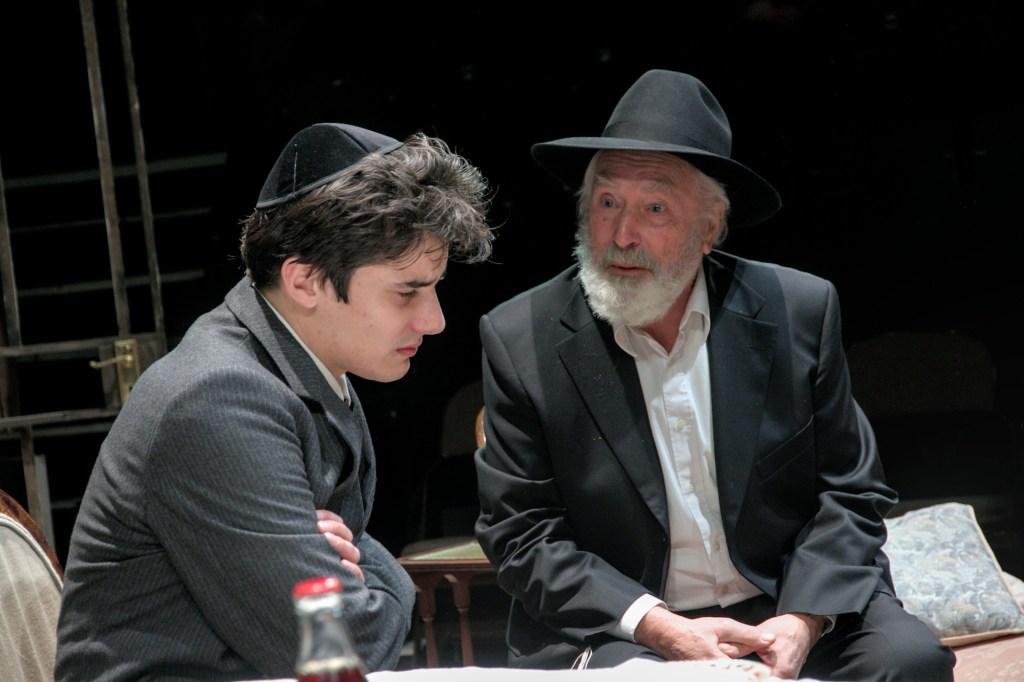
Reviving plays that have been untouched for decades can be a risky business: for every unearthed gem there’s a snooze fest that makes it all too clear why no director has been near it since before the Luftwaffe closed our theatres. Tricia Thorns’ Two’s Company has a better than average track record when it comes to rediscovering dormant dramas however, and Michael Hastings’s Don’t Destroy Me (written, astonishingly, when he was just seventeen) is an enjoyable, intermittently fascinating piece.
Set in a 1956 boarding house where 15 year old Sammy (a convincingly tormented Eddie Boyce) has come to reunite with Leo, his Hungarian Jewish father who sent him away to England as an infant to be brought up by relatives and escape the Nazis. Leo (Paul Rider in a painfully honest performance) has a miserable existence dominated by alcohol abuse and a much younger wife who can barely tolerate him. The Brixton lodging is a predominantly Jewish household, and although the Holocaust is never mentioned, the sense of unspoken trauma and restlessness is palpable in the writing and in Thorns’ frequently riveting production.
Don’t Destroy Me is no masterpiece -for all its truth and vividness, it strangely lacks a focussed centre- but it is remarkable for a first play, and demonstrates a notable ability in a youthful Hastings to swirl together a world of dramatic and literary influences into a tangy, elliptical but mostly satisfying whole. Contemporary to, and reminiscent of, the kitchen sink plays of Wesker and Osborne that revolutionised English drama at the Royal Court in the 1950s, the writing also has a fanciful, poetic quality that suggests a working class London Tennessee Williams.
The ghost of Williams hangs especially heavy over two characters. That’s needy, unstable Mrs Pond, whose lightning fast changes in mood, shady sexual past and eccentric tea-leaf reading present, bespeak of deep emotional trauma or at the very least severe mental health issues, and her smart, highly strung daughter Suki, employing an imaginative fantasy life as respite from her mothers mania and neglect. Nell Williams invests the latter with a compelling mixture of vulnerability and imperiousness.
With her faux genteel accent, dancers physicality and sense of aching, otherworldly sadness, Alix Dunmore’s elegant broken-doll Mrs Pond feels like an English cousin to Blanche du Bois; it’s a haunting, supremely effective portrayal. Nathalie Barclay skilfully navigates a perfectly calibrated line between steel and kindness as Sammy’s youthful stepmother, and Timothy O’Hara brings warmth and menace to the neighbour she habitually breaks her marriage vows with. Rider is wonderful, finding a tragic dignity in the dissolute ruins of Leo’s shattered life, and Nicholas Day does detailed, beautiful work as the kind rabbi invited to what turns into the tea party from hell.
Sue Kelvin is a glorious, gorgeous force of nature as landlady Mrs Miller, the main source of light relief, whose compassion is tempered with shards of self righteousness and a penchant for gossip and judgement. Eddie Boyce and Nell Williams suggest with laudable intensity the power-shifts between the mutually attracted younger pair, each questing to escape their separate painful, traumatised existences.
Alex Marker provides a nice, semi-realistic looking split level set that tantalisingly allows for eavesdropping with its see-through door and partially non-existent walls. The excellence of the acting goes a long way towards diverting attention from the weaknesses of the play. Not much happens and the penchant of some of the characters to communicate in a series of non sequiturs could become tiresome, pretentious even, but somehow never quite does, mainly due to the intelligence and craft of the cast.
If Don’t Destroy Me had been the work of an older writer it could be seen as derivative, and it is pretty overwrought at times, but it shows formidable promise and, particularly in the depiction of tortured Mrs Pond, foreshadows Hasting’s later, more accomplished work in his most famous play Tom And Viv. This well judged production may not necessarily spark a series of revivals of this interesting but naive, imperfect piece but it’s an engrossing couple of hours in the theatre.
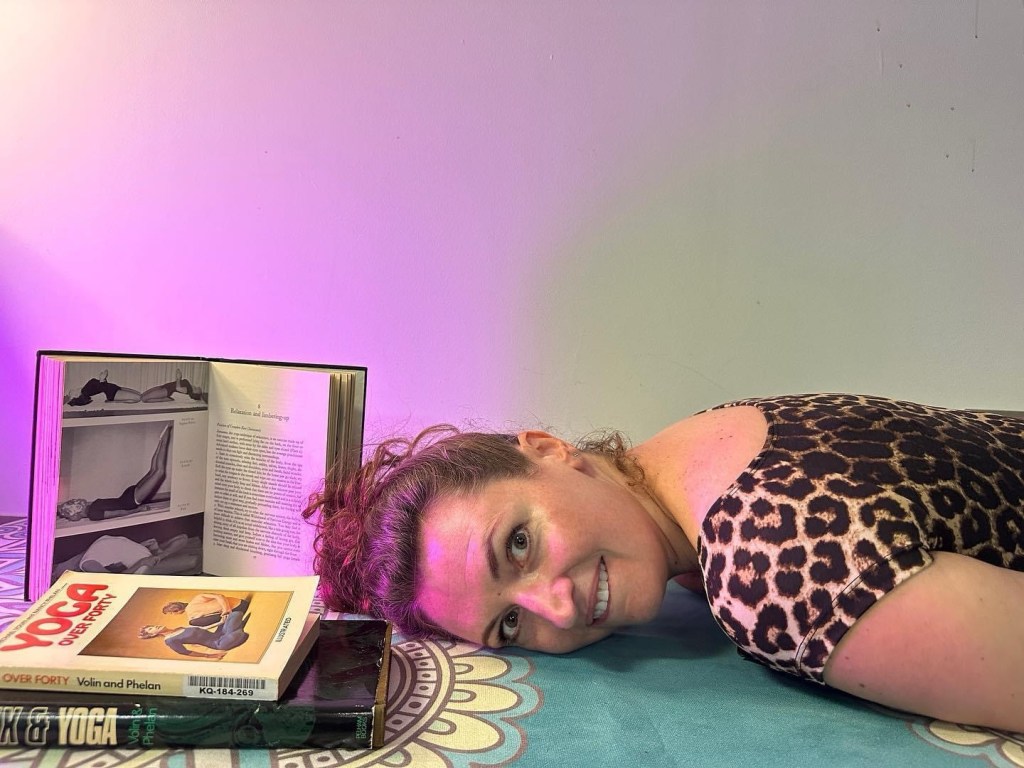
The spirits of Joyce Grenfell and Victoria Wood hover lightly over Kathryn Haywood’s delightful self-devised piece, which would be a solo show, and a pretty hilarious one at that, if it weren’t for the various audience members dragged out of the front row to participate. Inspired by a trio of 1960s Australian self help books – ‘Yoga For Women’, ‘Sex And Yoga’ and ‘Yoga Over Forty’ – it looks with a satirical eye and through a present day lens at the outdated attitudes to women and ageing espoused by such unreconstructed tomes. It’s often rambunctiously funny, but has a satisfying, perhaps surprisingly hard, bite.
We first encounter Haywood’s Aussie yoga instructor Kath winding up a class for flatulence sufferers while fielding text messages from an upcoming date. She’s a sunny oversharer, cheerfully telling us she’s playing it cool with the potential new boyfriend because “I don’t want him to know I’m easy”, and the script finds some lovely comic mileage in the contrasts between yogic serenity and the character’s occasional tetchiness. Kath unravels, not quite completely but very satisfyingly, as she attempts, in vain, to find the benefit and relevance of yoga designed to ensure that you “stay slim for your husband”, “save your unhappy marriage” or keep the wrinkles at bay.
Underneath the warm grin and gossipy chumminess, there are strong indications that Kath is a judgemental control freak, and possibly a bit of a nightmare (“could you make your voice sound a bit nicer?” she tartly demands of an audience member she has enlisted to read out some instructions), with more interest in herself and her libido than passing on the zen-like benefits of yoga. Haywood is terrific at suggesting the opposing traits of the character, and has the most glorious comic timing. She draws you in by being tremendously likeable, cheeky even, then hints at a mean streak that really ups the dramatic ante. It’s a fabulous performance, and her Australian accent is flawless.
Some aspects of the script need work: a running joke about consistently getting audience members names wrong isn’t clear in intention so doesn’t always land. The sequence preceding the ending feels rushed, as Kath tried to lead us to a touchy-feely conclusion that doesn’t feel organic. These are comparatively minor quibbles but in a show that lasts less than an hour, there’s definitely room for further fleshing out and expansion, particularly since Kath is such fun, off-the-wall theatrical company in Dan Mersh’s fleet, enjoyable staging.
Haywood is an authentic comic talent, and Yoga & Sex…For Women (Over 40) is a quirky, bonkers and altogether engaging mini tour de force. I really hope it gets a further life.
One of Brian Friel’s most beautiful and moving dramas, a memory play about a family of sisters eking out an existence in rural Donegal, receives a new production at this glorious Dublin venue. It’s an absolutely extraordinary play, suffused with longing and affection.
Cadillac Palace Theatre, Chicago – 30 April to 2 June
One of the campest black comedies ever written for the screen becomes a splashy new musical, trying out in the Windy City before hopefully head for Broadway. Anybody familiar with the work of Smash’s Megan Hilty and fabulous double Tony nominee Jennifer Simard will already be salivating with anticipation at what these two megawatt talents will bring to the diva roles created by Meryl Streep and Goldie Hawn.
After garnering reviews at the Public that were less write-ups than love letters to all involved, Alicia Keys’s semi-autobiographical jukebox musical moves uptown where it looks likely to become a permanent Broadway fixture. This sounds like potent, spine tingling stuff, and yes it does feature Keys and Jay-Z’s paean to NYC, ‘Empire State of Mind’.
Delamar Theatre, Amsterdam – 13 January to 18 February, then touring
I’ve a bit of a love-hate relationship with Belgian auteur Ivo van Hove’s output, but his esoteric multimedia approach feels like it could work thrillingly for the Rice-Lloyd Webber modern classic. It’s one of the greatest of all theatrical rock scores and van Hove has assembled a bloodcurdlingly photogenic cast.
Chicago Shakespeare Theatre, Chicago – 23 April to 26 May
“Are people any damn good?” asks this intriguing-sounding new dark comedy starring Seinfeld’s Jason Alexander as a morally bankrupt lawyer on the cusp of eternal damnation. Alexander is brilliant on stage and his director here is Morris (Hand To God) von Stuelpnagel, so this is likely to be a real treat.
I’m not necessarily saying this sounds like the most exciting new Broadway musical of the season, but what I’ve heard of the score (genuinely enthralling) and the advance reports from the LaJolla tryout suggests that it very well could be. Artist Tamara de Lempicka had a hell of a life and she’s played here by Eden Espinosa, the sort of powerhouse performer I’d pay to hear singing a shopping list.
Théâtre du Châtelet, Paris – 22 November to 31 December
Something of a homecoming for arguably the most popular musical in the world, but this is a completely new staging, and it’s performed in French. It’ll be really interesting to see what a new director (Ladislas Chollat) brings to this beloved material, plus it’ll be magnifique to see it in the city where it’s set.
Samuel J Friedman Theatre, New York – 2 April to 2 June
Film star Rachel McAdams makes her Main Stem debut in this Amy Herzog play which got tremendous reviews when it premiered off-Broadway in 2017. Centring on a young woman striving to care for her special needs child, it’s deeply moving but shot through with trenchant dark humour.
Billed as a “dramedy”, acclaimed, award-winning playwright Suzan-Lori Parks’s new work promises to be a playful, engrossing, ferocious mixture of satire, social history and backstage intrigue. The premise is a way off-Broadway theatre company attempting to mount a play about Thomas Jefferson and the enslaved Sally Hemings.
Is this Broadway transfer from the Public Theater the American answer to the Old Vic hit Sylvia? There are certainly similarities, as this challenging, female-driven new musical takes on the story of the original suffragettes and sets it to an accomplished contemporary score by multiple songwriting award winner Shaina Taub. I’m expecting something bracing, compelling and inspiring; I’ve heard some of the songs, and they’re gorgeous.
Playwights Horizons, New York – 21 February to 31 March
Yes folks, it’s the vagina dentata revenge musical we didn’t all know we needed. I can’t resist a truly off-the-wall idea for a show. Anna K Jacob’s rock and pop oriented music sounds pretty terrific, and the script is co-writtten by prodigiously talented Michael R Jackson, creator of A Strange Loop. This’ll be irresistibly unusual, and the cast includes Broadway star Steven Pasquale. May be worth going to, even if only to say that you were there.
Any new play that boasts a cast headed by Jessica Lange, Jim Parsons and Celia Keenan-Bolger has got to be worth a look. It becomes even more essential viewing when you consider that this comedy drama about the hold family and the past has on present day life is the work of multiple Obie winner Paula (How I Learned To Drive, Indecent) Vogel, and directed by Tina Landau.
The first New York revival of The Who’s edgy, uplifting rock opera is directed by Des McAnuff, who also helmed the breathtaking 1996 production which gave this soaring, eclectic score a coherent dramatic shape that it had previously been missing. Expect goosebumps, eye-popping spectacle and a Pinball Wizard!
Marquis Theatre, New York – from 28 March, and touring beforehand
I’ve never seen this joyful Black rejuvenation of The Wizard of Oz live on stage, and this production sounds like a real dazzler. The score is a soulful, zesty delight, and the cast of Schele Williams’s new staging, amazingly the first ever Broadway revival, includes Kyle Ramar Freeman, sensational in last year’s Barbican season of A Strange Loop, as the Cowardly Lion, also Deborah Cox and Wayne Brady.
Classic Stage Company, New York – Spring ‘24, dates to be confirmed
An artist completes his triptych on Black womanhood while the Harlem race riot of summer 1964 rages outside. Alice Childress’s play, exploring sexism, racism and classism, gets a rare revival, directed by beloved Broadway star LaChanze, who was Tony nominated for her star role in the same author’s play Trouble In Mind in the 2021 Roundabout revival.
Described by one NYC critic as a “love-hate song to this impossible town”, Stephen Adly Guirgis’s acclaimed drama has had two major off-Broadway productions and one on Broadway, as well as countless well-received mountings all over the USA. The 2015 Pulitzer Prize winner is only now receiving its UK premiere, in a new staging by former Donmar AD Michael Longhurst.
The 1936 Battle of Cable Street in the East End was a remarkable event in London history, where Jews, Irish and communists collaborated to halt Oswald Mosley’s fascist Blackshirts marching through Stepney. It’s now immortalised in a promising sounding musical by Tim Gilvin and Alex Kanefsky, with a distinguished cast including Max Alexander-Taylor and Sophia Ragavelas, and directed by Adam Lenson, one of this country’s most impassioned advocates for new musical theatre writing.
It’s unusual for the Royal Shakespeare Company to transfer from Stratford to the Royal Court, but then Charlie Josephine’s queer cowboy fantasia is a very special show. Praised to the skies at its Swan Theatre premiere last year, Josephine and Sean Holmes’s production comes to London with its acclaimed original cast including Sophie Melville, Lucy McCormick and Vinnie Heaven.
I love a campy jukebox musical where the script matches the songs in quality, and judging from the cast album and the positive press from the pre-pandemic off-Broadway premiere, Cruel Intentions very much fits that bill. ‘90s bangers meet a gleefully vicious tale, culled from the Ryan Phillipe-Sarah Michelle Gellar movie which was in turn based on Les Liaisons Dangereuses, of privileged young UWS New Yorkers ripping each other to pieces. I smell a cult.
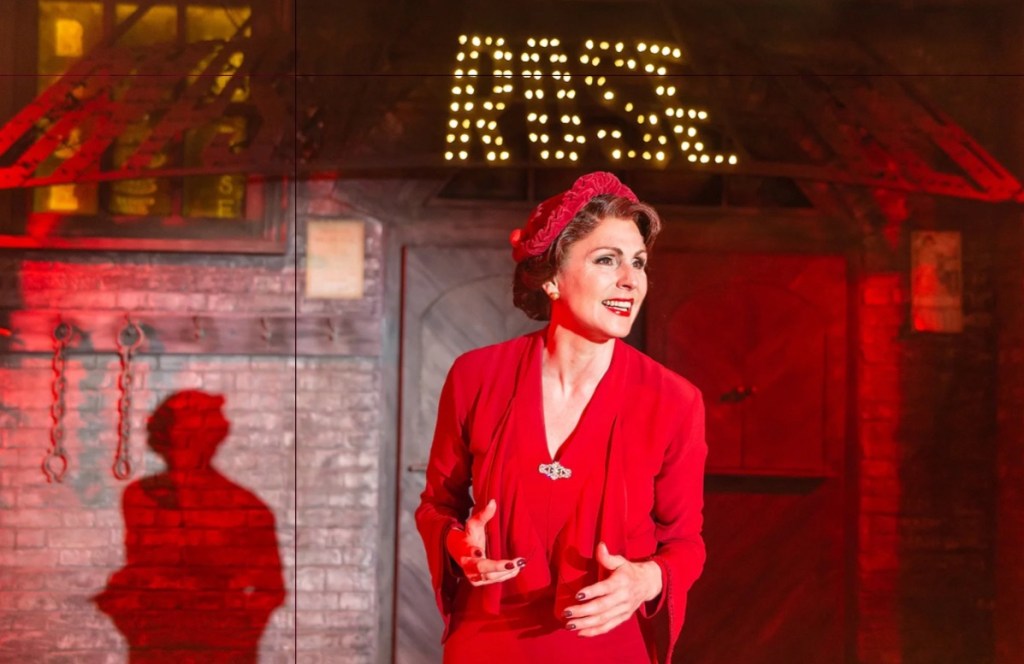
Michael Hastings is an unjustly neglected playwright so it’s wonderful to see a revival of his first play, dating from 1956, a Jewish family drama with a potent timeliness. Tricia Thorns, who specialises in uncovering lost theatrical gems, directs a terrific cast including Nicholas Day, Alix Dunmore, Sue Kelvin and Paul Rider.
Having seen the original NT production and subsequent Broadway transfer, I thought I’d done with Hadestown, for all the brilliance of Rachel Chavkin’s staging and the spine-tingling glories of Anaïs Mitchell’s songs, but then they announced the London cast. West End treasure Melanie LaBarrie as Hermes, glamazon diva Gloria Onitiri and Grace Hodgett Young, just before she repeats her luminous Betty in the Jamie Lloyd Sunset on Broadway, make this award-winning musical a must-see all over again.
Hopefully we are now in a position where we can actually watch a play set during lockdown rather than just getting PTSD from it, and this sounds excellent. Former EastEnders actress Kacey Ainsworth appears in this state-of-the-nation meets marital strife black comedy, staged by rising star director Scott LeCrass.
With Luke (& Juliet, The Little Big Things) Sheppard at the helm, this promises to be one of the major musicals of the year. A jukebox tuner, written by John O’Farrell who has previously demonstrated an unerring ability to match humour and real emotion, that looks back on the star-studded 1980s phenomenon of Live Aid, and includes hit songs performed on the day itself. Featuring a cast of the West End’s finest.
Eugene O’Neill’s American classic seems to be on at least twice in every decade, but then again, it’s a truly great play. Done right, it’s searing and unforgettable. With a cast headed by Brian Cox and Patricia Clarkson (few other American actresses can do steel and vulnerability like she can) this ought to be magnificent.
It’s so fetch. Although the Broadway run was curtailed by the pandemic, this Tina Fey stage adaptation of her own film, with a boppy, bombastic score by Jeff Richmond and Nell Benjamin, is a real crowd pleaser. Not as dark as Heathers, which it sometimes resembles, it nonetheless has genuine bite and wit, plus (on stage at least) significantly more lavish production values, and some terrific numbers. The imminent release of the new movie version will give audiences an idea of what to expect.
London’s not ready for the pure exhilaration of this celebration of Michael Jackson and his legacy. About as far removed from the long running Thriller Live! as it’s possible to imagine, this Broadway extravaganza features some of the most extraordinary choreography (by classical dance expert Christopher Wheeldon), dancing, sound and lighting I’ve ever experienced in a musical.
The Donmar has a superb track record of presenting the UK premieres of some of the best of contemporary American writing (Sweat, Appropriate, A Dolls House Part 2, Clyde’s) and this Eboni Booth comedy drama looks set to continue that trend. A critical and popular success in New York in 2019, the London production is directed by Matthew Xia.
A well deserved West End transfer for Tyrell Williams’s bold, beautiful, rich tale of Black brotherhood, coming-of-age, urban regeneration… and football. This has been a sold out triumph for the Bush Theatre twice already and deserves to repeat that success in town. Even better, the original cast – Francis Lovehall, Emeka Sesay and Kedar Williams-Stirling – are recreating their roles in Daniel Bailey’s flawless production.
Lava, Benedict Lombe’s previous play for this marvellous West London venue was a brilliant monologue about a British African woman confronting her dual heritage. This new one is billed as “a different kind of love story”….Lombe can write, Lynette Linton is directing, Heather Agyepong, so good in School Girls; Or, The African Mean Girls Play last year, makes up half the cast…I can’t wait.
After the triumph of last year’s Sunset Boulevard, Andrew Lloyd Webber is looking at his second runaway smash hit in a row, as the roller-skating trains that occupied the Apollo Victoria for most of the ‘80s and ‘90s, return to record breaking advance sales. Don’t expect anything profound, but go for the spectacle, heart-stopping stunts, fiendishly catchy pop tunes, and a huge dose of nostalgia for those of us who were there first time around.
A new Jez Butterworth play is inevitably a major event, and this Sam Mendes-directed premiere already looks like a smash hit. A story of sisters reuniting at the death bed of their mother, the cast includes Laura Donnelly, Ophelia Lovibond, Leanne Best and Helena Wilson. Early booking essential.
Lucy Kirkwood is one of the UK’s most consistently excellent playwrights, so perhaps it’s no surprise that her new play, a romantic drama apparently, is sold out before it even starts. The casting of Jack Davenport and Keeley Hawes won’t have hurt….
Although it’s a belter of a play, thIs Tennessee Williams romantic comedy isn’t seen very often (the last London production was at the National in 2007 with Zoe Wanamaker). Maybe it’s just too upbeat compared to the rest of the Williams canon (it actually has a happy ending!) Anyway, Martina Laird, this version’s Serafina, is a force of nature in a role that demands precisely that.
I missed Tim McArthur’s widely praised original production of Kevin Kelly’s explosive drama about Benjamin Britten during its brief Wimbledon run in 2022, so am looking forward to catching it this time around. The story of the composer’s tortured private life set against the magnitude of his artistry is a fascinating, albeit uncomfortable one.
Andrée Bernard is one of those charismatic triple threat talents that deserves to be a much bigger star than she is. Hopefully, this self-penned solo musical will help remedy that. She’ll be directed by Michael Strassen, who has superb form when it comes to coaxing stunning performances out of stellar divas.
Long-awaited tour for the rainbow-coloured, exhilarating and surprisingly moving sort-of sequel to the Shakespeare, putting Max Martin pop bangers into a funny, knowing script by Schitt’sCreek’s David West Read, with dazzling staging. This is a thumping great night out.
then Sadler’s Wells Theatre, London – 31 July to 25 August
The Broadway classic celebrating and demystifying the blood, guts and temperament that goes into creating musical theatre gets a whole new sheen in this much lauded Nikolai Foster-Ellen Kane revisal. I missed it first time around, so can’t wait to see this return run. Adam Cooper and Carly Mercedes Dyer are set to return to their previous roles.
Swan Theatre, Stratford Upon Avon – 21 February to 16 April in repertoire
Samuel Barnett and Victoria Yeates stars in Mark Ravenhill’s revisal of his 2013 play, originally written to mark the centenary of Benjamin Britten’s birth, about the extraordinary bond between the Peter Grimes composer and the wildly contrasting Imogen Holst, daughter of Gustav and a fine musician in her own right. Recent Artistic Director of the RSC, Erica Whyman, helms the production.
American director Stafford Arima comes to Birmingham to lead a team of international creatives to stage this new tuner. There’s nothing as infectious as a Bhangra beat, the story is a potent, uplifting one of rivalry in dance competitions, and honouring existing traditions while making new ones. The show went down a storm in its USA West Coast premiere and could be a real winner here too.
Emma Rice’s inspirational Wise Children company put a feminist spin on the unsettling fairytale. This should be wildly imaginative and theatrical, multi disciplinary in terms of the skills of the cast, and possibly a little bit sick. Bracingly original theatre making.
The cult movie is set to become a lavish stage musical, and Christina Aguilera, star of the original film, is on the team of producers. There are no plans as yet beyond the initial Manchester dates but I predict it’ll be a smash. I’m expecting something camp, gaudy and unrestrained, full of big pop tunes and bigger hair.
Get your hankies out, the good people of Gander are back in this utterly entrancing, life-enhancing musical that succeeds in moulding something humane, warm and exhilarating out of the dark days following 9/11. This beautiful show will clean up on tour, and the new cast has some seriously great singing actors in the ensemble.
Royal Exchange Theatre, Manchester – 26 April to 25 May
Lynn Nottage’s powerful, hard edged but deeply humane drama about disillusioned blue collar workers seriously let down by the American Dream was an absolute firecracker in its 2018 Donmar production. Here comes the UK regional premiere at this fine Manchester producing house. It’ll be interesting to encounter Nottage’s vivid creations in an in-the-round staging.
New York-based ballet and musical theatre star Robert Fairchild, best known here for the An American In Paris musical, returns to the British theatre to star in this adaptation of the well received ‘modern’ romantic comedy silent movie from a dozen years back. Expect this to be suitably dance heavy, especially since it’s staged by Drew McOnie, with music by Tony-winning genius Simon (Girl From The North Country, Cold War) Hale.
Hope Mill Theatre, Manchester – 9 February to 9 March
Jim Cartwright is like a poet for the Northern working classes, a writer with heart, grit and often startling originality. This is his first new play in seven years so it’s something of a coup for Hope Mill, especially with a cast consisting of Denise Welch and Matthew Kelly playing some 1960s hellraisers reunited after 50+ years.
The Mill at Sonning, Sonning Eye – 27 September to 16 November
A brand new thriller, based on a ghost story by Rebecca Netley set on a remote Scottish island, and directed by Joseph Pitcher who has repeatedly created theatrical magic at this atmospheric dinner theatre in a converted water mill on the banks of the Thames. A spine chiller in this space is likely to be deeply unsettling….I can hardly wait.
The Mill at Sonning, Sonning Eye – 27 November to 18 January 2025
Musicals at this delightful venue are rightly viewed as a bit of an event. Their current High Society is a joy and last year’s Gypsy an out-and-out triumph. It’ll be lovely to see how the festive magic is created in this intimate, sometimes surprising space. A classic musical with a Christmas dinner included with in the ticket price…should be a real winner.
Incorporating the changes made to the 1967 off-Broadway tuner for the starry 1999 Main Stem revival that garnered Kristin Chenoweth her first Tony award, this revival of Clark Geisner’s delightful musicalisation of the beloved Schulz Peanuts cartoons hits the sweet spot where children and nostalgic adults will be equally entertained. Although ostensibly about small kids, and their knowing mutt Snoopy, the observations and characterisations are firmly pitched at the more mature audience members: with this gang of mouthy, bossy, sensitive youngsters, Charles M Schulz created a microcosm of American society; it’s very funny but also mercilessly well observed. In that sense, it was a precursor of The Simpsons, a few bars from the theme tune of which is wittily interpolated into a hunting sequence in the second half.
Amanda Noar’s bouncy but whipsmart, expertly choreographed production gets it exactly right. Given the limited nature of the space, Noar has even managed to incorporate several examples of simple but highly effective stage magic, such as flying kite or an outsized dancing blanket for Jacob Cornish’s adorable, lisping Linus. The dances have a real Broadway level flair and are put over with enthusiasm and skill by an excellent six strong company.
Perhaps inevitably for a show inspired by a comic strip, You’re A Good Man, Charlie Brown is essentially episodic, a series of sketches and snapshots rather than a coherently crafted musical comedy, and not very much happens. It’s funny though and occasionally rather touching, and Gesner’s score is a real charmer. These lilting, musically sophisticated but immediately lovable numbers skilfully pastiche American song forms from vaudeville to Broadway big band, and are peppered with fine, pithy lyrics. Gesner’s music sounds like a forerunner to the acclaimed work of contemporary American MT tunesmiths such as William Finn and Andrew Lippa, the latter of whom has provided two new songs which slot seamlessly into the existing score.
The performances are suitably high octane: Jordan Broatch is a wide-eyed, sweet humoured Charlie Brown, and Troy Yip captures exactly the combination of exasperation and puppyishness required for precocious budding pianist Shroeder. Eleanor Fransch’s terrfiying Lucy Van Pelt is a fabulous, fierce creation, a domineering whirlwind of feistiness that will probably end up running a whole State within a few decades. You can equally see the older man that her brother Linus will end up as, in Cornish’s surprisingly nuanced performance. Millie Robins delivers caffeinated, cute work as Sally Brown.
The star turn comes from Oliver Sidney as a wonderfully world weary Snoopy. Whether hunched over in silent judgement of the idiocy of his human playmates, reclining laconically in sunglasses atop his dog kennel or participating in the group numbers with a sort of unwilling insouciance, it’s a terrific, and consistent, characterisation, and an exemplary bit of musical comedy playing. He sells his ‘Suppertime’ eleven o’clock number like a classic oldschool vaudevillian.
The sound balance between the singers and Harry Style’s superb five piece band is exquisitely managed, and the whole production suggests it was assembled with loving care by a team of people who really understand the genre they’re working in. The musical itself isn’t one of the greats – the second half feels a little baggy – but it makes for more than agreeable family entertainment when it’s done this well. I hadn’t seen any of Amanda Noar’s work before but will try to make a point of seeing anything she does in future. This is a lovely couple of hours, and a welcome festive alternative for families who don’t fancy panto.
Sometimes in the post Christmas slump, when you’re tired, stuffed (with food) and maybe a little hung over, all you really want in the way of entertainment is something elegant, classy and reflective, a show that gently washes over you. All well and good, but if that’s your idea of a fun time, then best to avoid the West End’s Harold Pinter Theatre where this adult panto, featuring the cream of alumnae from the UK edition of RuPaul’s Drag Race, requires you to scream your lungs out, get indiscriminately sprayed with lube (yes I’m afraid so), and participate in a Mexican wave, be upstanding for a mass sing-off of Kylie’s ‘Padam Padam’ smash hit and generally check your inhibitions in with your coat. This show is a lot…and it’s also pretty impossible to resist.
Miss Mopp’s script for Sleeping Beauty is a pretty basic recounting of the well worn story, serving mainly as a framework on which to hang the outsize personalities, ad libs and performance skills of a selection of Drag Queens and Kings, each of whom rises so fabulously to the occasion that the show becomes an almost total pleasure. Chris Clegg’s rambunctious production lovingly incorporates many of the familiar panto traditions – the “he’s behind you” ghost routine, audience singalong, running gags, the frantic ‘Twelve Days of Christmas’ song challenge – just served up with added bitchiness, and even more high camp than this already flamboyant genre usually sails in on.
It’s also genuinely witty, and, although definitely conceived as a garish playground for adults, it’s considerably less crude than the other current version of the same story, Sleeping Beauty Takes A Prick over at Charing Cross. Presumably as the run is so short, it rather looks like every expense has been spared on a set, but the sheer brio of the performances and the joyful inclusion of some well chosen pop songs with suitably tarted-up lyrics means that the delighted audience seldom notices. The overall effect of the production, which comes at you like a spangled steamroller, is of a West End theatre being transformed into somewhere like the RVT on a particularly good night. The comedy comes thick and fast, and if it doesn’t all fully land that may be down to the sometimes muffled sound quality, but there are some seriously fine mirth makers at work here.
There are ongoing jokes about lost watches, and winning WhatsOnStage awards, also a wonderful running sight gag involving a rainbow coloured confetti cannon that fires every time Michael Marouli’s lovably tetchy Good Fairy enters, yet somehow always manages to take her by surprise. Kitty Scott Claus is a queen of dead-pan delivery and her titular Princess Beauty gets funnier and funnier the more she tries to disengage from the chaos surrounding her, even getting upset because she’s more involved in the show than she thought she’d be (“I thought I’d be sleeping through most of this”). Kate Butch brings classy comedy chops to her mother, Queen Camilla, armed with some off-colour jokes about her marital predecessor (her name begins with a D and she’s had a terrible musical written about her) and a glorious hauteur that runs in delicious counterpoint to the indignities she’s forced to endure. LoUis CYfer is authentically hilarious as a bumbling but enthusiastic King Clyde and Kemah Bob’s non-binary, American Prince, or rather Prinyx, is a triumph of gormless bewilderment.
If you had to create a personification of camp, you’d probably come up with something very like Victoria Scone. Their green-haired, black leather clad, permanently bad-tempered Carabosse is a brilliant comic creation, deeply lovable despite being so thoroughly nasty, and one who could probably have their own entire show. Their singing is terrific, resulting in them snarling “did you forget you were supposed to be booing?” when the audience goes nuts at the end of a particularly impressive belty number. I also adored Ophelia Love as the inauspiciously named Villager No.4, a tragically overlooked diva-in-waiting hilariously desperate to wrestle the spotlight from her better known co-stars. When she gets her moment, it’s in a skilfully bastardised version of the ‘Roxie’ number from Chicago, and she’s so good at selling the material and negotiating the Fosse-esque choreography, that she is a considerable improvement on some of the dodgy “celebrity” casting that got to play Roxie Hart during the Kander and Ebb musical’s original London run.
The show has a distinct feeling of having been thrown together, but by people who know what they’re doing and understand exactly how much glitter will stick. The air of what’s-going-to-happen-next hysteria only really fizzles out in the final moments, where a barely rehearsed curtain call left everybody looking a little uncertain on both sides of the footlights. That’s a small glitch though in what is otherwise a couple of hours of really smashing entertainment.
“Isn’t this shit?!” gleefully leers Yshee Black’s adorable, eccentrically debauched Muddles (formerly Buttons) to the roaring crowd near the end. The only possible answer to that is “oh no it isn’t!”
I can’t believe it’s been a whole year since I wrote one of these lists, but here we are. In 2023 I’ve seen 168 professional stage productions across a dozen international cities and towns, predominantly in London, but also taking in Paris, Dublin and New York. I’ve also made a conscious effort to get to more UK regional venues, something I’ve shamefully neglected in the past, and I’m so glad I made the effort, and can’t wait to get to even more in 2024. Sure, the capital is saturated with theatrical riches but I’ve loved exploring the unique stage delights of Manchester, Bath, Sheffield, Leicester, Chichester and others, and have encountered some really terrific work.
It has been quite the challenge to pick out the top twenty new (to me) productions of the year that I found the most exciting and enjoyable. It’s a hugely personal list, so there are some massively acclaimed shows that I haven’t got round to seeing yet (hello Almeida Cold War and the West End’s Stranger Things: The First Shadow), or that for one reason or another didn’t quite hit the spot for me.
The following selection didn’t quite make my Top 20 but were utterly outstanding and deserve honourable mentions. The Donmar has had a superb year, and although only one show made my list, the timely reconsideration of Lilian Hellman’s vintage anti-fascist drama Watch On The Rhine featuring an incandescent Patricia Hodge, Clyde’s, the Lynette Linton-directed British premiere of Lynn Nottage’s gritty but warm story of working class, post-penitentiary African Americans, and the current David Tennant hot ticket Macbeth, were/are entirely deserving of the critical acclaim heaped upon them.
The brilliant Linton, who is also building up an impressive screen cv, was one of the names bandied about to take over the running of the National Theatre, but that job went, as we know, to the hugely popular Indhu Rubasingham. So for now, Lynette remains, with her dynamic associate Daniel Bailey, at the helm of the Bush, that crucible of excellence in West London, which has enjoyed another dud-free year on their watch, championing Black British, Asian and other Global Majority voices of real quality and originality. A Playlist For The Revolution was a unique gem that looked at the effect of student demos on urban life in Hong Kong, the triumphant Red Pitch returned ahead of a richly deserved West End transfer in 2024, and the year closed out with a pair of fine, funny, bracingly intelligent monologues, Marcelo dos Santos’s Feeling Afraid As If Something Terrible Is Going To Happen with Samuel Barnett firing on all cylinders and Kwame Owusu’s refreshing, sensitive Dreaming And Drowning.
Other really exciting new writing I’ve enjoyed this year includes Nina Segal’s highly original, bitingly funny distillation of Ibsen in Shooting Hedda Gabler over at Kingston’s Rose Theatre, and the vibrant£1 Thursdays, Kat Rose Martin’s mouthy, big-hearted tragicomedy about modern female friendships, that nearly took the Finborough’s roof off late in ‘23. Soho Theatre hosted FlawBored in It’s A Motherf***ing Pleasure, an outrageously funny but thought provoking look at disability and the way it’s perceived, and Lauryn Redding’s delicious self-penned coming-out solo musical Bloody Elle.
The National’s Dancing At Lughnasa and the Almeida’s Portia Coughlan were magnificent revivals of poetic, sometimes harrowing Irish texts that were every bit as fine as their original productions. The latter was possibly even something of an improvement, partly down to a painful, coruscating performance in the title role by Alison Oliver, who coincidentally was also in Lughnasa. Another gem at the National, and still currently playing, is the uneven but hugely enjoyable new family musical The Witches, inspired by the Roald Dahl book with an inventive Dave Malloy score and a performance of breathtaking venomous camp by Katherine Kingsley as the Grand High Witch.
Further afield, Gina Beck’s luminous Maria in a lovely Chichester revival of The Sound of Music, and the compulsive but worryingly prescient French success Farewell Mr Haffmann, about Jewish persecution in Nazi-occupied Paris, in a UK premiere with a stellar cast at Bath, were both major highlights. In New York, I especially enjoyed Larissa FastHorse’s biting black comedy taking down political correctness and cultural appropriation The Thanksgiving Play (FastHorse is the first Native American playwright to be produced on Broadway) and the magnificent Ben Platt-led revival of Jason Robert Brown’s enthralling, quasi-operatic Parade.
The return of multi-award garlanded Groundhog Day to the Old Vic, the European premiere of the game changing Tony winner A Strange Loop and the West End upgrade for Operation Mincemeat all dazzled, delighted and deeply moved but none of them sadly make the list as they’re not “new” to me.
Anyway, about that list…..and it’s in alphabetical order, not necessarily preference…..
*
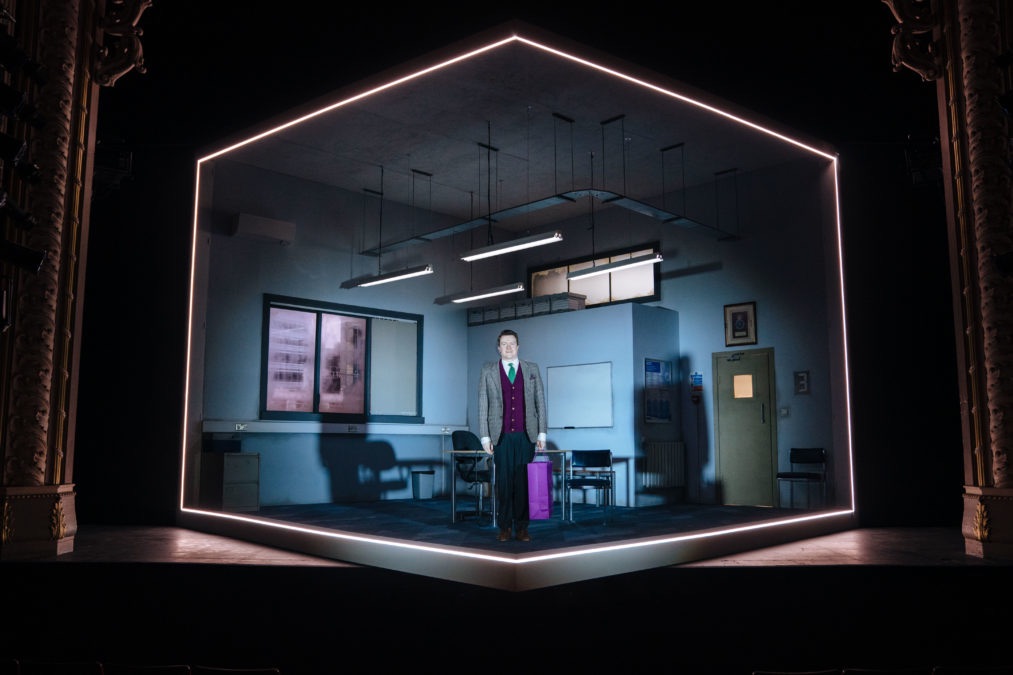
1. ACCIDENTAL DEATH OF AN ANARCHIST – Lyric Hammersmith Theatre, London – ended 8 April, then at Theatre Royal Haymarket 12 June to 9 September
Photograph by Helen Murray
Daniel Rigby gave a heroic, ferociously energetic turn of astonishing comic attack and invention as the Maniac in this Dario Fo-Franca Rame police corruption 1970s farce brought bang up to date in this thrilling new version by Tom Basden. As chilling as it was hilarious, this co-prod with Sheffield Theatres ripped up the rule book most satisfyingly.
*
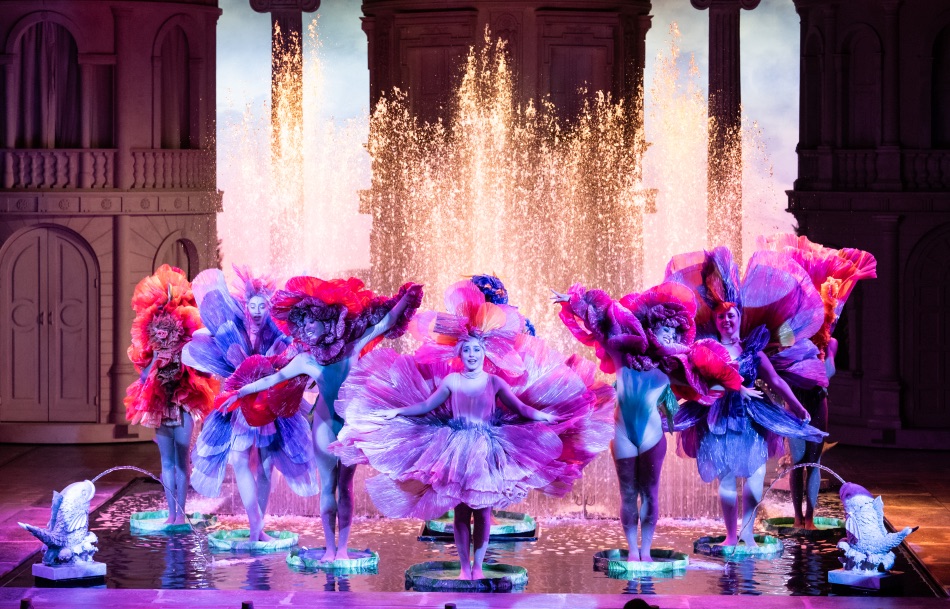
2. A FUNNY THING HAPPENED ON THE WAY TO THE FORUM – Lido 2 Paris, Paris – until 4 February 2024
Photograph by Julien Benhamou
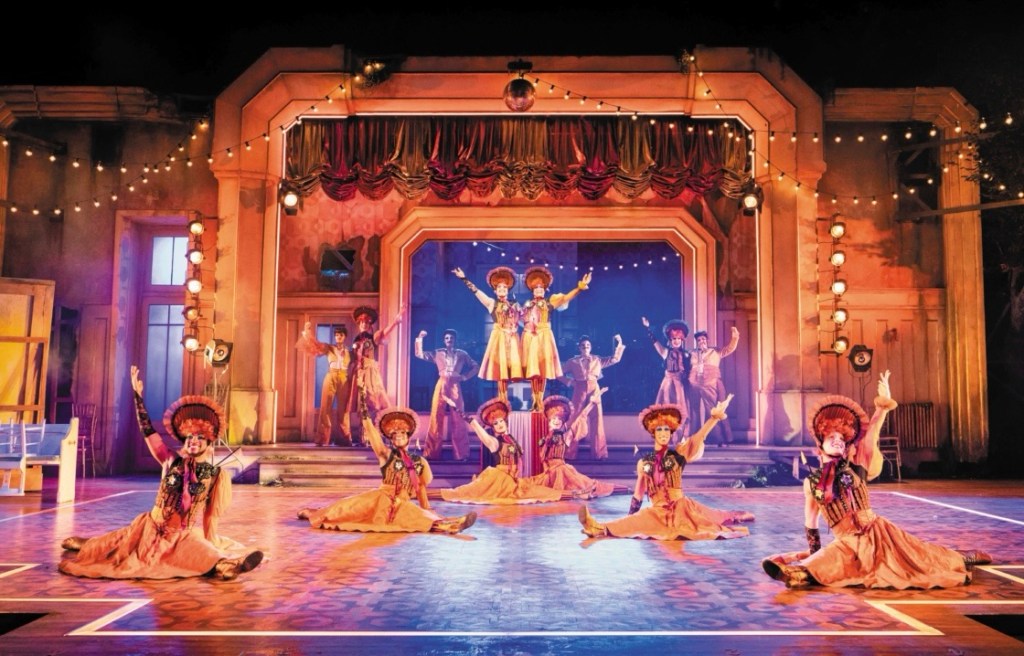
Equally inspired by the ancient Roman comedies of Plautus and old school American burlesque, this Sondheim-Gelbart-Shevelove confection is a non-PC delight in this glorious new production led by a perfectly cast Rufus Hound as Pseudolus. Cal McCrystal’s screamingly funny, lunatic vision honours equally the show’s Broadway roots and this Parisian venue’s storied history. A joy.
*
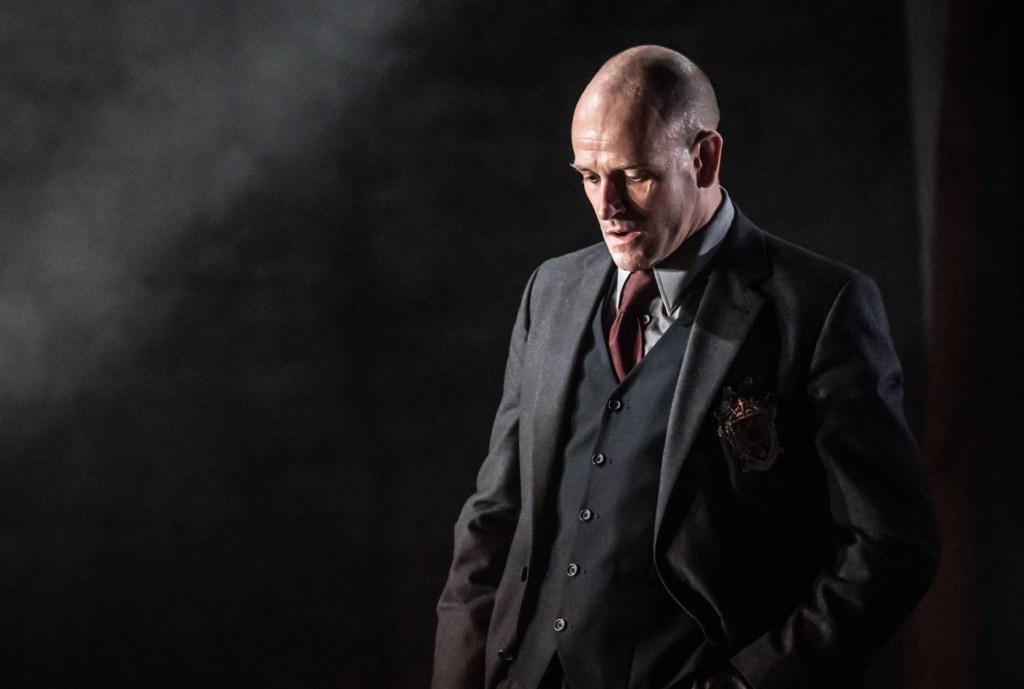
3. A MIRROR – Almeida Theatre, London – ended 23 September – at Trafalgar Theatre, London from 22 January 2024
Photograph by Marc Brenner
Jonny Lee Miller returned magnificently to the stage in this slippery, unsettling, ultimately jawdropping Sam Holcroft political thriller that turned the entire venue, in Jeremy Herrin’s shapeshifting production, into a kitschy wedding hall in a fascist state. As entertaining as it’s alarming, and with a terrific, catalytic performance by Tanya Reynolds, this is a must-see for anybody who missed it in Islington.
*
4. DEAR ENGLAND – Prince Edward Theatre, London – until 13 January 2024
Photograph by Marc Brenner
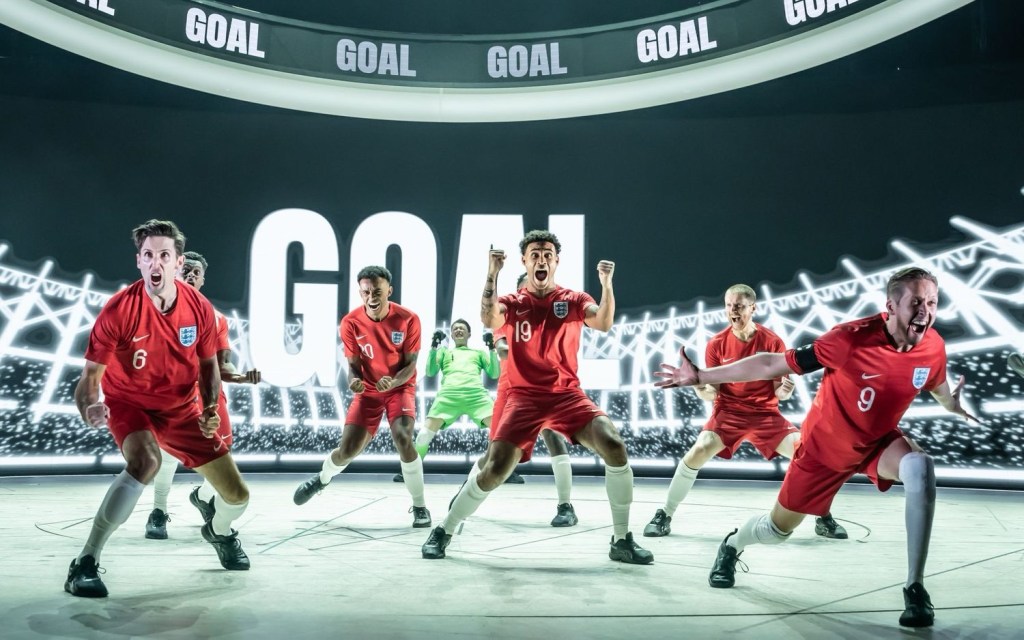
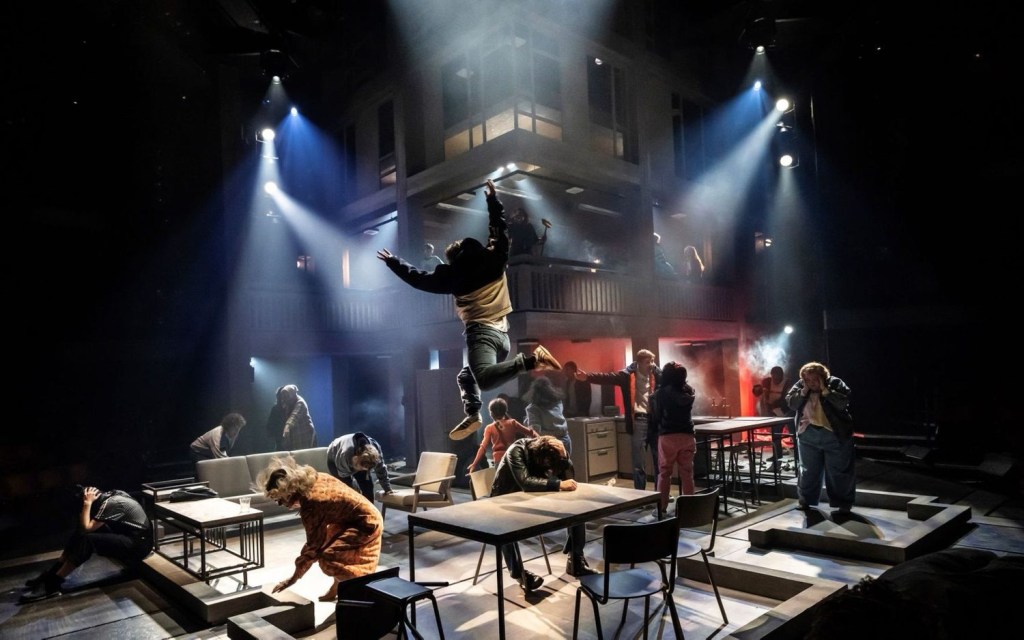
This National Theatre transfer is one of those rare, spinetingling theatrical events where literally every element – writing, performances, staging, design, concept – is in tune. James Graham’s terrific, rich play is ostensibly about football but is really about the state of the nation and where the UK stands in the world. Rupert Goold’s flashy production matches the epic sweep of the script, as does the cast led by an unrecognisable Joseph Fiennes as an uncanny Gareth Southgate.
*
5. FAT HAM – American Airlines Theatre, New York City – ended 2 July
Photograph by Joan Marcus
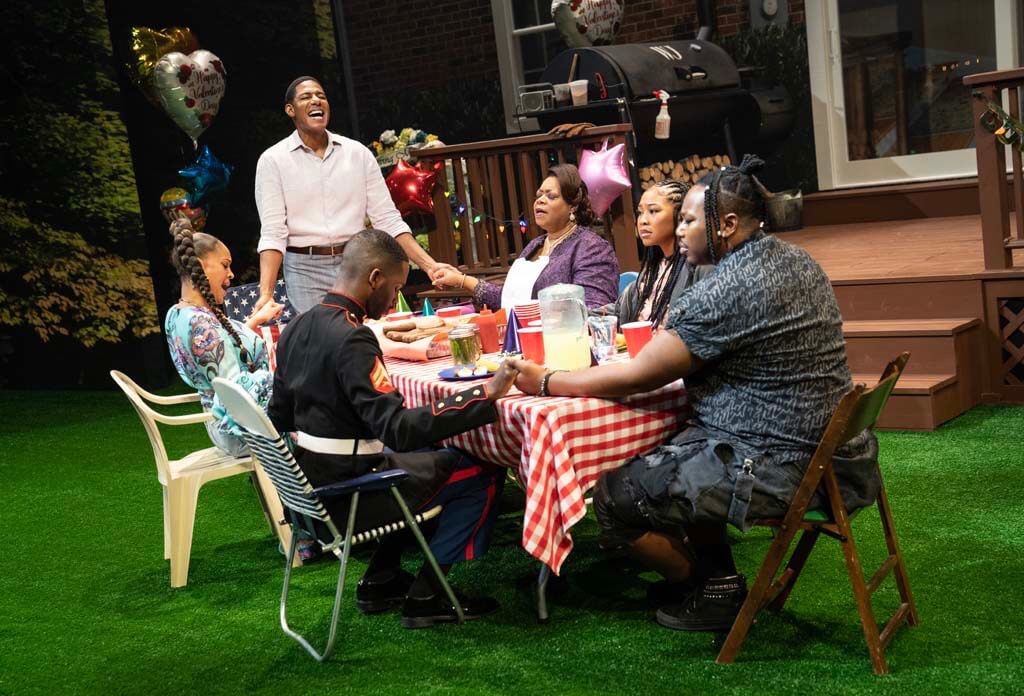
Gorgeous, inventive riff by African American writer James Ijames on the bard’s best known play. This is knowing, sassy, devastatingly witty, surprisingly touching and camp as Christmas. In this transfer from NYC’s Public Theater, Marcel Spears made an adorable Broadway debut in the title role, with a stunning (and Tony nominated) Nikki Crawford as his hi-glam, ball-busting momma. Surely a London premiere must be in the works?
*
6. FUN HOME – Gate Theatre, Dublin – ended 1 September
Photograph by Ros Kavanagh
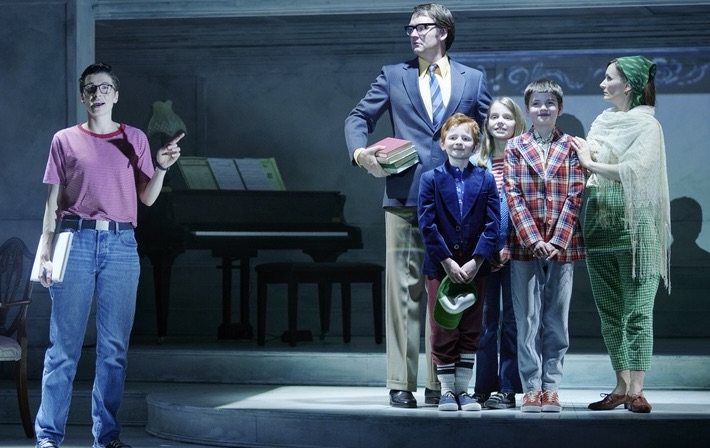
Róisín McBrinn’s Irish premiere of this searingly beautiful Tesori-Kron coming-of-age/coming out musical based on Alison Bechdel’s pictorial memoir, was about as different from the NYC and London originals as it was possible to imagine. It was stunningly effective though, making the heart soar before breaking it. Frances McNamee and a career-redefining Killian Donnelly led a marvellous cast. A real workout for the tear ducts and the soul.
*
7. GYPSY – The Mill at Sonning, Sonning Eye – ended 15 July
Photograph by Andreas Lambis
A wonderful surprise to find the brassy spirit of Broadway in a rural Thames-side water mill converted into a charming dinner theatre. Joseph Pitcher’s flawless account of this quintessential American backstage musical didn’t even feel scaled down so fresh and inventive was this take on it. Rebecca Thornhill led from the front as a more glamorous-than-usual Mama Rose with Evelyn Hoskins as an entrancing Louise. An absolute gem.
*
8. LA CAGE AUX FOLLES – Regents Park Open Air Theatre, London – ended 23 September
Photograph by Mark Senior
Tuneful, romantic, risqué and with a great big heart, this Jerry Herman and Harvey Fierstein Broadway charmer felt almost like a new musical in this, the last production of Timothy Sheader’s tenure in the Park. Reimagined to be set not in the usual St Tropez but a seedy 1970s Blackpool, it was funny, saucy and entirely winning. Choreographer Stephen Mear proved again why he’s the best in his showbiz field. A tonic for the soul.
*
9. MISS SAIGON – Crucible Theatre, Sheffield – ended 19 August
Photograph by Johan Persson
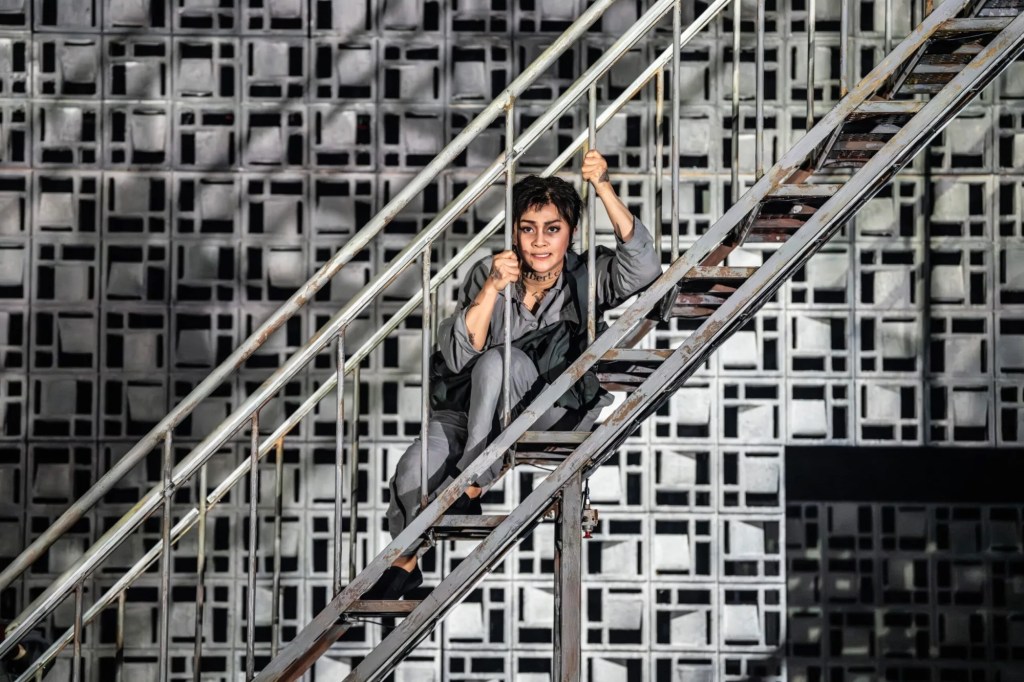
Freed from the bombastic constraints of the big Cameron Mackintosh stagings, Miss Saigon came across, in Robert Hastie and Anthony Lau’s high concept, video-heavy rethink as way more bleak and cynical in its depiction of war and the American involvement in Vietnam. Not as much of a tearjerker as earlier incarnations maybe, but tremendously powerful; one of many terrific new ideas was having a female Engineer, given a truly sensational performance by Boublil-Schonberg vet Joanna Ampil.
*
10. NEXT TO NORMAL – Donmar Warehouse, London – ended 7 October – at Wyndhams Theatre, London from 18 June 2024
Photograph by Marc Brenner
It took over a decade for it to get here from Broadway but it was sure worth the wait. A challenging look at mental illness and loss, powered by a driving rock score, Next To Normal hits with the emotional impact of a sledgehammer yet proves strangely exhilarating, especially in Michael Longhurst’s multilayered production. A flawless cast was headed by New York’s Caissie Levy delivering a full throated, open hearted tour de force that eclipsed memories of Alice Ripley’s less relatable, but Tony awarded, turn in the original. Fingers crossed Levy returns for next year’s West End run.
*
11. ROMEO AND JULIE – National Theatre/Dorfman, London – ended 1 April – then 13 to 29 April at Sherman Theatre, Cardiff
Photograph by Marc Brenner
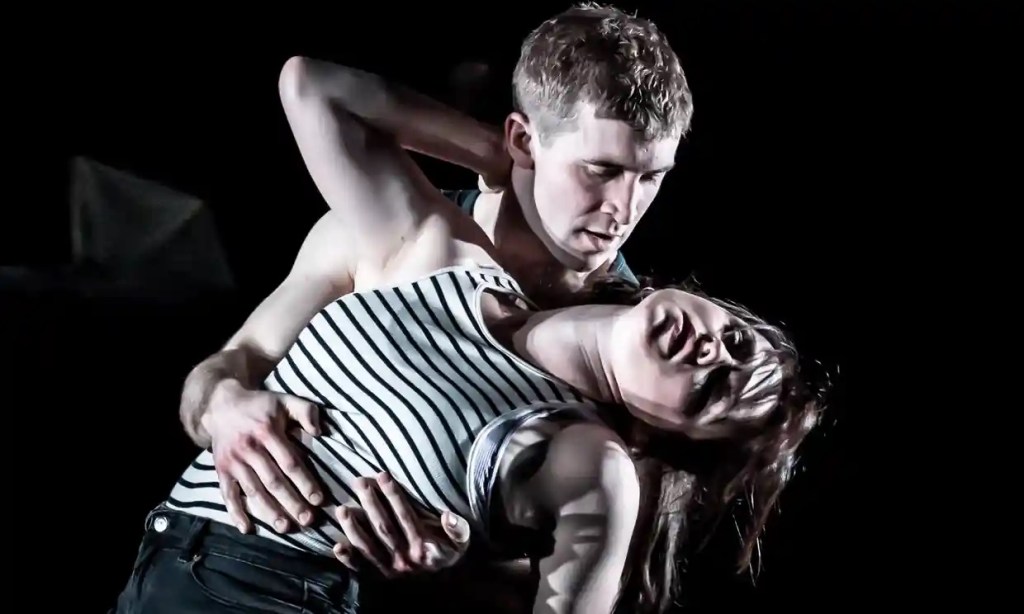
Another Shakespeare riff, but this one closer to home. Gary Owen’s potty-mouthed, urgent modern love story was set on the unequal, unjust streets of the Welsh capital. Callum Scott Howells and Rosie Sheehy had us roaring with laughter one moment then sobbing into our programmes the next. Tough, angry but essentially sweet, this wrapped so much beauty and ugliness around a core of steel.
*
12. SCHOOL GIRLS; OR, THE AFRICAN MEAN GIRLS PLAY – Lyric Hammersmith Theatre, London – ended 22 July
Photograph by Manuel Harlan
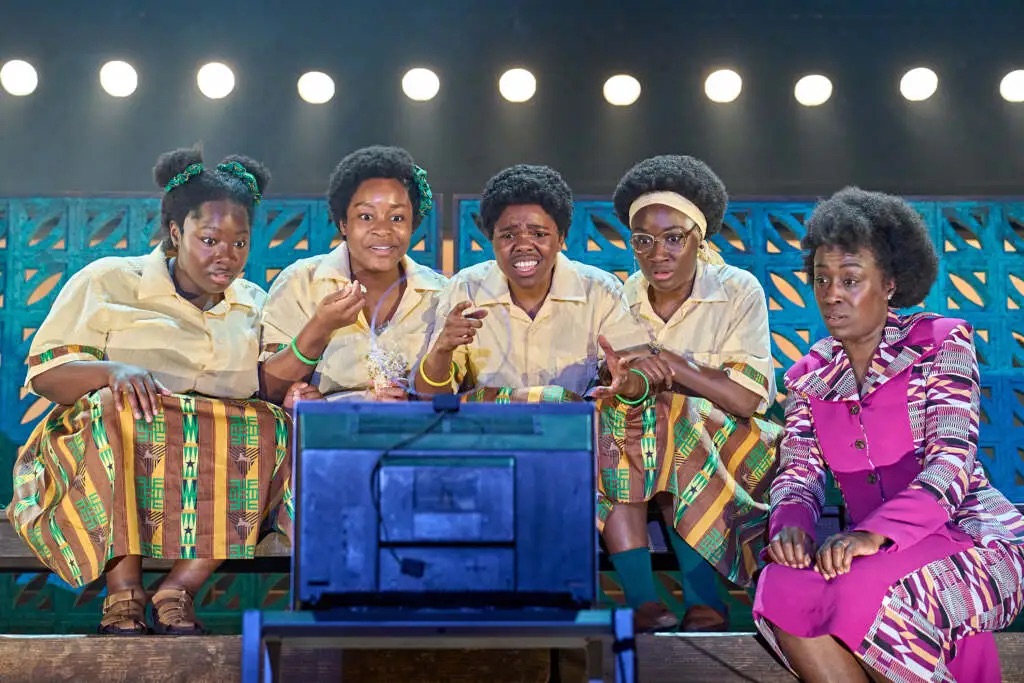
On the surface, Jocelyn Bioh’s acclaimed off-Broadway comedy was a cheeky, warm- hearted satire on the way American culture permeates global lifestyles and attitudes, but it had a lot of pithy, sometimes uncomfortable things to say about outside influences on young Black womanhood. Monique Touko’s UK premiere was fully alive to all the humour, idiosyncrasies and inconvenient truths of the cracking script and was fabulously cast. Enchanting, bittersweet and surprisingly hard hitting.
*
13. SLEEPOVA – Bush Theatre, London – ended 8 April
Photograph by Helen Murray
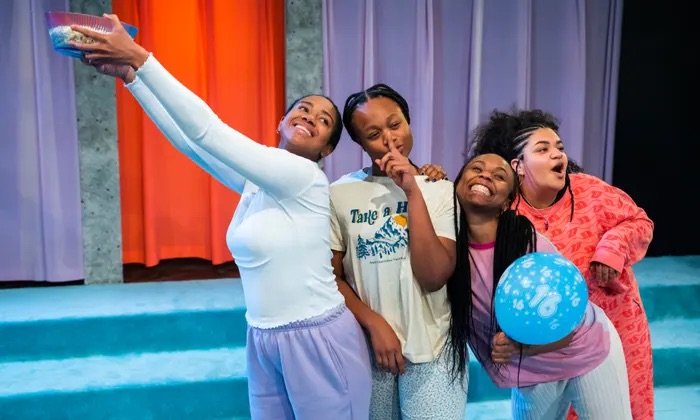
Yet another story of young Black womanhood, and this one equally fresh, surprising and delightful, but set in present day London. Matilda Feyişayo Inibi’s lairy, lovely look at female friendships and future aspirations was a total blast in Jade Lewis’s vital, tangy staging and featured a quartet of fine young actresses led by rising star Bukky Bakray in an assured debut. If Red Pitch is getting its West End transfer, can this be next please.
*
14. STANDING AT THE SKYS EDGE – National Theatre/Olivier, London – ended 25 March – at Gillian Lynne Theatre, London from 8 February 2024
Photograph by Johan Persson
So many people couldn’t get into this during its brief National season after word spread about what a tear-stained, goose-bump inducing sensation this Chris Bush-penned musical distilled from Richard Hawley’s collection of bluesy, rocky, endlessly exciting songs, was. The upcoming West End transfer is likely to be a big fat hit all over again, as Robert Hastie’s stunning Crucible Sheffield production crosses the river, buoyed up by a well-deserved Best Musical win in this year’s Olivier awards. Unmissable.
*
15. STEPHEN SONDHEIM’S OLD FRIENDS – Gielgud Theatre, London – until 6 January 2024
Photograph by Danny Kaan
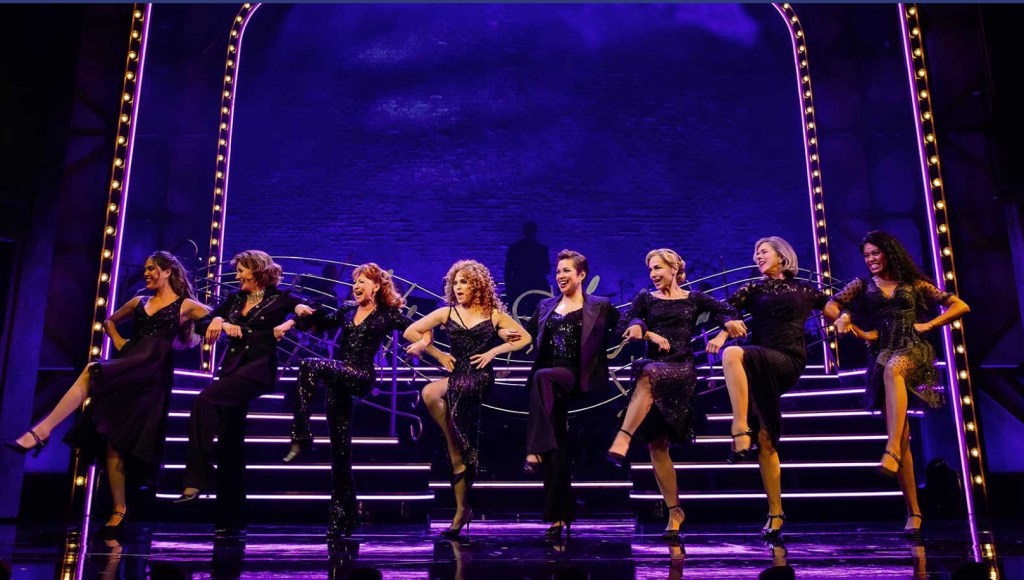
Cameron Mackintosh’s Christmas gift to discerning West End musical theatre lovers and Broadway babies everywhere, this is an uplifting, deeply moving, slickly produced look at Sondheim’s greatest hits. A couple of hours of showbiz heaven led by one of the great Steve’s muses, Bernadette Peters, with revelatory work from international MT superstar Lea Salonga, and a cast of some of the West End’s very finest, including Bonnie Langford, Janie Dee, Gavin Lee and Damian Humbley.
*
16. SUNSET BOULEVARD – Savoy Theatre, London – until 6 January 2024
Photograph by Marc Brenner
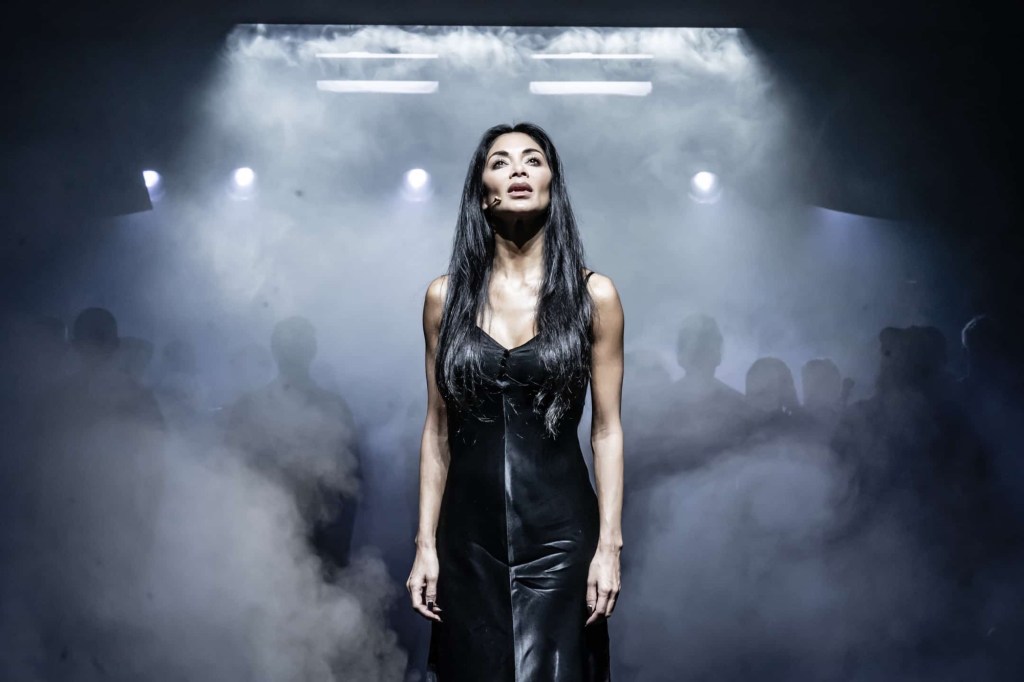
Already the stuff of showbiz legend, this was the moment pop star Nicole Scherzinger proved she is a musical theatre leading lady for the ages, in an unforgettable powerhouse turn as a drastically reimagined Norma Desmond in the melodramatic but intoxicating Andrew Lloyd Webber tuner culled from Billy Wilder’s cinematic saga of curdled Hollywood dreams. Director Jamie Lloyd created a thrilling, noir-ish multimedia staging, with roaring, frenetic Fabian Aloise and, in Tom Francis, a young male lead to make the angels weep. The whole show, but especially Scherzinger, will be talked about for decades. Broadway surely beckons in 2024.
*
17. THE CURIOUS CASE OF BENJAMIN BUTTON – Southwark Playhouse, London – ended 1 July
Photograph by Juan Coolio
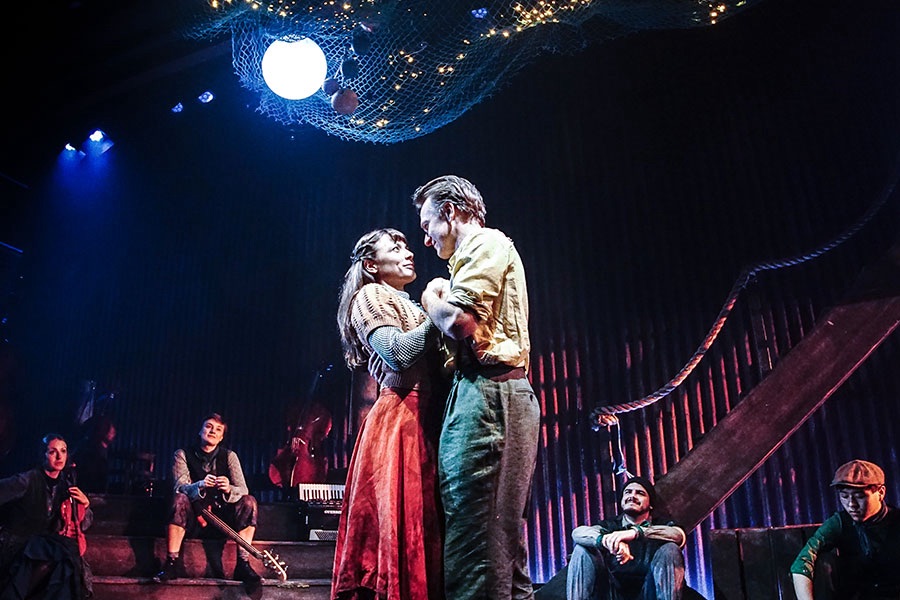
Brilliant, inspired transformation of the F Scott Fitzgerald tall story of a man born old who ages backwards, into a magical, mystical Cornish folk tale, with real theatrical bite, a stomping, haunting score and a devastating emotional impact. Already glorious in its 2019 premiere, Jethro Compton and Darren Clark’s beautiful piece was expanded for this new version into an entrancing, deceptively ingenious full scale British musical that may yet turn out to be a true world beater.
*
18. THE LITTLE BIG THINGS – @SohoPlace, London – until 2 March 2024
Photograph by Pamela Raith
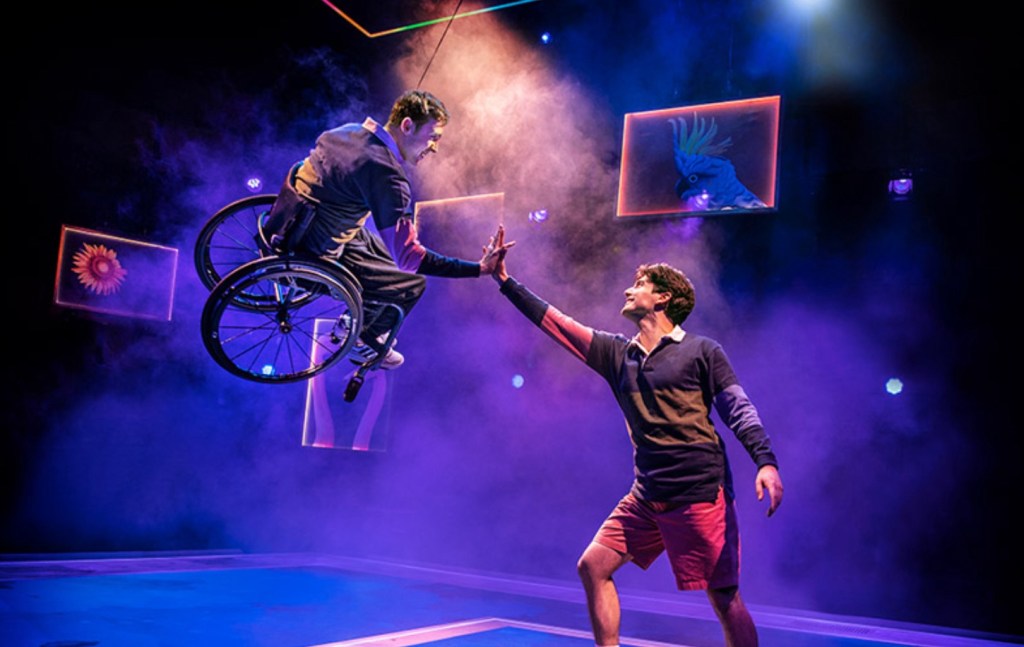
Based on Henry Fraser’s memoir chronicling his transformation from teenage sportsman to acclaimed painter via a life-changing accident which left him permanently in a wheelchair, this is a real original and a genuine treat. A new British musical with massive heart, showbiz flair, characters to root for, and thumping good tunes. Inclusive, exhilarating and even educational, it’s a real charmer. Take tissues, you’ll need them.
*
19. THE MOTIVE AND THE CUE – Noël Coward Theatre, London – until 23 March 2024
Photograph by Mark Douet
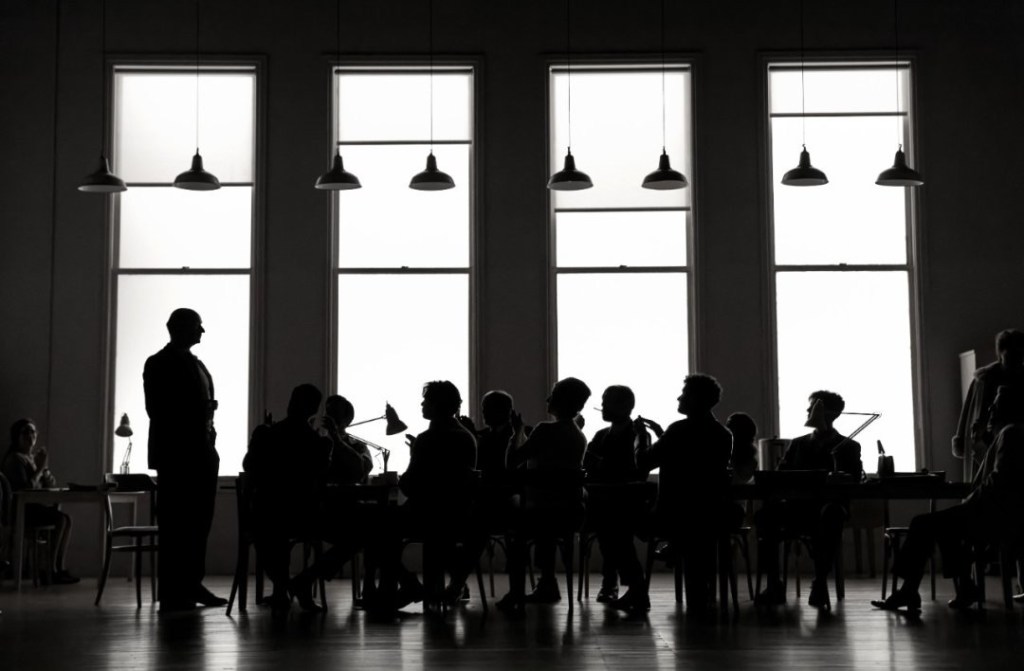
A West End transfer was a no-brainer for this National Theatre triumph. Jack Thorne’s engrossing backstage drama about the conflicts and friendship between Sir John Gielgud and Richard Burton when mounting their now-legendary Hamlet in 1960s New York, is gossipy, elegant and compulsive. Sam Mendes’s opulent staging features astounding work from Mark Gatiss and Jonny Flynn as Gielgud and Burton respectively.
*
20. THE SHAPE OF THINGS – Park Theatre, London – ended 1 July
Photograph by Mark Douet
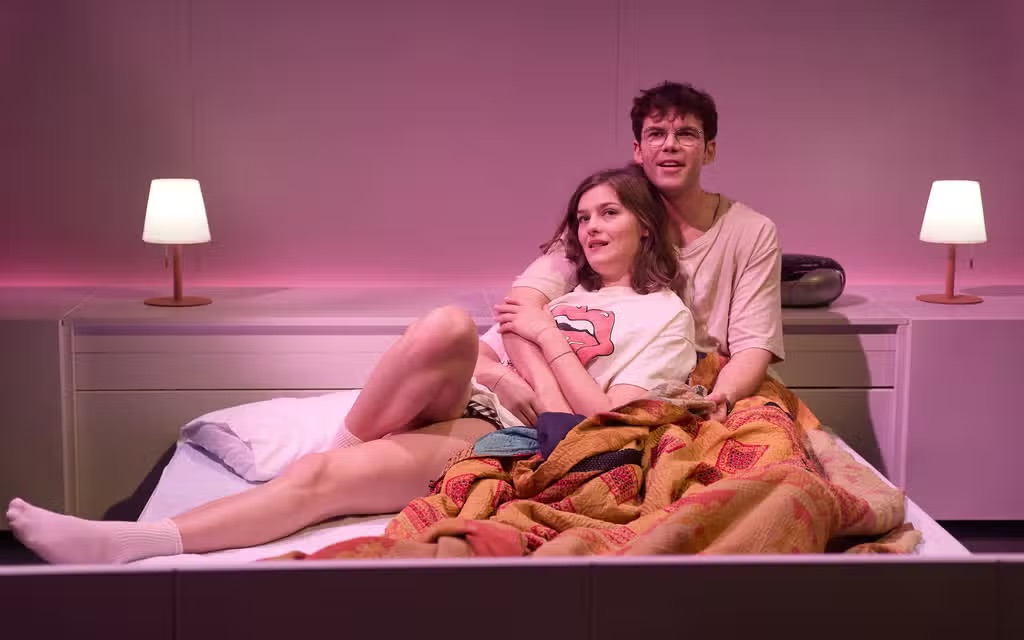
Who could have predicted that Neil LaBute’s smart, slick and sick examination of coercive relationships and the boundaries of art would play so much better in 2023 than in its 2001 original outing?! In Nicky Allpress’s razor sharp staging this felt hot, urgent and relevant, and featured detailed, haunting performances from Luke Newton, Amber Anderson, Carla Harrison-Hodge and Majid Mehdizadeh-Valoujerdy. Essential, nasty and dazzling.
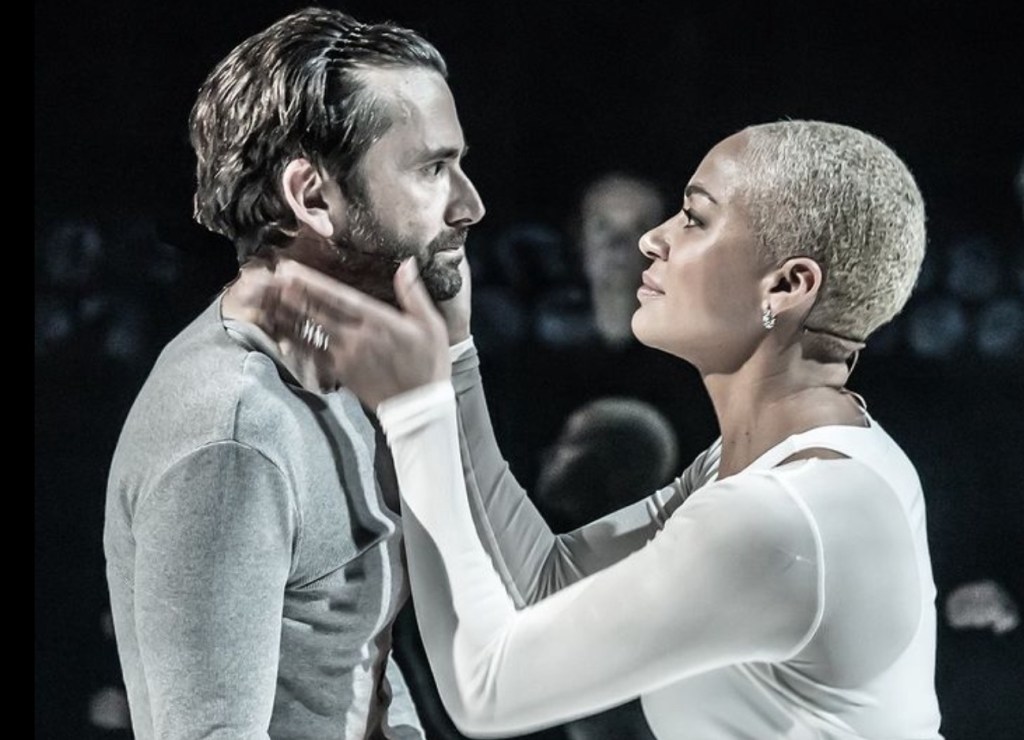
We may be into the last two weeks of 2023, but it’s undeniable that David Tennant is giving one of the performances of the year in the new Donmar Macbeth. This play, at this venue for the first time, and including the stage return of Cush Jumbo as a striking Lady Macbeth, would have been highly anticipated anyway, but Tennant’s presence turns it into a major cultural event.
He’s worth the hype, giving us a charismatic but preoccupied soldier who goes on an entirely convincing journey from initial bewilderment via unassailable bravado (“none of woman born shall harm Macbeth”) to dead-eyed acceptance. He makes the uncertainty, the cruelty and the vaulting ambition of the character all of a piece in a truly compelling performance. More than that, you see the precise moment where this Macbeth realises he’s a dead man walking, and it’s simultaneously chilling, and makes for tremendously satisfying theatre.
Tennant‘s Thane is at the centre of a production by Max Webster, a director who has form with mixing intelligence and raw theatricality and overlaying well worn texts with a crisp layer of anachronism, that is simultaneously vitiated and slightly sabotaged by a couple of bold central ideas. The most obvious is the use of binaural sound: every audience member experiences the performance wearing headphones, allowing Gareth Fry’s vivid sound score and the haunting, ethereal Celtic-inspired music to penetrate right into the ears and brain.
It’s an interesting, and intermittently very effective, conceit, sometimes reminiscent of the sound and light installation adaption of the novel Blindness with which the Donmar reopened during the Covid pandemic. The “weird sisters”, the witches who accost Macbeth on the blasted heath and hail him as the future King of Scotland, are the primary beneficiaries of this approach: instead of being physically impersonated by actors, they are a series of disembodied voices, so close that their plosives set off a chain reaction from your inner ear to the hairs on the back of your neck, then on down your spine. They sound seductive, soothing….yet deeply troubling. The murder of Lady Macduff (Rona Morison, delicate but mighty) and her children is done in pitch darkness with only the terrifying sounds, and our imaginations filling in the blanks: it’s horrific and deeply upsetting, and so it should be.
The constant thrum of underlying noise, the black modernish costumes, starkly dramatic lighting (Bruno Poet) and perhaps most of all, the use of Shelley Maxwell’s stylised movement, gives the overall sense of this Macbeth being more of a dark satanic ritual than a conventional play. There’s an air of shuddering suspense and dread that grips and discomforts. When the atmosphere explodes into action (terrific fight choreography by Rachel Bown-Williams and Ruth Cooper-Brown), it feels genuinely dangerous.
Having the actors mic’d and beamed straight into our ears is a reminder of how much covert whispering and how many duplicitous asides there are in this most bloody and dark of tragedies and thanks to the technology, we don’t miss a single word, even the most desultory murmurs. Personally, I would like to hear the voices acoustically from time to time though: the Scottish accented delivery of the verse here is uniformly exquisite. Tennant’s command of the language is particularly beautiful, fully alive to the poetry but making perfect sense of every line, living inside of it. His version of the “Tomorrow and tomorrow and tomorrow” soliloquy, just after learning of his wife’s death, is perhaps the most effective I’ve seen.
The second defining central concept explored by Webster is the idea of the Macbeths having lost a child, and being haunted by that loss. It’s psychologically acute and speaks directly to much of Shakespeare’s writing for Lady M, but feels a little over-egged by the end of the two hour, interval-free evening, with a small boy taunting Macbeth on the battlefield or peering through the gloom behind the clear back walls of Rosanna Vize’s simple but striking dais set. Those see-through walls serve a useful dramatic purpose too, as the supporting cast stare from the other side or sometimes bang disconcertingly on them like the collective conscience of the two principal characters.
Cush Jumbo’s fine Lady Macbeth is clad in figure-hugging white, in vivid contrast to the darkness of the other costuming, but this disturbed and disturbing figure is no angel. Jumbo points up her intelligence and pragmatism but also an undercurrent of real brutality. Interestingly, the robust strength she demonstrates earlier renders her vulnerability and distress in the famous sleepwalking scene all the more powerful. Jumbo and Tennant don’t have the sexual chemistry Saoirse Ronan and James McArdle brought to the 2021 Almeida production for Yael Farber but that feels deliberate, this coupling feels driven more by status and ambition.
The supporting cast are uniformly strong. Nouf Ousellam is a fiery, heroic but human Macduff and Cal MacAninch brings authentic depth and colour to Banquo. Jatinder Singh Randhawa works hard as the Porter and is cheeky and likeable despite being saddled with some rather belaboured audience interaction.
All in all, despite a couple of reservations, this is a fascinating, atmospheric Macbeth and Tennant is predictably brilliant but brilliantly unpredictable. A superb end to an excellent year at the Donmar.
Here’s something fresh, funny and more than a little touching. Kat Rose-Martin’s big-mouthed, big-hearted play explodes like a firecracker, leaving behind it trails of melancholy, hilarity and irresistible human feeling. Rude and blisteringly honest, it’s a no-holds-barred study of female friendship, the uncertainties of being a teenager, and the importance of not necessarily settling for the life you think has been mapped out for you.
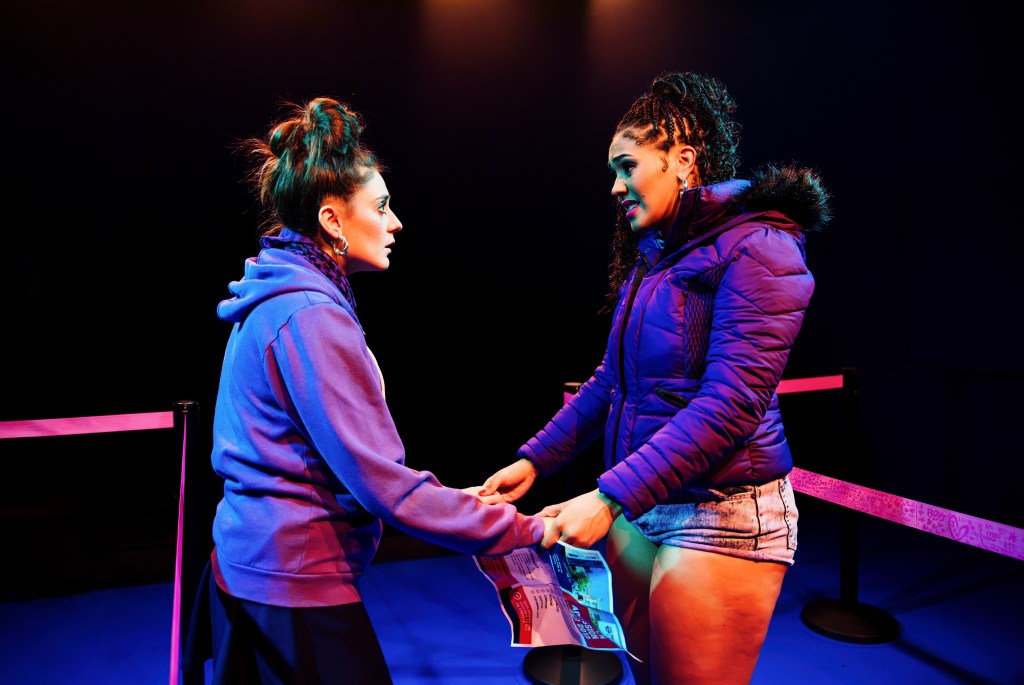
The title, £1 Thursdays, refers to the weekly mega-cheap club night that Bradford 17-year-olds Jen (Yasmin Taheri) and Stacey (Monique Ashe-Palmer) regularly go to at their local, to get puke-drunk on shots, dance the night away and compete with each other as to how many snogs they can rack up. The year is 2012 (Vicky Moran’s vital, supple staging is punctuated by ear-splitting blasts of dancefloor fillers from a decade ago) and these young women are the products of a city on its uppers where everybody’s just getting by, living for the weekend (or, in Jen and Stacey’s case, for Thursdays).
Rose-Martin’s dialogue – salty, unadorned but witty – has the unmistakable, unsentimental ring of authenticity. If sometimes the characters offer up their innermost feelings a little too quickly, it’s never less than engaging. It makes for the same compulsive viewing as a soap opera, although a teatime TV show would probably never have this much swearing in it.
It’s played at a hell of a lick, sometimes a little too fast for clarity, but both the writing and the delivery capture the urgency of youth: the intensity, the disaffection, the feeling of wanting everything right now. Most essentially, it conveys the camaraderie and the love between these two women. Ashe-Palmer and Taheri are wonderful, so natural it feels they’ve really been friends for years, besties who scrap like she-wolves but inherently have each others back. That set-up, so convincingly done, is important as it makes it all the more powerful when circumstances and expectations rend the friendship asunder, as life has a way of doing.
At times reminiscent of other coming-of-age plays – there are shades of Andrea Dunbar’s Rita, Sue And Bob Too, Willy Russell’s Educating Rita and Stags And Hens, even Jonathan Harvey’s Beautiful Thing here – £1 Thursdays repeatedly confounds expectations in the most pleasing ways. Jen’s relationship with her mother (Sian Breckin, wonderfully warm and eccentric) is, for all the former’s wayward behaviour, so loving and respectful, and suffused with so much affection. Ashe-Palmer, equal parts sunshine and steel, brilliantly conveys the contradictions in Stacey, a gifted dancer with an underlying neediness and self-sabotaging lack of confidence despite all her outward bravado, who makes a disastrous relationship choice.
Similarly, Taheri’s Jen is so much more than a hard-scrabble, sexually advanced-beyond-her years kid with a big attitude; she’s a prodigious mathematician, easily tossing out answers to complex sums that would make other students’ eyes glaze over. There’s a beautiful scene where she has a university interview and gets a tantalising glimpse of what her life could be, and it’s genuinely moving, so honest and organic is Taheri’s performance…this is acting of the highest order. Joseph Ayre impressively differentiates between the wildly differing roles of Stacey’s potentially abusive boyfriend and the kind, if vaguely patronising, uni interviewer who startles Jen into some seismic life changes.
Moran’s staging is full of inventive touches, from direct audience engagement, to sections of slo-mo choreography that suggest the temporary anaesthesia of intoxication only to be brought up sharp and short by the sudden, stark intrusion of brutal “real” life as the girls roll out of the clubs into the streets, or the STI clinic. Lighting designer Rajiv Pattani bathes it all in the dingy, queasy hues of nightlife, and Ethan Cheek’s set of the sort of retractable queue dividers found outside almost every entertainment venue in the land and semi-opaque curtains, is ingenious.
Ultimately, this is Ashe-Palmer and Taheri’s show, and they make irresistible, surprisingly sympathetic central figures that you find yourself really rooting for. They have a confrontation scene, terrifically well written, that is as electrifying as it is painful to watch. As actresses, they are the kind of talents that people write things for.



 ajhlovestheatre