ajhlovestheatre

  • Home
  • About
  • Contact
  • Blog

  • (THIS IS NOT A) HAPPY ROOM – ⭐️⭐️ – rising star Rosie Day writes and stars in uneven family tragicomedy

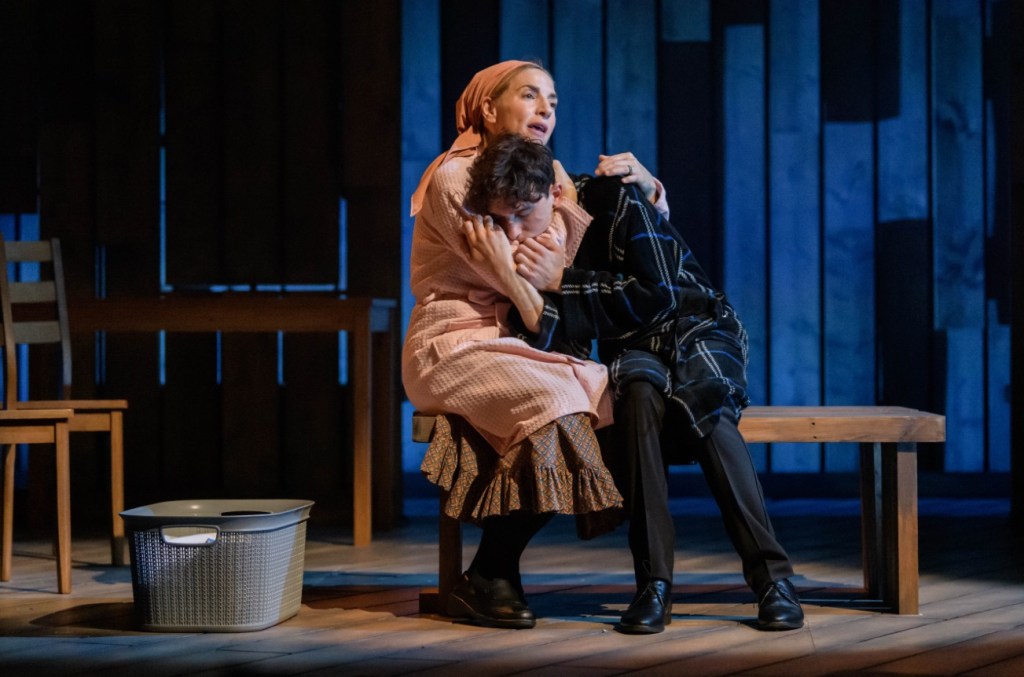
    Rosie Day and Jonny Weldon, photograph by Mark Senior

    (THIS IS NOT A) HAPPY ROOM

    by Rosie Day

    directed by Hannah Price

    King’s Head Theatre, London – until 27 April 2025

    running time: 90 minutes, no interval

    https://kingsheadtheatre.com/whats-on/14/by-rosie-day/this-is-not-a-happy-room

    Writer and actor Rosie Day won popular and critical acclaim for her (almost) solo show Instructions For A Teenage Armageddon in which she tackled the repercussions of abuse and the sheer bloody awfulness of being a hormone-crazed youth struggling to connect. Now she’s back with even more potentially relatable trauma but this time via a fractured family united for a wedding that swiftly, and implausibly, turns into a funeral, in a ninety minute tragicomedy that frustrates as much as it delights.

    (This Is Not A) Happy Room gets off to a cracking start. Day (in a performance not dissimilar to what she delivered in her earlier show), Jonny Weldon and Andrea Valls play a trio of bickering siblings gathered together in a hideous Blackpool hotel to “celebrate” their Dad’s wedding (there’s some conjecture as to whether it’s his third or fourth) to a younger woman. The writing’s combination of gallows humour and barely suppressed venom suggests an acidic modern Ayckbourn at work. If Day’s characters are more collections of neuroses and symptoms than fully fledged humans, the performances are engaging enough and the zingers funny enough that it’s hardly noticeable….at first. 

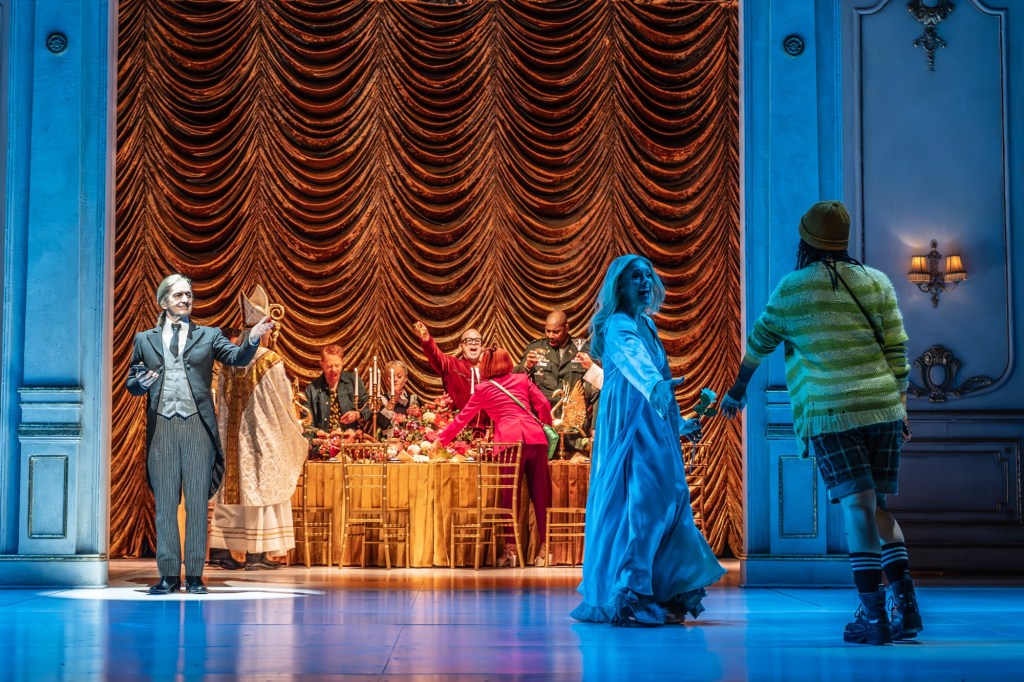
    Where the wheels start to come off is when the script seeks to make serious points about the long term effects of childhood abandonment with the arrival of the grown-up children’s mother (Amanda Abbington doing sterling work in an underwritten role). The humour gives way to a tsunami of psychobabble that instead of illuminating the characters, instead serves to make them more self-absorbed, and strangely less convincing. Even less believable is the way an upcoming wedding is repurposed with barely any notice into a funeral, and the arrival of the bride-to-be’s cousin (Jazz Jenkins, sparky), who conveniently works in mental health and is somehow dating Weldon’s chronic hypochondriac son. 

    There’s often something bleakly funny about a family in turmoil, as long as it isn’t your own, and Day clearly understands that, but there’s an unbridgeable gulf between the comic writing and the less successful, more serious stuff. So, despite the energised efforts of the actors in Hannah Price’s pacy production, the play becomes more laboured as it draws on and the characters reveal themselves to be less and less likable. The show ends on a particularly heartless bombshell, which I won’t reveal here, that leaves a nasty taste in the mouth but neither illuminates nor enhances anything we’ve seen before, especially as these individuals are pretty hard to care about.

    Some sections work well however, such as when Day’s actress daughter Rosie starts a funeral eulogy that, to the appalled amazement of herself as much as the other bewildered guests and participants, turns unstoppably into a recital of the lyrics to Steps/the Bee Gee’s pop hit ‘Tragedy’. Or the wildly inappropriate (under the circumstances) references to Philip Larkin’s ‘This Be The Verse’: “They fuck you up, your mum and dad”. Watch also Abbington’s hilariously uncomfortable physical reaction to the news that the interloper into the family gathering is a therapist (“I don’t believe in therapy”). There’s endearing work from Tom Kanji as the elder daughter’s goofy husband and, in a professional debut at an advanced age, Alison Liney as a benignly unaware great aunt in the grip of dementia, although one can’t help but wish Day’s writing around this tricky subject was a little more nuanced.

    Ultimately, this is an undemanding bit of theatre, made watchable by the work of a bunch of consummate professionals. But as a piece of writing it feels like it’s several drafts away from being a decent play.  

    April 5, 2025

  • THE WOMEN OF LLANRUMNEY – ⭐️⭐️⭐️ – compelling but uneven Welsh slave drama provokes authentic outrage

    Shvorne Marks (Suzanne Packer in background), photograph by Chuko Cribb

    THE WOMEN OF LLANRUMNEY

    by Azuka Oforka

    directed by Patricia Logue

    Theatre Royal Stratford East, London – until  12 April 2025

    running time: 2 hours, 15 minutes including interval

    https://www.stratfordeast.com/whats-on/all-shows/the-women-of-llanrumney

    The participation of Wales in the international slave trade is a curiously underexplored subject, despite the fact that one of the principality’s most notorious sons of the 17th century, Sir Henry Morgan, was governor of Jamaica for several years and so would have directly benefited from the servitude and exploitation of countless Black souls. Azuka Oforka’s interesting new play The Women of Llanrumney, playing a brief London season after premiering last year at Cardiff’s Sherman Theatre, while not an unqualified success, is to be applauded for shedding a stark light on this traumatic tranche of shameful history. 

    Set on the Llanrumney plantation (named after an area of the Welsh capital) in Jamaica, it’s a tale of brutality, humiliation and betrayal, the stuff of meaty drama. It has moments of brilliance and certainly pulls no punches in its descriptions of the inhumane horrors that slaves endured while working in the sugar cane fields and mills, yet it remains frustratingly inert as a piece of theatre. Oforka’s script derives much of its power from its retelling of the vile cruelties serving women Annwyn (Suzanne Packer) and Cerys (Shvorne Marks) have borne witness to, their Welsh first names a direct reference back to the master who controlled them. Some of the descriptions are truly, and necessarily, horrible, but the constant storytelling at the expense of action becomes wearisome.

    The three female characters – Annwyn -Annie for short- the middle aged mixed heritage housekeeper who upgraded from slavery to domestic service and is determined to hold on to her position at all costs, her darker-skinned daughter Cerys, rebellious and hungry for change, and their mistress Elizabeth (Nia Roberts), debt ridden, privileged and grossly insensitive – fall rather too neatly into a trio of archetypes. One is afraid to destroy the old order as that may take away what little comfort there is in her life, the second knows that freedom is hard won but is worth making sacrifices for, and the third reaps the rewards of slavery so will never willingly relinquish the reins of power. Putting women firmly at the centre of this examination of this worst of humanity is a tremendous idea and, at its best, The Women of Llanrumney leaves you with no doubt about the fire in its belly, but it’s all a little too on-the-nose, especially when the play lurches into full on melodrama in the second act.

    Patricia Logue’s production, played out on a too-pristine set by Stella-Jane Odoemelam that nonetheless suggests a tropical homestead, with green foliage sprouting everywhere and illuminated portraits of dead masters staring down from the walls, is a little rough around the edges. This manifests mainly in a quartet of uneven acting performances. Packer, one of Wales’s finest actresses, suggests with wonderful economy the pain behind Annie’s haunted, fearful eyes but pushes her desperation a little too hard from the outset so that her final outburst as all hell breaks loose around her doesn’t have as much impact as it might. She’s still a powerful presence though.

    Roberts is another superb actor but her Elizabeth feels like a misfire, a shrill, rouged, powdered brat, first cousin to Miranda Richardson’s Queenie from TV’s Black Adder but with a mouth like a docker. Initially she bowls on like the comic relief but as the play progresses one becomes acutely aware of how deeply unpleasant and mendacious this woman is. The problem is that Roberts isn’t allowed to develop the characterisation much beyond the fruity voiced comic charlatan so, even at her worst, she’s never as dangerous and chilling as she really ought to be. Only Marks, terrific as watchful, scornful Cerys, gets the tone absolutely right, and the final conclusion for this fierce young woman is an authentic gut punch. Matthew Gravelle, the sole man, does creditable, dexterous work as three contrasting  characters who are more plot devices than fully fledged humans. As the play’s title implies, it’s the women that are the focus here.

    Oforka makes valid points about how extreme circumstances can turn morality and culpability into luxuries, and galvanises the play towards a righteously exciting climax. The naked racism in some of the dialogue is pretty hard to listen to, but is essential to appreciate the milieu in which these women existed. It’s an uneven piece of theatre but it provides plenty to mull over, and the causes and aims of its fury and outrage are never in doubt, and it’s fascinating to see another angle on a lamentable tranche of human history. 

    April 3, 2025

  • SIX – ⭐️⭐️⭐️⭐️⭐️ – one of the strongest teams of Queens yet is now in royal residence

    Photograph by Pamela Raith

    SIX

    by Toby Marlow and Lucy Moss

    directed by Lucy Moss and Jamie Armitage 

    Vaudeville Theatre, London – open-ended run

    running time: 80 minutes no interval

    https://sixthemusical.com/london/

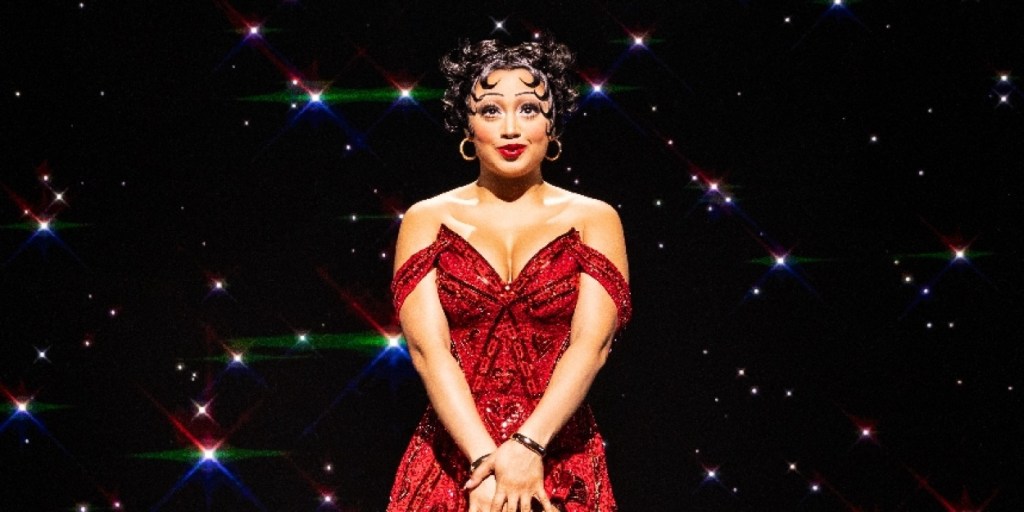
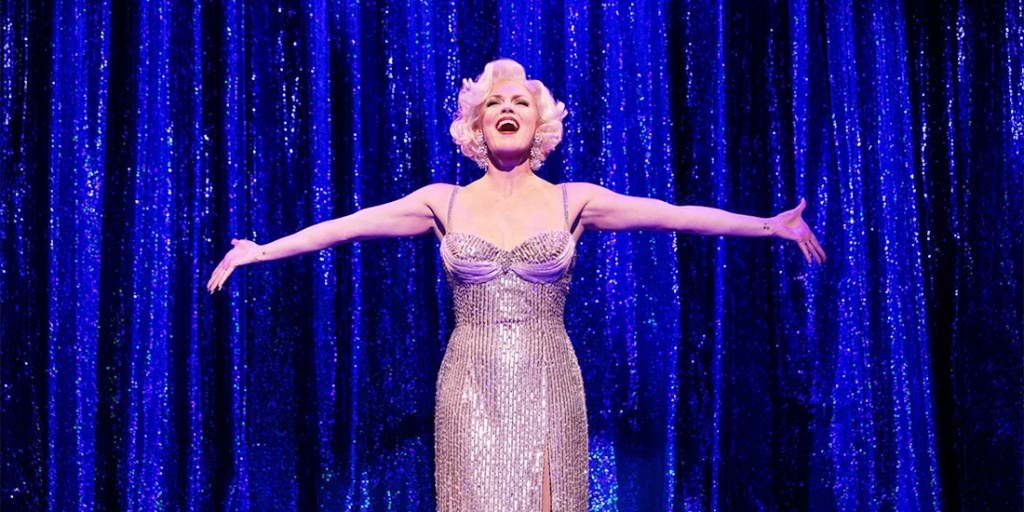
    Another year, another sextet of glittering Queens assume the crowns in Toby Marlow and Lucy Moss’s banging musical/pop concert hybrid. This time around though, Six hits a little different from the last couple of cast changes. This reimagining of the wives of Henry VIII as a fierce girl group, a permanent fixture in the West End and on Broadway, has always been exhilarating (how could it not be with this profligacy of great pop songs, authentic wit, female empowerment and glossy production values) but lately Moss and Jamie Armitage’s staging had seemed to have lost a little of its edge and specificity. 

    It’s therefore joyous to report that the 2025 company brings back a certain detail and individuality to the principal roles that hadn’t always been evident since the original team gave up their bejewelled Steampunk corsetry and high heeled boots. While nobody is going to see Six for nuance, it’s a subtly more satisfying experience when it’s not just about the sass, sparkle and vocal pyrotechnics (all of which are still, fabulously, present and correct of course) and that’s what we get here. It feels like the show has quietly (not that there’s much quiet about Six) regained its heart: these Queens aren’t just belting and strutting, they’re also listening to each other and investing their stories with a touch more drama and genuine pathos than we’ve seen in recent years.

    This is one of the strongest London casts to date, a multinational bunch of contrasting women (all of whom, bar one, have previous experience with the show) who nail their individual characterisations before coming together to form a tight, dynamic ensemble. Thao Therese Nguyen’s loose-limbed, adorably batty Anne Boleyn is the sole holdover from last years company while Dionne Ward-Anderson returns as a feisty, histrionic Anna of Cleves and seems to have acquired even more irresistible comic chops than in her previous stint in the role…she was excellent before but now she’s a bona fide firecracker.

    Jaz Robinson’s Canadian-accented Aragon fields a sweet but powerful voice with a breathtaking range. Cooler and less manic than some of her predecessors, she brings a unique regality which makes it all the funnier when her facade starts to crack. Hana Stewart, an esteemed standby for a couple of years who also appeared in the Broadway production, brings an affecting sincerity to Jane Seymour and delivers a superlative, power-packed rendition of  ‘Heart Of Stone’, the only ballad in the score. 

    Perhaps inevitably, an Aussie Katherine Howard suggests the Minogue sisters but that actually works terrifically well. Caitlyn De Kuyper, looking like the most exquisite porcelain doll, is funny and enchanting but has a curious detached quality which pays off devastatingly in her solo ‘All You Wanna Do’, a bop that darkens and deepens as it progresses into its tale of systematic abuse and is dramatically the most accomplished number in the show. De Kuyper absolutely nails the stark change of tone from playful to disturbing.

    In a company of fine voices, Amelia Kinu Muus as Parr stands out with a honeyed belt capable of descending into something down-and-dirty before flipping up into an almost classical flute-like purity. She also invests the surviving wife with a winning combination of warmth, fire and heartbreak; she’s the only Queen not to have done the show before but this is a remarkable Six debut. 

    Carrie-Anne Ingrouille’s whirling, stomping choreography remains as dazzling as ever, and the complex vocal harmonies have seldom sounded as fine as they do right now. All the technical elements remain tip top – the show is a gleaming, technicolour eyeful – but Paul Gatehouse’s sound design feels more crystal clear than ever, showcasing bold new notes, some thunderous and some surprisingly delicate, in Tom Curran’s orchestrations and the work of Beth Jerem’s cracking all-female band.

    It’s wonderful to see this beloved West End staple roaring back to such glorious life. The reign doesn’t just continue, it delights and surprises. A total pleasure.

    March 26, 2025

  • WHITE ROSE – ⭐️⭐️ – good intentions don’t necessarily make great theatre

    Photograph by Marc Brenner

    WHITE ROSE

    Book and lyrics by Brian Belding 

    Music by Natalie Brice

    directed by Will Nunziata

    Marylebone Theatre, London – until 13 April  2025

    running time: 2 hours, 10 minutes including interval

    https://www.marylebonetheatre.com/productions/white-rose-the-musical

    This off-Broadway tuner tells the true story of a collective of students and intellectuals who called themselves The White Rose and campaigned bravely and indefatigably against the Nazis in 1940s Munich. It’s a fascinating and inspiring tale that ends in tragedy but points up the importance of resistance and upholding truth to power. It undoubtedly speaks to the world we are living in now, but whether it’s really a suitable subject for the rock musical treatment – or at least THIS rock musical treatment which gets bogged down in superfluous songs and earnest but undramatic exposition – is a question. 

    The juxtaposition of historical timeframe and contemporary(ish) music worked fine for Spring Awakening and Hamilton, so why doesn’t this hang together? For starters, there’s the script. Brian Belding’s book presents young Sophie Scholl heading to Munich to visit her brother Hans, who has an unfortunate history as  a member of the Nazi Youth movement before seeing the light (cue a relentless guilt ridden bombast ballad performed with considerable power by Tobias Turley) and becoming a passionate political resister and agitator, in a succession of low key scenes that occasionally explode into dramatic fireworks. Not often enough though and there is insufficient sense of urgency or danger in Will Nunziata’s sluggish production which shuffles the cast aimlessly on and off during scene breaks but never builds up any dramatic momentum.

    While one wouldn’t expect a musical with important and serious themes and based on tragic facts to be a barrel of laughs, one would also not expect it to be so colourless and uninvolving. Natalie Brice’s songs sound heavily influenced by the aforementioned Sheik and Sater Tony winner and possibly Jonathan Larson, and while they’re moderately tuneful and occasionally rousing (the ‘We Will Not Be Silent’ finale chorale is genuinely affecting), they sound generic and don’t do much to propel or illuminate the action. Caitlin Morgan’s band sounds good and the voices are decent, and sometimes spectacular, but it all just feels a bit lacking in passion and originality. 

    A show that takes itself this seriously runs the risk of tipping over into unintentional comedy as the electric guitars start wailing and the cast stare intensely into the middle distance while solemnly belting their faces off but, to the credit of everyone involved, that seldom happens here. Equally though, apart from the impressive last number, there’s never a moment of inspiration where you forcibly realise why the creatives thought this interesting story would make a decent musical.

    Most of the cast do their best with what they’ve been given. Owen Arkrow finds some emotional heft in the young man traumatised by what he witnessed in the Warsaw ghetto and Danny Whelan, playing a youthful dad torn between the need to do what’s right and to provide for his young family, has a ringing rock tenor I’d like to hear let loose on more exciting material. TV’s Mamma Mia! I Have A Dream competition winner Turvey also has a lovely, rangy voice but doesn’t invest doomed Hans with much gravitas, though there’s not much in the writing to support him.

    As his sister Sophie, ostensibly the central figure in the story, Collette Guitart, another strong singer, gives one of the most disengaged acting performances I’ve ever seen, barely registering anything beyond mild annoyance or possibly boredom, which seems an odd reaction when you’re battling actual fascism. She finds some real emotion near the end but the character is so unknowable up to this point that it’s impossible to get involved, and it doesn’t help that the number she and Turley are gamely warbling their way through when she turns the waterworks on, is entitled ‘Who Cares?’  Sadly, that rhetorical question pretty much sums up this well meaning but misguided offering. 

    March 17, 2025

  • CRY-BABY – ⭐️⭐️⭐️⭐️ – look out everyone, it’s Hairspray’s naughty little sister

    Photograph by Charlie Flint

    CRY-BABY

    Book by Mark O’Donnell and Thomas Meehan

    Songs by David Javerbaum and Adam Schlesinger

    based on the Universal Pictures film written and directed by John Waters

    directed by Mehmet Ergen

    running time: 2 hours, 15 minutes including interval

    Arcola Theatre, London – until 12 April 2025

    https://www.arcolatheatre.com/whats-on/cry-baby-the-musical/

    Some shows are surprise hits but the 2008 Broadway musical Cry-Baby was a surprise flop. The formula, and source material, was similar to that of Hairspray which ran over six years on Broadway and enjoyed a lengthy West End run and starry movie version: again a cult movie by John Waters, that notorious doyen of sick humour and high camp, gets the musical treatment, full of outlandish characters and period-specific tunes. Watching Mehmet Ergen’s wonderfully entertaining UK professional premiere for the Arcola, it’s surely impossible not to have a good time, while also getting hints as to why the show failed initially.

    For Cry-Baby we’re once again transported back to Waters’ hometown of Baltimore but this time it’s 1954 and rock’n’roll is running riot along with paranoia about communism and the atomic bomb, and anybody who’s a bit “other” is the source of suspicion and derision. Once again, Hairspray book writers Mark O’Donnell and Thomas Meehan have done a capable job of bringing the screenplay to the stage, but, unlike with that earlier show, they barely homogenise the excesses and bad taste of the original movie. 

    So we get jokes about the electric chair and polio vaccines, a comedy number about extreme mental illness, arson, promiscuity, and a re-enactment of the panicked reaction to a perceived nuclear attack. It’s a spicy brew, served up as comedy, and is often helplessly, macabrely funny, which is perhaps not surprising as co-author Meehan is also responsible for the books of The Producers and Young Frankenstein so has form when it comes to spinning edgy material into musical comedy gold. While Cry-Baby isn’t necessarily that, it’s a real hoot. The first act is mostly set-up, and occasionally feels a bit too in-yer-face and frenetic to be really satisfying, but the pay-offs in the second half are mostly delicious.

    Misunderstood leather clad bad boy Cry-Baby (Adam Davidson) falls for goody-two-shoes Allison (Lulu-Mae Pears, divine) much to the horror of her grandmother and protector, society grand dame Mrs Vernon-Williams (Shirley Jameson, elevating deadpan delivery to majestic comic heights) who has a major skeleton in her closet. The show juxtaposes the squeaky clean, upwardly mobile and all-white Baltimoreans with the much more diverse (both racially and morally) crowd Cry-Baby hangs out with, and depicts Baltimore as a place of wholesome picnics and privileged country clubs or low down music and drinking dives (which, frankly, look a lot more fun) depending on which side of the social divide you’re on. Designer Robert Innes Hopkins provides a unit set backed by a grimy looking giant star spangled banner, with panels being dropped in to denote different locations. It’s hardly spectacular but it has a scrappy, garish quality that suits the material better than a big, glossy presentation.

    Songwriters David Javerbaum and Adam Schlesinger give the wealthier kids a raft of sunny lounge-music numbers while Cry-Baby’s gang gets more of a free-wheeling Rock’n’Roll sound, all twanging guitars and insistent drums. As a score it’s a decent pastiche of 1950s popular music but it has little theatrical heft and the tunes aren’t memorable, although the lyrics have real zip and bite. The vocal performances are all spectacular though, none more so than the roof-raising belt of Chad Saint Louis as Cry-Baby’s sidekick Dupree, in a sensational debut. Pears and Davidson sing their souls out and beautifully negotiate the gear changes between angsty and blissfully romantic. Davidson is also a fabulous dancer (Chris Whittaker’s choreography has a comforting familiarity about it, which works given the time period the show is set in, but also a genuine dynamism that is all the more remarkable for being performed in such a limited space) but can’t quite eclipse memories of Johnny Depp in the original film.

    Pears really is lovely, and as heartfelt as it’s possible to be in a show this campy and irreverent, as the sweetheart who isn’t quite as naive as everyone thinks she is. India Chadwick, Jazzy Phoenix and a thrilling voiced Kingsley Morton are terrific as the trio of contrasting women in Cry-Baby’s gang, and Eleanor Walsh is a bona fide camp showstopper as Lenora, the deeply unhinged young woman who’s convinced that Cry-Baby is going to marry her. ‘Screw Loose’, her big number, a doo-wop infused declaration of love and mental instability (“Darling, it’s so hard to be sixteen and schizo / But I know it’s worth the cost / I’ve made up my mind which I’ve lost”) is deeply un-PC but gosh it’s hilarious, and Walsh delivers it like her life depends on it.

    Arguably the best song, Mrs Vernon-Williams’ tarantella flavoured ‘I Did Something Wrong, Once’ sees the guardian of community morals makes a startling confession, and doesn’t sound like anything else in the score. It’s a welcome change in tone, and performed with an irresistible, very funny combination of restrained relish and bruised dignity by Shirley Jameson, who almost stops the show cold. The finale ‘Nothing Bad’s Ever Going To Happen Again’ may not be half as catchy as Hairspray’s ‘You Can’t Stop The Beat’ but it goes with a slightly manic satirical swing as the fully company asserts that the future of America is assured, bright and trauma-free: you can almost smell the irony in the air.

    The prevalence of that irony is maybe Cry-Baby’s biggest weakness, apart from a scarcity of really memorable songs. It’s very enjoyable, but it’s so busy winking at the audience and daring us to be outraged that it loses sight of the fact that really great musicals have characters we can really care about. The cartoons-made-flesh that populate this raucous, bonkers version of 1950s America are fun to spend time with but never come close to touching our hearts. That’s a flaw in the piece and, to a lesser extent, the staging, but this glorious cast really couldn’t do a finer job of selling it all to us. It’s like Grease gone sour, and it turns out there’s a lot of twisted joy to be found in that.

    March 16, 2025

  • THE GLASS MENAGERIE – ⭐️⭐️⭐️⭐️ – it’s the hipster take on Tennessee Williams that you didn’t know you needed, but will probably never forget

    Tom Varey and Sharon Small, photograph by Manuel Harlan

    THE GLASS MENAGERIE 

    by Tennessee Williams 

    directed by Jay Miller

    The Yard Theatre, London – until 10 May 2025

    running time: 2 hours, 30 minutes including interval 

    https://www.theyardtheatre.co.uk/events/the-glass-menagerie

    It’s fitting to close a theatre building (and this iteration of The Yard has joyfully occupied a canal-adjacent corner of Hackney Wick since 2011 while a larger, improved version is set to open in 2026) with Tennessee Williams’s classic memory play. The Glass Menagerie is a gorgeous piece of writing, an elegiac, poetic meditation on family ties and dependencies, etched in guilt and sorrow but with pops of faintly ridiculous humour. Crucially and appropriately, it’s a play all about commemorating and analysing the past. The Yard’s Artistic Director Jay Miller stages it as a ravishing, shabby-chic, vaguely anachronistic last dance of regret, awash with feeling and flights of imagination. 

    As a production this is very on-brand for The Yard: it’s wildly eccentric, achingly cool but feels as in tune with the author’s intentions as it is with the unconventional but atmospheric warehouse space it’s playing in. I laughed more than usual at this bittersweet play and marvelled at the cheekiness of some of Miller’s choices but still had the required lump in my throat during the final scenes. 

    The Wingfield family, Amanda and her adult children Tom and Laura, cloistered together in a tiny St Louis apartment surviving on a meagre income while the mother recalls bygone days of moneyed gentility, are a stand-in for Williams’s own (Tennessee’s real first name was actually Thomas). Tom Varey’s Tom, looking back on his fractured home, has in this version become a multidisciplinary artist: although the text refers to him as a poet, he’s first discovered here as a painter, clad in overalls and head-mounted light visor, working on the back wall of the stage as the audience files in. 

    Cécile Trémolière’s set looks like an art installation, with a chaise longue and (inventively used) wardrobe marooned atop scatterings of the dust we all eventually come to, while a large sand pile is studded with motifs from the text such as multiple blue roses and the telephone Amanda makes increasingly desperate sales calls on, bursting through. Meanwhile, outsize beaded curtains hang, a larger than life sized image of the absent father beams down jocularly next to a giant, unattainable moon. It’s simultaneously literal and dream-like, an impression reinforced by Josh Anio Grigg’s haunting, reverb-heavy music and sound design where single words and phrases are repeated like fragments of memory, and by the pearlescent make-up on all the other actors except Varey, rendering them as not-quite real, yet entirely plausible, as they’re caught under Sarah Readman’s effective lighting which goes from stark to sensuously colourful by the second.

    This is a play that sometimes in performance can feel a little precious but under Miller’s bold guidance, one is struck by the youthfulness and energy it can muster. The exquisite language and delicate characterisations are underscored by mini-explosions of colour, light and sound, and the piece reveals itself as an altogether more muscular, vital beast than it seemed in its last two major London outings: John Tiffany’s expressionistic, dead-of-night-set Broadway transfer, and the gentle Amy Adams revival which split the role of Tom between two actors. 

    This production isn’t perfect. Lambdog1066’s hipsterish costumes, sometimes more redolent of the 1970s than the period of the play, are maybe trying a bit too hard (Amanda’s cotillion dress donned for the arrival of the long awaited gentleman caller is unhelpfully hideous, while Jad Sayegh as Jim, said caller, is somewhat bizarrely got up to look like Jim Carrey in The Mask) but they are certainly striking. There’s a fantasy dance sequence for Laura and Jim that doesn’t really add anything. For all Miller’s obvious understanding of, and affection for, the text, there are moments when the cast are stuck in one corner of the large stage leaving the majority of the audience staring at blank space (there’s also onstage seating for no particular reason).

    Still, I’d rather sit through a take with this much guts and imagination than a more staid, conventional version, especially when the acting is so good. Sharon Small’s Amanda is a magnetic combination of sweetness and steel, and probably the most sympathetic rendering of this role I’ve ever seen. The love for her children is palpable, and her muted, brave reaction when she realises that Jim is not going to be the answer to her mother’s prayer for Laura is as heartbreaking as it is subtle. The volcanic fury that follows is grounded in real human feeling and disappointment. It’s a flawless performance.

    Equally compelling is Varey who invests Tom with a throbbing vein of torment, but also a baggy, louche charm and slight air of camp. His exasperation is deeply felt but so is his affection for his now-lost mother and sister, which is as dysfunctional as it is potent (note the way he assumes the foetal position when being held by Laura). 

    Eva Morgan’s neurodivergent Laura is a beautiful creation (first seen wearing modern ear defenders), as delicate as the tiny glass animals she treasures, and almost convulsing with panic or staying eerily still during moments of high stress, but with a gentle self-possession and wry humour that makes it all the more gut-wrenching when things don’t pan out for her. I’ve never seen the moment when Amanda cajoles her daughter into opening the front door to the stranger coming for dinner played with so much tenderness and care, and watching Morgan blossom then deflate is quietly devastating. Sayegh brings an authentic warmth to the ambitious but kind young man who offers a brief glimpse of normality and romance. 

    On a fun note, the production makes much use of the tinkling piano and doomy  bombast of Shakespear’s Sister’s 1992 hit ‘Stay’ (an instrumental version plays during the pre-show then returns at the end as in increasingly desperate Tom tries to outrun his memories, in an inspired bit of staging). The melancholic tone of the song suits the script but is doubly appropriate as Jim’s nickname for Tom is Shakespeare, and The Glass Menagerie centres on his sister. 

    The sense of America on the brink of something seismic (in the time frame of the play as written, it’s WW2), with unhappy souls burying their misery in liquor and casual encounters, feels shudderingly persuasive at the present time, but Miller and team don’t belabour this, investing the text with magic realism and an infinite amount of care. The ending is galvanising and emotionally affecting, befitting a production that thinks outside the box but never loses sight of the riches contained in that box. It’s a hell of a way to say goodbye to a space that has presented some of the most interesting, shape shifting fringe theatre London has seen in the last fourteen years. Even Williams purists may find themselves stirred and surprised by this Glass Menagerie. I loved it.

    March 12, 2025

  • PUNCH – ⭐️⭐️⭐️⭐️⭐️ – violence, forgiveness, humour, rich and rare humanity…it’s all here

    David Shields, photograph by Marc Brenner

    PUNCH

    by James Graham; based on the book Right From Wrong by Jacob Dunne

    directed by Adam Penford

    The Young Vic, London – until 26 April 2025

    running time: 2 hours, 25 minutes including interval 

    https://www.youngvic.org/whats-on/punch

    Something authentically remarkable happens in the second half of this new James Graham play, probably his most emotionally charged to date. Punch is a distillation of Right From Wrong, Jacob Dunne’s autobiographical account of a criminal youth stemmed by a manslaughter conviction and culminating in an astonishing rehabilitation. There’s a heartstopping moment in act two where we watch David Shields’s guilt-ridden, awkward, barely articulate Jacob tentatively but definitively blossom into somebody with a positive future under the steady, forgiving gaze of the parents of the young man whose life he accidentally ended with a fatally aimed sole punch to the head. The detailed subtlety of Shields’s work against the stoic warmth of Julie Hesmondhalgh and Tony Hirst as the pair of humans who are entitled to vengeful fury but instead choose an entirely different path quietly takes the breath away and elevates Graham’s writing and Adam Penford’s staging, already both quite wonderful, into the stratosphere.

    No contemporary playwright can beat Graham when it comes to state-of-the-nation narratives onstage and if Punch doesn’t feel as epic as say Dear England or This House, it provides, with humour and sparky theatricality, a clear roadmap of the social deprivations and conditions that drive a restless working class youngster into petty crime and gang membership. At least, that’s the first half which plays out like a Nottingham-accented stage version of Shameless as Dunne, in a group therapy session, relives his early life in the hardscrabble Meadows Estate, with his scally mates, his well meaning but alcohol abusing single mum and his sullen younger brother. 

    Jagged and episodic, it has the ring of savage truth, undoubtedly because it’s culled from Dunne’s actual lived experience. It’s tremendously watchable, staged with genuine panache by Penford and his movement associates Leanne Pinder and Lynne Page, underpinned by Alexandra Faye Braithwaite’s electronica score. In a towering performance, Shields impressively manages the transitions between cocky, wired youth through withdrawn disaffection to maturity and gravitas, his physicality and voice unerringly conveying which stage of life the man we are looking at is in.

    It’s the second act though where the play moves into a more fascinating zone as the consequences of Jacob’s actions are subverted by the sheer kindness and almost superhuman grace of Joan and David, the parents of Michael Hodgkinson, whose life support machine was turned off nine days after the fateful punch outside a Nottingham night club. This production is dedicated to Michael’s memory which is a fitting tribute to the young paramedic if no substitute for him living out his full lifespan. 

    This second half is extremely moving, all the more so for the lack of histrionics. Graham is too good a writer to make Joan and David into beatific saints, investing them with a questioning humanity that sears as much as it heals. Note the way David states he won’t shake Jacob’s right hand as that is the one he hit Michael with, and you’ll have a hard time getting over the look on Joan’s face as she listens to saved mobile messages from her deceased son. It’s hard to think of another actor as adept as Hesmondhalgh at conveying an innate goodness that never cloys, tempered with direct, warm humour, and Hirst complements her as a man bewildered both by his own feelings and the warm glow of forgiveness emanating from his beloved wife. 

    For all the truth and brilliance of the performances, if this weren’t a true story, one might have trouble buying that these people could find such kindness in their hearts, but it’s couched here with such sensitivity and intelligence that instead of incredulity you just find yourself sitting there strangely elated and with tears pouring down your cheeks. Graham’s dialogue is gritty, accessible – sentences get jumbled up or go unfinished as characters try to articulate a myriad of conflicting thoughts- and feels entirely credible.

    The acting throughout is magnificent, rooted in truth rather than theatrical grandstanding, each of the performers apart from Shields playing multiple roles. Emma Pallant is so touching as Jacob’s troubled mother and then is a spiky joy as his nice but tough social worker (“you’re on the housing list, but it’s a very long list and there’s no housing”) who bemoans that the local councils seem to favour potholes over people when it comes to fixing what’s broken. There’s equally memorable work from Alec Boaden and Shalisha James-Davis as a bunch of contrasting figures in our anti-hero’s troubled life.

    Anna Fleischle’s unit set of a metallic bridge atop a forbidding looking tunnel evoking the walkways and no-go zones of soulless urban estate planning is almost aggressively ugly, which feels about right. By contrast, Robbie Butler’s stunning lighting runs the full gamut from stark to fantastical, conjuring up detention centres, intimidating corridors, dancefloors, churches and dark nights of the soul with technical virtuosity.

    Punch is a play about healing, and forgiveness. It’s refreshingly non-preachy and well alive to the flaws in a social system that can so easily write people off, while also acknowledging that there are solutions, some of which are not readily obvious. It also pulls no punches (pun intended) in depicting the dangers of wreckless violence. Ultimately though, it presents the finest of humanity, celebrating how kindness and compassion can genuinely turn around an existence that seemed to have gone to the bad. Provocative, life-enhancing theatre.

    March 9, 2025

  • KENREX – ⭐️⭐️⭐️⭐️⭐️ – it’s a solo show with a cast of dozens…and it’s absolutely enthralling

    Photograph by Manuel Harlan

    KENREX

    written by Jack Holden and Ed Stambollouian

    music composed and performed by John Patrick Elliott

    directed by Ed Stamboullouian

    Southwark Playhouse, Borough – London, until 15 March 2025

    running time: 2 hours, 10 minutes including interval 

    https://southwarkplayhouse.co.uk/productions/kenrex/

    Reviewing theatre is a privilege and a challenge. Usually the challenge is to pick apart what works and what doesn’t about a production. But what about when a production is so good that not only do you have no criticisms, but you seriously doubt that you have sufficient superlatives? Kenrex is one such show. Billed as “a true crime thriller”, Jack Holden and Ed Stambollouian’s genre-busting, technically breathtaking (on every level) piece is so much more than that. 

    Performer and co-writer Jack Holden and his genius composer, musician and co-star John Patrick Elliott have form when it comes to shapeshifting almost-monologues, having been responsible for 2021’s Cruise, an evocative trawl through AIDS-era gay Soho that had audiences and critics on their feet in the wake of the pandemic. Brilliant as that was, Kenrex, apparently seven years in the making, is next level magnificent. Co-writer and director Ed Stamboullouian is now on board and drives Holden to even more ambitious heights of storytelling and characterisation, in a staging that takes elements of podcast, thriller, western, rock musical, performance art, stand-up comedy and even classical tragedy, and fuses them into a bold new genre. It’s also remarkable in that it manages to make a grim if fascinating true story into something so unforgettable, shattering and ultimately exhilarating. 

    Set simultaneously in the tiny rural American town of Skidmore, Missouri where aggressive outsider Ken Rex McElroy terrorised residents for years, every legal conviction quashed by his showboating defence lawyer Richard Gene McFadin, and in the memory of David Baird, the prosecuting attorney recalling his part in what would turn out to be the final case against the vicious drifter. An entire community is magically, vividly conjured up – the feisty female barkeep, the local butcher and his kindly wife, the scrappy underage girl McElroy impregnates, various others who have been intimidated and abused – as Baird tells the tale of ordinary people who finally decided enough was enough. As with Cruise, Jack Holden plays all of the characters, changing from male to female, young to old, civilised to feral, with an adjustment in voice, stance or emphasis, in a breathtaking display of actorly craft. He’s mesmerising, powerful then tender, pathetic then terrifying, turning on a dime, his handsome features endlessly malleable, as he snarls, simpers, pleads or just looks on with impassive authority. The word “stunning” gets bandied about frequently with regards to acting, but Holden truly is: this is a stupendous performance.

    The text, tense, white-hot and vivid, pulls few punches in describing the fear and brutality, shot through with unexpected shards of humour, all underscored and punctuated by Elliott’s thunderous, thrilling score. Tinged with C&W, emo rock and haunting bombast, Elliott’s music works mostly like a film soundtrack but occasionally explodes into full on numbers…it’s wonderful.

    In fact, Stamboullouian’s production is packed with wonders. The originality of his staging astonishes: an array of spotlit microphones stands in for an entire community, their systematic unplugging taking on a sinister tone, a neon lit doorway spins and pivots to simulate movement and change of location, a pair of roving spotlights suggests an oncoming truck, the invention is the very stuff of theatre, and it’s executed with razor-sharp precision. Joshua Pharo’s acidic, transformative lighting and Sarah Golding’s galvanic movement direction are indispensable, as is Natasha Fields’s starkly effective set design. 

    There are multiple stage pictures that linger long in the memory, but Giles Thomas’s sound design is equally essential to the overall success of the show. At times it’s like listening to a rock concert, at others a radio phone-in…or a seance. Whispers and shouts from a vengeful mob come from behind you, Holden barks, bellows and murmurs into hand held mics. It’s incredibly complex but thoroughly clear.

    This is theatrical storytelling at its most dynamic and compulsive, edge-of-your-seat stuff that plays out with a cinematic fluidity and the intensity of a thriller. Holden must be on the brink of major stardom, but this tour de force turn will surely go down as a career highlight. Don’t even think about missing it. Kenrex rocks.

    March 1, 2025

  • ALTERATIONS – ⭐️⭐️⭐️ – rare revival of 1970s Michael Abbensetts comedy whose bite is slightly diminished by a big stage

    Gershwyn Eustache Jnr and Arinzé Kene, photograph by Marc Brenner

    ALTERATIONS 

    by Michael Abbensetts, additional material by Trish Cooke

    directed by Lynette Linton

    National Theatre/Lyttelton, London – until 5 April 2025

    running time: 1 hour 50 minutes, no interval 

    https://www.nationaltheatre.org.uk/productions/alterations/

    The space where a play takes place is important. The late Sheridan Morley, theatre critic of Punch and International Herald Tribune, once opined that the Piccadilly (currently home to Moulin Rouge) was such an unsympathetic venue that any show not solid enough to be successfully performed on a busy railway station platform, should never play there. The National’s Lyttelton Theatre isn’t as tricky as that, but it’s the least forgiving of the three South Bank houses, lacking the intimacy of the Dorfman and the imposing uniqueness of the Olivier. I was reminded of Morley’s words watching this sparky, rediscovered 1978 comedy drama by British Guyanese author Michael Abbensetts in the NT’s proscenium house and thinking how much better it would play round the corner in the Dorfman. 

    The Lyttelton doesn’t quite swallow Alterations whole, but the sheer size of it means it’s harder work to connect with Abbensett’s vibrant characters and Lynette Linton’s staging than it should be. While the play isn’t truly an overlooked classic, it has a lot to commend it, particularly a free-wheeling humour that surprises and delights, and a thoughtful undertow of seriousness.

    It’s certainly not that Linton, one of the most consistently brilliant directors of her generation, can’t master the space, as her uniformly acclaimed 2022 revival of Blues For An Alabama Sky on this very stage proved, but Alterations is a very different kind of play. Although its themes are epic (the experience of Guyanese immigrants coming to late twentieth century UK and their efforts to assimilate and to forge successful futures for themselves sometimes in the face of open racism), its physical scale is small. 

    There’s really only one set (the clothing alterations shop of ambitious Guyanese Walker Holt, who projects for himself a future as a high end bespoke tailor, realised in an elaborate but superfluous dream sequence) and Linton and her designer Frankie Bradshaw do as much to open up the piece as possible, blasting it with music (fabulous, reggae-infused work by XANA, another of the director’s regular collaborators), mood-shifting lighting (Oliver Fenwick) and atmosphere. The dinginess and the unease of working class ‘70s London is accurately evoked, as is its vitality and urgency. With moments of stylised movement, a perpetually revolving set and rails of colourful garments flying in and out, it’s certainly striking theatre-making but it sometimes feels more borne out of a need to fill the space rather than to really serve a six character script.

    As often with Linton’s work, it’s the detail in the relationships and the pinpointing of humour springing organically from the characters and their situations that is so impressive. The edgy dynamic between Arinzé Kene’s Walker and Horace (Karl Collins, gloriously louche and surprisingly sensitive), the flamboyant, upwardly mobile frenemy with designs on his wife, is superbly done. Cherrelle Skeete as said wife Darlene turns in a beguiling, multi-layered study of a woman whose natural exuberance and formidable strength is under constant attack from disappointment and exasperation at the unreliability of the principal man in her life. 

    There’s an absolute peach of a performance from Gershwyn Eustache Jnr as Buster, Walker’s co-worker constantly waiting on the phone for news from the hospital where his wife is about to give birth. Eustache Jnr is a natural clown, able to wring irresistibly funny business out of things as simple as asserting his right to a coffee break or passing round the celebratory liquor. It’s an endearing performance steeped in pathos: his reaction to the long awaited birth when it finally happens is a beautiful, heartwarming thing. A hugely likeable Raphel Famotibe brings a very different energy as Courtney, the second generation kid who’s now as much a Londoner as he is Guyanese, and who floats the interesting idea that the difficulties the older men have with fitting in are as much a generational as a racial issue. There’s fine work too from Colin Mace as Mr Nat, a moneyed white immigrant better able to assimilate in less enlightened times by dint of his skin colour.

    Walker as a central character is a curious one. While his desires for betterment and the attendant frustration is easy to understand, it’s harder to feel sympathy for a man who isn’t just a terrible husband to Skeete’s magnificent Darlene but is also giving another (unseen) woman the runaround. An almost unrecognisable Kene invests him with a manic edge but ultimately the actor’s personal charm and charisma is doing a lot of the heavy lifting.

    Abbensett’s script, with additional material by Trish Cooke, is racy and witty, shifting seamlessly between Caribbean patois and conventional English, the frequently gorgeous dialogue bouncing off the stage with a crowd pleasing vivacity. If it’s essentially all talk and little action, it provides an arresting snapshot of a moment in time, and Linton’s inclusion of a non-speaking Windrush generation couple and a cucumber cool modern day youngster usefully contextualises it within the history of Black Britons. There’s a lot here to love and to think about, but I can’t help feeling most of it would pop and focus so much more satisfyingly in a smaller house.

    February 28, 2025

  • THE LAST LAUGH – ⭐️⭐️⭐️⭐️ – expert impersonations and a nostalgic glow make an irresistible, poignant pairing

    Photograph by Pamela Raith

    THE LAST LAUGH 

    written and directed by Paul Hendy

    Noël Coward Theatre, London – until 22 March 2025

    running time: 80 minutes no interval 

    https://thelastlaughplay.co.uk

    The basic format of Paul Hendy’s delightful play, based on his 2016 film of the same name and a smash hit at last year’s Edinburgh Festival, would seem to be quite simple: a trio of British comedy all-time greats (Tommy Cooper, Bob Monkhouse, Eric Morecambe) hang out in a dressing room shooting the breeze about their craft, careers and personal lives. It’s an opportunity to resurrect some of the most inspired gags and routines from these beloved titans of mirth, and the show does indeed buoy up its enraptured audience on a warm sea of helpless laughter.

    But The Last Laugh goes a little deeper than that: the clues are there from the outset in the way that the dressing room mirror lightbulbs sputter and flicker, in the ghostly soundtrack of a distant audience roaring with joy, and the way that the first comedian we encounter, Damian Williams’s gorgeously realised Cooper, materialises out of darkness. It quickly becomes clear that the three men aren’t just reliving their past glories and providing mutual support in the face of demanding schedules and a tough business; each of them is preparing for what will be their final live performances, magically connected for the purposes of this play but in reality several years apart and in different locations, literally ‘the last laugh’. 

    This lends a poignancy to the merriment, and elevates what could otherwise have been a series of riotous sketches and uncanny impersonations into something truly special. Watching The Last Laugh is like receiving a warm hug immediately cooled by a brief icy breeze. Anybody who grew up with these comedians will adore this, but equally it’s required viewing for any younger people with a genuine interest in the history of comedy.

    Bob Golding (Morecambe), Simon Cartwright (Monkhouse) and the aforementioned Williams are so good and so accurate that the show is almost as eerie as it is hilarious. Almost. Golding nails Morecambe’s off-the-wall joie de vivre and musicality while Williams brilliantly hints at the gleeful curmudgeon that lurked beneath Cooper’s endearingly bumbling exterior, along with his permanent sense that everything is about to go heroically, hysterically wrong. Cartwright beautifully suggests that Monkhouse was perhaps, under the debonair-borderline-smarmy persona, the sweetest of the three. He was certainly the most analytical of the trio when it came to appreciating their craft, and his working knowledge not just of the jokes but of who wrote them make him an easy target for the other mens’s affectionate mockery.

    It’s Monkhouse here that makes the interesting observation that he differs from the other two because they are innately funny human beings whereas he just tells jokes well. All three actors transcend mere impersonation to create fully rounded characters, but with joyously familiar vocal tics and body language. They are simply astonishing.

    Hendy directs with a commendable lightness of touch and a laser sharp precision. He has also done an inspired job of melding the anecdotes, comic schtik and familiar routines (there are even a couple of songs) into a coherent stage play. There’s zero dramatic conflict in what is essentially a celebration of three iconic talents. Some of the inclusion of biographical details feels a little clunky, and the writing loses momentum when the three men start to bemoan the difficulties of being in showbiz at their level. That said, Morecambe’s description of the addictive, exhilarating nature of making people laugh, citing one particularly successful instance, remembering the audience response itself yet not being able to recall the location or the joke told, isn’t funny in itself but serves as a piercing indictment of what makes funny people tick. 

    Lee Newby’s dressing room set and Johanna Town’s lighting are so atmospheric you can almost smell the greasepaint and the dust. As a whole, The Last Laugh is more on-the-nose than the phenomenally successful The Play What I Wrote which conjured up Morecambe and Wise in a more impressionistic way than what Hendy and gang are attempting here. The impersonations are phenomenally good but the humanity behind the comedy genius is potently evoked in all three cases. It’s perhaps a rather slight piece but it is a wonderfully enjoyable one, and nostalgia has seldom felt so seductive or so uplifting. 

    February 27, 2025

Previous Page Next Page

Blog at WordPress.com.


Loading Comments...
 

    • Subscribe Subscribed
      • ajhlovestheatre
      • Join 59 other subscribers
      • Already have a WordPress.com account? Log in now.
      • ajhlovestheatre
      • Subscribe Subscribed
      • Sign up
      • Log in
      • Report this content
      • View site in Reader
      • Manage subscriptions
      • Collapse this bar