ajhlovestheatre

  • Home
  • About
  • Contact
  • Blog

  • BROKEN LAD – ⭐️ – Arcola Outside opens with a bit of a shocker

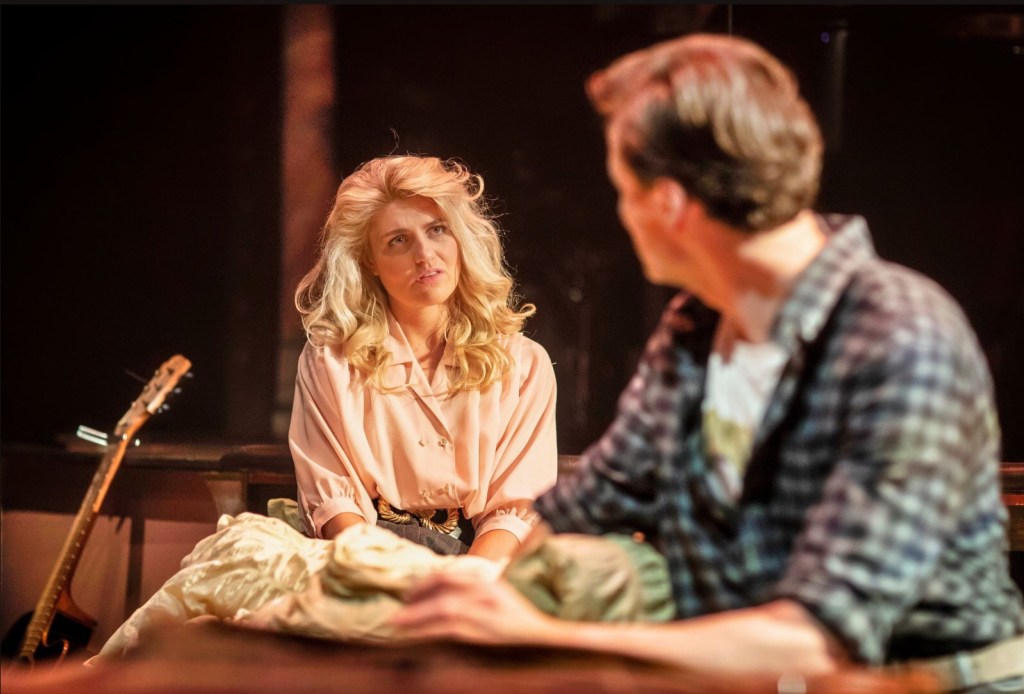
    Patrick Brennan, photography by David Monteith-Hodge

    BROKEN LAD

    by Robin Hooper

    Directed by Richard Speir

    Arcola Theatre/Arcola Outside – until 6 November

    https://www.arcolatheatre.com/whats-on/broken-lad/

    Kudos to the Arcola for finding a solution to the ongoing Covid situation by moving their entire performance operation to the outdoors for the time being. Arcola Outside has the same rough-and-ready charm as the adjacent main building, a decent sized stage, and an attractive, well-stocked bar, but with lots of air flow and plenty of room for social distancing. I guess there’s not much to be done about the amount of din coming from nearby Dalston Junction but one would hope that they’re planning to implement some sort of heating as the winter comes on, as it could get uncomfortably cold when the weather turns.

    Plummeting temperatures or not, patrons planning to experience the first new play presented in this space may feel the need to take heavy advantage of that aforementioned well-stocked bar. Unfortunately, Robin Hooper’s so-called comedy is a bit of a stinker, a whiney, misogynistic dirge that would have seemed a bit dated in the 1980s but manages to look simultaneously offensive and aimless when viewed through the prism of 2021 sensibilities.

    Comedian Phil, in a game performance by Patrick Brennan, was once a stalwart of primetime TV but is now reduced to gigging in rundown pubs. As he readies himself for his hopeless next set, his assistant-cum-manager Ned, an unhelpful variation on the “lonely old homosexual” trope, looks on – when he can tear himself away from the gay dating apps – with an unlikely combination of support and lust (yep, he has long held a torch for the unappealing Phil, which makes no sense at all until he also reveals that his celebrity crush is one Boris Johnson, so…yeah…his taste in men is unconventional, to say the least).

    Also circling are Phil’s sulky son Josh (Dave Perry, doing a lot of pouting and staring) who’s trying to work out if the old man has bonked his shrill girlfriend (he has), and, inexplicably, Phil’s sourly disapproving ex-wife (Carolyn Backhouse, doing her best in a thankless role). I can’t remember the last time I saw a play where none of the characters had a single redeeming feature, and Hooper’s script is sketchy on whether or not Phil is even any good as a comic. Certainly, the bit of his act that we get to see (through an upstage window, which is plenty near enough, to be honest) is borderline obscene and about as funny as a flag at half mast, while his offstage shtick consists mainly of warming over end-of-the-pier gags that weren’t particularly amusing even back in the ‘70s.

    Even more mystifying is the sexual thrall Phil seems to hold a couple of the other characters in. Maybe Hooper was trying to create an English Lenny Bruce or a modern variant on John Osborne’s Jimmy Porter, but what we get is a wheedling loser with bucket loads of self pity and a decidedly dodgy take on gender politics: apart from the divorce, his biggest problem with his ex seems to be that she was a successful businesswoman who was financially independent of him. This low level misogyny extends through the script to Josh’s girlfriend Ria (Yasmin Paige) who had been a fan of Phil’s when she was a teenager (er…why?) and is now also an incest survivor who slips into bed with both the comedian and his ghastly son. All this doesn’t so much stretch credulity as strangle it, especially during the melodramatic confrontations, and there is never a satisfactory reason for us to care about the fate of any of these unsympathetic individuals.

    Richard Speir’s staging is big on pacing about but lacks pretty much any subtlety, a problem exacerbated by the open nature of the space, where all the outside noise requires all actors to be mic-ed up, although when the script is like this I’m not sure that catching every line is really doing anybody any favours. All in all, this is a depressing evening, one that wastes the talents of some fine actors, and it’s a rare misstep in the Arcola’s usually superb programming. I suppose it could be argued that Jim Davidson’s recent TV embarrassment lends this unpleasant piece a certain topicality with it’s theme of reactionary, past-it comedians getting their comeuppance. The best thing I can say about is that it only lasts 90 minutes. Feels a lot longer.

    October 21, 2021

  • LOVE AND OTHER ACTS OF VIOLENCE – ⭐️⭐️⭐️⭐️⭐️ – the Donmar is SO back!

    Abigail Weinstock and Tom Mothersdale, photograph by Helen Murray

    LOVE AND OTHER ACTS OF VIOLENCE

    by Cordelia Lynn

    Directed by Elayce Ismail

    Donmar Warehouse – until 27 November

    https://booking.donmarwarehouse.com/events/1001ADGKSHLJDTDBJQTBMGLLJRLBJCMNN?_ga=2.6078067.1530587493.1634045699-900632422.1634045699

    The birth of a new star is always a source of theatrical excitement and it’s been a while since we’ve seen a professional debut as impressive as that of Abigail Weinstock, the sole female cast member of this powerful new play, a triumphant reopening production for the Donmar. Weinstock plays a young Jewish research physicist, a beautiful, brittle, brilliant young woman with a sardonic edge and, as becomes clear as the play progresses, a mother load of inherited trauma. It’s a terrific role, and Weinstock inhabits it fully, unforgettably, capturing every nuance of this complex character. She also, later, plays one of her ancestors, another intelligent, sensitive soul but one unfortunate enough to be living in the Polish city of L’viv in 1918, the year of the Lemberg Pogrom.

    If much of the epilogue of Cordelia Lynn’s finely tuned script feels apocalyptic, that’s because, to the Jewish people caught up in this seismic, vicious concerted attack, that’s exactly what it was. Interestingly though, and perhaps controversially, Lynn’s text seems to suggest that the perpetrators of atrocities are condemned to be haunted by their own actions in a similar way to their victims.

    Director Elayce Ismail and the creative team of Basia Bińkowska (design), Joshua Pharo (lighting) and Richard Hammarton (sound) collaborate on a terrifying scene transition. The thunderous aural effects, moments of stark illumination, and debris raining from the skies, are followed immediately by a final sequence of quiet, agonised tension that tellingly, tragically ties up all loose ends in the script while forcefully hammering home the point that, in the most extreme examples of humans being irredeemably cruel to each other, nobody ever wins.

    Prior to the lengthy, historical epilogue Lynn’s play is an edgy, often bleakly funny two hander about an unlikely, but entirely credible, dysfunctional relationship between Weinstock’s character (named in the programme as ‘Her’) and the nervy activist poet (Tom Mothersdale, delivering some of his career best work to date) who picks her up at her own party. The fault lines in the relationship and the eruption into bodily harm and anti-Semitism are not easy to watch, a fact exacerbated by the accuracy of the performances and production (fight director Yarit Dor’s work is alarmingly, uncomfortably convincing, especially given the intimate nature of the venue). Much of this is pretty hard to stomach, despite being shot through with some jet black laughs, but stick with it as the relevance to modern day issues and the emotional catharsis are a satisfying, essential pay-off for going through the wringer.

    If initially the play resembles Patrick Marber’s Closer and Nick Payne’s Constellations, both of which highlight the unexpected brutalities sometimes lurking within romantic/sexual liaisons, Lynn goes several steps further, allowing her principal figures to descent into actual physical violence. Her dialogue style is tart, taut and realistic, sliding periodically into something richer and more poetic. As a writer she seems intriguingly drawn to the “what if”s of an allegedly civilised world descending into chaos (her 2018 play One For Sorrow at the Royal Court covered similar terrain) and the initial humour of this new piece gives way pretty quickly to appalled alarm as we begin to realise that the two main characters are inhabiting a universe where anti-Semitism segregation is the acceptable norm. It’s both a dystopian fantasy rooted in reality, and a warning… and it feels horribly topical. There’s also a scene change that is an authentic coup de theatre.

    Unafraid to pull it’s punches, Ismail’s beautifully orchestrated production is a grimly exciting 100 minutes, with a pair of outstanding performances from Mothersdale and Weinstock. There are many plays that chronicle the disgusting treatment meted out to Jewish people throughout history, but here’s one that makes an explicit connection between historical wrongs and the present day. It’s devastating, dark and rich …and in Ms Weinstock we could be looking at the next Arterton or Atwell. This is one not to miss. What a way to reopen this powerhouse venue.

    October 18, 2021

  • THE NORMAL HEART -⭐️⭐️⭐️- Larry Kramer’s landmark AIDS play returns

    Ben Daniels and Dino Fetscher, photograph by Helen Maybanks

    THE NORMAL HEART

    by Larry Kramer

    Directed by Dominic Cooke

    National Theatre/Olivier – until 6 November 2021

    https://www.nationaltheatre.org.uk/shows/the-normal-heart

    One of the seminal plays of the AIDS generation, Larry Kramer’s 1985 text is a howl of outrage written in blood, fury, grief and bewilderment, epic in scope but intimate in detail. Subsequent plays, such as Tony Kushner’s Angels In America or Mathew Lopez’s The Inheritance, cover similar terrain with more finesse: the early to mid 1980s when a baffling, devastating disease ripped through the gay community laying waste to countless young lives, dreams, relationships and expectations. However, Kramer’s play is a different beast, pitched halfway between drama and reportage, and the immediacy and authenticity of it’s vision retains the ability to knock the breath out of the viewer, screaming at us down the years like a newspaper headline.

    I’m not sure though how clear that would be though if your only exposure to The Normal Heart is Dominic Cooke’s underwhelming new version. It starts with a striking visual image, which recalls Declan Donnellan’s original Angels In America that played just around the corner in what used to be the Cottesloe, with the entire company watching a flame of remembrance being lit then borne aloft into the Olivier flies before the stage erupts into a raucous 80s gay club vibrating to Donna Summer’s ‘I Feel Love’.

    From then on though, theatrical excitement is in rather short supply. For starters the venue is all wrong: even in the round the National’s Olivier stage feels huge (the original productions played at the Public in NYC and the Royal Court in London, both of which are comparatively tiny, and the searingly brilliant 2011 all-star revival played at the second smallest house on Broadway) and serves here to make an already declamatory script feel more and more like a series of bellowed set pieces and shouting matches, with several vital moments rendered invisible to large sections of the house due to the in-the-round set-up.

    The sheer size of the house makes emotional connection harder to achieve, a problem exacerbated further by a couple of lacklustre performances, some dodgy accents and an uncertainty of focus. The lack of human engagement needn’t necessarily be an issue in a play so fierily political as this one, cataloguing the monumental failures of the US presidential administration, NYC Mayor Ed Koch and the New York Times to acknowledge the health disaster unfolding, but it does run the risk of making the script seem like a series of dry list recitals rather than real drama. Cooke’s chilly staging, neither brutal nor funny enough, definitely errs in that direction, keeping the audience at a further remove by having the scene breaks and locations announced by the actors in their native Brit accents. It should come at us with the urgency of a high speed train that gets stopped dead in it’s tracks when the unfolding tragedy gets personal, but, at least on the night I saw it, it felt like an under energised meander.

    There are some powerful moments though, mostly down to Ben Daniels, genuinely magnificent in the central role of Ned Weeks (who basically IS Larry Kramer by another name). Daniels masterfully charts the man’s journey from defensive wit through bewilderment then bone-rattling fury at the plight of his gay brethren and the apparent general apathy to it, before utter, debilitating grief as he loses his beloved (Dino Fetscher, whose performance grows in stature as his character tragically disintegrates) to the dreaded epidemic.

    Daniel Monks and Luke Norris do truthful, passionate work as a pair of contrasting men engaging in the fight against AIDS and the broken status quo. The only woman in the cast, Liz Carr, is a glorious force of nature in real life but seldom finds the fire and dynamism in the irascible, outspoken doctor (Ellen Barkin on Broadway all but set the house ablaze in her precious few minutes of stage time), and is disappointingly flat.

    This remains a landmark play but it doesn’t suit the Olivier. What should knock us sideways feels, for the most part, timid and worthy. In the wake of the pandemic and the onscreen triumph of It’s A Sin, this could have felt like a major cultural event for 2021. It’s frustratingly lacking in catharsis and rage.

    October 8, 2021

  • & JULIET – ⭐️⭐️⭐️⭐️⭐️⭐️ – no, not five stars, more…because ‘I want it that way‘

    Photograph by Johan Persson

    & JULIET

    Music and lyrics by Max Martin

    Book by David West Read

    Directed by Luke Sheppard

    Shaftesbury Theatre – open ended run

    https://tixtrack.shaftesburytheatre.com/tickets/series/andjuliet/

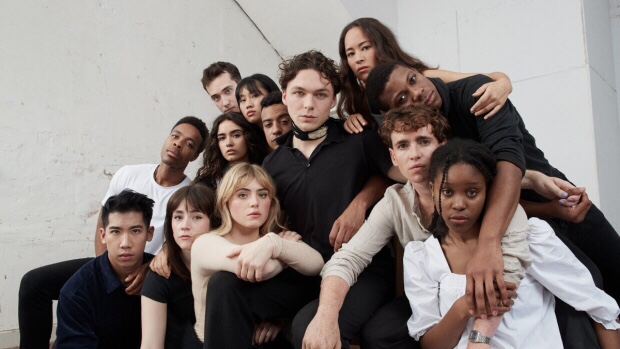
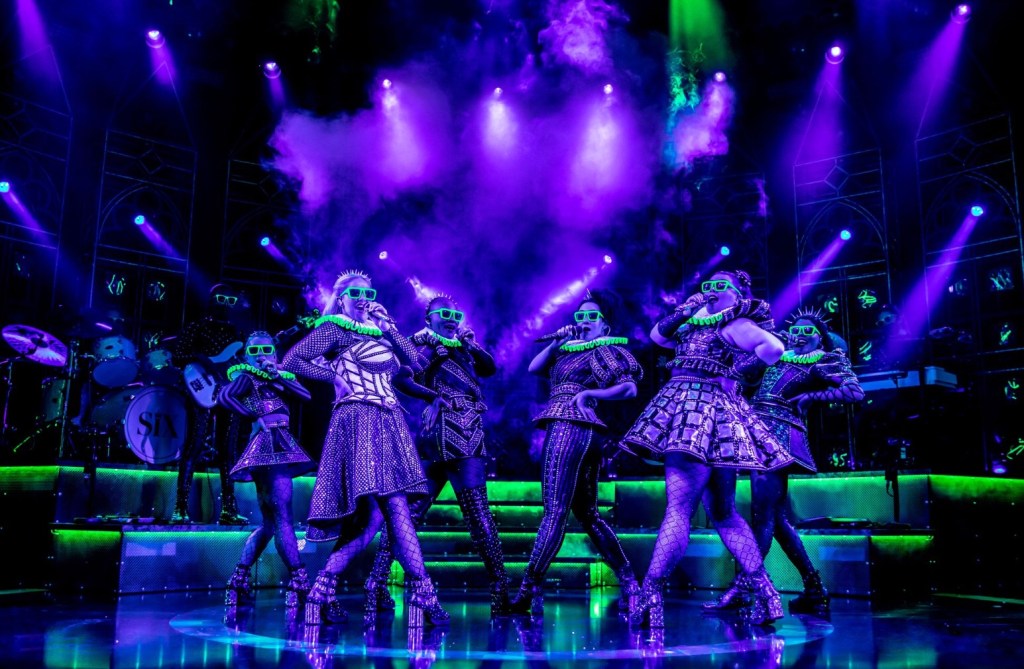
    A musical that riffs on Shakespeare while plundering the back catalogue of one of the most successful and prolific songwriters in pop history (Max Martin, who is only not a household name because he prefers the spotlight to be on the interpreters of his work: Backstreet Boys, Britney, Celine, Katy Perry, even Pink and Bon Jovi….you’ll have heard of them) was always destined to be either a car crash or a triumph. & Juliet joyously and thrillingly inhabits the latter camp (and I use the word “camp” deliberately). Throw in Luke Sheppard, a director equally at home with detailed sensitivity and balls-to-the-wall flamboyance, one of the writers of Schitts Creek in David West Read, a music video-savvy choreographer (Jennifer Weber), a cast of diverse, beautiful and supremely talented humans, and a quirky but world class design team working at the height of their abilities, and you’ve got theatrical ecstasy.


    Of course & Juliet is a heck of a lot of fun, a gorgeous confection packed with sensational performances, rousing numbers, good/bad jokes and enough baubles, bubbles and flash to induce a migraine in those who prefer their theatre stuffy and formal. But what may come as a surprise is how intelligent and moving it also is: a witty brain, a genuine affection for the works of the Bard of Avon, and a warm, kind heart lurk just beneath its glittering exterior. The pandemic seems only to have upgraded its exhilaration and deepened its well of feeling….and it was pretty damn special to begin with.


    Taking as it’s starting point the idea that Shakespeare’s Juliet didn’t swallow the poison when she thought Romeo was dead but got the hell out to wreak some havoc of her own, abetted by a disapproving nurse with an outrageous past of her own and a pair of best friends who egg her on while challenging her world view, it’s an anachronistic, primary coloured fantasia where sexuality, gender, body shape, even fidelity, are of zero importance compared to being true to oneself while not being an arsehole to everybody else. It’s full of attitude but equally full of love: the inclusivity and sheer joie de vivre it espouses is just what we all need after the last nineteen months.


    It’s also probably the prettiest spectacle you’ll ever clap eyes on (sets by Soutra Gilmour, costumes by Paloma Young, lighting by Howard Hudson, video and projection by Andrzej Goulding): a breathtakingly inventive parade of colour and whimsy that whisks the players from a mythical Paris complete with twinkling mini-Eiffel Tower and dry ice obscured Metro signs to a fairground ride eyrie suffused with twinkling stars while also evoking the idea of being backstage during a work in progress (the ensemble are characterised as Shakespeare’s acting company working on a troubled first draft of Romeo & Juliet). This rolling buffet of visual delight is further enhanced by Gareth Owen’s sound design which skilfully marries the gap between rock stadium rambunctiousness and making the characters sound like real people. Dominic Fallacaro’s orchestrations help enormously with this too, making the pop classics sound familiar yet excitingly new minted.


    When the show closed due to the pandemic, Miriam-Teak Lee had already won the WhatsOnStage award for Best Actress in a Musical but since then she’s also been handed the Olivier and in, in all honesty, it’s impossible to quibble. Her Juliet is the real deal: an authentic star performance, with killer vocals, a wicked sense of fun and a tangible warmth, she’s utterly fabulous. It’s watching a diva just before she goes supernova.


    The beating heart of the show though is Cassidy Janson as Anne, Shakespeare’s increasingly infuriated and disaffected spouse (“there’ll never be another Anne Hathaway”). Already multi-layered when the show opened, she has now acquired a greater lightness of touch, and an emotional urgency that proves deeply affecting. Her tear-stained rendition of Celine Dion’s ‘That’s The Way It Is’ is the stuff of memories, vocally enthralling and emotioally devastating. Oliver Tompsett’s cocky but charming Shakespeare is the perfect foil.


    Melanie La Barrie’s adorable Nurse also challenges the tear ducts with a roof raising version of Pink’s ‘Perfect’. Prior to that she is a comic joy…her rapport with David Bedella’s hilarious nobleman is utterly glorious. Their post-coital sass-ation of Katy Perry’s ‘Teenage Dream’ is one of the happiest things currently on any London stage.


    Jordan Luke Gage remains heroically vacuous and vocally exhilarating as the Romeo we never knew we needed: wait til you see his entrance at the end of act one…it’s pure showbiz meets rock excess. Tim Mahendran is as haunting as he is funny and cute as Bedella’s conflicted son, a sort of anti-Romeo trying to constantly to do the right thing even to his own detriment, and fields a truly exhilarating voice. Alex Thomas-Smith is just beautiful as his love interest May. If I missed the majesty and bruised emotionalism of Arun Blair-Mangat, the role’s originator, I loved the sensitivity and authenticity Thomas-Smith brings. This is a terrific cast.

    In short, when the term “a great night out” is bandied about, & Juliet is exactly what people are talking about: a thunderously exciting songbook tethered to a delightful script with a resource of tangible talent that’s almost an embarrassment of riches. I’m already planning my next visit and I hope to see you there.

    October 7, 2021

  • HOW TO SURVIVE AN APOCALYPSE- ⭐️⭐️⭐️- UK première for an award-winning Canadian play

    Photograph by Sam Taylor

    HOW TO SURVIVE AN APOCALYPSE

    by Jordan Hall

    Directed by Jimmy Walters

    Finborough Theatre – until 23 October 2021

    https://finboroughtheatre.co.uk/production/how-to-survive-an-apocalypse/#production-tickets-times

    It’s a treat to finally get back to the snug but ambitious Finborough, one of the capital’s most consistently impressive studio theatres. Kudos to them for forging ahead with reopening even while the pub downstairs is under major refurbishment. This may mean less woozy playgoers tripping inelegantly up those treacherous stairs, but the current production, Jordan Hall’s multi-award winning Canadian comedy in a smart staging by Jimmy Walters, is so engaging you don’t really need a glass of overpriced wine to enhance your experience.

    Hall’s tartly funny script, which reframes a lot of rom-com tropes in the context of a youngish urban couple Jen and Tim making preparations for the “end of days” while also examining their relationship and somewhat disappointing career trajectories, has probably, since it’s 2016 Vancouver premiere, acquired an added piquancy for these Covid-ravaged times.

    It’s an enjoyable evening, superbly acted on Ceci Calf’s elegantly off-kilter traverse set, but not perhaps as edgy as one might have expected from the play’s title or even the poster design for this London production: a cartoon drawing of a wedding day couple in gasmasks. Although billed as a romantic comedy in the publicity material, it still feels akin to writing a play about shopping and calling it something like ‘How Capitalism Destroyed The Western World’. Still, Hall’s dialogue accurately captures the rhythms and cadences of modern urbanites and wittily suggests that, for all of our sophistication, most of us would come apart at the seams in a real threat to civilisation. It becomes a little schmalzy though as the central couple fall out then regroup, and Jen is briefly drawn to Bruce, the gung-ho corporate macho man she had tried to set her New Age leaning, fragile friend Abby up with.

    Only one scene, where the women have a fairly intense conversation about matters of the heart, loudly punctuated by the sounds of offstage explosions and horrendous violence (Tim writes apocalyptic computer games for a living and is trying out a new creation at home) feels truly original. Elsewhere there are few genuine surprises.

    The actors are all terrific though. Kristin Atherton is a powerhouse of go-getting professional energy mixed with tremulous personal uncertainty, in a seriously accomplished, dynamic performance as Jen, matched by a hugely likeable Noel Sullivan as her infinitely less ambitious, permanently bewildered partner. Christine Gomes and Ben Lamb also do superlative work, suggesting multiple layers and shading to the other pair, both of whom could come off as a bit clichéd in lesser hands.

    The concepts of order collapsing and survival at all costs, while also attempting to maintain some vestiges of chi chi living, feels uncomfortably relevant, despite the steady flow of laughter, plus it’s good to discover a talented new writer, especially when her work is given as fine a UK premiere as this one. Welcome back Finborough, you’ve been missed.

    October 4, 2021

  • IDA RUBINSTEIN – The Final Act – ⭐️⭐️- A frustrating theatrical hybrid

    Photograph by Matthew Ferguson

    IDA RUBINSTEIN – The Final Act

    Book, direction and choreography by Christian Holder

    Original scenarios by Iryna Ioannesyan and Natella Boltyanskaya

    Playground Theatre – until 16 October

    https://theplaygroundtheatre.london/whats-on/

    Disparaging somebody else’s passion project is a bit like telling a doting parent that their baby is ugly. This stage tribute to Art Nouveau darling Ida Rubinstein – the early twentieth century dancer, art patron, actress and all round Renaissance woman, a Russian Jewish heiress who also served as a wartime nurse – is one such endeavour. It is abundantly clear that the creatives involved here have an encyclopaedic knowledge of, and love for, their subject and equally clear that she was a remarkable woman, an artist, philanthropist and trailblazer who also ran an extremely complicated personal life alongside her controversial professional one. Unfortunately though, good intentions, meticulous research, boundless respect and affection, nor even a fascinating central figure, do not automatically make great theatre.

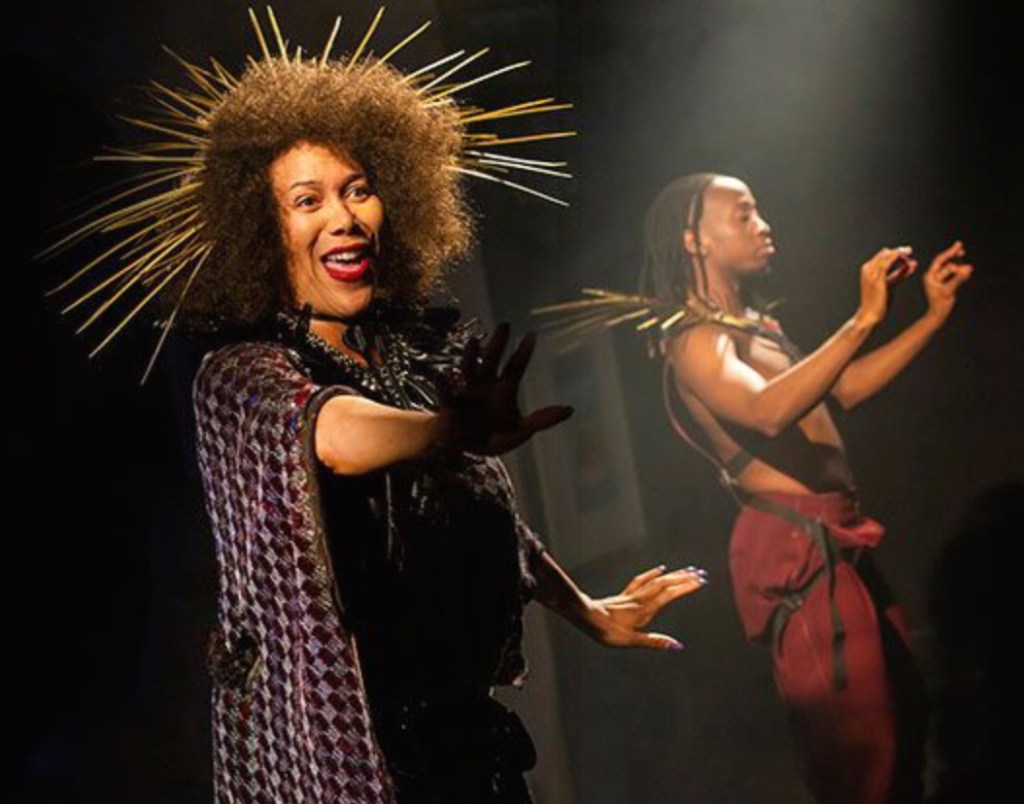
    If it takes a star to convincingly portray a star, then The Final Act is in very safe hands in this respect at least. The show is built around the considerable talents of Naomi Sorkin, herself a former principal for American Ballet Theatre and Lindsay Kemp amongst others. On a side note, I remember her as a haunting, grief-stricken, entirely wordless villager and quite the best thing about a late-1980s Brigadoon revival at the Victoria Palace. With her lithe dancers physicality, expressive hands, heavily made-up flashing eyes and shock of gorgeous Titan hair, she is utterly mesmerising here, swanning around in an array of glittering kaftans, evoking Belle Époque glamour, a slight edge of danger and an underlying well of deep melancholy.

    She is an imperious, eccentric yet oddly sympathetic presence, so bewitching that it almost becomes possible to overlook the ineptitude of much of the rest of writer-director-choreographer Christian Holder’s flattening hotchpotch of drawing room confessional, dance drama and home movie. Rubinstein did have several forays into film so this last element isn’t completely random, although it could have been interpolated into this genre-melding show with a little more finesse. Similarly, the terpsichorean sections, despite the majestic Sorkin, feel grafted on and, unfortunately, a little risible, particularly the bizarre second half sequence depicting Ida as a nurse in what would appear to be an oblique reference to her signature role of Salome, except here instead of the Dance of the Seven Veils we seem to be getting the Dance of the Single Bandage. Not gonna lie, I found it hard to keep it together for that one.

    Despite an impressive contribution from Darren Berry, a fine pianist and a suitably histrionic Maurice Ravel (Bolero was written for Rubinstein) I tend to think the show would work better as a solo show for Sorkin, as when she is down front centre stage she is compelling and authentic enough to (mostly) deflect attention from the clunky script, and the aimless shuttling on and off of Rubinstein’s lovers and artistic associates such as Romaine Brookes and Gabriele D’Annunzio, both of whom are performed with a frustrating lack of specificity and conviction.

    Apart from the opportunity to see a major talent embody another major talent, perhaps the most welcome thing about Ida Rubinstein – The Final Act is that it may make you want to go away and read up about its astonishing subject.

    October 1, 2021

  • BACK TO THE FUTURE – ⭐️⭐️⭐️ – Great Scott! It’s the movie on stage!

    Roger Bart and Olly Dobson, photograph by Sean Ebsworth Barnes

    BACK TO THE FUTURE

    Book by Bob Gale

    Music and Lyrics by Alan Silvestri and Glen Ballard

    Based on the screenplay by Bob Gale and Robert Zemeckis

    Adelphi Theatre – open ended run

    https://www.backtothefuturemusical.com

    The arrival of a trio of splashy big new musicals in the West End at roughly the same time – the others being Frozen and the ALW Cinderella – feels both like a brave move by producers but also, most importantly, a triumphant V sign (and I don’t necessarily mean ‘victory’) to the pandemic and the chaos, misery and uncertainty it has caused. The last of the three to open, this hyper-caffeinated stage version of, and homage to, Robert Zemeckis’s beloved 1985 time-travelling, sci-fi comedy, may turn out to be the biggest crowd pleaser of the lot, even if it’s probably the least satisfying when judged by the standards of well-crafted stage musicals.

    It is certainly the most astonishing in technical terms: I can’t think of any other show in recent memory that has combined computer generated imagery and physical sets to such overwhelming effect. Throw in a stage revolve in near perpetual motion, and a complex lighting rig that extends outside the proscenium and across the auditorium resembling the innards of a computer crossed with a multiple lightning strike, and you’ve got a visual feast. Then there’s the famed DeLorean car, retooled by eccentric scientist Doc Brown to allow 17 year old Marty McFly to travel back and forth in time to avert potential family disasters in small town America, and it’s quite a sight to behold. The frantic, eye-popping time travel sequence near the end of the show is genuinely thrilling. You’ll believe a car can accelerate to such an degree that it smashes through time, that it can fly and even, in a departure from the movie, that it can talk. Well, a bit.

    It says much for the performances of Olly Dobson, hugely likeable in the Michael J Fox role, and especially Broadway veteran Roger Bart, as a joyously eccentric Doc Brown, that the car doesn’t feel like it deserves star billing. Dobson carries the show with laidback charm and a pleasant voice, but Bart is the real deal, in a gorgeously funny display of physical quirks, vocal tics and formidable comic timing. He’s outrageous but with an underpinning of truth that pushes this Doc into the realms of the unforgettable. It’s a masterclass in musical comedy performance, and may even improve upon Christopher Lloyd in the original movie.

    There is a lot to love in the supporting cast too: Cedric Neal brings formidable comedy chops, delightful stage presence and a glorious, roof-rattling voice to the Diner owner who ends up Mayor of the local town. Rosanna Hyland does really lovely, subtle (for this show) work as Marty’s Mum, world weary and vodka soaked in the 1980s, plausibly morphing back to a more optimistic but still feisty version of herself in the 50s, and again with a voice to die for. Hugh Coles and Aidan Cutler are great fun as, respectively, Marty’s Dad and the town bully.

    Where Back To The Future on stage falters slightly is that, for all the flash and spectacle, it never feels like there was ever a really strong reason to turn it into a musical. Certainly not Alan Silvestri and Glen Ballard’s pastiche heavy score, which is enjoyable but largely unmemorable, all the songs paling beside the Huey Lewis classic ‘The Power Of Love’ which brings the house down in the second half. Nor Bob Gale’s script, adapted from the screenplay he co-wrote with Zemeckis, which ensures that the audience get all the big moments, laughs and plot points they paid for but never achieves a distinct theatrical life of it’s own. It does exactly what it says on the tin, no more, no less, but, like the DeLorean, it has a disconcerting stop-start quality that impedes tension and flow, before suddenly taking flight into moments of sheer exhilaration.

    John Rando’s direction doesn’t as yet smoothly marry the hi tech stuff with a cartoony go-for-broke, anything-for-a-laugh aesthetic: it’s like watching two shows pull in different directions at once, the lavish spectacle ultimately winning. Structurally, Back To The Future eschews convention (no opening number, an overly busy first half closer that feels like it should have cropped up half way through the preceding act, the much loved “big number” – the aforementioned ‘Power of Love’ – not ending the show but paving the way for a much less distinguished finale) but doesn’t replace it with anything exciting or even coherent. Tim Hatley’s designs, Ethan Popp and Bryan Crook’s orchestrations, Finn Ross’s video design and, above all, Tim Lutkins’s lighting are all world class however.

    The whole show is a technicolour eyeful and, even at West End prices, you’ll really be able to see where your money has gone. If it’s not even the best screen-to-stage adaptation of this year, I’ve still no doubt this will make a lot of people very happy, and will keep the Adelphi nicely filled for quite some time. Also, this must have one of the hardest working stage management teams in London; it’s seriously spectacular and a lot of fun.

    Note – this review first appeared on Fairy Powered Productions http://fairypoweredproductions.com/

    September 29, 2021

  • BLITHE SPIRIT – ⭐️⭐️⭐️ – Jennifer Saunders is a magnificent medium

    Jennifer Saunders and Lisa Dillon, photograph by Nobby Clark

    BLITHE SPIRIT

    by Noël Coward

    Directed by Richard Eyre

    Harold Pinter Theatre – until 6 November

    https://www.atgtickets.com/shows/blithe-spirit/harold-pinter-theatre/

    Written and premiered in the early 1940s while WW2 raged on and the prospect of losing a precious loved one at short notice felt like a very real possibility, Noël Coward’s ghostly comedy is, perhaps not surprisingly, the first of ‘The Master’’s plays to be seen in the West End post-pandemic. To be fair, Richard Eyre’s Theatre Royal Bath revival was playing, with most of the current cast, at the Duke of York’s when everything shut down in March 2020, so was ripe for reopening. Here it is again then, in a different venue, and maybe with an added piquancy and relevance.

    The ostensible centrepiece of the production remains Jennifer Saunders as Madame Arcati, the medium who conjures up Elvira, the dead wife of sceptic novelist Charles Condomine, much to the consternation of his current wife Ruth. Saunders is magnificent: this heroically eccentric woman is absolutely convinced of her own powers, and is genuinely affronted by the indifference and mockery of the posh Kent brigade she’s confronted with in the Condomine household. Got up like a chronically flatulent, Blyton-esque Head Girl gone to seed, she’s predictably hilarious, but Saunders also projects a wounded pride that lingers in the mind after the laughs have faded.

    This Arcati’s delight at encountering another person with “the gift” (the Condomine’s fabulously bizarre, awkward maid Edith – Rose Wardlaw in a surprising, scene-stealing turn) is oddly touching, and the resemblance between the two women – an insight I’ve never encountered in any earlier staging of the play – makes for a satisfying symbiosis.

    The performance of the night though turns out not to be Saunders, nor Madeleine Mantock’s impressively assured West End debut as a ravishing, unusually sexy Elvira, nor even Geoffrey Streatfeild handling Charles’s coming apart at the seams with incredible panache. In what is generally considered to be the least rewarding of the four lead roles, Lisa Dillon spins comedy gold out of insecure, passive-aggressive Ruth, eternally in unfavourable comparison (literally, as it turns out) to her more exotic predecessor, driving every scene she’s in. Proof that the greatest actors also make the best comedians, and also something of a Coward specialist (Design For Living at The Old Vic, Present Laughter at the NT, the Kim Cattrall Private Lives in the West End), Dillon brings a nervy charm and fragile elegance to the role, blending just the right notes of realism and camp (watch her flounce out of the room clad in dark glasses and a chiffon scarf leaving her husband to frolic with his phantom wife), this is a lesson in high comedy playing. Janie Dee’s Ruth was, for me, a highlight of the 2014 Angela Lansbury revival: Dillon turns out to be even better.

    Elsewhere, Eyre’s production, played out on a handsome set by Anthony Ward that feels a little too big for the Pinter’s stage, and exquisitely lit by Howard Harrison, is a frustrating mix of inspired insights and an inability, or unwillingness, to let the Coward text speak for itself. It feels about twenty minutes too long, the use of incidental music is way too strident, and the pace drags considerably in the last half hour before the interval. Given that the last occupant of the Harold Pinter was Sonia Friedman’s presentation of a trio of exciting, diverse new plays and talent (Walden, J’Ouvert, Anna X), Blithe Spirit feels a bit like a retrograde step, theatrical comfort food. That said, it’s maybe what many people feel that they want right now.

    Note – this review first appeared on Fairy Powered Productions http://fairypoweredproductions.com/

    September 25, 2021

  • THE LAST FIVE YEARS – ⭐️⭐️⭐️⭐️⭐️ – I didn’t think this could get any better but….

    Oli Higginson and Molly Lynch, photograph by Helen Maybanks

    By Jason Robert Brown

    Directed by Jonathan O’Boyle

    Garrick Theatre – until 17 October

    https://www.nimaxtheatres.com/shows/the-last-five-years/

    They say lightning never strikes twice: I beg to differ.

    Jonathan O’Boyle’s inspired actor-musician take on Jason Robert Brown’s song cycle-cum-musical felt like an eye-opening reinvention of a fascinating but conflicted piece (one half of the doomed love story between a pair of engaging, volatile creatives runs in chronological order while the other runs backwards; the two strands connect at the wedding) when it premiered at Southwark Playhouse in early 2020. It seemed then that O’Boyle, in tandem with a crack creative team and terrific duet of performers, had found a way of making this technically breathtaking but sometimes frustratingly cerebral piece achieve genuine theatrical fire.

    The actors (Molly Lynch and Oli Higginson, both still here and, almost unbelievably, even better than before) accompanied each other at the piano, swapped each other’s props and clothing out, and generally felt like an authentic team which then meant you felt as heartbroken as they did when their relationship fell into ruins. Watching it now in the cream and gold opulence of the West End’s Garrick however, it almost feels like a whole new show. I didn’t think you could improve on perfection, but it would appear that you actually can.

    This is more moving, funnier yet more tortured, and more visually satisfying than the earlier iteration. Aurally and musically, it also feels more variegated: Adam Fisher’s pin sharp sound design, swelling but never distorting the volume for a larger space, ensures that we in the audience get every timbre in George Dyer, Leo Munby and Nick Barstow’s orchestrations and almost every one of Jason Robert Brown’s witty, devastatingly acute lyrics. Musically, it’s lush, yet spiky, and always endlessly delightful. “The new Sondheim” is a term that gets bandied about loosely and it would feel appropriate to apply it to JRB until you check out his resumé and realise that he is actually just THE Jason Robert Brown, and that will more than suffice.

    Lee Newby’s set, beginning with a grand piano spinning in space and ending as a petal strewn fusion of battlefield and celebration, benefits from having more space to work with, and is lit with painterly panache and precision by Jamie Platt. The stage morphs from glitzy to stark in the blink of a tear-filled eye. It looks utterly gorgeous.

    The last London edition of the piece, at The Other Palace and directed by JRB himself, starring Samantha Barks and Jonathan Bailey, was superbly performed but felt a bit inert. This version, rendered with forensic sensitivity by O’Boyle with brilliant movement direction by Sam Spencer-Lane, was always full of invention but has now acquired a gloss and dynamism that makes it worth every penny of your West End ticket money.

    It also succeeds in making the self-absorbed characters rather more sympathetic than usual. That has a lot to do with the innate likability of Lynch and Higginson: insufferable though both characters can be – he the arrogant, preternaturally gifted novelist, she the needy, insecure actress – you inevitably find yourself rooting for them.

    If Oli Higginson was sensational before, investing author Jamie with a Manhattan intensity, a lithe athleticism and the arrogance of youth, topped off with an exhilarating, skyscraping rock tenor, he has now acquired an extra sheen of vulnerability. This interestingly redresses the sympathy balance somewhat between him (he does cheat on her first, as far as we know) and Molly Lynch’s bewitching Anne Hathaway doppelgänger Cathy.

    Lynch’s performance, previously utterly exquisite, feels like it has changed even more radically. As her side of the story plays out/unravels, she infuses the frustrated actress with a new bitterness and fury that throws her earlier joy into even starker relief (Cathy’s story moves backwards, so her enraptured final number “Goodbye Until Tomorrow” as she contemplates a first date with Jamie is almost unbearably poignant given that we know what’s coming). Irresistibly funny and with a powerful but sweet voice that can apparently sing anything, Ms Lynch is the real deal, the kind of musical theatre talent they used to write shows for. They still should.

    If you saw this gem of a show at Southwark and thought you didn’t need to go again, treat yourself to another visit: time, space and perspective has lent it a significant upgrade. If you didn’t see it before….what are you waiting for?! Any musical theatre fan that doesn’t experience this is missing a major treat; it enriches the West End. I can’t wait to go back.

    September 24, 2021

  • SMALL CHANGE – ⭐️⭐️⭐️⭐️ – a revival to savour

    Andy Rush and Toby Gordon, photograph by Jon Holloway

    SMALL CHANGE

    by Peter Gill

    Directed by George Richmond-Scott

    Omnibus Theatre – until 2 October

    https://www.omnibus-clapham.org/small-change-2021/

    First presented at the Royal Court in 1976 and last seen in London in a starry 2008 revival directed by the author, Peter Gill’s knotty, elegiac text is a dense, tense jumble of memory play, kitchen sink drama, poetry and gay love story. Dipping back and forth in time between the mid 1950s and the mid 1970s in working class Cardiff, it still packs a powerful punch as it raises questions of where do you come from versus where you are now, and what it emotionally cost you to get there. In it’s uncomfortable meditations on the holds mothers have over their sons, Small Change is sometimes redolent of a Welsh accented take on D H Lawrence’s Sons And Lovers, while the intriguing device of replaying the same scenes with different emphases and perspectives presages Nick Payne’s work on the internationally acclaimed Constellations.

    The simultaneous sense of claustrophobia while longing for the wider world informs much of the play, and the casual cruelty that occasionally breaks through innocuous family exchanges rings true and painful. Much of the writing is extraordinary, although a late scene lurch into psychobabble and gay longing between the two men, boyhood friends now reunited after a long absence from a city they now barely recognise, feels clumsy and a little implausible, despite the brilliance of the acting.

    It is hard to imagine a better version than George Richmond-Scott’s delicate but muscular revival, which, perhaps surprisingly, manages a more vivid theatricality and sense of time and place than Gill’s own Donmar staging thirteen years ago which, despite a higher profile cast, wasn’t as well acted as this one. As the two boys, then young men, in thrall to their surroundings, their mothers and each other, Andy Rush and Toby Gordon deliver beautifully detailed, vital, moving work. Sioned Jones is terrific -warm but steely- as a Welsh matriarch as capable of implacable stubbornness as she is of great kindness. Tameka Mortimer is very affecting as another working class mother suffering in not-quite silence at a time when mental health wasn’t as openly talked about as it is now.

    The quartet of actors seldom leave the stage, as though bearing witness or silently commenting on the intimate action unfolding within Liam Bunster’s endlessly flexible set of rust coloured beams, which evokes at times a gladiatorial combat ring, at others an art installation, even a climbing frame. The near constant use of movement (Rachel Wise, excellent work) is outstanding and makes the moments of stillness all the more potent. The contributions of Ali Hunter (lighting) and especially Lex Kosanke (sound) are also invaluable to this hugely accomplished, atmospheric rendering that brings clarity and passion to what can be a tricky text. Highly recommended.

    September 20, 2021

Previous Page Next Page

Blog at WordPress.com.


Loading Comments...
 

    • Subscribe Subscribed
      • ajhlovestheatre
      • Join 59 other subscribers
      • Already have a WordPress.com account? Log in now.
      • ajhlovestheatre
      • Subscribe Subscribed
      • Sign up
      • Log in
      • Report this content
      • View site in Reader
      • Manage subscriptions
      • Collapse this bar