ajhlovestheatre

  • Home
  • About
  • Contact
  • Blog

  • THE HUMAN VOICE -⭐️⭐️ – Ruth Wilson and Ivo van Hove are at it again

    Photograph by Jan Versweyveld

    THE HUMAN VOICE

    by Jean Cocteau

    Adapted and directed by Ivo van Hove

    Harold Pinter Theatre – until 9 April

    https://thehumanvoiceplay.co.uk/

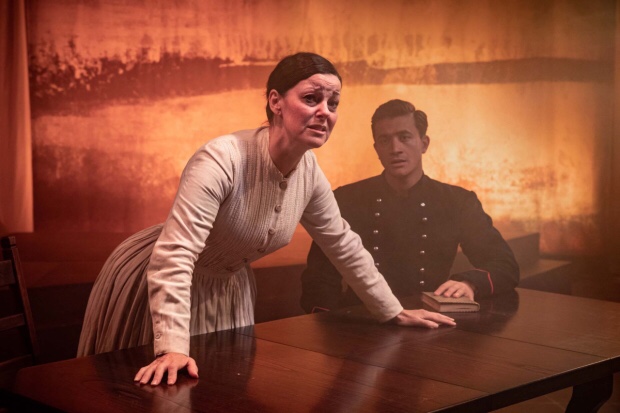
    This is one tough sit.

    I wonder if this production was conceived during the first lockdown. A Jean Cocteau monologue for a woman unravelling on the phone while her lover leaves her might have felt like a good idea at a time when solo shows seemed the only way forward for live theatre. Plus we were so grateful to see anything that wasn’t on a screen, let alone the work of an internationally acclaimed director and an award-winning leading actress, that the fact that the central protagonist is a privileged, humourless, self-indulgent whiner maybe didn’t seem like so much of an issue. Unfortunately, in 2022, this obscure confection looks a bit odd in an increasingly diverse theatre landscape where people have long started to talk to each other again, and we prefer our live entertainment to either provide pure escapism or connect us to a more profound understanding of the world at large. This does neither. It also whiffs unappealingly of misogyny (she can’t be with the man she wants and has so little agency that she bombards him with phone calls, then contemplates suicide).

    Ruth Wilson and director Ivo van Hove worked together on the National Theatre’s 2016 Hedda Gabler so presumably have some sort of artistic simpatico plus, given their worldwide success and acclaim, have professional commitments booked up for years in advance. Therefore it’s undoubtedly something of a scheduling triumph that they are available to finally give us this three week West End season. Whether or not it’s worth their, or our, time and effort is entirely another matter. Seventy minutes has seldom passed so interminably: it feels more like three hours.

    Cocteau’s text is riddled with ambiguities, at times it seems possible that the departing lover on the other end of the phone might be a figment of the woman’s imagination, and the conflicting voices that periodically come through on crossed lines are all in her head. There is little elucidation, or humour. Longtime van Hove collaborator Jan Versweyveld’s chilly perspex box set keeps us at a further remove (Wilson is mostly viewed from the knees up behind a see-through screen, when she isn’t crawling about on the floor pretending to be a dog, or, in one particularly interminable section, sprawled motionless against a wall like a broken doll, facing away from us for the entire duration of a song.)

    As a study in masochistic boredom and isolated despair, the piece carries a certain conviction and at least the leading lady here manages to avoid having unidentified liquid substances dripped on her (a van Hove motif that was thrillingly effective in his mould-breaking A View From The Bridge at the Young Vic but became eye-rollingly familiar thereafter). Wilson is technically proficient throughout but cannot disguise the dreary one-notedness of what she’s required to do, her performance only catching fire in a couple of welcome moments of white hot fury.

    The lighting and sound elements are impressive (there is an almost constant thrum of popular music, from Radiohead to Beyoncé, as though to exacerbate the heroine’s loneliness and misery) but the central conceit of crossed telephone lines doesn’t really work in this production’s ultra-modern milieu. The timing feels out in other ways as well: it would be hard to elicit much sympathy for this self-absorbed central character at the best of times, but at this particular point in human history, the whole experience proves barely tolerable.

    This is one for Wilson fans, van Hove connoisseurs and Cocteau completists (surely there are some?) only. I came away mostly thinking, bloody hell no wonder he dumped her. The emperor’s new clothes are looking distinctly threadbare.

    March 27, 2022

  • JEWISH HOLLYWOOD – ⭐️⭐️⭐️⭐️ – does rather more than what it says on the tin!

    (l-r) Jack Reitman, Howard Samuels, Sue Kelvin, Mackenzie Mellen – photograph by Louis Burgess

    Written by Chris Burgess

    Musical arrangements by Andy Collyer

    Directed and choreographed by Cressida Carré

    Upstairs At The Gatehouse – until 17 April 2022

    https://upstairsatthegatehouse.ticketsolve.com/shows/1173617187/events/428417798

    Any study of the history of popular music would be a very slim tome indeed without the contribution of Jewish songwriters, and that’s doubly true when it comes to considering the greatest showbusiness hits. This power-packed musical revue revels in some of Hollywood’s most beloved melodies and lyrics, while providing a potted history of the silver screen. It’s a joyful couple of hours but proves surprisingly hard-hitting as it charts the American journey west of European immigrants and the anti-Semitism they faced, then the sometimes shamefully muted response to said prejudice from within their own ranks once the millions had been made.

    Chris Burgess’s nicely turned script splits the narrative between a quartet of performers and periodically segues into conventional ‘book scenes’ which reframe familiar numbers in the context of the story being told. A particularly strong example of this is the employment of Rodgers and Hammerstein’s ‘Carefully Taught’ from South Pacific to illustrate the conflict between two movie moguls -one Jewish, one Gentile- over bringing a quintessentially Jewish story to the screen (unexpectedly, it is the former who is resistant).

    If the opening section, where Miss Saigon’s ‘The American Dream’ gives way to Charles Strouse and Stephen Schwartz’s bouncily cynical ‘Greenhorns’ from Rags, is a bit of a headscratcher since neither musical has yet had a movie iteration, it is still winningly performed and arranged. From Sondheim to Berlin, Kander and Ebb to George M. Cohan, and Marvin Hamlisch to Mel Brooks, the panoply of Jewish talent represented here fair takes the breath away. Many of the songs are necessarily presented in truncated form, which can get a little frustrating, but at least ensures that Cressida Carré’s richly enjoyable production never outstays it’s welcome.

    Closing the first half with Cabaret’s ‘Tomorrow Belongs To Me’ is a direct lift from the musical currently tearing the roof off the Playhouse in the West End nightly; if not exactly used here with any great originality, it works for the story, and is still a powerful way to send audiences out into the interval of a show that turns out to be less of a celebration and more of a critique than one might have been expecting.

    At other times, the show offers some delightful abbreviated versions of film classics, including a deliciously funny affectionate parody of Al Jolson’s The Jazz Singer. The Fiddler On The Roof section is another highlight – ‘Tradition’ thrills the blood, as it should, and Andy Collyer’s terrific arrangements make the small but mighty cast and band sound like the entire village of Anatevka are right there on the Gatehouse stage. Carré’s direction and choreography strikes a perfect balance between jazz hands exuberance and a still, centred gravitas. It’s really superb work.

    None of this would land as well as it does without a stellar company, and casting director Jane Deitch has sourced a quartet of world class talents. In a remarkably assured professional debut, Mackenzie Mellen, resembling a young Liza Minnelli, brings gamine charm, a dancers physicality and a gorgeous, rangy voice. Opposite her, Jack Reitman provides formidable versatility, matinee idol looks and more terrific vocals.

    Howard Samuels is a dream at working an audience: wildly funny but able to turn the mood on a dime, his glorious voice like cream one moment, and gravel the next. West End veteran Sue Kelvin is possibly the nearest thing to Merman that this country has ever produced: a thrilling performer with heart, unerring comic instincts and a magnificent Broadway belt, it’s almost impossible to take your eyes off her.

    Amir Shoenfeld’s multi-tasking four piece band is exquisite and frequently sounds like there are many more pieces: the whole show is a feast for the ears.

    All in all, this is a deeply lovable slice of music theatre. More than a nostalgia trip, and more fun than a history lesson, it is a testimony to resilience, chutzpah and sheer golden talent. Enthusiastically recommended.

    March 20, 2022

  • BACON – ⭐️⭐️⭐️⭐️⭐️ – is it too early to call Best Play of the Year yet?!

    Photograph by Ali Wright

    BACON

    by Sophie Swithinbank

    Directed by Matthew Iliffe

    Finborough Theatre – until 26 March 2022

    https://finboroughtheatre.co.uk/production/bacon/

    It may only be February, but the bar for fringe theatre sensation of 2022 has already been set astonishingly high by this firecracker of a show.

    Not since the original 1993 production of Jonathan Harvey’s Beautiful Thing at the Bush (which featured a pre-stardom Jonny Lee Miller) have I seen a new play and young actors that come off with the sheer swagger and brilliance of Sophie Swithinbank’s two hander and the performances of Corey Montague-Sholay and William Robinson. This is grittier but has the same bracing charge of fresh, dynamic talent.

    Montague-Sholay and Robinson play Mark and Darren, a pair of London teenagers from markedly different backgrounds – the former is decidedly middle class while the latter comes from a family whose hard scrabble lifestyle exists at the boundaries of criminality and brutality – who form, through necessity, an unexpected alliance at school. If Swithinbank’s script has a flaw it’s that perhaps one doesn’t immediately believe that these profoundly contrasting young men would ever become friends. Once you’ve bought it into it though (and you will, largely because of the extraordinary performances) strap in for the ride. And what a ride it is.

    Swithinbank’s writing is muscular, street-smart, hilarious, unflinching as she refracts toxic masculinity, peer pressure, social inequality, and pent-up, unarticulated sexuality through the intense, breathless prism of youth. There is a forensic precision to her observations, but also great warmth, humanity and heartbreak. The young men play out contrasting mini-monologues simultaneously but the effect is galvanising rather than confusing.

    Matthew Iliffe’s laser-sharp production helps immeasurably with this, potently demonstrating the power of simplicity and the kinetic charge of excitement that happens when rigorous  discipline and a wondrous freedom of expression are allowed to play together. There are moments here that take the breath away with their sheer invention and emotional honesty. Natalie Johnson’s exquisitely spare set (a giant seesaw sits and swings centre-stage, playful but threatening, symbolising childhood, but also shifts in power), is complimented by sparse but vivid lighting and sound contributions from Jess Tucker Boyd and Mwen respectively.

    I’m not sure there are enough superlatives to shower upon actors Corey Montague-Sholay and William Robinson, except to say that it feels like watching a pair of talents poised on the brink of major stardom. Montague-Sholay invests Mark with an innate niceness and gentle intelligence that makes one completely understand why the traumatised, lonely Darren would see him as a beacon of hope. He deftly, affectingly charts the journey from comparatively untroubled teenager to soulful, damaged young adult. It’s acting of the highest order.

    In the slightly showier role of allegedly bad boy Darren, careering so fast down the path to self destruction that he barely has time to slam on the brakes, William Robinson is absolutely astounding. With a face like a bruised cherub, Robinson goes from snarling confrontation to edgy sweetness to aching sadness and back again with a remarkably assured physical and vocal technique. It’s a haunting, thrilling, multi-faceted performance.

    If there’s any justice, this devastating production will completely sell out, and ultimately achieve a much longer life. Don’t hang about to get tickets: you’ll have an extraordinary time in the theatre plus, in a few short years, you’ll be able to say that you experienced these world class talents at close quarters and before they became mega-famous. Tender yet in yer face, raw yet accomplished, it’s unmissable. This Bacon is salty but irresistibly tasty.

    March 5, 2022

  • HENRY V – ⭐️⭐️⭐️⭐️⭐️ – Kit Harington is a Henry for our times

    Photograph by Helen Murray

    HENRY V

    by William Shakespeare

    Directed by Max Webster

    Donmar Warehouse – until 9 April 2022

    https://www.donmarwarehouse.com/

    One of the many fascinating things about Shakespeare’s history play is the ambiguity of the central figure. As a principal character Henry is infinitely malleable, and depending on your point of view, can be seen as hero or villain. This thrilling Donmar revival comes at a particularly interesting time in global history, where an unchecked leader invading a neighbouring country on which he has no authentic claim (in this instance, Henry V and his army going into France) is likely to provoke a particularly vehement reaction.

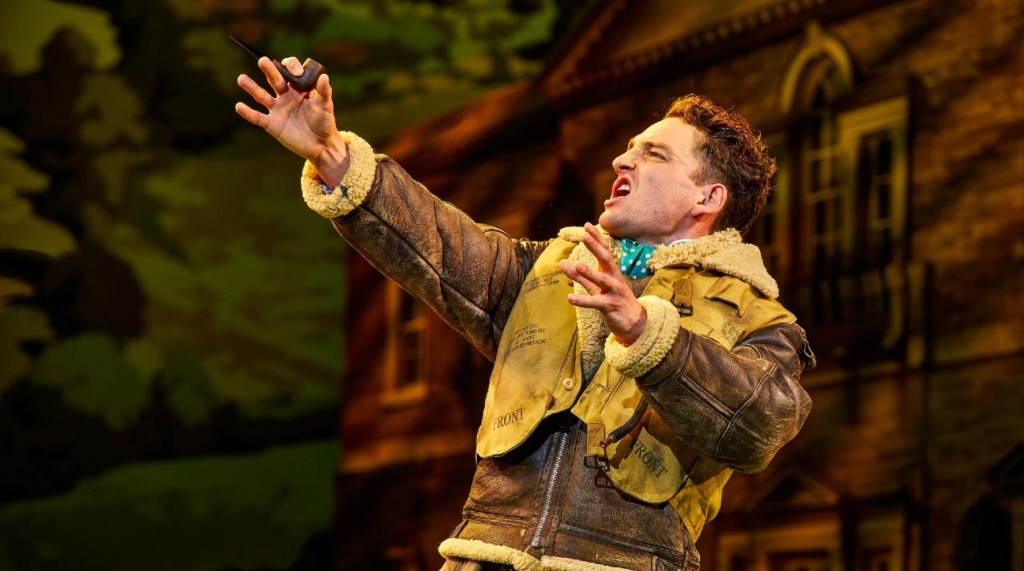
    By casting Kit Harington, one of those rare actors who, like James McAvoy, combines being drop dead gorgeous with an innate everyman likability yet tempered with a certain wildness, Max Webster’s visceral, modern dress, multimedia production muddies the waters to intriguing effect. This is a Henry V driven by the cult of personality: Harington’s pale, chiselled face is projected huge on the back wall of Fly Davis’s striking, monolithic set as Henry’s armies lay waste to France (movement director Benoit Swan Pouffer achieves a kind of balletic brutality).

    Harington’s Henry is equally convincing coldly dismissing Falstaff (superb Steven Meo, who also doubles as a highly effective Llewelyn, formerly Fluellen in more traditional readings of the text) as he is affably chatting incognito to his dormant troops in battle camps. This King is a thrilling, populist rabble rouser (the “once more unto the breach” call to battle is delivered from a high gantry with simultaneous video coverage while the troops chomp at the bit below) who suddenly turns utterly repellent as he casually orders the slaughter of the French prisoners. Webster’s slick but dangerous staging is unflinching in it’s depiction of the atrocities of conflict (the first act ends with a particularly distressing hanging scene, carried out beneath the exact same gantry from which Henry galvanised the troops) and is perhaps the most overtly ‘anti-war’ take on any of Shakespeare’s History plays that I have ever seen. It may prove too confrontational for some people, but it is damn fine theatre.

    Harington’s is a memorable, really satisfying take on the title role: he has the rare gift of making the Shakespearean language sound relatable and conversational, while still respecting it’s cadences and idiosyncrasies, and successfully binds numerous facets of this sometimes elusive character into one dynamic, charismatic whole.

    The majority of the supporting cast are at a similar level of brilliance. The women in the cast are terrific, often taking on roles usually played by men in such a strongly male driven text, and it’s so superbly done that it becomes a potent testimony to gender-blind casting. I was particularly taken with Kate Duchêne’s bossy, bolshy French Constable and Melissa Johns, funny and poignant as the soldier who unwittingly mouths off about the King to Henry in disguise and is then forced to eat their words. Claire-Louise Cordwell does fine, vivid work in a couple of roles but especially as a gender-swapped Bardolph, reconceived here as a drug-dealing squeeze to Prince Hal. Millicent Wong is a haunting, insistent presence as the Chorus.

    All of the sections set in the court of France are performed in French, which initially feels a bit gimmicky but pays dividends in the courtship scene between Henry and Princess Katherine (a glorious Anoushka Lucas, entrancing and fiercely intelligent). Olivier Huband is a magnificently disaffected Dauphin, and Jude Akuwudike’s King has real emotional heft and dignity.

    The employment of a quartet of classical singers wandering like phantoms through the action, their beautiful, calming voices in stark juxtaposition with the brutality unfolding is extremely powerful. Lee Curran’s lighting transforms the space from acidic urban exteriors to coolly elegant interiors to the ghostly horrors of the battlefield with such dexterity that it’s almost an extra character in the play. Andrzej Goulding’s projections are used with intelligence and economy.

    Anybody who reckons Shakespeare is boring and irrelevant (and yes there are still some people who think that!) should see this urgent, sometimes upsetting, consistently enthralling take: if you can possibly get a return don’t hesitate. It further consolidates Max Webster’s reputation as one of the most interesting directors of his generation and makes one impatient to see what Shakespeare lead Kit Harington will take on next. An unsettling triumph.

    March 3, 2022

  • SATURDAY NIGHT FEVER – ⭐️⭐️ – this nostalgia trip has more than a few bumps

    Photograph by Paul Coltas

    SATURDAY NIGHT FEVER

    based on the Paramount/RSO film and the story by Nik Cohn

    adapted for the stage by Robert Stigwood in collaboration with Bill Oakes

    Directed by Bill Kenwright

    Peacock Theatre – until 26 March 2022

    https://www.sadlerswells.com/whats-on/saturday-night-fever/

    “You should be dancing, yeah!” goes the oft-repeated chorus of the Bee Gees hit that loomed large in the original Saturday Night Fever movie soundtrack and closes the first half of this stage version. Frankly though, I didn’t feel much like dancing after a couple of hours of this sloppily directed, patchily acted mess of an adaptation.

    The lavish 1998 West End musical which made a star out of Adam Garcia in the Travolta role of Tony Manero and transferred to Broadway had it’s issues but it was a masterpiece compared to this wan effort. Arlene Phillips’s Palladium production found the natural dynamism in the disco hits and infused the songs with a potent, thunderous theatricality thanks to Nigel Wright’s orchestrations and Phil Edwards’s dance and vocal arrangements. Plus the choreography was thrilling.

    Almost none of that is true of Bill Kenwright’s infinitely more pedestrian staging which may be closer in tone to the darkness of the movie but seldom if ever takes wing as a piece of dance magic. Award winning choreographer Bill Deamer comes seriously unstuck here: the moves that aren’t cribbed directly from the film are frantic, inelegant, clumsy…a long way from sexy and cool. Deamer is a master of traditional musical staging, winning his Olivier for the tap heavy Top Hat, but is a bizarre choice for this; his work here is far from inspired, except for the second act competition sections, which are closer to Strictly than Studio 54.

    Any stage adaptation of Norman Wexler’s grimly hyper-realistic original screenplay inevitably struggles with reconciling the seamier aspects of the story (abortion, suicide, rape, drug abuse, the casual misogyny and racism) with the standard musical theatre requirement to send the audience out on a high, crazed with spectacle, high energy dancing and uplifting music. It’s a pretty sour tale anyway, closer to docudrama than musical fantasy, despite the banging soundtrack: and while one could argue that it’s of it’s time, it’s pretty hard, in 2022, to root for a leading male character who actually says in all seriousness to a young woman “you’ve gotta decide what you are. Are you a nice girl or a bitch.” Gross.

    Richard Winsor is incredibly handsome but reads as at least a decade too old, as well as too nice and too, well, English to convince as a streetwise Italian American youngster who plays the big man with his crowd of less remarkable pals but still resides with his parents and lives for the weekend when he can release it all on the dancefloor. He isn’t the best disco dancer in the company, which is unhelpful given the plot, and only really looks terpsichoreally comfortable in a smoothly executed, more classically choreographed fantasy sequence that recalls the work of Matthew Bourne, for whom Winsor worked extensively before becoming a TV name. Elsewhere, his moves lack the requisite joy and abandon.

    Olivia Fines fares better as snotty Stephanie, the upwardly mobile object of his affection. She’s hardly a sympathetic character but Fines does invest her with an inner life, plus she dances like a dream. Probably best to draw a veil over some of the other acting, but the energetic company sells the whole show for rather more than it’s actually worth. The accents are mostly dreadful (no dialect coach is credited… and it shows).

    This particular production doesn’t seem to know quite what it wants to be: it isn’t an integrated musical, preferring instead to have a trio of game young men shuffling aimlessly on and off with falsettos and fright wigs, playing the Bee Gees singing the songs commenting on the action. Strictly Ballroom and Dirty Dancing onstage both went down similar routes, with varying degrees of success. It doesn’t make for satisfying musical theatre but at least the songs sound like the original recordings. Confusingly though, three of the principal characters then get solo numbers, à la the Palladium musical, which make little sense given that at no other point do any lead characters sing. For suicidal Bobby C’s rendition of Tragedy, Deamer’s choreo for the chorus pays homage to the Steps dance moves for that track, which is a bit weird given that their version didn’t come out until at least twenty years after Saturday Night Fever. Ah well.

    Gary McCann’s set of wrought iron staircases, platforms and walkways looks like leftovers from a budget tour of West Side Story, but is undeniably enhanced by eye-catching video designs by Nina Dunn. Nick Richings’s lighting makes vivid and clear the differentiation between the garishness of the discotheque and the dullness of day-to-day life.

    The best screen-to-stage adaptations, from The Producers to the musical of The Full Monty, and including several of the Disney shows, work because they legitimately add something else to the story by placing them in a theatre. That just isn’t the case here, although it’s always fun to hear these disco classics done live. Ultimately, this is a lethargic, dispiriting evening capturing very little of the excitement of the film, the disco scene or the vibrant city in which is set: sadly, it’s more Birkenhead than Brooklyn.

    February 17, 2022

  • AN EVENING WITHOUT KATE BUSH – ⭐️⭐️⭐️⭐️⭐️ – get ready to howl: this is a bonkers triumph

    Sarah Louise Young, photograph by Clive Holland

    AN EVENING WITHOUT KATE BUSH

    created by Sarah Louise Young and Russell Lucas

    Soho Theatre – until 26 February 2022

    https://sohotheatre.com/shows/an-evening-without-kate-bush/

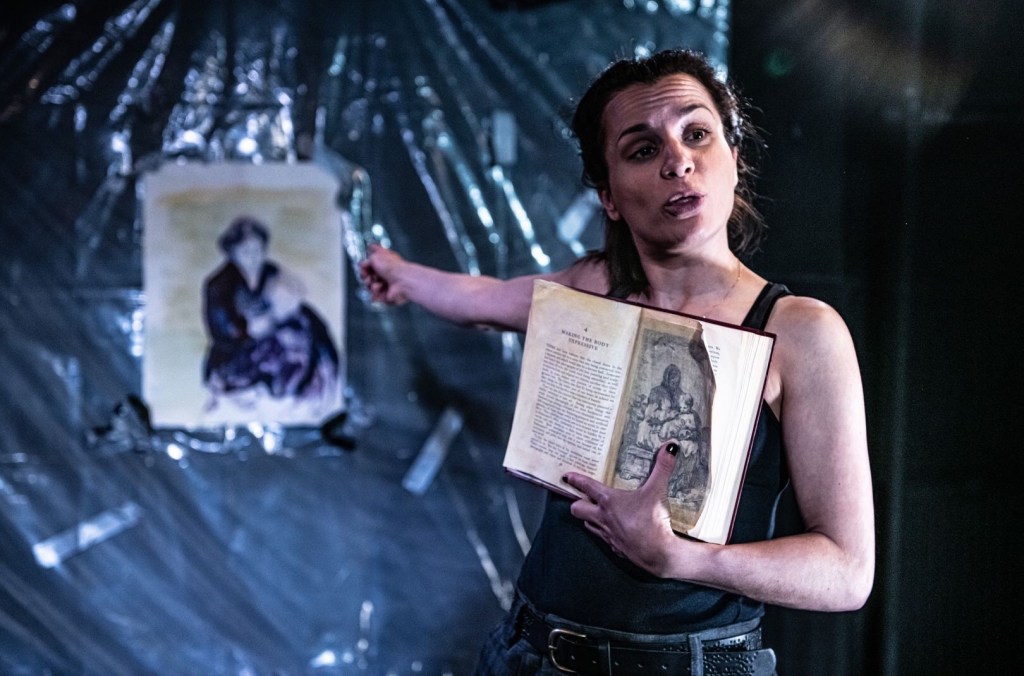
    You don’t have to be one of the Fish People (the collective noun for the community of Kate Bush fans, as well as the name of one of the beloved yet elusive diva’s albums) to enjoy this glorious one woman show: part cabaret, part tribute act, part mythology, wholly theatre. But you’ll definitely come out of it a fan of Sarah Louise Young, the shape-shifting artist who embodies and comments upon La Bush, as well as co-creating (with Russell Lucas) this cracking little show.

    When Young first appears – dimly lit, shrouded in black, in a gloriously outré headdress halfway between antlers and wings, with a slight whiff of Regina Fong (that’s a person, not a fragrance: look her up if you’re young) – it seems like we might be in for a bit of Kate Bush parody: absurd, slightly self indulgent yet weirdly compelling. Bush’s combination of mystery, camp and thunderously good tunes always felt ripe for theatrical treatment and comic lambasting. What follows is more satisfying and interesting than any of that however.

    In a well nigh miraculous case of having your showbiz cake and eating it, An Evening Without Kate Bush succeeds in embracing the bizarre concoction of accessible, unknowable and just plain bonkers that was always at the heart of Bush’s output while acknowledging the madness of it, sending it up, yet loving it deeply. That’s not easy to pull off. What comes across very strongly is just how haunting and so damn good these songs are: The Man With The Child In His Eyes, Babooshka, Cloudbusting et al crop up and provide thunderous and/or poignant pleasure even while you’re never quite sure what length of tongue Kate was leaving in cheek. Wuthering Heights comes up (as it must) but with a little twist. It helps that Sarah Louise Young – whether singing as herself or unerringly recreating Bush’s screechily enchanting vocal timbre – is equal to, and then some, the unique grunge/soprano demands of the songs.

    Young isn’t merely a skilled Kate Bush impersonator who gets the ethereal warbles and shrieks, and loose-limbed dance moves down to a T; she is a warm, self-deprecating stage presence with a formidable physical and vocal technique. When she relates the effect that the singer songwriter had both on her own life and that of the multitude of fans she has encountered, the mood goes from gleeful to tearful to joyously celebratory before you’re even aware of the change. The section where Young strips down to bare essentials and physically interprets Running Up That Hill is genuinely moving: it becomes less about Bush’s version of the classic and more concerned with the effect it has/had on our leading lady and, by extension, all of us. As I said, it’s real theatre.  

    Being a Bush fan will help with some of the references of course (Young and Lucas have more than done their homework in terms of Kate’s back catalogue) but Young brings such a joie de vivre and ability to connect with an audience that nobody feels excluded. This is one of those rare occasions where audience participation feels more like a pleasure than a chore for any but the most gregarious in the crowd, and it becomes a surprisingly moving paean to community and human connection.

    Ultimately, An Evening Without Kate Bush is a bit of a triumph, as clever as it is enjoyable, and capturing the compelling mix of menace, grace and camp that makes Bush so unique in British popular music: a remarkable, eccentric talent paying tribute to another remarkable, eccentric talent. In the words of one of the divine Kate’s biggest hits….WOW. Go see, and prepare to howl.

    February 9, 2022

  • THE GLOW – ⭐️⭐️⭐️⭐️ – dark magic is happening in Sloane Square

    Photo by Manuel Harlan

    THE GLOW

    by Alistair McDowell

    Directed by Vicky Featherstone

    Royal Court Theatre – until 5 March 2022

    https://royalcourttheatre.com/whats-on/theglow/

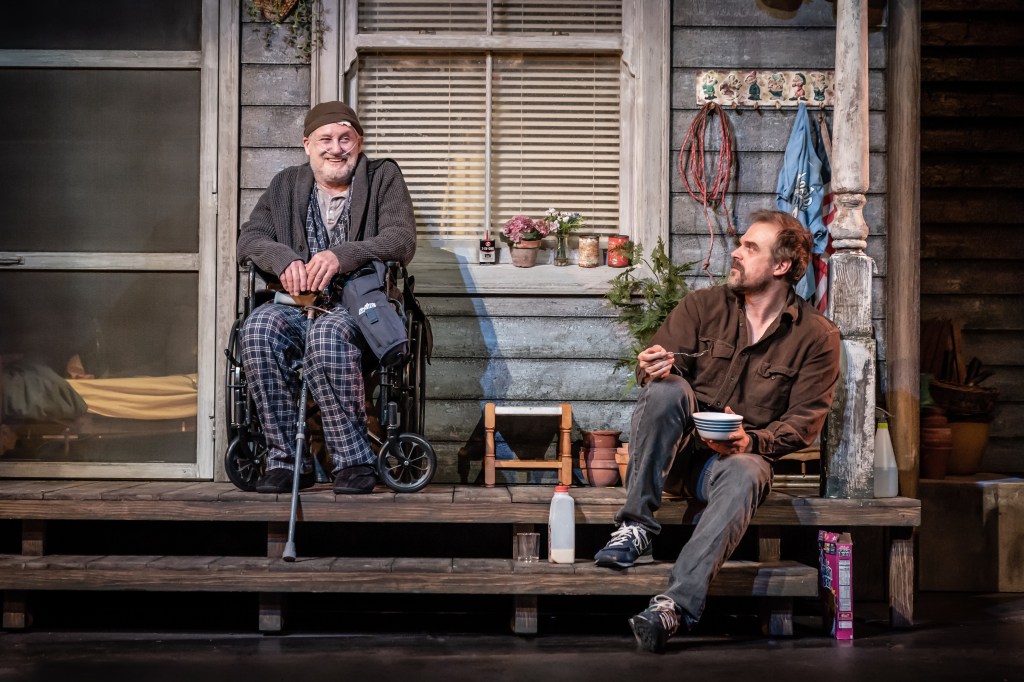
    The word ‘astonishing’ gets bandied about a lot, not least by me, when describing pieces of theatre, and it can sometimes feel a little like hyperbole. That is emphatically not the case with Alistair McDowell’s haunting new piece. McDowell is a playwright who repeatedly demonstrates a commendable unwillingness to fetter his imagination to the constraints of realism or what is normally represented on stage: Pluto-set outer space thriller X and his Manchester-on-steroids saga Pomona spring immediately to mind.

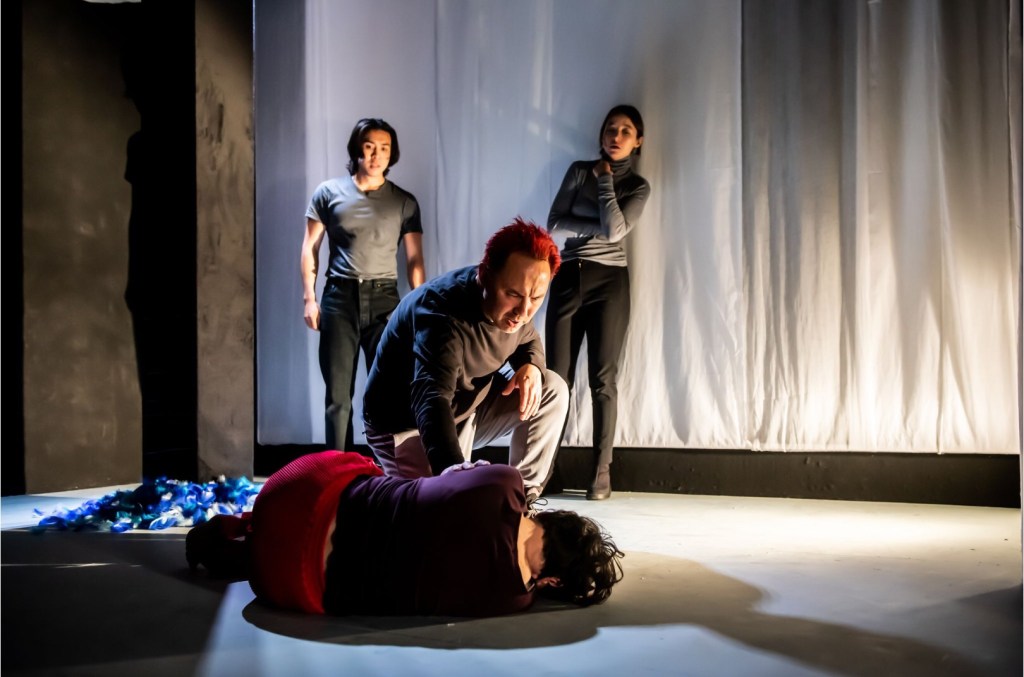
    Director Vicky Featherstone employs a similar cinematic technique staging The Glow as she used on X, also on the main stage of the Royal Court: extraordinary, fantastical things are illuminated but briefly (Jessica Hung Han Yun’s lighting is thrilling) before disappearing into the dark leaving us as audience members uncertain that we’ve just seen what we thought we saw. It’s unsettling and entrancing, enhanced further by Nick Powell’s frequently eerie sound and music score, and Merle Hensel’s stark, contracting set which is blank enough to convincingly represent periods of history from prehistoric through Roman, Medieval and Victorian times to almost the present day.

    If Featherstone’s accomplished, enjoyable production feels wildly imaginative, it’s only matching McDowell’s script which when in the cold light of day might sound overly fanciful and manipulative, but is, when you’re in your theatre seat, a gripping couple of hours. McDowell’s starting point is ‘The Woman In Time’, a semi-forgotten early twentieth century book by scholar Dorothy Waites that suggests that across a panoply of artistic endeavours, creatives have repeatedly used the exact same female figure as a running thread across the ages, as a social and historical commentator. Preposterous as it may be, the “what if” factor is sky high and fascinating, and that’s what McDowell goes to town with in a piece that even when it requires suspension of disbelief remains deliciously engaging and thought-provoking.

    Ria Zmitrowicz’s unnamed Woman is first discovered in the darkest recesses of a Victorian asylum by spiritualist medium Evelyn Lyall (Rakie Ayola) who takes her on as a new assistant, much to the chagrin of her discomfited son (Fisayo Akinade). It pretty soon becomes clear that the Woman is possessed of powers that Lyall can only dream about, and the action of the play hurtles and ricochets through time and history as the elemental, essential nature of this Woman is revealed. McDowell’s dialogue is salty and bleakly humorous, transforming an undeniably riveting tall story into something more troubling and challenging.

    Zmitrowicz and Ayola are magnificent, the former negotiating the transition from bluntly inarticulate distress to roaring, implacable divinity with exquisite power, while the latter contrasts the crisp, slightly insensitive Lyall with a moving portrait of a kindly retired nurse in the 1990s who takes the Woman in and forms a real, rare friendship with her. The men are equally fine: rising star Akinade is always exciting to watch and often very funny in a number of roles, and Tadhg Murphy makes something memorable and touching out of the Knight who goes from being the Woman’s captor to her companion in the mid 1300s.

    Poetic and rambunctious, sorrowful but transporting, brutal yet tender, this is a rattling good yarn. It also potently suggests the loneliness of feeling ‘other’ from the rest of humanity, and perhaps that is it’s greatest accomplishment. If ultimately it’s too far fetched to be fully convincing, for two magical hours you may find yourself wishing it was all true. Like many a good story, it stays with you long after it’s over. I loved it.

    February 6, 2022

  • MOULIN ROUGE! – ⭐️⭐️⭐️⭐️ – I mean…who needs restraint anyway?!

    Photo by Johan Persson

    MOULIN ROUGE!

    Book by John Logan

    Music arranged by Justin Levine

    Based on the Twentieth Century Fox motion picture written by Baz Luhrmann and Craig Pearce

    Directed by Alex Timbers

    Piccadilly Theatre – open ended run

    https://www.moulinrougemusical.co.uk/

    Well, it’s finally here….and it’s a big fat solid, crowd-pleasing commercial hit. Apart from Cabaret, this was the most eagerly awaited West End musical opening of the last year, although it got off to a rocky start with Covid causing the cancellation of multiple previews then in turn pushing back press night not once but twice. Still, it’s ensconced now at the Piccadilly, probably for the foreseeable future and it’s a true extravaganza, almost completely lacking any restraint (even a tragic death is enacted amidst a shower of glitter dropping from the heavens) but also with very few moments where you’ll be inclined to look at your watch. Put simply, Moulin Rouge is great entertainment.

    Or at least it is if you’re after an all-out assault on the senses, and you’re not looking for any kind of subtlety or complexity in your BIG musical night out. Sondheim this ain’t. Hell, it’s not even & Juliet, with which it suffers slightly in comparison: that Max Martin confection is another stunningly designed fantasia set in a European never land that anachronistically uses banging pop tunes to punctuate a tragi-comic romantic plot, but with more endearing characters and considerably more wit.

    The Moulin Rouge plot wasn’t exactly demanding in the original movie, and nor is it on stage: boy meets girl then loses girl to dodgy wealthy benefactor and chronic lung disease, in a sort of mash up of Camille, Pygmalion and La Boheme. On screen the story and most of the characters were subservient to Baz Luhrmann’s luridly fanciful visual aesthetic, and so it again proves in director Alex Timber’s opulent, thrillingly OTT theatrical interpretation.

    The garishly beautiful design elements here (set by Derek McLane) are key to the shows appeal: entering the Piccadilly’s auditorium now is to be transported into another world, an Aladdin’s cave of louche glamour with undulating swags of scarlet fabric, glittering chandeliers, cherub-festooned gilt, and neon light, complete with a giant blue elephant sculpture and a turning windmill; it’s gorgeous and vaguely unsettling. When the cast appears, Catherine Zuber’s costumes prove to be a similar mix of off-kilter elegance and extravagance, and the whole thing is lit with bravura intensity and invention by Justin Townsend. Make no mistake, this is one of the most head-turningly good-looking productions you’re ever likely to experience.

    It’s so head-turning in fact that, at least on a single viewing, it’s almost possible to overlook the lack of chemistry between the two leads or that some of the song choices don’t really suit their allotted place in the story… or that the show as a whole looks a little hemmed-in at the Piccadilly. Anyone who has seen the more lusciously expansive Broadway version is likely to spot this last issue immediately however: Sonya Tayeh’s enthralling, eclectic dances don’t explode across the stage with quite the same fiery abandon that they do on the other side of the Atlantic, although that is certainly not a fault of the gloriously athletic West End ensemble, all of whom work their socks off and some of whom manage to project distinct, individual performances through all the glitz. The act two opening sequence -a feverish, joltingly exciting splice-together of Lady Gaga’s ‘Bad Romance’ and Britney’s ‘Toxic’ with a bit of Soft Cell, White Stripes and Eurythmics hurled in- remains an exhilarating, heady stunner: sinuous bodies divebomb centrestage from various directions, in moves that go from jagged to fluid in a matter of seconds, then congregate into a human phalanx of attitude, abandon and potent sexuality. It’s as if Jerome Robbins had lived to choreograph an especially raunchy pop video. Totally breathtaking, this number is almost worth the price of a ticket all by itself.

    One aspect of Moulin Rouge London that may actually be better than the Broadway original is in the choice of leading lady. Liisi LaFontaine’s Satine is an absolute knockout. Sexy as hell, with a disarming warmth and satisfyingly steely edge, she fields a belting voice that still finds colours of sweetness and vulnerability, and mines the humour and emotional investment in a role that could so easily be played on one note. Watching her fall in love despite herself is extremely affecting, and her final doomed scenes with Jason Pennycooke’s terrific Toulouse-Lautrec (another improvement on the original) are authentically heartbreaking. Of the four stage Satines that I’ve experienced, she’s the only one who goes on a wholly satisfying journey, and also the only one who convincingly signals the physical frailty of the woman from early on. It’s impossible to take your eyes off her, which is really saying something in a show this spectacular.

    Certainly she doesn’t get much competition in the romantic scenes from Jamie Bogyo’s gormless male lead. A decent singer but a stilted actor, at least as directed in this role, recent drama school graduate Bogyo is mystifying casting as ardent young American abroad Christian. He’s quite sweet but it does feel like there’s a bit of a vacuum near where the centre of the show should be. It may be a performance that works really well at close quarters or in the rehearsal room, but at present very little is coming across the footlights.

    Clive Carter plays the crowd like the seasoned pro that he is as the MC and club proprietor, but also brings a gritty truth to his off stage scenes: he’s marvellous. So is Elia Lo Tauro’s impassioned Argentinian Bohemian artist.

    The frantic melding together of songs from numerous genres and decades of popular music occasionally threatens to get a bit much but Justin Levine’s arrangements truly snap and sparkle. Peter Hylenski’s sound design is rather brilliant, making sure that the lyrics, moods and orchestrations really register and don’t just become so much aural soup, which can be a problem in jukebox musicals.

    For eye-poppingly lavish escapism, head to the Piccadilly… the whole may be less than the sum of its parts but you’ll definitely be able to see where your ticket money went. As long as you haven’t got a migraine or a hangover, this showiest of shows is a glittering diamond of entertainment.

    January 30, 2022

  • HABEAS CORPUS – ⭐️⭐️⭐️⭐️- how well has Alan Bennett’s jet black farce aged?

    Jasper Britton and Katie Bernstein, photograph by Manuel Harlan

    HABEAS CORPUS

    by Alan Bennett

    Directed by Patrick Marber

    Menier Chocolate Factory – until 27 February

    https://www.menierchocolatefactory.com/Online/default.asp

    Sex and death: two of the primary motivators of human existence. Joe Orton understood this: his Loot and What The Butler Saw are loaded with them. He had been dead six years when Alan Bennett’s 1973 Habeas Corpus made it’s West End debut in a production starring Sir Alec Guinness, but there’s undeniably something Orton-esque in this farcical melange of lust, longing, humiliation, epigrammatic wit and occasionally breathtaking bad taste.

    It seems dated now (something director Patrick Marber doesn’t try to cover up, with his use of 70s pop music, Vaudevillian clichés and Richard Hudson’s decidedly retro costumes) but the richness and subversive free form nature of the writing as it veers between verse, crudity and cruelty, then back again, mark it as a true original, and a forerunner of the Alternative Comedy that transformed the genre a decade later. The problematic yesteryear trope of an ageing GP desperate to get his end away with a nubile young patient has not worn well, nor is it funny in itself. What sets Habeas Corpus apart from, and lifts it above, the dodgy sitcoms and farces that it riffs upon, is the delightful rhythm and absurdity of Bennett’s language -still sparklingly fresh after all these years- and the dark undertow. Death is everywhere: in the doctor’s uncomfortable descriptions of decaying human flesh, in the frequent references to World War Two, in the running theme of a neglected patient constantly trying to commit suicide, and in the shiny black coffin that constitutes most of Hudson’s elegantly spare set (lit with painterly precision by Richard Howell).

    The cast is brilliant, each of them cleverly negotiating the sometimes abrupt gear changes between saucy postcard-made-flesh comedy excesses and real humanity with a lot at stake. Jasper Britton is manically funny as the priapic Dr Wicksteed but is authentically chilling in the final moments where a lifetime of casual unkindness and sexual impropriety seems to be catching up with him, like a middle aged East Sussex Don Giovanni. Catherine Russell finds a sadness and desperation in his permanently disappointed wife that touchingly belies the shrill but often hilarious battle axe persona she initially presents.

    Similarly, Kirsty Besterman gives a poignant account of his perpetually single sister, forever fending off the advances of Matthew Cottle’s riotously named cleric Canon Throbbing (“together we will be at the forefront of Anglican sexuality!”) in favour of Dan Starkey’s enjoyably vicious senior medical specialist. Cottle even does a spot-on Bennett impersonation at one point. I also really loved Thomas Josling as the Wicksteed’s sweatily inept, perennially hypochondriac son, and Katie Bernstein as Felicity Rumpers, the stunning young woman who might deign to fall in love with him, but only if he really does have the terminal illness he thinks he’s got.

    Ria Jones is a gorgeous comic gem as the all-seeing char lady Mrs Swabb, the only character who isn’t carnally obsessed (“I leave sex to the experts”) and Caroline Langrishe is great fun as Felicity’s British Colonial Grande Dame of a mother, forever bemoaning the loss of her privileged earlier life in Addis Ababa.

    While one couldn’t make a convincing case for this being one of Bennett’s better plays (there’s very much a sense of hurling everything at the wall and seeing what sticks), it’s too bracingly original and too clear-eyed in the way it depicts the twin grips lust and mortality have on individual’s lives, to be written off merely as a period piece. It’s often laugh-out-loud funny and Marber’s fine production and terrific cast polish it up to an irresistible comic sheen. It’s naughty and not always nice: I think Joe Orton would have approved.

    December 24, 2021

  • SPRING AWAKENING – ⭐️⭐️⭐️⭐️⭐️ – the musical heartbreaker is back…and it may just be better than ever

    Photo by Alessio Bolzoni

    SPRING AWAKENING

    Book and lyrics by Steven Sater

    Music by Duncan Sheik

    Based upon the play by Frank Wedekind

    Directed by Rupert Goold

    Almeida Theatre – until 22 January 2022

    https://almeida.co.uk

    I’m not sure even the greatest admirers of this 2006 Broadway smash will be prepared for the emotional and visceral impact of this jaw-droppingly fine new production by the Almeida’s artistic director Rupert Goold and his team of visionary theatrical magicians. To have this playing on the London stage at the same time as Rebecca Frecknall’s astonishing new take on Cabaret is truly wonderful.

    The only chastening thing is trying to work out how many times one can conceivably get to Islington before this (far too) short season ends in late January. A West End transfer is far from a given, especially in these Covid times, and also considering how the 2009 London production fared: a replica of Michael Mayer’s stunning Broadway original, it got raves and sold out performances at the Lyric Hammersmith before dying a brutally swift death upon its transfer to the West End’s Novello, possibly not helped by an advertising campaign featuring the young cast (which included future stars such as Aneurin Barnard, Iwan Rheon, Natasha J Barnes and Evelyn Hoskins) that looked more like it was for a vintage clothes outlet (a period Gap perhaps?) than one of the most extraordinary new musicals of its generations.

    Anyway, here it is again, in an enthralling, bewitching new staging and with a terrific young cast, that is every bit the equal of its predecessor. One way that this version differs from the original is in tone. It’s slightly less fever-pitched, more contemplative and less aggressive….and the glorious songs (Sater and Sheik’s gorgeous rocky, folk-inflected creations collectively remain as haunting and rousing as ever) now spring directly from the script and characters whereas previously they ran almost antagonistically against them, like a contemporary commentary on the story.

    There’s even a new number (actually one cut from the original workshop version), ‘There Once Was A Pirate’ which serves as a sort of reverie and a glimpse of children at play, a heartcatching reminder of just how young these characters are supposed to be. It’s staged with a bravura simplicity -the kids creating a ship out of thin air, aided by Finn Ross’s video design, which is breathtaking throughout. The vocal arrangements and orchestrations (Sheik and the always brilliant Simon Hale) have more light and shade than I remembered, only unleashing full rock fury for the now-legendary ‘Totally Fucked’ number, the staging of which is possibly the most thrilling thing in any current London musical, which is quite a statement when one considers the last twenty minutes of Back To The Future, the transformations in Frozen, that Moulin Rouge is in preview, or indeed Cabaret in its entirety: yep, it’s THAT good.

    Lynne Page has repeatedly proved herself one of this country’s most versatile and inventive choreographers – American Psycho here at the Almeida then on Broadway, the Menier’s La Cage Aux Folles and Funny Girl, the Pet Shop Boys tour – but her work here is outstanding even by her acclaimed standards. The dances are earthy, organic, angular yet fluid, athletic, character-driven…. and they exhilaratingly negotiate the treacherous looking flight of steps that constitutes Miriam Buether’s striking set.

    The overall look of the production (Nicky Gillibrand’s costumes, Jack Knowles’s lighting, both spot-on, plus Ross’s endlessly fascinating projections) is a tantalising mixture of timeless, period specific and jaggedly modern, an ingenious visual shorthand for marrying Wedekind’s angst-ridden expressionist text to the sometimes intolerable pressures that contemporary teenagers face. None of this is oversold though, and the cumulative effect of the tragic narrative overlaid with a creepingly unsettling sense of present day unease proves revelatory.

    There isn’t a weak link in the cast, every one of whom, from Nathan Armakwei-Laryea’s swaggering bad boy to Bella Maclean’s luminous victim of abuse, has a specificity, commitment and power that fair knocks the wind out of the onlooker. The scene between the deeply unhappy, painfully sensitive Moritz (Stuart Thompson in a mesmerising star-making performance) and free-spirited outcast Ilse (Carly-Sophia Davies, perfection) where she sort-of comes on to him as he’s lost in a fog of despair has a searing intensity I’ve never seen before. Catherine Cusack and Mark Lockyer do magnificent work as all the adult characters, heightened, removed and slightly grotesque, as grownups often seem to troubled teens.

    As the nominal leads, young lovers Wendla and Melchior, Amara Okereke and Laurie Kynaston continue on the upward career trajectories that this sensational pair of young stars so richly deserve. Okereke is the stronger singer -her voice is basically astonishing, combining sweetness and power with a virtuoso versatility- but both invest their characters with an inner life, sharp intelligence and sheer relatability that forces us to pay attention and to care. They are stunningly good.

    I’m basically running out of superlatives here. This is the kind of spine-tingling production that forcibly reminds you of the transformative possibilities of theatre, and the uplift and heartbreak that truly great musicals can achieve. It thrills the blood and breaks the heart. Please go and see it…if you can get in.

    December 18, 2021

Previous Page Next Page

Blog at WordPress.com.


Loading Comments...
 

    • Subscribe Subscribed
      • ajhlovestheatre
      • Join 59 other subscribers
      • Already have a WordPress.com account? Log in now.
      • ajhlovestheatre
      • Subscribe Subscribed
      • Sign up
      • Log in
      • Report this content
      • View site in Reader
      • Manage subscriptions
      • Collapse this bar