ajhlovestheatre

  • Home
  • About
  • Contact
  • Blog

  • SOUTH PACIFIC – ⭐️⭐️⭐️⭐️⭐️ – it’s a soul-soaring triumph

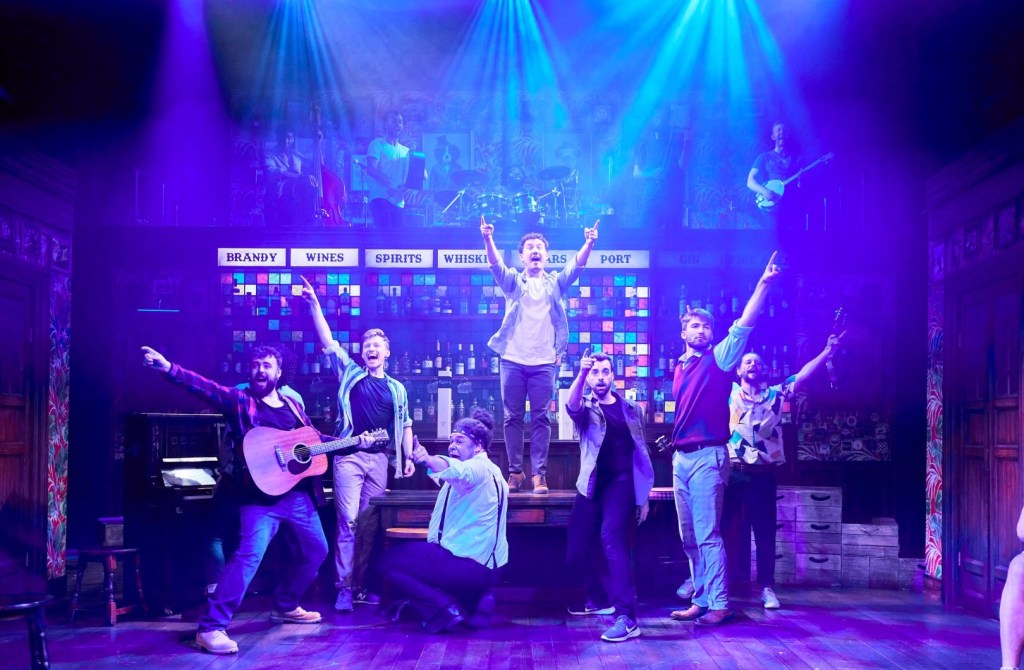
    Gina Beck and company, photograph by Johan Persson

    SOUTH PACIFC

    Music by Richard Rodgers

    Lyrics by Oscar Hammerstein II

    Book by Oscar Hammerstein II and Joshua Logan

    Adapted from “Tales of the South Pacific” by James A Michener

    Directed by Daniel Evans

    Sadlers Wells Theatre – until 28 August 2022, then on national tour

    https://southpacificshow.com

    Following an aggressively revisionist, critically lauded Young Vic Oklahoma! that sharply divided audiences (but look out for a West End transfer announcement imminently) and a My Fair Lady that seemed wonderful at NYC’s Lincoln Center but landed rather flatly on the stage of the Coliseum, Daniel Evans’s masterly take – first seen last summer at Chichester- on this 1949 Broadway classic comes as something of a relief. This is a production that respects and honours the original material in all it’s flawed humanity and emotional complexities, allowing the joy and elation but also the fear and tragedy of Rodgers and Hammerstein’s phenomenal work full rein, but still manages to find intriguing new colours and textures. It’s a thumping good night out that will satisfy the traditionalists while also giving more progressive theatregoers plenty to chew on.

    Perhaps the most obvious repointing is in the role of the opportunistic, Tonkinese islander Bloody Mary, constantly looking to relieve the American soldiers of their bucks with her handmade grass skirts and questionable shrunken heads. Usually played as a tough-talking bawd viewed with boisterous affection by the Seabees she’s trying to profit from, she emerges here, in Joanna Ampil’s haunting performance, as something quite different: younger than many of her predecessors in the role, her fearsome “dragon lady” persona is simply an act to beguile the visiting Americans: we even see her removing her elaborate make up and battered Forces jacket, and letting down her hair, at one point. Sure, she’s still a pragmatic, amoral survivor but Ampil gives her a watchful desperation and melancholy that is deeply affecting. The number “Happy Talk”, which in lesser productions has come across as excruciatingly and possibly inappropriately peppy as Mary tries to marry her daughter Liat off to Lieutenant Cable, is rescored here as a song of pleading anguish. It completely, movingly remints it, and it’s unforgettable.

    If Gina Beck and Julian Ovenden as the central couple, Ensign Nellie Forbush from Little Rock, Arkansas and French plantation owner Emile de Becque, are, on the surface, more traditional casting (they’re both beautiful and charming, with voices to die for), they too dig deeper into these familiar characters than I’ve ever seen before. We know they can sing (Beck’s exhilarating ability to blend chest voice and head soprano allows the music to soar in a way that brings tears to the eyes, while Ovenden’s spine-tingling rendition of “This Nearly Was Mine” is a bona fide showstopper) but it’s the truth in the acting that elevates these two performances into something compulsive and rich.

    Beck doesn’t sugar the pill of Nellie’s racially motivated confusion when she discovers that Emile has children with a Polynesian woman, but makes it a seamless part of the character of a young woman who at the top of act one is complaining about her mother back in America being prejudiced against anybody not from Little Rock but then goes through her own personal hell when confronted with the fact that she has carried some of that prejudice across the Pacific Ocean with her. I can’t imagine a finer account of this complex role. Ovenden is incredibly sexy, warm and winning, but underpins it with an undefined but all too human darkness. The chemistry between the two is unmistakable but Evans’s sensitive, smart staging ends their relationship on a subtly questioning note, not the arms and lips akimbo reunion most other versions present.

    Watching South Pacific in 2022, the sophistication of both the score, and Hammerstein and Joshua Logan’s book seems all the more remarkable. Yes it’s a piece of popular entertainment, sometimes rollicking and sometimes ravishingly romantic, but the way it tackles racism and interrogates the brashness of American wartime foreign policy is the stuff of riveting drama. Rodgers and Hammerstein never wrote a more overtly political song than “Carefully Taught” which posits that racism is not something we’re both with but are indoctrinated into, and it is powerfully put over here by Rob Houchen’s gorgeously sung Cable.

    Evans and the brilliant choreographer Ann Yee (this is a more dance-heavy South Pacific than usual, appropriately for Sadlers Wells, and it works thrillingly as such) find a visual metaphor for the show’s racially charged central arguments by eschewing the traditional overture in favour of placing Bloody Mary’s daughter (Sera Maehara, perfect) centrestage performing what looks like a ceremonial dance, only to have her tranquil space invaded by hoardes of leaden-footed American militia. It’s terrifying and enthralling, and the image is repeated near the close of the show, to devastating effect, a pitiless reminder of the human cost of war. The counterpoint between grim action and joyful music further confirms Rodgers and Hammerstein as the true precursors to Sondheim.

    Musically, this production is sublime: Cat Beveridge’s fifteen piece band sounds lush and full, with David Cullen’s orchestrations intriguingly pointing up both the minor chords and the joyful “Broadway” elements of the score, and the choral singing thrills the blood. Peter Mckintosh’s set solves the problem of trying to recreate a tropical paradise onstage by setting the whole thing, not in appropriately, in a giant aircraft hangar (we even get an airplane on stage at one point!) and letting Howard Harrison and Gillian Tan (superb lighting and video design, respectively) do much of the atmospheric heavy lifting. It works triumphantly.

    As he proved with his 2016 Showboat (which featured Gina Beck as an incandescent Magnolia), Daniel Evans knows exactly what makes these vintage musicals tick. He amplifies what makes them classics but finds ways of ensuring that they read as relevant and fascinating for modern audiences. Even the scene changes in this production are a thing of beauty, whole sets swirl into place before our very eyes, enhancing the action, never detracting from it. This is a profoundly satisfying experience on every level.

    Having endured the ropey West End revival in the late 1980s (will never forget the island of Bali Ha’i on a painted backdrop wobbling perilously every time a cast member walked within a few inches of it), the impressive but overlong Trevor Nunn staging at the National in 2002, and the watered down Lincoln Center version that landed at the Barbican just over a decade ago, I didn’t think I needed to ever sit through South Pacific again. It’s wonderful to be proved wrong….I would have hated to miss this flawless, soul-feeding production. It’s an absolute must-see.

    August 13, 2022

  • ALL OF US – ⭐️⭐️⭐️⭐️ – A compelling, important new play with a lot on it’s mind

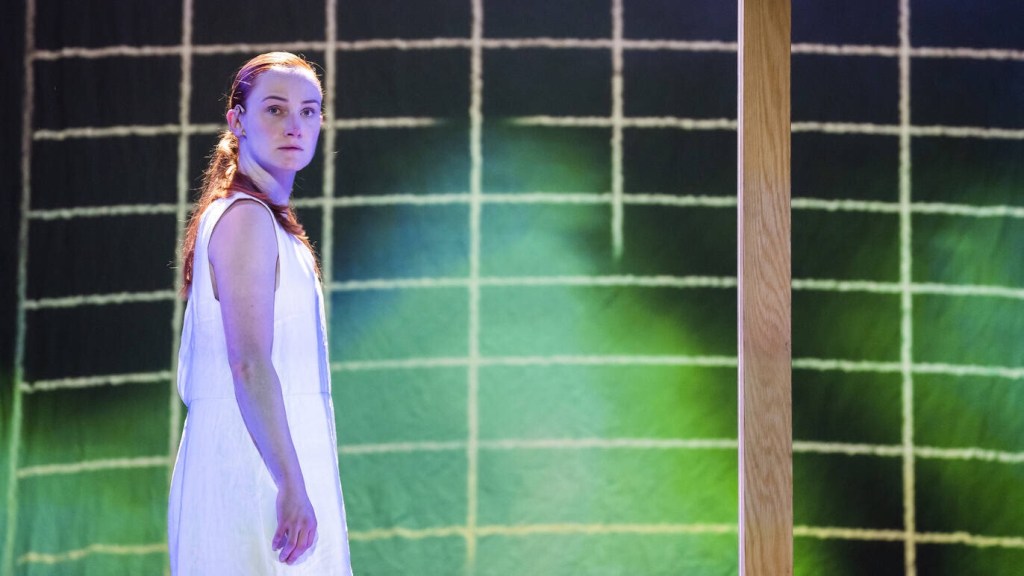
    Francesca Martinez, photograph by Helen Murray

    ALL OF US

    by Francesca Martinez

    Directed by Ian Rickson

    National Theatre/Dorfman – until 24 September 2022

    https://www.nationaltheatre.org.uk/shows/all-of-us

    It would be unsurprising, indeed completely understandable, for a new state-of-the-nation play focusing on the treatment of, and opportunities for, disabled people in present-day UK, to fetch up on stage as a furious, ranty polemic. Francesca Martinez’s dramatic writing debut, All Of Us at the National, goes down a rather more unexpected and interesting route however.

    It filters the passionate arguments, often grim experiences and execrable benefit cuts through the prism of one of the most likeable and engaging female central protagonists in any piece of new writing within living memory. That’s not to say that this confident new piece lacks fire in it’s belly; far from it, it’s coruscatingly clear-eyed in it’s takedown of a system that repeatedly and callously fails the people it should be helping, but it also has real tenderness and sweetness in amongst the politics.

    Martinez’s Jess is a successful therapist with her own practise, a ferociously positive outlook on life and an indomitable kindness tempered with a wicked sense of humour; in short, she is the kind of woman who makes other people’s lives better just by being there. She also has cerebral palsy, which means that she is on PIP, and is partially dependent on regular home visits from a carer (Wanda Opalinska, excellent) and, for the purposes of getting to and from her practise rooms, a car provided by the welfare state. The way that this intelligent, accomplished young woman’s life starts to unravel once she is deemed ineligible for vital portions of her financial support following a particularly callous reassessment of her needs, is what drives much of the play…but it is Jess’s unhistrionic reaction to her plight that vitiates and distinguishes it.

    Ian Rickson’s sparky production, making intelligent use of an unobtrusive revolve and the entire Dorfman auditorium, has many strengths but the chief one is having Martinez perform her own work. Her entrancing Jess projects an innate goodness that never cloys, as well as an intense watchfulness and sardonic wit; she is the sort of person that is so used to putting other people’s emotional needs before her own that it takes her some time to accept that the fact that she now needs the support she habitually offers to others. It’s a warm, generous performance, full of exquisite detail and an irrepressible joie de vivre that makes it all the more powerful in the moments when her facade cracks: when somebody this good gets truly angry, it behoves us all to shut up and listen.

    I defy anybody not to be deeply moved when Jess bares her soul to Bryan Dick’s superb patient-turned-ally Aidan, describing how hard won her optimism and kindness actually is, that to live this sunnily is an actual choice. That moment hammers home with excruciating force the realisation just how much the Jess’s of this world have had to conquer and still face daily in order to achieve what other people take for granted or, worse, squander on a regular basis. It’s extremely powerful and illuminating, and Martinez and Dick give it full emotional rein.

    It’s an ambitious piece, which at times threatens to sink under the sheer weight of it’s multiple themes, but is carried through by humour, some laser sharp observations and a vivid gallery of characters. Martinez creates a credible, beautifully realised friendship between Jess and her somewhat flaky pregnant best friend (Crystal Condie’s lovable Lottie) and the outspoken, sexually voracious Poppy (Francesca Mills in a firecracker of a performance), determined, at least initially, that being confined to a wheelchair will not cramp her wild style.

    Christopher John-Slater and Kevin Hely make potent, bitterly funny impressions as two furious victims of cuts to disability benefits due to austerity, resolutely refusing to suffer in silence, and Oliver Alvin-Wilson does terrific, contrasting work as one of Poppy’s squeezes and then the desperately disenfranchised parent of a severely disabled child.

    If an oil-smooth-until-rattled Conservative politician, played with appropriate oleaginous relish by Michael Gould, is given a rather-too-convenient backstory of untapped artistic ability and a troubled childhood, I suspect that may be more down to an inspiring generosity of spirit on Martinez’s part than any particularly redemptive features in any Tories. Her script smartly makes the point though that people on the fringes of despair and disillusionment don’t necessarily vote in the way that one might expect.

    Dramaturgically, All Of Us is pretty raw, but I’m not sure a more conventionally and neatly structured play would speak to us with quite the same compelling urgency. There is inevitably a slight feeling of shooting fish in a barrel as Martinez deconstructs and shines a light on the flaws in the welfare state system, but it is impossible to watch without an increasing sense of justifiable fury. It’s writing from the heart, and what a beautiful, all-encompassing heart it is. Essential viewing, a humanising experience.

    August 12, 2022

  • QUENTIN CRISP: NAKED HOPE -⭐️⭐️⭐️⭐️- the icon lives!

    Photograph by Jacky B Summerfield

    QUENTIN CRISP: NAKED HOPE

    written and performed by Mark Farrelly

    Directed by Linda Marlowe

    Kings Head Theatre – until 27 August 2022

    https://kingsheadtheatre.com/whats-on/quentin-crisp-naked-hope

    Another night at the Kings Head, another feat of astonishing transformation by the chameleonic actor-writer Mark Farrelly. Because delivering one bravura turn as a gay icon isn’t enough apparently (his utterly brilliant Jarman -about Derek- is currently running in repertoire as part of the Islington venue’s ongoing Boys Boys Boys season), Farrelly also reignites his heart-swelling, life-affirming tribute to the self-proclaimed “stately homo of England”, Quentin Crisp. The Kings Head is an appropriate venue for the show as well, since Crisp performed here at the beginning of his career.

    This is a magical theatrical miniature, that traces a direct line from Oscar Wilde through Crisp and on to Joe Orton and Kenneth Williams and Julian Clary and beyond. What Farrelly does, in a performance of meticulous detail and breathtaking technique, transcends mere impersonation as he brings the magnificent, mould-breaking Quentin back to life before our very eyes. He captures with unerring precision the swooping vowels and cadences, the amused but slightly detached attitude, epigrammatic wit and the subtle but unmistakable kindness at the heart of this wildly eccentric, joyfully off-kilter human being, whose ninety year life span encompassed prostitution and life modelling, through to being an unlikely style icon and a celebrated raconteur.

    The first part is set in the 1960s in Crisp’s infamously dusty Chelsea flat (“Don’t lose your nerve. After the first four years the dirt doesn’t get any worse”) and the second some thirty years later as the octogenarian Quentin prepares to go onstage to delight an adoring audience in his adopted home city of New York. Farrelly deftly suggests the physical frailty of the passing years running in a counter direction to Crisp’s soaring spirit, which flamboyantly flourished later in life as the more enlightened parts of the world at large realised what a gift to humanity he actually was.

    Farrelly’s show, directed with an unshowy but potent precision by Linda Marlowe, does little more than represent Crisp the raconteur, and honestly we don’t need any more than that. The man himself managed to combine style AND substance, and so does this solo play. It’s endlessly quotable (“if at first you don’t succeed, failure may be your style”, “never keep up with the Joneses. Drag them down to your level”, “my mother protected me from the world and my father threatened me with it”). It’s also very moving as one marvels at how Crisp retained a fundamental optimism and affection, however cynical, for his fellow humans despite being treated appallingly in early life on account of his undeniable, glorious “otherness”.

    If Jarman is the more elaborate, innovative piece of theatre, Naked Hope has real charm and heart, and Mark Farrelly’s central turn is every bit the match of John Hurt’s towering achievement in the Naked Civil Servant film. What both shows share, beyond a terrific central performance and Farrelly’s enviable gift for shaping the bon most of these iconic gay figures into compelling one person scripts, is the encouragement for audiences to go forth and live their best, most authentic lives. That’s a pretty amazing gift to receive. See them both! This is life-enhancing theatre.

    August 12, 2022

  • JARMAN – ⭐️⭐️⭐️⭐️⭐️ – a gorgeous tribute: if only all history lessons were this engaging

    Photograph by Jacky B Summerfield

    JARMAN

    written and performed by Mark Farrelly

    Directed by Sarah-Louise Young

    Kings Head Theatre – until 26 August 2022

    https://kingsheadtheatre.com/whats-on/jarman

    “Be astonishing” are the final words of this 75 minute distillation of the life, death, work and preoccupations of Derek Jarman, one of the most iconoclastic artists of the late twentieth century. It’s an instruction to the audience to go out and live their best, unashamed, creative, original lives. Writer-performer Mark Farrelly and his director Sarah-Louise Young have clearly applied that exhortation to be astonishing to themselves too when crafting this intense yet playful piece of total theatre. What they’ve created is roaring, but delicate, ritualistic and totally unique.

    Pitched somewhere between a celebration, a séance and an unusually engaging piece of performance art, Jarman eschews linear storytelling in favour of a sensory assault encompassing spoken word, music and direct audience engagement. Some of Jarman’s iconic film works are referenced – Sebastiane, Caravaggio, Edward II, The Tempest, the heartrending Blue which depicts the artist’s slide into blindness – and settings from Ken Russell’s chaotic movie shoots (Jarman designed several of his films) to Derek’s beloved, wall-less Dungeness garden are vividly evoked. So too is the hedonistic pre-AIDS London gay scene of the 70s and 80s, in sequences that rival Jack Holden’s terrific Cruise play (about to return for a limited West End season) and TV’s It’s A Sin. It’s spare but extravagant, and extraordinarily life-affirming even as it looks death squarely in the face (Jarman died from an AIDS-related illness in 1994, aged just 52).

    In a performance of such controlled brilliance that even his armpits seem to sweat on cue, Farrelly portrays the man in his prime – an outrageous force of nature but with an undertow of genuine warmth and kindness – then unflinchingly, and heartbreakingly shows him ravaged by disease. Crucially, it’s never sentimental, it’s just authentically tragic. Farrelly is an athletic, engaging stage presence with an unerring ability to connect with his audience at close quarters, and charisma to spare. I defy anybody to see this and not come away both as a fan of him, and determined to go away and read up about Derek Jarman.

    The writing is beautiful, poetic and pungent, full of yearning and truth, and a sort of enraged elegance punctuated by genuine wit. Young’s sensational staging repeatedly breaks the fourth wall, and makes theatrical magic using the bare minimum of props – a sheet, a torch, some torn up paper – buoyed by Farrelly’s extraordinary central turn. Technically the show is flawless too, Farrelly and Young’s shape-shifting lighting transforming the King’s Head’s tiny auditorium into an Aladdin’s cave of possibilities and landscapes, and Tom Lishman’s complex, ingenious sound design contributing immeasurably to the overall impact.

    Visceral and unmissable, and a history lesson dressed up as a great, sometimes harrowing, piece of entertainment, “astonishing” this most certainly is. One suspects Jarman would have loved it.

    August 7, 2022

  • MUCH ADO ABOUT NOTHING -⭐️⭐️⭐️- it’s a visual feast

    Photo by Manuel Harlan

    MUCH ADO ABOUT NOTHING

    by William Shakespeare

    Directed by Simon Godwin

    National Theatre/Lyttelton – until 10 September 2022

    https://www.nationaltheatre.org.uk/shows/much-ado-about-nothing

    It’s probably fair to state that Much Ado About Nothing is generally considered to be one of the most accessible, “user friendly” of all Shakespeare’s comedies: the sparring of Beatrice and Benedick, while barbed, has real affection amidst the wit and these two leads are amongst the most beloved of all the Bard’s creations, while the maltreatment and misunderstanding of Hero can be played pretty nasty, ultimately it does all add up to a case of all’s well that ends well (sorry).

    Simon Godwin’s new production for the National initially seems to be going for the full-on romantic escapism, from the bougainvillea and sun-kissed (Amalfi?) coast of the front curtain to the gorgeous Art Deco-meets-Italianate Palazzo mixture of colour and elegance of Anna Fleischle’s hotel setting: the whole thing takes place in the 1930s Hotel Messina, under Leonato’s management and ownership. There’s an abundance of ravishing period costumes by Evie Gurney; one would imagine the cost of Katherine Parkinson’s wardrobe as Beatrice alone is equivalent to the budget of a half dozen fringe productions.

    So far, so entrancing: what follows however is not quite what might have been expected. This is an uneven Much Ado, one that is surprisingly unfunny (there’s some very heavy handed clowning going on, and a half-baked broadening of some minor characters that feels insufficiently flamboyant) but scores strongly in the more dramatic scenes, particularly in the superior second half. Despite the opulent luminosity of the location, it’s the darkness that really captivates here.

    The fake funeral for Hero, performed in murky scarlet-hued light with the entire black-clad cast performing a full throated musical lament, truly haunts, as does the inclusion of the 29th sonnet for Ioanna Kimbrook’s captivating Hero. Parkinson tears into Beatrice’s act four “O that I were a man!” speech with such ferocity that it feels like a frozen breeze passing across the stage. Rufus Wright, always exquisite, handles Leonato’s descent from debonair bonhomie to fury and grief after Hero’s discrediting, with real skill. Ashley Zhangazha’s fine Don Pedro also makes a strong impression.

    John Heffernan is an earnest, relatable Benedick, the sort of bloke you’d always want in your corner, and his realisation of his feelings for Beatrice has a touching gravitas. Parkinson brings her familiar world-weary breathiness to the female lead but feels oddly underpowered and heavy-handed until she really lets rip with the anger. There isn’t much chemistry between these two, especially in comparison to the gloriously warm and eccentric performances by Ralph Davis and Lucy Phelps in the same roles in the current Globe production.

    Eben Figueiredo’s London-accented Claudio lacks subtlety, and, for me, Phoebe Horn’s sexually voracious Margaret (here a senior hotel maid) and David Fynn’s Dogberry (remodelled as the hotel’s head of security) would be a lot more amusing if they stopped trying so hard to be funny. To be fair, that may be down to direction but it’s interesting to note how hilarious, by comparison, Olivia Forrest’s strong-arming Seacole is by just employing a deadpan, vaguely bewildered stillness.

    I enjoyed the transformation of Leonato’s brother Antonio, into his wife and co-hotelier Antonia (Wendy Kweh) and the sheer visual beauty of the whole staging is a source of considerable pleasure: if feels like only the National can afford to put on plays at this level of budget (Jack Absolute Flies Again next door in the Olivier is similarly sumptuous), especially these days. In all honesty, I prefer my Much Ado funnier than this (the Globe version delivers that in spades) but this is still an intriguing take on a familiar text…..and it looks breathtaking.

    July 24, 2022

  • PENNYROYAL – ⭐️⭐️⭐️⭐️⭐️ – it’s true: good things come in small packages

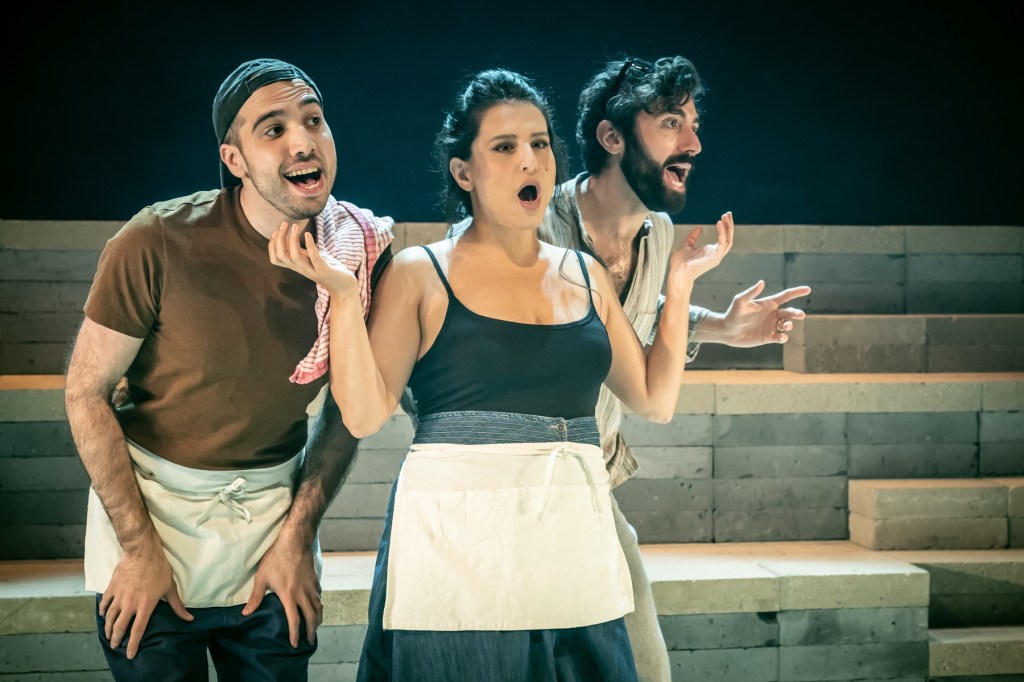
    Madison Clare and Lucy Roslyn, photograph by Helen Murray

    PENNYROYAL

    by Lucy Roslyn

    Directed by Josh Roche

    Finborough Theatre – until 6 August

    https://finboroughtheatre.co.uk/production/pennyroyal/

    For the second time this year, the first being Sophie Swithinbank’s sensational Bacon back in the Spring, the tiny Finborough punches up with a new work that lays a strong claim to be considered best play of the year. Lucy Roslyn’s Pennyroyal takes Edith Wharton’s 1922 novella The Old Maid as it’s initial inspiration but feels immensely immediate and relevant. It centres on a very specific theme – Premature Ovarian Insufficiency, not a Wharton issue, to be clear – but in it’s unflinching, open-hearted depiction of the stresses and dynamics of family relationships it nudges towards the universal. There’s a lot to unpack and connect with here, and it is exquisitely observed.

    Sisters Christine and Daphne have a genial but sometimes fractious relationship, and when younger sibling Daphne (a terrific Madison Clare) discovers, age 19, that she is unable to have children, her older sister (author Lucy Roslyn, heartcatchingly good) steps in to help by donating her eggs. The path ahead proves far from straightforward and Roslyn’s nailing of the contradictory nature of sibling relationships is sharp and satisfying, as is her deeply moving understanding of loneliness even among apparently happy, sorted people (“I’d see my shadow and I’d be like: well, that’s proof then. There I am” says Christine at a certain point in one of several monologues that cut like knives).

    Roslyn’s text is suffused with affection but it’s as cruel as it is loving. Her writing is gorgeous: poetic flights of fancy are suddenly undercut by pithy shards of relatable bittersweet humour as the sisters bicker, remember and pontificate. It’s very funny and also, at times, wildly eccentric, yet every line, monologue and muttered aside matters; the script is lean yet extravagant, and some of the longer speeches will inevitably crop up as audition pieces in the near future. It’s hard to imagine anybody matching the insouciant brilliance of Roslyn and Clare though: these women are phenomenal.

    Josh Roche’s tender but tough production doesn’t put a foot wrong: even the way the bell jars housing tiny plants (Christine is a horticulturalist) light up at given points are little moments of magic. The chemistry between the actresses is a thing of wonder. Roslyn and Clare don’t look alike but utterly convince as sisters seven years apart, dealing with a difficult but rather marvellous sounding (unseen, to us) mother, and a long-standing childhood friend who ends up being a lot less of an ally than they would have hoped for.

    Roslyn is a chummy, disarming stage presence, so natural as the innately good, kind but never cloying Christine (her hatred of the aforementioned family friend is gleefully funny) that it barely feels like she’s acting. It’s a beautiful, beguiling performance. Clare matches her, making Daphne likeable but with a convincing edge of wildness and aggression. At first the younger sister exudes an aching vulnerability but the shift of power that comes later on is completely credible, and it proves impossible not to care about these flawed but fundamentally good women. Christine’s gayness is introduced fairly late on but feels authentic and one can only hope that the unseen Carolyn is worthy of her.

    The title – Pennyroyal – refers to a species of the mint family that can be used for medicinal purposes but is toxic to the liver in too high doses. It’s a fitting metaphor for a sibling relationship that nurtures and sustains but can tip over into something much less wholesome at a moment’s notice.

    This quietly riveting little gem packs as much truth, illumination and sheer theatrical potency into it’s eighty minutes playing time than many other plays of double the length. It sears as it amuses, it’s a powerfully women-driven piece, and it’s a genuine emotional rollercoaster. What’s not to love? See it. Bring tissues.

    July 17, 2022

  • JACK ABSOLUTE FLIES AGAIN – ⭐️⭐️⭐️⭐️- the National has a joyous, big fat summer hit

    Laurie Davidson, photograph by Brinkhoff Moegenburg

    JACK ABSOLUTE FLIES AGAIN

    by Richard Bean and Oliver Chris

    based on Richard Brinsley Sheridan’s The Rivals

    Directed by Emily Burns

    National Theatre/Olivier – until 3 September 2022

    https://www.nationaltheatre.org.uk/shows/jack-absolute-flies-again

    Watching Richard Bean and Oliver Chris’s breezily funny, good-hearted variation on Sheridan’s evergreen comedy, it’s hard to shake the feeling that the National has found a natural successor to One Man Two Guv’nors. The parallels are clear: both are based on classic texts (One Man adapted Goldoni’s The Servant To Two Masters to a 1960s British setting), both feature sumptuous and inventive set designs, cartoon-like but gorgeously vivid, by Mark Thompson, and both temper the farcical hilarity with an undertow of gentle melancholy.

    Furthermore, co-authors Bean and Chris worked on both shows (Bean as writer, and Chris as wondrously daft upper class twit Stanley Stubbers in the original NT, West End and Broadway runs of One Man Two Guv’nors.) I fully expect this new comedy to be another solid hit, something that, Follies and Small Island aside, hasn’t been hugely common on the epic but challenging Olivier stage in the last half decade.

    Jack Absolute Flies Again relocates The Rivals to a bucolic Sussex village – all cut glass vowels and cut grass lawns – during the Second World War. Absolute and Lydia Languish – the Beatrice and Benedick of Restoration Comedy – are now RAF pilots (Natalie Simpson and Laurie Davidson sparkle winningly) and language mangling Mrs Malaprop (Caroline Quentin in uproariously fine form) is now a merry ‘lady of the manor’ with an unexpectedly raunchy past. The humour is more belly laughs than sophistication, but there are moments when it’s almost impossible possible to stop laughing.

    The supporting cast are a delightful rogues gallery, from Kerry Howard’s knowing maid, James Corrigan as an adorable, clueless Aussie fighter pilot, to Jordan Metcalfe and Helena Wilson as an über-posh, totally crazy secondary couple, everybody scores their laughs unerringly. This applies to nobody more than Peter Forbes’s gloriously deadpan, joyously disagreeable Sir Anthony Absolute. An absolute monster of a man, insensitive, bullying, misogynist…and sheer comedy gold. Forbes plays him to the hilt.

    There’s lovely, touching work from Tim Steed as a closeted RAF man, and if TV star Kelvin Fletcher seems slightly less polished than his cast mates that sort-of works for a Northern innocent adrift in rural Sussex, and I suspect his performance will grow in authority as the run progresses.

    Jack Absolute Flies Again isn’t perfect: the second act could lose about twenty minutes playing time and some of the running jokes don’t so much fly as get run deep into the ground. There is a plot development late in the second half that deviates massively from the original Sheridan and it’s a bit of a gut wrencher, plus it doesn’t actually happen on stage but via a series of impressive but bewildering projections. It does also mean that a, for the most part, larky evening ends on a melancholic note and one can’t help but long for another burst of the exhilarating jitterbug number (choreography by Lizzi Gee) that lights up a flashback sequence, to round off the evening and send audiences out on an even greater high.

    Nonetheless, this is a rollicking good time and may, I suspect, be around a lot longer than the current scheduled summer season. The National’s resources have seldom been thrown at such a mass populist crowd pleaser in recent years….and I’ve no doubt ticket buyers will repay accordingly. Huge fun.

    July 16, 2022

  • MAD HOUSE -⭐️⭐️⭐️⭐️- Harbour and Pullman are a devastating double act

    Bill Pullman and David Harbour, photograph by Marc Brenner

    MAD HOUSE

    by Theresa Rebeck

    Directed by Morris von Stuelpnagel

    Ambassadors Theatre -until 4th September 2022

    https://www.atgtickets.com/shows/mad-house/ambassadors-theatre/?gclid=EAIaIQobChMIpbOvjOrU-AIVC4BQBh2vvgLGEAAYAiAAEgIGjPD_BwE&gclsrc=aw.ds

    If conflict be the essence of great drama, then American writer Theresa Rebeck is serving up something akin to a modern masterpiece with this world premiere. While not a masterpiece perhaps – there is a jarring gear change near the end of act one, the second half veers towards sentimentality, and some of the structure and plotting is a little predictable, while the end feels too abrupt – Mad House is still a tremendously engrossing and satisfying tragicomedy, given a flawless, blazingly well acted production by Moritz von Stuelpnagel.

    Although primarily known for US TV and film roles, David Harbour and Bill Pullman field an impressive array of theatre credits between them: Harbour was previously in the West End in 2006 in the Kathleen Turner Broadway revival of Who’s Afraid of Virginia Woolf (and Rebeck’s writing at it’s most caustically brilliant here sometimes recalls the bile and bite of Albee) and Pullman starred opposite Sally Field in the Old Vic’s 2019 All My Sons. They bring formidable technique, fascinating physicality and a thrilling command of the stage to a father and son relationship etched in loathing, guilt and mutual recrimination.

    If Joe Keller as played by Pullman in the aforementioned Miller revival was a flawed patriarch, Mad House’s Daniel, bed bound, permanently attached to an oxygen machine and offensively determined to make his final days as hellish for everybody else as they are for him, is broken beyond repair. He knows it – his frequent screams of “I’m not dying!” are more of a hectoring threat than anything else – and he isn’t so much raging against the dying of the light as screaming blue murder at, and spitting in the face of, it. Pullman is barely recognisable, decrepit but possessed of a malevolent energy, relishing the sheer nastiness of the character but also delivering lethal comic zingers with grim precision: it’s a hell of a performance.

    At one point, he literally spits in the face of Harbour’s hulking, emotionally challenged elder son Michael, recently released from long term psychiatric care and now looking after his poisonous dad partly because he has no place else to be, as Daniel frequently delights in reminding him. It’s a powerful moment, one of several in a script that, while seldom actually surprising, so ingeniously dripfeeds information that it feels fresh even when the situations depicted aren’t particularly original. Rebeck is a skilled storyteller but her handle on vividly drawn characters and incendiary dialogue is even more impressive, as is her compassionate understanding of the mentally ill, and a tacit acceptance of the awfulness of some people’s old age.

    End of life care, bereavement, suicide and mental health are potent subjects and Mad House pulls no punches in dealing with them, yet the script is shot through with irresistible gallows humour and punctuated with moments of unexpected but authentic sweetness. Most of these moments involve Akiya Henry’s luminous but tough hospice nurse Lillian, brought in to look after Daniel but suddenly thrust into the role of lynchpin for this fractured family. Henry sensitively evokes a woman whose almost angelic kindness and strength has been hard won, and her second act recollection of the loss of her child carries a devastating emotional punch.

    Equally fine is Stephen Wight as the Manhattan-dwelling, hedge fund manager son who plays the city slicker upon arrival back at the Massachussetts homestead but is soon reduced to impotent mumbling after a couple of hours of toxic family crossfire. Sinéad Matthews has an innate likability which creates an interesting tension against Rebeck’s writing for ruthless, also largely absent, sister Pam, nursing a longstanding resentment at their late mother’s care for the troubled Michael to the detriment of her other kids. In a brave, full throttle performance, Matthews invests her with an intriguing brittleness which ensures that a moment of almost unbelievable psychological cruelty towards her distressed brother, makes absolute sense.

    Ultimately though, the play belongs to David Harbour’s sardonic, physically imposing, psychologically fragile Michael. Harbour delivers exquisitely detailed work: tender but brutal, witty and flamboyant but unflinchingly truthful. He entirely convinces as a flawed, kind individual capable of a fury that can only be managed by absenting himself from a situation and raging at the sky, but also an unrefined sensitivity: note the way he repeatedly tries, yet fails, to physically reach out to Henry’s Lillian as she pours her beautiful heart out to him. There’s psychological authenticity too in the way Harbour’s Michael follows extravagant pronouncements of anger with a subtle physical jerk-back of the neck, as though in a state of constant self-censorship. This is a magnificent sucker-punch of a performance, and one that ought to feature on every Best Actor award nomination list for this year.

    Frankie Bradshaw’s gorgeous set of a grandiose period family home fallen into disrepair is an appropriate metaphor for the relationships of the principal characters. There’s even an unnecessary but entirely pleasing revolve, further indicative of the Rolls Royce swagger of von Stuelpnagel’s assured, world class staging.

    This may prove too dark for those after a night of West End escapism, but it is an undeniably fine piece of theatre. Rich and complex, yet accessible, it’s a thumping good night out that’ll give you plenty to talk about afterwards. Rebeck’s works usually premiere on Broadway so this is a real gift for London….and you’d be mad to miss acting of this calibre.

    June 30, 2022

  • NO PARTICULAR ORDER – ⭐️⭐️⭐️⭐️ – a brave, bold new piece of writing

    photograph by Lidia Crisafulli

    NO PARTICULAR ORDER

    By Joel Tan

    Directed by Josh Roche

    Theatre 503 – until 18 June 2022

    https://theatre503.com/whats-on/npo/

    With over forty characters, seventeen locations and a timespan of more than three hundred years packed into his script’s ninety minutes running time, nobody could accuse playwright Joel Tan of lacking ambition.

    No Particular Order eschews a linear narrative in favour of a procession of tense, brief scenes offering snapshots into life under a number of unspecified totalitarian regimes: a married couple, wreathed in sadness, discuss a lost son; a liaison between soldiers turns nasty; protestors shelter from an unseen attack; a refugee pleads with a guardsman for her and her daughter’s lives; a head teacher’s warning to one of her subordinates becomes more sinister with every sentence… It’s an elliptical epic that’s at times reminiscent of Pinter at his most forbidding and obscure, but ultimately proves haunting and troubling on entirely it’s own terms.

    The title could apply equally to the dramatic structure as to the fact that ruling parties and geographical locations are never named, as the piece explores humanity in the face of almost insuperable odds.

    If Tan’s text is a lot, director Josh Roche matches it with a staging of elegant austerity. A superb cast of four play all the roles, with minimal changes in voice, appearance or even attitude. It’s an interesting choice that certainly bears out the concept that human beings and, accordingly, the way history tends to play out, never fundamentally changes…but it can get a little confusing. There is little humour and a lack of variety in pace and tone that may be a deliberate choice but doesn’t help in demystifying the text.

    Despite these reservations, the cumulative effect of these scenes, many of which are pretty grim, stays with you some time after leaving the theatre. Sarah Sayeed’s compositions and sound designs – ranging from jagged to insistently hypnotic – enhance the text immeasurably. Some of Tan’s writing is remarkable though as he drops little thematic timebombs into apparently unconnected scenes set across vast swathes of time – birds and flowers are a recurring motif, to sometimes surprising effect – that serve as portents, reminders and, occasionally, emotional life rafts back to peaceful, less complicated lives. It’s interesting work, brutal but sophisticated, that often threatens to tip over into the pretentious but never quite does.

    The four actors – Jules Chan, Pandora Colin, Pia Laborde-Noguez and Daniel York Loh – are terrific, investing each discrete moment with the requisite truth and conviction. The playing is naturalistic, as it probably needs to be in such a small space, which further adds to the sense of brewing dread.

    No Particular Order isn’t perfect, and may prove too depressing for some, but some of the sections speak relevantly, scarily, to current world events, and it is invigorating to encounter a new play with this level of ambition and breadth of vision.

    June 9, 2022

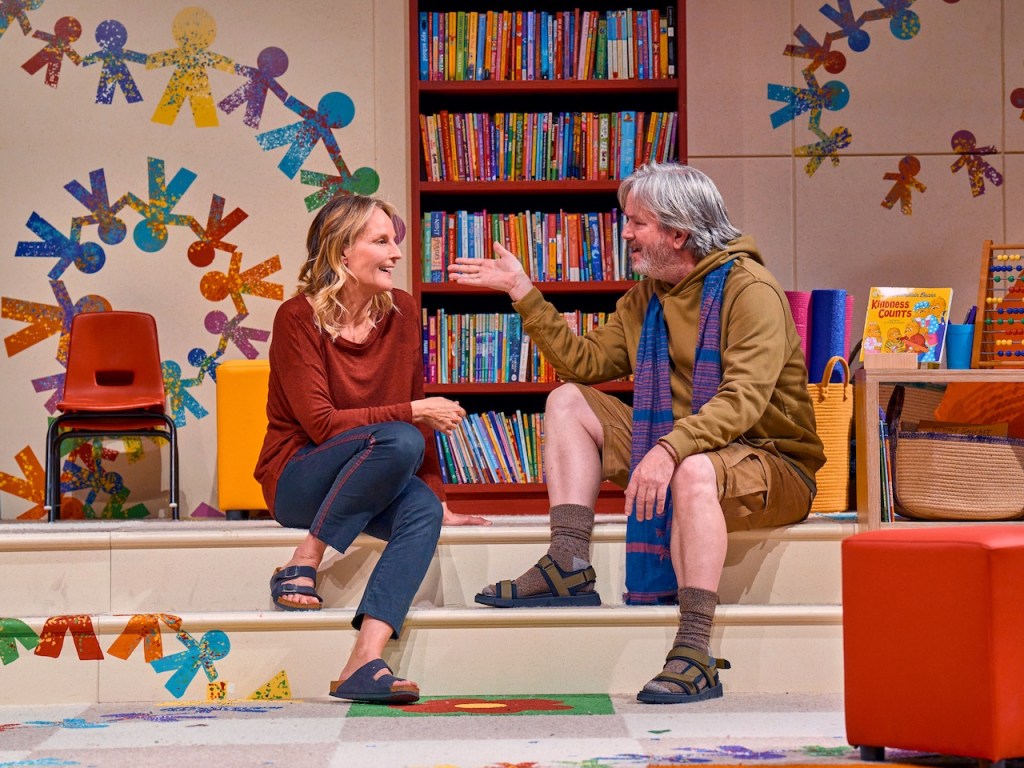
  • THE HAUNTING OF SUSAN A – ⭐️⭐️⭐️ – a very Islington ghost story

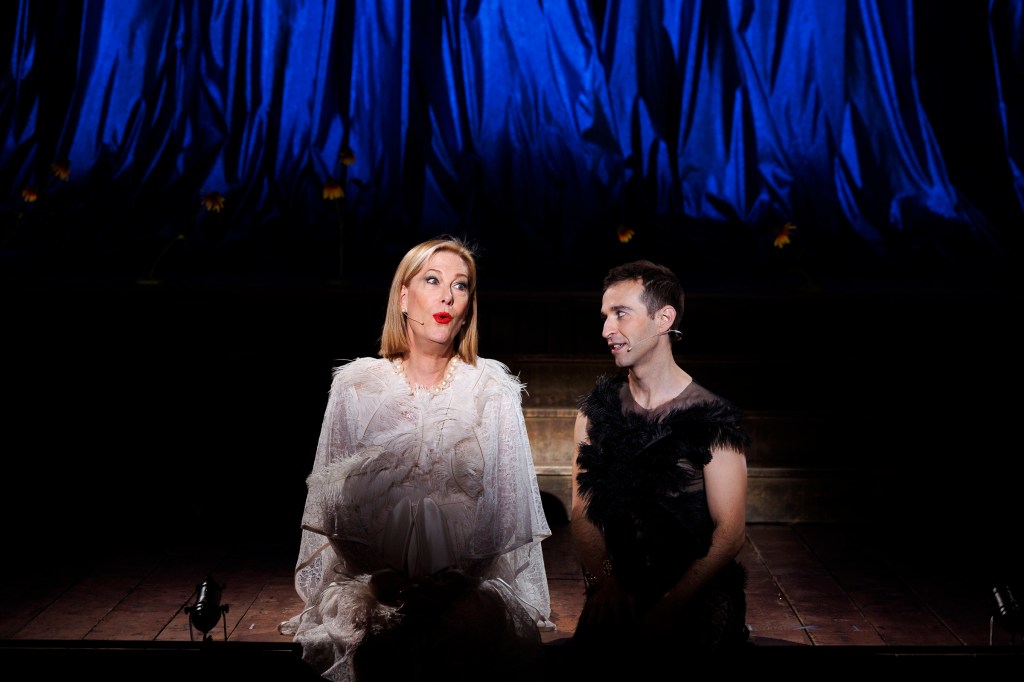
    Suzanne Ahmet, photograph by Rah Petherbridge

    THE HAUNTING OF SUSAN A

    Written and directed by Mark Ravenhill

    King’s Head Theatre – until 26 June 2022

    https://kingsheadtheatre.com/whats-on/the-haunting-of-susan-a

    Ghost stories are a much loved theatrical genre – The Woman In Black has been in the West End for over thirty years and shows no signs of moving on – but can be fiendishly difficult to get right: go too horrific and you run the risk of alienating your audience, overdo the melodrama and you end up with inappropriate laughter in the auditorium. Mark Ravenhill’s tense new piece avoids these pitfalls, providing some authentic chills even if it fails to completely satisfy as a piece of supernatural storytelling.

    Actually, the storytelling here is skilfully done, seamlessly bleeding real life into fiction as Ravenhill himself gets up before the performance officially begins (or at least before it APPEARS to have begun) to regale us with facts about the Kings Head Theatre. Regular visitors to this venue won’t find this unusual, since every performance here is prefaced by a heartfelt appeal for funds. Ravenhill is interrupted mid sentence by an audience member who has performed as an actor at this theatre in a previous production and is still haunted by a supernatural experience she had during that run.

    In all honesty, this conceit would work better if Suzanne Ahmet, in that role, weren’t so obviously acting at the outset. Ravenhill is much more successful at apparently making his lines up on the spot, possibly as a result of having written them himself. That said, Ahmet gets into her stride as the piece draws on, compellingly recalling her brush with a vengeful ghostly presence that feels unsettlingly plausible in the dimly lit, muggy back room of this historical Islington pub. She also interacts winningly with a couple of game audience members, drawing all of us further into the eerie theatrical mire.

    Without giving away spoilers, Ravenhill’s text is so bound up with the venue itself that it’s basically a piece of immersive theatre. It even works as a useful, if slightly heavy-handed, advertisement for the venue’s future plans as the King’s Head prepares to move to their new home in an adjacent new Upper Street development (Ravenhill is the co-artistic director).

    Ahmet’s haunted Susan accused Ravenhill at one point of being “another white man” trying to control the narrative, which she then wrestles from him. That’s all well and good, but the irony still stands that this piece is still the creation of a white man, albeit an extremely talented one, and one who creates convincing female characters. If the play’s conclusion is a bit of a letdown given the shuddering suspense and carefully brewed atmosphere of what has gone before, that is a frequent weakness of this genre, and one that the aforementioned The Woman In Black only avoids by deviating quite drastically from its original source material.

    Jo Underwood’s lighting and Roly Botha’s lighting are flawless however. Botha’s contribution is particularly invaluable, a foreboding soundscape that ratchets up the tension to pleasurably unbearable levels.

    This may not be a classic of the ghost story genre, being too tied to the venue and the surrounding area to have serious legs, although future productions could possibly see portions of the script rewritten to reflect alternative locations. It is however a creditable and often gripping attempt to marry contemporary issues with Islington’s somewhat grim past, and an interesting, evocative way to commemorate fifty years of the King’s Head Theatre.

    June 8, 2022

Previous Page Next Page

Blog at WordPress.com.


Loading Comments...
 

    • Subscribe Subscribed
      • ajhlovestheatre
      • Join 59 other subscribers
      • Already have a WordPress.com account? Log in now.
      • ajhlovestheatre
      • Subscribe Subscribed
      • Sign up
      • Log in
      • Report this content
      • View site in Reader
      • Manage subscriptions
      • Collapse this bar