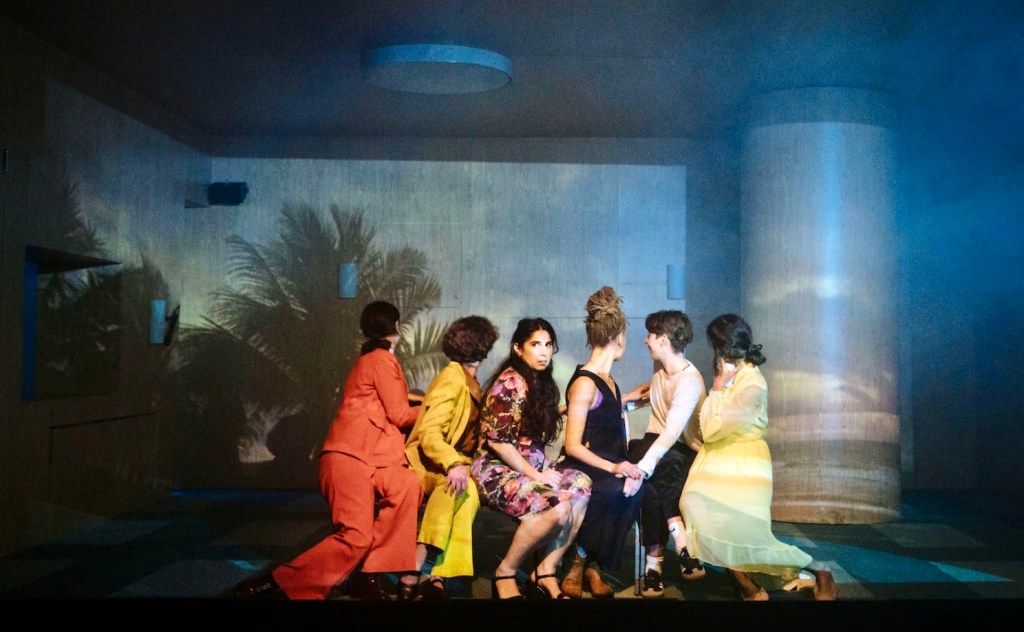
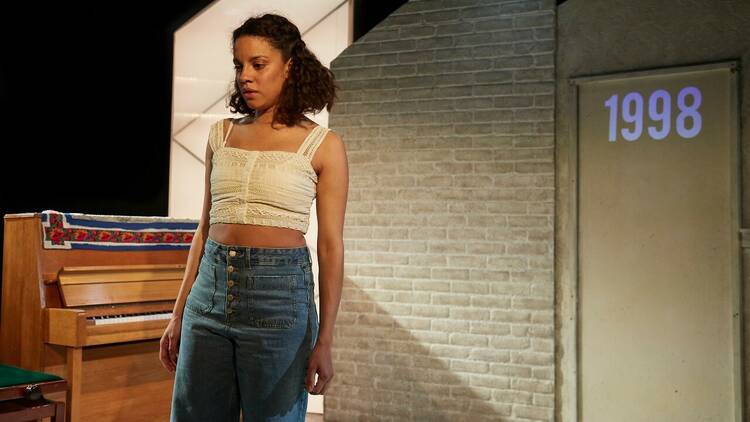
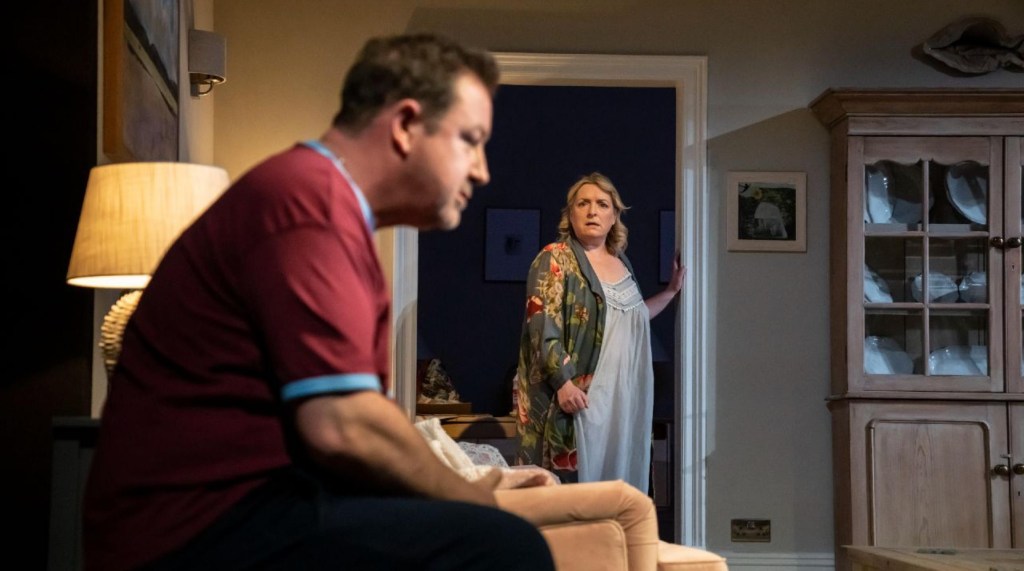
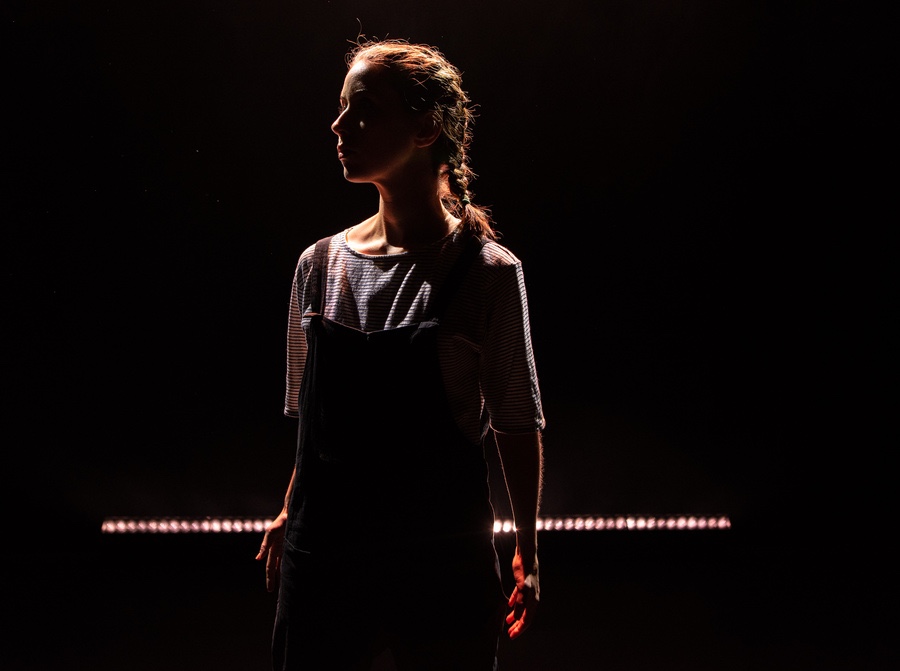
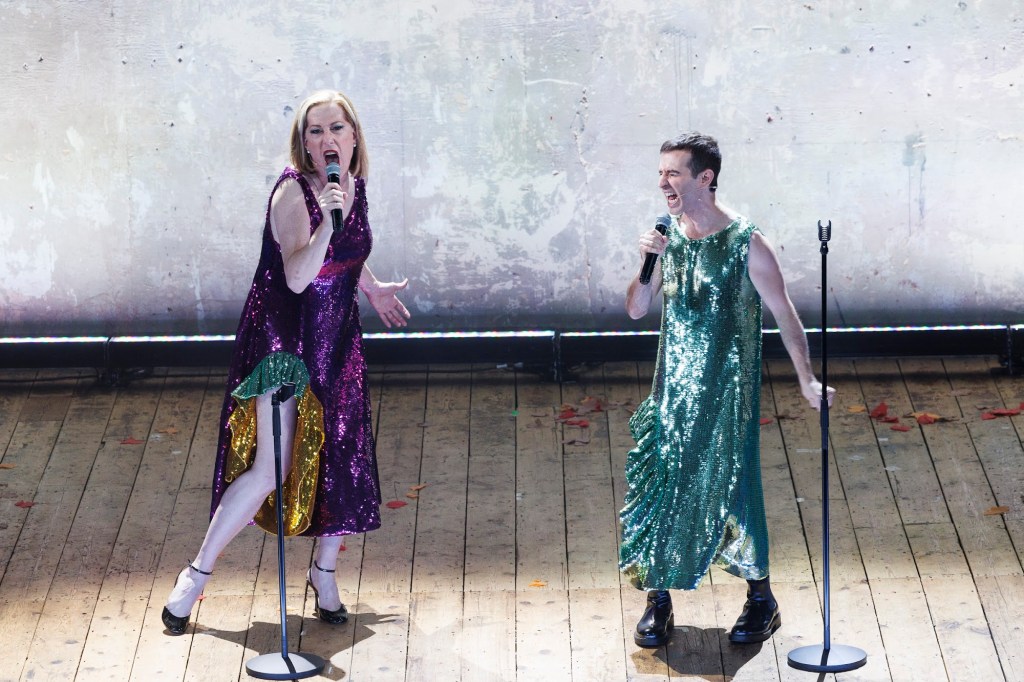
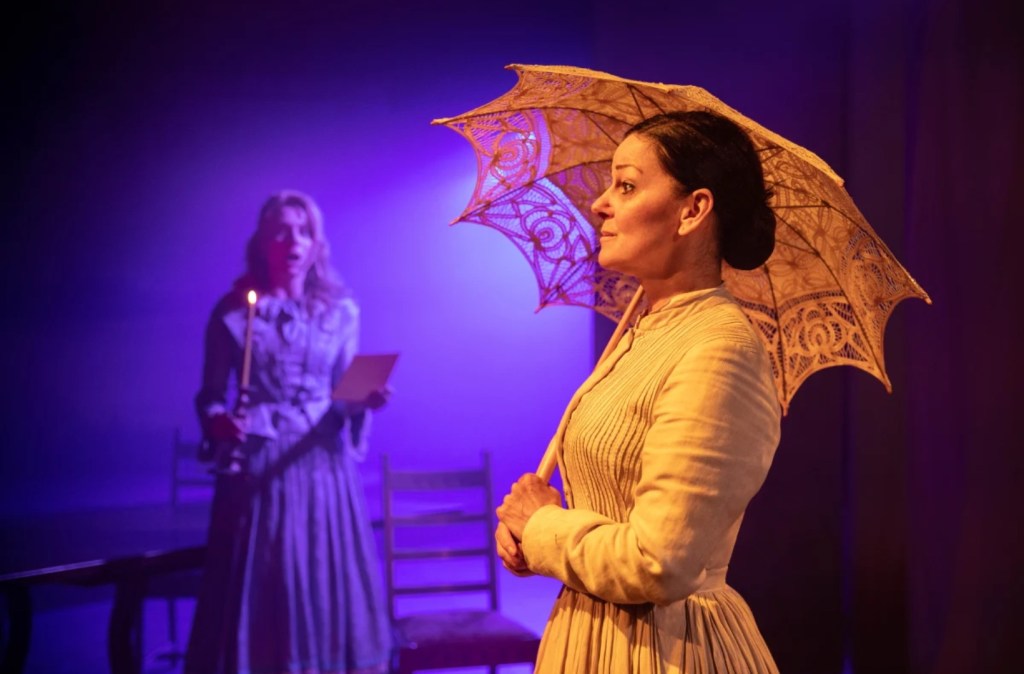
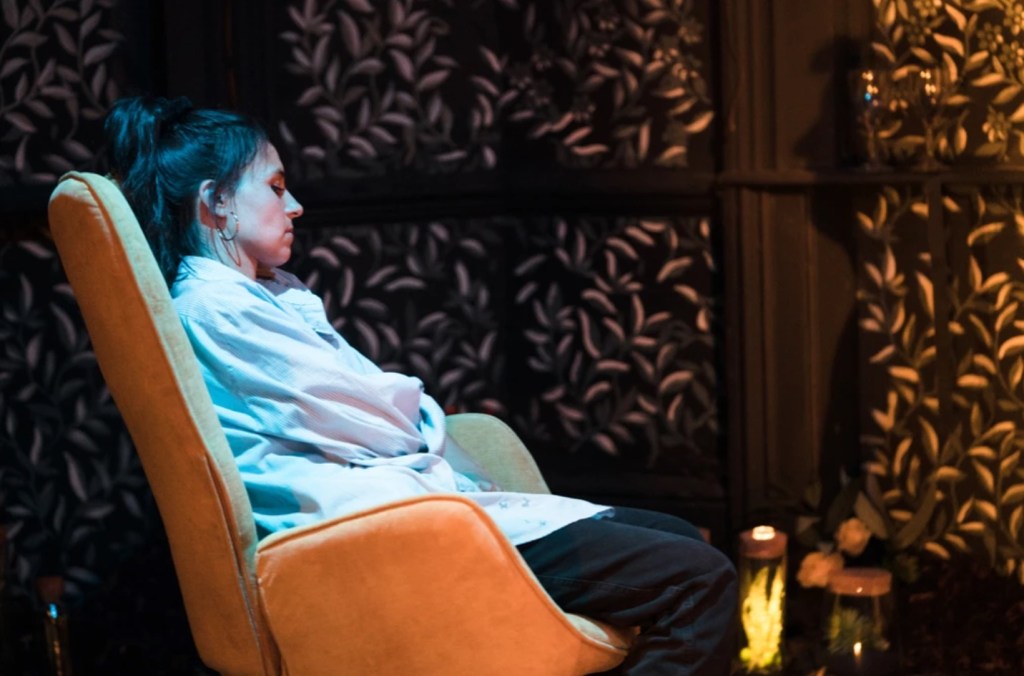
“It could be worse” observes Baby, one of the pair of Irish sisters who open and close Margaret Perry’s richly enjoyable new play, as she contemplates their less-than-ideal lives; that statement applies equally to the existences of the other four women whose frustrations, tragedies and eccentricities inform this delightful, unruly tragicomedy. Their gender apart, the other thing that connects this mismatched sextet is their dissatisfaction with their place in the world, specifically contemporary London, although it could be any impersonal major city: each of them feels they could, and should, be doing better, and one of the interesting, humane and frequently laugh-out-loud funny things about Perry’s script is the way that these women tackle their individual plights.
Another thing they have in common is a pyramid selling scheme, the commercial arm of an essential oils company called Paradise (the play’s title is the name of the corporation’s annual weekend-long seminar, an event described with the sort of fervour some people reserve for Christmas, Mardi Gras or a Royal wedding), which is how they all initially meet. Perry is clearly fascinated by the cult-like aspect of some of these schemes and weaves that into a complex but accessible tapestry that also encompasses female empowerment, sisterhood (of both the familial and non-familial kind), loss, the essence of sleep, and how the relationship between siblings can be surprisingly toxic even as they are supportive and loving. It paints an engaging picture of bodies adrift in a big city, each with an agenda but not necessarily much self awareness.
If it sounds a bit random and a lot to take in, well, it is, but it’s also rollicking good fun. Director Jaz Woodcock-Stewart matches the scattershot brilliance of Perry’s text with a staging that hurls everything at the wall: there’s music, physical comedy, some over-elaborate scene changes, a few bizarre dramatic and visual non sequiturs …but the theatrical miracle of it all is how much of it sticks.
Each character is so exquisitely drawn (and, in most cases, indelibly flawed) that it’s impossible not to care, even when some of the behaviour exhibited is less than admirable. The writing is impressive: frank, funny, and at times compellingly weird. Perry has a tremendous gift for imparting information between the lines of dialogue, such as in a glorious scene where needy, strange yet relatable Laurie (Rakhee Thakrar in a performance of genuine comic genius) turns up to a party of an old high school acquaintance who clearly has no idea who she is. It’s blissfully, uncomfortably funny, and all the more amusing because it’s played with a lot of truth but just slightly off kilter from realism.
Act one is pretty much perfect and the second act sets off at a similarly terrific level, with the women at the Paradise Now event, their reactions ranging hilariously from hysteria to disbelief as touchy-feely mutual support swiftly devolves into something a lot less wholesome, albeit way more amusing for us in the audience. Revelations pop, perhaps a little too conveniently, a major deception is uncovered, and it all proves as gripping as it’s funny.
It’s a shame then that the overlong second half loses it’s way a bit, meandering down a couple of dead ends plot wise, and, frustratingly, not giving closure to the story arc of arguably the most interesting character (Thakrar’s inspired Laurie). It’s never less than watchable though, which is due in no small part to the cast, each of whom inhabits her/their characters with utter conviction.
Michele Moran draws a tender, truthful portrait of depressive middle aged Gabriel, who blossoms from dowdy homebody to determined but kind go-getter as her pyramid selling dream seems to take off, while Carmel Winters invests her sister Baby with a riveting combination of whimsy and watchful stoicism. Ayoola Smart is beguiling and multi-layered as youthful would-be TV presenter Carla, whose desire to succeed proves motivated as much by spite and revenge as anything more aspirational. Annabel Baldwin is tremendous – sexy and likeable – as the striving dancer Carla falls in love with (and they are a truly wonderful dancer).
The comedy gold, but with an undertow of real melancholy, is provided by the astonishing Ms Thakrar, who takes an unconventional character and mines her for every last ounce of irresistible peculiarity and pathos, and the equally magnificent Shazna Nicholls, who plays Alex, the Paradise recruiter and lynchpin, with the clenched, ingratiating ferocity of a woman who knows that, if she stops talking and smiling, she’ll probably start screaming and be unable to stop. The moment near the top of act two where she realises that her standing within the company has been bested by one of her own recruits is comedy acting of the highest order.
If ultimately Paradise Now! turns out to be slightly less than the sum of its parts, it’s still a tangy, ambitious, thoroughly engrossing piece. Woodcock-Stewart’s superb production moves at a hell of a pace, and the performances nudge the whole gorgeous enterprise into the realm of the unmissable. I liked it enormously.
As somebody who loves a listicle plus a bandwagon to jump on, how could I NOT compile my list of my top 20 new (to me) shows of 2022?! It’s been a twelve month in which live entertainment has come back with an encouraging roar, although the impending cost of living crisis is inevitably, and understandably, causing anxiety in theatrical circles. Please do get out there, if you can, and support your local venue in 2023….
In 2022 I saw 157 new shows between London, the UK regions and New York so whittling them down to just twenty favourites has been a considerable, but lovely, challenge. Honourable mentions go to Jodie Comer’s astonishing -and Broadway bound- solo performance in Prima Facie, the Donmar’s delicate reinvention of The Band’s Visit (a considerable improvement on the NYC production plus featuring a glorious UK debut for Israeli diva Miri Mesika), and Hampstead Theatre’s truly beautiful drama about the power of music, Folk. I also loved the Old Vic’s rambunctious, timely Eureka Day which comically examined the thought processes of anti-vaxxers, the Royal Court’s haunting feminist time travel thriller The Glow, and Mark Farrelly’s affectionate and affecting solo shows Jarman and Quentin Crisp – Naked Hope, both of which are coming briefly to Wiltons Music Hall in March. Wiltons hosted Starcrossed, the captivating gay riff on Romeo & Juliet and Punchdrunk made a triumphant return with The Burnt City, which is still tantalising audiences at their new Woolwich HQ plus there was a tasty musicalisation of Great British Bake-Off in Cheltenham but heading into the West End next spring. A late addition to the year’s theatrical glories was the Ian McKellen-John Bishop Mother Goose, an affectionate, rambunctiously funny, totally joyful panto that wiped the floor with the Palladium’s annual offering, and tours the country following an extended West End season.
On Broadway I was exhilarated by MJ which features some of the most jawdropping choreography, by Tony winning Brit Christopher Wheeldon, in decades (it’s hitting London in 2024: early booking will be mandatory) and Jordan E Cooper’s furious, wildly entertaining Ain’t No Mo which explored the Black American experience with humour, vitality and sheer in ya face originality. The New York production proved unjustly short lived but I doubt we’ve seen the last of Cooper’s extraordinary creation.
So , here’s my Top 20, in alphabetical order…..enjoy (I did)
1. A STRANGE LOOP – Lyceum Theatre NYC until 15 January 2023
Photograph by Marc J Franklin
The 2022 Best Musical Tony winner, Michael R Jackson’s “big Black and queer ass American Broadway show” (to quote it’s own tangy, racy lyrics) is a boundary-pushing, melancholic yet rollicking interrogation of racial and sexual identity, and what a musical even is. A breathtaking original with a sensational cast, it will go down in the annals of theatre history, no question. Would love to have experienced this again. Calling Stratford East, the Young Vic or Lyric Hammersmith….?
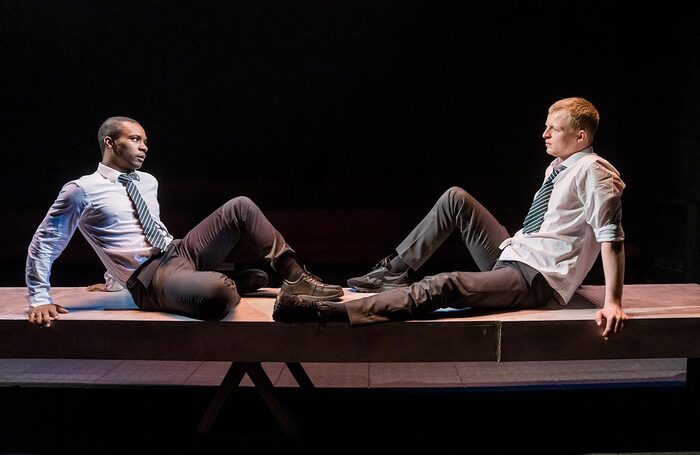
2. BACON – Finborough Theatre London – ended 16 March
Photograph by Ali Wright
A terrific surprise, Corey Montague-Sholay and William Robinson were astounding in Sophie Swithinbank’s swaggering but sensitive two hander that looked at toxic masculinity, peer pressure, social inequality and pent-up sexuality in a devastatingly powerful and inventively abstract production by Matthew Iliffe. This little firecracker surely deserves a further life.
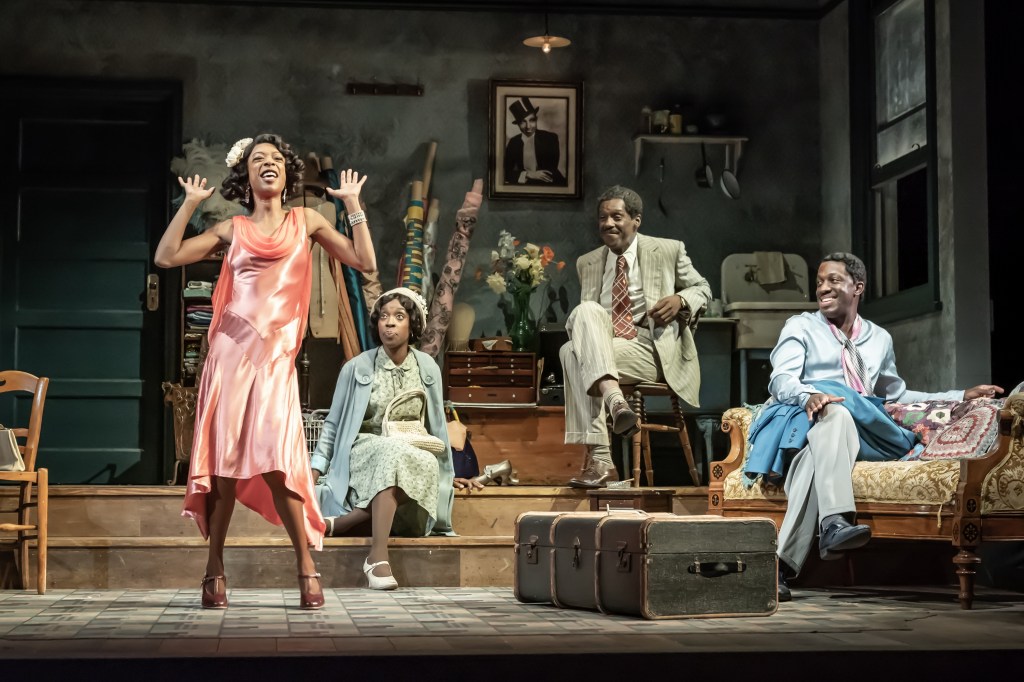
3. BLUES FOR AN ALABAMA SKY – National Theatre London – ended 5 November
Photograph by Marc Brenner
UK premiere for Pearl Cleage’s poetic but muscular 1995 play, set in 1930s Harlem, and reminiscent of a Black Tennessee Williams. A superb evening, marking a magnificently confident NT debut for Bush artistic director Lynette Linton and featuring a brace of flawless performances from a company led by American TV star Samira Wiley and Olivier winner Giles Terera.
4. ELEPHANT – Bush Theatre London – ended 12 November
Photograph by Henri T
The first of several one person shows on this list, and Anoushka Lucas’s gig-family saga-history lesson hybrid is a multi-faceted beauty, taking on colonialism, the dualities of being mixed race, and the implicit racism within the music industry. Lucas herself played the young musician at the centre, as well as various figures in her life, and one fervently hopes she comes back to this when she finishes tearing up the stage as a brilliant Laurey in the Daniel Fish Oklahoma! reimagining.
5. HENRY V – Donmar Warehouse London – ended 9 April
Photograph by Helen Murray
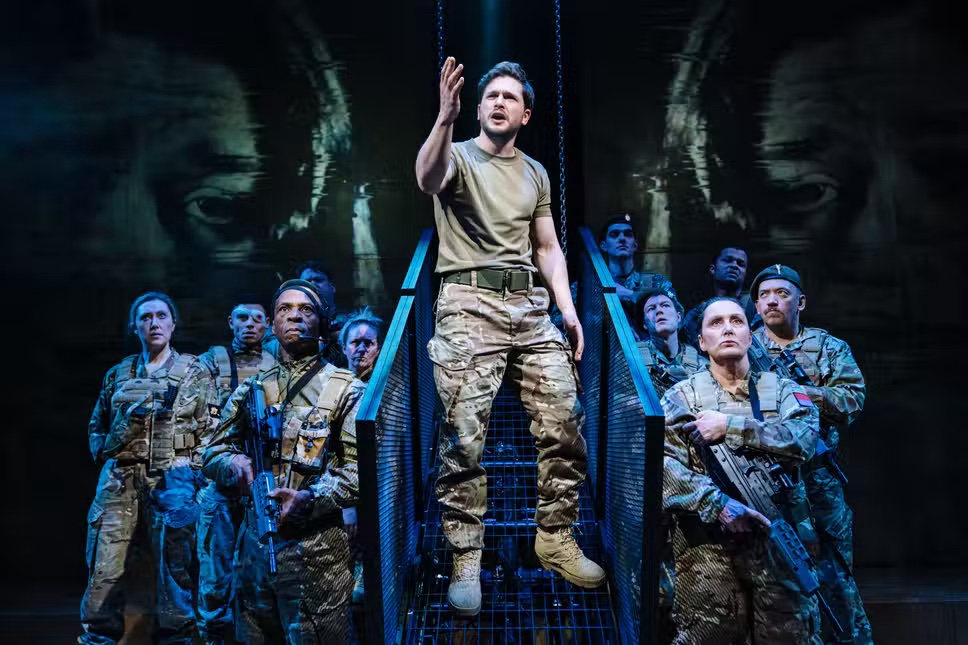
A thrilling reinvention: one of Shakespeare’s driest plays felt dirty, raw, vital and dangerous in Max Webster’s modern dress, multimedia production which seemed to draw parallels between Henry’s unwanted march on France with the Russian invasion of Ukraine. Kit Harington was a dynamic, relatable king and a terrific ensemble included Anoushka Lucas (again) as an ice-cool Princess of France who conversed entirely in French. Theatrical dynamite.
6. INTO THE WOODS – St James Theatre NYC until 8 January 2023 then touring
Photograph by Matthew Murphy & Evan Zimmermann
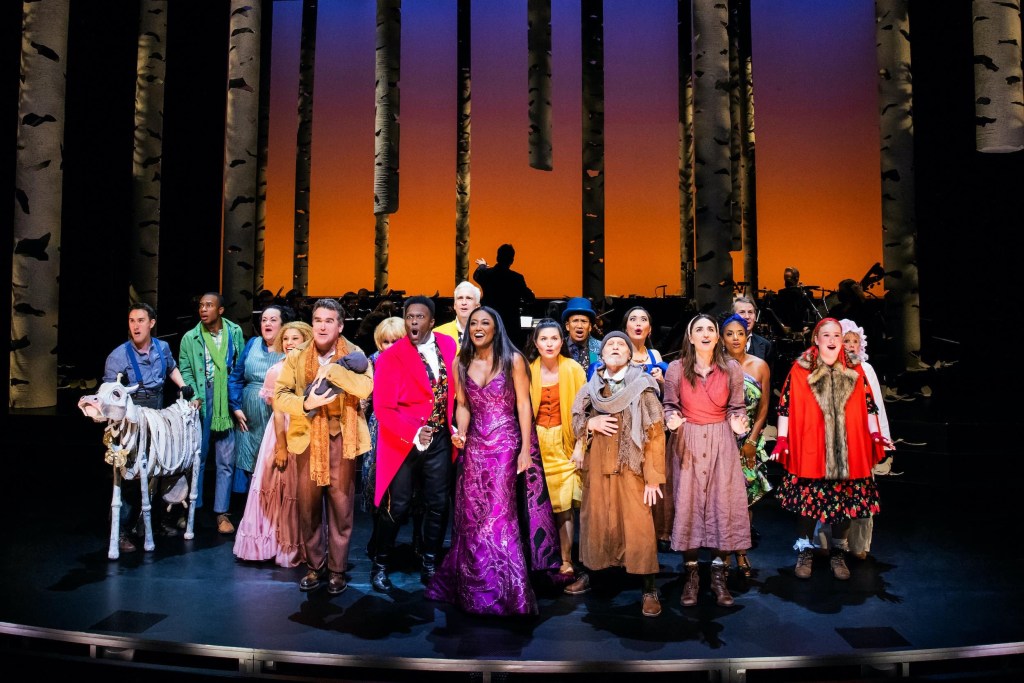
In the year following Sondheim’s death, I also saw, and hugely enjoyed, Into The Woods productions in Belfast and Bath but it was this supremely intelligent, immaculately crafted distillation of the New York City Center all-star concert that really got to the heart of this beautiful, complex piece. Lear deBessonet’s bare bones staging, lushly orchestrated and extravagant of imagination and understanding, proved that when the material and the talent are this good, you don’t need all the folderol. Plus Sara Bareilles’s Bakers Wife was one for the ages. Magic.
7. KIMBERLY AKIMBO – Booth Theatre NYC – now playing
Photograph by Joan Marcus
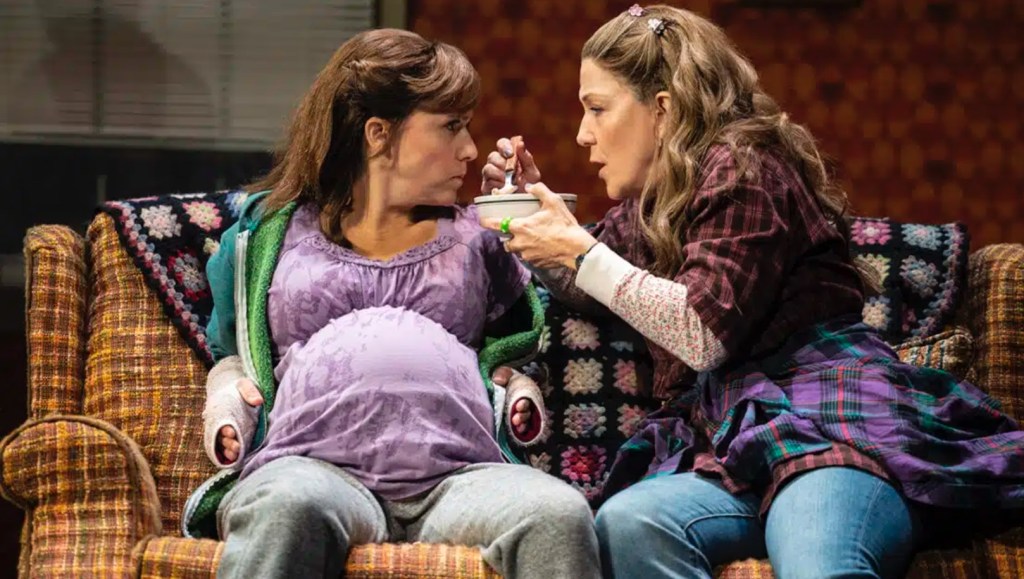
Possibly my new favourite musical. Adapted by David Lindsay-Abaire from his own quirky comedy about a sixteen year old girl with a rare genetic disorder whereby she ages five times faster than regular people, this fresh, funny heartbreaker boasts an entrancing Jeanine Tesori score and a haunting central performance from Broadway vet Victoria Clark that is one for the history books. Seriously life-enhancing, joyously off-beat, this has had the sort of reviews creatives and producers dream about.
8. MIDDLE – National Theatre London – ended 18 June
Photograph by Johan Persson
David Eldridge, whose unique ability to find the riveting in the apparent ordinariness of everyday life is one of the glories of British theatre, followed his quietly flawless Beginning about a young couple at the start of a relationship (to be revived at Manchester’s Royal Exchange in early 2023) with this equally exquisite two hander about a middle aged marriage in sort-of crisis. Polly Findlay directed a note-perfect production, played out in real time, which drew performances of such truth, tenderness and precision from Claire Rushbrook and Daniel Ryan that the angels could weep.
9. ONE WOMAN SHOW – Ambassadors Theatre London – until 21 January 2023
Photograph by David Monteith-Hodge
Seriously, go and see Liz Kingsman in this intimate setting before she becomes a global superstar. I’m not joking, even though she is in this exhilaratingly funny, gleefully bonkers almost-solo show that takes surreal pot shots at rom coms, the entire concept of a one woman play, and the ubiquitous comic trope of messy, “flawed but loveable” modern women (hello Fleabag). Absolutely tremendous.
10. ONLY AN OCTAVE APART – Wilton’s Music Hall London – ended 22 October
Photograph by Ellie Kurttz
Was it Theatre? Was it a recital? Was it a concert? Was it a cabaret? Who the hell cares…it was utter magic. Downtown cabaret NYC-style (in the endlessly elegant, tartly witty shape of Mx Justin Vivian Bond) met grand opera (engaging, internationally acclaimed counter tenor Anthony Roth Costanzo) in this quirky, eclectic slice of flamboyant joy. An evening of total and utter delight.
11. PASSION – Hope Mill Theatre Manchester – ended 5 June
Photograph by Mark Senior
Another Sondheim, and one of the least popular, although anybody who saw Michael Strassen’s ravishing production, where jagged edges meet raw silk, may wonder why. While this version, ballsier than any other I’ve seen, embraced the delicacy of this semi-operatic tale of poisoned unrequited love, it also had the emotional impact of a sledgehammer. A trio of impeccable, yet consistently surprising, starry central performances (Ruthie Henshall, Dean John-Wilson and Kelly Price) make a further case for a further life for this exceptional staging.
12. PENNYROYAL – Finborough Theatre London – ended 6 August
Photograph by Helen Murray
Another entry for the tiny but mighty Earls Court powerhouse of new writing, and another delicious surprise. Lucy Roslyn (who also starred, winningly, alongside Madison Clare) took a 1922 Edith Wharton novella and turned it into a wonderfully perceptive, occasionally searing, and surprisingly universal mini-saga about infertility, eggs donation and the fractious relationship between a pair of sisters. Beautiful.
13. PROJECT DICTATOR – New Diorama Theatre London – ended 30 April
Photograph by Cesaro de Giglio
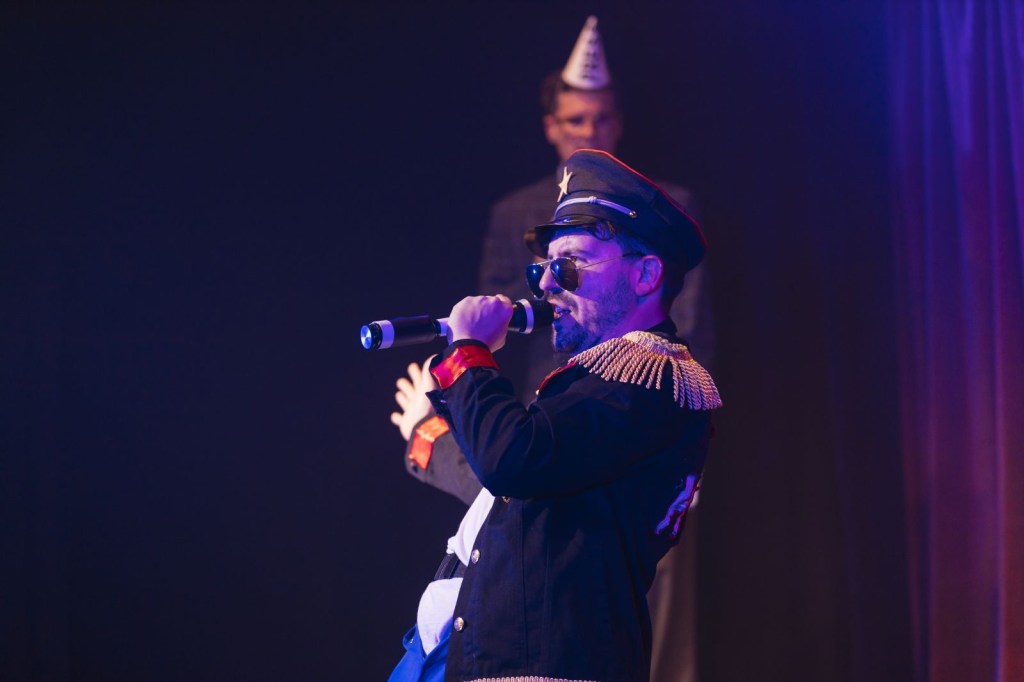
This was my first exposure to theatre makers Rhum & Clay and I was bowled over. Starting out as a bit of merry audience participation comedy centred around an apparently trivial power struggle between the fabulous performers (Matt Wells and Julian Spooner), it devolved into a masterful, unsettling critique of power, coercion, collaboration and how artists fit into all that. Seventy five minutes to watch but months, maybe years, to process.
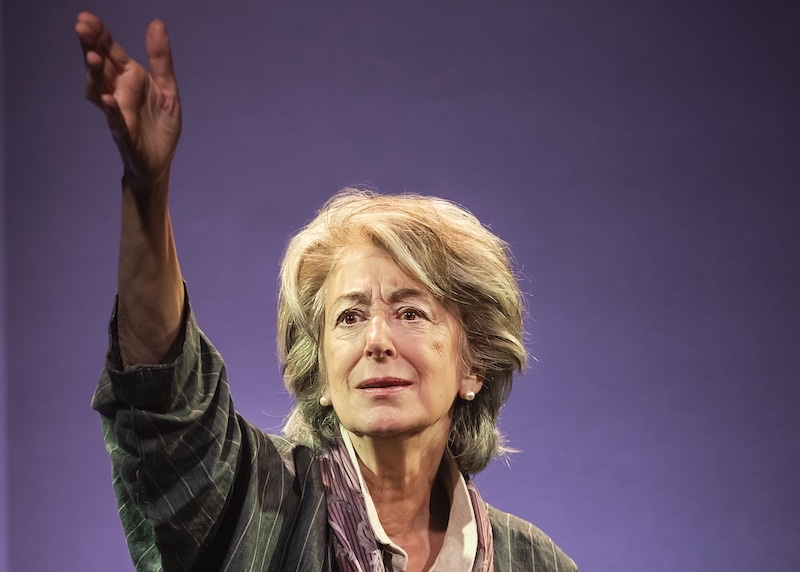
Martin Sherman’s solo piece about a Jewish woman who survived the concentration camps to gain her own pragmatic take on the American Dream, was first seen in the 1990s with the late Olympia Dukakis, but really came into its own with Scott LeCrass’s spellbinding revival, featuring career-best work from Dame Maureen Lipman. An unforgettable evening and a riveting masterclass.
15. SOME LIKE IT HOT – Shubert Theatre NYC – now playing
Photograph by Marc J Franklin
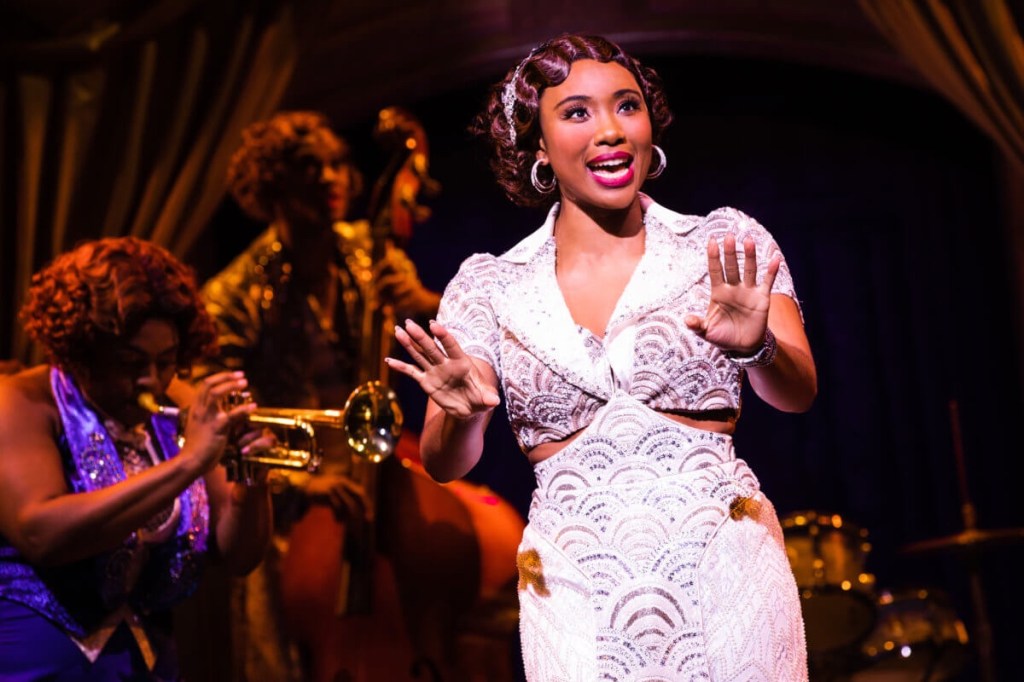
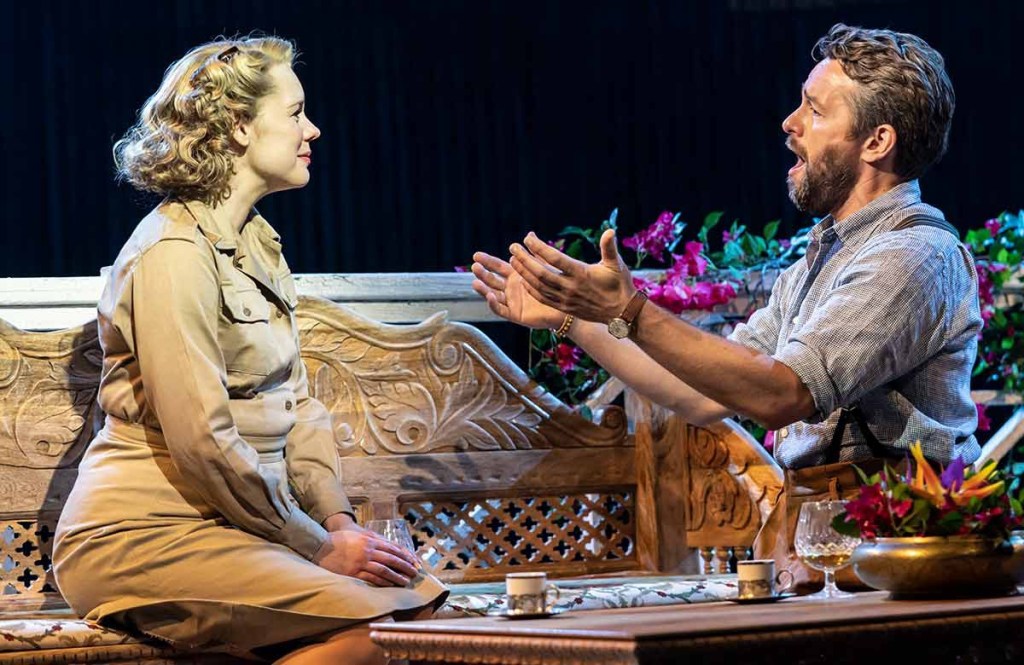
Not just hot, but sizzling. This sparkling musical confection from the team behind Hairspray and Smash, takes a vintage Hollywood screwball comedy and remints it as something fresh, inclusive and full of heart, with an uplifting jazzy score. It’s both traditional yet woke, and announces J Harrison Ghee and Adrianna Hicks as major new Broadway stars. Irresistible.
16. SOUTH PACIFIC – UK and Ireland tour ended 20 November
Photograph by Johan Persson
Originally seen in Chichester, Daniel Evans’s flawless production found new colours and textures in the Rodgers and Hammerstein classic, giving it an excitement and emotional urgency I’d never seen before. Revelatory central performances from Gina Beck, Julian Ovenden and Joanna Ampil helped to make this a soul-searing triumph.
17. THE LION – Southwark Playhouse London – ended 25 June, then US tour
Photograph by Pamela Raith
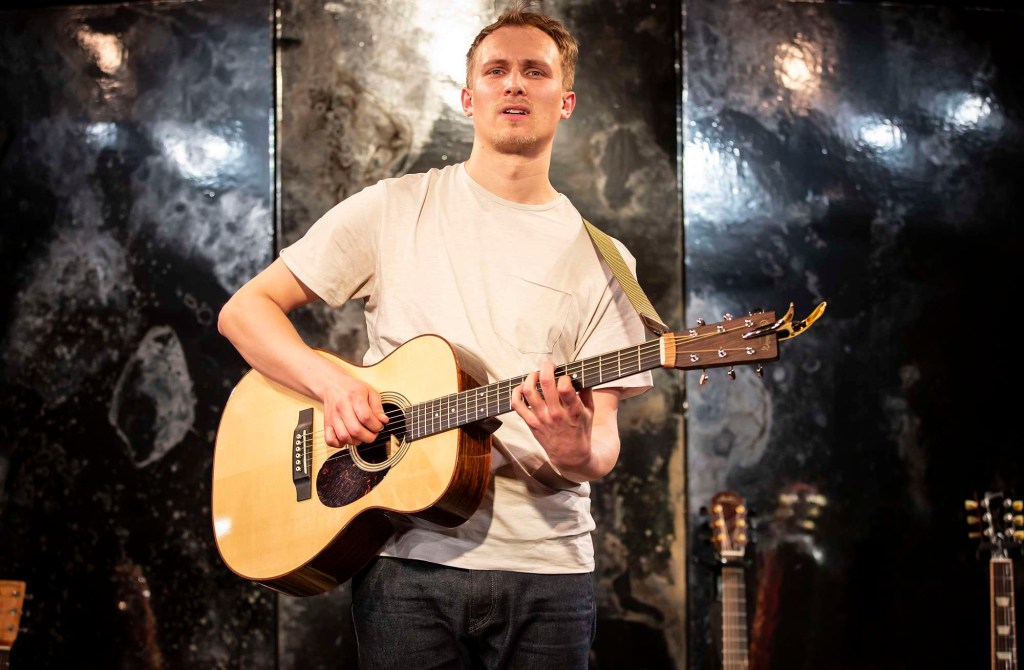
As somebody who had seen, and adored, Benjamin Scheuer perform his autobiographical solo musical about his family and his cancer survival, first time around, I didn’t see the point of reviving it without him. But then I saw Max Alexander-Taylor in Alex Stenhouse and Sean Daniels’s perfectly calibrated new staging, and fell in love all over again. A heartwarming, life-affirming little bit of magic.
18. THE P WORD – Bush Theatre London – ended 29 October
Photograph by Craig Fuller
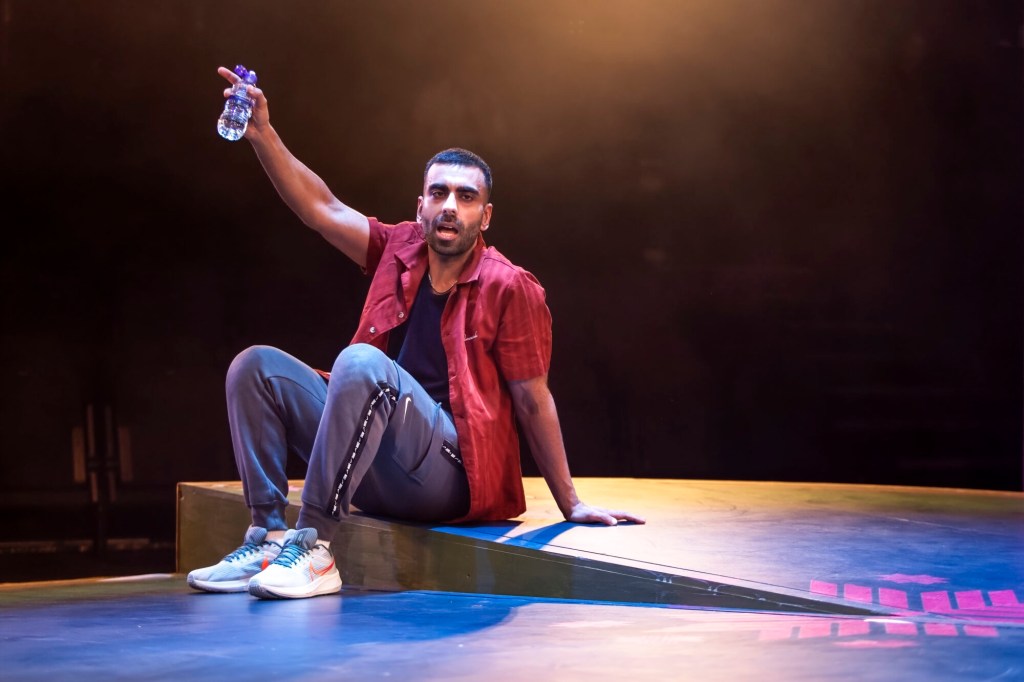
Another Bush gem. Waleed Akhtar’s terrific two hander was a plea for tolerance, a study of the power of friendship, and ultimately a potent political act that grips like a thriller. Thought provoking, with a simmering rage and a cracking sense of humour, it was a gay Asian sort-of love story that took an unflinching look at the inhumanity with which refugees are often handled in this country. Akhtar himself and co-star Esh Alladi were devastatingly good in Anthony Simpson-Pike’s engrossing production. Revival please.
19. THE SOLID LIFE OF SUGAR WATER – Orange Tree Theatre Richmond – ended 12 November
Photograph by Ellie Kurttz
Short, sharp, shocking and utterly compelling, Indiana Lown-Collins delivered a shattering account of this remarkable Jack Thorne play that considers the effect of the loss of a baby on a young disabled couple. Katie Erich and Adam Fenton delivered soul-baring performances. Strong meat yes, but unforgettable, essential theatre.
20. TITANIQUE – Daryl Roth Theatre NYC – now playing
Photograph by Chad David Kraus
A loving send-up of the Titanic movie and a certain adored French-Canadian diva, this is the Celine Dion disaster jukebox musical we didn’t know we needed but probably now can’t do without. Screamingly funny, jawdroppingly camp and musically enthralling, this off-Broadway smash has already moved into a larger venue and looks set for world domination. Resistance is futile, but really, why would you want to?! Co-creator Marla Mindelle’s Celine is worth the ticket price all by herself.
Beautifully crafted musical comedy, light as air yet with a lingering fragrance of potent joy, and as poignant and full of heart as you need it to be, is back on Broadway….and it doesn’t get much better than this.
Some Like It Hot, the newest incarnation of this most particularly American of all art forms, could have felt like an unfashionable throwback, set as it is in the 1930s and based on an iconic, but potentially problematic, movie, with a jazzy score (Marc Shaiman and Scott Wittman’s terrific songs here are more reminiscent of their work on the underrated Catch Me If You Can and TV’s Smash than it is of their irresistible Hairspray) and tap choreography to rival 42nd Street. But no…
In fact, it proves anything but, thanks to inspired casting, some sensitive repointing of the original story and crackerjack good comedy by book writers Amber Ruffin and Matthew López: Some Like It Hot delivers the kind of uplifting good time that should send audiences out into the night with sappy grins plastered all over their faces while they text their friends demanding that they book tickets. Joy meets Woke meets all-embracing here in a way that very few shows manage…
In one of the most remarkable cases of having it’s cake and eating it that I can remember, this sparkling dose of escapism married to modern sensibilities manages to be transporting enough to entrance traditional theatregoers while at the same time ensuring that people who have felt marginalised and shut out are brought along on the beautiful train ride. It looks effortless, in the way that dreamy musical comedy needs to, whether on screen or stage, but features rigorously disciplined and clever work from a crack team of Broadway craftspeople, led by director-choreographer Casey Nicholaw who has never done anything finer, at the top of their games.
The trans community had voiced reservations over the use yet again, after the Tootsie and Mrs Doubtfire musicals, of “man in a dress” as a comic trope, but Ruffin and Lopez sidestep this issue by having Jerry, one of the hapless musicians forced to flee in disguise after witnessing a ganglands massacre in Prohibition Chicago, realise their truest self once they are in their alter ego Daphne’s wig and frocks. It’s done with such a lightness of touch, and played with so much panache and sensitivity by the jaw-droppingly lovely J Harrison Ghee, one of the show’s two breakout stars and who identifies as non-binary, that it adds a freshness and kindness to what could have been an icky cliché. When this Daphne dons the look, the effect isn’t funny at all, it’s enchanting, in the way that classic transformations from chrysalis to butterfly usually are. Extra emotional punch is added by having Osgood, the eccentric millionaire who falls for them and who leads a double life of his own (an utterly delightful Kevin Del Aguila) realise who Daphne is before Jerry does. Truly heartwarming.
Having set that up so well, the show does give us carte blanche to laugh at Jerry’s partner in crime, Joe (Christian Borle, quite restrained by his own standards, but still a masterclass in exquisite musical comedy performance) who makes an exceptionally unusual woman when got up as the hapless Josephine, a fact referred to often and hilariously by NaTasha Yvette Williams’s fabulously sassy band leader. The show softens, rightly, the romantic gaslighting of female lead Sugar by Joe, but it’s still loaded with comic panache.
The other breakout star referred to earlier is Adrianna Hicks as Sugar (the role immortalised on screen by Marilyn Monroe). But whereas the screen Sugar was a product both of her time and Monroe’s particular persona, a ditzy, breathy blonde with a fondness for the bottle and getting repeatedly involved with the wrong kind of men, the new musical incarnation is a much richer, tougher creation. For starters, she’s a Black woman…but this isn’t colour-blind casting: Ruffin and Lopez have deliberately written her this way, giving her a poignant speech about sneaking into cinemas as a kid and never seeing anybody who looked like her on the screen. Hicks gives her attitude, warmth and just enough vulnerability to make us care, but without ever shading her as a victim. She’s a leading lady to fall in love with, and her power-packed vocals swoop and soar.
Everything here works, from Charlie Rosen and Bryan Carter’s brassy, big band orchestrations to Gregg Barnes’s sparkling costuming, and Scott Pask’s glossy art deco box of a set. Nicholaw’s staging is oil-smooth accomplished and reaches a blissfully inventive climax with a tap dance chase sequence late in the second half that is an exhilarating object lesson in stagecraft.
This Some Like It Hot actually feels like a traditional musical comedy from the storied Golden Age of Broadway, but joyfully transmogrified into something inclusive, relevant and deeply satisfying. Any NYC theatre season that includes this life-enhancing confection, the equally unmissable Kimberly Akimbo and the arrival of West End hit & Juliet amongst it’s new musicals might reasonably be considered vintage. “Nobody’s perfect” are the last words in the screenplay of the original movie, but this life-enhancing new musical pretty much is. It’s not just hot, it’s sizzling.
Suffering as the basis for explosive comedy appears to be something of a specialty for acclaimed American dramatist Stephen Karam. Back at Hampstead Theatre where his Pulitzer and Tony winning The Humans was seen before the pandemic, Karam has another gem, which actually predates his better known play having been seen at off-Broadway’s Roundabout Theatre in 2011, with this touching, bracingly funny examination of a young man’s life in freefall as his body collapses on him, his dysfunctional family turn on each other after a bereavement, and his crazy boss threatens to withhold approval for his medical care if he doesn’t cooperate on a book cannibalising his father’s story.
Sons Of The Prophet is a wonderfully quirky paean to human resilience, fleshed out with richly drawn characters and dialogue of immense eccentricity and comic truth.
Joseph (in a superb central performance by Irfan Shamji) has a hell of a lot to deal with. But neither Karam’s writing nor Shamji’s performance allow him much more than a hint of self pity. When he does break down, in an exquisitely drawn final scene as he opens up to a former primary school teacher -a luminous Sue Wallace- who he unexpectedly encounters at a physical therapy class, it’s genuinely affecting. The absence of mawkishness and the constant presence of sheer human weirdness as we endure the allegedly unendurable make this a play to savour.
More often than not, Joseph is necessarily combative whether it’s with his needy but feisty younger brother (Eric Sirakian, just fabulous), triumphantly unreconstructed Uncle Bill who’s both protective of the family’s Lebanese heritage but right on the mark with modern American entitlement (Raad Rawi delivering a masterclass in magnificent crankiness) or his crassly insensitive boss Gloria, determined to inveigle her way into his family by whatever means necessary. Meanwhile, as a long time athlete, his body is breaking down on him. Your heart bleeds for him, but he is no victim.
As for ghastly Gloria, that aforementioned boss, she’s a Manhattan monster and a terrific comic creation. Pill-popping, mendacious, manipulative, the kind of person that plays the victim to get whatever she wants, she’s awful but she revivifies an already salty, tangy script whenever she’s on stage. Dreadful she may be, but she is theatrical dynamite and Juliet Cowan plays her, brilliantly, with a combination of steel and honey that convinces and appals in equal measure. She’s a victim and a predator, and if Shamji, Sirakian and Rawi weren’t so damn fine, she’d walk away with this entire show.
That said, there is brilliant support from Jack Holden as the unerringly privileged journalist Joseph has a fling with and Holly Atkins in a variety of roles, ranging from disaffected medical professional to a terminally unimpressed board member announcing the next stage in the legal case between Joseph’s family and the young man (Raphael Akuwudike, perfection) who accidentally killed their father.
It’s strange perhaps that something this brutal can be so life-enhancing, but that’s what Karam has given us: an enormously loveable play with a core of implacable steel. Strongly recommended.
A Steven Berkoff Christmas show was never gonna be all cards and fairy lights, although both of these do feature in this production, along with a tree, copious amounts of booze and a massive dose of existential despair, but anybody planning to watch Scott Le Crass’s accomplished version of this 1985 solo play, needs to brace themselves for just how grim it gets. I can’t think of anything more depressing on any current London stage…but by the same token I can’t think of many shows as brutally relevant right now either.
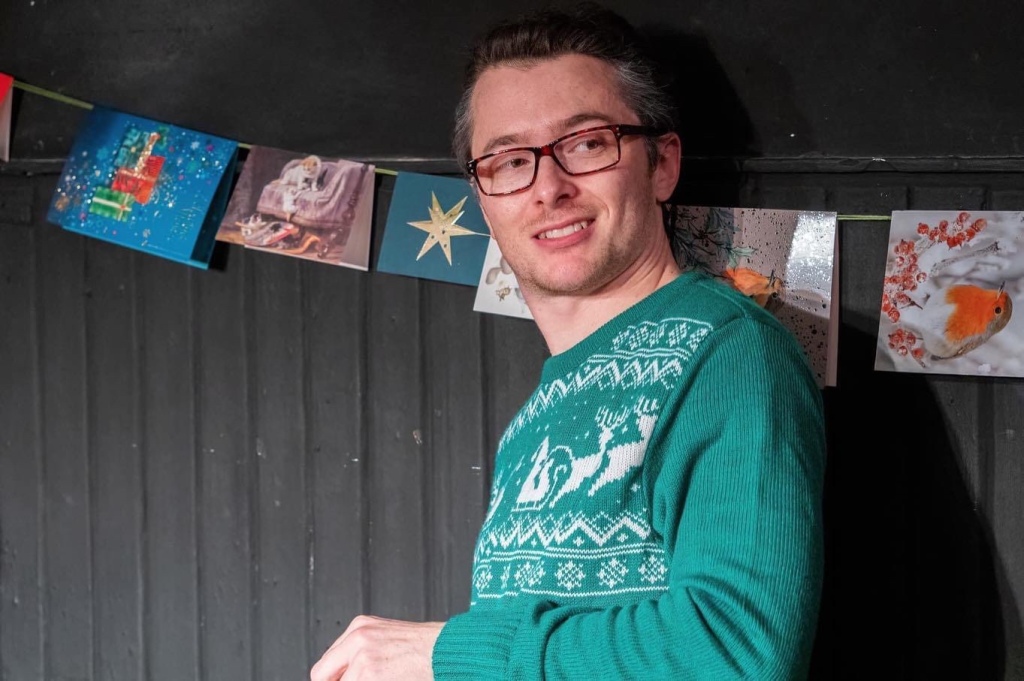
When we first encounter Harry (Stephen Smith, whose Threedumb Theatre Company is presenting this production in aid of the anti-suicide charity CALM), he is shuffling around his wan-looking abode, a couple of days before December 25th, in a garishly cheery Christmas jumper, trying to work out whether he should bring out some of last year’s festive cards to bolster the paltry display of the half dozen he received this season. It’s more sad than funny, sweet even, with Smith’s innate likability enhancing Harry’s already potent pathos: the mirthless grin, slightly stooped posture, regular swigs from a can of cheap cider…this is a tender and tough portrait of a man only in very early middle age but already beaten by life.
As the play progresses though, we learn the true extent of Harry’s isolation and also, equally disturbingly, about his anger management issues and fairly unreconstructed attitude to women (one suspects that this aspect of his character was seen as less problematic when Harry’s Christmas premiered in 1985). His desperation for connection and utter hopelessness feel real, but so do his less palatable traits such as self-pity and a chronic lack of self awareness. Berkoff’s writing, pitched at a point somewhere between banal and poetic, that occasionally gets a little wearisome, with a characteristic (for this writer) overlay of the obscene, finds bleak humour in Harry’s sensitive but mind-bendingly tedious phone calls to his aged mother or an ill-advised exchange with a long lost friend which culminates in him being on speaker phone with his mate’s demanding toddler. His internal voice, by turns cajoling then taunting, speak to him, and us, over the sound system.
This is all a lead-up though to the main point of the play, which is how loneliness can blight a life, and how the apparent joys of the Christmas season can throw such feelings into even starker relief. Harry ends up giving in to the dark side, in a chilling overdose scene performed with a remarkable sort of abandoned precision by Smith. It’s not an easy watch, but if it causes anybody who sees it to stop and reach out to someone they know who is spending Christmas alone, then it’s worth it.
In all honesty, Smith reads as too young, vital and attractive to fully convince as Harry, at least initially, but he compellingly charts the character’s tempestuous journey between snarling misanthropy, abject dejection, and, ultimately, complete abandonment of any attempt at hope. You may not necessarily like Harry but it’s hard to feel something for him.
Director Le Crass does a fine, nuanced job of maintaining the tension between how we perceive Harry and perceives himself. The staging is just technically flashy enough to maintain interest across a sometimes harrowing 75 minutes but restrained enough to never run the risk of trivialising or sensationalising the heartrending subject matter. The haunting sound score by Julian Starr, who also collaborated with Le Crass on another solo piece, Rose with Maureen Lipman, which was one of my theatrical highlights of 2022. This is a very different kind of script but in a production that further cements this director’s reputation as a talent to watch.
Harry’s Christmas is about as far removed from traditional festive entertainment as it’s possible to get, and it isn’t for everyone. But, as a consciousness raiser, as well as the chance to see some extraordinarily committed acting at close quarters, this is a worthwhile addition to the capital’s pre-Christmas theatrical offerings.
Newsies, although based on a 1992 Disney live action movie that initially bombed at the box office, belongs to that small coterie of musicals that defies criticism. Paying customers love this show and story: there is something about Alan Menken’s bouncy, catchy tunes and the sight of more than a dozen athletic, waistcoated newsboys leaping tirelessly and unfeasibly high above a stage, that audiences just cannot get enough of. The original 2012 Broadway production, with a heavily revisionist book by Harvey Fierstein and buoyed up by a swaggering, star-making turn from Jeremy Jordan as chief agitator Jack Kelly, was initially intended to be a limited season but wound up extending repeatedly until it achieved an impressive 1000 performances.
This London premiere has already extended bookings until next spring and, if the ecstatic -verging on hysterical- first night reaction was any indication, it’ll be opening up ticket sales for beyond then fairly soon. One would imagine this was always the intention of principal producers Runaway Entertainment (in partnership with Disney Theatrical and a few others) who have clearly spared no expense in presenting this London Newsies. This is one of the largest casts you’ll see on any current stage, backed up a decent-sized band on an environmental set that turns the hangar-like Troubadour Wembley Park Theatre into an atmospherically grimy, iron-girders-and-dirty-glass vision of 1899s New York that recalls the all-encompassing scenic designs John Napier used to create for the Lloyd Webber blockbusters and the RSC in the 1980s. It’s a real eyeful.
Size isn’t everything however and the question is….just how good actually IS Newsies? Well, I suspect your reaction to it may depend on what you want from a night of musical theatre. It was always a pretty simplistic take on actual historical events (a bunch of New York newspaper sellers declaring a strike after publishing magnate Joseph Pulitzer raised the price of their bundles of papers by ten cents in the summer of 1899) with a romantic subplot shoe-horned in….and a ton of dance breaks. Probably wisely, director Matt Cole makes no attempt to find parallels with the newspaper sellers’ strike and this country’s ongoing industrial action problems. Owing to the sheer size of the venue, subtlety and nuance are pretty much non-existent, a problem exacerbated further by having many of the scenes performed so far upstage, mostly on a towering tenement block set piece, that it dwarfs the actors, making it impossible to connect with the characters.
The highly inconsistent sound design doesn’t help either, flattening all, save Simon Hale’s lush orchestrations, in it’s wake, and rendering most of the words unintelligible. During the dialogue scenes it’s often hard to tell who’s speaking yet still possible to note that some of the accents are a bit ropey, and during the choral sections the voices are frequently far too low in the mix. Mark Henderson’s lighting proves frustrating as well: while it’s often gloomily evocative of the mean streets of old New York, there are moments -particularly when the cast are racing all over the auditorium- that it feels over-chaotic and it’s hard to know where you should be looking.
Michael Ahomka-Lindsay captures hero Jack’s mixture of bravado and desperation, even projecting some vulnerability across the wide open spaces, and meets the rangy vocal demands of the role with assurance. Moya Angela, formerly one of the knockout replacements for Amber Riley in the West End Dreamgirls, has too little stage time as Medda, the vaudeville performer-manager who takes Jack and his rebellious crew under her wing, but exudes charisma and vocal firepower that hits right to the back of this massive venue. Bronté Barbé has a fabulous voice but, perhaps understandably, struggles to make coherent the poorly fleshed-out dramatic arc of the young journalist he falls for, being required to go from abrasive to yearning in a couple of indifferently written scenes.
If however, you’re here for the dance and prepared to look on this more as Newsies – The Arena Spectacular rather than a coherent musical where you’re expected to feel more than bedazzled wonder tinged with fatigue, then Cole’s dance-driven extravaganza is a triumph, and he has assembled a formidable, thrilling team of dancers. His choreography -sharp angles and clenched fists giving way to breathtakingly clean lines and acrobatic athleticism- may recall Christopher Gattelli’s Tony-winning contribution to the Broadway version which in turn homaged Kenny Ortega’s iconic work in the original film, but has a dynamism and vitality that sends an electric charge through the theatre. One can’t help but wish that the old adage “less is more” had occasionally been applied to the staging though: filling every spare corner of the space at every available opportunity with a couple of twirling, somersaulting “newsies” threatens to diminish the effect of the genuinely heart-stopping ‘Seize The Day’ massed company number that comes late in the first act.
Still, as these superb dancers/acrobats slice through the air like human dynamos, albeit astonishingly graceful ones, or congregate into a phalanx of youthful exuberance and sheer muscle power, it’s pretty hard not to be won over. There are several moments where all the elements cohere into unforgettable stage pictures, and then this Newsies really soars.
Sometimes the hardest theatre to write about, critically speaking, is a production that you’ve loved almost entirely without reservation. I mean, how many superlatives are there?! The current Broadway season has already yielded two such showbiz Holy Grails: one is the NYC transplant of London hit & Juliet, every bit as adorable as it was in the West End and, if anything, enhanced by it’s new North American slant. The other is new musical Kimberly Akimbo, small in scale but mighty in craft, ambition, accomplishment and sheer, beautiful heart.
Kimberly Akimbo’s book is by David Lindsay-Abaire, the author of the original 2010 play, which may explain the extraordinary richness of the musical’s characters -a bunch of flawed, troubled yet relatable people elbowing their way through life as best they can- and the mastery of a variety of themes and tones that frequently promise one thing then deliver something quite delightfully different. Lindsay-Abaire clearly loves this bunch and, by extension, so do we.
However, what elevates this unusual and entirely engaging musical from a thumping good night out to a rare, must-see event are the score (Jeanine Tesori’s music, and more about that shortly, and Lindsay-Abaire’s own lyrics which merge seamlessly with his hilarious, poignant, potty-mouthed script) and a central performance from Victoria Clark as the titular Kimberly that will inevitably go down in Broadway history.
Kimberly is a musical theatre heroine unlike any other: on the cusp of turning sixteen, she has a rare genetic disorder, affecting one in fifty million people, that causes her to age four to five times faster than the average. Thus we have Ms Clark, a radiant and powerful early sixty-something, realising the gauche awkwardness and open hearted energy of a sixteen year old with a conviction, physicality and technique that takes the breath away. When Clark sings – and it’s swoon-worthy when she does – her voice magically encapsulates youth but also a sense of autumnal finality. She is extraordinary.
Kimberly’s problems don’t just end with her disorder though, and neither does this musical’s infinite pleasures. Jessica Stone’s seamless, emotionally intelligent production features a galaxy of fine supporting performances fully in tune with Lindsay-Abaire’s off-beat vision and Tesori’s exhilaratingly eclectic music. But, wow, these people are messy. Heavily pregnant Mom Pattie (Alli Mauzey, glorious) is a narcissistic hypochondriac, both arms in plaster from a carpal tunnel syndrome operation and forever making videos for the unborn child she already prefers to the under-appreciated diamond she already has, while Dad Buddy (Tony nominee Steven Boyer on sensational form) is a feckless drunk, albeit one with a big heart.
On top of all that there’s Aunt Debra, a convicted felon with a money-making cheque rinsing scheme and a serious lack of accountability, newly arrived in the family home to upset the moral and ethical apple cart. Rising star Bonnie Milligan inherits her with a ferocious energy and laid back chutzpah only topped by a thrilling belt of a voice. I defy anybody not to watch either of her big numbers, one in each act, without a massive grin on their faces, even while marvelling at what a truly awful human being she is. Along with Clark, Milligan is providing the kind of moments that theatregoer’s memories are made of.
A set of unmissable performances is completed by Justin Cooley, in a fine, heart catching Broadway debut, as Seth, the fiercely smart fellow student, missing his own deceased mother, also a freakishly gifted anagram geek and tuba specialist (yes it’s random but it adds to the richly bizarre tapestry), who becomes Kimberly’s sidekick and love interest. A magnetic, warm stage presence, Cooley ensures that Seth is a guy to root for, even when being crassly insensitive to our beloved heroine, which pays rich dividends by the joyful, tear-stained finale. There is also a sort of Geek/Greek Chorus of four teenagers, played with real charm and tremendous specificity by a group of superb young performers – Olivia Elease Hardy, Fernell Logan, Michael Iskander and Nina White – three of which are making their Broadway debuts…. and what a show this is to get started with!
Tesori’s musical contribution feels like a sister score to her stunning work on Caroline, Or Change and Fun Home whereby sophisticated, choppy, character-driven sections give way to pastiches of late twentieth century pop and, in this instance, folk that inform the period and characters. Thus Clark gets a bittersweet ´I want’ song near the top of the show, then there’s a gorgeous lullaby for Pattie’s unborn child and possibly for the troubled Kimberly (delivered flawlessly by Mauzey) that goes from whimsical to profound within a few bars, and ‘Better’, a rambunctious, belty, poppy paean to doing entirely the wrong thing with which La Milligan nearly rips the roof off the theatre. Boyer gets a patter song that wouldn’t disgrace G&S, and the second half features an inspired section that pits a family dispute against a glitzy show choir rehearsal. It’s all powerfully evocative and memorable theatre music, and the cast album will be a must-have.
“Getting older is my affliction / getting older is your cure” sings Kimberly to her classmates at one point, with an astonishing level headedness and lack of rancour. The writing never descends into sentimentality or sensationalism but when it’s sad, it really goes there: see the way Clark’s Kimberly just blinks and firms up her mouth when her pregnant mother expresses hope that her next child will turn out better, or the unhistrionic way she affirms to Seth, as she turns sixteen, that people with her disorder usually don’t make it much past that age (“it’s just an average though” she trills).
If Kimberly Akimbo doesn’t gladden, then threaten to break, your heart, maybe book an appointment with a cardiologist to check if you even have one. This is life-enhancing theatre, a show you don’t just watch, you fall in love with. To quote one of the best numbers in the score, although pretty much every one is a gem, this’ll “make your shitty life better”. Kimberly’s a keeper and this show is a masterpiece.
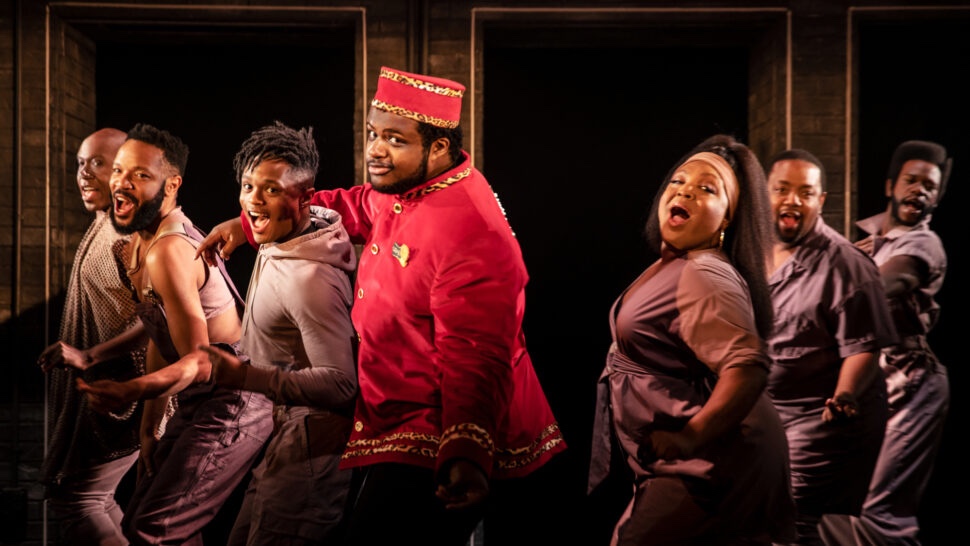
All aboard the final flight of African American Airlines, a journey taking every last Black American, tired and pissed off from being sidelined, passed over, disappointed, hurt, viewed with suspicion and just plain disrespected, to a new life in Africa. Such is the premise of Jordan E Cooper’s extraordinary new play, just opening on Broadway in a gorgeously realised production by Stevie Walker-Webb that manages to combine the high gloss sheen New York ticket prices would seem to demand with a biting fury that feels raw and authentic. Shocking and bewildering this show frequently is, but it provides 100 minutes of thought-provoking, often rollicking entertainment that turns on a dime between hilarious and horrible.
Structurally, Ain’t No Mo’ is nearer to a sketch show or a revue than a traditional play, which allows a phenomenally talented quintet of performers to display some serious versatility as they switch between roles, playing styles and looks (the outstanding costume and wig designs are by Emilio Sosa and Mia M Neal respectively). It also allows a broad examination of Black life in modern day America from a variety of different perspectives. Opening with a wondrously OTT, cartoon-like funeral with Marchánt Davis’s pastor prowling the aisles of the theatre like a gospel preacher on acid whipping up audience response, it moves on to a scabrously funny harpoon on the Real Housewives franchise that also takes on cultural appropriation (Shannon Matesky is gloriously off-kilter as a character described as “trans-racial”, in other words a white woman hell bent on turning herself Black), and an aspirational family dinner blown apart by a figure, who might best be described as the essence of Blackness, newly released from shackles in the basement (Crystal Lucas-Perry, simultaneously frightening and energetically funny).
Holding the running theme of the soon-to-be-departing flight together, is the fabulous (literally) stewardess Peaches (performed usually by the author, but played at the preview I caught by the sensational understudy Nik Alexander). Peaches is terrific company: gossipy, judgemental, wise but sassy, and ultimately extremely affecting for reasons that I won’t spoil here. It’s during Peaches’s sections that Cooper’s writing really takes flight (pun intended) and as a character she’s a gift to audiences and the performer (Alexander invests her with charm, attitude and killer comic timing, then finally a vulnerability that pierces the heart.)
Not every section lands perfectly, and a few scenes outstay their welcome, but when Cooper’s script really hits its mark it’s unforgettable. At just 27, Cooper is the youngest playwright in Broadway history, and Ain’t No Mo’ feels like a young work, but, for the most part, in the best possible sense, in that it has a freshness, originality and “fuck you” outspokenness that braces thrillingly.
The only scene where the writing matches what Cooper has given himself as Peaches is one set in abortion clinic and a young pregnant woman (a supremely affecting Fedna Jacquet, all the more poignant because the actress has just announced her own pregnancy in real life) chooses to end the life of her unborn child rather than allow them to face the horrors and injustices of growing up Black and poor. Meanwhile, her partner (Davis again, superb) tries to cajole her out of it, while another mother-not-to-be (Ebony Marshall-Oliver, just wonderful) pontificates comically. Tragedy and comedy co-exist bruisingly here, and there is a massive twist, revealed early on. The whole show is never less than engaging but this sequence haunts and hurts.
Of all the actors, it’s probably the chameleonic Ms Lucas-Perry that gets the most opportunities to transform, which she does with remarkable skill, literally unrecognisable from scene to scene, whether as a trashily glamorous English babymama, a deeply damaged convict or a breezily glossy TV anchorwoman. The entire team is magnificent though, tackling the knotty, vital text with restraint or abandon as required.
For all its entertainment value (which is extremely high), and the visual flair of Scott Pask’s colourful sets and Adam Honoré’s flashy lighting, Ain’t No Mo’ is ultimately a work of seriousness and significance. Yes, it’s a great time in the theatre but it stays with you long after the final curtain. It is a worthy and welcome addition to the Black excellence suffusing Broadway at the moment with works such as the stunning Best Musical Tony winner A Strange Loop and the acclaimed, starry revivals of Topdog/Underdog, The Piano Lesson and Death Of A Salesman. Cooper’s multitude of characters may be going on a journey, but so are we in the audience.
Hurtling towards December we may be, but there’s no doubt that Jonathan Slinger is delivering one of the performances of the year in Sarah this extraordinary fever dream of a monologue, distilled from Scott McClanahan’s acclaimed 2015 semi-autobiographical novel The Sarah Book. This booze-and-bile soaked tale of one man’s descent into alcoholic stupor and emotional and spiritual freefall as his marriage collapses (the titular Sarah is the wife who is leaving him, not altogether surprisingly given what we get to witness here) serves as a coruscating metaphor for the collapse of the great ‘American Dream’ and the result is frequently wince-inducing to watch, but also often grimly hilarious.
The adaptation and direction are by Berliner Ensemble artistic director Oliver Reese who provides a staging that starts out like a piece of stand-up comedy with Slinger’s Scott in a spotlight with a mic stand telling a funny story that quickly sours, then veers between chillingly still to toxically energised, but is seldom less than gripping. The black box setting is dressed only with a fridge, a few props and a couple of sticks of furniture, and the most prominent technical elements are a haunting country/rock musical underscore and Steffen Heinke’s acidic, malleable lighting.
The emphasis is, rightly, on Slinger and on McClanahan’s remarkable writing. Yet another privileged white man falling through the cracks in life is hardly original subject matter but the language McClanahan employs is muscular, evocative, poetic….and sometimes revolting. McClanahan doesn’t spare us, or his onstage counterpart, much, whether it’s in the jet-black-funny description of Mr King, the ancient, severely physically compromised rescue dog who gives Scott and Sarah the mange, or the heartrending sequence where a desperate, inebriated Scott is comforted by his own young daughter. Nothing is sugarcoated and there are moments where McClanahan offers peeks into the very darkest recesses of his imagination that seem calculated to offend and upset. It’s seldom less than gripping though.
That this tawdry tale feels like compulsive viewing rather than just an endless trawl through a troubled soul at the boundaries of reason and civility, is largely down to Jonathan Slinger in a powerhouse solo turn of such ferocious brilliance and technical dexterity that even the veins in his forehead seem to pop on cue. He never once tries to excuse Scott or make his behaviour more “acceptable” but instead invests him with a humour and battered humanity that draws the audience in even when, in real life, one’s instinct might be to run away screaming. He impressively navigates the tricky Virginian accent with ease, and manages the lightning fast switches between pathetic to swaggering to vaguely repellent with complete assurance. He’s utterly magnificent.
This is an uncomfortable ninety minutes of theatre but a rewarding one, and anybody who wants to see a masterclass of a performance at extremely close quarters should beat a path to Notting Hill immediately.
Terry Johnson has an interesting history of promising his audience a certain kind of play then delivering something quite unexpected: DeadFunny sounded like a classic, if macabre, farce but turned out to be a devastating examination of a marriage in crisis, while Insignificance featured a number of 20th century cultural and intellectual icons and it’s key scene had Marilyn Monroe explain the theory of relativity to Einstein using balloons as props. Hysteria saw a chamber comedy about Freud and Dali explode into a wild surrealist extravaganza. True to form, The Sex Party -his first new play in four years and the reopening production for a refurbished Menier Chocolate Factory- appears from it’s title and marketing to be something salacious and naughty, but actually proves to be a surprisingly astute critique of open relationships and the emotional and human costs of a situation where not everyone is reading off of the same hymn sheet. It’s also not very sexy, although I suspect that is partly the point. This isn’t Johnson at his best, to be honest, but it’ll certainly get people talking.
Set in the kitchen at a swingers party in Islington, this is essentially a discussion piece that puts nine contrasting individuals in a room and has them grapple with, well, almost everything really: jealousy, gender, personal boundaries, yearning for what might have been, political correctness …oh and sex of course, although anybody seeing this show to view nudity and onstage “action” will be left disappointed. Johnson’s gift for literate, often painfully funny dialogue remains, as does his wry, almost absurdist take on allegedly civilised social conventions: there’s an amusing moment when Jason Merrell’s party host Alex bolts, mid-orgy, into the living room in high dudgeon and armed with salt because somebody has spilt red wine on an expensive rug.
That aforementioned verbal elegance is shot through with moments of quite breathtaking crudity and even cruelty though. A lot of what comes out of the character’s mouths may be disturbingly unpalatable but most of it sounds authentic enough, although whether one would choose to spend over two hours in the company of some of these people is another matter. The script becomes less successful as it interrogates the boundaries of “wokeness”, the catalyst for which is the arrival of the stunning Lucy, a trans woman played with a fascinating mixture of aloofness and vulnerability by Pooya Mohseni. There is an extended scene in the second act where a number of really offensive opinions (think, if you must, transphobic, homophobic and just plain crass) are bandied about from some of the more unreconstructed partygoers. It’s pretty ugly stuff and no doubt indicative of the way many people sadly still think, and while I’m not suggesting for one moment that theatre shouldn’t explore the uncomfortable and/or offensive, Johnson’s characters here morph into mouthpieces for a bewilderingly eclectic selection of viewpoints rather than fully fledged human beings, and there’s nothing that even this fine bunch of actors can do to ameliorate that.
Jason Merrells makes host Alex into a genuinely likeable figure, and Molly Osborne sparkles as his enthusiastically frisky younger girlfriend, who finds one character’s scepticism about the merits of owning a dog far more unacceptable than any of the coital excesses going on in her own living room. Lisa Dwan and John Hopkins find real firepower in a fractured couple at their first sex party, and whose relationship looks set to change forever after the revelations of a single night. Kelly Price is hilarious but also entirely convincing as haughty, intimidatingly “right on” Camilla who comes to realise that her boundaries are not necessarily where she thought they were, and Will Barton is great fun as her drug-addled man-child boyfriend. Oscar winner Timothy Hutton invests wealthy eccentric Jeff with just the right amount of blunt insensitivity and blandly masked nastiness, while Amanda Ryan goes impressively for broke as his super-brash trophy wife, who seems to have been written as Russian solely so that she can toss out unspeakable opinions without intending to offend anyone (although she invariably does). Either way, Ryan’s roaring Russian accent sounds spot on. Mohseni is gorgeous and makes Lucy into probably the most sympathetic figure at the party.
While it has much to enjoy, particularly the note-perfect performances and Tim Shortall’s beautiful and astonishingly detailed Islington townhouse kitchen set, The Sex Party feels like a play that needed at least one more draft before being exposed to audiences and indeed to critical opinion. The music choices are a little confusing… although the piece is set in the present day the playlist seems stuck irrevocably in the 1970s, but then again so do some of the attitudes presented. Ultimately, The Sex Party is an unruly beast, chock full of opinions, tropes, issues and characters that have the unmistakable tang of truth while only fitfully achieving full theatrical life, despite the efforts of a stellar cast.





 ajhlovestheatre