A pair of beloved, long-term married screen stars, one of them making her hotly anticipated London stage debut, and a classic American comedy that has already proved to be a solid Broadway hit…what could possibly go wrong? As an evening of undemanding stargazing, John Benjamin Hickey’s plush production succeeds well enough – Sarah Jessica Parker and Matthew Broderick work hard, if not always entirely convincingly, in a trio of roles apiece – but anybody looking for anything meaty or enlightening is likely to be disappointed. It’s not even all that funny, at least not for modern audiences.
The biggest problem with Plaza Suite is unfortunately Plaza Suite itself. Although the original New York production ran over 1000 performances nearly 50 years ago, and spawned a film adaptation, and two sequels, one set in Hollywood and the other in London, Neil Simon’s triptych of comedies all set in the same hotel room (the scenic design by John Lee Beatty is gorgeous) has not aged well.
In the first playlet we see a middle aged housewife Karen (Parker in a dowdy wig, reading as too young, too attractive and too vital but doing a nice line in wistful melancholy) reacting with remarkable equanimity when her husband admits to an affair before pleading with him to end it. It may have played well in the 1960s and 1970s, but presenting a woman as a codependent doormat seems bewildering today, and in the intervening years we’ve had plays like Stoppard’s The Real Thing and Patrick Marber’s Closer which dealt with the pain of marital infidelity, and didn’t reduce it to a couple of empty quips and a lot of whingeing. As if aware of the datedness of the sexual politics, Broderick delivers a philandering husband with an endearingly soft edge, where really the character requires more macho self absorption and dynamism. All in all, it’s a pretty wan hour.
Things improve after the interval, where Simon, Hickey and the starry leads put their collective feet on the comedy pedal, to much more pleasing effect. In Visitor from Hollywood, Broderick is a dandy LA movie bigwig, vaguely reminiscent of Mike Myers’s turn as Austin Powers, attempting to get with Parker’s radiantly ditsy, but smarter-than-she-initially-looks, former flame. It’s really more of a sketch than a play but it has a sparkle that revitalises the whole evening.
The final piece has Broderick and Parker as a pompous old codger and his vulgarian wife trying to coax their daughter out of the bathroom she’s locked herself into minutes before her wedding. It’s a silly but enjoyable premise, and Broderick comes into his own as the bewildered, barely coping pater. Parker is less comfortable, she’s more wilting flower when she should be chiffon-clad battleaxe. Her physical comedy seems too choreographed, too calculated and lacking in spontaneity to be truly funny. Individual moments land quite satisfyingly, but that’s what they remain: isolated moments of hilarity with little to connect them. As with the first act, Parker is too delicate, too youthful and just too plain nice to make this self-dramatising harridan plausible. Fun though he mostly is, Broderick appears to be giving pretty much the same performance in each play, albeit with changes of wig and costume.
Both leads are guilty at times of delivering the lines as though they’d just been fed them through earpieces and had never actually come across the script before, which deadens the pace somewhat. It almost feels under-rehearsed, but surely it can’t be given that it has already played a New York season. Simon’s writing is slick, sharp, and heartless.
With most performances already sold out, bar a few eye wateringly expensive premium tickets, Plaza Suite is a great big fat hit. Critical opinion is entirely superfluous in the face of this sort of stardom and hype. It’s an efficient production of an irrelevant play, with adequate turns from leading actors whose past work proves that they’re capable of being so much better than this with the right material. Something this insubstantial needs to be a lot more fun, quite frankly. It’s a glossy entertainment that’s forgotten almost before you get back out onto the Strand. I’d love to see SJP on stage again, in something more suited to her endearing, more dramatically inclined talent. Disappointing.
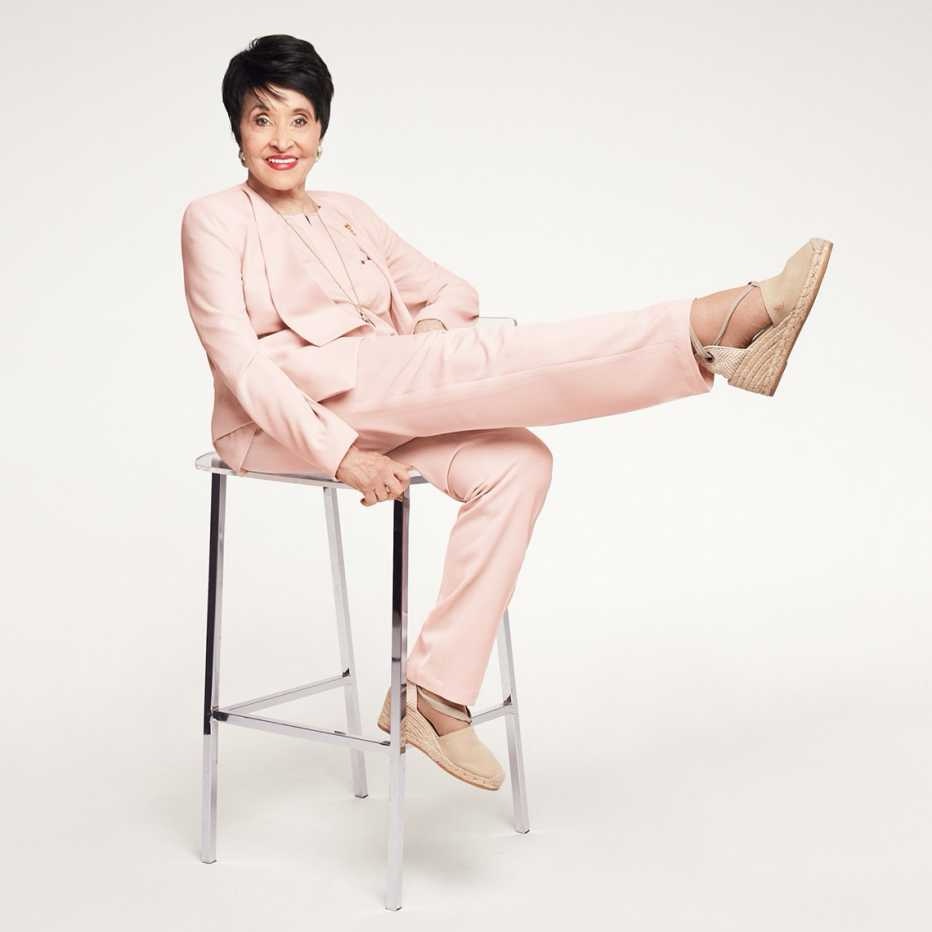
I saw Chita Rivera several times on stage – as Aurora in Kiss of the Spiderwoman, as Roxie Hart in Chicago (her ‘Roxie’ monologue went on for what felt like ten minutes each time and she still left the audience wanting more…she made a total hilarious meal out of the simple line “I’m older than I ever intended to be” and the audience went nuts) and most recently as the oldest woman in the world in the thrillingly dark Kander and Ebb flop The Visit on Broadway. In the latter, her acting was so detailed and exquisite that I wondered if maybe she was showing signs of advanced age; that thought went out of the window at curtain call when she turned into a funny, naughty, flirtatious showgirl, batting her eyelashes at her leading man (whom her character had wanted murdered) and blowing kisses into the orchestra. Every performance I saw her give was fresh, magnetic and infused with indefinible star quality. She was like molten lava mixed with kindness. Totally unique. You can’t manufacture stage presence, and she had it. Blimey, did she have it.
Back in 2016 when I was researching a book about the history of Joe Allen restaurant, my NYC based friend Merle set up a phone interview for me with Chita (who was a regular at the restaurant on both sides of the Atlantic, and was an ex of the eponymous restauranteur….her name and face are all over the walls of the eateries on West 46th Street in Manhattan and Burleigh Street in Covent Garden). Since I don’t habitually speak to Broadway legends – especially not ones whose distinctive, charismatic voices I listened to as a kid on the cast albums of shows like West Side Story and The Rink – I was a little nervous.
As it turned out, I needn’t have been. From the moment she picked up the phone and said “is that you Alun?” in that tone that just doesn’t sound like anyone else, Chita was everything you’d hope she’d be, and more. She was funny, gossipy, delightful, as she talked about her disappointment at seeing posters of shows she’d been in on Joe’s notorious “flop wall”, how Mr Allen didn’t say much but would write her the most beautiful poems…. the chat went on way longer than the allotted time. It ended with Chita making me promise to come and say hello if ever we were in Joe Allen at the same time at any point in the future. Sadly for me, that never happened. Neither did the book, but I still treasure my notes from that magical conversation.
I heard her voice again, as I was reading her glorious autobiography written with Patrick Pacheco, Chita – A Memoir – the book is an absolute must for Broadway fans, and anybody who wants confirmation that you can simultaneously be a terrific, compassionate human being, and an insanely talented artist…those two things are not necessarily mutually exclusive. It’s a great read particularly, in the light of what’s just happened, the sections where Chita talked about her fascination with death. I hope she and Hinton Battle are kicking up a storm together.
Rest well, you amazing woman. One of the greatest lights of the Broadway Golden Age is gone. Chita Rivera 1933 – 2024: what a lady, and what a star.
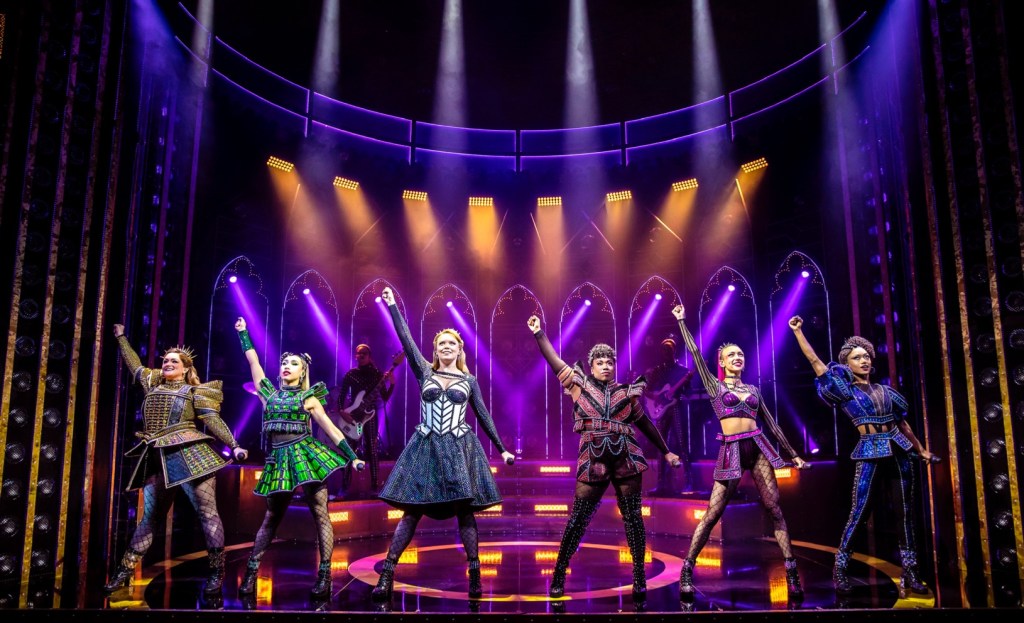
Happy 6th to Six, the formerly little show that most definitely could! From the Edinburgh fringe to Broadway, Australasia and the high seas, Toby Marlow and Lucy Moss’s thunderous concert-cum-musical hybrid has become a beloved fan favourite and a true show business sensation. As the West End production enters its seventh year, surviving a pandemic and two changes of theatre, it remains in good, crowd-pleasing shape, with a fourth completely new cast of performers taking on the wives of Henry VIII, and sending ecstatic audiences out into the night, hoarse from roaring their approval.
Moss and Jamie Armitage’s staging has become slicker and glossier since the original run at the Arts, and Carrie-Anne Ingrouille’s terrific choreography, mixing up pop video dance styles with moves by turns organic, sassy, occasionally sinister, certainly breathes more easily on the larger stage. Tim Deiling’s thrilling rock stadium lighting and Paul Gatehouse’s sound design are similarly upgraded, although the latter has a few moments, usually when the queens are belting in unison, where it becomes a little woolly, but the majority of the deliciously deft lyrics penetrate through the aural bombast. Similarly, the purple glitz of Emma Bailey’s set and the bejewelled Steampunk splendour of Gabriella Slade’s award-winning costumes reflect the continuing upswing in this blockbuster’s fortunes.
That global success seems to come with a price tag though. It’s something I noticed when I reviewed the previous cast last year and it struck me again watching the excellent current team. Specifically, it feels that a certain homogeneity has crept in, a fudging of detail, a prioritisation of ‘yasss kween’ fabulousness over the fact this sextet of young women actually existed and had fraught, frequently tragic lives; it’s more glamorous now, but it’s seldom as moving as it once was. It’s still fabulous entertainment, one of the most unapologetically enjoyable eighty minutes in the West End, but some of the charm and spontaneity has been lost. It may just be that the creatives have so many international iterations of the show to keep an eye on that the quirks and idiosyncrasies and the sheer heart that made the original so special have been inevitably ironed out.
It’s not necessarily due to the talent on stage. The current cast are not cookie cutter replacements for the last set of queens, are fine triple threats, and register pleasingly as individual personalities. Nikki Bentley’s powerhouse-voiced Catherine of Aragon reads as more measured and repressed than some of her predecessors which feels entirely right for the rejected, senior wife, while Thao Therese Nguyen gives us a sexy, loose-limbed, funny-boned Anne Boleyn probably nearer in spirit to Millie O’Connell’s crazy, delightful original than any we’ve seen since.
Kayleigh McKnight fuses an innate likability with a gorgeous, diva-worthy tone as Jane Seymour and does some exhilarating vocal opting-up in unexpected places in her roof-raising ‘Heart of Stone’ solo. Reca Oakley’s American Anna of Cleves is adorable, if more cuddly than edgy, and Inez Budd is a vivid, memorable Katherine Howard, compellingly balancing mean girl confidence with a backstory of abuse and manipulation in the most disturbing number in the score. Janiq Charles delivers a radiant, warmly empowered Catherine Parr with vocals like honeyed molasses, her balm-like Trinidadian accent absolutely perfect for the wife who stands alone as the voice of reason.
Ultimately, as well as being a fine time in the theatre, Six is a valuable ongoing part of the West End (and Broadway) landscape because it serves as an irresistible gateway drug to musicals for emerging audiences. First time theatregoers adore this spangled but intelligent pop-showbiz hybrid, and no wonder. It’s hard to imagine it ever closing: emerging, dazzled and deafened, back out onto the Strand after this most recent viewing, I was struck by the thought that there are future cast members who haven’t even been born yet. It remains a phenomenon.
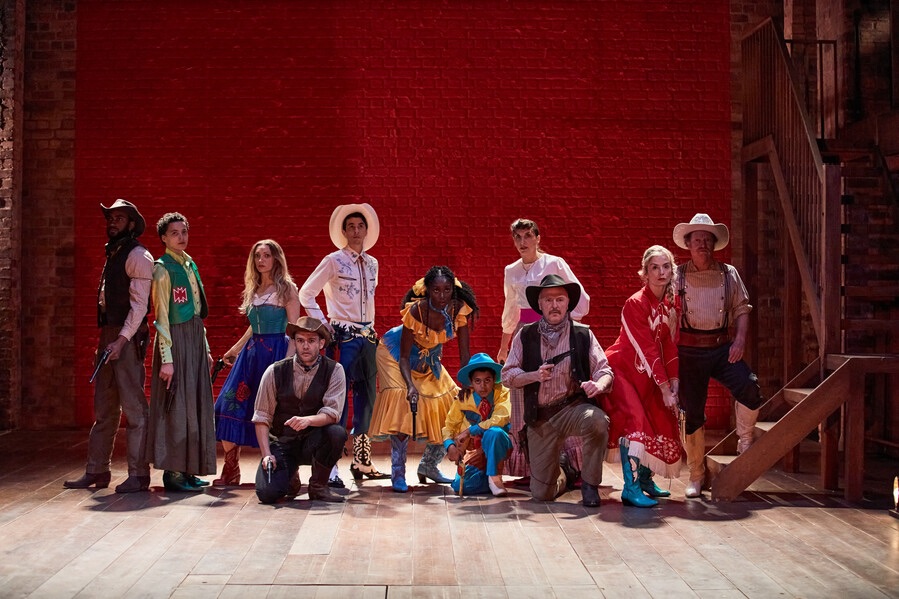
Remember the good old Wild West as depicted in the cowboy films of yesteryear? It was a world where the women were either servile and possibly repressed, or floozies, and the gun totin’, hard drinkin’ Stetson wearing men were bow legged from horse riding all day (at least, one assumes that’s why they were bow legged). All that gets turned on its head in this remarkable musical play which is as delightful as it is confrontational, repeatedly challenging one’s expectations and prejudices with a cheeky wink, a camp sashay, and lashings of rough theatre magic, sending you out dazzled, transported…and more than a little moved.
Charlie Josephine made a big splash in the summer of 2022 with I, Joan, a bold non-binary reimagining of the legend of Joan of Arc at Shakespeare’s Globe. That was a rambunctious, irreverent, imaginative piece, but this new work, co-directed by Josephine and Sean Holmes, and transferred from Stratford by the RSC for an all too brief Royal Court season, is even better. Cowbois is another show that defies both genre and gender, serving up a rollicking riff on traditional cowboy stories, enriched by a queer sensibility, terrific song and dance, a higher-than-average strike rate of authentically hilarious comedy shtick, and a gallery of magnificent, occasionally outrageous, performances.
Josephine’s characters speak in the American idiom we are familiar with from watching Westerns, but keep their British or Irish accents. Thus Sophie Melville’s bar-keep is Welsh, Bridgette Amofah’s young mum is pure London, Julian Moore-Cooke’s bewildered, unreconstructed young gold quester is Northern Irish, and so on… Far from being confusing, it actually aids in making them all more relatable, although I’m not sure the gloriously free-wheeling, deceptively ambitious text necessarily even needs that help. It reaches its hilarious apotheosis in the much-feared Mancunian One-Eyed Charley, in a mesmeric, show-stealing turn from L J Parkinson (aka LoUis CYfer).
Or at least Parkinson, striding on half way through the second act like a rhinestoned, green-maned harbinger of death with some seriously sexy dance moves, one milky eye and the comic timing of a master, would walk off with the show if everyone else wasn’t so damn good. Melville is luminous and impassioned. Lucy McCormack delivers astonishing work, her character undergoing a remarkable but credible transformation from comically uptight and judgemental to celebrating the rich diversity of humanity that doesn’t conform to preconceived norms. I defy anybody to remain unmoved by Lee Braithwaite’s Lucy becoming Lou, as they realise their true nature.
Equally moving is the love that develops between Melville’s Miss Lillian and Vinnie Heaven’s gender-exploding bandit Jack. Heaven brilliantly suggests the pain beneath Jack’s swagger, and the joy when they realise they are just as worthy of love as anybody else is palpable and infectious. Shaun Dingwall as Lillian’s bullying beau, Emma Pallant’s hilariously buttoned-up Sally Ann and Paul Hunter’s drunken sheriff are all vivid creations, but there really is no weak link in this fine company.
I suspect the moments of direct address to the audience and some of the running about worked slightly better at the RSC’s Swan, where the show premiered last year, rather than in the Court’s more traditional auditorium, but it remains vital and magical. The brilliantly controlled chaos climaxes in a shoot-out that is as exhilarating as it is funny. Josephine’s text is political but never preachy, choosing instead to seduce with heart and humour, and it’s full of delightful surprises and anachronisms. The balance between zany comedy, raw emotion and the sense of external threat, made uncomfortably vivid when the absent men return at the end of the first half to confront the joyful revelry of newly liberated women and non-binary people, is exquisitely handled. Jim Fortune’s anthemic final song brings a real lump to the throat.
This is total theatre, anarchic, sexy and life enhancing, something with the power to quicken the pulse, gladden the heart and broaden the mind. We are so lucky to have it.
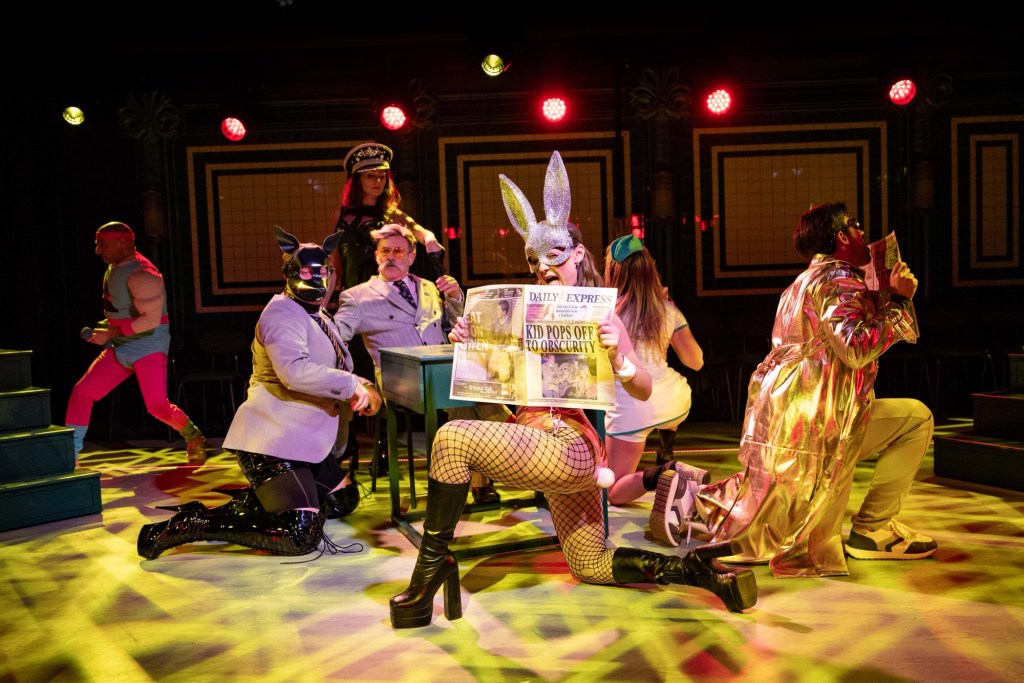
“Waaaaaanker! You’re a wanker!” Who doesn’t love a good ole musical theatre singalong?! Not sure that this particular ditty will be popping up much at the Theatre Café or Marie’s Crisis, mind. It’s one of the standout numbers from a new British tuner entitled Rehab The Musical, currently and inexplicably enjoying a second London run having premiered in 2022 at the Playground Theatre in Notting Hill and now deafening unsuspecting patrons in a basement near Piccadilly Circus.
Actually I say “inexplicably” but a quick glance at the credits reveals that the music and lyrics are co-written by Grant Black, the main producer is Clive Black, and they are both sons of another of the shows producers, lyricist Don Black CBE, whose work includes Tell Me On A Sunday, Sunset Boulevard, several James Bond themes, and words for everyone from Michael Jackson and Meat Loaf to Lulu. Without such a showbiz heavy hitter involved, it’s hard to believe this well meaning but strange bit of nonsense would have made it past the first reading let alone to a production featuring some of the West End’s finest.
In all fairness, musically this rock-pop-soul score is often nicely crafted and moderately memorable. The lyrics however are quite another matter, coming from the anything-for-a-rhyme school of writing that just about suffices in the jolly uptempo numbers (although the ‘Wanker’ number is pushing it a bit) but run the risk of provoking laughter in all the wrong places when they seek to be heartfelt or serious. Incredibly, they are partly the work of Murray Lachlan Young, which goes to prove, I guess, that providing the words for musical theatre songs and writing poetry are two very discrete skills.
Collectors of theatrical curios, and masochists of a certain age who harbour “fond” memories of such West End musical disasters of yore as Which Witch, Out Of The Blue (the Nagasaki musical…yes really), The Fields of Ambrosia (“where everybody knows ya!”) and Murderous Instincts (‘nuff said), might want to check this out. So too should anybody who fancies seeing a selection of terrifically talented performers, with enough collective credits to choke a proverbial cart horse, grappling with some pretty diabolical material. That most of them emerge with dignity intact says more about their professionalism than about the show they’re in, which is an example of the so-bad-it’s-almost-good inept British musical that I thought we’d left behind in the early 1990s. But apparently not…
This amateurishly staged, poorly lit farrago, long on swearing (the line “off you fuck” had the glossy first night crowd wetting their uncomfortable seats with mirth) but short on real wit and human interest, trivialises addiction, recovery, eating disorders and almost everything else it touches upon. An overdose is used as a cheap plot device to ignite a thunderous affirmation-burning anthem vaguely reminiscent of the end of the first act of Hair, only not so effective, while a crass cross-dressing number makes one ponder whether La Cage Aux Folles had just been a beautiful mirage. There’s a song about cheese that I think is supposed to be funny but mainly made me feel lactose intolerant.
The show tells, in crude, bold, primary colours, the 1990s-set story of one Kid Pop, real name Neil (a glowering, posturing Christian Maynard who at least looks like a star), his stint in rehab and the efforts of his sleazy crook of a manager (Keith Allen, apparently having a whale of a time) to derail his efforts at sobriety in order to keep him in the tabloids. There’s a bit of a love story, although neither Maynard’s Kid, or Neil or whatever, nor Maiya Quansah-Breed’s glamorous stripper seem that into it, warbling about being two broken people with all the passion and heartbreak of a pair of gym buddies arguing about whose turn it is to put the weights back.
There’s also a plot twist which I admit I did not see coming but which I was grateful for, partly because it meant we would all shortly be able to go home, and partly because it explained why one of British musical theatre’s more reliable talents had been giving, up to that point, such a bizarrely detached performance. There’s also redemption at the end…you can tell it’s redemption because they all come on dressed in white.
Gary Lloyd’s in-ya-face production initially recalls Christopher Renshaw’s work on the original production of Taboo at what is now the Leicester Square Theatre, with the cast emerging from all corners of the unconventional playing space and at close proximity to the audience. But where that show about a pop star (Boy George) going off the rails before getting a second chance had poignancy and a huge heart, this one only has a load of shouting and bawling, and a bunch of unsympathetic characters it’s hard to care about. Also, Mark Davies Markham’s writing for the book scenes in Taboo had a tang of emotional authenticity, whereas the script here (by Elliot Davis) is mostly like an old fashioned schools and colleges TV programme about addiction, with extra swearing.
Rebecca Thornhill and John Barr are fundamentally incapable of giving bad performances, and invest their roles -respectively, an alcoholic former Bond girl and a tanning addict called, I kid you not, Barry Bronze- with a lot more feeling and skill than the writing warrants. Oscar Conlon-Morrey is excellent, and in fabulous voice, as probably the only sympathetic character in the entire cast, and Jodie Steele looks stunning but is mostly wasted (in the non-inebriated sense) as Keith Allen’s nasty P.A. sidekick. Mica Paris MBE brings big hair and a big voice but little in the way of acting to the underwritten role of a group leader in the rehab clinic. Most of the singing is quite wonderful, and the dancing is a lot better than the actual choreography.
If I’m harsher than usual on this sour yet insipid show, it’s because there is so much good musical theatre that goes unproduced or doesn’t get beyond the developmental stage, and this one has had considerable talent, resources and money lavished upon it, and it’s still excruciating. There’s a lively second act night club number, vaguely reminiscent of the rollicking ‘Shameless’ from the Pet Shop Boys musical Closer To Heaven, which repeatedly rhymes “cocaine” with “again”, and I couldn’t help but think that Rehab as a whole brought to mind, for me anyway, one of PSB’s most popular hits from the ‘90s…namely, ‘What Have I Done To Deserve This?’
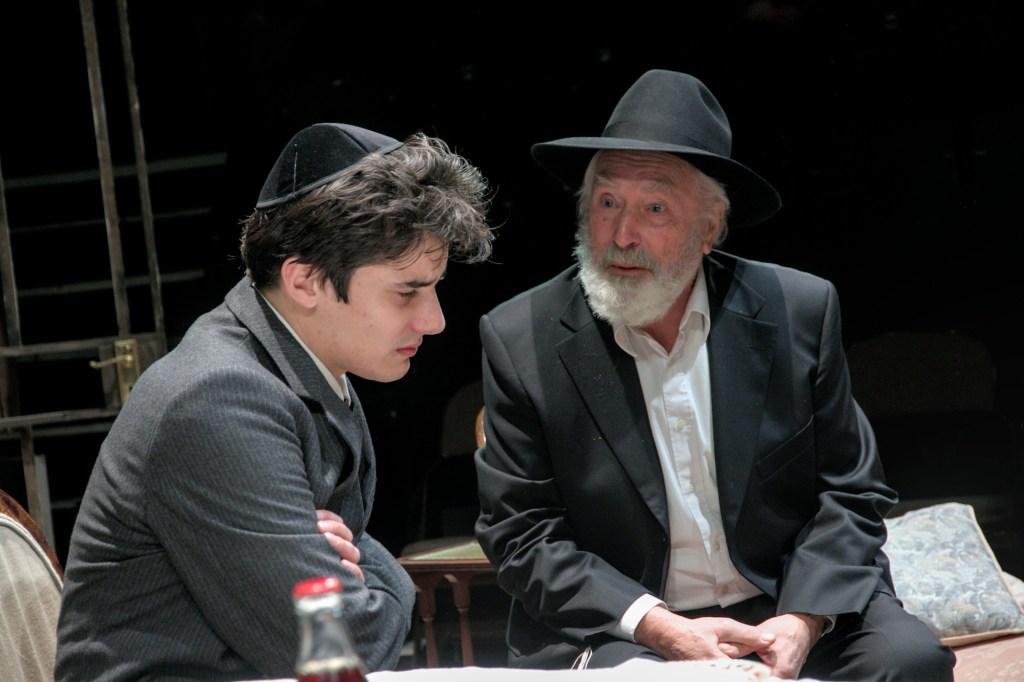
Reviving plays that have been untouched for decades can be a risky business: for every unearthed gem there’s a snooze fest that makes it all too clear why no director has been near it since before the Luftwaffe closed our theatres. Tricia Thorns’ Two’s Company has a better than average track record when it comes to rediscovering dormant dramas however, and Michael Hastings’s Don’t Destroy Me (written, astonishingly, when he was just seventeen) is an enjoyable, intermittently fascinating piece.
Set in a 1956 boarding house where 15 year old Sammy (a convincingly tormented Eddie Boyce) has come to reunite with Leo, his Hungarian Jewish father who sent him away to England as an infant to be brought up by relatives and escape the Nazis. Leo (Paul Rider in a painfully honest performance) has a miserable existence dominated by alcohol abuse and a much younger wife who can barely tolerate him. The Brixton lodging is a predominantly Jewish household, and although the Holocaust is never mentioned, the sense of unspoken trauma and restlessness is palpable in the writing and in Thorns’ frequently riveting production.
Don’t Destroy Me is no masterpiece -for all its truth and vividness, it strangely lacks a focussed centre- but it is remarkable for a first play, and demonstrates a notable ability in a youthful Hastings to swirl together a world of dramatic and literary influences into a tangy, elliptical but mostly satisfying whole. Contemporary to, and reminiscent of, the kitchen sink plays of Wesker and Osborne that revolutionised English drama at the Royal Court in the 1950s, the writing also has a fanciful, poetic quality that suggests a working class London Tennessee Williams.
The ghost of Williams hangs especially heavy over two characters. That’s needy, unstable Mrs Pond, whose lightning fast changes in mood, shady sexual past and eccentric tea-leaf reading present, bespeak of deep emotional trauma or at the very least severe mental health issues, and her smart, highly strung daughter Suki, employing an imaginative fantasy life as respite from her mothers mania and neglect. Nell Williams invests the latter with a compelling mixture of vulnerability and imperiousness.
With her faux genteel accent, dancers physicality and sense of aching, otherworldly sadness, Alix Dunmore’s elegant broken-doll Mrs Pond feels like an English cousin to Blanche du Bois; it’s a haunting, supremely effective portrayal. Nathalie Barclay skilfully navigates a perfectly calibrated line between steel and kindness as Sammy’s youthful stepmother, and Timothy O’Hara brings warmth and menace to the neighbour she habitually breaks her marriage vows with. Rider is wonderful, finding a tragic dignity in the dissolute ruins of Leo’s shattered life, and Nicholas Day does detailed, beautiful work as the kind rabbi invited to what turns into the tea party from hell.
Sue Kelvin is a glorious, gorgeous force of nature as landlady Mrs Miller, the main source of light relief, whose compassion is tempered with shards of self righteousness and a penchant for gossip and judgement. Eddie Boyce and Nell Williams suggest with laudable intensity the power-shifts between the mutually attracted younger pair, each questing to escape their separate painful, traumatised existences.
Alex Marker provides a nice, semi-realistic looking split level set that tantalisingly allows for eavesdropping with its see-through door and partially non-existent walls. The excellence of the acting goes a long way towards diverting attention from the weaknesses of the play. Not much happens and the penchant of some of the characters to communicate in a series of non sequiturs could become tiresome, pretentious even, but somehow never quite does, mainly due to the intelligence and craft of the cast.
If Don’t Destroy Me had been the work of an older writer it could be seen as derivative, and it is pretty overwrought at times, but it shows formidable promise and, particularly in the depiction of tortured Mrs Pond, foreshadows Hasting’s later, more accomplished work in his most famous play Tom And Viv. This well judged production may not necessarily spark a series of revivals of this interesting but naive, imperfect piece but it’s an engrossing couple of hours in the theatre.
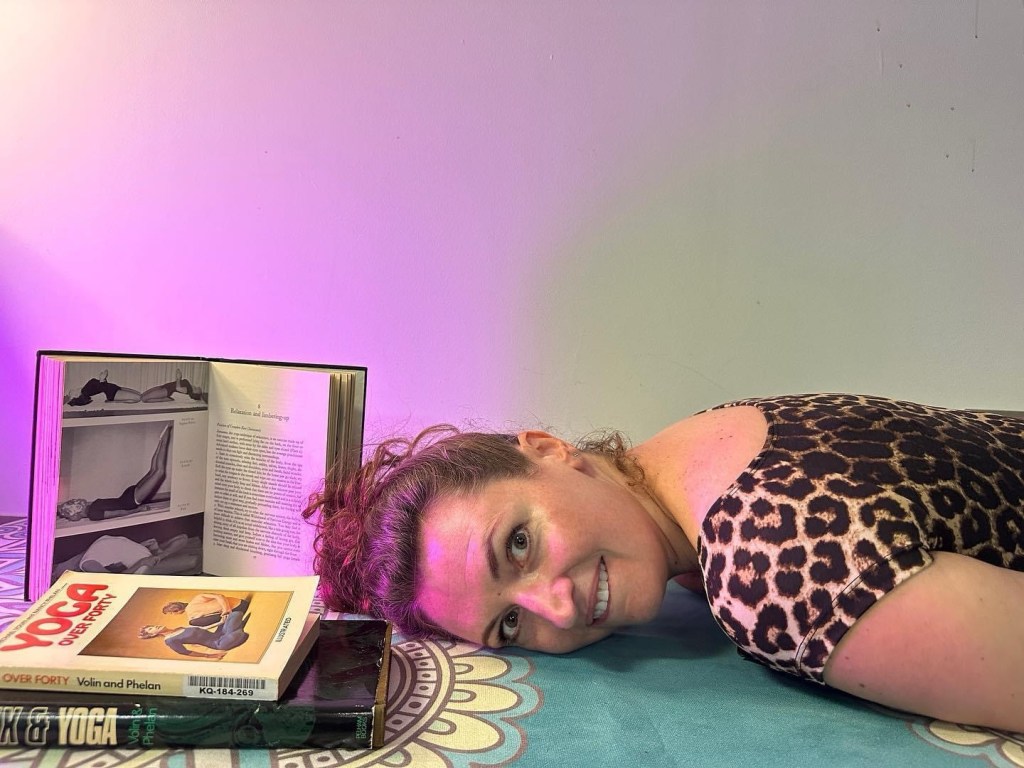
The spirits of Joyce Grenfell and Victoria Wood hover lightly over Kathryn Haywood’s delightful self-devised piece, which would be a solo show, and a pretty hilarious one at that, if it weren’t for the various audience members dragged out of the front row to participate. Inspired by a trio of 1960s Australian self help books – ‘Yoga For Women’, ‘Sex And Yoga’ and ‘Yoga Over Forty’ – it looks with a satirical eye and through a present day lens at the outdated attitudes to women and ageing espoused by such unreconstructed tomes. It’s often rambunctiously funny, but has a satisfying, perhaps surprisingly hard, bite.
We first encounter Haywood’s Aussie yoga instructor Kath winding up a class for flatulence sufferers while fielding text messages from an upcoming date. She’s a sunny oversharer, cheerfully telling us she’s playing it cool with the potential new boyfriend because “I don’t want him to know I’m easy”, and the script finds some lovely comic mileage in the contrasts between yogic serenity and the character’s occasional tetchiness. Kath unravels, not quite completely but very satisfyingly, as she attempts, in vain, to find the benefit and relevance of yoga designed to ensure that you “stay slim for your husband”, “save your unhappy marriage” or keep the wrinkles at bay.
Underneath the warm grin and gossipy chumminess, there are strong indications that Kath is a judgemental control freak, and possibly a bit of a nightmare (“could you make your voice sound a bit nicer?” she tartly demands of an audience member she has enlisted to read out some instructions), with more interest in herself and her libido than passing on the zen-like benefits of yoga. Haywood is terrific at suggesting the opposing traits of the character, and has the most glorious comic timing. She draws you in by being tremendously likeable, cheeky even, then hints at a mean streak that really ups the dramatic ante. It’s a fabulous performance, and her Australian accent is flawless.
Some aspects of the script need work: a running joke about consistently getting audience members names wrong isn’t clear in intention so doesn’t always land. The sequence preceding the ending feels rushed, as Kath tried to lead us to a touchy-feely conclusion that doesn’t feel organic. These are comparatively minor quibbles but in a show that lasts less than an hour, there’s definitely room for further fleshing out and expansion, particularly since Kath is such fun, off-the-wall theatrical company in Dan Mersh’s fleet, enjoyable staging.
Haywood is an authentic comic talent, and Yoga & Sex…For Women (Over 40) is a quirky, bonkers and altogether engaging mini tour de force. I really hope it gets a further life.
One of Brian Friel’s most beautiful and moving dramas, a memory play about a family of sisters eking out an existence in rural Donegal, receives a new production at this glorious Dublin venue. It’s an absolutely extraordinary play, suffused with longing and affection.
Cadillac Palace Theatre, Chicago – 30 April to 2 June
One of the campest black comedies ever written for the screen becomes a splashy new musical, trying out in the Windy City before hopefully head for Broadway. Anybody familiar with the work of Smash’s Megan Hilty and fabulous double Tony nominee Jennifer Simard will already be salivating with anticipation at what these two megawatt talents will bring to the diva roles created by Meryl Streep and Goldie Hawn.
After garnering reviews at the Public that were less write-ups than love letters to all involved, Alicia Keys’s semi-autobiographical jukebox musical moves uptown where it looks likely to become a permanent Broadway fixture. This sounds like potent, spine tingling stuff, and yes it does feature Keys and Jay-Z’s paean to NYC, ‘Empire State of Mind’.
Delamar Theatre, Amsterdam – 13 January to 18 February, then touring
I’ve a bit of a love-hate relationship with Belgian auteur Ivo van Hove’s output, but his esoteric multimedia approach feels like it could work thrillingly for the Rice-Lloyd Webber modern classic. It’s one of the greatest of all theatrical rock scores and van Hove has assembled a bloodcurdlingly photogenic cast.
Chicago Shakespeare Theatre, Chicago – 23 April to 26 May
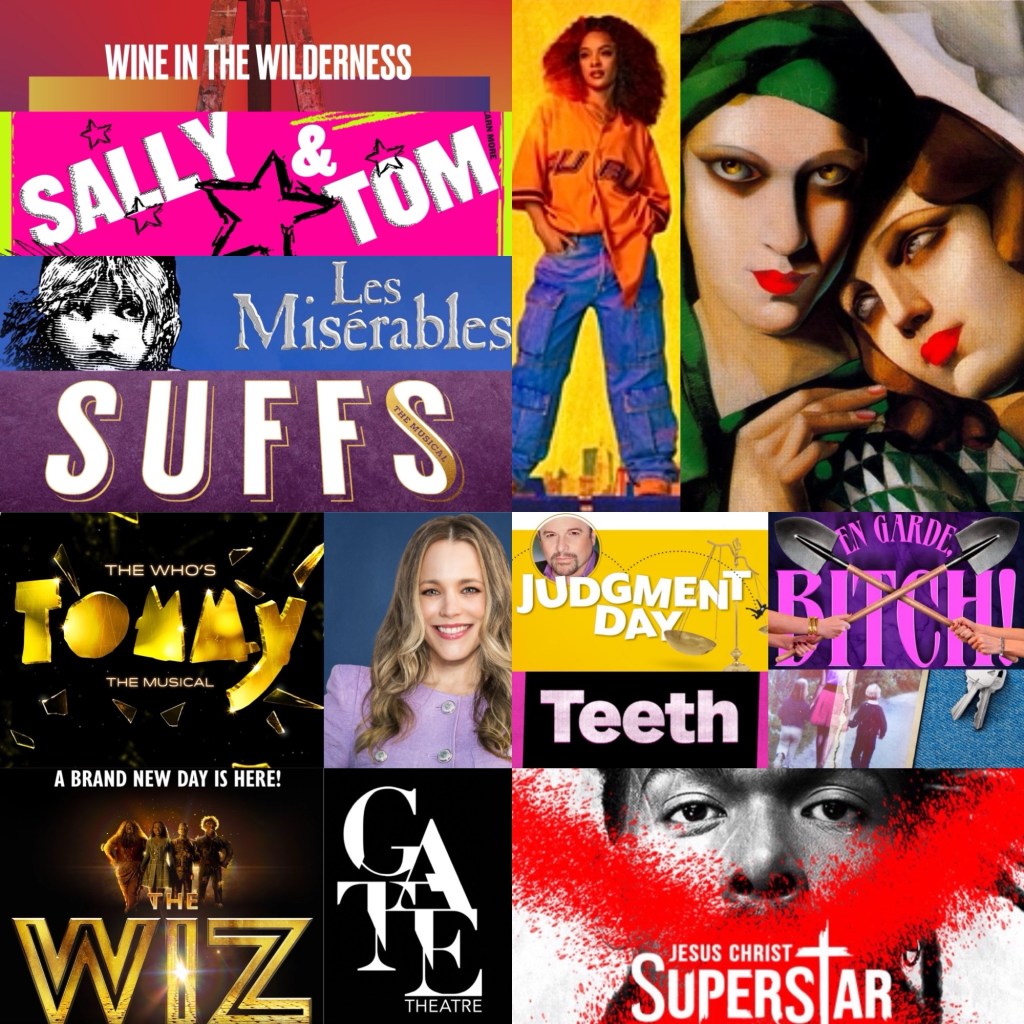
“Are people any damn good?” asks this intriguing-sounding new dark comedy starring Seinfeld’s Jason Alexander as a morally bankrupt lawyer on the cusp of eternal damnation. Alexander is brilliant on stage and his director here is Morris (Hand To God) von Stuelpnagel, so this is likely to be a real treat.
I’m not necessarily saying this sounds like the most exciting new Broadway musical of the season, but what I’ve heard of the score (genuinely enthralling) and the advance reports from the LaJolla tryout suggests that it very well could be. Artist Tamara de Lempicka had a hell of a life and she’s played here by Eden Espinosa, the sort of powerhouse performer I’d pay to hear singing a shopping list.
Théâtre du Châtelet, Paris – 22 November to 31 December
Something of a homecoming for arguably the most popular musical in the world, but this is a completely new staging, and it’s performed in French. It’ll be really interesting to see what a new director (Ladislas Chollat) brings to this beloved material, plus it’ll be magnifique to see it in the city where it’s set.
Samuel J Friedman Theatre, New York – 2 April to 2 June
Film star Rachel McAdams makes her Main Stem debut in this Amy Herzog play which got tremendous reviews when it premiered off-Broadway in 2017. Centring on a young woman striving to care for her special needs child, it’s deeply moving but shot through with trenchant dark humour.
Billed as a “dramedy”, acclaimed, award-winning playwright Suzan-Lori Parks’s new work promises to be a playful, engrossing, ferocious mixture of satire, social history and backstage intrigue. The premise is a way off-Broadway theatre company attempting to mount a play about Thomas Jefferson and the enslaved Sally Hemings.
Is this Broadway transfer from the Public Theater the American answer to the Old Vic hit Sylvia? There are certainly similarities, as this challenging, female-driven new musical takes on the story of the original suffragettes and sets it to an accomplished contemporary score by multiple songwriting award winner Shaina Taub. I’m expecting something bracing, compelling and inspiring; I’ve heard some of the songs, and they’re gorgeous.
Playwights Horizons, New York – 21 February to 31 March
Yes folks, it’s the vagina dentata revenge musical we didn’t all know we needed. I can’t resist a truly off-the-wall idea for a show. Anna K Jacob’s rock and pop oriented music sounds pretty terrific, and the script is co-writtten by prodigiously talented Michael R Jackson, creator of A Strange Loop. This’ll be irresistibly unusual, and the cast includes Broadway star Steven Pasquale. May be worth going to, even if only to say that you were there.
Any new play that boasts a cast headed by Jessica Lange, Jim Parsons and Celia Keenan-Bolger has got to be worth a look. It becomes even more essential viewing when you consider that this comedy drama about the hold family and the past has on present day life is the work of multiple Obie winner Paula (How I Learned To Drive, Indecent) Vogel, and directed by Tina Landau.
The first New York revival of The Who’s edgy, uplifting rock opera is directed by Des McAnuff, who also helmed the breathtaking 1996 production which gave this soaring, eclectic score a coherent dramatic shape that it had previously been missing. Expect goosebumps, eye-popping spectacle and a Pinball Wizard!
Marquis Theatre, New York – from 28 March, and touring beforehand
I’ve never seen this joyful Black rejuvenation of The Wizard of Oz live on stage, and this production sounds like a real dazzler. The score is a soulful, zesty delight, and the cast of Schele Williams’s new staging, amazingly the first ever Broadway revival, includes Kyle Ramar Freeman, sensational in last year’s Barbican season of A Strange Loop, as the Cowardly Lion, also Deborah Cox and Wayne Brady.
Classic Stage Company, New York – Spring ‘24, dates to be confirmed
An artist completes his triptych on Black womanhood while the Harlem race riot of summer 1964 rages outside. Alice Childress’s play, exploring sexism, racism and classism, gets a rare revival, directed by beloved Broadway star LaChanze, who was Tony nominated for her star role in the same author’s play Trouble In Mind in the 2021 Roundabout revival.
Described by one NYC critic as a “love-hate song to this impossible town”, Stephen Adly Guirgis’s acclaimed drama has had two major off-Broadway productions and one on Broadway, as well as countless well-received mountings all over the USA. The 2015 Pulitzer Prize winner is only now receiving its UK premiere, in a new staging by former Donmar AD Michael Longhurst.
The 1936 Battle of Cable Street in the East End was a remarkable event in London history, where Jews, Irish and communists collaborated to halt Oswald Mosley’s fascist Blackshirts marching through Stepney. It’s now immortalised in a promising sounding musical by Tim Gilvin and Alex Kanefsky, with a distinguished cast including Max Alexander-Taylor and Sophia Ragavelas, and directed by Adam Lenson, one of this country’s most impassioned advocates for new musical theatre writing.
It’s unusual for the Royal Shakespeare Company to transfer from Stratford to the Royal Court, but then Charlie Josephine’s queer cowboy fantasia is a very special show. Praised to the skies at its Swan Theatre premiere last year, Josephine and Sean Holmes’s production comes to London with its acclaimed original cast including Sophie Melville, Lucy McCormick and Vinnie Heaven.
I love a campy jukebox musical where the script matches the songs in quality, and judging from the cast album and the positive press from the pre-pandemic off-Broadway premiere, Cruel Intentions very much fits that bill. ‘90s bangers meet a gleefully vicious tale, culled from the Ryan Phillipe-Sarah Michelle Gellar movie which was in turn based on Les Liaisons Dangereuses, of privileged young UWS New Yorkers ripping each other to pieces. I smell a cult.
Michael Hastings is an unjustly neglected playwright so it’s wonderful to see a revival of his first play, dating from 1956, a Jewish family drama with a potent timeliness. Tricia Thorns, who specialises in uncovering lost theatrical gems, directs a terrific cast including Nicholas Day, Alix Dunmore, Sue Kelvin and Paul Rider.
Having seen the original NT production and subsequent Broadway transfer, I thought I’d done with Hadestown, for all the brilliance of Rachel Chavkin’s staging and the spine-tingling glories of Anaïs Mitchell’s songs, but then they announced the London cast. West End treasure Melanie LaBarrie as Hermes, glamazon diva Gloria Onitiri and Grace Hodgett Young, just before she repeats her luminous Betty in the Jamie Lloyd Sunset on Broadway, make this award-winning musical a must-see all over again.
Hopefully we are now in a position where we can actually watch a play set during lockdown rather than just getting PTSD from it, and this sounds excellent. Former EastEnders actress Kacey Ainsworth appears in this state-of-the-nation meets marital strife black comedy, staged by rising star director Scott LeCrass.
With Luke (& Juliet, The Little Big Things) Sheppard at the helm, this promises to be one of the major musicals of the year. A jukebox tuner, written by John O’Farrell who has previously demonstrated an unerring ability to match humour and real emotion, that looks back on the star-studded 1980s phenomenon of Live Aid, and includes hit songs performed on the day itself. Featuring a cast of the West End’s finest.
Eugene O’Neill’s American classic seems to be on at least twice in every decade, but then again, it’s a truly great play. Done right, it’s searing and unforgettable. With a cast headed by Brian Cox and Patricia Clarkson (few other American actresses can do steel and vulnerability like she can) this ought to be magnificent.
It’s so fetch. Although the Broadway run was curtailed by the pandemic, this Tina Fey stage adaptation of her own film, with a boppy, bombastic score by Jeff Richmond and Nell Benjamin, is a real crowd pleaser. Not as dark as Heathers, which it sometimes resembles, it nonetheless has genuine bite and wit, plus (on stage at least) significantly more lavish production values, and some terrific numbers. The imminent release of the new movie version will give audiences an idea of what to expect.
London’s not ready for the pure exhilaration of this celebration of Michael Jackson and his legacy. About as far removed from the long running Thriller Live! as it’s possible to imagine, this Broadway extravaganza features some of the most extraordinary choreography (by classical dance expert Christopher Wheeldon), dancing, sound and lighting I’ve ever experienced in a musical.
The Donmar has a superb track record of presenting the UK premieres of some of the best of contemporary American writing (Sweat, Appropriate, A Dolls House Part 2, Clyde’s) and this Eboni Booth comedy drama looks set to continue that trend. A critical and popular success in New York in 2019, the London production is directed by Matthew Xia.
A well deserved West End transfer for Tyrell Williams’s bold, beautiful, rich tale of Black brotherhood, coming-of-age, urban regeneration… and football. This has been a sold out triumph for the Bush Theatre twice already and deserves to repeat that success in town. Even better, the original cast – Francis Lovehall, Emeka Sesay and Kedar Williams-Stirling – are recreating their roles in Daniel Bailey’s flawless production.
Lava, Benedict Lombe’s previous play for this marvellous West London venue was a brilliant monologue about a British African woman confronting her dual heritage. This new one is billed as “a different kind of love story”….Lombe can write, Lynette Linton is directing, Heather Agyepong, so good in School Girls; Or, The African Mean Girls Play last year, makes up half the cast…I can’t wait.
After the triumph of last year’s Sunset Boulevard, Andrew Lloyd Webber is looking at his second runaway smash hit in a row, as the roller-skating trains that occupied the Apollo Victoria for most of the ‘80s and ‘90s, return to record breaking advance sales. Don’t expect anything profound, but go for the spectacle, heart-stopping stunts, fiendishly catchy pop tunes, and a huge dose of nostalgia for those of us who were there first time around.
A new Jez Butterworth play is inevitably a major event, and this Sam Mendes-directed premiere already looks like a smash hit. A story of sisters reuniting at the death bed of their mother, the cast includes Laura Donnelly, Ophelia Lovibond, Leanne Best and Helena Wilson. Early booking essential.
Lucy Kirkwood is one of the UK’s most consistently excellent playwrights, so perhaps it’s no surprise that her new play, a romantic drama apparently, is sold out before it even starts. The casting of Jack Davenport and Keeley Hawes won’t have hurt….
Although it’s a belter of a play, thIs Tennessee Williams romantic comedy isn’t seen very often (the last London production was at the National in 2007 with Zoe Wanamaker). Maybe it’s just too upbeat compared to the rest of the Williams canon (it actually has a happy ending!) Anyway, Martina Laird, this version’s Serafina, is a force of nature in a role that demands precisely that.
I missed Tim McArthur’s widely praised original production of Kevin Kelly’s explosive drama about Benjamin Britten during its brief Wimbledon run in 2022, so am looking forward to catching it this time around. The story of the composer’s tortured private life set against the magnitude of his artistry is a fascinating, albeit uncomfortable one.
Andrée Bernard is one of those charismatic triple threat talents that deserves to be a much bigger star than she is. Hopefully, this self-penned solo musical will help remedy that. She’ll be directed by Michael Strassen, who has superb form when it comes to coaxing stunning performances out of stellar divas.
Long-awaited tour for the rainbow-coloured, exhilarating and surprisingly moving sort-of sequel to the Shakespeare, putting Max Martin pop bangers into a funny, knowing script by Schitt’sCreek’s David West Read, with dazzling staging. This is a thumping great night out.
then Sadler’s Wells Theatre, London – 31 July to 25 August
The Broadway classic celebrating and demystifying the blood, guts and temperament that goes into creating musical theatre gets a whole new sheen in this much lauded Nikolai Foster-Ellen Kane revisal. I missed it first time around, so can’t wait to see this return run. Adam Cooper and Carly Mercedes Dyer are set to return to their previous roles.
Swan Theatre, Stratford Upon Avon – 21 February to 16 April in repertoire
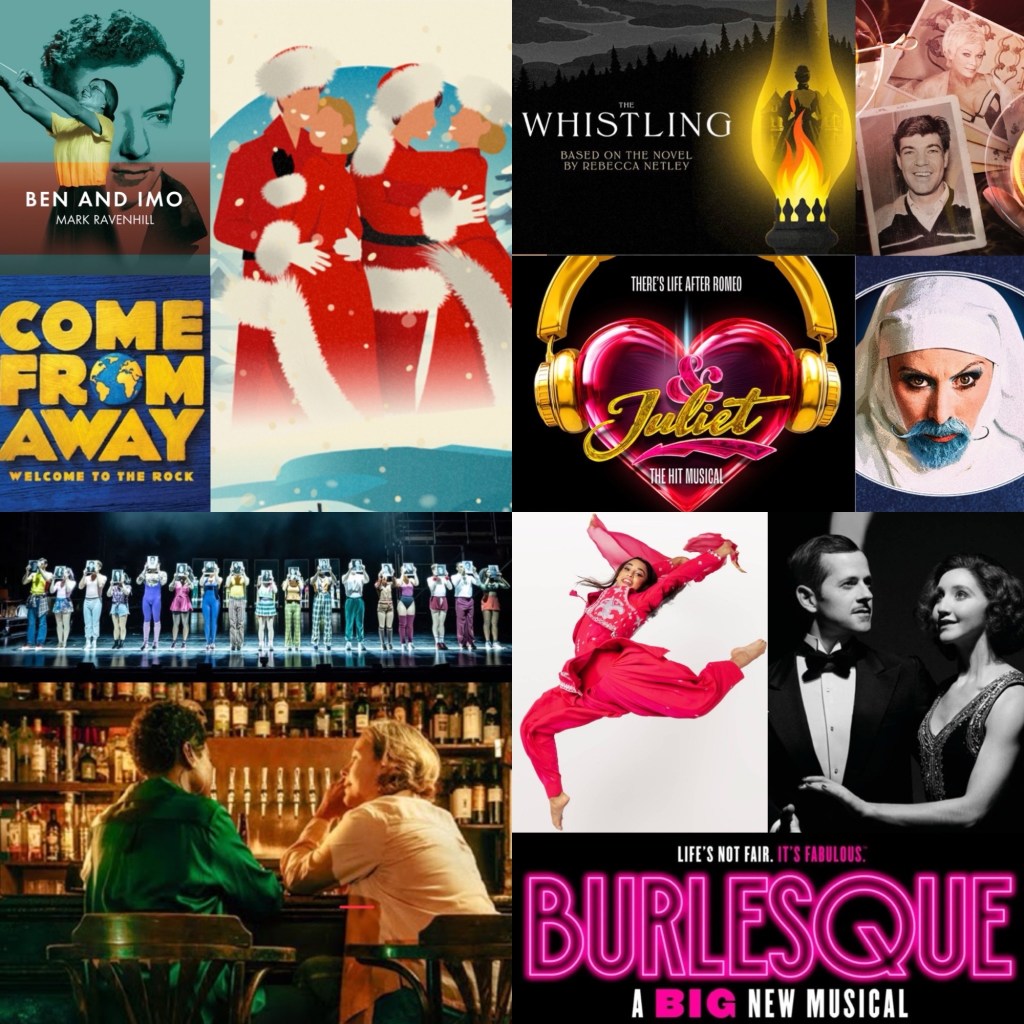
Samuel Barnett and Victoria Yeates stars in Mark Ravenhill’s revisal of his 2013 play, originally written to mark the centenary of Benjamin Britten’s birth, about the extraordinary bond between the Peter Grimes composer and the wildly contrasting Imogen Holst, daughter of Gustav and a fine musician in her own right. Recent Artistic Director of the RSC, Erica Whyman, helms the production.
American director Stafford Arima comes to Birmingham to lead a team of international creatives to stage this new tuner. There’s nothing as infectious as a Bhangra beat, the story is a potent, uplifting one of rivalry in dance competitions, and honouring existing traditions while making new ones. The show went down a storm in its USA West Coast premiere and could be a real winner here too.
Emma Rice’s inspirational Wise Children company put a feminist spin on the unsettling fairytale. This should be wildly imaginative and theatrical, multi disciplinary in terms of the skills of the cast, and possibly a little bit sick. Bracingly original theatre making.
The cult movie is set to become a lavish stage musical, and Christina Aguilera, star of the original film, is on the team of producers. There are no plans as yet beyond the initial Manchester dates but I predict it’ll be a smash. I’m expecting something camp, gaudy and unrestrained, full of big pop tunes and bigger hair.
Get your hankies out, the good people of Gander are back in this utterly entrancing, life-enhancing musical that succeeds in moulding something humane, warm and exhilarating out of the dark days following 9/11. This beautiful show will clean up on tour, and the new cast has some seriously great singing actors in the ensemble.
Royal Exchange Theatre, Manchester – 26 April to 25 May
Lynn Nottage’s powerful, hard edged but deeply humane drama about disillusioned blue collar workers seriously let down by the American Dream was an absolute firecracker in its 2018 Donmar production. Here comes the UK regional premiere at this fine Manchester producing house. It’ll be interesting to encounter Nottage’s vivid creations in an in-the-round staging.
New York-based ballet and musical theatre star Robert Fairchild, best known here for the An American In Paris musical, returns to the British theatre to star in this adaptation of the well received ‘modern’ romantic comedy silent movie from a dozen years back. Expect this to be suitably dance heavy, especially since it’s staged by Drew McOnie, with music by Tony-winning genius Simon (Girl From The North Country, Cold War) Hale.
Hope Mill Theatre, Manchester – 9 February to 9 March
Jim Cartwright is like a poet for the Northern working classes, a writer with heart, grit and often startling originality. This is his first new play in seven years so it’s something of a coup for Hope Mill, especially with a cast consisting of Denise Welch and Matthew Kelly playing some 1960s hellraisers reunited after 50+ years.
The Mill at Sonning, Sonning Eye – 27 September to 16 November
A brand new thriller, based on a ghost story by Rebecca Netley set on a remote Scottish island, and directed by Joseph Pitcher who has repeatedly created theatrical magic at this atmospheric dinner theatre in a converted water mill on the banks of the Thames. A spine chiller in this space is likely to be deeply unsettling….I can hardly wait.
The Mill at Sonning, Sonning Eye – 27 November to 18 January 2025
Musicals at this delightful venue are rightly viewed as a bit of an event. Their current High Society is a joy and last year’s Gypsy an out-and-out triumph. It’ll be lovely to see how the festive magic is created in this intimate, sometimes surprising space. A classic musical with a Christmas dinner included with in the ticket price…should be a real winner.


 ajhlovestheatre