ajhlovestheatre

  • Home
  • About
  • Contact
  • Blog

  • NYE – ⭐️⭐️⭐️ – it’s more of an extravaganza than a play really

    Michael Sheen, photograph by Johan Persson

    NYE

    by Tim Price

    Directed by Rufus Norris

    National Theatre/Olivier, London – until 11 May 2024

    https://www.nationaltheatre.org.uk/productions/nye/

    then Wales Millennium Centre, Cardiff – 18 May to 1 June 2024

    https://www.wmc.org.uk/en/whats-on/2024/nye

    The National Theatre and the Wales Millennium Centre collaborating on a stage life of Aneurin Bevan, the fiery Welsh politician central to the setting up of the NHS, seems like a marriage made in theatrical heaven. There are indeed moments where Tim Price’s script and Rufus Norris’s showy, shouty production achieve true greatness, but they are tempered by too many sequences and choices that prove bewildering rather than brilliant.

    As the story is told in flashback from Bevan’s death bed in one of the hospitals helped to fund and revitalise, Michael Sheen’s Nye (short for Aneurin) spends the entire show in pyjamas. In a similar vein, Vicki Mortimer’s spare, wide set, which, like much of the blocking of the actors, looks better suited to the more traditional playing area of Cardiff’s premiere house than the open stage of the Olivier, is informed by the green, draw-along curtains of hospital wards, at one point configuring at different levels to create an approximation to the interior of the House of Commons.

    That striking image aside, the look of the production is austere, ugly even, with a reliance on projections that often sees the hard-working Sheen bellowing at gigantic monochrome pre-recorded figures. Office desks caper around like bumper cars, hospital beds tilt and spin, actors perform Steven Hoggett and Jess Williams’s cumbersome choreography, all adding to an overall impression of Nye being more of a pageant than a play, especially given the sketchiness of the characterisations. Many of the people seem more like figures in a cartoon than fully fleshed out human beings.

    There’s even a full scale production number, where Sheen (in excellent voice) leads the company in a rousing but bizarre rendition of the Judy Garland classic ‘Get Happy’. I’m all for inserting big numbers into plays (Stranger Things The First Shadow has one that is an absolute stunner) but this feels unnecessary, and a little like it’s trivialising something as important as the inauguration of the National Health Service. When not providing an incidental chorus line, the supporting cast also pop up as a series of Kafka-esque politicians and even a rugby scrum, which isn’t inappropriate given the Welsh setting.

    There’s a cloying vein of sentimentality in Price’s writing (“I’ll take care of all of you” cries Nye into the void as he cradles his miner father who’s expiring of black lung disease, and the staging of Bevan’s own death is staged with such over-choreographed portentousness that it robs the moment of authentic emotional power) and the gear changes in tone and emphasis never feel smooth. The razzmatazz sits uneasily alongside the cold, hard information, such as the fact that only four thousand doctors originally voted to work in the NHS against the forty thousand who didn’t.

    Nye is at its most stirring, persuasive and indeed timely when the principal character is expounding on the importance of free health care for all. Sheen brilliantly captures the passionate orator and the eccentric egotism that seem to have characterised Bevan. The play also serves as a timely reminder that well behaved people don’t necessarily achieve as much as their more disruptive counterparts, and suggests that Bevan’s commitment to the greater good was at least in part to his failure to step up for his immediate family (Kezrena James finds real power in his disappointed sister’s admonishments, and doubles nicely as a kindly nurse awestruck at her high profile patient). This Nye is wayward, charming and often exasperating. Sharon Small is sharp but warm as his life partner Jennie Lee who put her own political ambitions aside to support Bevan, and Roger Evans is equally fine as Archie Lush, the childhood friend who became a lifetime constant.

    Most of the rest of the acting is bold and non-specific, not surprising since the majority of the cast are given mere sketches and caricatures to work with. Tony Jayawardena’s uncanny Winston Churchill is a notable and impressive exception to this though, cutting a familiar figure but so multi-faceted and playful that it transcends impersonation. There’s also a delightful irony in having an actor of global majority heritage playing a well documented racist. Jayawardena gives him more charm than he probably deserves.

    Sheen’s magnetic central performance holds the whole unwieldy piece together, and finds an energy and focus that compels, despite the sometimes uninspired writing. Judged as a play, Nye is, in all honesty, a bit of a mess and Norris’s overlong staging, although often inventive, doesn’t make it all coalesce, but the energy of the cast and the sheer potency of the themes ensure that it still packs a punch.

    March 21, 2024

  • KING LEAR – ⭐️⭐️⭐️⭐️⭐️ – now that’s how to update Shakespeare

    Danny Sapani, photograph by Marc Brenner

    KING LEAR

    by William Shakespeare

    directed by Yaël Farber

    Almeida Theatre, London – until 30 March 2024

    https://almeida.co.uk/whats-on/king-lear/

    Shakespeare’s bleakest tragedy gets a haunting, multicultural makeover in South African director Yaël Farber’s uncompromising yet ethereal new production for the Almeida. As with her James McArdle-Saorsie Ronan Macbeth at this venue in 2021, Farber isn’t afraid of a lengthy duration, and this Lear clocks in at the full three and a half hours. But similarly to that iteration of The Scottish Play, the running time feels necessary to build the shuddering suspense and tense, forbidding atmosphere. There is a current of electricity, aurally actualised by Max Perryment’s omnipresent thrum of piano and violin music, running throughout the entire performance that ensures a long evening is a consistently engrossing one.

    Farber and her designers Merle Hensel (set), Camilla Dely (costumes), and Lee Curran (lighting) have created a strikingly dark world for the play where the trappings of sophisticated living (spirits are gulped from expensive-looking glass as a singsong happens around an upright piano, Regan appears in silk pajamas, a Habitat style floor lamp illuminates the blinding of Gloucester) exist right next to scatterings of muddy earth, the skeleton head of an impala, and lots and lots of blood. It has the classic hallmarks of a Farber production: earthy, elemental, touched by her native Africa though not necessarily set there.

    Although the time and place is unspecified, the collective visual clues are potent and familiar: Danny Sapani’s Lear first comes on like some tinpot military dictator bellowing into a microphone in his powder blue suit; when he and Gloria Obianyo’s Cordelia are captured, the sacks over their heads and the grimy boiler suits recall the prisoners at Abu Ghraib. ‘Poor Tom’’s dwelling is reminiscent of the tent cities that seemingly spring up under every railway arch in major cities, and there’s the terror of modern warfare in the deafening explosions and overheard whirring of helicopters in the battle scenes. The sound design by Peter Rice is unsettling and highly effective throughout. Also worth a mention is the fight direction by Kate Waters which feels dangerous and desperate.

    The performances are all strong, and in some cases revelatory. The downfall of this Lear is less to do with age than collapsing mental health. In the first scene he is frighteningly unpredictable, his violent rage at what he perceives Cordelia’s public betrayal comes out of nowhere although it feels entirely organic, and the body language of his three daughters suggests a lifetime of verbal abuse and bullying. Sapani’s bullish, dynamic King seems to know that he is only one setback away from completely losing the plot, and the way he hits the line “o fool I shall go mad” as he exits after a final showdown with his two older daughters isn’t a cry of despair so much as a statement of resignation, as though he always knew this moment would come. When fully mentally untethered, this Lear becomes bitterly funny, and while it’s not a sympathetic reading of the role, it’s a memorable one. You can’t take your eyes off him, nor off his Fool, whom molasses-voiced Clarke Peters turns into a knowing, elegant, magnetic truth teller, more regal than the actual King.

    Obinayo’s equally unconventional Cordelia might be a chip off the old block. About as far removed from the cosseted princess she’s often portrayed as, she’s a contained young woman who becomes an alarmingly aggressive soldier. The contrast between her and Akiya Henry and Faith Omole as Goneril and Regan is huge. A side effect of such a volatile Lear is that it humanises the “bad” daughters, at least at first. The way Henry’s tiny, glamorous older sister recoils from Lear’s fury is painful to watch, and when she cradles her sisters (Cordelia when she’s rejected, and Regan when she’s dying) she suggests a warmth and humanity that is allowed to curdle. Regan appears similarly traumatised (the way Lear awkwardly forces this grown woman on to his knee then refuses to let her go even as he rages, is plain horrible) but the blinding of Gloucester (appropriately distressing, and skilfully managed) seems to unleash something in her. Omole makes chillingly credible the transformation from beautiful marionette to snarling panther.

    Fra Fee’s sexually irresponsible, hipsterish, Ulster-accented Edmund, resembling Game of Thrones-era Kit Harington, is simultaneously louche and fierce, as ruthless as he’s charming. Opposite him, his half brother Edgar might initially seem a bit colourless, but Matthew Tennyson turns him into a wraith with a welter of open-hearted compassion, and the scenes between ‘Poor Tom’ and the newly blinded Gloucester (Michael Gould, excellent) have seldom been so moving. Hugo Bolton is a hilariously prissy Oswald, and Alec Newman’s staunch Kent also makes a strong impression, convincingly moving from flinty toughness to emotionally broken by the play’s shattering conclusion.

    It’s often starkly stunning to look at, the overriding visual image being of figures materialising out of the gloom into pools of murky light, their faces often hard to make out. as befits a world where people’s motivations and allegiances are never fully known and can be subject to change in the blink of an eye. The infamous storm scene is brilliantly done with booming sound effects, and billowing and shaking of the chain mail strands that run the height and length of the set, it’s authentically frightening, and definitely not an environment into which any normal person would release an unprotected aged parent.

    This is one probably the most compulsive reading of this brutal play that I’ve ever seen. It’s raw, sexy, shocking and leaves you with the taste of blood and earth in your mouth. It feels modern but not in a gimmicky way and never at the expense of the poetry or the story. Tremendous and troubling.

    March 6, 2024

  • STANDING AT THE SKYS EDGE – ⭐️⭐️⭐️⭐️ – the award-winning musical triumph returns

    Photograph by Brinkhoff Moegenburg

    STANDING AT THE SKYS EDGE

    Book by Chris Bush

    Music and Lyrics by Richard Hawley

    Directed by Robert Hastie

    Gillian Lynne Theatre, London – booking until 3 August 2024

    https://www.skysedgemusical.com

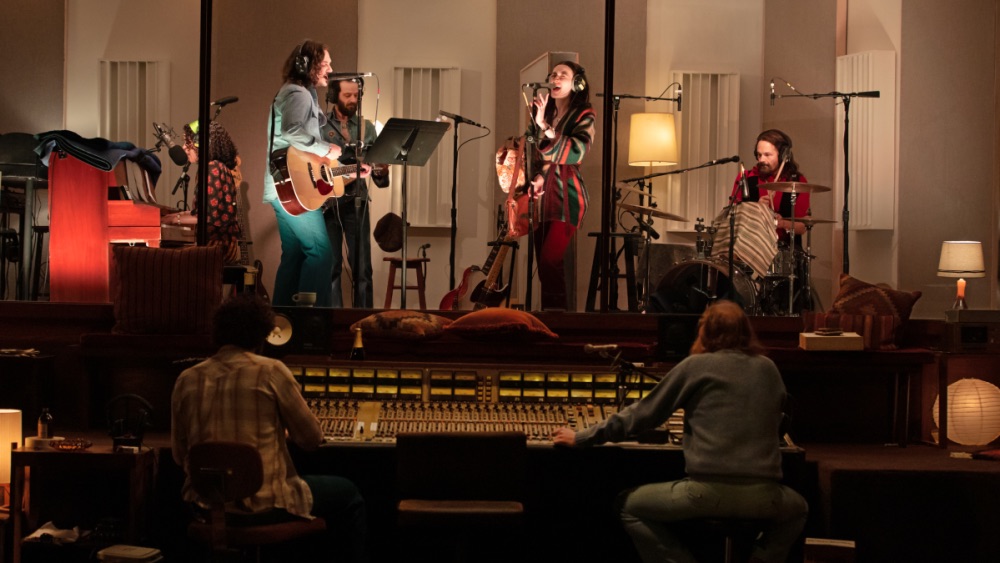
    Since garnering rave reviews at Sheffield’s Crucible Theatre, and subsequently here in London at the National last year where it was a total sell out, Standing At The Skys Edge has won the Olivier Award for Best Musical. Watching it again in its belated West End transfer at the Gillian Lynne, it’s impossible to escape the feeling that this won’t be the only such accolade it picks up. In Robert Hastie’s complex but clear staging, it remains something very special: a ballsy, blousy, lyrical blast of a show that raises the roof and breaks the heart. It has transferred impeccably, with some substantial but very successful recasting, although this time, moved and impressed as I was, its record album origins felt more obvious and the sense that the beautifully crafted songs by Richard Hawley comment upon and stand outside the action rather than propel it forward is more pronounced.

    Although more sophisticated in execution, Standing At The Skys Edge has a similar open-hearted ebullience as perennial favourite Blood Brothers and deserves to achieve a similar longevity. Chris Bush and Richard Hawley’s epic creation also recalls the inspired Conor McPherson-Bob Dylan tearfest Girl From The North Country with it’s employment of pre-existing songs to complement and comment upon a searingly effective script.

    Bush’s mastery of a trio of female-centric stories, set in the same flat on the infamous Sheffield Park Hill estate but decades apart, is enthralling. Rose and Harry (Rachael Wooding and Joel Harper-Jackson replacing Robert Lonsdale) are a young couple moving into the brand new dwelling in the 1960s, full of optimism and overjoyed at having escaped the slums. Then there’s the family of Liberian refugees who move in during the 1980s (Baker Mukasa returning to his original role, now joined by Sharlene Hector and Elizabeth Ayodele) when the estate has become rundown and plagued with crime; the modern tranche of the story sees affluent Londoner Poppy (Laura Pitt-Pulford) relocating to the now-redeveloped area and nursing a broken heart. In clean, intelligent strokes, with salty, realistic dialogue, refreshing humour and a brace of vivid characters, Bush’s terrific text embraces community, social change, migration and gentrification, with a bracing theatricality.

    It’s ambitious but galvanising and accessible in Hastie’s capable hands. If it’s sometimes reminiscent of soap opera, that’s only because it’s so compulsive and relatable, and how much and how deeply we come to care about these characters. There’s a running theme between the stories, which I won’t spoil here (though there is a clue from the outset in Ben Stones’s starkly imposing set design) but it carries a massive emotional wallop when the realisation dawns, and feels like the hallmark of truly great storytelling. There is a scene near the end, which refracts an exchange of dialogue from early in act one through what we have since discovered, and which is one of the most breathtakingly brutal and ingenious examples of turning a moment on its head, that I can remember, and it’s heartbreakingly played by Ayodele, who is flintier but no less effective than her predecessor as the appropriately named Joy, and Samuel Jordan, already terrific during the previous run but even better now.

    Hawley’s songs, some of which originated on a 2012 concept album, range from achingly lovely to real bangers. There’s a lot of light and shade, and a variety of popular music genres, but the predominant sounds tend to be shimmering, strings-heavy impressionism then thundering, portentous rock. It’s more attractive than memorable perhaps but it works tremendously well as theatre music. Watching it a second time, I do wonder if it could afford to lose a couple of solos and some of the extraneous dances, especially in the second half.

    Anybody who still subscribes to the hackneyed cliché that “real” acting seldom happens in musicals needs to see this though, the acting right across the company is outstanding. Watching the sunshine drain out of Rachael Wooding’s adorable, tough-but-tender Rose, her contended family unit decimated by the destruction of the steel industry where her husband previously flourished, is deeply painful. Wooding’s beautiful portrayal is warm, open, and, crucially, unsentimental which makes it all the more moving. The way both she ages as the story progresses is a masterclass, aided in no small measure by intelligent costume and wig design. Opposite her, Harper-Jackson manages the descent from ardour to despair with extraordinary delicacy.

    Laura Pitt-Pulford, in another gem of a performance, invests lovelorn, conflicted Poppy with an endearing daffiness that makes more sense for her story arc than her more grounded predecessor and she sings like a dream. Lauryn Redding is a wonderful addition to the cast as a messy, mouthy, deeply lovable lesbian with a strong political conscience and a propensity to enter every social situation like a bull in a china shop. She’s utterly captivating and hilarious, and when she describes herself as “a lot” you totally believe her. There isn’t a weak link in the supporting cast either, with an especially invaluable contribution from newcomer Mel Lowe as a narrator whose connection to the central storyline is only revealed later in the show. Mukasa continues to carve out an unexpectedly joyous showstopper from the number he leads.

    Hastie’s staging is laser sharp, negotiating the gear changes from tender family moments to rioting and much in between, with real flair. His work is augmented by Lynne Page’s expressive, if over-used choreography, which invests “real” people with an unusual grace, while remaining grounded in a gritty naturalism. Ben Stones’s towering set looks suitably monumental on the new stage, and is stunningly lit by Mark Henderson.

    Revisiting Sky’s Edge I found myself more taken with Chris Bush’s ingenious, emotionally charged storytelling than the score perhaps, but it still soars, and remains one of the finest things on any current London stage. Vital, haunting music theatre, magnificently staged and performed, it’s supposed to be a limited run but one can’t help feeling this will end up being a permanent West End fixture. It certainly deserves to be.

    March 4, 2024

  • THE HUMAN BODY – ⭐️⭐️⭐️⭐️ – a wonderful cast shines in this richly enjoyable new play

    Photograph by Marc Brenner

    THE HUMAN BODY

    by Lucy Kirkwood

    directed by Michael Longhurst and Ann Yee

    Donmar Warehouse, London – until 13 April 2024

    https://www.donmarwarehouse.com

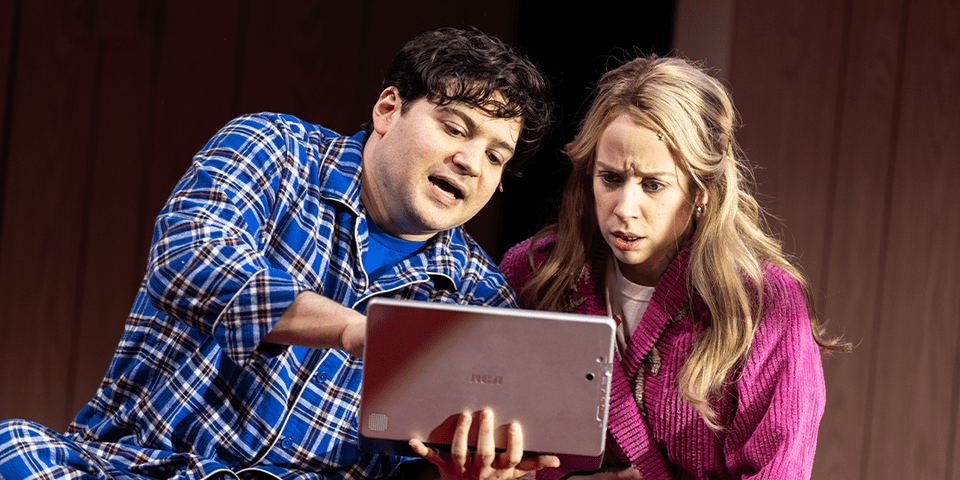
    Lucy Kirkwood certainly doesn’t shy away from tackling huge themes in her plays. Her 2013 Olivier winner Chimerica looked at the fractious relationship between the USA and China, The Children (2016) dealt with a post-apocalyptic way of living and in 2017 her National Theatre hit Mosquitoes spun a story of sisters through an examination of experimental physics. Now, with her richly enjoyable new play The Human Body she takes on the birth of the NHS. It’s slightly ironic that this should be premiering at the Donmar just as Nye, the National’s stage life of NHS founder Aneurin Bevan, is previewing on the other side of the river. It’s a lengthy but rewarding evening.

    Once again Kirkwood explores an ambitious subject through the relatable experiences of regular people caught up in something bigger than they are, in this case the marital disenchantment of one Iris Elcock, a tireless post war middle aged wife and mother who is also a GP and an aspiring MP. Countless present day women will identify when she confides to a friend that she feels that on a daily basis she’s doing a hundred little things but not getting any of them right. She’s a superb, strong, multi-layered creation. In a performance of outstanding delicacy and truth, Keeley Hawes invests her with a credible combination of crisp efficiency and reassuring warmth, but brilliantly suggests passion and melancholy beneath the elegant surface.

    That passion comes to the fore when she holds forth on the importance of health care for all (the play may be set in the late 1940s but it’s relevance to today is occasionally breathtaking) with the forceful conviction of a zealot. By contrast, the hurt and humiliation when she’s rejected by her war veteran husband, also a doctor (superb Tom Goodman-Hill, in one of numerous roles) is palpable. Hawes makes kind compelling, and fuses it seamlessly with the intriguing spikiness, born of frustration and stiff upper lipped despair, that Kirkwood has given Iris at certain moments in the script. She is a magnetic lynchpin for the sprawling but fascinating drama surrounding her.

    That drama doesn’t just stop with Iris’s marital misery and political ambitions, nor the impending inauguration of the NHS, all of which is handled with commendable flair and urgency. Kirkwood also manufactures for Iris an illicit romance, with a film star, played with an insouciant, grizzled charm by Jack Davenport, who she meets by chance on a train and unlocks in her “the rapture of living”, as he puts it. The parallels with Noël Coward’s Brief Encounter, which is referenced in the script, are inescapable then further underlined by the use of black-and-white live filming.

    Simultaneously viewing actors live on stage, and in real time on a big screen above them is very much having a theatrical resurgence right now (my first memory of a version of it is from the opening Requiem sequence of Hal Prince’s original Evita staging). Nathan Amzi and Joe Ransom’s work here is no less impressive and sophisticated than what they were recently awarded for in the Jamie Lloyd Sunset Boulevard but whether it really adds anything in this instance is a question. Certainly it underlines the relationship to the aforementioned Noël Coward screen saga of middle aged romance on trains, and it allows us to appreciate finesse and subtlety in the performances, particularly from Hawes and Davenport both of whom have luminous screen as well as stage presences, but it doesn’t necessarily enhance the play itself, except on a superficial but admittedly exciting level.

    The acting throughout is wonderful, walking the fine line of appealing to modern audiences, while at the same time capturing the clipped understatement that characterises the way people spoke and behaved in the middle of the last century, or at least as we today perceive them. Hawes and Davenport couldn’t be better, but the range and skill of the other three actors who play umpteen other roles apiece (this is effectively an epic play done on a minuscule scale) is astonishing. Goodman-Hill, Siobhàn Redmond and Pearl Mackie are effectively doing an acting marathon every night here, and they never hit a false note as a series of colleagues, rivals, patients and relatives. Tremendous work.

    There’s an invaluable contribution too from the hardworking stage crew, essential yet unobtrusive, who are part of the action of Michael Longhurst and Ann Yee’s busy but oil smooth staging, fully visible as they hand props to actors and shift furniture and lights on Fly Davis’s bare, perpetually revolving stage. Technically brilliant as the production is, it never clarifies whether some of the storytelling clichés (amongst others, a posh frock reveal, sudden lengthy speeches that spring from nowhere like arias and feel inorganic, and a moment of discovery of infidelity that could have come straight out of a hackneyed romance) are weaknesses in the script or a deliberate homage to B-movies of yore. The muted palette of Davis’s design and Joshua Pharo’s lighting would suggest the latter. The contrasts between middle and working classes is portrayed effectively if without much subtlety.

    Where the play is most successful is that it makes you care deeply about its flawed but ultimately admirable heroine and the things that she cares about. The last couple of minutes, which I won’t spoil here, may well have you reaching for hankies, and Hawes is heartrending but never sentimental. Kirkwood has made an angry play but also an articulate and deeply humane one. I wasn’t fully convinced by the golden age of cinema redux approach perhaps but the majority of the writing is very fine, and there’s no denying that this is a grand, engrossing time in the theatre.

    March 3, 2024

  • SHIFTERS – ⭐️⭐️⭐️⭐️⭐️ – meet Destiny and Dream, and you’ll never forget them

    Heather Agyepong and Tosin Cole, photograph by Craig Fuller

    SHIFTERS

    by Benedict Lombe

    directed by Lynette Linton

    Bush Theatre, London – until 30 March 2024

    https://www.bushtheatre.co.uk

    Dream and Destiny seem to be made for each other. They’re super-smart young Black Brits – he’s of Nigerian heritage, she of Congolese extraction – they’re both funny, creative (chef and painter respectively), self-aware, deceptively sensitive and hugely lovable. Life doesn’t always pan out the way it should though, and sometimes the scars from past trauma and loss prove almost insurmountable. Such is the central premise for Shifters, Benedict Lombe’s ravishing new play, a zingy, punchy, multi-faceted romantic tragi-comedy with a beautiful bruised heart and a handle on human yearnings and pain that delights as much as it sears.

    In Heather Agyepong (Des as she’s referred to, short for Destiny), Tosin Cole (Dre, for Dream) and director Lynette Linton, Lombe has the ideal interpreters of her work. It’s tender and often hilarious, and a lot more complex than it initially appears, but it’s staged and performed with such confidence, sensitivity and skill that the material soars. It’s simultaneously a very “young” play (we see the characters between the ages of 16 and 32) yet a very wise one as it explores the concepts of loss (at the opening, Dre is mourning his beloved grandmother who mostly brought him up, and Des’s mother died when she was very young), legacy, abandonment, and the ramifications of the life roads one didn’t take.

    It’s sloppy critical thinking to liken every two hander that tells a non-linear love story, to Nick Payne’s genre-busting, time-bending Constellations, but Shifters can bear the comparison better than most. While Lombe doesn’t give Des and Dre actual alternative realities, she has them consider other versions of themselves (“if you chose a different path, you’d probably have a different life, in a different world, with a different person, right? So that means there has to be more than one out there for us” says an anguished Des at one point) that has intriguing theatrical currency but also rings entirely true of young, curious, restless minds.

    Lombe’s writing has a poeticism that never sounds forced, and is periodically punctured by bouts of irresistible humour. It’s also deeply touching, and I can’t remember the last time I was so invested in the joint romantic fate of two central characters in a stage play. The chemistry between the actors is like a living, breathing thing.

    Agyepong and Cole are sublime. She’s energised, humorous but watchful, suggesting a chasm of hurt beneath a fiery but constantly engaging exterior. By contrast, he is laid back and totally charming, then devastating when he turns up the emotional heat. The flawless naturalism in the performances yields rich dividends as vital pieces of information about their lives together and apart are detonated like tiny explosions as the scenes switch backwards and forwards through the years, and the ability of both actors to age up or down by a change of vocal timbre and physical stance is remarkable.

    It may be a very personal story but it has a universality that eventually brings a tear to the eye. Under Linton’s mighty direction, meticulously detailed yet flamboyant when it needs to be, apparently banal activities like searching for a player to spin some vinyl records on, or Des removing the knots from Dre’s hair while he luxuriates contentedly in her lap, become strangely riveting. The lightning fast changes in year come so frequently in the latter part of the play that it’s not always easy to keep up, yet it hardly matters so assured and specific are the playing and direction. Tellingly, for huge swathes of the performance, you’d be able to hear a pin drop as the audience members hold their collective breath, willing these fractured, loving, unconventional young people to make the right choices.

    Linton’s production is abstract but vivid, playing out on the gleaming obsidian black of Alex Berry’s bare stage under a forest of mood-shifting, multicoloured tubes of light (design by Neil Austin) like an uncommonly enjoyable art installation. The sound score by Xana provides a constant haunted thrum of different musical styles that enhance but never detract from the text.

    A fine, sparky piece of writing, thought-provoking and entirely accessible, deeply felt but also a heck of a lot of fun, in an exquisite, state-of-the-art staging…this is the sort of thing that the Bush does best. Vital, inclusive, life-enhancing theatre, featuring a pair of authentic rising stars. Get tickets while you still can.

    March 1, 2024

  • JAB – ⭐️⭐️⭐️⭐️ – terrific performances and inventive direction enhance this engaging look at bleak recent history

    Kacey Ainworth and Liam Tobin, photograph by Steve Gregson

    JAB

    by James McDermott

    directed by Scott Le Crass

    Finborough Theatre, London – until 16 March 2024

    https://finboroughtheatre.co.uk/production/jab/

    How soon is too soon? That’s the question I found running through my head during the brief hiatuses between scenes in this short, tense dramatic rewind to 2020 and the dark early days of the pandemic. It’s a testament to the performances, the direction and much of the writing that during the scenes themselves, it’s impossible to focus on anything else, like the fact that the Covid shutdowns and what came next are still raw in many people’s minds. Still, we’ve currently got Breathless on the telly, and now we have Jab on stage.

    Partially inspired by his own parents lockdown experience, although really these characters could be anyone and everyone, McDermott presents a couple married for 29 years whose combative but loving status quo (she works for the NHS, he runs a vintage shop that never turns a profit) is undermined by being closeted together against their will. The dynamics of their relationship is conveyed in tiny, telling details, the affections, the irritations, the weaponising of words, and Kacey Ainsworth’s Anne and Liam Tobin’s Don are so exquisitely naturalistic that it feels like we’re eavesdropping into real lives.

    That specificity and recognition is vital because when everything is ripped apart (which it will be, quite devastatingly) it’s all been set up with so much care that the emotional fallout carries genuine weight. Scott Le Crass’s direction is remarkable, mining the script and actors for every nuance, and making even the most trivial of activities (eating a bag of crisps, counting bank notes, studiously ignoring each other while watching TV) quietly riveting, and loaded with a significance that pays off later on.

    The title is ambiguous. A jab is of course another word for vaccination, the receiving of which becomes a huge bone of contention between these Anne and Don, but it also could mean the short, staccato blows that fighters land on each other. The blows here may be predominantly verbal (“non-essential. You’re non-essential” says Anne witheringly to Don near the beginning) but they get more and more vicious as the resentments and discontentments pile up. In that sense what McDermott has written here is as much a study of a marriage breaking down as a response to Covid, as though Strindberg had set one of his plays in the North of England. The text is studded with oblique references to the current death toll as time goes on, (“twenty thousand now…”, “sixty five thousand”), that also feel like jabs.

    Le Crass employs just the two terrific actors and Leah Kelly’s set of four mismatched chairs and a curtained window to convey easy domestic intimacy, then marital crisis, social distancing, and finally the unimaginable. It’s simple but extraordinarily effective, punctuated by Jodie Underwood’s malleable lighting and a nightmarish sound score by Adam Langston that sounds like an aural equivalent to the paranoia that was roiling through most of our minds at the time.

    The play is structured as dozens of short scenes (or jabs?), some wordless and lasting barely a minute, that collectively build up to a picture of ordinary people in a crisis not of their own making, and struggling to maintain control of increasingly fractured lives. If Anne’s trajectory is marginally more convincing than Don’s, that’s partly because she has more stage time, but also that the text requires some shifts into aggression, sexual and otherwise, for him that don’t entirely convince, despite Tobin’s superb performance. Ainsworth’s unforgettable Anne is a masterclass; so human and relatable, whether raging, sobbing or just getting on with her life with a dogged resignation that will be familiar to so many who can bear to cast their minds back nearly three years.

    If this isn’t always an easy watch, it is often a surprisingly entertaining one. The humour is keenly observed, and the use of pop music (particularly Eurythmics, who are always worth a listen) and dance is very intelligently done. The production ends with a low-key coup de theatre that suggests hope, renewal and healing. This is powerful, engaging stuff.

    February 24, 2024

  • HIR – ⭐️⭐️⭐️ – Felicity Huffman makes a terrific London stage debut in Taylor Mac’s edgy family comedy-drama

    Simon Startin and Felicity Huffman, photograph by Pamela Raith

    HIR

    by Taylor Mac

    directed by Steven Kunis

    Park Theatre, London – until 16 March 2024

    https://parktheatre.co.uk/whats-on/hir

    Long before she became an award-winning television star as flawed high achiever Lynette Scavo in Desperate Housewives, Felicity Huffman was primarily a theatre actress. Amongst other achievements, she was part of the team that founded acclaimed NYC new writing powerhouse Atlantic Theater Company and she took over from Madonna in the original production of Mamet’s Speed-The-Plow on Broadway. Watching her mighty performance in this rare revival of Taylor Mac’s muscular, absurdist genderqueer black comedy is a forcible reminder that she is one hell of an actress, and what the stage has been missing.

    Huffman plays Paige, controlling matriarch of a deeply unconventional family living in a plasterboard house atop landfill in the suburb of an unnamed American city. Eldest son Isaac (Steffan Cennydd) returns home following a dishonourable discharge for drug use after three years of active service, to find that his teenage sister Maxine is now Max (using the pronouns “hir” and “ze”) and educating Paige in all manner of things about the whole new rainbow-coloured world. Meanwhile, their Dad Arnold has suffered a massive stroke, communicates mainly in moans and monosyllables, is made up like a clown, and is kept under control by Paige with meds and regular blasts of liquid from a handy plant watering spray. The Waltons this ain’t.

    Mac’s characters are nearer in tone and bearing to the creations of Sam Shepard at their most dysfunctional, and this sort-of hate letter to the small Californian town Mac grew up is at its strongest when it explores just how eccentric people can get when reacting to unusual circumstances. Tellingly, the most grounded, and arguably the most likeable figure is teenage Max (beautifully played by Thalía Dudek), flaunting hir newly developing facial hair with glee, proudly proclaiming a sexual attraction to men and, most touchingly, trying to make sense of the family battlefield exploding on all sides.

    Kunis’s well judged, if occasionally over-emphatic, staging gives us a glimpse of the literal battlefield that haunts Isaac as Ceci Calf’s fabulous, almost disgustingly well realised house set (Paige has put a ban on housework since Arnold’s stroke, as a sort of two fingered salute to the patriarchy) undergoes a transformation. It doesn’t really add anything to the trajectory of the play but it’s a striking theatrical moment.

    The conversations around gender identity are more familiar to mainstream audiences now than they were when Hir had its London premiere at the Bush, in a rather less nuanced production than this one. Mac’s script now fascinates mainly as a portrait of a family in freefall, how changing circumstances and the passage of time can drive an insurmountable wedge between people. Simple things like using a kitchen blender or controlling the temperature of a room with a/c or indeed leaving everything in a (possibly metaphorical) mess seen as weapons of control and domestic war. The attempts at home entertainment (including shadow puppetry and banjo playing) that this bunch get up to have to be endured to be believed, but you wouldn’t wish them on your worst enemy.

    It’s a little exhausting and relentless, despite the efforts of a very fine cast. Huffman is sensationally good. If at first her innate elegance might seem a little at odds with the grungy surroundings, she totally nails this woman’s bizarre combination of wacky eccentricity, implacable righteousness and ice cold vengeance. It’s a complex, psychologically astute, technically brilliant performance and one that will probably see her on every Best Actress award shortlist if this production transfers.

    Cennydd, who if there’s any justice should be heading for major stardom, is equally impressive as the young soldier returned home to total bewilderment. He veers between astonished child and macho posturing with seamless, credible assurance, and his breakdown near the end is heartrending, despite everything we’ve seen and heard. I adored Dudek’s wide-eyed, wired Max, vacillating between indignation, compassion and casual teenage cruelty, and Simon Startin invests stricken Arnold with a haunting desolation but offers tantalising, unsettling glimpses of the bullying monster he once was.

    There’s a naivety and rawness to Mac’s writing that doesn’t always gel with the finely tuned observations of the dynamics between human beings, but the acidic dialogue and sheer off-the-wall bonkersness of it all ensures that boredom at least is never an option. It’s a messy, scattershot piece of work with moments of genuine power and featuring some unforgettable characters. It’s hard to imagine it being acted better than it is here.

    February 23, 2024

  • AN ENEMY OF THE PEOPLE – ⭐️⭐️⭐️⭐️⭐️ – could this be the most divisive West End show of the year?

    Matt Smith, photograph by Manuel Harlan

    AN ENEMY OF THE PEOPLE

    by Henrik Ibsen

    adapted by Thomas Ostermeier and Florian Borchmeyer

    English version by Duncan Macmillan

    directed by Thomas Ostermeier

    Duke of York’s Theatre, London – until 13 April 2024

    https://anenemyofthepeople.co.uk

    Henrik Ibsen’s 1882 drama is a play that speaks to us more urgently now than ever. Hence as well as this modernised adaptation, first seen at Berlin’s Schaubühne Theatre in 2012 but only now receiving its English language premiere, a separate production, directed by Sam Gold and starring Succession’s Jeremy Strong, is about to go into previews on Broadway. The play’s ongoing relevance is both bracing and depressing, dealing as it does with potentially life threatening lies being told by those in high office, the challenges of living a morally spotless life in a world powered by status and money, and the way the mass populace can be manipulated by the few.

    Thomas Ostermeier and Florian Borchmeyer’s version is to the Ibsen as Simon Stone’s Yerma and Phaedra were to Lorca and Racine, or Jamie Lloyd’s deconstructions of everything from Cyrano de Bergerac to Sunset Boulevard are to their source materials. In other words, this Enemy of the People distills the essence of the original but reinvents it almost as a new play, complete with modern dress and references to social media and present day politics. It’s a polarising approach, as initial press reviews have already proved, and anybody going in expecting heavy Victorian-style drapery and period costumes is in for quite a surprise.

    So are people who come along expecting it to be the Matt Smith show. He is brilliant as the good-hearted, highly strung doctor who discovers poison in the waters of the town spa that is the primary source of local revenue, but the contemporary German theatre style that this production represents tends to favour ensemble over star turns, and that is very much the case here. Paul Hilton brings a compelling mixture of pomposity and aggrievance to his condescending older brother, who happens to be the town mayor. The dynamic between the two siblings, politically and socially opposite to each other yet entirely credibly of the same blood, is superbly fleshed out.

    Jessica Brown Findlay makes Katharina, Dr Thomas’s wife, a fiercely intelligent, complex modern woman, impassioned, funny, sometimes ambiguous and hard to read in certain situations…in other words, a completely real person. She’s tremendous. Nigel Lindsay gives her factory owner father an intriguing air of low level menace that comes to fruition when he throws a moral crisis-inducing spanner in the works at the eleventh hour. There’s further sublime work from Shubham Saraf, Zachary Hart and Priyanga Burford as a trio of vested interest journalists whose allegiance-switching pragmatism is extremely funny …until it absolutely isn’t.

    The acting never hits a false note. The line deliveries throughout have a throwaway, almost improvisational feel that draws us in while paving the way to what is arguably Ostermeier’s biggest coup de theatre where the opening of act two becomes a Question Time-style debate with the Duke of York’s doubling as the town hall, roving mics and audience members encouraged to have their say. Without breaking character, Burford moderates from the stage with a fascinating mixture of authority, unspoken opinion and barely concealed contempt.

    In that same scene, Dr Thomas Stockmann has a coruscating speech-cum-rant about modern life – the environmental crisis, the gaslighting, the failing infrastructures, the perils of social media, the greed, and so much more – that cuts to the heart of what Ibsen was saying but refracts it back through the prism of our own time, and it takes the breath away. Smith delivers it with an energy, precision and white hot fury that matches the words. It’s impossible to be unaffected.

    Elsewhere, Ostermeier’s staging is filled with quirks – scene changes are indicated by words on a chalkboard, a beautiful German Shepherd dog makes repeated appearances, Hart’s inspirationally gormless Billing gets an impromptu beatbox moment – that might be enervating if they weren’t executed with such commitment. Technically, it’s flawless, from Jan Pappelbaum’s angular, transformable set to Urs Schönebaum’s stark lighting and Ben and Max Ringham’s haunting aural creations.

    The use of music is interesting: at the beginning the Stockmanns are jamming in a band with their friends, but by the end there are no more tunes; a character puts on headphones to drown out an unwelcome tirade by a colleague and we in the audience also hear just the banging rock music not the bellowed speech. It’s music as a motif, as a balm and a distraction, and when the proverbial shit hits the fan, the music stops.

    It’s almost needless to say that this won’t be to everyone’s taste. It’s the theatrical equivalent to having a bucket of ice thrown over you, and it feels urgent, alive and thrilling. It’s dark yes, but also unexpectedly hilarious, and it ends on a low key, quizzical, troubling note. Expect to be thinking about it long after the performance is over. Love it or hate it, this breathes life into the West End, and you need to see it if only to know what everyone is talking about. I was absolutely riveted.

    February 22, 2024

  • DOUBLE FEATURE – ⭐️⭐️⭐️⭐️ – fascinating new play exploring artistic collaboration and power abuse in the old Hollywood system

    Joanna Vanderham and Ian McNeice, photograph by Manuel Harlan

    DOUBLE FEATURE

    by John Logan

    directed by Jonathan Kent

    Hampstead Theatre, London – until 16 March 2024

    https://www.hampsteadtheatre.com/whats-on/2023/double-feature/

    Anybody interested in the creative process behind movies is going to be fascinated by Tony and BAFTA winning American writer John Logan’s new play. Double Feature has taken a decade to pen, and accordingly has matured like a fine wine, full of complex notes and intriguing aftertastes, as it hits the Hampstead stage in Jonathan Kent’s classy if static production.

    Alfred Hitchcock and his sinisterly controlling relationships with assorted leading ladies still exerts a horrifying fascination, and was explored to fine theatrical effect in Terry Johnson’s 2003 Hitchcock Blonde. Logan covers some of the same thematic ground here, specifically with Tippi Hedren, the actress Hitchcock held under personal contract having elevated her to film stardom from appearances in TV commercials. This is a less flashy piece than that Royal Court smash hit, but it is quietly shocking in its contemplative explorations of power abuses, coercion and artistic differences in an industry with more than its fair share of problematic individuals.

    Double Feature, true to its title, juxtaposes an uneasy combination of power play and confrontation between the director and star of his 1964 movie Marnie, with a comparable, but differently accented, encounter between actor Vincent Price and his enfant terrible director Michael Reeves while they’re working on the 1968 horror flick Witchfinder General. Theatrical piquancy is added by having both meetings play out simultaneously and on the same set (a luxuriously appointed, faux rustic lodge, in an atmospheric, detailed design by Anthony Ward).

    In a fun extra layer, the set may look the same but it actually represents two separate locations, as well as two differing time periods: Witchfinder General was shot in East Anglia while Hitchcock had a replica English cottage built on his Hollywood film set for him to use while filming. Hugh Vanstone’s complex lighting does a lot of heavy lifting here to differentiate between the two locales.

    The amount of research and veracity of detail means this is a play that will appeal primarily to the nerdiest of cineasts, but the production values, the sheer quality of the acting and much of the writing ensure that it more than commands the attention even for people less film-obsessed. Furthermore, the Hedren-Hitchcock portion of the play addresses centuries of male on female abuse that extends far beyond the reaches of Hollywood.

    Logan’s script and Kent’s staging get off to a cracking start with Rowan Polonski’s nervy, mercurial Reeves alternately cajoling and attempting to bully Jonathan Hyde’s magnificently grand but playful and affronted Price into not abandoning the film project. It’s riotously funny, and meticulously well observed as the power balance shifts between the two men apparently at opposing ends of their career trajectories (tragically, the real Michael Reeves died aged only 25 not long after Witchfinder General came out). Both actors handle the whip-smart dialogue and lightning fast changes in mood and attitude brilliantly, and Hyde offers up an uncanny Vincent Price with a rare mixture of high status grandiloquence and innate warmth.

    The temperature cools perceptibly with the arrival, albeit taking place half a decade earlier and thousands of miles away, of Hitchcock and Hedren. This section occasionally proves pretty hard to watch, such is the accuracy and truth in the performances of Ian McNeice and Joanna Vanderham. The latter, abetted by Ward’s period-perfect powder blue suit, captures exquisitely the on-edge poise of the young star covering up her desperation with a veneer of sophistication, and she’s ferociously authoritative in a tense worm-turning scene that may have you silently punching the air in approval.

    It’s essentially a very talky piece, and a small amount of research into the figures involved and the movies in production, would definitely benefit the lay viewer. There’s a beguiling symmetry in the way individual spoken phrases ricochet and replicate between the two separate scenes, as though to suggest, depressingly, that some things never change. The convention of having both sets of actors on stage even when half of them aren’t engaged occasionally creates a vacuum of energy that threatens to detract from the scene being played out, but the magnetism of the actors mostly overcomes that. Similarly, the decision to shakily (and loudly) revolve the set by a few degrees to expose the messy bed chamber that never gets used, feels a little ponderous and unnecessary.

    Despite these reservations, this is nonetheless a Rolls Royce piece of theatre, one that deserves to have a further life beyond this brief premiere season. It’s worth pointing out that a production of this world class quality is happening at a venue which lost both its Arts Council funding and Artistic Director within the last eighteen months. Hampstead Theatre has come out swinging with what looks like one of their most exciting seasons for years, off to an impressive start with this intelligent, elegant offering. This North London institution remains an essential destination for discerning theatregoers, it’s imperative that it’s supported and Double Feature, for starters, is well worth your time and money.

    February 21, 2024

  • DINA MARTINA: SUB-STANDARDS – ⭐️⭐️⭐️⭐️ – definitely not a drag to sit through

    DINA MARTINA: SUB-STANDARDS

    Soho Theatre, London – until 24 February 2024

    https://sohotheatre.com/events/dina-martina-sub-standards/

    When they commemorate the great chanteuses of the late twentieth and early twenty-first centuries – Barbra, Liza, Bette, Cher, Madonna, Gaga, and so on – the name Dina Martina probably won’t be on the list ….and that’s a bit of a shame. For her, mainly.

    Anyway, moving swiftly along, Seattle (she pronounces it “Seettle”) resident Martina is currently wow-ing (using that term loosely) London audiences in the basement space of Soho Theatre with a residency of her barbarically poignant new show, Sub-Standards. Ignore it at your peril.

    Although now Seattle-based, Dina Martina originally hails from Vegas and there is undeniably something of the Glitter Gulch in her sparkling insensitivity and irrepressible good humour in the face of technical issues, wardrobe malfunctions and an audience that seems hell bent on laughing hysterically at some of her most heartfelt anecdotes. Dina’s equal parts inspiration, desperation and perspiration.

    Blessed with a sound that is somewhere between a comforting caress and a cat that’s just had its tail trodden on, her vocal stylings have the kookie panache of Carol Channing and the brassy assurance of Bette Midler, with just a pinch of Walter Cronkite and somebody in the midst of having a very loud nervous breakdown. With dance moves that would alarm St Vitus, a face like a heavily made-up cement mixer, and wardrobe choices that suggest a collision between a small tank and a large pile of sequins, Martina would be a lounge singer… if said lounge was in a lunatic asylum, and what she lacks in dignity she makes up for in enthusiasm.

    Her vocal range may be limited but commendably she doesn’t let that compromise her song options, resulting in renditions of such modern classics as Janet Jackson’s ‘When I Think Of You’ and Duran Duran’s ‘Girls On Film’ that feature notes and phrasing that the lyricists and composers could never have envisioned. Being the consummate artist that she is, Martina frequently rewrites the original lyrics, uncovering the dread, awkwardness and sheer misery that you may not have realised was lurking just beneath the surface of these bouncy pop favourites. What she does with Vanessa Williams’s signature ballad ‘Save The Best For Last’ really needs to be heard to be believed but suffice it to say that it’s probably just as well that Dina will be safely back in Seettle before the Grammy-nominated star arrives in the West End for The Devil Wears Prada.

    Whether talking about her now defunct (due to lack of interest) charity, the Dina Martina Foundation for Conjunctivitis, or bestowing the admirable mantra that you should never regret what you didn’t do in life, only what you actually did, or regaling us with stories from the sunny car crash of her existence, including one about finding her long lost daughter in her own house while filming a documentary about hoarders for American TV, Martina is beguiling company. She’s a fragrant performer and a seasoned human: she’s lived, she’s travelled (she knows a handful of words in French), she embraces Steampunk, she’s unfeasibly triggered by audience members lying about having been to Niagara…

    Every aspect of Grady West’s creation, from the cheeky bastardisations of scenes from movies, all doctored to include La Martina, that punctuate, or stem the flow of, songs and anecdotes that are really more extended non sequiturs, to the maquillage that looks like it’s been done by a beautician with severe psychological problems, is objectively terrible, and that is where the genius comes in. Dina is so exuberantly un-self aware, so caught up in her own showbiz maelstrom and determined to sweep us all along, that resistance is futile. A couple of the songs slightly outstay their welcome, but the twisted joy and glitter-spattered unease of the performance carries it through.

    Who knew angst and jollity could co-exist so harmoniously? Ok, maybe more cacophonously than harmoniously, but you get my drift. At times, Dina Martina reminded me a little of Dame Edna, and at others of Justin Vivian Bond’s Kiki (of Kiki & Herb), but mainly she’s just bracingly original, biliously funny, and as unexpectedly lovable as she’s inept. This is 75 minutes of comic bliss and musical hell. I’d like to go back, once I’ve recovered.

    February 19, 2024

Previous Page Next Page

Blog at WordPress.com.


Loading Comments...
 

    • Subscribe Subscribed
      • ajhlovestheatre
      • Join 59 other subscribers
      • Already have a WordPress.com account? Log in now.
      • ajhlovestheatre
      • Subscribe Subscribed
      • Sign up
      • Log in
      • Report this content
      • View site in Reader
      • Manage subscriptions
      • Collapse this bar