ajhlovestheatre

  • Home
  • About
  • Contact
  • Blog

  • THE WIZ – ⭐️⭐️⭐️⭐️ – gleaming revival marks first Broadway production of the musical classic in forty years

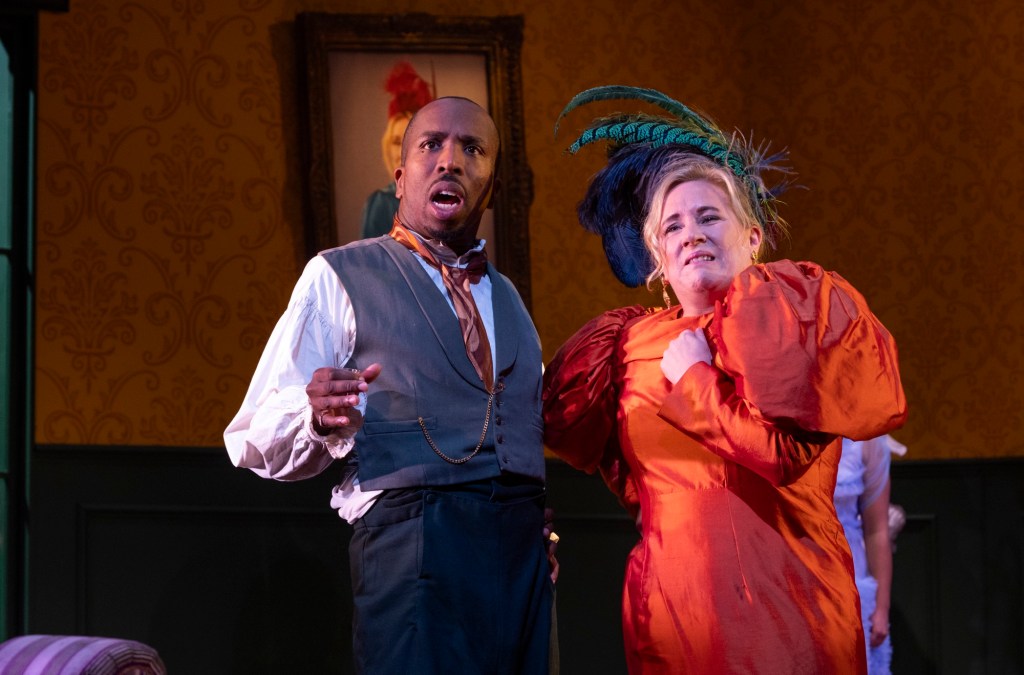
    Kyle Ramar Freeman, Nichelle Lewis, Phillip Johnson Richardson & Avery Wilson, photograph by Jeremy Daniel

    THE WIZ

    Book by William F Brown

    Music and lyrics by Charlie Smalls

    Additional material for this production by Amber Ruffin

    Directed by Schele Williams

    Marquis Theatre, New York City – until 18 August 2024

    https://wizmusical.com

    Featuring a reworked book by TV writer and comedian Amber Ruffin and dances by Beyoncé’s choreographer of choice JaQuel Knight, that owe more to Hip-hop, Dancehall and Urban Ballroom than traditional Broadway, this is less a revival than an all-out revisal of the beloved Charlie Smalls-William F Brown property. The Wiz was always a triumph of exuberance and bravura belting over craft anyway, albeit one that ran for more than 1600 performances in its original Main Stem iteration, so an attempt to drag it kicking and screaming into the 21st century is unlikely to have purists bellowing from the rooftops with outrage.

    They may be disappointed at the excision of Toto (losing a dog in real life is always a terrible idea but, as the recent London Palladium Wizard of Oz proved, having a puppeteer onstage throughout to evoke one à la War Horse can be an unwelcome distraction) and surprised at heroine Dorothy’s new back story: she’s now an urban youngster adrift in a rural landscape following her mother’s death, bullied by local kids and trying to make a new life with her Aunt Em. Her grief and isolation isn’t belaboured but it lends a raw, streetwise edge to newcomer Nichelle Lewis’s interpretation of the role that genuinely ups the emotional ante in a show that otherwise comes at you like a garishly coloured, hi-energy juggernaut of camp and go-for-broke enthusiasm.

    Lewis is a real find; this Dorothy is clear-eyed, sincere but no pushover, and she makes something passionate and affecting out of the much covered soul ballad ‘Home’ that brings the show to a stirring, if somewhat abrupt, ending. Director Schele Williams has surrounded her with quality. It’s hard to imagine a more engaging central quartet than Lewis, Avery Wilson (as an athletic, über-camp scarecrow barely a z-snap away from RuPaul’s Drag Race), Phillip Johnson Richardson (an adorable Tinman with a sweet soul voice and a surprising amount of emotional depth) and Kyle Ramar Freeman’s hilarious, scenery-chewing sweetie of a Lion (“y’all are obsessed with me!” he squeals at his new friends, and frankly who could blame them for being). High octane and far-fetched it may all be, but these young performers, short on Broadway credits as yet but big on authentic star quality, make rooting for them entirely essential.

    Then there’s clarion-voiced Melody A Betts in a fiery, funny double role of Aunt Em and a vicious yet strangely endearing Evillene. Allyson Kaye Daniel is fabulous but criminally underused as one of the good witches, while recording star Deborah Cox, all blonde curls and elaborate riffing, is fine but a trifle underpowered as Glinda. The other lead with marquee name recognition is Wayne Brady in the title role and he brings buckets of slippery charm and magnetism, and gets to bust out some pretty impressive moves. The ensemble work is terrific, even when given some less-than-inspired things to do, such as the interpretative dance of the hurricane that whisks Dorothy off to Oz (it may be an homage to the original but it’s still naff) or the slightly toe-curling business for the yellow brick road made flesh, clad in what look like saffron coloured beefeater outfits.

    Those aberrations aside, Knight’s choreography is exciting, bringing a new dance language to Broadway. The voguing-heavy Emerald City ballet that opens the second half is pure exhilaration, full of attitude and limb-popping joie de vivre, whipping an already up-for-it audience into total frenzy. Williams’s direction is more serviceable than distinctive with a couple of disappointing key moments, such as the melting of Evillene which is staged with minimum panache but maximum volume. Still, she finds the comedy (although it’s not hard to locate thanks to Ruffin’s zinger-soaked new script) and, crucially, the heart in this crowd pleaser.

    The production’s touring routes are evident in the super-busy video-generated backdrops and slightly wobbly set pieces (courtesy of Daniel Brodie and Hannah Beachler respectively) but that matters surprisingly little thanks to the raw talent out front, and the show is never unappealing to look at. Jon Weston’s sound design isn’t always as clear as it could be.

    Joseph Joubert’s band is large by current Broadway standards and sounds brassy, funky and fine. ‘Ease On Down The Road’ ‘No Bad News’ and others pop and sparkle, even if there’s sometimes a feeling that the performances are more remarkable than the actual material. That’s not true though of the anthemic, celebratory ‘Brand New Day’ that follows the demise of the wicked witch…good luck with getting that unique syncopation and soaring melody out of your head for days after watching the show.

    In a Broadway season that includes the triumphant resurrection of Merrily We Roll Along, the import of the London Cabaret at the Kit Kat Club and the critically hallowed new version of The Who’s Tommy, this imperfect but uplifting revival of an imperfect but uplifting musical is unlikely to get much love from the Tony awards (although I’d be thrilled to see some of the performances honoured). I’m not sure that even matters: it’s got title recognition, it’s family friendly and this is the first time The Wiz has been on Broadway in forty years, so it feels like an inevitable hit. There are many valid, impressive and searing instances of Black misery and trauma in the theatrical canon, and it’s just lovely to experience a show that simply espouses Black joy. This “brand new day” may not really be all that new, but it surely is a blast.

    April 18, 2024

  • TEETH – ⭐️⭐️⭐️⭐️ – buckle up, it’s the vagina dentata musical you didn’t know you needed, and it’s fabulous

    Jared Loftin and Alyse Alan Louis, photograph by Chelcie Parry

    TEETH

    Book and Music by Anna K Jacobs

    Book and Lyrics by Michael R Jackson

    Directed by Sarah Benson

    Playwright’s Horizons, New York City – until 28 April 2024

    https://www.playwrightshorizons.org/shows/plays/teeth/

    Inspired by the low budget 2007 comedy horror flick of the same name, Teeth is a wild, vivid and altogether marvellous new off-Broadway musical with a cracking score, terrific performances and, if you’ll pardon the pun, some genuine bite. Set in a creepily devout New Testament Village in small town America, the story turns on teenager Dawn (Alyse Alan Louis), step daughter of fire and brimstone preacher (Steven Pasquale) and suffering from a nasty case of Christian fundamentalist guilt….oh yes, and vagina dentata. That’s right, she’s got teeth ‘down there’ and ultimately she’s not afraid to use them.

    Oklahoma! this ain’t. Hell, it’s not even Little Shop of Horrors, which is probably the closest the American musical has hitherto ever got to marrying together the unlikely bed fellows of comic glee and all-out horror, unless you count Carrie which was funny for all the wrong reasons in its original iteration. Teeth is a darker, nastier, more outrageous work than Little Shop, although it reaches similar heights of inspired comic lunacy. Where the latter show has an underlying sappy sweetness, this one is savage. It’s also pretty irresistible.

    One of the many wonderful things about Sarah Benson’s staging is that, with the exception of Pasquale’s thrilling, scenery-chomping turns as a gung-ho pastor pitched somewhere betwixt a better looking Billy Graham and Rambo, and a dishonourable gynaecologist who makes Little Shop’s Orin Scrivello DDS look like Mary Poppins, the show is played straight. Accordingly, the ludicrous but infinitely catchy ‘Modest Is Hottest’ duet for tormented Dawn and her milquetoast boyfriend (Jason Gotay) has a worldly New York audience screaming with laughter but is performed with such sincerity that the comic stakes are upped only higher.

    Sensational Alyse Alan Louis fleshes out Dawn’s self-abasement, uncertainty and anguish with such conviction that it’s almost hard to watch, and if she’s funny (which she unquestionably is) it’s because co-creators Anna K Jacobs and Michael R (A Strange Loop) Jackson have given her lyrics such as “my panties are wet, and it’s not blood or sweat” which she delivers with nary a nod to the absurdity. This pays off richly when the production and show snap their own tether and Dawn becomes the embodiment of a mythical feminist goddess, righting gender-based wrongs by indiscriminately ripping off male genitals with her voracious, razor sharp downstairs department. It’s completely nuts (again, no pun intended) of course, but done with such craft and ferocious go-for-broke commitment that it’s pretty hard to resist.

    That said, the gear change between angsty hilarity and full-out batshit crazy is handled quite clumsily at the moment. Although Teeth has, and should have, jagged edges as a musical, the alteration in emphasis and tone feels fudged and rushed. That’s frustrating as there are specific moments – such as an authentically chilling number where Pasquale’s preacher whips his rebellious biological son (Will Connolly) to agony after catching him masturbating – where the lightning fast switches in tone really work for the show. This is equally true of the contrast between the sunny, glazed-eye evangelism of the perennially pure Promise Keeper Girls in the congregation and the murky, cowed group of threatened, lonely young men, the self-appointed Truthseekers, who meet online to bemoan their beleaguered masculinity. It’s witty and disturbing.

    I also feel it would benefit from an interval. Although it runs just under two hours, which fly by incidentally, there is a lot to process here, from the shock value to the sheer rollicking bonkers-ness of it all, and there is a point just after Dawn performs her first, er, mutilation, where a break naturally occurs. It would give audiences a breather and, most probably, the chance to chat about how much they’re loving it and will be recommending it to their more broad-minded friends. Leaving the theatre after yesterdays matinee, on a considerable high, I was hearing comments from various people along the lines of “that’s the best thing I’ve seen in ages” and “I can’t wait to come back”.

    So, this has the potential to be massive. It’s too rude for family audiences and possibly too graphic for the squeamish (the prop department has provided some very convincing male members that are hurled around with gusto at key dramatic moments, along with lashings of fake blood) but it feels of the zeitgeist with its twin themes of the life-strangling hypocrisy behind religious fervour, and feminism taken to a murderously extreme conclusion. Most crucially, the songs are well-crafted, eclectic bops, reminiscent at times of a more twisted Spring Awakening. The sense of the wells of pop, folk and gospel being subtly poisoned feels absolutely, consistently right; some of the writing is white-hot, and the whole thing is a heck of a lot of unsettling fun.

    There’s not a weak link in the cast. Gotay never overplays the apparently wholesome jock whose true colours land him in blood-curdled waters, and Connolly finds troubled, troubling layers in the disaffected preacher’s son. Jared Loftin is hilarious as the unhinged ally whose motivation for befriending the unhappy Dawn is more to do with seeking absolution for his rampant gay-ness than actual altruism. The six-strong ensemble of smug schoolgirls who transform into vengeful, sexually voracious harpies is just fabulous. The singing throughout is roof-raisingly fine.

    Moving forward, the show will need sensitive but fearless producing to fine tune and aim it at a wider audience that will cherish it. Teeth is simultaneously puerile and sophisticated, snarky and sincere, and many of its elements require some polishing but not to gleaming blandness: a huge part of the shows appeal is down to how “out there” it feels. It’s more subversive than Heathers and kinkier than Rocky Horror.

    Not all of Raja Feather Kelly’s bump-and-grind choreography feels necessary and Adam Rigg’s aggressively ugly set, all nondescript beige walls, neon cross and hideous cheap scarlet carpet, could do with an upgrade when the show gets its inevitable longer life, although its apocalyptic transformation is quite something to behold. Jane Cox and Stacey Derosier’s lighting and Jeremy Chernock’s SFX designs are very effective.

    Previous musicals that Playwright’s Horizons have nurtured prior to Broadway include Sunday in the Park with George, Once on this Island and the aforementioned first post-pandemic Tony winner A Strange Loop. This one equally deserves longevity, although whether its natural place is on the frequently homogenised, financially treacherous main stem is a question. Either way, this is a rambunctious good time in the theatre, and one I would happily, if uncomfortably, sit through again in a heartbeat. Culty, gory and unforgettable.

    April 15, 2024

  • FOAM – ⭐️⭐️⭐️⭐️⭐️ – astonishing new play exploring extremist ideology through a gay lens

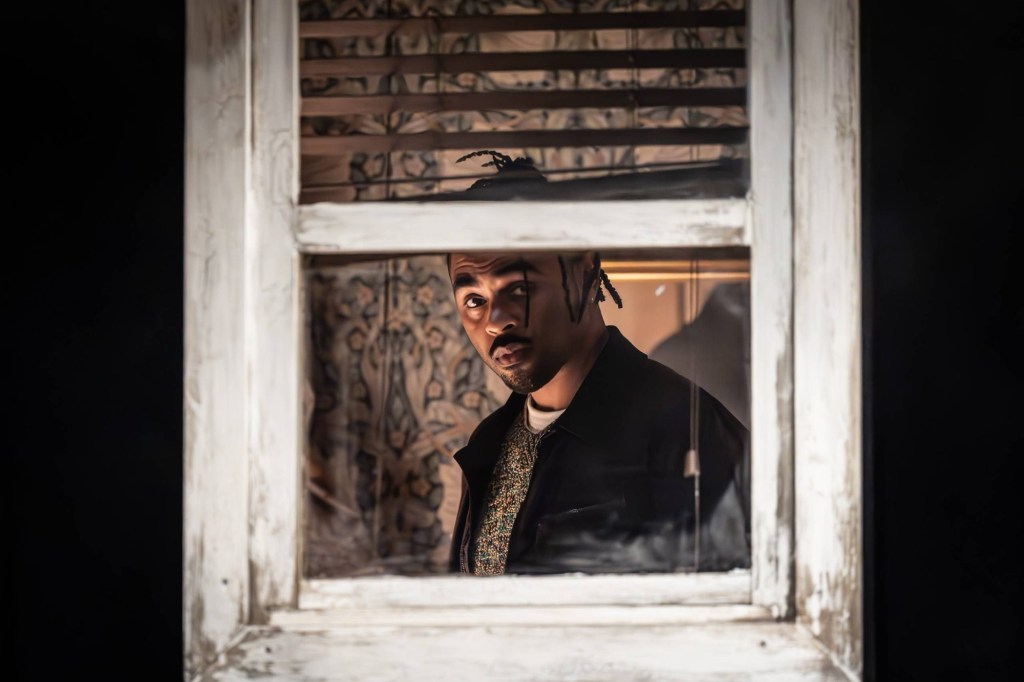
    Jake Richards, photograph by Craig Fuller

    FOAM

    by Harry McDonald

    directed by Matthew Iliffe

    Finborough Theatre, London – until 13 April 2024

    https://finboroughtheatre.co.uk/production/foam/

    This is a fascinating and important addition to the canon of modern gay plays. Foam feels highly unusual, exploring in a quintet of tense, compulsive scenes, with salty, raw dialogue, the comparatively uncharted (at least in theatrical terms) intersection between far right, neo-Nazi politics and the gay community. It’s inspired by the true story of notorious far Right skinhead Nicky Crane, recruited from a deprived upbringing into the British fascist movement while just a boy, whose terrifying reputation for violence and viciousness belied the fact that he was actually gay. He died of AIDS-related complications in 1993.

    There are shadows of Schnitzler’s La Ronde in the way the sequences dovetail together, as Nicky (played with a wild intensity by Jake Richards) goes on his personal odyssey, taking in jail spells, fledgling careers in music and porn, covert sexual activity, and finally as a barely functioning husk in an AIDS hospice. The writing is brutal, muscular, rude, but more honest than it is sensationalist. Harry McDonald has created a refreshingly original work, as vital as it is disturbing.

    In a delicious piece of historical-literary trolling, McDonald’s opening scene features a mythologised version of Oswald Mosley, played with an appropriate mixture of precious superciliousness and ruthlessness by Matthew Baldwin. One can only hope that evil Oswald, founder of British fascism and leader of the infamous Blackshirts, would be suitably appalled to to be portrayed as a kinky old aristocrat who requisitions under-age working class boys in public lavatories (each scene happens in a different washroom, on Nitin Parmar’s dingy but gleaming unit set), luring them with gifts, cigarettes and amyl nitrate.

    Although there’s nothing to admire in the character, McDonald doesn’t invest Nicky with any self-pity. His companion (Baldwin again, impressively contrasting his earlier role with a beautiful study in tough but tender) chides him for thinking of AIDS as a punishment for his past misdemeanours. That in itself throws up an interesting moral conflict, in that the horrors of AIDS shouldn’t be visited upon anybody, yet it’s hard to feel pity for somebody who so single-mindedly terrorised anybody who didn’t fit into his pitifully narrow world view. Richards is truly remarkable, giving Nicky a brutish charisma and an inner life that the character could never begin to articulate. The constant thrum of violence is deeply troubling but so are the occasional glimpses of the dispossessed child recruited and manipulated by more sophisticated power players such as Mosley.

    Matthew Iliffe directs with scalpel-like precision. Every look, covert or open, every gesture, every movement matters. There’s also a sense, dream-like, enhanced by Jonathan Chan’s lighting and David Segun Olowu’s sound design, that the whole thing is taking place outside chronological time, so that Nicky’s grim tale resonates strongly and lamentably in the present day.

    There’s terrific support from Kishore Walker doubling as a young photographer and a porn actor, both realising to their cost that the controversial tattoos and snarling attitude carried by Nicky are not mere style choices. Keanu Adolphus Johnson is bracingly effective as a young Black gay clubber who takes robust steps to fight back.

    Foam as a substance is malleable and prone to increasing in volume with manipulation, which is a suitable metaphor for the insidious creeping evil of neo-Nazism and the way Nicky’s strings are pulled from afar by individuals with infinitely more intelligence, influence and power. Foam the play is a deeply moral work; a warning, an acknowledgment and a howl of pain. It’s also cracking but challenging entertainment. I suspect it will have a much longer life following this Finborough premiere run.

    April 7, 2024

  • HOLLY SPILLAR: HOLE -⭐️⭐️⭐️⭐️- surely a show about a medical condition shouldn’t be THIS much fun….

    Photograph by Grace Weltch

    Holly Spillar: HOLE

    created and performed by Holly Spillar

    dramaturgy by Ben Francombe

    Soho Theatre, London – 2 and 3 April 2024

    next scheduled performance: Colchester Arts Centre – 24 April 2024

    https://colchesterartscentre.ticketsolve.com/ticketbooth/shows/1173652559/events/428638847?_ga=2.152348156.412975513.1712743097-1698441638.1712743097

    It took me a couple of minutes to warm to this HOLE but I’m very glad I stuck with it. That might seem a bizarre way to start a review but then this is a bizarre show, albeit an unexpected, sometimes deeply uncomfortable, treat.

    Holly Spillar, wafting in looking like a cross between the door hostess at an eccentric but trendy bistro and Sarah Brightman in her Hot Gossip days, has created a frequently witty, often outrageous and occasional very poignant hour long cabaret, pitched somewhere between stand-up and performance art, inspired by her own vaginismus. For those unaware, vaginismus is a condition whereby the vaginal muscles tighten uncontrollably whenever penetration is imminent, and can be a source of pain and embarrassment to the women suffering from it.

    If Spillar wasn’t so likeable and talented, one would still have to applaud her bravery and chutzpah for addressing the condition in this format, and exploding some of the myths surrounding it. By empowering herself, she’s also empowering others, and that’s pretty special. 

    You wouldn’t necessarily assume that vaginismus could be the basis for a piece of musical entertainment, let alone a rambunctious crowd pleaser. But then you won’t have seen the chaotic but magnetic Spillar, who’s at once ethereal and goofy, with a raw soprano voice that isn’t always easy on the ear but astonishes with its range. She also makes ingenious use of a loop pedal which effectively means that she is her own backing singer(s) and accompanist, except when she’s getting the audience to join in with a jolly singalong about the NHS. 

    Her comedy instincts are unerring, as she plays everything from a therapist with more than a whiff of Björk about her, some insensitive male doctors and numerous friends and advisors ranging from the hopeless to the offensive. Her ability to morph into different people with just a dip in her voice, change of facial expression and alteration in stance is impressive.

    Spillar commands her audience by stealth, the scattershot strangeness of her initial moments giving way to authentic hilarity and moments of genuine shock. You’ll laugh a lot but you’ll also probably wince quite a bit. Life-enhancingly weird and unique: well worth catching next time she’s on.

    April 6, 2024

  • LONG DAY’S JOURNEY INTO NIGHT – ⭐️⭐️⭐️ – the classic American drama returns in a starry new revival

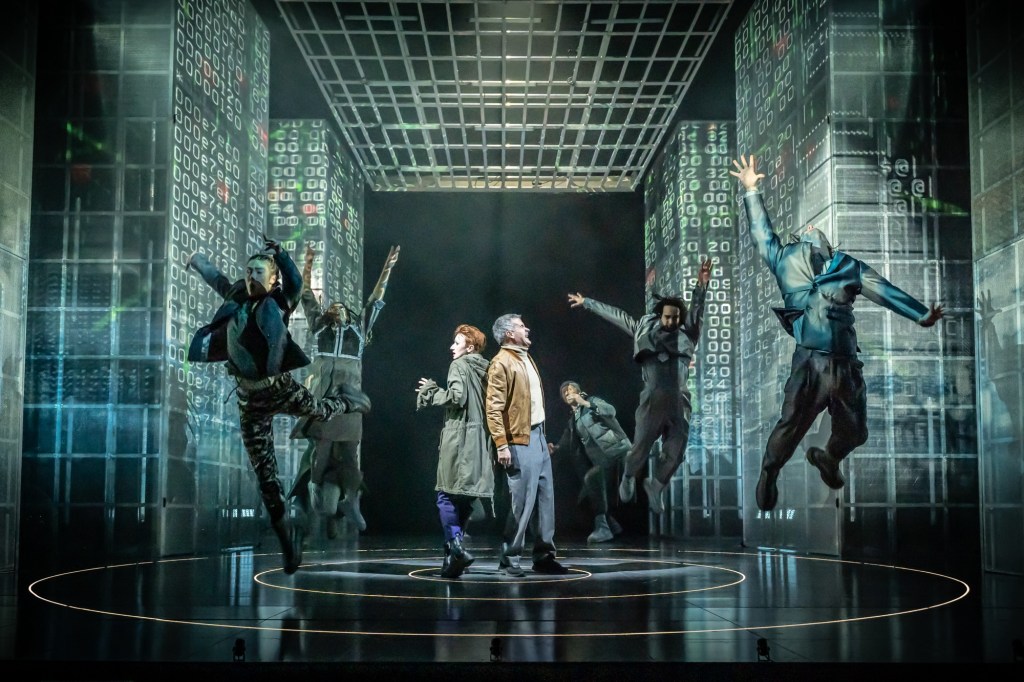
    Brian Cox and Patricia Clarkson, photography by Johan Persson

    LONG DAY’S JOURNEY INTO NIGHT

    by Eugene O’Neill

    directed by Jeremy Herrin

    Wyndhams Theatre, London – until 8 June 2024

    https://longdaysjourneylondon.com

    When it’s done well, O’Neill’s lengthy family drama is a soaring, searing indictment of human frailty and the ties of guilt, blood and co-dependence that bind people together, and when it isn’t, Long Day’s Journey Into Night can seem like an endurance test for audience and actors alike, the title less a description and more a warning. At the moment, Jeremy Herrin’s intermittently riveting but somewhat hesitant revival falls between these two stools.

    I say “at the moment” because in a couple of weeks I suspect this script and this cast will be up to full strength, but on press night there were too many moments when the staging and some performances felt curiously undercooked, as though they would have benefited from another week of previews to really get to grips with the epic, unforgiving poetic nature of this classic American text. There are already magnificent individual elements but they don’t, as yet, coalesce into greatness.

    The Tyrone family of the play so closely mirrored O’Neill’s own family story (retired actor father, morphine-addicted mother, one son a drunkard, the other consumptive), that the writer stipulated that it should not be published until 25 years after his own death. Certainly there is a mastery of detail, and a juxtaposition of raw tragedy with often dark humour that has the unmistakable ring of authenticity. The portrayal of Mary Cavan Tyrone, the mother, played here as a wistful wraith with a tang of bracing narcissism by the tremendous Patricia Clarkson, is particularly multilayered, full of compassion but with an unflinching honesty about the fallout from this woman’s addiction and the devastating effect it has on her husband and sons.

    Brian Cox’s patriarch, the roaring, hard-drinking actor James Tyrone, has flashes of brilliance. He’s irascible, comically self-dramatising and convincingly wracked with guilt. The extended second half scene with Laurie Kynaston’s magnetically suffering younger son is a masterpiece of boozy anecdotage and fudged filial emotion. He’s less secure though when delivering back-and-forth dialogue, and it’s not clear whether some of the line fluffs are character choices or genuine stumbles. His stage presence is formidable however and this is a performance that will hopefully develop into something richer and more memorable for the right reasons given time.

    Opposite him, Clarkson suffers from a similar uncertainty at the beginning but grows in stature as Mary withers, disheveled, before our eyes. The ghost of the conceited but devout young beauty is present in this Mary’s haunted gaze, and in the chilling, lightning fast switches from bathos to imperiousness. Clarkson shows us simultaneously the helpless selfishness of the addict and the equally helpless love of a mother for her children. Clarkson is American acting royalty and there are multiple moments in this performance that demonstrate precisely why.

    There’s fine work from Kynaston, and Daryl McCormack invests his dissolute older brother with an authentic rage and sense of lost control. Perhaps the most satisfying performance, and certainly the one that ignites the whole production with a welcome jolt of energy in her all-too-brief scenes, comes from Louisa Harland as the spiky, sassy Irish maid emboldened by the whisky an increasingly strung out Mary plies her with in an attempt to beat back the engulfing loneliness.

    Everything about the production, from Lizzie Clachan’s design to Jack Knowles’s dim lighting and Tom Gibbons’s doomy sound design and music, is classy and muted, so as not to detract from the central protagonists and drama. The problem is that, currently, the core of the show isn’t potent or focused enough to sustain the punishing length…the second half alone runs at over 100 minutes. The uninitiated will likely still realise they’re in the presence of greatness, but for swathes of the evening the raw power of O’Neill’s mighty drama is as elusive as the fog metaphor that permeates the text. It’s worth seeing but, as yet, it’s not essential.

    April 3, 2024

  • THE DIVINE MRS S – ⭐️⭐️⭐️⭐️ – Rachael Stirling is the real deal in this delightful new comedy

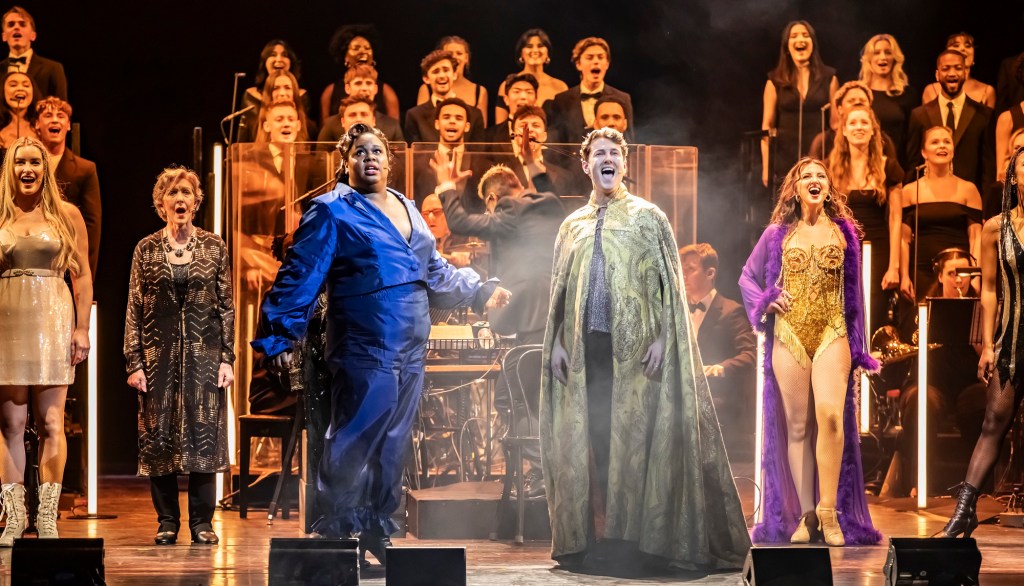
    Rachael Stirling as Sarah Siddons, photograph by Johan Persson

    THE DIVINE MRS S

    by April de Angelis

    directed by Anna Mackmin

    Hampstead Theatre, London – until 27 April 2024

    https://www.hampsteadtheatre.com/whats-on/2024/the-divine-mrs-s/

    With this imaginative, sometimes anachronistic, peep into the life of legendary 18th century actress Sarah Siddons, April de Angelis has created possibly the most quintessentially theatrical play since Michael Frayn’s Noises Off. Not that the two pieces are similar; if anything, The Divine Mrs S ends up closer in tone to Morgan Lloyd Malcolm‘s acclaimed Emilia with its grandstanding fury at the inequality between the sexes, but this is a play in love with the theatre, with its traditions, challenges and idiosyncrasies. It also recalls de Angelis’s own Playhouse Creatures from thirty years ago which looked at the assimilation of women into Restoration theatre.

    Under Anna Mackmin’s direction, this is a richly enjoyable evening, fruity, epigrammatic and very very funny. There’s something Black Adder-ish about the relish with which de Angelis presents her dramatis personae of self-regarding, impassioned and frequently preposterous actors and their assorted hangers-on, and her vision of Siddons herself is brought to bewitching, eccentric life by an irresistible Rachael Stirling firing on all cylinders. The dialogue is played at a hell of a lick, although seldom at the expense of clarity, and has a heightened, declamatory style that matches de Angelis’s writing.

    With her throaty voice, statuesque charisma and innate warmth, Stirling is the sort of talent plays are created for (just ask Mike Bartlett); I don’t know if this role was written especially for her, but it’s hard to imagine any other actress equalling her work here. She captures with precision and glee the self-aggrandising, mercurial nature of an old school theatre creature, somebody absolutely steeped in all things connected to the stage: the kind of woman prone to fainting fits, who can dismiss Shakespeare’s Titus Andronicus as “an experimental tragedy about a pie”, who can destroy a scatter cushion in a fit of fury then a split second later, in honeyed tones, request if her maid could repair it. It’s a gorgeous performance, revelling in its own artifice but rooted in truth.

    The high camp comic histrionics (of which Stirling is a total mistress, as evidenced by her equally scenery-chomping turn in Bartlett’s modern day Restoration riff Scandaltown at the Lyric Hammersmith a few years ago), is underpinned by a subtle melancholy. When she mourns the loss of her children, it’s painfully real. She’s by turns passionate then withering, and if the lightning quick changes in mood sometimes mean that we’re not always sure which emotions are entirely real, then neither does Siddons. In a further stroke of ingenuity, in the sections where we see Siddons on stage acting, Stirling and Mackmin make clear that she is an extraordinary talent, head and shoulders above the people surrounding her.

    Dominic Rowan matches Stirling with a performance of brilliantly wrought bombast and sweaty desperation as Sarah’s actor-manager brother John Philip Kemble, acutely aware that his sister is the far greater talent, exasperated by her yet also in her thrall. A terrible actor (Kemble, not Rowan), such power as he has over the wiser, better women surrounding him is by the happy accident of being born male.

    These women are formidable: Sadie Shimmin is a tart joy both as a censorious theatre aficionado and as a messy comic actress, Anushka Chakravarti makes something delightful and oddly touching out of Patti, Siddon’s maid-cum-dresser and Eva Feiler dextrously juggles a quintet of roles, excelling particularly as a female playwright running the gamut from triumph to despair as her work is recognised then discarded.

    Gareth Snook gets some fabulous comic mileage out of a trio of faintly ridiculous men, although the performance would benefit from a greater differentiation between each.

    There are points in the second half when the characters start to sound a bit like mouthpieces for opposing views rather than people, despite the stellar efforts of the cast. That the play has strong fire in its belly is a wonderful and essential thing, it’s just a shame that the writing suffers when the anger rears up. Also, there’s a near-rape of Sarah’s beloved Patti by Kemble that is pretty much glossed over.

    Despite this, the play does a fine job of balancing the campy fun (of which there is a lot) with serious, necessary points about the social and professional inequalities between women and men. de Angelis makes Siddons a vivid, specific figure but ends the play enshrining her as a sort of theatrical everywoman pioneer walking into a spotlight that could be on any stage, illuminating any actress who has trodden the boards. It’s a powerful moment, beautifully lit by Mark Henderson on Lez Brotherston’s attractively chaotic playhouse set.

    The Divine Mrs S is predominantly a rollicking comedy for people who love all things stagey, full of specialised references and in-jokes (the way brother and sister react every time the title of the Scottish Play comes up is hysterical), but it has a satisfyingly serious core, and writing that is a little patchy but frequently soars. Even if the rest of the cast weren’t as good as they are, it would still be worth catching for the divine Ms S (S for Stirling).

    March 30, 2024

  • WHAT IF THEY ATE THE BABY? – ⭐️⭐️⭐️⭐️ – fringe darlings Xhloe and Natasha are back!

    WHAT IF THEY ATE THE BABY?

    written and performed by Xhloe Rice and Natasha Roland

    Kings Head Theatre, London – until 7 April 2024

    https://kingsheadtheatre.com/whats-on/what-if-they-ate-the-baby

    New York based multi-disciplinary performers Xhloe Rice and Natasha Roland caused a sensation at the 2022 Edinburgh Festival with their Beckett meets hoedown mini extravaganza And Then The Rodeo Burnt Down, which subsequently played a short London season last year at the Kings Head Theatre’s original home on Upper Street. Now the fearless but weirdly charming are twosome are back with their latest, this time at the NEW Kings Head and playing in rep with their acclaimed earlier show. What If They Ate The Baby? feels slightly more immediately accessible than it’s sister show perhaps but shares the same weirdly haunting mixture of unease and delight.

    It feels like Pinter filtered through a prism composed of pop art, commedia dell’arte and Doris Day. Rice and Roland play 1950s all American housewives, perky, poised but with clownish and queer overtones. What begins as a send-up of perfect Wisteria Lane-ish suburban lives (the returning of an empty casserole dish sparks a jagged ballet of suppressed aggression and one-upmanship) devolves into a fascinating examination of the extremes of emotion, despair and frustration that can lurk under an apparently civilised surface. It’s often laugh-out-loud funny but with edges of wildness and melancholia that trouble and intrigue.

    This -the 1950s- being the era of the McCarthy witch hunts, the show also suggests life under surveillance, as the women obliquely refer to a neighbour who’s been taken away for questioning. It isn’t belaboured but it’s quietly powerful, speaking equally to our own time, a point underlined by the frenetic, jagged dances performed at intervals to contemporary(ish) hip hop and disco. It also lends a frisson of urgency to the women’s covert sexual relationship, and even intimations of cannibalism.

    Roland and Rice are sensational: athletic, wry, specific, and able to turn on a dime between kookie cuteness, smiling passive aggression and what looks like genuine fear. At the outset, Roland is sweet, almost puppyish and Rice is more sassy and sophisticated but they switch up attitudes and moods with every change of lighting. They’re clowns, they’re dancers, they’re bloody good actresses and they are charming agitators with a healthily iconoclastic theatrical vision.

    There are moments during the hour long performance where it’s not entirely clear what they’re getting at, and anybody who likes linear storytelling and conventional play-making might find this frustrating. Ultimately though, it’s adventurous and playful, confrontational but also deeply charming. I really liked its scattershot unruliness and moments of surprising delicacy. Highly original, and well worth a look.

    March 27, 2024

  • HARRY CLARKE – ⭐️⭐️⭐️⭐️ – Billy Crudup is one of the finest living American actors, and this theatrical gem proves it

    Photograph by Carol Rosegg

    HARRY CLARKE

    by David Cale

    directed by Leigh Silverman

    Ambassadors Theatre, London – until 11 May 2024

    https://harryclarketheplay.com

    It takes guts for any actor to undertake a role that requires not one but two specific foreign (to them) accents then perform that role on a high profile stage in the country from which said accents originate. Billy Crudup is not just any actor though. He’s a magnetic Puck-ish stage presence, and a brilliant technician, able to turn on a dime between charmingly quirky and utterly chilling. Furthermore, David Cale’s delicious monologue – equal parts confessional, thriller and comedy of social embarrassment – gives him a get-out clause in the event of the accents being poor (which they’re not).

    A success on both American coasts, Leigh Silverman’s exquisitely judged production possibly plays even better in London than it did in NYC or LA. That’s less because USA-based writer Cale was born and raised here, but more because it’s about a small town American who, in a bid to distance himself from his dysfunctional upbringing, adopts a fey upper crust Brit accent, which fools everyone that crosses his path into thinking that he is in fact English. The script is peppered with frequently hilarious and sometimes quite erroneous assumptions about England and Englishness that shed further light on the character and has the West End audience whooping with merriment.

    Crudup’s Philip Brugglestein is a mass of neuroses -not surprising when we learn of his turbulent relationship with his father- and a bit of a loner. However, Philip has another persona, one he turns on as a coping and shielding mechanism, and this Harry Clarke is everything he is not. Harry’s a cheeky, charming Cockney with a refreshing disregard for social and sexual mores. When Philip ‘becomes’ Harry he becomes more confident, more attractive, more comfortable in his own skin, and more outrageous.

    Watching Crudup morph between Brugglestein’s dual personalities is both unsettling and a joyous reminder of the possibilities of theatre. He also, with just an adjustment of stance, voice and head position, turns himself into the various members of a stonkingly rich Jewish family Harry gets Philip embroiled with. It’s a complete tour de force, and already one of the strongest contenders for the performance of the year.

    Silverman’s direction, unobtrusive but potent, supports him every step of the way; the changes in mood and pace are startlingly well managed, except for a couple of moments where the speed of delivery is such that it takes a moment to catch up with which character is which, particularly the American ones. Alexander Dodge’s scenic design, Alan C Edwards’ lighting and Bart Fasbender’s sound are all deceptively sophisticated, complementing the text, transforming mood and rhythm, and always ensuring that their star is right at the heart of any given moment, exactly where he should be, regardless of who he’s portraying.

    Some of Cale’s storytelling is perhaps a little contrived, and the writing, sharp, funny and poignant as it is, is undoubtedly elevated by the central performance. It’s hard to talk about the actual plot without giving too much away, but suffice it to say that there is a poisonous, unexpected tang to the delightful sweetness and hilarity in this tale of a fractured personality, and on the night I saw it, much of the front stalls reacted with audible shock. When the dark shadows creep in, the manipulation of information and audience reaction is really skilful.

    All in all, Harry Clarke is a cracking eighty minutes of theatre: compact, enlightening and hugely entertaining. I loved it.

    March 26, 2024

  • WILD ABOUT YOU in concert – ⭐️⭐️ – fabulous cast but the show needs a lot of work

    WILD ABOUT YOU – in Concert

    Music and Lyrics by Chilina Kennedy

    Book by Eric Holmes

    directed by Nick Winston

    Theatre Royal Drury Lane, London – 25 & 26 March 2024

    https://lwtheatres.co.uk/whats-on/wild-about-you-a-new-musical-in-concert/

    Based on Broadway singer/actress/songwriter Chilina Kennedy’s 2015 album, Wild About You is an edgy but generic folk-rock musical receiving its world premiere here in a concert version, ahead of a planned developmental run “during the 2024-25 season” according to the shows website? In all honesty, this isn’t a concert version at all, but a fully staged realisation of a show that is clearly still in need of quite a lot of work.

    The piece was previously workshopped with two separate titles (Without Her and Call it Love) and watching Eric Holmes’s script unfold, it isn’t particularly obvious why this third title was alighted on, beyond the fact that it’s the title of one of the more striking songs. Wild About You isn’t essentially a love story, or at least not in the traditional sense, and nor is it particularly wild, although some of the music rocks out a bit. It centres on amnesiac Olivia (Rachel Tucker) who at the beginning is in hospital trying to piece together her extraordinarily messy romantic and family history, with the help of a smart-talking nurse (Todrick Hall, all “yasss gurl” attitude and comic asides) who has clocked off his shift but is fascinated by our heroine’s plight.

    Tucker has one of the rangiest powerhouse voices in the business, and Kennedy’s songs certainly give it a work out. The score is a relentless succession of big, bombastic moments, moderately tuneful but all pitched at such a level of fevered emotionalism that the overall effect is more exhausting than exhilarating. Tucker is ill-served by Holmes’s book which serves up probably the most self absorbed musical theatre heroine since Norma Desmond, who Tucker recently and stunningly played on Nicole Scherzinger’s nights off over at the Savoy. She doesn’t get to shine nearly so brightly here, albeit through no fault of her own.

    Olivia is a sexually careless, emotionally incontinent mess with whom people seem to fall in love for no very intelligible reason. Any charm she has is due to Tucker’s innate likability rather than any indications from the head-turningly inconsistent writing. She spends most of the show looking tense in a petticoat, with her shoulders hunched, arms stiff and fists clenched; it’s particularly frustrating when you’re aware of what this fine artist is capable of.

    The first half is a bit like Next To Normal but with added lesbianism as she tries to sort her head out in a hospital setting, while wailing, riffing and generally singing everything to the absolute max, leading her husband and a male and female lover up the romantic garden path, and getting pregnant. In act two she basically turns into a female version of Billy Bigelow from Carousel as she tries to influence her now grown up son from the other side of the grave.

    We never find out what she dies of. Belting maybe? Anyway, the gear change between the two acts is bewildering. The first half is whimsical (Olivia is prone to making ‘Bad Day Boxes’ filled with things to cheer up loved ones when they’re feeling blue), then angsty and a little abrasive, while the second seems to be going for the tear ducts, yet we haven’t been invested enough in the characters to be moved by their plight. It’s comes at you with a numbing welter-load of unearned emotion and much of the dialogue wouldn’t sound out of place in one of the trashier US daytime soaps.

    Hall crops up in drag after the interval as a comically opinionated “heavenly friend” figure, and Olivia’s son Billy (Jamie Muscato, singing up a storm but given insufficient material to create anything but a clichéd character) goes on a journey of self discovery. Meanwhile, the adults glower and swear at each other. Olivia’s final moment, warbling “I will always be here” from behind a wall of frosted glass, her face pressed up against it and her palms splayed, feels more like a threat than a promise, the chilly uplighting giving Tucker the unfortunate appearance of something from a horror film, surely not the intended effect.

    It’s hard to see what attracted Will & Grace’s Eric McCormack to this strange piece for his West End debut, but he gives it his creditable all as Michael, Olivia’s bewildered, religious husband, although his singing isn’t really up to the standard of that of his colleagues. Oliver Tompsett sounds sensational as his love rival and has sufficient stage presence to almost cover up that the role is so weakly written as to barely be there. Hall is often hilarious, sometimes distractingly so, but the only performer that really rises above the material is Tori Allen-Martin as Jessica, the artist friend who falls for Olivia. A natural comic with an extraordinary emotional availability and a gorgeous voice, Allen-Martin is mesmerising, and makes Jessica’s story arc mostly convincing, despite the writing.

    The songs are well-crafted but start to sound a little samey, and still feel like a record album on stage rather than a true theatrical score. Nick Winston’s production is in decent shape given the weaknesses of the book but feels dwarfed in the cavernous Drury Lane auditorium. A show on this scale’s natural home is somewhere like the larger houses at Southwark Playhouse rather than one of the grandest auditoriums in the country.

    It’s still very much a work-in-progress, and much of that work needs to be focussing on making the heroine funnier, more relatable. The religious overtones, mostly connected to McCormack’s character, are intriguing but are currently a bit of a red herring, and I’m not sure the lurch into celestial sitcom at the top of the second half really works. The bizarre scene and duet where a high-as-a-kite Billy sees his dead Mom also needs a drastic rethink. As it is, Wild About You consists of a bunch of very talented singer-actors struggling with an incoherent, derivative book and a challenging but only intermittently soaring set of songs.

    March 26, 2024

  • FAITH HEALER – ⭐️⭐️⭐️⭐️⭐️ – Friel’s masterwork retains its power in this stunning new production

    Justine Mitchell, photograph by Marc Brenner

    FAITH HEALER

    by Brian Friel

    Directed by Rachel O’Riordan

    Lyric Hammersmith Theatre, London – until 13 April 2024

    https://lyric.co.uk/whats-on/shows/

    There’s something magical about Faith Healer, Brian Friel’s quartet of interconnected monologues of dislocation, faith and heartbreak. This is the fourth London revival in about thirty years, and it seems that every time this story of a travelling showman who may or may not have the power to heal, and the two lost souls he enriches and destroys, arrives with new colours, fresh insights and the transformative power of truly great storytelling. Rachel O’Riordan’s newest iteration for the Lyric Hammersmith is a searing piece of theatrical alchemy that showcases a trio of magnificent actors at the top of their games, and mines Friel’s poetic yet brutal text for every ounce of its truth, grief, rueful humour and eerie fascination.

    The play is as elliptical as it’s compulsive, leaving audience members full of questions about the veracity of the different versions of the same story we’ve just witnessed but winded by the potency of Friel’s creation, and, certainly in this flawless new production, dazzled by the sheer craft on display. The four scenes actually feel more like confessionals than monologues, the names of the remote villages where faith healer Frank Hardy toured to ply his trade running through the text like a mantra or incantation, as Hardy or his neglected wife Grace feverishly, doggedly recite them in a bid to keep panic and darkness at bay. Friel’s language is at once conversational and evocative, with little explosions of shock detonated at points by a memory or anecdote.

    O’Riordan and her peerless trio of actors (Declan Conlon, Justine Mitchell, Nick Holder) calibrate all this perfectly. Every gesture, every vocal intonation and facial tic tells a story of a pain inflicted or remembered, of a memory or inconvenient truth quashed. That intense, exquisite detail is matched by Paul Keogan’s lighting and Anna Clock’s soundscape, which repeatedly offer minute but telling adjustments and effects prompted by the text. It’s incredibly subtle but infinitely rich, like the haunted echos of past trauma manifested in sound and light.

    Colin Richmond’s spare but impactful set design reveals more and more of itself as the characters do, starting as an abstract jumble of chairs and a tattered banner but ending up as an exposed, distressed wall, just as Frank stands before us with so many of his illusions and fantasies about himself exploded and debunked. Conlon captures his hard drinking charisma, while also suggesting a dead-eyed self protection, callousness even, that chills, and demonstrates simultaneously how this slippery figure captures hearts and imaginations, and will always survive at all costs. He’s seductive, magnetic…and potentially lethal.

    Wife Grace and manager Teddy are the principal victims of this bewitching toxicity, and Mitchell and Holder give multi-layered, riveting accounts of these fascinating characters, whose respective stories cast both light and shade on Frank. There are few finer actresses working in British or Irish theatre right now than Mitchell: in last year’s National Theatre Dancing at Lughnasa revival she found notes and colours in Kate, the most uptight, closed-off of Friel’s Mundy sisters, that I’d never seen before. She is revelatory once again here; this Grace is so dreadfully damaged yet possessed of a wry self awareness, bitter humour, and sudden shards of incandescent fury that pin you to your seat. When she breaks open, it’s devastating. This is a beautiful, unforgettable performance.

    Holder’s Teddy is another creation that stuns by stealth. Initially he comes across like an old school Music Hall vaudevillian, calling everyone “dear heart” and nailing hilarious stories of the outlandishly tawdry acts he’s managed… but Holder gives him an unsettling edge of aggression alongside the bonhomie and camp raconteuring. He’s tremendous company but you feel that it could all turn sour at any moment. Holder is an extraordinary stage creature, flamboyant but sensitive and he builds his monologue to an electrifying climax.

    The way O’Riordan juxtaposes stillness and motion is exemplary, the focus and tension never wavering. There is a compassion and humanity to the way these broken people are depicted that enriches the soul even as it hurts the heart. A modern classic is illuminated and reinvigorated. Theatre doesn’t get much better than this. Spellbinding.

    March 21, 2024

Previous Page Next Page

Blog at WordPress.com.


Loading Comments...
 

    • Subscribe Subscribed
      • ajhlovestheatre
      • Join 59 other subscribers
      • Already have a WordPress.com account? Log in now.
      • ajhlovestheatre
      • Subscribe Subscribed
      • Sign up
      • Log in
      • Report this content
      • View site in Reader
      • Manage subscriptions
      • Collapse this bar