ajhlovestheatre

  • Home
  • About
  • Contact
  • Blog

  • The Who’s TOMMY – ⭐️⭐️⭐️ – the Pinball Wizard is back on Broadway!

    Photograph by Matthew Murphy and Evan Zimmerman

    The Who’s TOMMY

    Music and lyrics by Pete Townshend

    Book by Pete Townshend and Des McAnuff

    Additional music by John Entwistle and Sonny Boy Williamson II

    Directed by Des McAnuff

    Nederlander Theatre, New York City – open-ended run

    https://tommythemusical.com

    Can the same director reinvent a beloved show more than once? On the basis of this crowd-pleasing revival of The Who’s Tommy, returning to Broadway by way of Chicago’s Goodman Theatre and once again staged by Des McAnuff who won the 1993 Tony for his previous version of the legendary rock opera, the answer is an emphatic, if slightly qualified, yes.

    The world has changed considerably in the 30+ years since McAnuff’s mind-blowing original vision of The Who’s rock rollercoaster first exploded onto Broadway (it transferred to the West End’s Shaftesbury Theatre for a years run in 1996 with a cast that included Kim Wilde and a young Nigel Harman) and certain elements of this tall tale of “that deaf, dumb and blind kid [who] sure plays a mean pinball” have not aged well. Those lyrics from the most famous number (‘Pinball Wizard’, which once again brings the first act to a thunderous, thrilling conclusion, with go-for-broke choreography by Lorin Latarro, who is fast turning into one of New York’s preeminent dance directors) are a major indication as to what has altered.

    Looked at through a 21st century lens, Tommy appears uncomfortably ableist. The titular character’s instantaneous descent into silence and blindness (apart from staring into a mirror) after witnessing his father murder his mother’s lover, may be intended as symbolic but it now seems as insensitive as it’s poignant. Furthermore, the young Tommy, unprotected by his senses, is thrown around like a rag doll, sexually abused by his uncle (John Ambrosino) in a terrifyingly intense sequence that’s thankfully at least not graphic, before being assaulted by a prostitute (Christina Sajou’s extravagantly feral Acid Queen) in a misguided attempt to “cure” him.

    While I would defend to the death the right of popular entertainment to explore and confront some of the more disturbing facts of life, Tommy, in 2024, feels like an outlandish special effects fest and collage of (admittedly fabulous) music, and these darker aspects tend to register as jarringly exploitative, sensationalist add-ons to a fantastical narrative. Die-hard fans may not care, but newcomers may find the more unpalatable aspects of the story pretty hard to take, especially when they’re presented with minimum illumination or explanation but maximum razzle dazzle.

    Furthermore, the principal characters Mrs Walker (Alison Luff) and Captain Walker (Adam Jacobs), Tommy’s parents, school bully Cousin Kevin (Bobby Conte) and Tommy himself (Ali Louis Bourzgui) aren’t nuanced enough to penetrate through the flash and spectacle of the staging and seem more like archetypes than flesh and blood people, which is no fault of the excellent performers but more that the bells and whistles of McAnuff’s vision and the sheer, roof-shaking bombast of this mostly enthralling score don’t allow for much in the way of humanity.

    All that said, there’s still a heck of a lot here to like: Latarro’s choreography, dynamically mixing up styles and moods, is absolutely terrific, and performed with precision and glorious energy by a crack ensemble, who also sing like dreams. Tommy feels nearer to a dance show now than it ever did previously, and that’s possibly the only area where this version improves upon its predecessor.

    All the voices are wonderful, although Bourzgui’s Tommy was struggling with the higher notes at the performance I attended. Probably best to draw a veil over the attempts at British accents (the majority of the show is set in London during and after WW2) and just enjoy the uplifting spectacle and musical excitement. Conte displays commanding stage presence as the bullying Kevin, and Luff and Jacobs inject their roles with more purpose and feeling than are in the writing. Luff’s voice in particular is a thing of wonder and when she cuts loose in Mrs Walker’s angry rock tirade ‘Smash The Mirror’ she’s like a severed power cable. Bourzgui’s Tommy has undoubted charisma but feels diminished by the decision to turn him from a messianic cult figure to effectively a social media influencer.

    All kudos to McAnuff for not simply rehashing the work that won him accolades thirty years ago. This new Tommy is genuinely reconceived, and in some ways, for all technical ingenuity of Peter Nigrini’s projections, Amanda Zieve’s lighting and above all Gareth Owen’s truly awesome sound design, feels less hi-tech at times than the previous production: human figures and inanimate objects are borne aloft and spun through the air by black-clad figures, kuroko-style. Nigrini’s work and David Zinn’s gleaming settings favour a black and white pallet with occasional flashes of acidic yellow; the whole thing moves with an oil slick smoothness.

    Those of us who were knocked sideways by the earlier iteration of The Who’s Tommy, whether here on Broadway, in the West End or during its extensive North American tour, might experience a certain sense of anticlimax though. This new version undoubtedly achieves lift-off some of the time when it needs to, but overall feels less urgent, less sensorily overwhelming, less epic, with the result that the lameness of much of the storytelling, the absence of humour and the random nature of some of the character motivations are left more obviously exposed. McAnuff’s new concept of setting part of it in the future doesn’t entirely work since there is little correlation between that and the core story.

    This new Tommy is unquestionably a big, flashy Broadway night out. The music remains hugely exciting, and when the stellar vocals, athletic dancing, and visual effects coalesce it provides maximum musical theatre uplift. It’s just that in a season that includes stunners like Hell’s Kitchen, The Outsiders and the import from London of Cabaret, this melodically profligate, dramatically undernourished throwback feels a bit lacking. It’s certainly an enjoyable journey, but not an entirely amazing one.

    April 28, 2024

  • SWEENEY TODD THE DEMON BARBER OF FLEET STREET – ⭐️⭐️⭐️⭐️ – a modern dress Sweeney to haunt your nightmares (spoilers included)

    SWEENEY TODD THE DEMON BARBER OF FLEET STREET

    Music and lyrics by Stephen Sondheim

    Book by Hugh Wheeler, from an adaptation by Christopher Bond

    Directed by Graham Hubbard

    Produced by Adrian Jeckells for London School of Musical Theatre

    Bridewell Theatre, London – until 3 May 2024

    https://www.lsmt.co.uk/tickets

    It’s pretty unexpected to go and see a drama school production of a beloved musical and to discover that it’s more satisfying, and possibly more coherent, than the version of that same show which is currently on Broadway (until the end of next week when the starry Thomas Kail revival closes). Of course, one thing that Graham Hubbard’s fascinating new Sweeney Todd for London School of Musical Theatre has going for it is that the cast (split into two performing teams, wittily entitled Steak and Kidney…I saw the Kidney company) can actually do the accents. Another special frisson to this iteration is that it’s being performed at the Bridewell, literally steps away from actual Fleet Street. Stephen Sondheim and Hugh Wheeler’s musical thriller may have been conceived and created in Manhattan, but its spirit and soul are inextricably rooted in Grand Guignol and the Victorian stews of London’s Square Mile.

    Most importantly and persuasively, Hubbard’s vision for this endlessly malleable musical masterpiece demonstrates a total and utter understanding of the material, and a rock solid faith in it, while also having the courage and imagination to take certain liberties that illuminate rather than detract from what is one of the greatest American tuners of all time. Ravishingly melodic then jarringly dissonant, operatic in structure and ambition, Sweeney still, over forty years after its premiere, takes the breath away with its juxtaposition of the macabre and the comic, and a score that owes as much to British Music Hall and Britten’s Peter Grimes as it does to its Broadway antecedents.

    Like most meticulously crafted pieces, Sweeney Todd is able to withstand a robust concept. The acclaimed Bill Buckhurst staging that played both sides of the Atlantic placed the show in an actual pie factory, John Doyle’s actor-musician version had the action unfold in the fevered mind of the already incarcerated Tobias. Even the Harold Prince original had a central conceit, setting the entire show in a giant factory where all the workers were making the story happen, with a genuine 19th century Rhode Island iron foundry transplanted onto the stage of Broadway’s Uris (now Gershwin) Theatre, subsequently recreated for Theatre Royal Drury Lane. Hubbard’s takes place in an abattoir, a place of clinical killing and abject despair, with parts of human-shaped mannequins hanging overheard like carcasses of meat, and phantom whispers of “I will have vengeance” come over the sound system as the audience files in. It’s an environment that feels recognisable but hermetically sealed off from the rational, light-filled outside world.

    The ensemble wear the shiny, white, wipe-clean boiler suits of slaughterhouse workers and sit observing on the sidelines when not fixing the front rows with threatening stares and screaming ‘Attend the tale…’ at us with considerable power. If some of the older roles are perhaps too complex to be full fleshed out by youthful performers at this stage in their careers, the cast deliver with commendable commitment and generally superb voices. Alex Maxwell finds a frightening intensity in the titular character and frequently soars vocally.

    The principals are in modern dress – for instance, Lydia Duval’s Mrs Lovett, with scruffy top knot, strappy top and filthy apron over baggy jeans in act one, then with immaculate coiffure and scarlet cocktail dress for her more affluent act two, could have come straight out of Eastenders. I also particularly liked gender-swapped Beadle Bamford (Alanagh Murray) as a hard-as-nails, flick knife-toting Scouse glamazon, listening to the ‘Parlour Songs’ on her iPhone. As with the John Doyle version, the scheming Pirelli is also female here. The Beggar Woman (Aaliya Mai, rivetingly tragic) is a recognisably contemporary vagrant, trawling around with her Lidl and Tesco bags and, most heartbreakingly if you know the story, a baby doll on a string.

    Bob Sterrett’s set consists of little more than a raised platform, clear PVC curtains through which shadows of characters appear like ghosts, some sterile tiling, a trapdoor, a few stepladders, and buckets of blood, and it’s hugely effective, especially in the disused Victorian swimming pool that is the Bridewell and lit in harsh whites and brutal reds by Ric Mountjoy. Huw Evans’s six piece band playing a pared down version of Jonathan Tunick’s still-stunning orchestrations make the hairs on the back of your neck stand up, and David Beckham’s crystal clear sound design ensure that every lyric and harmony is heard.

    Sondheim aficionados will appreciate Hubbard putting in Sweeney’s chilling door slam at the very last moment of the show, in an homage to Prince’s iconic original, but will hopefully be equally pleased with some of the innovations (some spoilers to follow). The infamous factory whistle, notably absent from the current Broadway version, has been replaced by a scream of outrage from Lucy, Benjamin Barker (later Sweeney Todd)’s young wife, when her husband is shipped off to the Australian penal colony on a trumped-up charge in an intelligently rethought prologue. Lucy reappears after the Beggar Woman is murdered and the bereft Sweeney sings his final, heartbroken farewell to her rather than the corpse he has just despatched. It’s a smart, moving adjustment.

    At the conclusion, Sweeney offers himself up to Tobias for death, actively handing him the razor, a powerful moment foreshadowed right at the beginning where Todd is revealed to have self-mutilating tendencies. Having Lucy reappear spectrally, like a figure from a horror film, when Sweeney murders Judge Turpin, as if to put a definitive end to the killing spree, is another inspired touch. Mrs Lovett doesn’t die by being tossed into her own oven but by being frenziedly slashed to death with the same razor that claimed all the other victims. The ambitious, almost cinematic ‘City on Fire’ section that sees the lunatics literally taking over the asylum while major plot points are kept spinning, is staged with notable clarity and dynamism.

    All in all, this is a tremendous Sweeney Todd, not as humorous as it could be perhaps, but giving full rein to the uncomfortable bedfellows of revulsion and lyricism that characterise this glorious piece. It puts an interesting spin on a familiar piece, that feels fresh but never detracting from the original, magnificent work by the peerless creatives. The legend is reminted but not at the expense of its integrity or power.

    April 27, 2024

  • MOTHER PLAY – A Play In Five Evictions – ⭐️⭐️⭐️ – Jessica Lange returns to Broadway in new Paula Vogel drama

    Photograph by Joan Marcus

    MOTHER PLAY – A Play In Five Evictions

    by Paula Vogel

    directed by Tina Landau

    The Hayes Theater, New York City – until 16 June 2024

    https://2st.com/

    An all-star cast headed by a member of American acting royalty making her return to Broadway after almost a decade in a new play by a Pulitzer prize winner, staged by one of the New York theatre scene’s most respected and innovative female directors… On paper, Paula Vogel’s Mother Play – A Play In Five Evictions starring Jessica Lange, Jim Parsons and Celia Keenan-Bolger sounds like a sure fire winner. On stage however, Tina Landau’s production is a mixed bag, with moments of genuine power jostling up against a surprising amount of dead air.

    Like much of Vogel’s work, this is an autobiographical play, explicitly so. Lange plays Phyllis (which was Vogel’s mother’s actual name) across multiple decades as daughter Martha (Keenan-Bolger, in a really lovely demonstration of truthful, selfless stagecraft) recalls, in a series of memory-vignettes, life with this narcissistic alcoholic (there are shades here of The Glass Menagerie‘s Amanda and Long Day’s Journey‘s Mary Tyrone, both of which Lange has portrayed on Broadway and in the West End), and also the loss, to AIDS, of her beloved brother Carl (Parsons). The text makes it clear that this isn’t a naturalistic play, yet Landau’s production works best when it isn’t firing off the bells and whistles and focuses on letting these fine performers, particularly the two actresses, do their thing.

    Landau has liberally applied lashings of stage magic to Vogel’s brutal, witty, somewhat meandering text, pointing up the fanciful tricks that memory can play. Some of it is wonderful (the two siblings seem to conjure Lange out of thin air, sparking some of the most heartfelt entrance applause currently on Broadway), some of it subtle (look out for the apparently bottomless handbag, à la Mary Poppins) and some of it plain bewildering (projection designer Shawn Duan has created a festering cockroach effect to denote the squalor of one of this family’s homes that makes your skin crawl, which is followed by a sequence involving a giant dancing bug that is more of a head scratcher).

    Lange is magnificent, and brave. Phyllis, for all her fun flamboyances such as the knock-off designer outfits (costumes by Toni-Leslie James) and the exuberant disco dancing, is a bit of a monster. She’s vindictive, she writes off her own daughter while idolising and nearly suffocating her son. Then there’s the homophobia, which is probably the bitterest pill to swallow here: she rejects both of her gay children and reacts to her son’s life-claiming illness with a load of self-dramatising grandstanding and not one ounce of compassion. While I’ve no doubt this is an accurate picture of Ma Vogel it makes the character impossible to like, and renders the final scene -dementia-afflicted Phyllis, in a wheelchair, being tended to by a daughter who doesn’t want to be there- deeply depressing rather than moving.

    There’s a particularly telling section, exquisitely rendered by Lange and Landau, that goes on for several minutes and is completely wordless but shows the emptiness and loneliness of this woman’s life as she gets progressively drunker, reacts to music and the television and settles down to a microwave dinner….it’s the minutiae of a solo life, self-inflicted after years of wearing everybody else down. It’s incredibly bleak but riveting in its precision and understanding of human behaviour.

    Mother Play is frequently not an easy watch, which is understandable given the subject matter some of which might be more suitable for the analysts couch rather than the stage, but Vogel’s guilt and rage infused writing has some real bite, even if it’s not her best work. The switches between real and fantastical are clunky, and Parsons is disappointingly bland, although his few moments of rage feel authentic. Great as Lange is, it’s Celia Keenan-Bolger who holds the evening together, painting a touching, haunting picture of a kind soul whose needs and anger were repeatedly subsumed into a peripatetic existence and the needs of more obviously robust personalities.

    April 26, 2024

  • THE OUTSIDERS – ⭐️⭐️⭐️⭐️⭐️ – forget the film, the musical is a thing of wild, unforgettable beauty

    Photograph by Matthew Murphy

    THE OUTSIDERS

    Book by Adam Rapp and Justin Levine

    Music and lyrics by Jamestown Revival (Jonathan Clay & Zach Chance) and Justin Levine

    Based on the novel by S E Hinton, and Francis Ford Coppola’s motion picture

    Directed by Danya Taymor

    Bernard B Jacobs Theatre, New York City – open-ended run

    https://outsidersmusical.com

    If you like your musical theatre packing a ton of testosterone but also tenderness, with a side of irrepressible youthful energy and a great big dollop of uglycrying, then this electrifying, emotionally charged adaptation of S E Hinton’s coming-of-age novel, revered in the US but known mainly in the UK due to the 1983 Francis Ford Coppola movie version, will knock your socks off. You don’t even need to have any prior knowledge of either the book or the film to be thoroughly moved and exhilarated by Danya Taymor’s spellbinding production: this is one of the most exciting new musicals of the current Broadway season.

    Although it’s set in a different city (Tulsa, Oklahoma) and a decade later (1967), The Outsiders is often reminiscent of West Side Story with its tale of warring gangs, accidental death, and youthful disenfranchisement, although the love story, such as it is, is much further down the list of key elements. Here the impoverished Greasers are up against the privileged Socials, and the dramatic stakes are high. Hinton was a teenager when she wrote the original novel and an authentic sense of youthful openness and hormone-driven histrionics permeates through to Adam Rapp and Justin Levine’s dynamic, well-fleshed-out book for the musical.

    The score, by Levine and Texan folk duo Jamestown Revival, adds a rich, multi-textured layer of nostalgia and exuberance, vital enough to thrill younger audience members yet so haunting and full of plangent yearning that it feels like a lament for lost youth, which strikes a cord in more senior onlookers. This gorgeous, evocative collection of songs occasionally sounds a bit samey as the evening draws on but it’s such quality work it still feels like a total pleasure. The unforgettable ‘Great Expectations’ that builds from a simple solo line to a thunderous full company chorale is an anthem, and if a dying characters musical exhortation to narrator Ponyboy to ‘Stay Gold’ doesn’t have the tears pouring down your cheeks then you maybe need to check your vital signs. This is folk and blue grass but infused with a potent theatricality. Levine has done his own orchestrations and vocal arrangements and they’re spectacularly good. The cast album will be a must have.

    The mind-bogglingly fit, prodigiously talented young male ensemble is the most dynamic bunch of Broadway heartthrobs since the original company of Newsies, although this show is grittier, darker, and, frankly, better. They execute Rick and Jeff Kuperman’s athletic, enthralling choreography with a fearless insouciance, when, that is, they’re not clambering vertiginously up the scaffolding of AMP’s multi-level set. Crucially, they dance in character, so the moves feel raw and spontaneous, even though they’re meticulously drilled. The climactic fight isn’t a traditional number as such, but a thrilling cinematic slugfest unfolding in pouring rain punctuated by great slabs of overwhelming sound and unforgiving light: it’s astonishing.

    Taymor’s visionary direction evokes a world on stage, conjuring up car lots, a cinema, a church on fire and a dinghy kitchen with simplicity but a fearsomely well honed stagecraft. The use of projections and Brian Macdevitt’s shape-shifting lighting is exemplary. Technically the show is a wow, but it’s so seamlessly done and the storytelling is so good that you may be sobbing too hard to notice.

    There’s not a weak link in the cast but Brody Grant’s watchful, intelligent, sensitive Ponyboy Curtis lingers long in the memory. Jason Schmidt as his sunny, straightforward brother and Brent Comer as the elder, more responsible one, tasked with looking after his siblings after the death of their parents, are equally vivid. Sky Lakota-Lynch teases every last iota of dark and hurt out of Ponyboy’s doomed best friend Johnny and Joshua Boone has a voice and stage presence to thrill the blood as the rebellious Dallas. Although it’s a strongly male dominated work, there’s beautiful work from Emma Pittman as Cherry Valance, the popular Socials princess whose compassion takes her to the wrong side of the tracks.

    This is a wonderful piece of work, full of rough magic; inventive, invigorating and ultimately deeply moving. I hope it becomes the long running Broadway fixture it undoubtedly deserves to be. If you’re visiting New York City any time soon, put this, along with Hells Kitchen, at the top of your must-see list.

    April 25, 2024

  • THE CORD – ⭐️⭐️⭐️⭐️ – a lot of good stuff packed into eighty compelling minutes

    Eileen O’Higgins and Irfan Shamji, photograph by Manuel Harlan

    THE CORD

    written and directed by Bijan Sheibani

    Bush Theatre, London – until 25 May 2024

    https://www.bushtheatre.co.uk/event/the-cord/

    Family dynamics, male fragility and the delicate balance of parenting come under the spotlight in this quietly compulsive new play by Bijan Sheibani. The title seems initially to be about the unseen but omnipresent connection between mother and child, two generations of which are on stage here, but Sheibani is on about something even more complex.

    New parents Ash (Irfan Shamji) and Anya (Eileen O’Higgins) are having what would appear to be fairly standard challenges in the aftermath of the birth of their new baby boy, although Ash seems unusually preoccupied with his perceived lack of involvement from his own mother Jane (Lucy Black) while Anya’s parents seem much more ‘hands on’. To the onlooker, Jane seems to be doing just fine, offering love and advice but giving the fledgling parents room to breathe and discover, but Ash keeps pushing it. The only other cast member is cellist Colin Alexander whose exquisite, sometimes foreboding musical contribution runs under dialogue like an expressive, but never obtrusive, film score.

    Sheibani’s highest profile credit is probably as writer on Netflix’s One Day, and his dialogue for The Cord has a naturalistic quality that could work equally well on film or TV as in the Bush’s intimate auditorium. Being in the theatre gives it an extra frisson though, so that loaded small asides and build-ups from normal conversation to full scale row become authentically compelling. His spare, cool, mime-infused staging (there are no props at all) plays out on Samal Blak’s muted, pared-down set almost like a ritual, with actors entering the raised space to play their scenes then sitting on the sidelines watching.

    Interestingly, Sheibani makes Ash the most self-absorbed character, the sort of man-child who makes everything about him, perceiving wounds and slights where none exist, while the two most important women in his life struggle and strain. Shamji has an innate likability and cuddly Everyman quality that ensures he’s almost never entirely unsympathetic but his constant “what about me” whingeing is a curious choice. Shamji’s flatly naturalistic line delivery at first seems so disengaged and throwaway that it’s hard to get a handle on him, but he manages Ash’s furious flailing and hyper-neediness beautifully, even if it’s still not easy to fully warm to him.

    Gently magnetic Eileen O’Higgins accurately captures Anya’s wonder and fatigue at being a new mum then moves powerfully into anger and disbelief at Ash’s failure to support. Lucy Black, so good in Sheibani’s staging of Till The Stars Come Down at the National earlier this year and every bit as fine here, is really terrific as Jane: practical, warm but unsentimental, sometimes a little fractious, and battling an unspecified pain that sometimes sees her doubled up in agony while her unaware son rages down the phone at her. Black delivers astonishing work, completely truthful and tapped into a complex well of emotion that feels 100% accurate. It seems that Jane suffered from severe post-natal depression after Ash’s birth, which explains somewhat his ongoing anxiety, and the look on Black’s face when her adult son brings it all up to her as his own family unit teeters on the brink of collapse, is unforgettable.

    This is a play that looks deceptively simple on the surface but haunts and sears in its sometimes uncomfortable depiction of the way people who genuinely love each other can also perpetrate great hurt, even without thinking, and of the almost mystical bond between parents and their children. It’s suffused with a lovely rueful humour and an unshowy but persuasive theatricality. Writers directing their own work can sometimes come a bit unstuck, leaving room for laughs that an audience doesn’t always rush in to fill for example, but Sheibani has done a delicate, impressive job here. I’m not a parent but in the space of eighty minutes I went from reasonably engaged to deeply moved. Recommended.

    April 25, 2024

  • YOU ARE GOING TO DIE – ⭐️⭐️⭐️⭐️ – humanity and mortality laid bare amid raucous laughter

    Photograph by Ryan Buchanan

    YOU ARE GOING TO DIE

    created and performed by Adam Scott-Rowley

    co-created by Joseph Prowen and Tom Morley

    Southwark Playhouse Borough, London – until 4 May 2024

    https://southwarkplayhouse.co.uk/productions/you-are-going-to-die/

    “To die will be an awfully big adventure” so said J M Barrie in his perennially popular fantasy Peter Pan. There’s something of the boy who refused to grow up about Adam Scott-Rowley’s unique, shape-shifting creation in this bracingly original piece of theatre, that embraces, explores, reveres and often blows a raspberry in the face of human mortality.

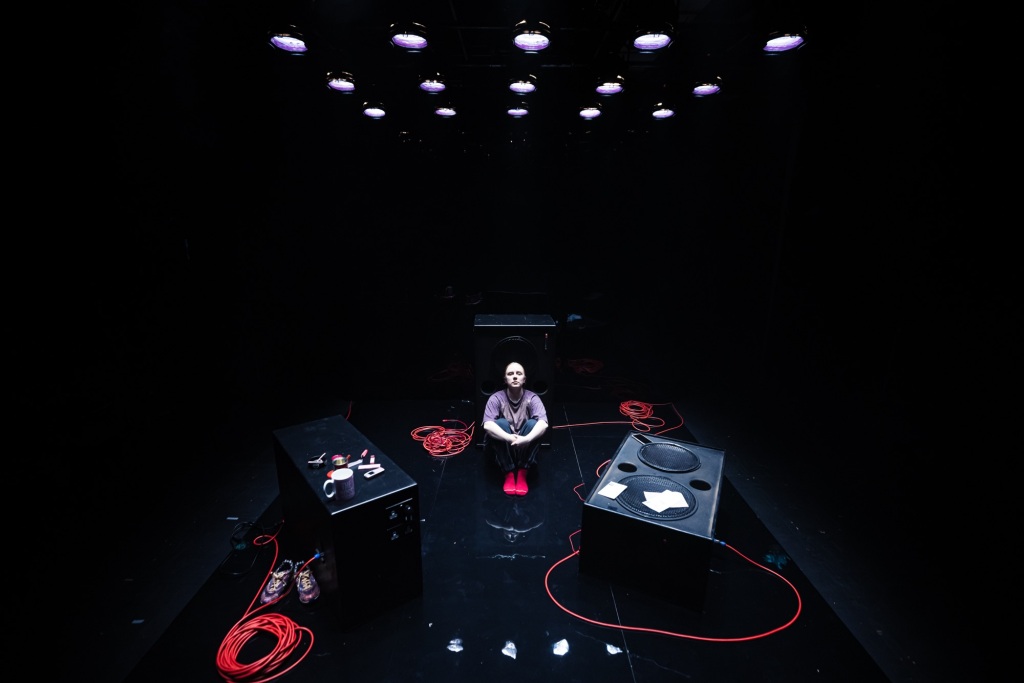
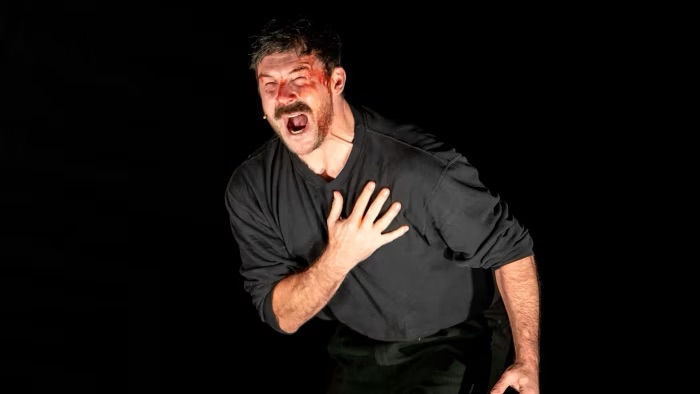
    Naked, unkempt and crudely painted, there’s also something of the clown, the shaman, the tragedian, and the unreconstructed Northern club circuit comedian about Scott-Rowley. He’s by turns inviting, threatening, charming and utterly magnetic. The nakedness isn’t for titillation but to give a sense of the primal about this sort-of apocalyptic solo vaudeville that is sometimes too esoteric to be fully comprehensible but is more often hypnotic and surprisingly hilarious. The lone toilet on stage, and which is the only set we get, feels indicative of the show’s attitude to existence….as though this is where humanity is heading. It’s a funny conceit, but also a nihilistic one.

    Although male genitalia are clearly on display, Scott-Rowley is a curiously androgynous figure for much of the performance, a sort of conduit and representative of humanity in all its squally, plaintive, anxious imperfection. You Are Going To Die seems calculated to unsettle, amuse and baffle in equal measure, and it succeeds.

    This was a sell out sensation at Edinburgh and the Vaults festival, and it’s not hard to see why. Scott-Rowley’s astonishing performance is augmented only by the aforementioned toilet, Matt Cater’s evocative, majestic lighting design and a doom-laden sound score. It’s simultaneously simple and hugely challenging. Prepare to laugh a lot, gasp in sheer astonishment…and take part in the most ribald audience singalong you’ve ever heard.

    About an hour of this level of intensity and insanity is probably about as much as anybody can cope with, but it really is a hugely rewarding piece of theatre. And even its detractors can’t cry emperors new clothes…as he’s all too aware that he isn’t wearing any. Strangely life-enhancing stuff, for all its desolation and shock value.

    April 24, 2024

  • THE HEART OF ROCK AND ROLL – ⭐️⭐️⭐️⭐️ – new jukebox musical based on the Huey Lewis songbook is a lovely surprise

    Corey Cott and McKenzie Kurtz, photograph by Matthew Murphy

    THE HEART OF ROCK AND ROLL

    Inspired by the songs of Huey Lewis and The News

    Book by Jonathan A Abrams

    Story by Tyler Mitchell and Jonathan A Abrams

    Directed by Gordon Greenberg

    James Earl Jones Theatre, New York City – open ended run

    https://heartofrocknrollbway.com

    There’s a lot of theatrical snobbery around the jukebox musical genre – for every & Juliet or Our House, there’s a Daddy Cool or a Tonight’s The Night – but when a show is as fresh, well-crafted and just flat-out delightful as this new Broadway tuner built around Huey Lewis’s apparently inexhaustible song stack, resistance is futile. That’s particularly true when Jonathan A Abram’s genuinely funny and touching script and Gordon Greenberg’s effervescent production are good enough to stand up to pretty robust critical analysis while at the same time giving audiences a really wonderful time.

    This might be the best integrated jukebox musical since the Madness-Tim Firth-Matthew Warchus Our House in that, if you walked in not realising that Huey Lewis and The News are a platinum selling band, you’d probably assume this was a custom built 1980s-set rom com studded with catchy soft rock numbers created for this specific story. That’s no mean feat, but The Heart of Rock and Roll wears its artfulness lightly.

    The plot’s not exactly challenging: nice guy Bobby who gave up on his rock band stardom dreams for a steady pay check in a cardboard box factory (try to contain your excitement) gets fired for a costly mistake, is reinstated when he redeems himself, gets involved with the boss’s daughter and finds his music career possibilities reignited at the most inconvenient moment. So far, so anodyne…but Abrams populates his story with such a sweetly eccentric rogues gallery of characters and writes with such wit and feeling, that what could have felt tediously predictable comes off as warm, quirky and surprisingly satisfying. It also finds an interesting tension in Bobby’s dilemma, and the ending is slightly unexpected.

    It also helps that in leading man Corey Cott the show has a bona fide heartthrob, one who sings and swaggers like a true rocker, has charm and vulnerability, can point a funny line, and looks, frankly, gorgeous. He’s reminiscent of a young Hugh Jackman, even down to the musculature, and is so adorable it’s impossible not to root for him. That proves especially valuable later in the second half when he breaks down in a cri de cœur solo lamenting his fractured relationship with his now departed father. It provides a surprisingly powerful emotional centre to what is elsewhere mostly a fun, light-hearted show. Opposite him, McKenzie Kurtz is every bit as fine, investing superficially uptight Cassandra with a kookie manic edge and real heart, in a performance that sometimes recalls Jane Krakowski at her most sparkling.

    Other stand-outs include Orville Mendoza as a marvellously bizarre Swedish tycoon, Billy Harrigan Tighe as an oleaginous, ruthless corporate player with designs on Cassandra (look out for the hilarious nightmare -as opposed to dream- ballet where she envisions the matrimonial horrors ahead as his bride) and F Michael Haynie, Raymond J Lee and John-Michael Lyles as Bobby’s bandmates, a trio of man-children whose weirdness is matched only by their heartwarming steadfastness. Broadway veteran John Dossett brings a nice dose of sincerity as Cassandra’s Dad. The superbly drilled ensemble execute Lorin Latarro’s high energy, often highly inventive choreography with skill and gusto (there’s a particularly fun dance on bubble wrap that’s as invigorating as it’s silly, and a bonkers aerobics number).

    Best of all there’s Tamika Lawrence as Bobby’s best mate, who is also the not-always PC HR manager in the factory. Lawrence has the god given ability to make any line funny, and when she lets rip vocally….consider yourself blessed. Roz, Lawrence’s character, is gay but it’s only lightly touched upon and in a way that is neither sensationalist nor patronising, another instance of this good-hearted charmer of a show getting it absolutely right.

    Derek McLane’s sets, Jen Caprio’s costumes and Nikya Mathis’s wig and hair creations all embrace the 1980s aesthetic with eye-popping, colourful flamboyance that never tips over into the grotesquerie that can sometimes happen when revisiting the decade of big hair, shoulder pads, leg warmers etc. The band and voices are all superb and, if the wrapping up of the plot feels a tad contrived, that’s a minor misstep in a massively likeable show.

    The Heart of Rock and Roll isn’t trying to reinvent the genre, but as a crowd-pleasing piece of nostalgic entertainment, appealing equally to the eyes, ears and heart, it succeeds triumphantly. It’s sometimes reminiscent of other shows – The Wedding Singer and Back to the Future, both set in a similar time period and the latter of which it shares ‘The Power of Love’ with as a finale, spring immediately to mind – but this is arguably better put together than either of these despite not being an original score, and ultimately it works on its own terms. “Do you believe in love?” goes one of Huey Lewis’s biggest earworms, used repeatedly here. The answer is a resounding yes.

    April 22, 2024

  • SUFFS – ⭐️⭐️⭐️ – the women’s suffrage movement marches to Broadway in this uncommon new musical

    Shaina Taub and company, photograph by Joan Marcus

    SUFFS

    Book, music and lyrics by Shaina Taub

    Directed by Leigh Silverman

    Music Box Theatre, New York City – open-ended run

    https://suffsmusical.com

    The struggles and setbacks encountered by the women’s suffrage movement is an incontrovertibly important matter and one of many admirable things about Shaina Taub’s worthy tuner, now on Broadway after considerable reworking from its original Public Theater run, is that it presents these grim challenges with equal parts gravitas and lightness of touch. A common accusation levelled at musicals trying to tackle “big” themes is that the song and dance treatment risks trivialising the serious points being made (much of Sondheim, Jason Robert Brown and of course Hamilton and Cabaret are notable exceptions), but nobody is likely to accuse Suffs of that either. Whatever its flaws, this bold new musical takes a clear-eyed, unsentimental look at not-too-distant American history, and appraises it with a cool head, a fire in its belly, and considerable wit.

    On paper, Suffs sounds like the American answer to the Old Vic’s Sylvia, which filtered the English suffragists stories through a modern lens, including hip hop and rap, and came off a bit like a Brit Hamilton wannabe. However, in chronicling the history of American suffrage and the battle for women in the United States to get the vote, Taub’s compositions are more timeless, taking in influences from vaudeville, traditional Broadway, and the sort of anthemic chorales that characterised the pop operas of the 1980s and 1990s. There are some ballads too, usually performed by Taub herself as chief agitator Alice Paul, but they tend to be reflective and gentle rather than bombastic. It’s a pleasant score, and intermittently very rousing, but not an especially memorable one.

    The all female company, fine voices all, sing it as though their lives depend upon it (which, in a way, they do) and Jason Crystal’s sound design and Michael Starobin’s subtly effective orchestrations ensure that the songs are showcased as compellingly as possible. The storytelling in Taub’s script is less successful however. It’s more of an episodic pageant than a conventional musical book, which works insofar as the cause is more important than any individual characters, but it does mean that most of the emotional engagement is achieved through broad, generalised brushstrokes, such as in the raging act one closer (“How Long?”) in which the collective of women attempt to reconcile the loss of one of their leading lights, Inez Milholland (Hannah Cruz in a luminescent Broadway debut), or the gorgeous, galvanising finale, “Keep Marching”, rather than connection to individual characters.

    That is partly the point of course, that the sweeping subject is of far more relevance than the plight of individuals, but it can make for theatre that is sometimes repetitious and only intermittently involving. In the second half, the show includes the hunger strikes and force feeding while incarcerated that was endured by these early feminists, and the simultaneous gaslighting of the general public from the offices of President Woodrow Wilson (a chilling but sparkling Grace McLean), but none of this hits with the shocking impact it should, partly because the characters feel more like sketches than fully rounded people and Leigh Silverman’s stylish but sanitised staging seems intent at keeping us at arms length.

    A face-off duet between Paul and society suffragist Carrie Chapman Catt (Jenn Colella, incisive, magnetic and customarily stellar) sees the latter change her mind about the former within the space of about a verse, which just feels like sloppy writing. Also, the tensions both within the Black contingent of suffragists and in relation to the rest of the movement are only addressed perfunctorily. All of this is essential, fascinating information but it often doesn’t feel fully fleshed out, as though through a need to keep the show down to a manageable running time.

    Taub’s achievement here, as book writer, lyricist, composer and star, is extraordinary but one wonders if the piece would be structurally stronger if she had more collaborators. Her singing has an attractively plaintive quality that gives way to a sweet and surprising power in the upper register. She’s a solid actress yet Alice feels strangely unknowable as the centrepiece of the musical.

    Ally Bonino and Nadia Dandashi have less stage time but register more vividly as two of her colleagues, and I loved Kim Blanck’s fiery, funny, staunch Ruza Wenclawska, whose self-dramatising histrionics would eventually secure her a career on the stage. Nikki M James finds complex layers in the brilliantly outspoken Ida B Wells and is a potent stage presence. Glorious Emily Skinner injects a welcome jolt of camp as society benefactress Alva Belmont.

    Visually, the production is elegant (especially Paul Tazewell’s beautiful period costumes) but sometimes a bit too crisp and clean. There are a couple of ponderous choices, such as the bizarre half-horse creation with which designer Riccardo Hernandez recreates the famous image of Inez Milholland, clad as a symbolic herald, on horseback leading the 1913 Women Suffrage Procession: it’s a striking image for sure, especially when juxtaposed with the giant photo of the actual woman (and horse) that flies in at the end of act one, but the actual structure Cruz’s Milholland is perched upon is distractingly strange to look at, with it’s golden head, white body and neck and legs that appear to be constructed out of coathangers. It’s the sort of prop that looks as though it was cobbled together for rehearsals but should have been replaced for the stage. Elsewhere, Hernandez’s work is spare and unobtrusive, but never, to be fair, cheap-looking.

    Ultimately, Suffs succeeds because of its ambition and originality, but most importantly because it talks about a fight that is still going on. It honours the work and sacrifices of the women who looked ahead for the generations of women who would come after them. It’s not a great musical, but it’s a richly significant one, and it doesn’t look or sound like anything else, not even the questionable Roundabout revival of 1776 from two seasons ago and which cast the (almost) entirely male dramatis personae with female and non-binary performers. That felt like a gimmick, but having an all-female cast here is a logical decision borne out by the themes and material.

    The ovation at the end of the performance I saw felt as though it stemmed as much from a desire by audience members to stand up and be counted as much it did to acknowledge the undeniable excellence of this cast and (also all female) orchestra, and that’s pretty powerful. I suspect these suffragists will “Keep Marching” on Broadway for quite some time.

    April 22, 2024

  • HELL’S KITCHEN – ⭐️⭐️⭐️⭐️⭐️ – native New Yorker Alicia Keys’s valentine to her hometown is a complete and utter triumph

    Maleah Joi Moon, photograph by Marc J Franklin

    HELL’S KITCHEN

    Music and lyrics by Alicia Keys

    Book by Kristoffer Diaz

    Directed by Michael Greif

    Shubert Theatre, New York City – open ended run

    https://www.hellskitchen.com

    Talk about having your cake and eating it. Hell’s Kitchen, the breathtaking, heart-pounding Alicia Keys musical now on Broadway hopefully until hell itself (if such a place exists) freezes over, is both a love letter to the “concrete jungle where dreams are made of” which New Yorkers will watch with pride-filled hearts and damp eyes, and also the quintessential NYC theatrical experience for tourists. Not since Rent, with which it shares director Michael Greif, has a musical so compellingly captured the relentless energy, sharp edges and bruised magnificence of the city that never sleeps. Not even In The Heights, which it also superficially resembles in its depiction of a teeming Manhattan community on stage, achieved this sense of caffeinated urgency tinged with wonder and danger.

    Over a decade in the making, Keys’s semi-autobiographical musical, now on Broadway after a sold out premiere at the Public, tells the story of 17 year old Ali (the abbreviated name isn’t by accident) growing up in the 1990s at Manhattan Plaza, the mighty tower block right in the heart of Hell’s Kitchen that provides low cost housing for artists and other creative people. It’s a real building and Alicia Keys really did grow up there. Kristoffer Diaz’s feisty, engaging book charts Ali’s joyous discovery of music, also boys, and her sometimes fractious relationship with her solo parent, mother Jersey (a beautiful, selfless performance by Shoshana Bean, that only becomes showy when she turns up the vocal heat to exhilarating effect).

    Diaz’s script namechecks historical Black female musicians via the authoritative, slightly elusive figure of Miss Liza Jane (a sublime, incandescent Kecia Lewis) who spots Ali’s musical potential and nurtures it with tough love and uncompromising excellence. If the unreliable dead-beat Dad, forever promising to show up then failing to do so, is a bit of a cliché, although one superbly played by Brandon Victor Dixon, the character of Knuck (Chris Lee, heartcatching), the tough-looking but honourable street drummer Ali falls for, really is not. Similarly, there’s nothing particularly original about the way the pull-and-push of the mother-daughter relationship is depicted, but it’s so well acted and the dialogue is vital and authentic, so it’s impossible not to get involved.

    Then when you then throw in Keys’s beloved songbook, a host of thunderously successful technical elements, Camille A Brown’s wild, raw, gorgeous choreography (surely this is the most exciting dancing currently on Broadway) and a truly phenomenal cast, you may find yourself not just involved but catapulted joyously into the stratosphere. Hell’s Kitchen might be the greatest legal high available in New York City right now, even allowing for the fact that cannabis has been decriminalised here.

    Yes, it’s really that good: a kaleidoscopic, emotional, visual and aural rollercoaster that captivates non-stop. From the first glimpse of Robert Brill’s complex, gleaming urban jungle set, dazzlingly lit by Natasha Katz, through to the soul-stirring ‘Empire State of Mind’ finale, so thrilling it’s almost an out-of-body experience, Hell’s Kitchen is a full-on New York assault on the senses as much as it’s a traditional musical.

    The frenetic chaos of the multicultural Manhattan streets gives way to the oasis of calm that are Miss Liza Jane’s piano lessons for Ali, and number after number threatens to rip the roof off the Shubert (Gareth Owen’s sound design is sensational, as are Tom Kitt and Adam Blackstone’s orchestrations which succeed in preserving the essence of Keys’s original recordings while making the songs sound dynamically theatrical.) Each ensemble member reads as an individual, even when executing Brown’s jagged but graceful dances in unison, and they are all utterly fabulous.

    Kecia Lewis closes the first half with a transfixingly powerful version of ‘Perfect Way To Die’, Keys’s mediation on police brutality and racism (“Another dream lost /Another king and queen lost /Another broken promise they refuse to make right”) which is one of the most extraordinary examples of acting through song I’ve ever witnessed. Lewis’s voice is ringingly sweet in its upper register and like a growl of deep-rooted pain in the lower. She’s stunning. The unbridled joy of ‘Girl on Fire’ and a glorious new song written especially for the show, ‘Kaleidoscope’ (staged with a kinetic vitality that stirs the soul) is equally moving, but for very different reasons.

    At the centre of it all is newcomer Maleah Joi Moon as Ali, delivering one of the most blazingly impressive debuts within living memory. Tiny in stature but mighty in everything else, she captures the rangy freshness of Keys’s vocals but without resorting to impersonation. Her acting is wonderfully alive and in-the-moment, she has the comic instincts and the emotional depth of a seasoned pro decades older, and makes Ali a tough but infinitely lovable go-getter. She’s lost yet cocky, ambitious but never obnoxious, even when warring with Bean’s memorable Jersey. She gets a little croak in her voice at moments of high emotion that tears at your heart, and has an irresistible energy and edge. It’s a platitude, but a star really is being born here.

    Greif’s direction and Brown’s often witty choreography, with influences from Alvin Ailey to street dance and much in between, marry whirring restless energy with complete clarity. Batteries of lights spin and whirl, great walls of sound surge through the theatre and the multilevel set, with musicians arranged in towers on either side of the stage, is in constant motion, augmented most pleasingly by Peter Nigrini’s colourfully inventive projections…technically the show is an absolute marvel, yet never at the expense of the humanity at the core of this compelling story.

    Vibrant, transformative and just damn beautiful, Hell’s Kitchen is the sort of show that makes you fall in love all over again both with the theatre and with New York City. To misquote one of Keys’s lyrics, “this show is on fire”….and it’s on fire ‘cos it’s dynamite.

    April 21, 2024

  • STEREOPHONIC – ⭐️⭐️⭐️⭐️⭐️ – a new American classic arrives on Broadway

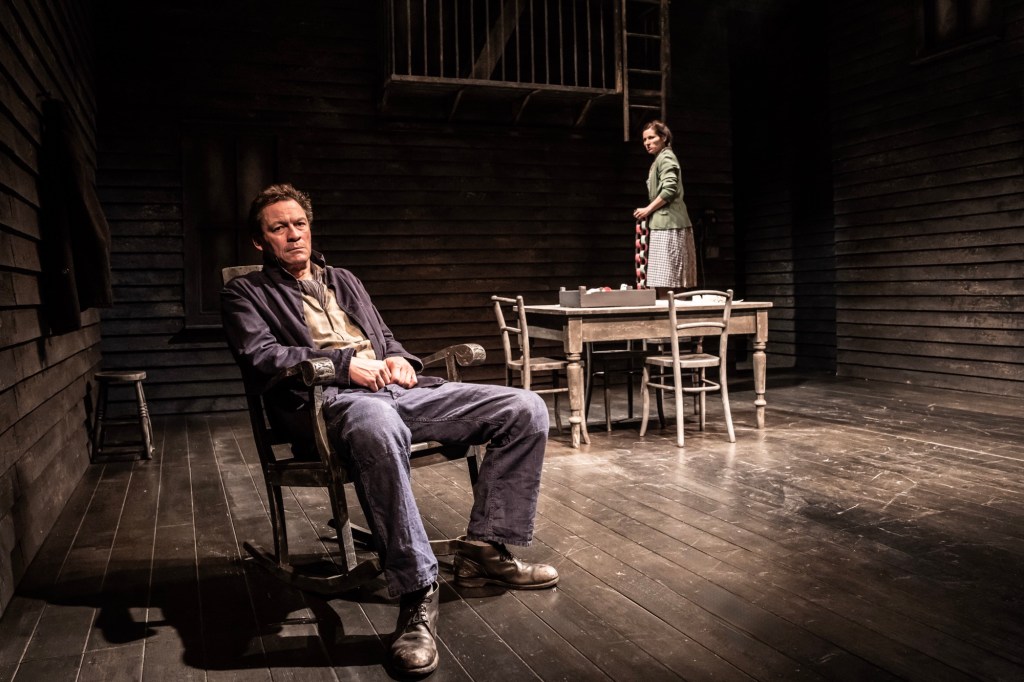
    Photograph by Julieta Cervantes

    STEREOPHONIC

    by David Adjmi

    Original songs by Will Butler

    Directed by Daniel Aukin

    John Golden Theatre, New York City – until 18 August 2024

    https://stereophonicplay.com

    There is a common perception that while Americans are peerless at producing high energy musical theatre, we Brits have the monopoly on straight drama in the English speaking world. Obviously, there are exceptions, such as Williams, Miller, Wilson and O’Neill to name a few, but traditionally the received wisdom is that Broadway excels at musicals, while we are superior at the non-singing and dancing stuff. A play like David Adjmi’s engrossing Stereophonic, newly transferred to Broadway after a sold out premiere run at Playwright’s Horizons, poses a mighty challenge to those archaic preconceptions though.

    Like the works of Annie Baker and Stephen Karam’s 2016 Tony winner The Humans, this is one of those great American plays where seemingly nothing much happens…and yet everything happens. This rewarding slow-burner charts, with forensic precision, piercing wit and a clarity of vision that the characters themselves seldom possess, the progress of a rock band creating a career-defining album. It’s like a fly-on-the-wall documentary but performed live, and Adjmi carefully, lovingly builds up a picture of these people -their flaws, their insecurities, their loves, their eccentricities- so that they glow before our very eyes, with a rare richness of colour and detail. The first couple of minutes are bewildering, as the characters talk over each other, speak at levels and speeds that are naturalistic but not immediately accessible, but stick with it….

    So sublime and real is the direction of Daniel Aukin and the flawless cast of seven (all but one of whom are Broadway debutants) that it’s hard to know where Adjmi’s script ends and the brilliance of the production takes over. It hardly matters. The play deals with the sometimes fraught, often random nature of the creative process, and of how success and validation can wreak havoc on personal relationships. Across three hours duration and a two year timespan (1976-77), the group’s journey from amazement at their new found success to ragingly huge egos, is beautifully managed.

    Will Brill’s mercurial, meticulously well observed bass player Reg transforms from alcoholic, drug-infused mess to holier-than-thou but deluded health freak (watch for his reaction when Eli Gelb’s guileless recording engineer Grover points out to him that he does in fact still drink). Two romantic relationships break down irretrievably. There’s a particularly amusing second act scene where a couple are bickering vitriolically to the evident discomfort of the singer standing between them, but are able to instantaneously snap out of it to produce the most exquisite harmony.

    A mesmerising Sarah Pidgeon brings Meryl Streep levels of truth and emotional engagement to Diana, the lead singer whose relationship with diva-esque, almost cruelly disengaged band leader Peter (Tom Pecinka) is imploding even as they try to make music together, and whose career may be on the verge of going stratospheric independently of the group. She nails the vulnerability of a young woman whose personal life is being torn apart while simultaneously suggesting the dual veins of insecurity and self belief that run through the core of true artists. Pidgeon is thoroughly convincing, even musically, with a rangy, haunting plaintiveness to her vocal timbre that recalls Stevie Nicks.

    Pecinka and Brill are magnificent, capturing every aspect of their complex, often infuriating characters. Gelb and Andrew R Butler are cryingly funny yet oddly touching as the engineers trying to preserve some level of self respect while managing the band’s often outlandish behaviours. Despite wavering accents, Juliana Canfield and Chris Stack contribute invaluably as two English members of the group, she reassuringly stable until she absolutely isn’t, and he covering personal emotional pain with a veneer of scabrous sarcasm. The camaraderie between the two women in a predominantly male environment strikes a real chord. There’s not a single moment that doesn’t ring true (accents aside) and the tiniest of details becomes absolutely riveting.

    Behaviourally, these people are often nightmares but, and here’s where Stereophonic becomes truly magical, when they find the sweet spot in their music, all is temporarily forgiven. Will Butler has crafted a selection of rock songs – galvanising, affecting, rousing, most of which we only hear fragments of – that aren’t just authentic, they’re completely wonderful. Like, this is an album one would go out and buy. The music is fully live, and the whole play becomes testament to its power to express, heal and uplift.

    Presenting artists on stage agonising about their art can be tricky: if you don’t show any of the ‘work’ then audiences can feel cheated, but if you do present a taste of it and it isn’t very good (Steven Pimlott’s original NT production of Sunday in the Park with George is a case in point, where the act two Chromolume was eye-rollingly pretentious) it potentially invalidates everything you’ve been trying to point out about creative struggles. From this point of view however, Stereophonic is an utter triumph, these songs sear and soar.

    That triumph extends further to David Zinn’s richly textured, intricate set, a hermetically sealed band box atop a scruffy but homey communal area, so evocative you can almost smell it, centred around a gigantic mixing desk. Ryan Rumery’s sound design is a masterpiece, balancing the two environments, and finding both the human and the monumental. It’s fascinating, even moving, such as in the final moments where Gelb’s lovable, shell-shocked Grover, alone in the recording studio, plays around with tracks, isolating then adding, making the full sound we’ve been listening to, then dismantling it, until we’re left with just the human voices, breathy, harmonious and timeless.

    In all honesty, it is a bit long: Canfield’s Holly gets to deliver a lengthy pontification on the movie thriller Don’t Look Now that, although beautifully performed, distends an already punishingly lengthy second act, and doesn’t really add anything. Also, it takes a few minutes to tune in at the top of each act. For a piece that so steadfastly refuses to ingratiate itself (although the irresistible humour is an undeniable palliative), it’s still astonishing to see and hear the effect this show has an audience; the night I attended you could’ve heard a pin drop at key moments, and the ovation at the end was like being at an actual rock concert. I would imagine this’ll be a front runner for every Best Play award going, and will be seen in countless international productions. Sonia Friedman is one of the producers so it could well end up in the West End, although it wouldn’t look out of place at the National or the Almeida. If there’s any justice, wherever it ends up, it’ll be with this glorious original cast.

    April 20, 2024

Previous Page Next Page

Blog at WordPress.com.


Loading Comments...
 

    • Subscribe Subscribed
      • ajhlovestheatre
      • Join 59 other subscribers
      • Already have a WordPress.com account? Log in now.
      • ajhlovestheatre
      • Subscribe Subscribed
      • Sign up
      • Log in
      • Report this content
      • View site in Reader
      • Manage subscriptions
      • Collapse this bar