Skip to content

ajhlovestheatre

  • Home
  • About
  • Contact
  • Blog

  • FIDDLER ON THE ROOF – ⭐️⭐️⭐️⭐️⭐️ – staggeringly good new version of a Broadway classic that feels all too timely

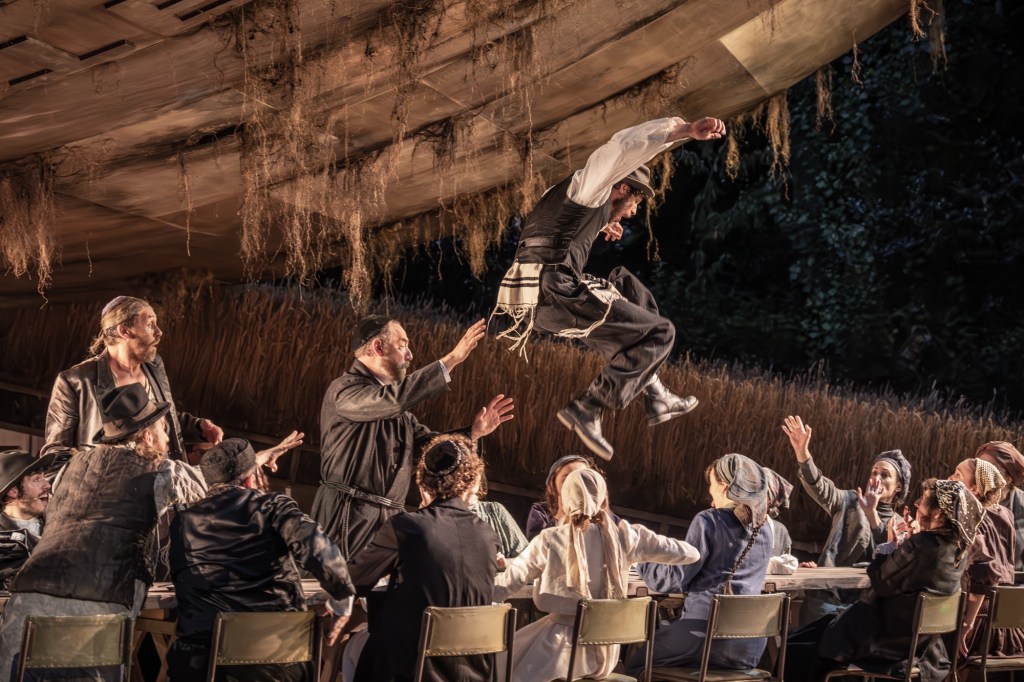
    Photograph by Marc Brenner

    FIDDLER ON THE ROOF

    Book by Joseph Stein 

    Lyrics by Sheldon Harnick 

    Music by Jerry Bock

    Based on the stories of Sholem Aleichem

    directed by Jordan Fein

    Regents Park Open Air Theatre, London – until 28 September 2024

    https://openairtheatre.com/production/fiddler-on-the-roof

    With Kiss Me Kate sparkling at the Barbican, a gorgeous Hello, Dolly! at the Palladium, A Chorus Line scintillatingly reminted at Sadlers Wells (by way of Leicester Curve) and now this breathtaking new Fiddler on the Roof as Regents Park’s centrepiece production of the season, London-based lovers of classic Broadway tuners are having a bumper theatrical summer. There are certain vintage musicals that, however well-crafted and admirable, I don’t really need to see another production of, but that’ll never be the case with Bock, Harnick and Stein’s exhilarating, sorrowful and sweet masterpiece.

    It has only been five years since Andy Nyman led Trevor Nunn’s magnificent, semi-immersive Menier production, but sadly this tale of Antatevka, a rural Jewish peasant settlement in early 20th century Imperial Russia, having to uproot and flee due to pogroms and anti-Semitic prejudice, feels even more relevant now than it did then. Joseph Stein’s book, based on a selection of short stories by Sholem Aleichem and centering on devout milkman Tevye, his opinionated wife Golde and their five unmarried daughters,  is an engaging mix of Borscht Belt humour, brutal realities and unabashed sentiment. It has a certain toughness as it depicts the hardscrabble, make-do-and-mend lives of these people offset by a wonderful generosity of spirit. 

    Meanwhile Bock and Harnick’s score, the music owing more to Jewish Klezmer than the traditional brassiness of Broadway, thrills the blood. Beloved numbers such as ‘Sunrise Sunset’, ‘If I Were A Rich Man’ and the enthralling chorale ‘Tradition’ get right under your skin. Expect a quickened pulse and wet eyes. 

    Director Jordan Fein remounted the bold Daniel Fish take on Oklahoma! for its Young Vic and subsequent West End seasons, so has form on casting an iconoclastic light on MT classics. However, this Fiddler has more in common with the Daniel Evans-directed 2021 Chichester South Pacific than with that divisive deconstruction of Rodgers and Hammerstein’s beloved first hit, in that it’s a staging which leaves traditionalists happily tear-stained while simultaneously providing plenty of fresh insights for those seeking a little more edge and depth. 

    It’s impossible in the present climate to watch the violent attack ruining the joyful wedding that closes act one and not equate it with the racist thuggery currently occurring in cities up and down the UK, in the same way that the oft-repeated statements in the script that “horrible things are happening in the world” chillingly foreshadows present times. One of the reasons why Fiddler retains its power is that it can encompass contemporary horrors yet still find the joy in being alive. The show as a whole is a paean to humanity, and to survival, or as one of the uplifting numbers has it, “L’Chaim” (“To life”).

    Fein has some bracingly original thoughts about this beloved piece, such as having the villagers sitting around bearing witness to even the most intimate family scenes, like a Jewish Greek chorus, or leaning more than usual into the concept that the eponymous fiddle-player (a virtuosic Raphael Papo) is an alter ego to Tevye. That said, he doesn’t go as far as the modern framing device Bartlett Sher used in the last Broadway revival (the show opened and closed with Danny Burstein’s Tevye in contemporary dress, clutching a book about historical Anatevka). The women possess more agency though, and it’s a stroke of genius having oldest daughter Tzeitel (luminous, clarion-voiced Liv Andrusier) play both her deceased grandmother and vengeful ghost Fruma Sarah in the fantastical dream section (stunningly staged and lit by Julia Cheng and Aideen Malone respectively) whereby Tevye convinces his wife that the lucrative match between their first born and the older local butcher, is a terrible idea. There’s no attempt to adopt Yiddish or faux-Russian vocal inflections: everybody speaks in their own accent. This is a production full of glorious things.

    Broadway actor Adam Dannheisser who played the butcher Lazar Wolf in the Sher production now graduates to Tevye, and must surely be one of the most engaging and magnetic actors to play the leading role. He projects a hearty combination of warmth and virility, plus a terrific singing voice; he convinces as a garrulous, sometimes irascible, family man torn, eventually to the point of real tragedy, between his love for his wife and daughters, and his strict obeisance to god. 

    Also unforgettable is the central trio of older daughters. Andrusier confirms that the star quality she displayed in the off-West End musical hit Ride was no fluke, while Georgia Bruce brings a haunting dolefulness to second daughter Hodel. I’ve probably heard prettier versions of her ravishingly lovely farewell lament ‘Far From The Home I Love’ but never one that feels so strongly as though it’s being ripped out of the very soul of this young woman making an irrevocable life choice; it’s desperately moving. Equally devastating is Hannah Bristow’s Chava, the bookish daughter rejected for falling in love with somebody from outside the faith. Bristow invests her with a rich, palpable inner life, a charming goofiness and a core of steel that belies her fragile appearance: she’s remarkable.

    Lara Pulver brings gentle authority, an austere elegance and expressive, beautiful singing voice to Golde, while Beverley Klein (a previous and much acclaimed Golde) is irresistibly funny as the gossipy, overdramatic matchmaker. Daniel Krikler and Dan Wolff lend passion and specificity to two young suitors. The fine ensemble create an entirely credible community on stage, and the choral singing is transportingly fabulous. 

    Tom Scutt’s split level set of corn field and wood, suggestive of both shelter and oppression, is fascinating, simultaneously evoking a giant book being prised open (perhaps a nod to the short stories upon which the show is based) with the word ‘Anatevka’ etched on the pages, and the rural harvests that sustains the population.  Fein’s direction is nimble and brilliant, some of the stage pictures linger long in the memory after the performance is over. Dan Turek’s fine band help ensure that the show sounds as impressive as it looks. 

    You emerge from this new version of one of the most deservedly beloved musicals of all time with renewed respect for just how finely crafted the piece itself is, alongside a sense of wonder at how Fein and his marvellous team have honoured what is already there while finding subtle new colours. In this enthralling production, Fiddler on the Roof succeeds in changing with the times in a way its hero struggles to do. Also, as long as some humans feel that they can beat down on people who think or believe differently from them, then this story needs to be told. Do not miss this. 
    August 8, 2024

  • DEATH OF ENGLAND: THE PLAYS – MICHAEL and DELROY – ⭐️⭐️⭐️⭐️ – Clint Dyer and Roy Williams’s thrilling state-of-the-nation monologues transfer in triumph

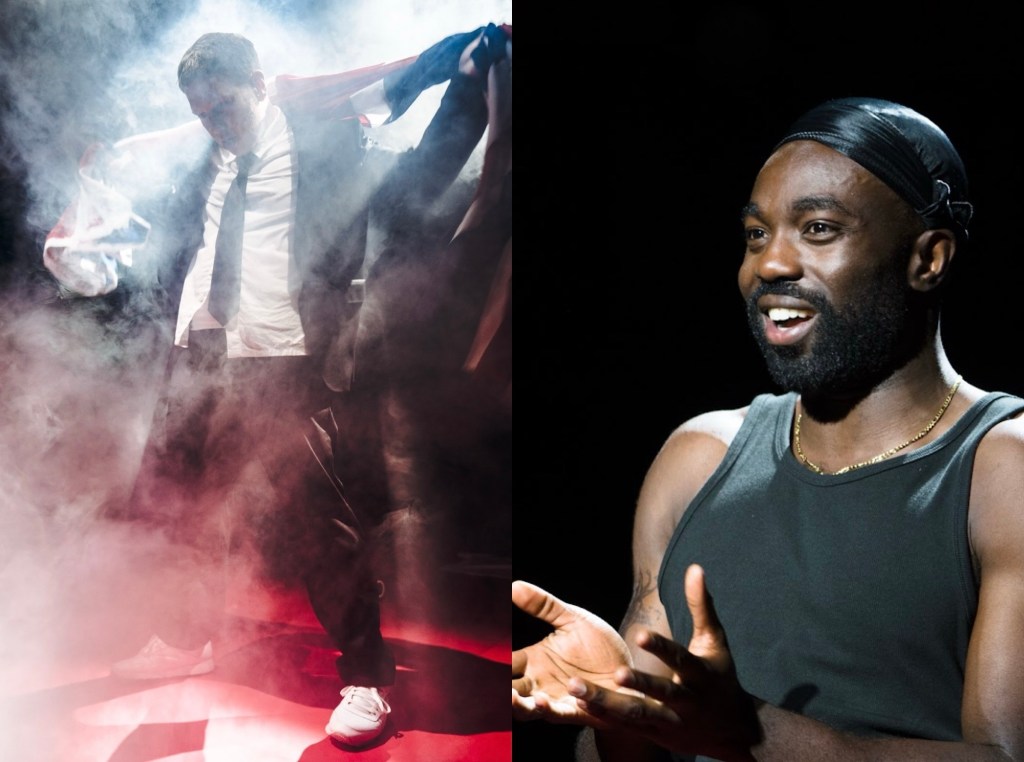
    Photographs by Helen Murray

    DEATH OF ENGLAND: THE PLAYS – MICHAEL

    DEATH OF ENGLAND: THE PLAYS – DELROY

    by Clint Dyer and Roy Williams

    directed by Clint Dyer

    @sohoplace, London – in repertoire until 28 September 2024

    https://sohoplace.org/shows/death-of-england-the-plays

    This provocatively titled trio of plays (the third, Closing Time, begins performances next month) returns following a series of premieres at the National and, in the case of Michael and Delroy, also online, the run of the latter curtailed by Covid. Co-writers Clint Dyer (who also directs) have updated the first play Michael, which closed at the NT’s Dorfman the week before the pandemic shut the theatres, by putting in references to Covid and other post-2020 events. Individually these pieces – superannuated monologues really in the case of Michael and Delroy – are vivid, coruscating state-of-the-nation diatribes larded with punchy theatricality and brilliantly performed, but collectively they feel like An Event.

    Michael (originally played to great acclaim by Rafe Spall, replaced now by a sweatily compelling Thomas Coombes who proves every bit the equal of his predecessor) has just lost his Dad, an East End flower stall holder who was also a massive racist, and is negotiating grief, guilt, some fairly poisonous family dynamics and the consumption of heroic quantities of booze and cocaine. Coombes brings a formidable energy to the role, his aggressive chumminess covering up deep wells of pain and self doubt. There are shades of Music Hall to the way Coombes’s Michael interacts directly with the audience (arranged on all sides of the giant St George’s Cross that makes up Sadeysa Greenaway-Bailey and ULTZ’s unit set), cheerfully handing out Penguin biscuits and bananas, or getting right up in the faces of aisle-sat patrons while celebrating a football win. He’s dangerous too, especially when intoxicated, pointing out individuals as guests at the family funeral he’s about to ruin, or examining how many of his father’s godawful prejudices he has inherited.

    The writing is abrasive but has the salty tang of authenticity and Coombes doesn’t miss a beat, even when Dyer and Williams throw a plot curveball near the end of Michael that strains credulity. In the hands of a lesser actor, this bizarre misstep (no spoilers, you need to experience it for yourself) might seriously unbalance what is otherwise a gritty thrillride of a play, but Coombes is so good he makes it work….just about. The overriding idea that to thrive on our own terms we need to free ourselves from the constraints of our parents’s flaws and opinions is a fascinating one.

    Watched together, Michael and Delroy paint a bold, fascinating picture of lives that don’t often get stage time (Delroy as a Black, Tory-voting Brexiteer feels like a particularly fresh creation). The two scripts are full of rage, bewilderment, ruthlessly detailed observation, and rambunctious comedy, they also inform each other (Michael and Delroy are working class Londoners, childhood friends who have become estranged, and use similar vernacular), and both protagonists are a mass of convincing contradictions like, you know, real flesh and blood humans.

    Delroy is, I think, the slightly better play. Like its predecessor, it’s predominantly told in flashback, and features a lot of the same unseen but vividly evoked characters. Paapa Essiedu plays Michael’s former friend, about to have a baby with his mate’s formidable-sounding younger sister, and whose life is tossed into chaos and distress when he becomesn the victim of racial profiling. If neither play is necessarily telling us anything new about the inequalities and injustices within the British social and legal systems, setting Delroy up as a home-owning bailif (and he’s pretty self-aware about the amount of sympathy that profession is likely to garner), an individual who’s actively contributing to society, makes it all the more potent and poignant when he’s sidelined and judged purely on the colour of his skin.

    Essiedu is dynamite. He brings every nuance and detail of Delroy – his charm, cheek, arrogance, humour, vulnerability, tenacity, despair and finally his hope – to raw, pulsating life. His comic timing and ability to connect directly with the audience are joyous, while his ability to crumble before our very eyes is heartrending. This may be his finest stage work to date.

    Played out on the same set (which gets partially trashed during Delroy, in a keen bit of theatrical symbolism), Dyer’s highly charged stagings are further bound together by common visual and aural motifs (thunderous sound by Benjamin Grant and Pete Malkin, and exciting lighting design by Jackie Shemesh). It’s more bombastic than subtle, but it’s an undeniably potent double-punch of theatrical wonder and political fury. You inevitably come out of the theatre determined to come back and see the third play. Riveting, vital stuff.

    My review of Closing Time will appear on WhatsOnStage on 29 August 2024

    July 31, 2024

  • WORMHOLES – ⭐️⭐️⭐️⭐️ – solo play that combines unease, humour and razor sharp writing to riveting effect

    Photograph by Rob Grieg

    WORMHOLES

    by Emily Jupp

    directed by Scott Le Crass

    Omnibus Theatre, London – until 10 August 2024

    https://www.omnibus-clapham.org/wormholes/

    Monologues and thrillers are two of the trickiest theatrical genres to pull off successfully, but Emily Jupp’s Wormholes is a compulsive fusion of the two. This isn’t an exploitative thriller though; rather it’s a one-act play, a sort of confessional, infused with intelligence, tragedy, fury and humour, sensational only in that the writing, direction (Scott Le Crass) and acting (Victoria Yeates) are so damn good.

    Wormholes is a story of domestic abuse, controlling behaviours and the way that one person’s mental health can be completely destroyed by a carefully calibrated combination of the two, especially when ignited by an irresistible dose of sexual chemistry. Victoria Yeates plays a cheerful, smart but essentially unremarkable young urbanite, with a decent job and social life, a positive outlook and a gaggle of supportive gal pals. She meets an unnamed man, has the most exciting sex of her life, and slowly but surely sees her self esteem, her external relationships and her sanity being whittled away.

    It’s not a particularly original starting premise perhaps but the quality of Jupp’s script and Yeates’s performance plus the air of simmering unease, punctuated by moments of daylight, that Le Crass’s direction subtly brews, ensures that Wormholes is thoroughly gripping for its seventy minute duration. The breezy normalcy that Yeates’s Mary projects so effortlessly serves as a feint to draw us into the mire of the mental and physical torture this woman, who seldom comes across as a victim despite life’s efforts to cast her as such, goes through at the hands of an unstable man. The message seems to be that if it can happen to her, it could happen to anybody.

    Yeates’s ability to switch between chummily anecdotal and total anguish is impressive, and the whole performance is a technically terrific example of a superb actress at the top of her game knowing exactly when and where to take her foot off the emotional pedal then when to go for absolute broke. Le Crass (who with his stunning post-pandemic production of Rose on stage and screen with Maureen Lipman, and the fascinating gay body image monologue Buff seen recently in London and Edinburgh, is a specialist in making solo plays take wing) has her talking directly to us, dancing with abandon, staring dead-eyed at a hopeless future, and, in a particularly harrowing sequence, reacting to a volley of horrible physical attacks. This is top drawer work, focussed, economical but able to go to extremes when required. The matter-of-fact-ness of roughly seventy per cent of the delivery makes the trauma of the remaining thirty per cent all the more astonishing and affecting.

    The collaboration between writer, actor and director is seamless, except for one brief moment when Mary hurls abuse at a younger detainee in the facility where she has ended up after exacting a brutal, if dramatically satisfying, revenge on her tormentor. Momentarily, the play doesn’t quite ring true. Jodie Underwood’s subtle, detailed lighting, Leah Kelly’s soothing yet vaguely clinical set and perhaps especially Paul Housden’s sound and composition, full of distortion and dislocation, unsettlingly suggest being inside the head of a person who, through no fault of her own, is unable to discern which way is up.

    It’s a powerfully female-driven show, as it needs to be, so it’s perhaps a little churlish to wish that the man who lays Mary so low wasn’t so sketchily drawn. I’m not sure that her dismissive mother rings entirely true either, but these are minor flaws in a sophisticated piece of storytelling that employs its red flags with subtlety and real skill. Jupp’s writing is terse, compelling, witty and, when it needs to be, utterly cruel. The wormholes metaphor that permeates the text (the parasitic guinea worm can live undetected in an apparently healthy human, the person’s increasing health niggles easily dismissed as something negligible, before exiting the body in the most agonising way possible…look it up, it’s terrifying) only occasionally feels forced, and makes a potent parallel with our heroine’s tangy but awful tale.

    If Wormholes doesn’t end the way I thought it would, the ambiguity and sadness of its conclusion makes for memorable theatre. This is a haunting contemporary piece: intense and tough to take, but shot through with compassion and humour, and ultimately strangely uplifting thanks to the sheer quality of the artistry on display. Strongly recommended.

    July 29, 2024

  • FANGIRLS – ⭐️⭐️⭐️ – cultish Australian teen musical arrives in London with a colourful bang

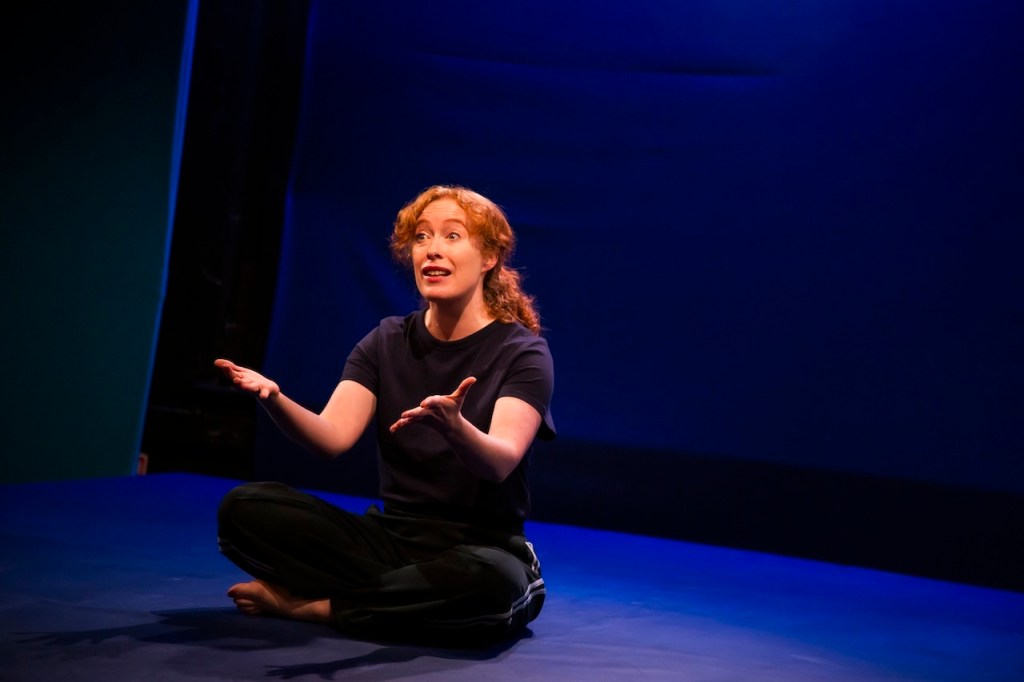
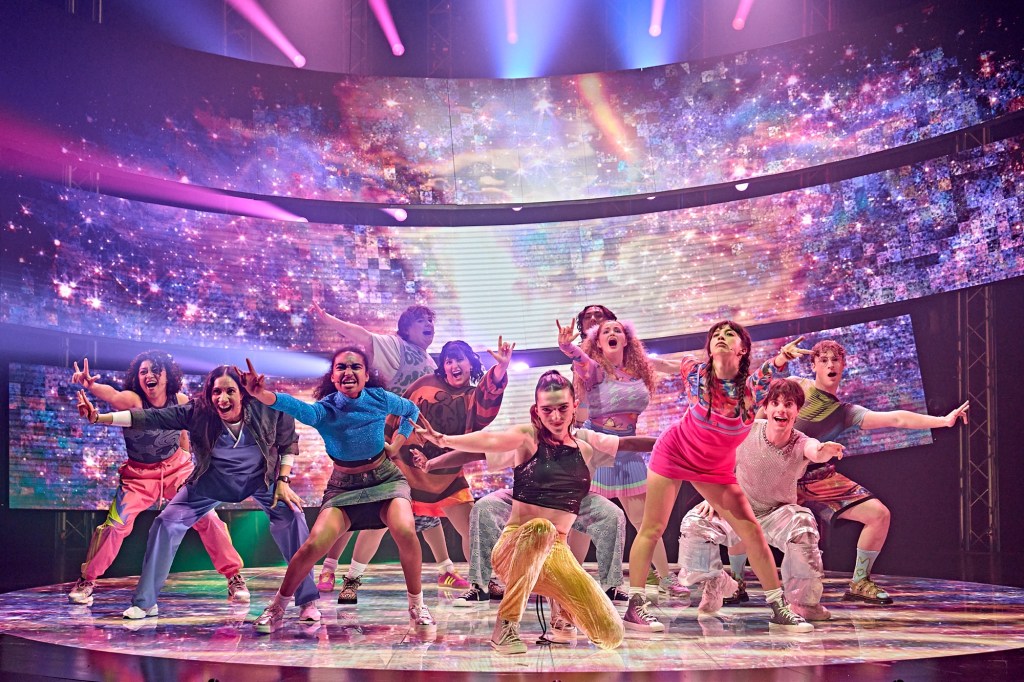
    Photograph by Manuel Harlan

    FANGIRLS

    Book, music and lyrics by Yve Blake

    Directed by Paige Rattray

    Lyric Hammersmith Theatre, London – until 24 August 2024

    https://lyric.co.uk/shows/fangirls/

    There’s a very dark, very funny musical screaming to get out of Fangirls, receiving its UK premiere in a co-production between the Lyric Hammersmith and Sonia Friedman (who apparently has a penchant for teen-aimed tuners with youthful female protagonists, since she’s also currently presenting Mean Girls in the West End) but this unruly Australian concoction needs more work to uncover it. As it stands, Yve Blake’s show is a cartoonish blast of lunacy that never quite has the courage of its convictions, and seems determined to hurl everything at the wall, in terms of tone, plot and emphasis, to see what sticks. It’s a boisterously entertaining mixed bag, messy and more crude than witty, as though Matilda, The Rocky Horror Show and Be More Chill had been swirled round in a blender and emerged with a dodgy Aussie accent.

    On the upside, Paige Rattray’s bubblegum-bright staging boasts a diverse, talented cast, flashy production values, a banging score and gleefully energetic choreography by Ebony Williams. Conversely, the piece itself is sloppily structured, and there are plot holes you could drive a truck through (a teenager can abduct and keep captive one of the biggest pop stars on the planet, and her mates are fine with it once they get over the shock?….er, ok) plus a tone of amped-up hysteria that bludgeons you into submission, or possibly bewilderment. Sometimes it’s deeply felt whilst at others it seems like a cynical attempt to cash in on a youth market that is outgrowing Six, mourns the closure of Heathers and can’t afford the ticket prices to Mean Girls. Apparently it has been extensively workshopped since its original Australian iteration, and the mind boggles at what it must have been like before.

    Despite all that, it whips up its audience into quite a frenzy. Blake’s songs are generic but they’re rousing and attractive, the voices are fabulous and the dances are executed crisply and with real dynamism. By mixing sections of the fan fiction that obsessed Sydney teenager Edna (Jasmine Elcock) creates into the action, Blake’s book doesn’t always make it clear if what we’re watching is supposed to be taken at face value or not in this high octane examination of obsessive fandom and the societal pressures on modern teenagers. The opening is a thrillingly staged fantasy sequence where Edna and her favourite pop star Harry (Thomas Grant) motorcycle ride through a nighttime city while knocking seven bells out of sinister adversaries, and I found myself fervently wishing some of the later plot developments were also supposed to be figments of Edna’s overwrought imagination, but alas not.

    Fangirls captures the abrasive sugar rush of adolescence but the production doesn’t seem clear on whether it’s embracing it or sending it up. The sinister side of obsessive fandom is alluded to, as are some of the other potential horrors of transitioning from child to adulthood (being torn between two parents, domestic abuse, self harm), but with insufficient detail or sensitivity to be properly affecting. It pales in comparison with recent Brit musicals aimed at a similar market, specifically Babies which was a beautifully realised teenage take on early pregnancy, or the current return of the joyful Fantastically Great Women Who Changed The World which makes a more persuasive and heartfelt argument for female empowerment.

    The staging has a colourful, hi-tech aesthetic, a simplicity and relentless energy that suits the material, although the piece as written feels a bit too long. The act two opening brilliantly captures the manufactured joy of a large scale arena concert (dazzling lights by Jessica Hung Han Yun and video design by Ash J Woodward), with fabulously OTT Max Gill and Gracie McGonigal leading some hilarious audience participation as a pair of over-emotional youngsters, and some of the songs hit pleasingly home.

    Elcock makes a refreshingly quirky leading lady and she and the ever-marvellous Debbie Kurup (who is incapable of giving a bad performance in anything) provide the show with what heart it has as Edna and her overstretched mum. McGonigal has a stunning voice and there’s a fun running joke which has her turning up to belt and riff whenever there’s a scene change. Terique Jarrett is magnetic and athletic as an American fan Edna’s never met. Miracle Chance and Mary Malone work hard to inject the comedy into two of Edna’s schoolmates yet are more effective in the serious moments, and Thomas Grant has authentic pop star swagger as the focus of all their obsessions. There’s even an amusing pre-recorded cameo from a multi-award winning actor and director who happens to be the sister of one of the lead producers…

    Friedman and the Lyric couldn’t have programmed this sassy rainbow-burst of a show for a better time of year, what with the long school summer holidays being upon us. Whether or not its long term prospects are as bright as the undeniable talent on display will depend on whether or not British audiences embrace it with the same enthusiasm as the Australians did…judging by the reaction on the night I saw it, Fangirls could very well find a fanbase here.

    July 27, 2024

  • I’M GONNA MARRY YOU TOBEY MAGUIRE – ⭐️⭐️⭐️ – Tom Holland isn’t the only Spiderman currently on* the London stage (*-sort of)

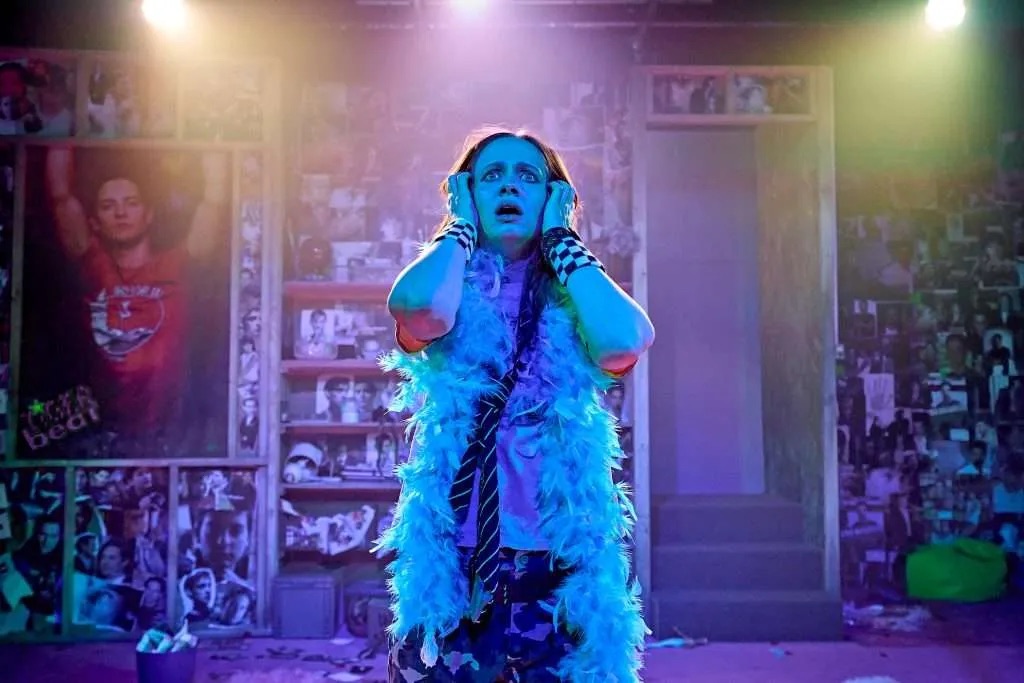
    Tessa Albertson, photograph by Manuel Harlan

    I’M GONNA MARRY YOU TOBEY MAGUIRE

    by Samantha Hurley

    directed by Tyler Struble

    Southwark Playhouse Borough- The Little, London – until 24 August 2024

    https://southwarkplayhouse.co.uk/productions/im-gonna-marry-you-tobey-maguire/

    This cultish off-Broadway smash feels like what would happen if you put angsty teenage fan fiction, the off-kilter humane intellectualism of Will Eno and the zany/gritty aesthetic of John Waters into a blender: it’s sometimes cute but more often absolutely lethal, and sometimes impenetrable. Samantha Hurley’s jet black tragicomedy arrives at Southwark with its original star (the genuinely remarkable Tessa Albertson), director (Tyler Struble) and set designer (Rodrigo Hernandez Martinez), and proves less whimsical and considerably darker than its title, and indeed its scenic design, might suggest.

    Hernandez Martinez has turned the Southwark Little space into a fairy-lit, atmospheric, all-encompassing shrine to Tobey Maguire, the Spiderman star (yes, there was another Spidey before Tom Holland) is literally everywhere: he’s plastered all over the walls, on posters, magazine covers, in a giant framed portrait. He’s also physically on stage in the person of Anders Hayward, who looks enough like the screen star to get away with playing him (just about), but is, rather alarmingly, handcuffed to a metal pole centre stage. Maguire has been abducted and he, along with this cornucopia of images of him, is in the basement of teenager Shelby (Albertson) who is taking extreme fandom to new heights, or rather depths.

    What Hurley has created is a frequently funny but more often disturbing look at obsession, youthful alienation and the consequences of neglect. Shelby, in Albertson’s detailed, screechily go-for-broke performance, is clearly deeply troubled. She has a combative relationship with her unseen (but very much heard) mom, a non-existent one with her absent, lawbreaking father, and is the victim of school bullying. She’s not necessarily easy to like, but neither is she easy to write off. Albertson gives her a wild, restless energy tempered with moments of hollow-eyed despair; she’s emotionally immature, disconcertingly sexual at times, and extremely smart. It’s the intelligence that actor and writer give Shelby that renders her misplaced devotion to Tobey and the dysfunctional loneliness of her existence, so sad. It also makes her dangerous.

    Albertson never sentimentalises Shelby’s struggles, has wonderful comic instincts (“I’ve seen Misery” she sullenly tells Maguire at one point) and fully inhabits the character’s lightning fast changes in mood and focus: it’s an exhausting but multi-faceted performance, that constantly threatens to go slightly too far but never quite does: she’s brilliant. Hayward’s Tobey convincingly goes through the various stages of being held hostage, Stockholm syndrome apparently being the predominant one in this instance. He skilfully manages a rather pointless audience participation section, but can’t disguise the fact that the role feels underwritten in comparison with his captor. Kyle Birch is gorgeously funny as Brenda Dee Cankles, a cartoonish real estate agent who’s a jolly amalgam of every Strong Black Woman cliché, but performed with such life-affirming over-the-top relish that it’s hard to take offence. Birch also doubles improbably but gloriously as an impish Toby Maguire alter ego who bursts through the walls at regular intervals to mock, or commiserate with, the stricken screen star.

    Struble’s staging is in tune with the eccentricities of Hurley’s script, but sometimes doesn’t feel punchy or pacy enough. The writing and the premise suggest that the piece should come at us with a furious urgency, but too often here the show seems a little hesitant and languid. Ultimately, beyond the not-terribly-original revelation that parasocial relationships and teenage obsession make toxic bedfellows, it’s hard to grasp what Hurley’s point is with this strange, overlong combination of soured sitcom, psychological thriller and rampant absurdism. I’m Gonna Marry You Tobey Maguire provides equal amounts of good, nasty fun and “wtf is going on” bewilderment, but it does at least feel refreshingly original.

    July 13, 2024

  • SLAVE PLAY – ⭐️⭐️⭐️⭐️ – provocative and bracingly original, this acclaimed American import provides lot to think about

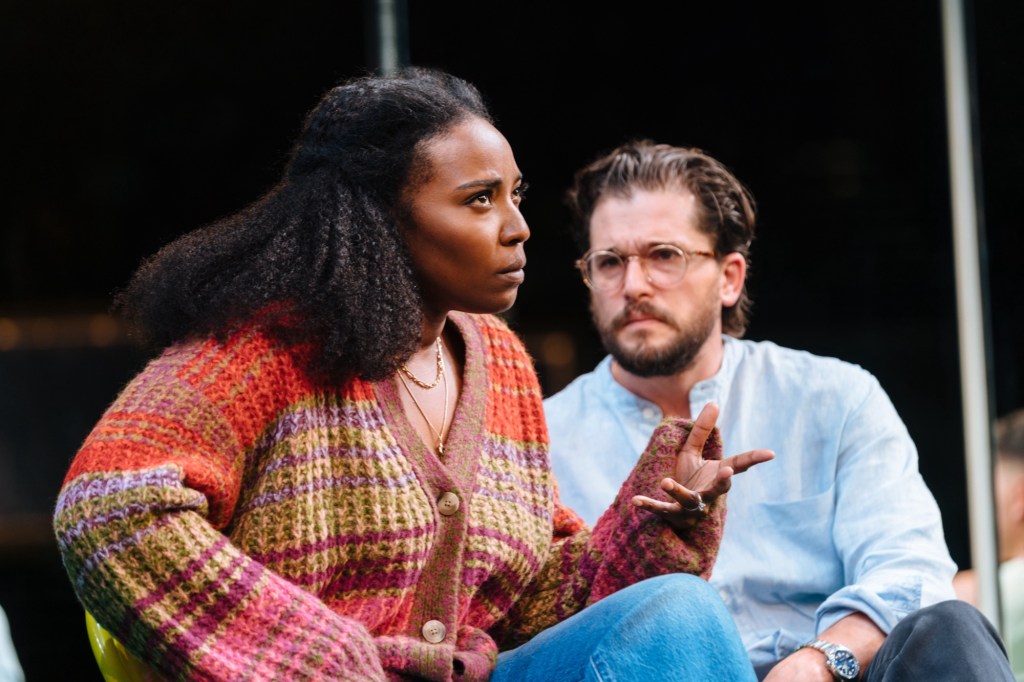
    Olivia Washington and Kit Harington, photograph by Helen Murray

    SLAVE PLAY

    by Jeremy O Harris

    directed by Robert O’Hara

    Noël Coward Theatre, London – until 21 September 2024

    https://slaveplaylondon.com

    Black writers have seldom been as well represented in London theatre as they are at the moment. The National has Katori Hall’s acclaimed The Hot Wing King in preview and is about to move Clint Dyer and Roy Williams’s Death Of England plays cycle to Sohoplace, while Faith Omole’s My Father’s Fable at the Bush and the Donmar’s UK premiere for Dominique Morisseau’s Skeleton Crew are two of the finest, funniest, most satisfying nights of drama on any current stage. They’re joined in melanised excellence by this import from New York, which enjoyed Broadway seasons either side of the pandemic, was nominated for a record number of Tony awards for a straight play, and for many London theatregoers will be the biggest must-see of the summer, if only to discover what all the fuss is about.

    Jeremy O. Harris’s Slave Play explodes into the West End as a noisome, wild, confrontational thing, hauling taboos into the unforgiving light, examining prejudices and kinks with rare, ripe humour, buckets of vitriol, and a humanity and intellectual rigour that take the breath away. I can imagine it’s possible to be offended, confused or shocked by this unique, unforgettable fusion of coruscating social, sexual and spiritual commentary, high camp and sheer fuck-you (literally at times) outrageousness, but remaining indifferent to it is surely not an option.

    The antebellum-inspired opening sections appear calculated to wrong-foot and potentially upset viewers, regardless of colour, age or sexual preference. A mixed race straight couple Kaneisha and Jim (Olivia Washington and Kit Harington) act out a preposterous slave-and-master scene: the wayward accents suggest that something is a little off, an impression reinforced by the anachronistic music and Kaneisha witheringly pointing out that the fruit Jim has provided as a prop is in fact a cantaloupe not a watermelon. Next up is an older white lady (Tony nominee Annie McNamara) in ringlets and hoop skirt (until she isn’t) sexually humiliating her manservant (Aaron Heffernan), and finally a violent bi-racial gay coupling (Fisayo Akinade, and James Cusati-Moyer, another Tony nominee for his work in the Broadway original) atop an old cart amidst cotton bales. It’s all provocative, often riotously funny, and constantly on the verge of tipping over into something deeply troubling, although Harris makes us wait for that.

    The title “slave play” turns out to have more than one meaning as the piece explores multiple themes as well as the relationship between people of different skin colours. It interrogates sexual fantasy and how potentially damaging it can be when the deepest, darkest ones are acted out. It looks with scorn on the ‘white saviour complex’, and has some very unsettling insights into interracial unions. It is mindful of Black history, but not didactically so, and inherited trauma, and savagely satirises therapy culture. The central, slightly overlong, scene is a particularly outlandish couples therapy session presided over by a pair of enthusiastic but thunderingly crass practitioners (Irene Sofia Lucio and Chalia La Tour, holdovers from the Broadway cast and both amusing if lacking in nuance).

    Some of the grievances and revelations that come to light in this section are fascinating, and Harris’s writing is unflinching, witty and brutal. It also showcases some terrific acting, especially from Akinade whose simultaneous breakdown and breakthrough is really moving, and from Cusati-Moyer opposite him as the bewildered partner forced to abandon his flamboyant histrionics and really listen. Heffernan delivers nuanced, deliciously funny but also deeply touching work as the sexy but blunt mixed race youngster who has a startling revelation over how much his sexual identity and race are intertwined. McNamara is great value, if hardly subtle, as his older lover, working herself up into paroxysms of middle class white guilt.

    Given how much Slave Play has on its mind, it’s a remarkably unpreachy piece; Harris never tells us what to think. This proves especially challenging in the final, very disturbing sequence between the first couple we saw. It’s an apotheosis of the ‘play’ that kicks off the play, but so much more. It’s sexual but not necessarily sexy, and it’s unclear whether we are witnessing the relationship imploding or a genuine breakthrough; either way it is tremendously uncomfortable to watch, and Harington and Washington play it full throttle, unsparingly and brilliantly.

    If Robert O’Hara’s production seems deliberately rough round the edges (set pieces judder haltingly on, some of the acting in the central therapy scene reads as broader than it might be, lighting and sound effects jar and alarm), that feels apiece with Harris’s text which eschews multiple established tenets of playwriting to create something unique and vital. Anyway, there’s nothing about Slave Play that suggests it should ever be a smooth theatrical journey.

    There’s no linear storytelling and no easy answers. Even Clint Ramos’s mirrored set feels like a provocation: it confronts us in the audience (with our prejudices? our proclivities?) and it gives the characters nowhere to hide. Slave Play dazzles, sears and confounds; it also makes the current theatrical landscape a considerably more stimulating place.

    July 11, 2024

  • SKELETON CREW – ⭐️⭐️⭐️⭐️⭐️ – a modern American masterpiece crashes into the Donmar, now let’s see the rest of the trilogy

    Racheal Ofori and Branden Cook, photograph by Helen Murray

    SKELETON CREW

    by Dominique Morisseau

    directed by Matthew Xia

    Donmar Warehouse, London – until 24 August 2024

    https://www.donmarwarehouse.com/whats-on/17/by-dominique-morisseau/skeleton-crew

    “How am I going to help anyone else if I can’t help myself?” This question, posed by working class factory foreman Reggie justifying his not-always-sympathetic behaviour while the Detroit car plant he works at hurtles towards foreclosure, runs like blood flow through Dominique Morisseau’s cracking, essential drama.

    Skeleton Crew premiered at New York’s Atlantic Theater in 2016, and was seen on Broadway in 2022. It now receives a stunning, note-perfect UK premiere courtesy of director Matthew Xia and a cast so in tune with the material that it’s less like watching acting than eavesdropping on a compelling slice of real life, and humanity in it’s bruised, fallible magnificence.

    Morisseau’s play, the final tranche of a trio of plays entitled The Detroit Project but the only one to get a British staging so far, takes place entirely in the break room of a car plant on its uppers. Bolshy all-seeing senior worker, lesbian Faye (Pamela Nomvete, heading for another Olivier nomination if there’s any justice) is hanging in there until she has completed thirty years service whereby her severance money will increase greatly; she’s also, unbeknownst to her co-workers, homeless. The detail in Nomvete’s performance is extraordinary, from her off-hand line delivery, unwavering but not unkind stare, the total absence of self-pity and then the sloppy yet determined walk, like a woman on a difficult mission but determined not to give in.

    The other characters are equally fascinating and are given performances to match. There’s pregnant Shanita (a luminous but heartcatchingly real Racheal Ofori), thrilled to be following in family footsteps and taking great pride in being a vital part of the production line (“Love the way the line needs me. Like if I step away for even a second and don’t ask somebody to mind my post, the whole operation has to stop”). Then there’s young Dez (American screen actor Branden Cook in a terrific stage debut) who has big dreams but carrying an unseen mark on his back to match the all-too-visible one on his neck. The chemistry between Ofori and Cook is a shifting, fluid but ultimately scorching thing; both young actors are utterly brilliant, making their tough but tender characters entirely sympathetic yet never giving in to easy sentiment. It’s almost shocking how much we come to care about them.

    That’s also true of Reggie, party to unwelcome information about the factory’s fate and always and uneasily aware that his promotion is largely due to Faye’s influence. Tobi Bamtefa, in another devastating performance to complete this sublime quartet, invests him with authentic kindness, but leaves us in no doubt that everything he does is underpinned by an ongoing, borderline ruthless need to provide for his young family. When Reggie’s roiling rage comes to the surface it is chilling yet undeniably understandable. The four actors play together like musicians negotiating a rich, complex score, and not a single false note sounds.

    Xia’s production is flawless: pacy, sensitive, dynamic but with moments of telling stillness: the silences are as revealing as the dialogue sections. Ultz’s setting, putting us right into the factory, opens up the Donmar space, exposing more brick and metalwork than usual. Literal sparks fly, steam billows, lights flash….the scene transitions are like music: clanking, dehumanising, galvanising, but music nonetheless: it’s exciting but vaguely terrifying.

    The point here, I think, is it that these characters could be any one of us, in line with the old adage that many working people are just one pay check or dispute away from disaster, or as Faye puts it, “any moment any one of us could be the other. That’s just the shit about life. One minute you passin’ the woman on the freeway holdin’ up the ‘will work for food’ sign. Next minute you sleepin’ in your car.” Morisseau writes with gritty precision, but also massive heart and humour. Her love for these flawed, struggling humans, looking out for each other sometimes at personal expense, is palpable, and it rubs off on us in the audience. Her mastery of plot is subtle and gripping, and ultimately the play is deeply moving. Morisseau is known to British audiences mainly as the book writer for the Temptations musical Ain’t Too Proud seen in the West End last year, but Skeleton Crew confirms her easily as a writer of equal stature to Lynn Nottage or Katori Hall.

    Affectionate yet tough, and finally supremely satisfying. This is an absolute must-see.

    July 8, 2024

  • STARLIGHT EXPRESS -⭐️⭐️⭐️⭐️- it still doesn’t make much sense but who cares when you’re having this much fun

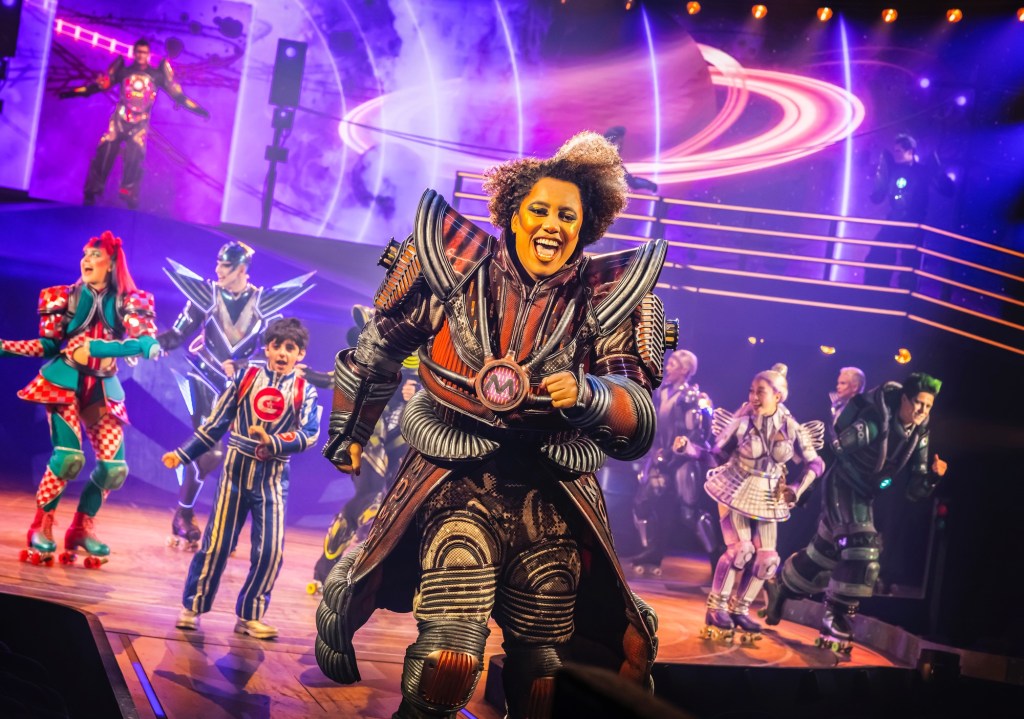
    Jade Marvin and company, photograph by Pamela Raith

    STARLIGHT EXPRESS

    Music by Andrew Lloyd Webber

    Lyrics by Richard Stilgoe

    Creative dramaturg: Arlene Phillips

    Directed by Luke Sheppard

    Troubadour Wembley Park Theatre, London – booking until 16 February 2025

    https://www.starlightexpresslondon.com

    Look, neither Andrew Lloyd Webber nor Trevor Nunn, the shows original director, ever made any claims to Starlight Express being a great musical. It was always about the fun, the spectacle and the roller skating….and it still is.

    Punch’s theatre critic, the late and often acidic Sheridan Morley, writing about the 1984 London premiere, famously likened it to being invited to watch a multimillionaire playing with some ingenious but ultimately wasteful toy engines. Arlene Phillips (who choreographed the original) and Luke Sheppard’s retina-searingly colourful reimagining for a whole new audience (although admittedly the first production ran so long that several generations of theatregoers cut their musical teeth on it) probably wouldn’t have convinced Mr Morley otherwise, but for the less lofty-minded, it offers a couple of hours of fast-paced, escapist euphoria.

    It feels like An Event. It was always closer to a Disney Theme Park ride rather than a coherent piece of musical theatre, but there’s something about Starlight, and particularly this expensive reboot in a venue transformed to house it, that feels appropriate for the stylish soullessness that now characterises Wembley Park, with its upmarket chain shops, hotels and skyscrapers. Compared to the original, this version makes it even more explicitly clear that we are watching a child playing with their model train set: when you enter the Troubadour’s reconfigured auditorium there’s a kids bedroom and a litter of toys in the centre of Tim Hatley’s set, and we are introduced to the child (Cristian Buttaci on opening night, but there are six young performers in rotation) in whose imagination the toy trains come to life as campy, roller skating glamazons of often indeterminate gender, engaged in racing for supremacy.

    Where John Napier’s previous setting was a staggering feat of imagination and engineering that culminated in a gigantic railway bridge that tilted, spun and connected up the multiple levels of race track set that snaked all over the Apollo Victoria, Hatley’s is sleek, glossy, futuristic, suggestive of the decor for a particularly hi-tech TV game show (of course the Troubadour used to be a television studio). It’s visually impressive but because it’s more modest in scale, the individual personalities of the performers stand more of a fighting chance of breaking through the pyrotechnics, dry ice and acrobatics than in the earlier productions.

    Chief amongst these is Al Knott in an irresistible professional debut as Greaseball the diesel engine, transformed from the Elvis-style male rocker of old into a stroppy, self-obsessed she-engine who’s tougher than her male rivals yet strangely likeable despite the hard time she gives Rusty the steam engine. Jeevan Braich and Kayna Montecillo bring an appealing wide-eyed freshness and fabulous vocals to the romantic duo of Rusty and new coach Pearl, despite their big reconciliation duet being the blandest song in the score. Jade Marvin is a deeply lovable powerhouse as Momma, the old steamer whose soulful common sense gives the show what heart it has. Ashlyn Weekes and Renz Cardenas are great fun as a pair of cheerful coaches, as is Emily Martinez as a villainously smiling race saboteur. Jaydon Vijn is a swaggering sensation as new character Hydra, a green (literally) alternative to the rust and smoke of the old steamers (“it’s not a matter of if/it’s a matter of when”), and is noticeably one of the strongest skaters in the cast.

    Andrew Lloyd Webber has his detractors but you’d have to be pretty mean not to admit that his music for Starlight demonstrates his gift for a tune, and they’ve seldom been as well sung or played (Laura Bangay’s seven piece band sounds better than the original sixteen pieces ever did, playing spiffy new orchestrations by Matthew Brind with ALW) as they are here. There may not be much of a coherent style to the score as a whole, apart from insistent dance beats some of which are clearly inspired by the clickety clack of a train on a track, but it’s a zesty, boppy, propulsive collection of songs. It’s arguably even more eclectic than his score for Cats, taking in Country & Western (Dinah the Dining Car’s Tammy Wynette-inspired lament ‘U.N.C.O.U.P.L.E.D.’, performed with disarming histrionics by Eve Humphrey), electronica for ‘AC/DC’, Electra the electric engine’s spinetingling mission statement and the first bona fide showstopper of the night as led by an icily graceful Tom Pigram, R’n’B, lashings of good old fashioned rock’n’roll and the kind of uptempo numbers (Rusty’s super-cute ‘Crazy’, the newly added empowerment anthem ‘I Am Me’) that would sound equally at home in Eurovision or on the dancefloor at G.A.Y. Then there’s the thunderously rousing gospel ‘Light At The End Of The Tunnel’ finale. The popular music styles invoked tend to be broadly American which sometimes renders ponderous the English accents used throughout in this version.

    Because there isn’t a governing style, anybody unfamiliar with the show’s earlier iterations (substantial rewrites and whole new numbers were added for the Broadway production, the London relaunch in the ‘90s, and the still-running Bochum version) won’t necessarily be able to detect what’s new and what isn’t. It doesn’t hang together particularly well as a score but then I’m not sure that matters; this is majorly loud theatrical pop designed to get the blood pumping and in that it’s highly successful. Richard Stilgoe’s lyrics veer between witty and clunky but mostly work fine.

    Gabriella Slade’s gleaming costumes are garishly inventive, although the coaches look more like the queens of Six (which she also designed) on wheels rather than railroad stock, and crucially give the cast ample scope to execute Ashley Nottingham’s dynamic, often exciting choreography. Howard Hudson’s transformative lighting is completely sensational, and Gareth Owen proves once again why he is the go-to sound designer for any stage production with rock and pop elements: his work here is at once precise and bombastic, matching his outstanding efforts on MJ The Musical on both sides of the Atlantic and the glorious Alicia Keys tuner Hells Kitchen currently tearing up Broadway.

    Where the first production had an unreconstructed twentieth century attitude to gender (male engines and freight trucks, female coaches) and a 1980s budget (i.e. excessive), this one has a much more loose approach to the former (I mean, it’s 2024 and these are toy trains anyway) and possibly didn’t, in real terms, cost as much to mount but it still looks a million dollars…several million actually. The updates and adjustments have been sensitively done, so as not to put the noses of fans of the original out of joint. Realistically, the median age of the core youthful audience for Starlight Express is probably younger now than it was forty years ago as older teenagers used to a diet of TikTok and sundry other social media might find it all a bit, well, wholesome.

    Luke Sheppard has proved repeatedly (& Juliet, Just For One Day, the Adrian Mole musical) that he is the perfect director for whipping up a frothy, fun-filled confection into something with a satisfyingly true emotional centre, and that impression is further confirmed here where you find yourself genuinely caring about a love story between inanimate objects. Having Control, the young child (young Mr Buttaci is a sassy delight, undercutting the soppier bits of the show with the unselfconscious brutality of the very young), physically in the centre of the action at key points is a very useful emotional conduit and helps give this version a charm that the original production never achieved (the train set owner was a disembodied voice). Overall, this is less a nostalgia-fest revival than a complete rethink.

    The final word (almost) goes again to Sheridan Morley who witheringly compared Starlight #1984 to the Eurovision Song Contest. Back then, that was an insult. Funnily enough, Starlight #2024 really DOES resemble Eurovision…. but as Eurovision is perceived now: joyful, exhilarating, good-natured, frequently nonsensical and stunningly well produced. There’s also still such a thrill and entrancement at the fleet gracefulness of the skating. Check your brain in at the door, and you’ll have a ball, and you won’t be able to get the tunes out of your head for a week; take a child under ten, and you might just create a theatregoer for life.

    June 30, 2024

  • MY FATHER’S FABLE – ⭐️⭐️⭐️⭐️⭐️ – Faith Omole proves as fine a writer as she is an actor with this gorgeous new play

    Theo Ogundipe and Tiwa Lade, photograph by Manuel Harlan

    MY FATHER’S FABLE

    by Faith Omole

    directed by Rebekah Murrell

    Bush Theatre, London – until 27 July 2024

    https://www.bushtheatre.co.uk/event/my-fathers-fable/

    Not content with being one of acting’s rising stars, Faith Omole proves with this astonishingly assured debut that she’s also a tremendous playwright. In fact Omole already won the Alfred Fagon award for an earlier piece but My Father’s Fable is the first time she has had anything professionally produced. I doubt it’ll be the last.

    Rebekah Murrell’s engrossing staging continues the Bush’s house policy of world class drama premieres with a multiethnic flavour: this is an absolute belter. The command of character, dialogue, plot development, humour and suspense is outstanding. On the night I saw it, a diverse (both in terms of race and age) crowd were alternately on the edge of their seats or roaring with laughter, and culminated in one of the most spontaneous standing ovations I’ve seen even at this venue, where the audience tends to be vociferous.

    Omole gives us a family tragicomedy with London-based British Nigerian teacher Peace (delightfully natural Tiwa Lade) preparing for the arrival from Nigeria of Bolu, the long lost brother (from another mother) she’s only recently discovered she has, while also still mourning the loss of her father. Theo Ogundipe makes Bolu a charismatic, slightly unknowable figure, his motivations and intentions not immediately clear. Roy, Peace’s supportive boyfriend (Gabriel Akuwudike, note-perfect and deeply lovable), initially thinks Bolu is on the make, but quickly falls under his spell.

    Then there’s Peace’s mother Favour (Rakie Ayola), deeply suspicious of Bolu and nearly as sceptical about Roy, and a real piece of work. Omole has created here a theatrical maternal monster to rank alongside such unforgettable figures as Lady Bracknell, Bernarda Alba and Cocteau’s Yvonne from Les Parents Terribles, and Ayola matches the writing with an exquisite, detailed study of poised venom and manipulation, the kind of person who becomes mysteriously unwell every time she doesn’t get her own way. “I don’t enjoy always being right” she purrs at her exasperated (almost) son-in-law, while brandishing a fan like a weapon, her eyes constantly widening in disdain or mock horror. Ayola is too fine an actress, and Omole too skilled a writer, to just give us a simple domestic villain though, so Favour is a vibrant, multi-layered creation, with intriguing otherworldly connections and above all else a real love for her child. It’s pretty impossible to take your eyes off, despite the brilliance of the other three cast members. The acting throughout is flawless.

    The play is top heavy, with act one nearly twice as long as act two, but there turns out to be a valid reason for that. My Father’s Fable pulls the rug out from underneath the audience in the second half in one of the most effective dramatic volte faces I can remember. Bolu’s character is explained, as is Peace’s almost disconcerting childlike essence, her fear of flying and the dark… on the night I saw it, the audience’s vocal reaction to the revelation was thrillingly immediate and unguarded.

    There’s more to the play than just the family story though. Omole astutely tackles the uncomfortable tension, snobbery almost, between Africans who left the continent to live elsewhere and those who remain, and touches sensitively on how the diasporan experience can result in a dilution of culture and language. “Shall I tell you what I see when I look at your life?” Bolu says to Peace, “you are rootless”. He has a point, but the play is wonderfully even-handed in its examination of how differently from each other people can live, and is ultimately rather moving.

    The relationship between Peace and Roy is beautifully articulated, even when under severe strain, and brought to delicate but vivid life by Lade and Akuwudike, and the showdown between Favour and Bolu which closes the first act is electrifyingly played by Ayola and Ogundipe. Interestingly, director Murrell is, like Omole, a fine actor in her own right, and the detail, pace and specificity in this sublime production demonstrates the work of a multi-disciplinary artist. TK Hay’s modern house set, with a symbolic crack bisecting the ceiling, Simisola Majekodunmi’s playful, mood-shifting lighting and the mysterious sound and music contributions of XANA and Ayanna Witter-Johnson complement the overall vision seamlessly.

    So far in 2024, the Bush has already given us one of the contenders for best play of the year with Shifters (soon heading into the West End, and on no account to be missed). Four months later, here’s another one: My Father’s Fable is a terrific piece of work, infused with that rare tang of pleasure that happens when everyone involved is at the top of their game. Cracking theatre.

    June 27, 2024

  • DRAG BABY – ⭐️⭐️⭐️ – new queer comedy drama is intriguing but over all too soon

    Ché, photograph by Harry Elletson

    DRAG BABY

    by Grace Carroll

    directed by Joseph Winer

    Pleasance Theatre, London – until 22 June 2024

    https://www.pleasance.co.uk/event/drag-baby

    It’s not often that you come out of a show wishing it was twice as long, but that’s the case with Grace Carroll’s Drag Baby, which is just concluding its run at the Pleasance’s Downstairs space in North London, following a 2022 presentation at the Kings Head. As it stands, it feels very much like a work-in-progress, a sliver of a play (even with a lot of music the whole thing clocks in at barely 75 minutes) wrapped up in a ton of glitter, attitude and some glimpses into contrasting drag performance styles.

    The brevity of the piece is unfortunate as the basic premise of the piece commands attention but doesn’t get enough room to breathe or explore: estranged childhood sweethearts Dan and Sally, both now gay or at least bi-sexual, he now a drag queen in a liaison with a fellow performer and she in a lesbian relationship, meet to explore possibility of having a child together. It throws up a lot of intriguing factors -jealousy, family expectations, shared history, party lifestyle versus domesticity- but hasn’t the time or the depth to really examine them.

    Carroll’s dialogue mostly lacks flavour, and the characters feel so perfunctorily drawn that it’s hard to empathise with them, despite the valiant efforts of the cast. More time to establish who these people are and why they matter so much to each other, and why they should matter to us, would pay off rich dividends in terms of making this into satisfying drama.

    Only one performer, charismatic, witty Ché as Nathan, the avant garde drag performer in love with Dan and whose tough exterior conceals a young lifetime of hurt, rises above the script’s limitations, creating a fully rounded character with authentic presence and edge. Furthermore, the extended taste we get of Nathan’s outrageous onstage antics are so exciting and bizarre that it’s a bit disappointing when we have to go back to the play itself. Stephen Cheriton’s Dan is likeable and natural, without ever quite suggesting why everybody’s falling at his feet, and doesn’t feel ruthless enough. The subplot about his upcoming TV break seems curiously under-explored.

    Nicole Evans fares better as overeager, insecure Sally, making her compellingly needy yet manipulative. As her partner Amelia Parillon has a nice line in aggrieved disapproval but is given far too little to do. The ending, which sees the two women sort-of making up, is such a dramatic non sequitur that the audience isn’t sure whether to clap.

    Joseph Winer’s production is highly watchable but suffers from pacing issues – there are a couple of ponderous gaps between scenes that not even the disco bangers being played over the sound system can fill – and doesn’t fully master the wide, shallow playing space, resulting in some lost laughs and fudged emotional moments. Olivia Heggs’s movement direction is spot on, as does Lu Herbert’s suitably glitzy but dingy set.

    This feels like an appropriate theatrical offering for Pride month, but falls between two stools: in its present form, Drag Baby is too weighty to be a frivolous curtain raiser to a night out on the town, but too brief to really work as a complete play. Promising but frustratingly flimsy.

    June 21, 2024

Previous Page Next Page

Blog at WordPress.com.


Loading Comments...
 

    • Subscribe Subscribed
      • ajhlovestheatre
      • Join 59 other subscribers
      • Already have a WordPress.com account? Log in now.
      • ajhlovestheatre
      • Subscribe Subscribed
      • Sign up
      • Log in
      • Report this content
      • View site in Reader
      • Manage subscriptions
      • Collapse this bar