ajhlovestheatre

  • Home
  • About
  • Contact
  • Blog

  • SKELETON CREW – ⭐️⭐️⭐️⭐️⭐️ – a modern American masterpiece crashes into the Donmar, now let’s see the rest of the trilogy

    Racheal Ofori and Branden Cook, photograph by Helen Murray

    SKELETON CREW

    by Dominique Morisseau

    directed by Matthew Xia

    Donmar Warehouse, London – until 24 August 2024

    https://www.donmarwarehouse.com/whats-on/17/by-dominique-morisseau/skeleton-crew

    “How am I going to help anyone else if I can’t help myself?” This question, posed by working class factory foreman Reggie justifying his not-always-sympathetic behaviour while the Detroit car plant he works at hurtles towards foreclosure, runs like blood flow through Dominique Morisseau’s cracking, essential drama.

    Skeleton Crew premiered at New York’s Atlantic Theater in 2016, and was seen on Broadway in 2022. It now receives a stunning, note-perfect UK premiere courtesy of director Matthew Xia and a cast so in tune with the material that it’s less like watching acting than eavesdropping on a compelling slice of real life, and humanity in it’s bruised, fallible magnificence.

    Morisseau’s play, the final tranche of a trio of plays entitled The Detroit Project but the only one to get a British staging so far, takes place entirely in the break room of a car plant on its uppers. Bolshy all-seeing senior worker, lesbian Faye (Pamela Nomvete, heading for another Olivier nomination if there’s any justice) is hanging in there until she has completed thirty years service whereby her severance money will increase greatly; she’s also, unbeknownst to her co-workers, homeless. The detail in Nomvete’s performance is extraordinary, from her off-hand line delivery, unwavering but not unkind stare, the total absence of self-pity and then the sloppy yet determined walk, like a woman on a difficult mission but determined not to give in.

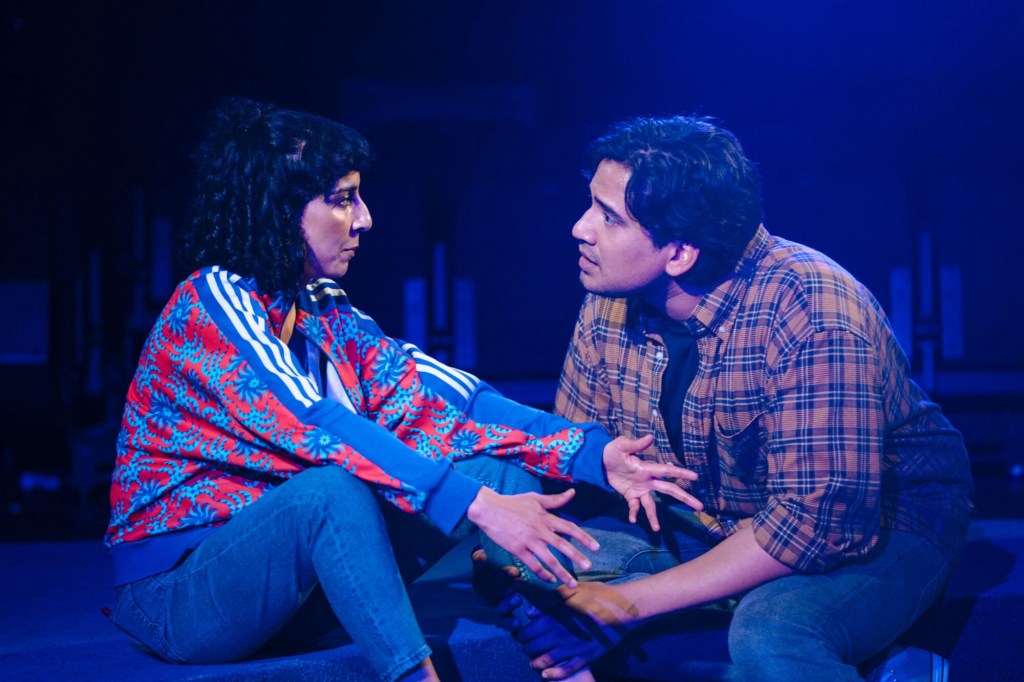
    The other characters are equally fascinating and are given performances to match. There’s pregnant Shanita (a luminous but heartcatchingly real Racheal Ofori), thrilled to be following in family footsteps and taking great pride in being a vital part of the production line (“Love the way the line needs me. Like if I step away for even a second and don’t ask somebody to mind my post, the whole operation has to stop”). Then there’s young Dez (American screen actor Branden Cook in a terrific stage debut) who has big dreams but carrying an unseen mark on his back to match the all-too-visible one on his neck. The chemistry between Ofori and Cook is a shifting, fluid but ultimately scorching thing; both young actors are utterly brilliant, making their tough but tender characters entirely sympathetic yet never giving in to easy sentiment. It’s almost shocking how much we come to care about them.

    That’s also true of Reggie, party to unwelcome information about the factory’s fate and always and uneasily aware that his promotion is largely due to Faye’s influence. Tobi Bamtefa, in another devastating performance to complete this sublime quartet, invests him with authentic kindness, but leaves us in no doubt that everything he does is underpinned by an ongoing, borderline ruthless need to provide for his young family. When Reggie’s roiling rage comes to the surface it is chilling yet undeniably understandable. The four actors play together like musicians negotiating a rich, complex score, and not a single false note sounds.

    Xia’s production is flawless: pacy, sensitive, dynamic but with moments of telling stillness: the silences are as revealing as the dialogue sections. Ultz’s setting, putting us right into the factory, opens up the Donmar space, exposing more brick and metalwork than usual. Literal sparks fly, steam billows, lights flash….the scene transitions are like music: clanking, dehumanising, galvanising, but music nonetheless: it’s exciting but vaguely terrifying.

    The point here, I think, is it that these characters could be any one of us, in line with the old adage that many working people are just one pay check or dispute away from disaster, or as Faye puts it, “any moment any one of us could be the other. That’s just the shit about life. One minute you passin’ the woman on the freeway holdin’ up the ‘will work for food’ sign. Next minute you sleepin’ in your car.” Morisseau writes with gritty precision, but also massive heart and humour. Her love for these flawed, struggling humans, looking out for each other sometimes at personal expense, is palpable, and it rubs off on us in the audience. Her mastery of plot is subtle and gripping, and ultimately the play is deeply moving. Morisseau is known to British audiences mainly as the book writer for the Temptations musical Ain’t Too Proud seen in the West End last year, but Skeleton Crew confirms her easily as a writer of equal stature to Lynn Nottage or Katori Hall.

    Affectionate yet tough, and finally supremely satisfying. This is an absolute must-see.

    July 8, 2024

  • STARLIGHT EXPRESS -⭐️⭐️⭐️⭐️- it still doesn’t make much sense but who cares when you’re having this much fun

    Jade Marvin and company, photograph by Pamela Raith

    STARLIGHT EXPRESS

    Music by Andrew Lloyd Webber

    Lyrics by Richard Stilgoe

    Creative dramaturg: Arlene Phillips

    Directed by Luke Sheppard

    Troubadour Wembley Park Theatre, London – booking until 16 February 2025

    https://www.starlightexpresslondon.com

    Look, neither Andrew Lloyd Webber nor Trevor Nunn, the shows original director, ever made any claims to Starlight Express being a great musical. It was always about the fun, the spectacle and the roller skating….and it still is.

    Punch’s theatre critic, the late and often acidic Sheridan Morley, writing about the 1984 London premiere, famously likened it to being invited to watch a multimillionaire playing with some ingenious but ultimately wasteful toy engines. Arlene Phillips (who choreographed the original) and Luke Sheppard’s retina-searingly colourful reimagining for a whole new audience (although admittedly the first production ran so long that several generations of theatregoers cut their musical teeth on it) probably wouldn’t have convinced Mr Morley otherwise, but for the less lofty-minded, it offers a couple of hours of fast-paced, escapist euphoria.

    It feels like An Event. It was always closer to a Disney Theme Park ride rather than a coherent piece of musical theatre, but there’s something about Starlight, and particularly this expensive reboot in a venue transformed to house it, that feels appropriate for the stylish soullessness that now characterises Wembley Park, with its upmarket chain shops, hotels and skyscrapers. Compared to the original, this version makes it even more explicitly clear that we are watching a child playing with their model train set: when you enter the Troubadour’s reconfigured auditorium there’s a kids bedroom and a litter of toys in the centre of Tim Hatley’s set, and we are introduced to the child (Cristian Buttaci on opening night, but there are six young performers in rotation) in whose imagination the toy trains come to life as campy, roller skating glamazons of often indeterminate gender, engaged in racing for supremacy.

    Where John Napier’s previous setting was a staggering feat of imagination and engineering that culminated in a gigantic railway bridge that tilted, spun and connected up the multiple levels of race track set that snaked all over the Apollo Victoria, Hatley’s is sleek, glossy, futuristic, suggestive of the decor for a particularly hi-tech TV game show (of course the Troubadour used to be a television studio). It’s visually impressive but because it’s more modest in scale, the individual personalities of the performers stand more of a fighting chance of breaking through the pyrotechnics, dry ice and acrobatics than in the earlier productions.

    Chief amongst these is Al Knott in an irresistible professional debut as Greaseball the diesel engine, transformed from the Elvis-style male rocker of old into a stroppy, self-obsessed she-engine who’s tougher than her male rivals yet strangely likeable despite the hard time she gives Rusty the steam engine. Jeevan Braich and Kayna Montecillo bring an appealing wide-eyed freshness and fabulous vocals to the romantic duo of Rusty and new coach Pearl, despite their big reconciliation duet being the blandest song in the score. Jade Marvin is a deeply lovable powerhouse as Momma, the old steamer whose soulful common sense gives the show what heart it has. Ashlyn Weekes and Renz Cardenas are great fun as a pair of cheerful coaches, as is Emily Martinez as a villainously smiling race saboteur. Jaydon Vijn is a swaggering sensation as new character Hydra, a green (literally) alternative to the rust and smoke of the old steamers (“it’s not a matter of if/it’s a matter of when”), and is noticeably one of the strongest skaters in the cast.

    Andrew Lloyd Webber has his detractors but you’d have to be pretty mean not to admit that his music for Starlight demonstrates his gift for a tune, and they’ve seldom been as well sung or played (Laura Bangay’s seven piece band sounds better than the original sixteen pieces ever did, playing spiffy new orchestrations by Matthew Brind with ALW) as they are here. There may not be much of a coherent style to the score as a whole, apart from insistent dance beats some of which are clearly inspired by the clickety clack of a train on a track, but it’s a zesty, boppy, propulsive collection of songs. It’s arguably even more eclectic than his score for Cats, taking in Country & Western (Dinah the Dining Car’s Tammy Wynette-inspired lament ‘U.N.C.O.U.P.L.E.D.’, performed with disarming histrionics by Eve Humphrey), electronica for ‘AC/DC’, Electra the electric engine’s spinetingling mission statement and the first bona fide showstopper of the night as led by an icily graceful Tom Pigram, R’n’B, lashings of good old fashioned rock’n’roll and the kind of uptempo numbers (Rusty’s super-cute ‘Crazy’, the newly added empowerment anthem ‘I Am Me’) that would sound equally at home in Eurovision or on the dancefloor at G.A.Y. Then there’s the thunderously rousing gospel ‘Light At The End Of The Tunnel’ finale. The popular music styles invoked tend to be broadly American which sometimes renders ponderous the English accents used throughout in this version.

    Because there isn’t a governing style, anybody unfamiliar with the show’s earlier iterations (substantial rewrites and whole new numbers were added for the Broadway production, the London relaunch in the ‘90s, and the still-running Bochum version) won’t necessarily be able to detect what’s new and what isn’t. It doesn’t hang together particularly well as a score but then I’m not sure that matters; this is majorly loud theatrical pop designed to get the blood pumping and in that it’s highly successful. Richard Stilgoe’s lyrics veer between witty and clunky but mostly work fine.

    Gabriella Slade’s gleaming costumes are garishly inventive, although the coaches look more like the queens of Six (which she also designed) on wheels rather than railroad stock, and crucially give the cast ample scope to execute Ashley Nottingham’s dynamic, often exciting choreography. Howard Hudson’s transformative lighting is completely sensational, and Gareth Owen proves once again why he is the go-to sound designer for any stage production with rock and pop elements: his work here is at once precise and bombastic, matching his outstanding efforts on MJ The Musical on both sides of the Atlantic and the glorious Alicia Keys tuner Hells Kitchen currently tearing up Broadway.

    Where the first production had an unreconstructed twentieth century attitude to gender (male engines and freight trucks, female coaches) and a 1980s budget (i.e. excessive), this one has a much more loose approach to the former (I mean, it’s 2024 and these are toy trains anyway) and possibly didn’t, in real terms, cost as much to mount but it still looks a million dollars…several million actually. The updates and adjustments have been sensitively done, so as not to put the noses of fans of the original out of joint. Realistically, the median age of the core youthful audience for Starlight Express is probably younger now than it was forty years ago as older teenagers used to a diet of TikTok and sundry other social media might find it all a bit, well, wholesome.

    Luke Sheppard has proved repeatedly (& Juliet, Just For One Day, the Adrian Mole musical) that he is the perfect director for whipping up a frothy, fun-filled confection into something with a satisfyingly true emotional centre, and that impression is further confirmed here where you find yourself genuinely caring about a love story between inanimate objects. Having Control, the young child (young Mr Buttaci is a sassy delight, undercutting the soppier bits of the show with the unselfconscious brutality of the very young), physically in the centre of the action at key points is a very useful emotional conduit and helps give this version a charm that the original production never achieved (the train set owner was a disembodied voice). Overall, this is less a nostalgia-fest revival than a complete rethink.

    The final word (almost) goes again to Sheridan Morley who witheringly compared Starlight #1984 to the Eurovision Song Contest. Back then, that was an insult. Funnily enough, Starlight #2024 really DOES resemble Eurovision…. but as Eurovision is perceived now: joyful, exhilarating, good-natured, frequently nonsensical and stunningly well produced. There’s also still such a thrill and entrancement at the fleet gracefulness of the skating. Check your brain in at the door, and you’ll have a ball, and you won’t be able to get the tunes out of your head for a week; take a child under ten, and you might just create a theatregoer for life.

    June 30, 2024

  • MY FATHER’S FABLE – ⭐️⭐️⭐️⭐️⭐️ – Faith Omole proves as fine a writer as she is an actor with this gorgeous new play

    Theo Ogundipe and Tiwa Lade, photograph by Manuel Harlan

    MY FATHER’S FABLE

    by Faith Omole

    directed by Rebekah Murrell

    Bush Theatre, London – until 27 July 2024

    https://www.bushtheatre.co.uk/event/my-fathers-fable/

    Not content with being one of acting’s rising stars, Faith Omole proves with this astonishingly assured debut that she’s also a tremendous playwright. In fact Omole already won the Alfred Fagon award for an earlier piece but My Father’s Fable is the first time she has had anything professionally produced. I doubt it’ll be the last.

    Rebekah Murrell’s engrossing staging continues the Bush’s house policy of world class drama premieres with a multiethnic flavour: this is an absolute belter. The command of character, dialogue, plot development, humour and suspense is outstanding. On the night I saw it, a diverse (both in terms of race and age) crowd were alternately on the edge of their seats or roaring with laughter, and culminated in one of the most spontaneous standing ovations I’ve seen even at this venue, where the audience tends to be vociferous.

    Omole gives us a family tragicomedy with London-based British Nigerian teacher Peace (delightfully natural Tiwa Lade) preparing for the arrival from Nigeria of Bolu, the long lost brother (from another mother) she’s only recently discovered she has, while also still mourning the loss of her father. Theo Ogundipe makes Bolu a charismatic, slightly unknowable figure, his motivations and intentions not immediately clear. Roy, Peace’s supportive boyfriend (Gabriel Akuwudike, note-perfect and deeply lovable), initially thinks Bolu is on the make, but quickly falls under his spell.

    Then there’s Peace’s mother Favour (Rakie Ayola), deeply suspicious of Bolu and nearly as sceptical about Roy, and a real piece of work. Omole has created here a theatrical maternal monster to rank alongside such unforgettable figures as Lady Bracknell, Bernarda Alba and Cocteau’s Yvonne from Les Parents Terribles, and Ayola matches the writing with an exquisite, detailed study of poised venom and manipulation, the kind of person who becomes mysteriously unwell every time she doesn’t get her own way. “I don’t enjoy always being right” she purrs at her exasperated (almost) son-in-law, while brandishing a fan like a weapon, her eyes constantly widening in disdain or mock horror. Ayola is too fine an actress, and Omole too skilled a writer, to just give us a simple domestic villain though, so Favour is a vibrant, multi-layered creation, with intriguing otherworldly connections and above all else a real love for her child. It’s pretty impossible to take your eyes off, despite the brilliance of the other three cast members. The acting throughout is flawless.

    The play is top heavy, with act one nearly twice as long as act two, but there turns out to be a valid reason for that. My Father’s Fable pulls the rug out from underneath the audience in the second half in one of the most effective dramatic volte faces I can remember. Bolu’s character is explained, as is Peace’s almost disconcerting childlike essence, her fear of flying and the dark… on the night I saw it, the audience’s vocal reaction to the revelation was thrillingly immediate and unguarded.

    There’s more to the play than just the family story though. Omole astutely tackles the uncomfortable tension, snobbery almost, between Africans who left the continent to live elsewhere and those who remain, and touches sensitively on how the diasporan experience can result in a dilution of culture and language. “Shall I tell you what I see when I look at your life?” Bolu says to Peace, “you are rootless”. He has a point, but the play is wonderfully even-handed in its examination of how differently from each other people can live, and is ultimately rather moving.

    The relationship between Peace and Roy is beautifully articulated, even when under severe strain, and brought to delicate but vivid life by Lade and Akuwudike, and the showdown between Favour and Bolu which closes the first act is electrifyingly played by Ayola and Ogundipe. Interestingly, director Murrell is, like Omole, a fine actor in her own right, and the detail, pace and specificity in this sublime production demonstrates the work of a multi-disciplinary artist. TK Hay’s modern house set, with a symbolic crack bisecting the ceiling, Simisola Majekodunmi’s playful, mood-shifting lighting and the mysterious sound and music contributions of XANA and Ayanna Witter-Johnson complement the overall vision seamlessly.

    So far in 2024, the Bush has already given us one of the contenders for best play of the year with Shifters (soon heading into the West End, and on no account to be missed). Four months later, here’s another one: My Father’s Fable is a terrific piece of work, infused with that rare tang of pleasure that happens when everyone involved is at the top of their game. Cracking theatre.

    June 27, 2024

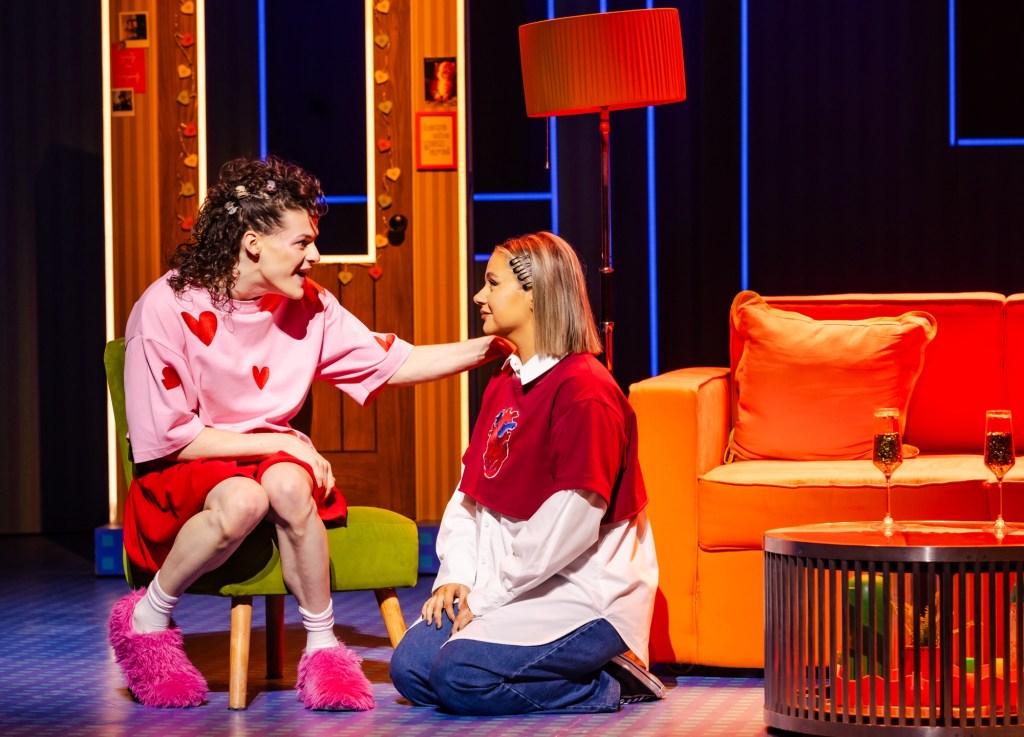
  • DRAG BABY – ⭐️⭐️⭐️ – new queer comedy drama is intriguing but over all too soon

    Ché, photograph by Harry Elletson

    DRAG BABY

    by Grace Carroll

    directed by Joseph Winer

    Pleasance Theatre, London – until 22 June 2024

    https://www.pleasance.co.uk/event/drag-baby

    It’s not often that you come out of a show wishing it was twice as long, but that’s the case with Grace Carroll’s Drag Baby, which is just concluding its run at the Pleasance’s Downstairs space in North London, following a 2022 presentation at the Kings Head. As it stands, it feels very much like a work-in-progress, a sliver of a play (even with a lot of music the whole thing clocks in at barely 75 minutes) wrapped up in a ton of glitter, attitude and some glimpses into contrasting drag performance styles.

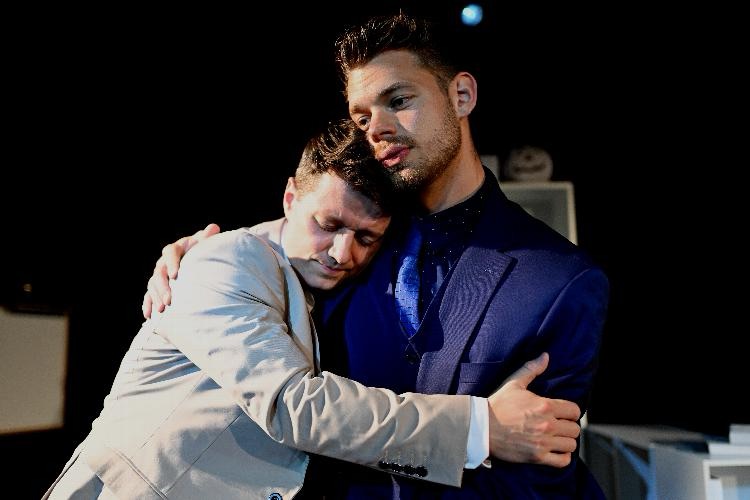
    The brevity of the piece is unfortunate as the basic premise of the piece commands attention but doesn’t get enough room to breathe or explore: estranged childhood sweethearts Dan and Sally, both now gay or at least bi-sexual, he now a drag queen in a liaison with a fellow performer and she in a lesbian relationship, meet to explore possibility of having a child together. It throws up a lot of intriguing factors -jealousy, family expectations, shared history, party lifestyle versus domesticity- but hasn’t the time or the depth to really examine them.

    Carroll’s dialogue mostly lacks flavour, and the characters feel so perfunctorily drawn that it’s hard to empathise with them, despite the valiant efforts of the cast. More time to establish who these people are and why they matter so much to each other, and why they should matter to us, would pay off rich dividends in terms of making this into satisfying drama.

    Only one performer, charismatic, witty Ché as Nathan, the avant garde drag performer in love with Dan and whose tough exterior conceals a young lifetime of hurt, rises above the script’s limitations, creating a fully rounded character with authentic presence and edge. Furthermore, the extended taste we get of Nathan’s outrageous onstage antics are so exciting and bizarre that it’s a bit disappointing when we have to go back to the play itself. Stephen Cheriton’s Dan is likeable and natural, without ever quite suggesting why everybody’s falling at his feet, and doesn’t feel ruthless enough. The subplot about his upcoming TV break seems curiously under-explored.

    Nicole Evans fares better as overeager, insecure Sally, making her compellingly needy yet manipulative. As her partner Amelia Parillon has a nice line in aggrieved disapproval but is given far too little to do. The ending, which sees the two women sort-of making up, is such a dramatic non sequitur that the audience isn’t sure whether to clap.

    Joseph Winer’s production is highly watchable but suffers from pacing issues – there are a couple of ponderous gaps between scenes that not even the disco bangers being played over the sound system can fill – and doesn’t fully master the wide, shallow playing space, resulting in some lost laughs and fudged emotional moments. Olivia Heggs’s movement direction is spot on, as does Lu Herbert’s suitably glitzy but dingy set.

    This feels like an appropriate theatrical offering for Pride month, but falls between two stools: in its present form, Drag Baby is too weighty to be a frivolous curtain raiser to a night out on the town, but too brief to really work as a complete play. Promising but frustratingly flimsy.

    June 21, 2024

  • BOYS FROM THE BLACKSTUFF – ⭐️⭐️⭐️⭐️ – Alan Bleasdale’s seminal TV work makes enthralling stage drama

    Barry Sloane, photograph by Jason Roberts

    Alan Bleasdale’s BOYS FROM THE BLACKSTUFF

    by James Graham

    directed by Kate Wasserberg

    Garrick Theatre, London – until 3 August 2024

    https://nimaxtheatres.com/shows/boys-from-the-blackstuff/

    There’s something both invigorating and deeply depressing about watching this blistering stage adaptation of Alan Bleasdale’s seminal 1980s TV drama and realising not only does it still feel relevant but that in fact it resonates more powerfully now than it would have done, say, a decade ago. Make no mistake, this is a deeply Left Wing piece of work, filled with humanity and rage, despair and vitality.

    Perhaps it could only have sprung from a city that had the guts ripped out of it by the Tories under Thatcher, and Bleasdale’s all-too-credible tale of working class Liverpudlians doing their best not to get crushed by a societal system not designed to help them, now screams like a clarion call to a nation once again decimated by a bunch of uncaring, dishonest elitists. That this coruscating piece of theatre is playing in the West End as the UK heads into a General Election feels particularly apposite.

    Originally commissioned by, and produced at, Liverpool’s Royal Court before a brief stint at the National, Boys From The Blackstuff arrives in the West End like a blast of fresh air. Kate Wasserberg’s staging, performed in front of a projected backdrop of the perpetually rippling waters of the Mersey, has an appropriately warm-hearted community theatre feel, with the actors trundling on set pieces and furniture while forbidding-looking rusty metal frames pivot and position overhead, and is perfectly matched by James Graham’s episodic but bold adaptation of the television scripts. It’s scrappy and a little rough around the edges, but it has tremendous focus, irresistible Scouse energy, moments of surprising lyricism, and a raw, ferocious theatricality that captivates and soars.

    Unless you’ve a working knowledge of the original series, it’s hard to know where Bleasdale ends and Graham begins, although the latter adds a heartbreaking coup de theatre concerning the children of one of the leading characters that leaves us winded. As writers they share a flair for channelling politics and history down through the lived experience of individuals we can identify with. If you spend the first half of the stage play marvelling at the ongoing relevance of the themes, in act two the drama moves into a zone where you find yourself caring desperately about the people. The writing is terse, bleakly funny, sometimes overtly sentimental, and ultimately desperately moving. The conflicts between these flawed, angry, frightened people makes for riveting theatre but feels like a challenge to humanity at large to just do better.

    It isn’t perfect: the bond between the tarmac-laying men (hence the title) drawing the dole while still taking on manual labour in an attempt to makes ends meet, isn’t as strongly felt as it might be. The storytelling is a little uneven, and, from a design perspective, the wigs for the female characters are pretty awful, while having a young actress playing, however skilfully, a much older woman smacks of drama school end-of-year shows.

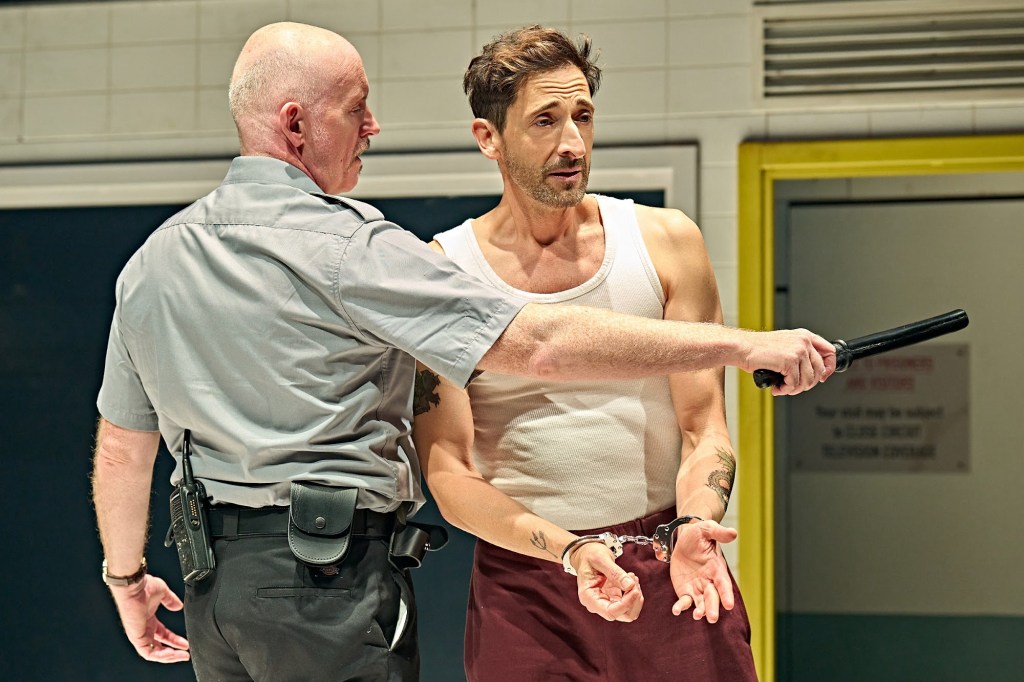
    These are small cavils though at a rousing production that evokes time and place with such vivid specificity and bold stagecraft. Movement director Rachael Nanyojo’s striking work reaches its apotheosis with the slo-mo ballet, at once brutal and graceful, where the police violently take down poor, mentally incapacitated Yosser (Barry Sloane, inheriting Bernard Hill’s iconic “gizza job” with stunning commitment). Amy Jane Cook’s gritty set, Ian Scott’s lighting and Jamie Jenkin’s video design all contribute to the show’s devastating overall impact. The humour is tart, dark and much needed in what could otherwise be a night of unremitting depression.

    Sloane is more physically striking than one might expect somebody in such dire straits as Yosser, abandoned by his wife and apparently unemployable for any length of time, to be, but he nails the swagger, aggression and broken masculinity of a human whose life has spiralled so far away from what he presumed it would be that he barely recognises himself. It’s a tremendous performance. As his pal Chrissie, equally impecunious but managing to hang on to his family…for now, Nathan McMullen delivers a flawless, heartcatching account of a genuinely decent man (“you’re too good!” Yosser constantly rails at him) and his scenes of marital strife with despairing wife Angie (Lauren O’Neill, thrillingly impassioned) are electrifying.

    Philip Whitchurch is brilliant as frail, older George, haunted by memories of a more affluent, less desperate Merseyside, and there are potent contributions from Mark Womack, Aron Julius and George Caple as men old before their time and desperately clinging on to what’s left of their sanity and dignity. There’s excellent multi-rolling work from Dominic Carter, Jamie Peacock and Hayley Sheen as a variety of clerks, officials, priests and family members who emerge from the nightmarish landscape to challenge or ameliorate the struggling protagonists’s lives.

    Male mental health is more widely discussed than it was forty years ago, so the characters, but especially stricken Yosser, read slightly differently now than they did when the tv series first appeared. Wasserberg’s production wisely doesn’t comment on this but allows the situations and the people to speak for themselves. The result is a piece of theatre that pays tribute to its epoch-making source material but which packs one hell of an emotional punch of its own. See it, and come out simultaneously angered by its resonances and exhilarated by its theatrical bravura. On screen and now on stage, Boys From The Blackstuff proves unforgettable. Bleasdale’s legacy is vindicated.

    June 19, 2024

  • THE BLEEDING TREE – ⭐️⭐️⭐️⭐️ – brutal, poetic and powerful, this Australian drama is the real deal

    Photograph by Lidia Crisafulli

    THE BLEEDING TREE

    by Angus Cerini

    directed by Sophie Drake

    Southwark Playhouse Borough, London – until 22 June 2024

    https://southwarkplayhouse.co.uk/productions/the-bleeding-tree/

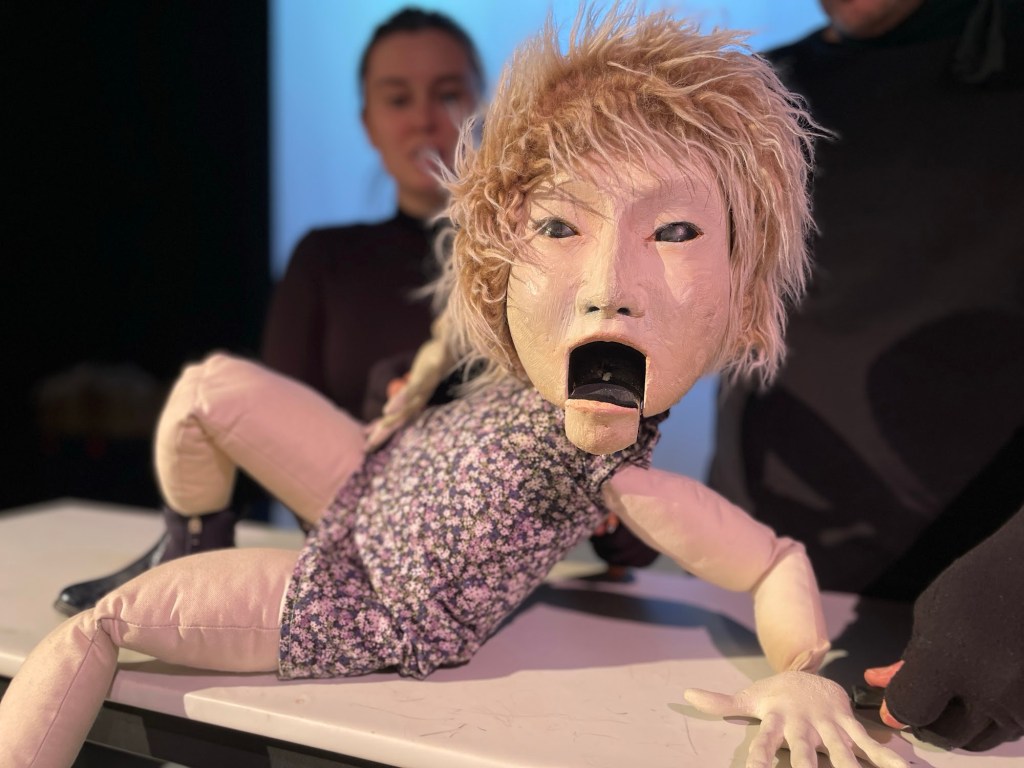
    Poetic beauty and unmitigated revulsion coexist in this remarkable 2015 Australian play, receiving its British premiere in an abstract, note-perfect production by Sophie Drake. A trio of fine actresses (Mariah Gale, Elizabeth Dulau, Alexandra Jensen) play a mother and two daughters who take the ultimate revenge on the drunk, abusive patriarch that makes their home life a domestic hell.

    It’s not a particularly original premise but it’s the raw, bare bones that fuels classical tragedy, and the execution -a tantalising combination of revenge thriller, verse play and female empowerment at its most extreme- makes it horribly, compulsively watchable. Angus Cerini’s writing sometimes feels hemmed-in by his decision to have the women speak in verse, but for the most part is vivid and compelling. It runs for a mere hour but that is all we need, and possibly all we can take.

    The acting is unflinching and truthful. Southwark’s smallest auditorium doesn’t allow for much in the way of artifice, and there is a ruthlessness yet also a grace about the work of Gale, Dulau and Jensen that takes the breath away. Gale and Dulau are particularly impressive with simplicity and detail at morphing into the men who intrude on the story, the latter excelling as the rural policeman who discovers the women’s crime, and whose reaction comes as a bit of a surprise. There’s a grim satisfaction in the fact that the last living being to come into contact with the bodily remains of the appalling man whose demise lights the touch-paper on the whole drama, is the canine parent of a litter of puppies this human monster kicked to death….and of course she’s female.

    Every ounce of horror (be warned that the descriptions of a decomposing human body are extremely graphic) and dark humour is extracted from Cerini’s text, and the overall impression created by Drake’s staging is that we are watching a sort of dark ritual as much as a piece of storytelling. The oppressive, dusty heat of rural Australia is powerfully evoked, as is the sense of elemental fury that is unleashed when women are pushed to breaking point.

    Iskandar R Sharazuddin’s movement direction is an important component to the general air of sweaty threat: note the way all three women flinch simultaneously as a violent noise ricochets through the auditorium (outstanding sound and composition by Asaf Zohar). Jasmine Swan’s design, redolent of earth and blood, feels exactly right, and is moodily lit by Ali Hunter.

    The Bleeding Tree is strong stuff: brutal, essential, and highly theatrical. It’s a feast of terrific acting, intelligent production choices, bold writing and female-driven righteous rage. It’s not for the faint-hearted, but if you go you’ll probably be processing it long after it’s over.

    June 16, 2024

  • BABIES – ⭐️⭐️⭐️⭐️⭐️ – youthful freshness and musical theatre know-how coexist splendidly in this irresistible new show

    Ashley Goh, Bradley Riches, Nathan Johnston and Max Mulrenan, photograph by Matt Crockett

    BABIES

    Book and direction by Martha Geelan

    Music and lyrics by Jack Godfrey

    The Other Palace, London – until 14 July 2024

    https://theotherpalace.co.uk/babies-musical/

    More than at any time in recent memory, it feels as though the British musical is having ‘a moment’. There’s the perennially popular Everybody’s Talking About Jamie back out on tour, ditto Unfortunate, the rambunctious Little Mermaid bastardisation. Meanwhile, Six continues with world domination, 42 Balloons made hearts soar in Manchester (in what must surely be a precursor to a London run), Operation Mincemeat’s installed in town in its best ever version and garnering every award going, while crowd pleasers Kathy & Stella Solve A Murder!, Two Characters (Carry A Cake Across New York) and Standing At The Sky’s Edge are enjoying West End transfers, and an autumn return is announced for tear-jerking stunner The Curious Case Of Benjamin Button. These homegrown tuners seem mostly to succeed when dealing with predominantly British themes and styles, instead of taking on the glitz and sentimentality of Broadway, but here’s one that potentially has more universality than most: after all, we’ve all been teenagers, right?!

    Having already won BYMT’s New Music Theatre Award, and became a fan favourite through workshops and a concert presentation, Babies is built on the unpromising (to me anyway) premise of a bunch of fifteen year olds being given life-like electronic doll babies to take care of as an educational project, mainly because of a plethora of unplanned teen pregnancies in the school year above. Reading the blurb, I assumed this show was for the kids only…but what a pleasure it is to be proved so utterly wrong. Jack Godfrey and Martha Geelan’s unpretentious, deceptively clever show never patronises its youthful characters, instead presenting them in all their contradictory, self-obsessed, neurotic, swaggering, humane glory. It’s refreshing, life-enhancing and insightful, while delivering a couple of uplifting hours, full of heart, hope and wicked humour, in the theatre. The concept provides a useful tool to examine the pressures on young people, from social media, from their families, from each other and from themselves, and it does so with a deft touch and a lot of goodwill.

    Babies boasts a propulsive, tuneful pop-rock score -it’s a bit Alanis, a bit Avril Lavigne, a bit Destinys Child, all enjoyable- that employs thematic repetition to telling effect, and replete with pithy, witty, relatable lyrics. There’s at least one bona fide showstopper in ‘Hot Dad’, a sassy, z-snapping paean to (predominantly) male self-image and parenting. If there’s any justice, this six week season should be a stepping stone to a permanent run somewhere prominent for this funny, frank, altogether delightful new musical that, although a shoo-in for the GenZ-ers, is so well crafted and intelligent as to have broad cross-generational appeal. Crucially, you can’t help but care about and root for these kids, and the show reveals a startling emotional centre that throws into sharp, joyful relief the pervasive raucous humour but seldom seems belaboured.

    The casting is sublime. Heartstopper star and Big Brother alumnus Bradley Riches makes an adorable stage debut as fledgling gay Toby, while Lauren Conroy captures precisely the unique combination of intensity, insecurity and superiority of the teenage overachiever. At the performance I saw, cover Grace Townley subbed brilliantly for Jaina Brock-Patel as social media savvy popular girl Becky, her regular podcast bulletins unravelling hilariously as the pressures of parenting and a super-needy boyfriend (Max Mulrenan, smashing) start to kick in. Lucy Carter is a delight as gawky Lulu who feels like all her Christmases have come at once when an unthinking Becky turns the light of her friendship unexpectedly upon her.

    Ashley Goh, Nathan Johnston and Viola Maisey do beautifully by a trio of queer characters the writing for whom neatly sidesteps cliché. The most challenging, best written role is probably mouthy, rebellious Leah, navigating a tricky course between her absent, probably addicted mum, and the grandmother she lives with, and who goes from cynicism about the baby project to forming a touching, clearly much needed, bond with her ‘child’. Zoë Athena is phenomenal, investing this troubled, porous young woman with sweetness, fire and emotional complexity.

    Geelan directs her own work with pace and flair, matched by Alexzandra Sarmiento’s streetwise, high energy choreography. Jasmine Swan’s climbing frame set looks good although it wobbles somewhat alarmingly when the cast are clambering all over it. Paul Gatehouse’s sound design is pleasingly clear so that the lyrics, harmonies and the orchestrations (Godfrey, and Joe Beighton) register as they should.

    Any parent with a teenager needs to plan a family visit to this, and don’t be surprised to find tears in your eyes… both of mirth and the other kind. I loved every minute of it. A bit naughty, a lot lovely, Babies is unexpectedly but totally delightful.

    June 12, 2024

  • ENGLISH – ⭐️⭐️⭐️⭐️ – a modern classic in an exquisite production

    Sara Hazemi, Nojan Khazai, Nadia Albina and Lanna Joffrey, photograph by Richard Davenport

    ENGLISH

    by Sanaz Toossi

    directed by Diyan Zora

    Kiln Theatre, London – until 6 July 2024

    https://kilntheatre.com/whats-on/english/

    Since its off-Broadway premiere in 2022, Sanaz Toossi’s quietly brilliant ninety minute play has been seen in several major American cities and won the Pulitzer Prize for Drama. Now English arrives in London, following a brief run in Stratford-upon-Avon, courtesy of the Royal Shakespeare Company in an understated but scintillating, and flawlessly acted, production by Diyan Zora. Watching it at the Kiln, it’s not hard to see what all the fuss is about.

    It’s a fascinating piece, set in Karaj, Iran in the first decade of this century, depicting a quartet of adult students learning the English language under the tutelage of Marjan (Nadia Albina), returned from nine years in Manchester, who runs her classroom under the mantra “English Only”, which we see her writing on the whiteboard before even a word is spoken. Of course, her students, each of whom has their own very specific reasons for learning English, struggle with this rule and one of the conceits, not entirely original but dramatically pleasing, of the play is that when conversing in their native Farsi the characters adopt neutral, ostensibly British, accents but when speaking English their speech becomes broken, their accents strongly Iranian.

    To people old enough to remember the distinctly un-PC British sitcom Mind Your Language, set in a language school and with enough yellow face and other racial tropes to give present day audiences the absolute ick, this premise might be a tad uncomfortable, were author Toossi not Iranian-American herself, and the depth, ambition and perception of her writing so clear and true. The final scene is played entirely in Farsi, and it’s sublimely moving.

    Not all of the characters have been created with equal amounts of detail but the fine actors, under Zora’s restrained but perfectly pitched direction, bring them to vivid life. Roya (Lanna Joffrey, wonderful) wears the permanent expression of mixed-together panic, amazement and disdain so often adopted by older people well out of their comfort zone: she’s learning English so that she can move to Canada and communicate with her granddaughter, although it becomes clear that she and her expat son are tragically not on the same page.

    The sole male in the group (Nojan Khazai’s blunt but likeable Omid) is ambitious (“I want to be like you. You could live anywhere. You could learn any language. You could do anything and you’re here” he says to Marjan at one point) but is concealing a surprising secret. Sara Hazemi’s enthusiastic, youthful Goli appears to be the most influenced by, and embracing of, foreign, specifically American, influences, while Serena Manteghi’s facetious, rule-bending Elham is in a race against time to get her English language qualification to go and train abroad, yet is probably the most fiercely nationalistic of the quartet.

    Meanwhile, Marjan quietly yearns for England (“I always liked myself better in English”). Albina hauntingly suggests a gnawing loneliness and displacement underneath her usually peppy, occasionally infuriated exterior, and nails a beautiful speech near the end about how the foreigner abroad speaking that country’s native language is somehow always ‘othered’ and seldom fully able to express the full range of their humanity. If great drama encourages the viewer to genuinely open their minds and see things from another point of view then it’s during this illuminating section that English steps up a gear, and becomes something really distinguished. All of the acting is spot-on.

    Toossi’s script never belabours the point that language can equally be a cage as much as a passport to freedom, preferring instead to skilfully and lovingly filter the information through her carefully drawn characters. There’s only one challenge to credibility, which is that the bolshiest, least receptive student suddenly passes her final test with flying colours but that, and an occasional tendency to go for the obvious laugh, are minor flaws in this exquisite, life-enhancing play.

    Zora’s production has the exhilarating hallmarks of a project where everyone on the creative team is singing from the same hymn sheet, so to speak. Elliot Griggs’s lighting, bathing the unit set in colour to differentiate times of the day, Anisha Fields’s naturalistic, nicely specific costume and scenic designs, and the sound -unobtrusive but punchy when it needs to be- by George Dennis, are complementary and pretty much perfect.

    English is a provocative modern classic and it’s hard to imagine a finer production of it. Very highly recommended.

    June 12, 2024

  • WEDDING BAND A Love/Hate Story in Black and White – ⭐️⭐️⭐️ – intriguing but uneven mid 20th century American play in UK debut

    Deborah Ayorinde and David Walmsley, photograph by Mark Senior

    WEDDING BAND A Love/Hate Story in Black and White

    by Alice Childress

    directed by Monique Touko

    Lyric Hammersmith Theatre, London – until 29 June 2024

    https://lyric.co.uk/shows/wedding-band-a-love-hate-story-in-black-and-white/

    First seen on stage in the US in 1966, this play by African-American writer Alice Childress is only now receiving its British stage debut. Kudos to the Lyric Hammersmith and director Monique Touko for giving UK audiences a chance to enjoy this challenging, thought-provoking piece, whose themes resonate down the ages. Set early in the twentieth century in South Carolina, as Black Americans started the Great Migration north to seek better work opportunities, it focuses on racism, miscegenation, female influences within the community… these are big, important issues, the stuff of enthralling drama and memorable, shattering theatre.

    That sometimes proves the case with this production, but not always. It’s not clear if it’s Childress’s script or Touko’s direction, but Wedding Band only intermittently catches dramatic fire. While seldom less than engaging, the tone is bewilderingly inconsistent, at times sultry, at others comical, then edgy, often tragic, occasionally heartachingly poetic.

    All of these tones and hues are valid and present in this story of a resourceful Black woman and the Caucasian man she loves, against a backdrop of mistrust and appalling racism. They don’t coalesce into a satisfying whole though, so a couple of impressive or moving moments and inspired acting or directional choices feel isolated from each other, which becomes frustrating so that an ending that should be cathartic feels a bit ponderous, although beautifully realised. There’s a rich seam of welcome humour running through Childress’s writing that plays well against the distressing material. All in all, it’s a heady brew of religious fervour, philosophical discourse, and eroticism, but it feels uneven.

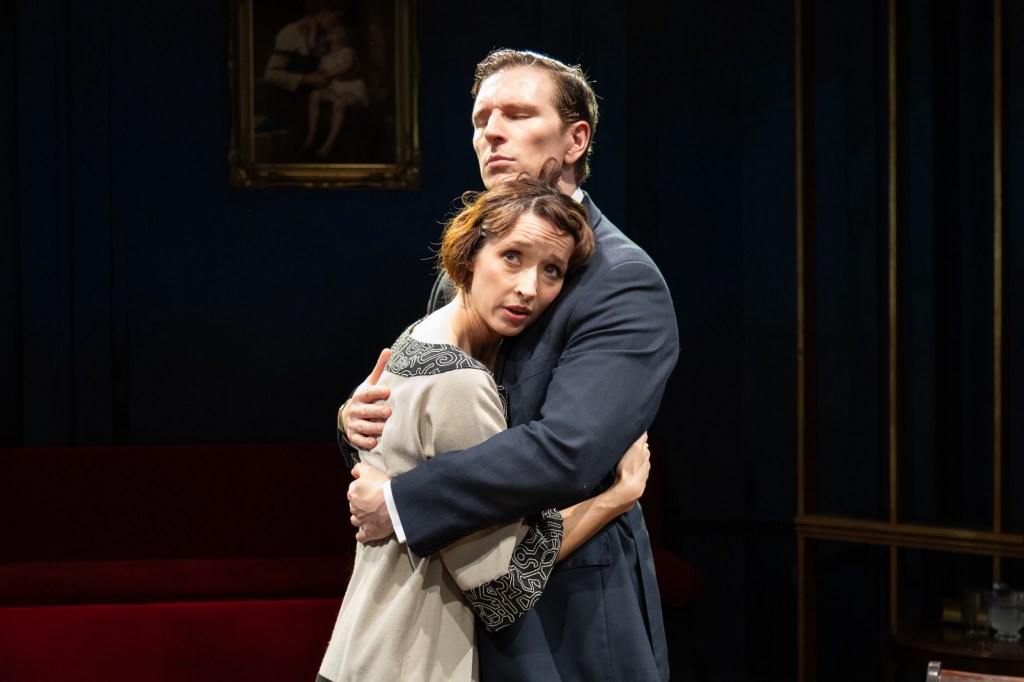
    Theres’s a lack of palpable chemistry between Deborah Ayorinde’s Julia and David Walmsley’s Herman though. Although they make a strikingly attractive couple, the heat and feeling between them doesn’t feel overwhelming, which robs the play of some of its urgency. Individually, they make potent impressions but collectively something doesn’t quite gel. She’s strident but sensitive, and when she gives full reign to her anger in the second half, in a bitter showdown with his bigoted mother (Geraldine Alexander, powerful in a deeply unsympathetic role), she’s pretty magnificent. Walmsley delivers an affecting study of a straightforward man caught in a situation that in another life wouldn’t be problematic.

    Some of the supporting performances are terrific. Bethan Mary-James delivers flawless work as a dour neighbour with a joyfully eccentric turn of phrase but a kind heart, innate intelligence and a tragic bond to the absent husband who abused her. Lachele Carl excels as a landlady whose surface gentility belies a surprising degree of sensuality and a penchant for mysticism that ricochets between comical and sinister. There’s strong work from Patrick Martins and Diveen Henry as, respectively, a troubled soldier and his mother.

    Although it’s spare and elegant, the metal and mesh-framed set by Paul Wills doesn’t evoke a particularly strong sense of place or time, and Matt Haskins’s non-specific lighting doesn’t help. Shiloh Coke’s music is boldly effective and evocative however.

    This is a decent production of a play that exerts a certain amount of power but which feels too diffuse to be really satisfying.

    June 11, 2024

  • CLOSER TO HEAVEN – ⭐️⭐️⭐️ – trip back to the gay ‘90s with this Pet Shop Boys-Jonathan Harvey musical

    Beth Curnock, Frances Ruffelle and Cian Hughes, photograph by Mark Senior

    CLOSER TO HEAVEN

    Book by Jonathan Harvey

    Music and lyrics by Pet Shop Boys

    directed by Simon Hardwick

    Turbine Theatre, London – until 30 June 2024

    https://www.theturbinetheatre.com/whats-on/closer-to-heaven

    It may not be particularly radical now and the weaknesses in the writing seem more exposed, but the significance of Closer To Heaven in the canon of queer musical theatre cannot be overstated. Twenty three years (the show was first seen at the Arts Theatre in 2001 and has enjoyed two London fringe revivals since) may not be that long in historical terms but huge leaps and bounds have since been made in gay and queer representation, and back in the day this Pet Shop Boys-Jonathan Harvey collaboration felt like having a bucket of cold water thrown over you in that it didn’t sanitise or pretty up the gay experience: sure, we’d had La Cage aux Folles but that was comforting and cute, and Rent which was artsy and so NYC-centric. But Closer To Heaven rubbed our noses into 1990s(ish) London club culture in all its seedy, camp, dysfunctional glory. Where “the love that dare not speak its name” often still cringed in the shadows, this divine, imperfect show dragged it out into the sunshine, or rather the spotlight, and pulled few punches.

    Any contemporary production comes up against the fact that attitudes have mightily changed, both to homosexuality, and to addiction, which is a more insidious theme in this darkly exciting confection. Simon Hardwick’s new staging turns the Turbine auditorium into a night club, with a stage-cum-runway and audiences arranged in tables which is a valid take: squint and you could be in Heaven. This ups the ante and the immediacy, but there’s an unfortunate pay-off: the idea that we’re all spectators in a club robs the play of some of its power. Scenes repeatedly have their truth and urgency diluted by performers playing to the audience rather than the characters they’re talking to. Harvey’s script, equal parts sleaze and sentimentality, has a soap operatic feel but when played to the hilt it can be genuinely affecting, but that seldom happens here.

    As a result, the tormented relationships (boy meets girl who falls for him but also meets boy who he in turn falls for, a daughter trying to help her gay dad get off the drugs and booze) don’t have the depth or emotional resonance they need to make the catharsis of the ending really work. This is frustrating in a production that has a lot going for it elsewhere.

    Chief amongst its glories is Frances Ruffelle as Billie Trix, the bonkers, sexually ambiguous club hostess-cum-cultural icon who presides over the whole torrid proceedings like a female version of Cabaret’s Emcee. Ruffelle is compelling, a pixie-ish (possibly Björk-inspired?) girl-woman who’s got by with charm, eccentricity and a blithe disregard for anybody else who comes into her orbit. In the original production Frances Barber felt more dangerous and feral, but Ruffelle invests her with a deranged charisma and gets some gorgeous comic mileage out of Harvey’s innuendo-infused script. She also sounds fabulous belting out the Pet Shop Boys numbers, most of which still thrill with their unique combination of thunder and melancholy. She proved in the 2017 London premiere of the LaChiusa The Wild Party that she does louche pretty well, and she’s wild, yet likeable, here.

    Courtney Bowman is terrific as Shell, the go-getting record company talent spotter who ends up torn between her feelings for the eminently unsuitable Straight Dave and pseudo-parenting her own, deeply troubled Dad. Glenn Adamson’s perpetually grinning Dave has a cracking voice and a degree of swaggering charm but never plumbs the depths of despair and insecurity the role really requires: when tragedy strikes in the second half he seems more mildly inconvenienced than broken. A man telling a woman having a perfectly understandable extreme reaction to an unusual sexual/emotional situation, that “you’re going mad” plays quite differently in 2024 than it did in 2001 (thank goodness) but it does Adamson’s character no favours, and it’s just never really clear why everyone is throwing themselves at this slightly smug chancer.

    Connor Carson’s strapping physical beauty and bell-like vocals seem at odds with the desperation and vulnerability ideally needed for nihilistic drug dealer Mile End Lee (“I’m easy to hate” he sadly states, but we get no real indication of that). Both David Muscat as a vile record producer and Kurt Kansley’s drug-addled club impresario, whose dark-night-of-the-soul aria ‘Vampires’ is a vocal highlight of the second half, could afford to go bigger and deeper with their characterisations.

    Christopher Tendai’s striking choreography and David Shield’s neon-infused set that resembles a catwalk disappearing into a vortex of hedonism…or hellishness, are effective, and the use of TV screens to show cctv footage of other areas of the “club” is a nice touch.

    The show has one of the best opening numbers of any modern musical, the infinitely catchy ‘This Is My Night’, which establishes character, milieu and relationships with wit, economy and booty-shaking dance beats. Hardwick and Tendai stage it exhilaratingly, although the night I attended it was marred by a microphone issue. Given the electronic nature of the score, I guess there is a case to be made for pre-recorded music (I think the Above The Stag version went down a similar route) but it inevitably saps the show of some immediacy and nuance, despite the generally excellent voices.

    Still, the songs are earworms, Ruffelle is wonderful and the whole thing bowls along at quite a lick. With unapologetic depictions of drug taking, sexual voraciousness and consumerist greed, Closer To Heaven may be a bit grimy for nostalgia, but it is a piece that irresistibly evokes the grotty underbelly of London nightlife at a very specific time. Maybe to enjoy it at its fullest you had to have been there, but there is something rather lovely about the way it resolutely defies sanitisation. Rodgers and Hammerstein this ain’t, hell, it’s not even Taboo (the less uncompromising Boy George musical also rumoured for an upcoming revival).

    June 7, 2024

Previous Page Next Page

Blog at WordPress.com.


Loading Comments...
 

    • Subscribe Subscribed
      • ajhlovestheatre
      • Join 59 other subscribers
      • Already have a WordPress.com account? Log in now.
      • ajhlovestheatre
      • Subscribe Subscribed
      • Sign up
      • Log in
      • Report this content
      • View site in Reader
      • Manage subscriptions
      • Collapse this bar