ajhlovestheatre

  • Home
  • About
  • Contact
  • Blog

  • HOW TO SURVIVE YOUR MOTHER – ⭐️⭐️⭐️ – some stories are so weird they can only be true

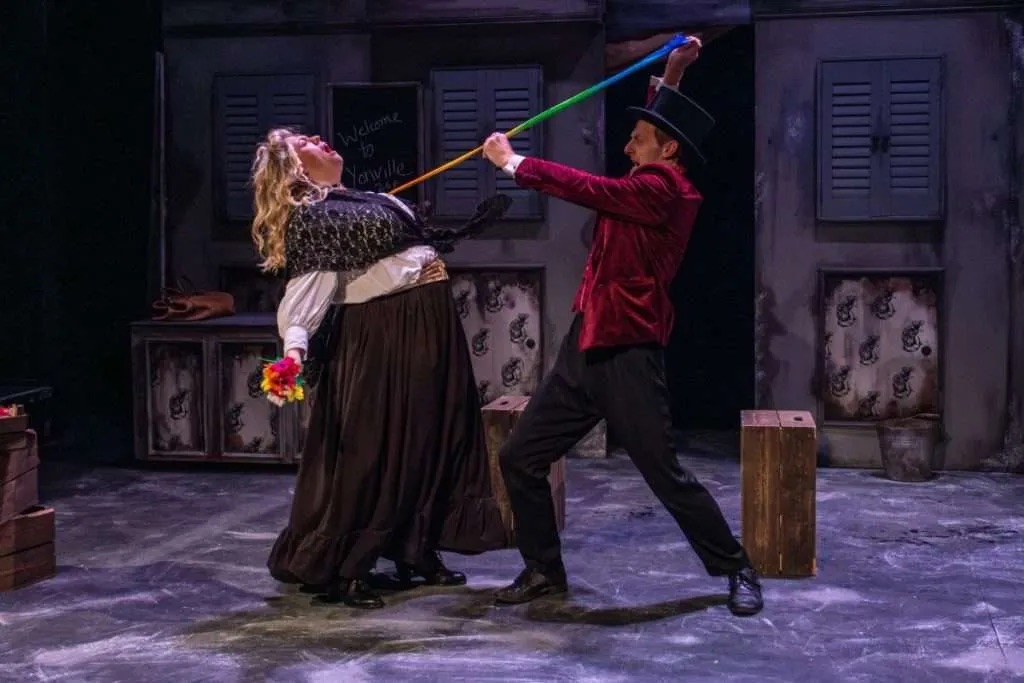
    Peter Clements and Emma Davies, photograph by Charles Flint

    HOW TO SURVIVE YOUR MOTHER 

    by Jonathan Maitland

    directed by Oliver Dawe

    Kings Head Theatre, London – until 24 November 2024

    https://kingsheadtheatre.com/whats-on/how-to-survive-your-mother

    From All About Eve and Mommie Dearest on screen to The Little Foxes and the heroines of Noël Coward and Tennessee Williams on stage, and Death Becomes Her and Sunset Boulevard on both, women behaving appallingly is a longstanding stalwart of popular entertainment. It’s a bit different when the woman in question is your mum though, and Jonathan Maitland’s tart autobiographical comedy drama tackles this conundrum almost head on…with enjoyable results.

    How To Survive Your Mother, a meta theatrical distillation of Maitland’s 2007 memoir, has the unique USP, in Oliver Dawe’s nimble, inventive staging, of having the author himself appearing in person. He’s not the most convincing or comfortable of stage actors but his presence is a useful conduit between the audience and the frequently outrageous antics of his self-dramatising mama, a glamorous entrepreneur whose old folks home ran into trouble when she started conning residents out of their fortunes, and who turned the family home (in Cheam of all places) into a hard-partying gay hotel. 

    Maitland has created a humdinger of a starring role and bewitching leading lady Emma Davies seizes it with a gigantic dollop of camp panache, but also a surprising sensitivity. Bru Maitland was a Jewish immigrant who claimed to be French and Spanish to avoid anti-semitism, who told the most preposterous lies to get what she wanted, and discarded the men in her life when it suited her to. She was generally A Piece Of Work, the sort of woman who would crash a car to get her own way, or who would claim to have a life threatening made-up illness (“I have cancer…of the eyebrows”) to avoid uncomfortable questions from her own son.

    She’s also irresistible theatrical company, especially as embodied by Davies as a foul-mouthed, extravagantly accented amalgam of Joan Crawford, Norma Desmond and a younger Betty White. Bru was not, by most conventional standards, a “good” person but Davies gives her an indomitable life force, a dancers physicality, and breathtaking comedy timing. It’s a glorious portrayal, over-the-top but rooted in a somewhat tragic reality. There’s a strong sense that this woman is bigger and more vivid than the humdrum suburban life she’s supposed to be fitting in to, like a proverbial square peg into a round hole, and that she is just too much for the conventional men who are getting in her way.

    If Davies mines her role for every last nugget of comic gold and histrionic temperament, the rest of the cast have a lot less to get their teeth into. Despite the flimsiness of the roles, Peter Clements does strong work as adult Maitland in his middle years (two young actors alternate as the author as a child) and John Wark raises seething resentment into an artform as his father. Stephen Ventura is excellent as the homophobic neighbour reduced to a gibbering mess after a showdown with Bru at her most viciously withering.

    Dawe’s production makes effective use of music to denote which decade we’re in story wise, and features some strikingly effective staging, using only a couple of moveable furniture pieces and a minimum of props in a bare space. It’s a shame Jason Taylor’s overly bright lighting isn’t more instrumental in evoking time and place, and that the production budget didn’t spring for some slightly more opulent costuming for its leading lady (although Davies wears animal print like an old school screen siren).

    It’s a tremendously entertaining ninety minutes, but a framing device of having the real Maitland discuss the genesis of the play with his wife (also played, with acerbic grace, by Davies) feels mostly surplus to requirements. The storytelling moves through important developments in the Maitland family’s life with almost indecent haste and a sometimes bewildering lack of specificity. The trauma that the writer dealt with as a result of his unusual relationship with his mother, even from the earliest age, is given lip service but not much analysis. It would also be interesting to know why Bru behaves as extremely as she does, but we get little background detail (“it’s a drama, not a diagnosis” as Maitland points out when challenged), having to settle for bathing in the not inconsiderable glow of Davies’s barnstorming central turn.

    Some stories are so strange they could only be true, and here’s one, even if we don’t get that much of the actual story. Still, How To Survive Your Mother is poignant and often downright hilarious, plus it offers an opportunity to see an authentic diva performance at very close quarters. 

    November 4, 2024

  • BARCELONA – ⭐️⭐️⭐️⭐️ – Lily Collins and Álvaro Morte make fine West End debuts in hugely enjoyable American play

    Photograph by Marc Brenner

    BARCELONA

    by Bess Wohl

    directed by Lynette Linton

    Duke of York’s Theatre, London – until 11 January 2025

    https://barcelonatheplay.com

    With Camp Siegfried at the Old Vic in 2021, American playwright Bess Wohl gave London audiences a two hander that starts out pretty innocuously before becoming deeply unsettling. Now she’s at it again with Barcelona, which predates the other play by several years but packs just as potent a punch, served up with a side order of intrigue, a lot of humour, some menace, and, in Lynette Linton’s exquisitely calibrated, shape-shifting production, irresistible star power.

    This UK premiere features the stage debut of Netflix smash Emily In Paris’s Lily Collins, once again playing a kookie, sometimes crass, American adrift in an unfamiliar European city, in this case the capital of Catalonia, home to Gaudi and Miró. La Sagrada Família is just something Collins’s Irene has read about in a guidebook though: when we first see her, visiting Barcelona as part of a bachelorette party, she’s hammered, bursting into an apartment, wrapped around Manuel, a local guy she picked up in a bar. This production is also the British stage bow of Spanish star Álvaro Morte, best known here as a lead in another Netflix show Money Heist, and his performance turns out to be just as much of an event. The sexual tension between the two actors is combustible, and so is the sense of implied threat when required (there’s a moment where Manuel informs Irene that there are no other people in the building, and it’s like an ice cold wave briefly breaking over the stage).

    Initially, Irene is every European’s worst nightmare of vulgar Americans abroad -puke drunk but motormouthed, using Italian instead of Spanish phrases, constantly calling Manuel “Manolo”, harping on about being proud to be an American without giving concrete reasons why- and she’d probably be pretty unbearable were it not for Collins’s innate likability. Collins displays the comic instincts and physicality of a true clown (“I nearly fell” she mutters, having ended up spreadeagled on the floor). Morte’s Manuel watches her with a detached mixture of amusement and exasperation. 

    One of the principal pleasures of the early section of the play is observing the wildly differing energies of these two characters: Irene’s a caffeinated ball of self-absorption while Manuel has a panther-like sensuality and off-handed charisma. They could almost be human metaphors for their respective continents of origin. The sparky banter about cultural and political differences -her sunny eagerness contrasting with his laconic bemusement- is pretty predictable but the charm of the actors and the steady eroticism keep it interesting. Wohl laces her text with surprises; Irene is more perceptive and less of a naïf than she first appears, and Manuel is nursing a deep well of hurt. It’s a love story of sorts, but not in the way one might presume.

    There are clues from the get-go: watch the subtle projections (by Gino Ricardo Green) as they dance on the back wall of the stage before the play even begins, as well as at certain points in the performance. Frankie Bradshaw’s detailed apartment set poses its own questions; it’s cosy yet strangely discomfiting, especially in tandem with Duramaney Kamara and Xana’s complex, doomy soundtrack. Lighting designer Jai Morjaria bathes it in the warm orange of a Catalan night, which changes tellingly over the course of the hundred minute duration. It’s a play that refreshingly defies categorisation and Linton has assembled a team fully alive to its quicksilver shifts in mood, power and focus. Visually the show shimmers, dramatically it alternates between balm and sizzle, and at the centre of it all is a pair of note perfect performances, playful but deeply felt.

    Lynette Linton also helmed the previous occupant of the Duke of York’s, the marvellous Shifters, another inspired two hander, which transferred from the Bush Theatre, where she is artistic director until next year. This exquisite production demonstrates the same flair, freshness and loving attention to detail in an unabashedly commercial project, as she brings to homegrown ventures at the West London venue she has transformed into a powerhouse of artistic integrity and effortless cool. 

    Wohl’s dialogue is snappy and funny, but taps into rich veins of feeling when necessary, and Collins and Morte inhabit it fully. Barcelona is ultimately a fairly slight play, but it’s genuine entertainment, and such care and talent have been lavished on it for this West End premiere that it feels like a deserved popular hit. I hope this isn’t the last we see of Collins and Morte on the British stage.

    November 3, 2024

  • WISH YOU WERE HERE – ⭐️⭐️⭐️⭐️ – Female friendship Iranian-style, this is a real beauty but you’ll need tissues

    Afsaneh Dehrouyeh and Maryam Grace, photograph by Rich Lakos

    WISH YOU WERE HERE

    by Sanaz Toossi

    directed by Sepy Baghaei 

    Gate Theatre, London – until 23 November 2024

    https://www.gatetheatre.co.uk/wish-you-were-here-uk-premiere/

    Iranian-American writer Sanaz Toossi is having an excellent year on UK stages. The RSC premiered English, her exquisite meditation on diaspora and the power of language to connect and alienate, at Stratford-upon-Avon before moving it to London’s Kiln for a sold out season. Now there’s Wish You Were Here, first seen off-Broadway in 2022, a honey-sweet, bitter-as-herbs study of female friendship against a tumultuously changing political and social landscape in Iran between the years 1978 and 1991. In Sepy Baghaei’s beautiful staging for the Gate, this remarkable five hander turns out to be as wise and engrossing as its predecessor, and even more emotionally engaging. 

    When we first meet the quintet of friends, in party mode as they prepare for the wedding of one of their number, it’s 1978, the year that saw the Iranian revolution that would strip women of many of their fundamental rights and deny them the opportunities to take up careers they’d studied for. Toossi’s dialogue refers to the impending change (“there’s static in the air”) but these women are mostly having fun; they swear, smoke, discuss sex and the human anatomy with eye-watering frankness, and snap at each other.  

    Initially, the group seems to divide too neatly into archetypes: there’s laidback, flighty Zari (Maryam Grace), straight laced Shideh (Isabella Nefar), diplomatic, sweet Salme (Emily Renée), intelligent, acerbic Nazanin (Afsaneh Dehrouyeh) and her best friend, too-cool-for-school Rana (Juliette Motamed), who happens to be the only Jew amongst these Muslims. This being Iran before it became a theocracy, that’s not an issue…at first. The years pass and the relationships, and these women’s lives, change, but what could otherwise be an engaging but not necessarily very original story of female friendships is lent urgency and piquancy by the setting.

    The acting has a lovely, naturalistic quality that precisely matches Toossi’s writing, balancing delicacy and nuance with moments of real dramatic meat and some pretty outrageous humour. If at first you feel like you’re eavesdropping, as the play draws on, it becomes quietly riveting, and very very moving. Wish You Were Here celebrates friendship while lamenting that time and circumstances can rend asunder even the strongest of connections. “Change is good. Right?” asks one of the group, before the seismic events in their country have fully kicked in; in fact, for these vibrant young women, it’s hardly a good thing at all. The yearning for a different life in America prompts the question of how differently these lives would pan out in a different setting.

    Baghaei’s production, played out in traverse, steers a cool, clear path between the realistic and the fanciful: a wedding dress lifted from the body of one woman onto that of another denotes the passage of time and a shift in attention; an intimate long distance phone call between two of the friends is wryly observed from the sidelines by the others. It’s a compelling mix of dreamlike and harsh reality. Tomás Palmer’s set design is a masterpiece of plushly carpeted late twentieth century kitsch that simultaneously cocoons the five characters while casting them adrift in a larger, not always benign, void.

    The maturing, in some cases hardening, of the women is meticulously done, and so are the powershifts, changes in allegiance, and the subtle -and not so subtle- cruelties within their relationships. “I used to be so dumb. I would give anything to feel dumb again” declares Zari wistfully, and one fully understands her longing. Each of the actresses fleshes out her character’s journey with infinite skill. Grace’s Zari and Dehrouyeh’s Nazarin are perhaps the most contrasting of the women and have the most volatile big swings to play, and they make it real edge-of-your-seat stuff. It’ll be a long time before I forget the look in Motamed’s eyes as Rana realises just how far removed she is from her best friend, or Dehrouyeh’s final, cathartic breakdown before pulling herself together and getting on with her life. Really though, all the acting is flawless, so good it barely feels like acting at all.

    The 1990 scene where Nazarin acquires a new friend (played by Nefar but so closely to her main character as to be confusing) feels like a bit of a non sequitur, but that’s a tiny misstep in a rich and rewarding evening. Wish You Were Here channels individual life experience through the broader canvas of turbulent recent history; it’s about love, loss, what binds people together outside immediate family. Humanity, intelligence and theatricality meld almost seamlessly together in this affection-infused piece…it’s very special.

    November 1, 2024

  • DR STRANGELOVE – ⭐️⭐️⭐️⭐️ – the threat of complete extinction surely shouldn’t be this much fun…

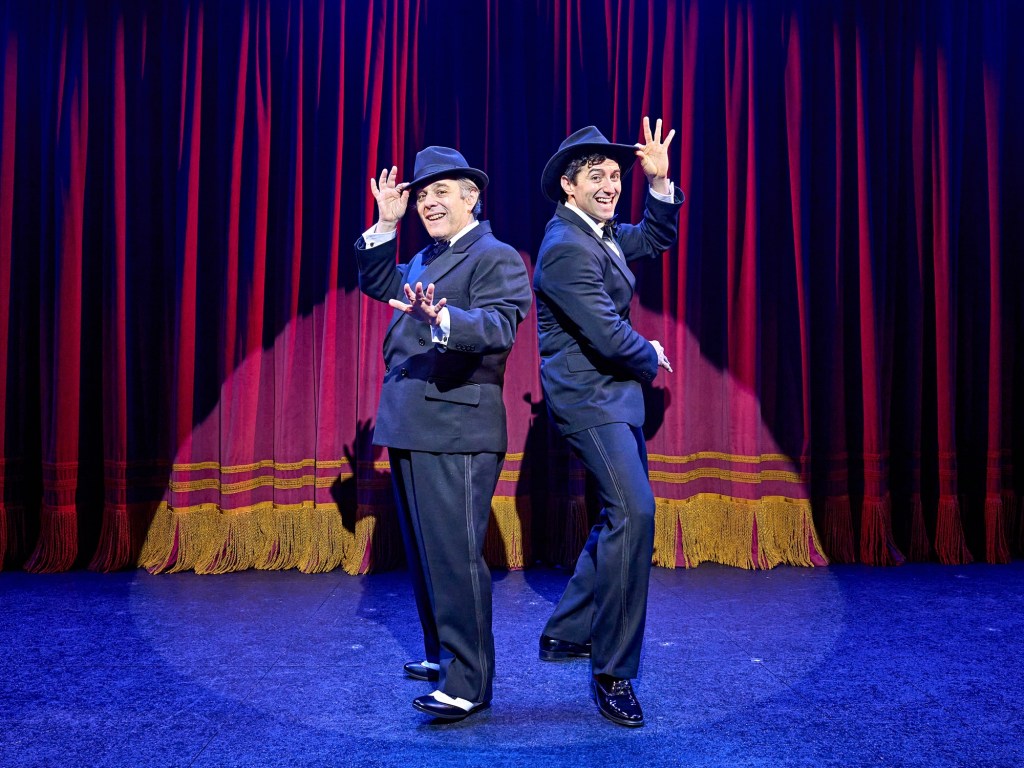
    Ben Turner and Steve Coogan, photograph by Manuel Harlan

    Stanley Kubrick’s DR STRANGELOVE 

    Adapted by Armando Iannucci and Sean Foley

    directed by Sean Foley

    Noël Coward Theatre, London – until 25 January 2025

    https://drstrangelove.com

    An artistic response to the nihilistic hysteria and dread of the Cold War era, Stanley Kubrick’s 1964 film feels horribly relevant as it hits the stage today as an absurdist black comedy full of belly laughs but infused with a very real sense of danger. At a time when the global sabre-rattling around nuclear weapons is louder than at any other period in recent history, Dr Strangelove, as reimagined for the theatre by Armando Iannucci and Sean Foley, is as unsettling as it is hilarious in its caricature-esque depiction of the various maniacs, cowards, diplomats and fanatics who hold the keys (literal and metaphorical) to mutually assured destruction. 

    Steve Coogan inherits Peter Sellers’s multi-role mantle, even adding an extra character to the roster of parts he gets to perform: like his celluloid predecessor, he plays Mandrake, the British RAF man stuck between the rock and hard place of having to placate John Hopkins’s lunatic General Ripper (“we don’t want to start a nuclear war unless we really really have to”) while also realising the impending danger, plus the American President, and titular Strangelove, a wheelchair-occupying scientific adviser with a camply preposterous Teutonic accent and nefarious links to the Third Reich. 

    On screen, Slim Pickens was deranged American bomber pilot Major TJ ‘King’ Kong when Sellers sustained an injury but here Coogan also gets to don the cowboy hat and sunglasses, gleefully riding pillion atop a nuclear warhead to light the touch paper on Armageddon. It’s a tour de force quartet of roles and Coogan is thrillingly up to it, making each character vivid, specific and plausible within the bonkers, high stakes confines of Foley’s bombastic staging. Strangelove is a particularly glorious creation, part man, part machine, sibilantly decrying the Nazis at every available opportunity while constantly trying to stop his recalcitrant electronic right hand from raising in an involuntary ‘Heil Hitler’ salute. 

    Brilliant though Coogan is, Dr Strangelove is far from a one man show. Hopkins is alarmingly funny as the gung-ho, machine gun-toting American General drunk on pure grain alcohol diluted with rain water, as is Giles Terera as a war-mongering Presidential advisor who’d rather annihilate the human race than admit defeat. Tony Jayawardena is wonderfully wired as an appalled Russian ambassador in fear for his life after spilling the beans on his own country’s Doomsday plans, and Mark Hadfield delights as the forlornly inadequate Faceman, trying with fake cheer to convince the US President that things aren’t as hopeless and terrifying as they appear (“we’re offering the Russians an American city to destroy. It sounds bad but it’s not.”) Ben Turner’s fierce but astonishingly dim Colonel (his name Bat Guano literally meaning Bat Shit as in “bat shit crazy” as other characters are constantly at pains to point out to him) is another blast of comic inspiration. 

    The apocalypse-with-slapstick nature of Dr Strangelove entirely suits Iannucci’s signature style of the deadly serious frothed up with sharp satire and rollicking entertainment value, and Foley’s innate comic flair, as director and writing collaborator, catapults the whole extravaganza into the stratosphere. The sense of the ridiculousness of these puffed-up, self-important men (“you can’t fight in here, this is the War Room!” bellows one of them as diplomatic tensions boil over into actual physical violence at one point) is tempered with the creeping, dreadful realisation that these suited and booted fools have access to weaponry that could be curtains for all of us. If black comedy is your vibe, then what’s on offer here is pure jet.

    The pace and dynamism slackens off a little after the interval and the law of diminishing returns means that the fun of watching Coogan re-emerge transformed into a new character every couple of minutes, decreases as the evening wears on. Still, the production is handsomely mounted, Hildegard Bechtler’s monumental sets gliding and soaring into place, strikingly and inventively lit by Jessica Hung Han Yun, with extensive projection design by Akhila Krishnan. Ben and Max Ringham’s sound design and music are suitably terrifying.

    The austere opulence of the show’s overall look and the gleaming slickness of the staging sometimes feel at odds with the cartoon-made-flesh manic pitch of the performances but maybe that is the point of an evening that seeks to be a biting comedy, an earnest warning and an apocalyptic vaudeville, and frequently all at the same time. It’s certainly a thumping good piece of theatre, but don’t be surprised if that smile freezes on your face and the laughter gets stuck in your throat.

    October 30, 2024

  • REYKJAVIK – ⭐️⭐️⭐️ – bleak comedy and fanciful anecdotes cohabit in Richard Bean’s haunting new play

    Photograph by Mark Douet

    REYKJAVIK 

    by Richard Bean

    directed by Emily Burns

    Hampstead Theatre, London – until 23 November 2024

    https://www.hampsteadtheatre.com/whats-on/2024/reykjavik/

    Imagine a fusion between Conor McPherson’s The Weir, where the regulars of a rural Irish pub sit around scaring each other with ghost stories, and the gritty, character-driven idiosyncrasies of Jez Butterworth. Leaven that with ripe low comedy, and further enrich with trenchant social commentary and a unique evocation of recent history… then you’ll have some idea of what to expect from Richard Bean’s engrossing if uneven new play.

    Set in the late 1970s in the aftermath of the UK referendum on membership of the Common Market (Bean wisely doesn’t beat us over the head with modern parallels but they’re certainly there) Reykjavik begins in the offices of a Hull fishing trawler firm, rendered spookily dusky in Anna Reid’s detailed set. One of the company’s fishing fleet has come to grief off the coast of Iceland and owner Donald Claxton (John Hollingworth, excellent) is working a late night dealing with the fallout from that. He’s disturbed by the arrival of Lizzie, one of his workers wives (Laura Elsworthy, all blazing eyes, querulous dignity and aggrieved fury) and an almost-seduction surprisingly occurs. Hollingworth and Elsworthy have palpable chemistry, but that turns out not to be the point of the play.

    Actually the first half is more of a milieu-establishing curtain raiser for the much longer second half which relocates the action, such as it is, to the lobby of the Reykjavik hotel (another period-specific masterpiece of sublime grimness by Reid) where the survivors of the fishing ship disaster are temporarily lodging. These include Jack, Lizzie’s bullying, possibly unstable “nasty bastard” of a husband (played with alarming intensity by Matthew Durkan, in impressive contrast to the mild-mannered young vicar he portrays in act one). Claxton arrives to check up on the men and the play becomes  an interesting exploration of the division between management and workers (a point powerfully underlined by a quietly haunting final tableau) and, by extension, class. 

    Bean’s script touches on traditions within the coastal communities, and the mysticism and treachery of the sea, and the characterisations of the men are vividly drawn. The women, which also include a gauche secretary to Claxton, and Einhildur, a comically fierce Icelandic hotelier (both played with considerable skill and glee by Sophie Cox), feel less fleshed out. Elsworthy and Cox are so good that the somewhat trite way Bean has their characters drop their defences and change their attitudes doesn’t really hit home while you’re actually watching the play unfold, but it’s the men who carry the bulk of the somewhat static text.

    Emily Burns’s staging is longer on atmosphere and garrulousness than action, but it is superbly acted, and beautifully augmented by striking lighting, sound and compositions by Oliver Fenwick, Christopher Shutt and Grant Olding respectively (the sea shanty singing is authentically stirring). If most of the second half consists of the men telling a selection of tales (of varying levels of interest, to be honest) to keep each other amused, the tension and suspense ramp up satisfyingly when required. 

    This being a Richard Bean play, there is a welcome vein of comedy running through the play. The section where the fishermen conflate and mansplain, with mounting frustration and incoherence, the common phrases regarding pissing on chips and pissing on someone when they’re on fire, is hilarious, and culminates in an unexpected bit of stage business. There’s even some macabre comedy involving a deceased seaman and his coffin that wouldn’t look out of place in Joe Orton.

    Despite the comic flair of Cox’s performance, I didn’t quite buy sceptical Einhildur’s capitulation to Adam Hugill’s gormless romantic chancer, nor his decision to remain behind in Reykjavik after the other men have returned, but the drip-feeding of information throughout is very nicely done. Bean’s ear for salty, sparky dialogue (Lizzie self describes as “I’m thirty three. I look older. It’s the wellies” when asked her age) and bold use of language remain a frequent delight.

    Bean’s writing and Hollingworth’s performance are too intelligent to make a villain out of Claxton’s capitalist trawler owner, and the other men are similarly nuanced. Paul Hickey delivers a quietly astonishing double as critical Claxton Sr. and Quayle, a loquacious Irish sea dog with a gift for tall tales and an ambiguous connection to the supernatural. 

    That ambiguity hangs over Reykjavik like a sea mist. It’s a slightly overlong evening, but an enjoyable, intermittently intriguing one that depicts a community and a tranche of humanity seldom seen on stage. 

    October 27, 2024

  • THE FEAR OF 13 – ⭐️⭐️⭐️⭐️⭐️ – Adrien Brody’s West End debut was worth the wait, but he’s not the only great thing in this remarkable production

    Aidan Kelly and Adrien Brody, photograph by Manuel Harlan

    THE FEAR OF 13

    by Lindsey Ferrentino

    directed by Justin Martin

    Donmar Warehouse, London – until 30 November 2024

    https://www.donmarwarehouse.com/whats-on/36/by-lindsey-ferrentino/the-fear-of-13

    Oscar winner Adrien Brody making his theatrical debut at one of London’s most prestigious boutique venues was always going to be big news. The Fear of 13, one of three 2024 world premieres from American writer Lindsey Ferrentino, turns out to be an event for other reasons as well. Firstly it’s an astonishingly assured opening production for Tim Sheader’s inaugural season as artistic director of the Donmar Warehouse; it also marks the London stage debut of acclaimed screen multi-hyphenate Nana Mensah, in a role and performance almost as pivotal and certainly as impressive as Brody’s.

    Sheader doesn’t direct, handing the reins to Justin Martin, a sometimes collaborator of Stephen Daldry with whom he shares a gift for deceptive simplicity melded with bold theatricality, and an almost alchemical ability to seamlessly fuse text with sophisticated technical elements. Martin also has form for coaxing remarkable stage performances out of screen actors, having steered Jodie Comer through the internationally acclaimed Prima Facie. 

    Brutal yet tender, The Fear of 13 takes place simultaneously in a barbaric American Death Row prison, where inmates sometimes wait for decades or more for the inevitable, and in the minds and imaginations of the two principal characters. It’s based on the true story of a spectacular miscarriage of justice that cost Nick Yarris decades of his life. If it doesn’t make you angry, check your pulse.

    Brody proves an authentic stage creature. He is terrific as Yarris, bowed but unbroken, imbuing him with a grace that’s ethereal yet earthy, conveying every nuance of his enquiring, optimistic personality, and a sweetness under the bad-boy attitude that may or may not be a put-on. His vacillations between embodying his sloppy misspent youth, himself as a timid nine year old and finally a disillusioned but not-quite-hardboiled longterm prisoner are compellingly done. When he explodes in anger it’s genuinely unsettling even as it’s understandable, and when his hope is finally extinguished it’s almost unbearable to watch. He manages Ferrentino’s exquisitely crafted monologues like a champ, especially the deeply moving final one which is a clarion call to grab every last morsel of life available to you. This is undoubtedly one of the performances of the year.

    Equally brilliant is Mensah as Jackie, the benignly spiky prison visitor who begins as Nick’s confidante but becomes a beacon of love, light and hope to him. She’s a complex young woman and Mensah brings her to shimmering, watchful life in a performance that’s as selfless as it’s technically adroit. If initially I was disappointed that the trope of prisoner and visitor finding a romantic connection was introduced, it yields powerful emotional fruit as the play progresses. 

    Martin has assembled a fine supporting cast, surrounding the two leading players on all sides, sometimes as observers, sometimes as judges and participants, and sometimes like pack animals waiting to pounce. Ferdy Roberts is particularly impressive switching between vicious warden, cowering inmate and Nick’s bewildered, straightforward dad, and Cyril Nri brings gravitas and breathtaking range to a variety of roles. The incarcerated men play people from Nick’s past and Jackie’s future, abusive guards and even an angelic-voiced choir. It could easily tip over into whimsicality but Martin’s staging is infused with a sort of grim magic that keeps us spellbound, even as we are alternately appalled, upset and totally riveted by what we are watching. 

    Miriam Buether’s all-encompassing set suggests both a stark prison house and a playground for the imagination, and is thrillingly augmented by Jon Clark’s piercing lighting and Ash J Woodward’s multi-faceted video designs. DJ Walden’s music and Ian Dickinson’s sound, both omnipresent, also contribute invaluably to the simmering tension and atmosphere. All in all, this is a beautiful staging, full of edge and fury, and just magnificent theatrical storytelling.

    If you haven’t already seen David Sington’s documentary about Yarris but plan to experience the play, I strongly advise going in cold: without wishing to sound callous, the drama plays out like a taut dynamic thriller with an extraordinary and authentic emotional punch when you don’t know what the conclusion is going to be. 

    Ultimately, it’s difficult to know if Ferrentino’s text would stand up as well as it does without the controlled firepower of the performances and the austere flash of Martin’s overall vision, but really it doesn’t matter, this is a triumph and it achieves the considerable feat of being hugely entertaining while never losing sight of the harrowing human cost at core. In short, The Fear of 13 is a tremendous piece of total theatre, haunting, stirring and vital. The run is unsurprisingly already sold out but any serious theatregoer who doesn’t already have tickets needs to keep an eye out for returns. Be prepared to think, feel, marvel and get thoroughly knocked out.

    October 13, 2024

  • GINGER JOHNSON BLOWS OFF! – ⭐️⭐️⭐️⭐️ – drag and mortal danger, this needs to be seen to be believed

    GINGER JOHNSON BLOWS OFF!

    written, directed and performed by Ginger Johnson 

    songs by Bourgeois & Maurice

    Soho Theatre, London – until 12 October 2024

    https://sohotheatre.com/events/ginger-johnson-blows-off-2/

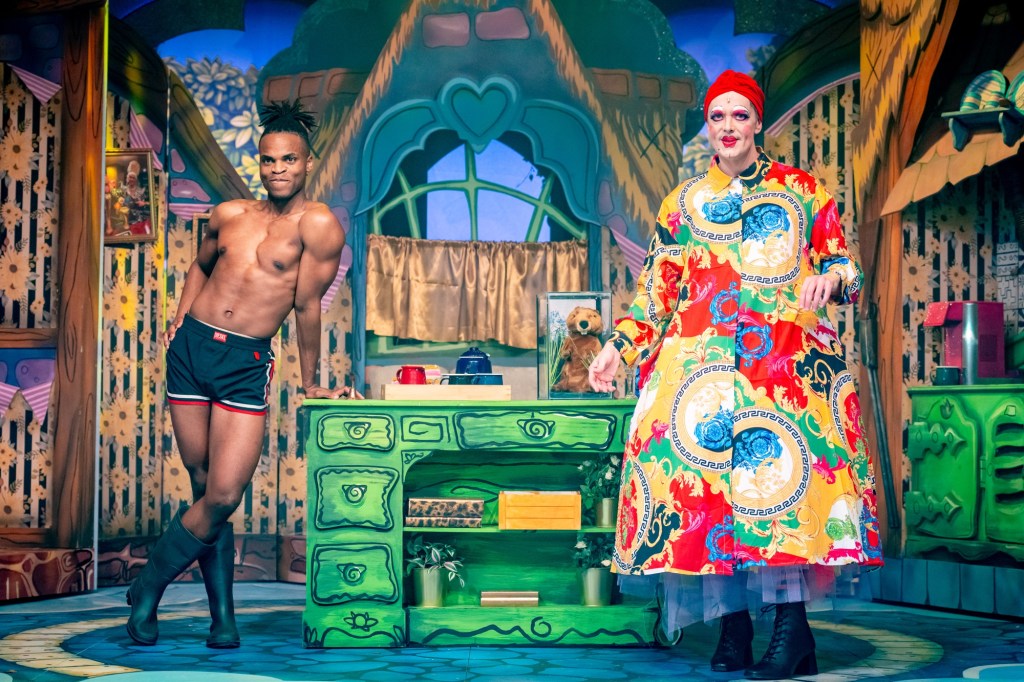
    Not content with winning the fifth season of Drag Race UK and building up a devoted following, it turns out Ginger Johnson, the self-described “seven foot millennial Lucille Ball”, also harbours a deep seated desire to be a stunt woman, ever since being on a childhood trip to the circus and witnessing the glamorous, and not at all camp-sounding, Zaza being shot out of a cannon. That’s the starting premise for this riotous, ribald and altogether bonkers new show from the Geordie firebrand who bowls on atop a motorcycle like a garish amalgam of Evel Knievel, Denise Welch, Corrie’s Rita Fairclough and a Christmas tree. She’s a lot, the show’s a lot, the fun quotient’s a lot…the whole thing is a lot.

    Ginger Johnson Blows Off! features just the divine Ms Johnson, a grimly unsmiling accomplice called Jen who’s only really there for health and safety purposes (think Dame Edna’s Madge Allsopp but with a much worse attitude) and the unsuspecting audience member that Ginger deems to be the bravest of the night, and who becomes embroiled in a potentially life altering trick. By the way, if you’re terrified of audience participation, don’t assume sitting at the back will save you, that’s not how Johnson operates. 

    Her singing is like her appearance: loud, unsubtle and hugely enjoyable. Ginger’s stage persona is infused with a grim joie de vivre (even when facing possible death or at least permanent facial disfigurement, this game glamazon is always ready with a cheeky quip, bitchy aside and triumphant if somewhat misplaced air punch) and she’s completely adorable in a vaguely terrifying sort of way. 

    The original songs by Bourgeois and Maurice have all the catchy, bombastic glam rock cynicism associated with that gloriously twisted duo, and they are performed with aplomb. The final cri de cœur, a power ballad entitled ‘How The Fuck Did I End Up Here’ is a mini masterpiece of dark musical comedy writing.

    Johnson does indeed attempt to recreate the mythical Zaza’s cannon-firing trick, with hilarious results, and along the way we get Russian Roulette, confetti, ignited farts (hence the title of the show)….and a lot of sweat, swearing and, er, drawing pins. Ingeniously, for all the glitz and humour, there’s a very real sense of danger (try watching the Russian Roulette section without getting sweaty palms) and even some pathos. Ultimately, Ginger says she’s just doing it for the attention, but, you know what, she deserves it. Give it to her. 

    September 26, 2024

  • THE STORY OF MY LIFE – ⭐️⭐️⭐️ – delightful small scale Broadway musical gets its London premiere

    Photograph by Peter H Davies

    THE STORY OF MY LIFE

    Music and lyrics by Neil Bartram

    Book by Brian Hill

    directed by Robert McWhir

    Stage Door Theatre, London – until 19 October 2024

    https://www.stagedoortheatre.co.uk/the-story-of-my-life-4-sept-19-oct/

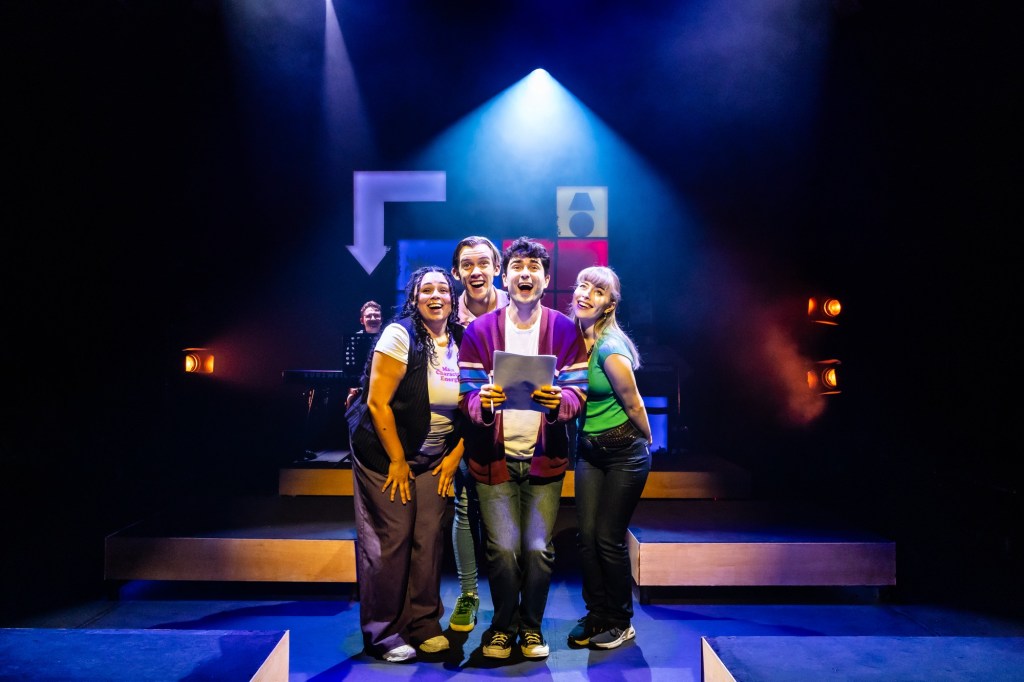
    Not every musical needs to be on Broadway and it’s rather sad that the reputation of this two handed tuner has gone down in the annals of the Great White Way as being a notorious flop (it lasted a mere five performances) when in fact it has a lot going for it. The charms of The Story Of My Life are amplified by being seen up close in this intimate new venue above a Drury Lane pub, in an exquisitely modulated production by Robert McWhir, whose lengthy tenure at the much missed Landor Theatre repeatedly demonstrated his adeptness at creating musical theatre magic on a stage the size of a postage stamp.

    Neil Bartram and Brian Hill’s show inhabits similar territory, pitched half way between traditional musical and song cycle for two players, as Jason Robert Brown’s acclaimed The Last Five Years, which is set to finally have its Broadway bow this season, over twenty years after it was first seen. However, where Brown’s work has an unusual time structure and some potent emotional punch, Bartram and Hill’s is a more whimsical, less histrionic affair. It’s a study of friendship between two men, grief, and the art of storytelling, with just a hint of unrequited love. I can imagine that in a venue much larger than this it could register as a bit insipid, but up close and personal it’s pretty lovely.

    On an all white set by David Shields that simultaneously evokes a blank page (one of the friends is a writer) and the heavenly plane to which the other friend has ascended (the story turns on the former attempting to eulogise the latter), Markus Sodergren and Tim Edwards convincingly age up and down, soliloquise, bicker, and deliver a series of nicely crafted songs. Bartram’s elegiac numbers, which do become a little samey in all honesty, sound heavily Sondheim influenced with their shimmering elegance and sometimes unexpected melodic hooks. As played by Aaron Clingham’s exquisite three piece band (keys, woodwind and cello) it sounds absolutely beautiful. The programme doesn’t specify if the orchestrations are the original ones by Jonathan Tunick (they certainly have the flavour of his work) or if they’re newly created by Clingham, but they are perfect for this space and this delicate material, crucially never overwhelming the often excellent lyrics.

    If Hill’s script doesn’t offer anything particularly revelatory or even dramatic, it sketches the two men (Sodergren’s dynamic writer Thomas and Edwards’s quirky, puppyish bookstore owner Alvin) with efficiency and a large dose of affection. Sodergren has a natural likability that mitigates somewhat against his character’s self-centred nature, but he could possibly find a little more stillness in the role, particularly as a more mature man. Edwards draws a tender portrait of a vulnerable but bright young man who never got over the loss of his mother. Both sing superbly.

    There are suggestions that Alvin’s feelings for Thomas extend beyond the platonic but this isn’t fully explored. That’s symptomatic of a show that washes pleasantly over you without ever throwing up anything particularly distinguished or confrontational, even the details of Alvin’s death are left non-specific. Anybody who likes their musicals with a healthy side order of bombast will be disappointed. The constant allusions to It’s A Wonderful Life get a little repetitive.

    Still, this is a very agreeable eighty minutes, suffused with genuine talent. It won’t rock your world but it might make you appreciate the friendships in your life, and the music is tremendously enjoyable.

    September 22, 2024

  • THE SILVER CORD – ⭐️⭐️⭐️⭐️⭐️ – a precious gem has been unearthed


    Alix Dunmore and George Watkins, photograph by Carla Joy Evans

    THE SILVER CORD

    by Sidney Howard

    directed by Joe Harmston

    Finborough Theatre, London – until 28 September 2024

    https://finboroughtheatre.co.uk/production/the-silver-cord/

    Not seen on the London stage since the original West End production of 1927, this American play feels like a remarkable rediscovery, one that genuinely begs the question why isn’t this engrossing, engaging piece seen more often. It’s not a stretch to imagine Sidney Howard’s script, which is neither comedy nor melodrama although it has delicious lashings of both, on one of the National stages, or at the Almeida or the Donmar. Anyway, here it is in a flawless, wonderfully acted in-the-round production by Joe Harmston in one of the fringe’s most intimate yet enterprising venues, and it’s a real gem.

    Set in the 1920s in an affluent household in rural New England, The Silver Cord (the title is a reference to the mythical bond between parent and child, but particularly mother and son) sees an emotionally manipulative widow Mrs Phelps (Sophie Ward, in a sensational return to the London stage) wreak devastation on the relationships of her two grown-up sons. DH Lawrence in Sons and Lovers would recognise the dynamics in this play, as would the Tennessee Williams and Noël Coward who gave us The Glass Menagerie’s Amanda Wingfield and The Vortex’s Florence Lancaster respectively: there is something especially fascinating about mother’s love going awry. When a life-giving force curdles into something strangulating and poisonous, that sense of nature perverted makes for great drama, and so it proves here.

    Mrs Phelps is a grimly glorious creation. On paper she looks like Mother Of The Year but in reality she’s nearer to a species that eats its young. A wealthy widow whose marriage was unfulfilling, she controls her children by subtly pitting them against each other (she craftily tells whichever son she’s talking to any given moment that he takes after her, whereas the other one is like their late father), and referring often to a life-threatening (and fictitious) heart condition that could carry her off at any moment. It’s telling that older son David (George Watkins) has to move 3000 miles away to fall in love.

    The role is an absolute gift for an actress and Ward unwraps it joyfully. She is all surface charm, with a beatific smile that with just a small adjustment of the eyes turns from benign into something completely chilling. This is the sort of woman who can make a single word sound like a weapon of mass destruction: note the deadly way she repeats the name “Omaha” when learning that is the home state of her newly acquired daughter-in-law, just dripping with judgement and dismissal. There is a surprising degree of high camp to Howard’s writing for her (she’s prone to grand, deranged pronouncements like “everybody knows that aviators are lunatics!”) but Ward plays it, brilliantly, for real which adds to the sense of underlying danger. It’s a magnificent performance, one that commands the stage by stealth. 

    Equally terrific is Alix Dunmore as Christina, the daughter-in-law who proves Mrs Phelps’s match, at least until she wavers in her conviction that this is even a battle worth fighting. Dunmore imbues the younger woman, a biologist on the verge of a stellar career in a field where women are scarce, with an innate kindness and a fierce intelligence. When she squares up to her tyrannical maternal nemesis, demolishing the carefully constructed walls of the toxic family edifice with the precision and insight of a scientist, it’s thrilling to witness. She’s also extremely affecting as she delivers a heartbreaking ultimatum to her new husband. This is acting of the highest order.

    The writing for the female characters is outstanding. Jemma Carlton also excels as Hester, the fragile partner of infantilised second son Robert (Dario Coates, superb), who gets a glorious worm-turning moment near the end where she proclaims she is off to marry an orphan….and really who can blame her. George Watkins does a fine job of conveying older son David’s anguish as he’s torn between a wife he adores and a mother whose metaphorical teeth are embedded deep within him, even making sense of some bewilderingly fast changes of allegiance, one of the few shortcomings in the text.

    What’s remarkable is how modern the play feels, despite some of the language and the spare period elegance of Carla Joy Evans’s costumes and Alex Marker’s set which feels simultaneously and appropriately like an opulent home and a cage. The psychological insights are so acute, the relationships so plausible…it’s impossible not to become invested, especially in such an intimate space. The kitschy artworks on the wall, each depicting sugary, romanticised visions of parenthood, look harmless enough when you enter the auditorium but feel positively sinister when glanced at while you’re leaving. 

    This really is an event. A majestic, criminally overlooked play, rediscovered in an utterly marvellous staging. The Finborough is tiny, tickets are scarce, but this really is a must see for anybody who craves meaty, multi-faceted drama. This is a hell of a resuscitation job.


    September 20, 2024

  • THE REAL ONES – ⭐️⭐️⭐️ – the eagerly awaited new play from the writing and directing team behind The P Word

    Mariam Haque and Nathaniel Curtis, photograph by Helen Murray

    THE REAL ONES

    by Waleed Akhtar

    directed by Anthony Simpson-Pike

    Bush Theatre, London – until 26 October 2024

    https://www.bushtheatre.co.uk/event/the-real-ones/

    Waleed Akhtar’s The P Word, an astonishing, urgent drama of two gay Pakistanis finding the UK a less than welcoming environment, was an event that deservedly won the 2022 Olivier for Outstanding Achievement in an Affiliate Theatre, an award that for several years seems to have come with the Bush Theatre’s name pre-engraved upon it. This is Akhtar’s first new play since, and expectations are inevitably high, especially as it’s at the same venue and boasts the same director (Anthony Simpson-Pike). It’s disappointing to report that, while perfectly watchable, The Real Ones is less interesting and a lot less affecting than the earlier play.

    It’s a story of friendship between two British Pakistanis, feisty, forward-thinking Neelam (Mariam Haque) and blustering, Peter Pan-ish Zaid (Nathaniel Curtis), both aspiring writers, and both slightly at odds with their traditional families. We see them between the ages of nineteen to thirty six, their ages for each section projected into the back curtain of Anisha Fields’s spare, open set. When the play begins, Neelam is no virgin and Zaid is coming out as gay, both facts that are likely to cause consternation within their families should they ever find out.

    It’s an interesting premise but Akhtar is more concerned with tracing the arc of friendship from teenage to just before middle age. He also explores, albeit not very deeply, racism and snobbery in non-white communities as Neelam gets into a relationship with a British Nigerian (Nnabiko Ejimofor’s Deji) whose family consider themselves several social strata above her.

    Although beautifully played by Ejimofor, an alumni of the original cast of For Black Boys…., Deji seems a bit too good to be true, even willing to pretend to be Muslim in order to mollify Neelam’s parents and gain permission to marry their daughter. I didn’t completely buy that. Nor did I believe that Neelam and Zaid’s friendship would be so damaged by the arrival of her first child. Temporary estrangements in friendships under such circumstances, where participants have wildly differing commitments and domestic arrangements, are surely a fact of life, but it feels as though this is being offered up here as something revelatory.

    Akhtar’s dialogue is funny and authentic though, particularly in the way Neelam develops from raw and streetwise to more articulate and subdued, but with the spiky edges still occasionally forcing through. Haque embodies her brilliantly, following off-the-cuff statements with a momentary intense stare as if to gauge how what she’s just said is going down. She’s at once fierce but not quite comfortable in her own skin, at least not at first. The scene where she turns on a well intentioned but patronising white theatre practitioner trying to get her to spice up her play dealing with her own community (“so you want me to change my play for your white audience and you’re not even going to pay me?”) is savagely well done. 

    By contrast, Zaid feels irredeemably self absorbed and whiney, at least in Curtis’s rather one-note performance. While one sympathises with his coming out struggles, Zaid ends up living his best life having his play produced, living with an affluent boyfriend yet still manages to appropriate other people’s dramas: he wants to come out to his dad straight after the man has had a life-threatening stroke, despite Neelam’s entreaties not to, and manages to make his friend’s postpartum struggles and his partner’s unemployment anguish all about him. Although he’s good at throwaway comedy, Curtis struggles to make any of Zaid’s hurt  or anguish, whether it’s about being temporarily homeless or uncertainties over the sexual opening up of his relationship, seem deeply felt. There are indications in the text that Zaid should be as scrappy and streetwise as Neelam but there’s nothing in the performance to indicate that.

    Zaid’s partner, white, older Jeremy (a convincing Anthony Howell) is also a playwright and as his professional star wanes just as Zaid’s rises, Akhtar starts but quickly discards a potentially fascinating study of increased diversity in the arts and how the whole “pale, male and stale” label has come into vogue. Elsewhere, the discussions around writing are frustratingly non-specific, although there is a suggestion that Neelam is the genuine talent, although she ends up not doing anything professional with it.

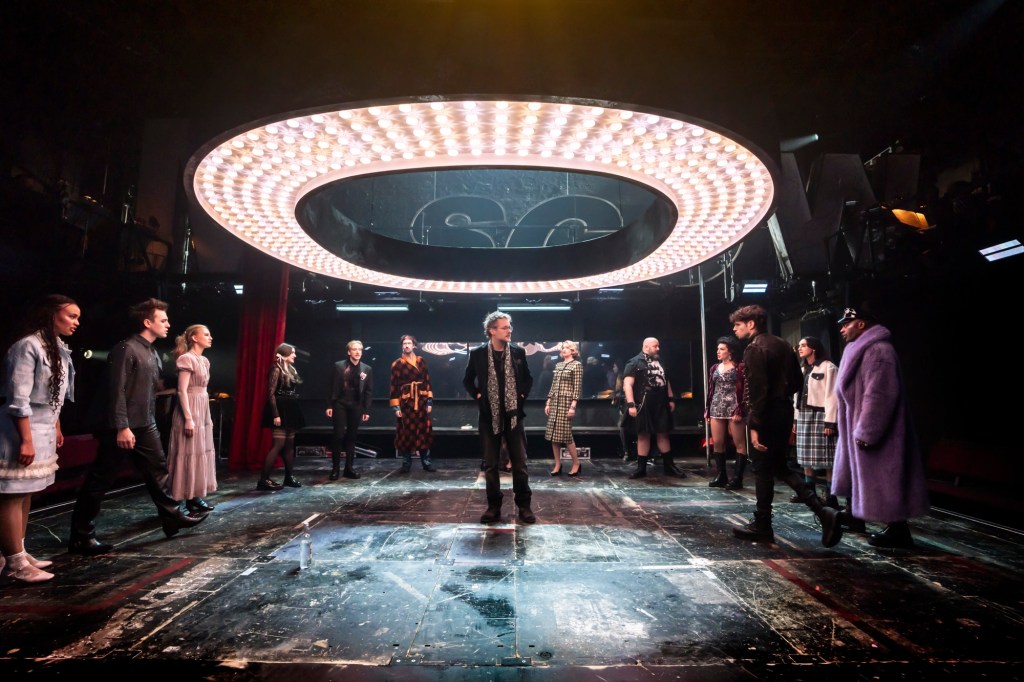
    Simpson-Pike’s well paced staging is flashy and slick, although the decision to have the centre of the set a sunken circular space where a lot of the action takes place causes some sight line problems if you’re not at the front or the ends of the banks of seating. XANA’s ear-splitting sound designs and thudding music, and the very busy video work of Matt Powell, are all quite impressive but feel as though they are there more to deflect attention from a lack of real dramatic power in the script. 

    Although the storytelling is linear, the text is punctuated by a repeated sequence of young Zaid and Neelam off their faces on a dance floor swearing ongoing love and support (“we’re gonna be fucking brilliant!”) and it should be moving, but it doesn’t feel as though we’re given enough to care about in the course of the 100 minute duration, so emotional investment is hard to make. The ending is surprisingly bleak but your reaction to it may depend on how you view these central characters.

    The P Word wasn’t Akhtar’s debut play, but it was a career-redefining one, and The Real Ones feels like that tricky second play. It’s enjoyable if frustrating, and there is some cracking dialogue in there. That, and Haque’s detailed, intelligent, emotionally charged work makes it worth seeing, but I’m more looking forward to seeing what Akhtar gives us next.

    September 19, 2024

Previous Page Next Page

Blog at WordPress.com.


Loading Comments...
 

    • Subscribe Subscribed
      • ajhlovestheatre
      • Join 59 other subscribers
      • Already have a WordPress.com account? Log in now.
      • ajhlovestheatre
      • Subscribe Subscribed
      • Sign up
      • Log in
      • Report this content
      • View site in Reader
      • Manage subscriptions
      • Collapse this bar